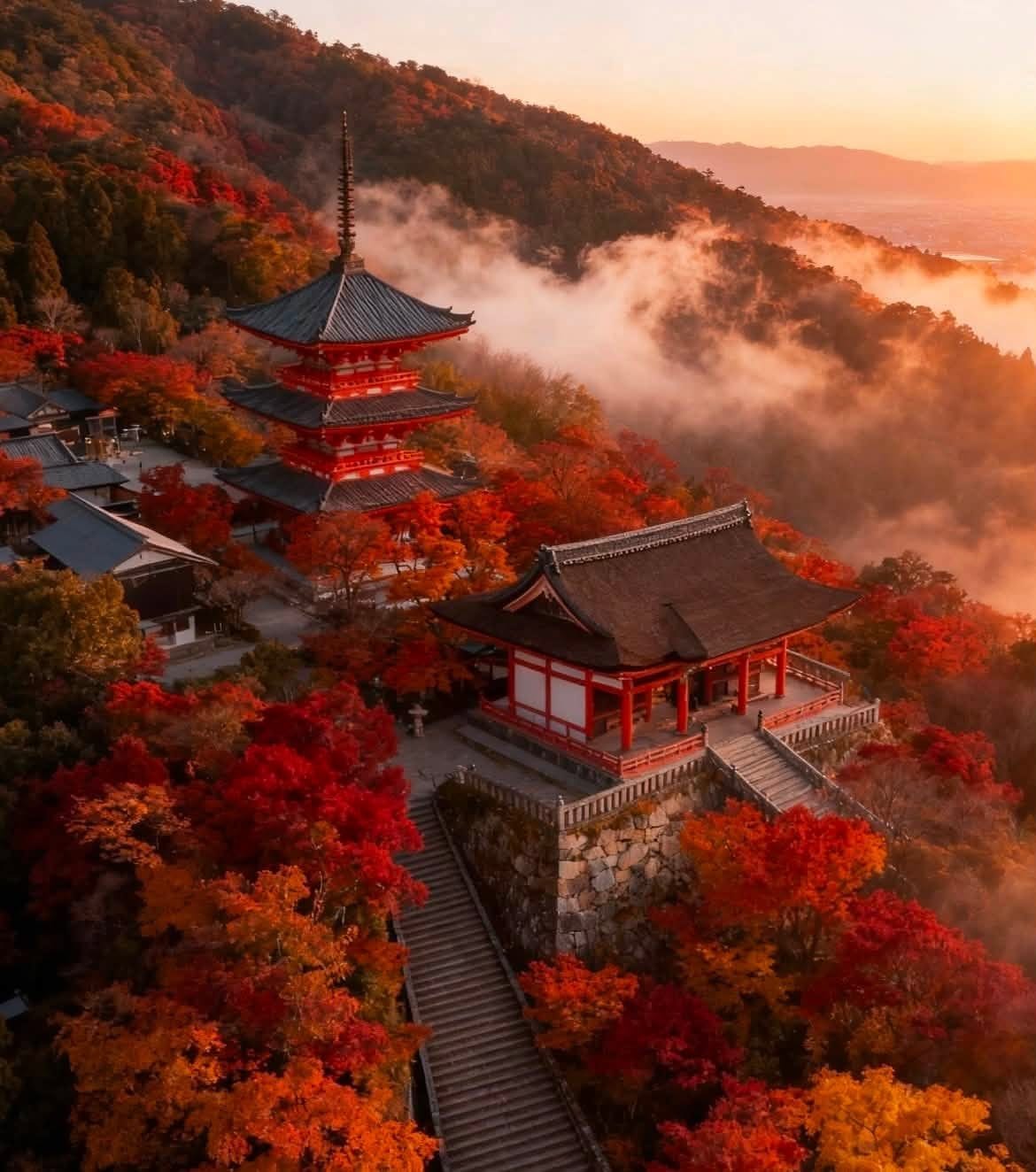
Kyoto in Autumn: A Complete Seasonal Guide for Trips from October to December
What temperatures are like from October to December, what to wear each month, which areas change color first, and tips for avoiding the late-November peak week — everything you need for a trip to Japan’s ancient capital.
Aug 12, 2026·✍️ olablog·⏱ 15 min read
What temperatures are like from October to December, what to wear each month, which areas change color first, and tips for avoiding the late-November peak week — everything you need for a trip to Japan’s ancient capital.
Tap a region to browse articles
Every year around August and September, I get the same question from readers: “I’m booking a trip to Kyoto in mid-October to see the autumn leaves. Will I make it in time?” And every time, I have to give them the answer nobody wants to hear: in mid-October, Kyoto is still... brilliantly green. The autumn colors arrive later in the ancient capital than most people imagine, and that is the first — and most common — trap of Kyoto’s fall season.
The second trap is the opposite: many people know that the autumn leaves peak in late November, so they cram their entire trip into that one peak week. Then they are stunned when hotel prices double or triple, buses are packed, and the area in front of Kiyomizu-dera is a sea of people. In reality, Kyoto’s autumn lasts nearly three months, with each period offering its own beauty and its own way to experience the city. Choose wisely, and you can have a trip that is both beautiful and comfortably paced.
This is not a list of the “top autumn foliage spots” — if that is what you need, I have already written a separate article, Top 10 Best Places to See Autumn Leaves in Kyoto. This is an overview guide: what the weather is like each month, what to wear, how fall differs from spring and summer, how each part of Kyoto changes as the weather cools, and how to plan your itinerary without falling into the two traps mentioned above.
When does autumn begin and end in Kyoto?
If we define autumn by the feeling that “the season has changed” — cooler breezes, higher skies, and no more oppressive heat — then autumn in Kyoto begins around early to mid-October. But if we define it by the autumn leaves, known in Japan as koyo, the story is quite different:
- Early to mid-November: the leaves begin changing color in northern mountain areas such as Takao, Kurama, and Ohara — places that are higher and colder than the city center.
- Mid- to late November: the colors gradually spread down to lower hillsides such as Arashiyama and Higashiyama.
- Late November to early December: peak season arrives in the city center and at the major temples and shrines. This is the “golden” week when visitors from around the world descend on Kyoto.
- The first to middle weeks of December: the leaves gradually fall, but the red carpets of leaves on the ground and the late-turning golden ginkgo trees are still well worth seeing, while the crowds have thinned out considerably.
The general rule is easy to remember: autumn colors move from high to low ground and from north to south — the exact opposite of cherry blossoms, which bloom from south to north. In recent years, as temperatures have gradually risen, Kyoto’s foliage peak has tended to arrive later, with some years extending into the first week of December. Before finalizing your tickets, check that year’s koyo forecast (Japanese autumn foliage forecast sites usually begin updating from September). I have compiled the information in Japan’s regional autumn foliage calendar so you can easily compare Kyoto with other destinations.
Weather and temperatures from October – 12
Kyoto lies in a basin surrounded by mountains on three sides, giving it a distinct climate: sweltering summers, bitterly cold winters, and a fairly large day–night temperature gap in autumn. This is the most important thing to remember when packing.
October: early autumn and the most comfortable weather of the year
Daytime temperatures are around 20–25°C, while nights fall to around 13–16°C. The skies are often clear, humidity drops sharply compared with summer, and you can walk all day without breaking a sweat. Early October occasionally sees the tail end of a typhoon, so you may encounter one or two days of heavy rain, but overall this is the most “mild-mannered” month weather-wise. The only drawback is that the leaves are still green, so if your goal is autumn foliage photography, October is too early.
November: the month of autumn leaves — and temperature swings
Daytime temperatures are around 13–18°C, while early mornings and evenings can drop to 5–8°C. Toward the end of the month, some days come close to 3–4°C. The challenging part of November in Kyoto is that you might feel perfectly comfortable in a light sweater at 1 p.m., then be shivering at 6 p.m. while waiting outside a temple for an evening light-up. November is generally dry and sees little rain, with beautiful golden sunlight for photography — and it is this nighttime chill that helps the leaves develop more vivid colors.
December: still autumn at the start, winter by the middle
Daytime temperatures are around 8–13°C, with nights hovering around 2–5°C. During the first week of December, a few temples in the south may still have late-season red leaves, along with rows of golden ginkgo trees, but the atmosphere is already beginning to feel like early winter. From the middle of the month onward, consider the foliage season essentially over, and the city shifts into a year-end atmosphere with decorative lights. If you are visiting in early December, pack for mild winter weather.
Note: the figures above are multi-year averages intended to give you a general idea. Temperatures can vary by several degrees from year to year, so check the specific forecast as your trip approaches.
What to wear in Kyoto in autumn
The golden rule is to dress in layers, since you will constantly be moving between the cold outdoors, warm buses, warm restaurants, and then back outside again.
- October: a long-sleeved T-shirt or shirt, plus a light jacket (a cardigan or windbreaker) for early mornings and evenings. On many days, a long-sleeved top alone will be enough during the day.
- November: this is the month that requires the most careful planning. My formula is one thin thermal layer (Heattech-style), a sweater or hoodie, and a moderately warm outer layer (a trench coat, light wool coat, or lightweight down jacket). Add a scarf — it keeps you warm and looks great in photos with the autumn leaves. If you plan to attend an evening light-up, do not underestimate the cold: spending 1–2 hours outdoors at 5–7 degrees is perfectly normal.
- Early December: a padded jacket or thick wool coat, a thermal layer underneath, and thin gloves if your hands get cold easily.
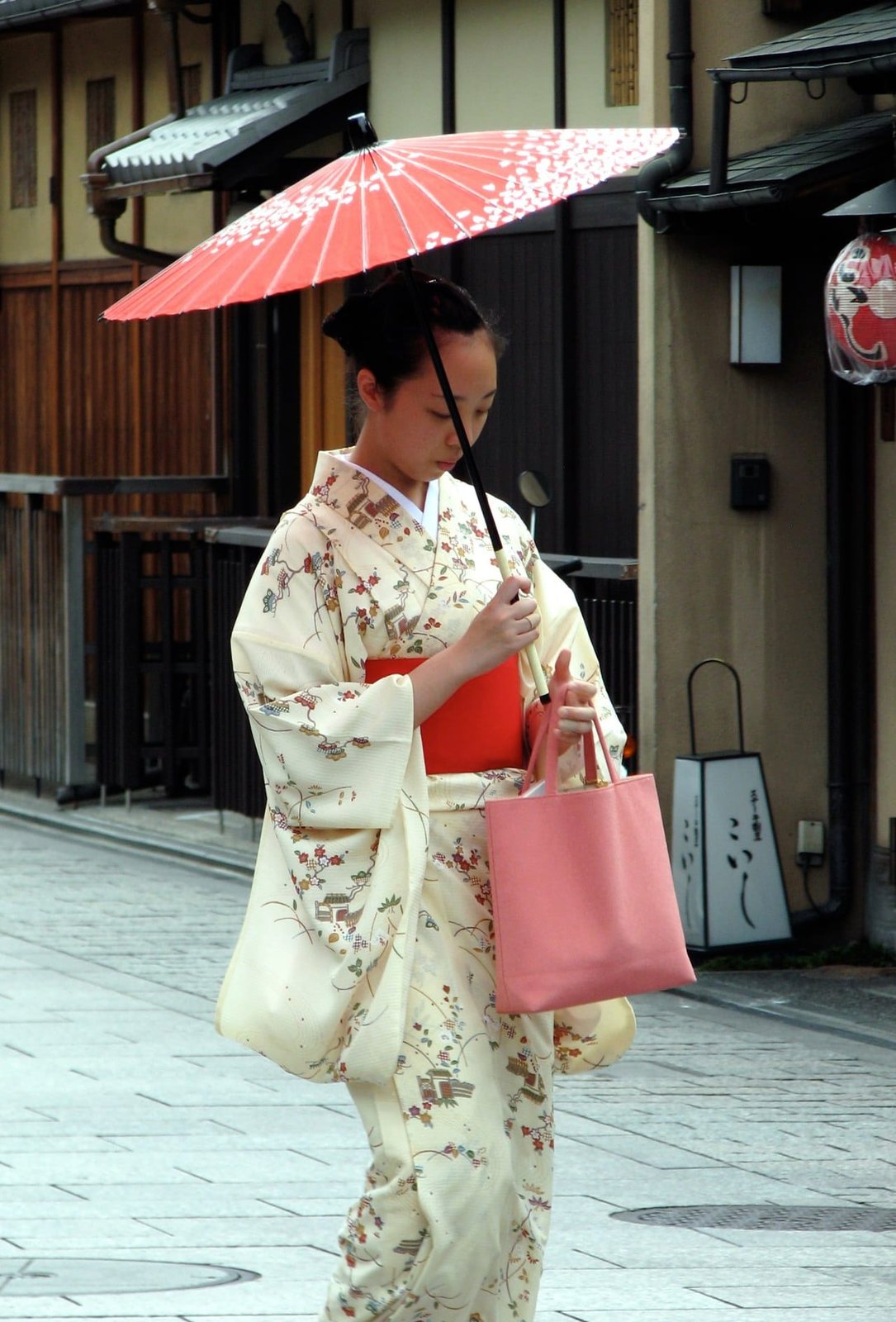
As for footwear, Kyoto is a city of stone slopes and days that can involve 15.000–20.000 steps of walking. A comfortable, well-broken-in pair of sneakers matters more than any other item in your suitcase. If you plan to rent a kimono for a stroll — and autumn is the best season for kimono, with the fabric’s deep colors pairing beautifully with red foliage — remember to add a thermal layer underneath. Rental kimonos are usually quite light for the weather in late November.
How is autumn in Kyoto different from spring and summer?
Many people wonder, “Which season is best for visiting Kyoto?” My honest answer is that each season has its own appeal, but these three seasons differ more than you might expect:
Compared with spring (cherry blossoms)
- The viewing window: cherry blossoms are at their peak for only about one week, and rain or strong winds can strip them bare — arrive a few days too early or late and you may miss them. Autumn leaves are much more forgiving: the season lasts an entire month, and because different areas peak 1–2 weeks apart, you can almost always find somewhere beautiful to visit at some point in November.
- The weather: Kyoto’s spring often brings unpredictable spells of rain and overcast skies. Autumn, especially November, is considerably drier and clearer — the odds of having a “beautiful-weather day” are noticeably higher.
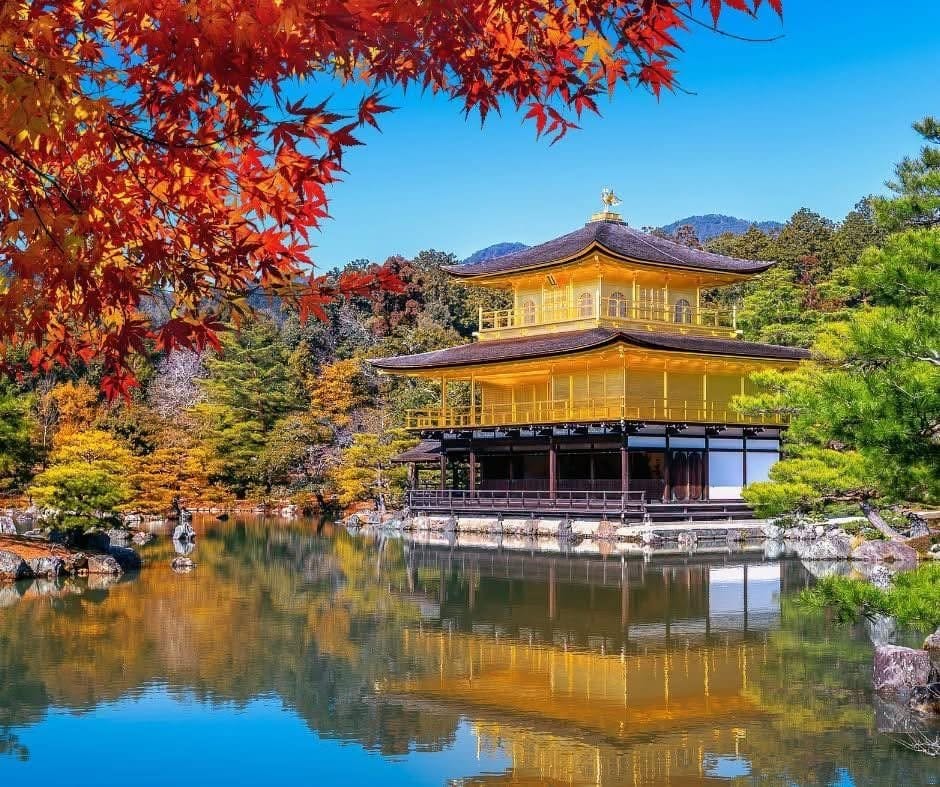
- Signature experiences: autumn offers something that spring has almost nothing comparable to on the same scale — temples and shrines opening at night and illuminating the red leaves. Vivid red maple leaves against the night sky, reflected in a pond, are a uniquely koyo experience.
Compared with summer
This is a completely different world. Kyoto summers are notoriously harsh — the basin traps heat, and 35–38°C combined with high humidity is normal. Walking around at midday can genuinely feel punishing. Autumn frees you from all of that: you can walk from morning until evening, climb the slope to Kiyomizu-dera, or walk the entire Philosopher’s Path without becoming exhausted. In exchange, summer has major festivals such as Gion Matsuri — if you love the atmosphere of street festivals, that is something autumn cannot offer.
In short: spring is for “chasing the perfect moment,” summer is for festivals, and autumn is the season for taking things slowly, exploring deeply, and enjoying yourself with the least physical strain.
How Kyoto’s main areas change in autumn
Kyoto does not change color all at once. Once you understand the rhythm of each area, you will know where to go each week.
Higashiyama – the historic heart, reaching its peak latest
The eastern stretch from Kiyomizu-dera through Kodai-ji and Gion to Nanzen-ji and the Philosopher’s Path is the most quintessentially “Kyoto” area, and it also reaches peak foliage later — usually from late November into early December. Autumn here has two faces: during the day, the stone-paved sloping streets are packed, but early in the morning (before 8 a.m.), they can be astonishingly peaceful — light mist, sunlight slanting through temple roofs, and almost no one around. In the evening, many temples in the area hold light-ups, transforming the entire hillside into a nighttime painting.
Arashiyama – where an entire mountainside changes color
If Higashiyama is beautiful in the style of a meticulously landscaped temple garden, western Kyoto’s Arashiyama is beautiful in a grand, natural way. The mountains on the opposite side of the Katsura River become mottled with red, orange, and yellow, reflected in the water as seen from Togetsukyo Bridge. The famous bamboo grove stays green year-round, but it is the contrast between the green bamboo and red maples at nearby temples such as Tenryu-ji that makes this area special in autumn. Arashiyama usually peaks a few days earlier than the city center, around mid- to late November. A hard-learned lesson: arrive before 8 a.m. or be prepared to squeeze through the crowds.
The north – Kurama, Ohara, and Takao: where autumn arrives early
The northern mountains usher in Kyoto’s autumn foliage season, usually from early to mid-November. The little train to Kurama passes through a “maple tunnel,” Ohara’s Sanzen-in is famous for its moss carpet and picture-perfect fallen leaves, and Takao is much more rustic and far less crowded. If your trip falls in early November — when the city center is still green — simply head north and you will not miss the foliage season.
Central and southern Kyoto – Tofukuji, Fushimi, and Uji
Tofukuji, south of Kyoto Station, is one of the most famous koyo spots in the country. The maple-filled valley viewed from Tsutenkyo Bridge can become so crowded that visitors may have to wait in line for an hour during peak season, but it is worth it. Fushimi Inari, with its thousands of red torii gates, is not a classic foliage-viewing destination, but hiking here in autumn is far more pleasant than in summer. And Uji — the home of Japanese tea — offers both red leaves along the river and the season’s new teas. If you love matcha, spending an autumn afternoon in Uji is an under-the-radar choice that is well worth making.
For a detailed list of locations, the best time to visit each one, and how to get around, continue to the top 10 Kyoto autumn foliage spots. In this article, I am only sketching the overall map to help you get oriented.
What to eat and drink in Kyoto in autumn
The Japanese have a concept called “shun” — eating ingredients at their seasonal peak — and autumn is the most abundant shun season of the year (I write more about it in Japanese seasonal cuisine). In Kyoto from October to December, make room for:
- Chestnuts (kuri): chestnut Mont Blanc, chestnut rice, and wagashi filled with chestnut paste — these appear at pastry shops everywhere from September onward.
- Persimmons (kaki) and roasted sweet potatoes (yaki-imo): a steaming hot roasted sweet potato from a street cart or supermarket on a cool afternoon is a quintessential autumn combination.
- New rice (shinmai): rice harvested during the autumn crop, noticeably more fragrant and sticky — even an ordinary bowl of white rice at a set-meal restaurant tastes significantly better.
- Autumn kaiseki: if you have the chance to splurge on a kaiseki meal, autumn is when the menus are at their most beautiful, featuring mushrooms, amberjack, and maple-leaf garnishes.
- Matcha sweets: hot matcha suits cold weather much better than summer — my list of cafés is in Beautiful matcha cafés in Tokyo and Kyoto.
How to plan a smarter autumn itinerary
A few principles drawn from many koyo seasons:
- Book your accommodation early — really early. During the last two weeks of November, Kyoto hotels are under the greatest pressure of the year. Prices can double or triple compared with normal days, and the best places sell out many months in advance. A money-saving tip is to stay in Osaka and take the train to Kyoto each day (around 30–45 minutes). It is both cheaper and easier to book — I cover this regional combination in the Kansai guide: Osaka – Kyoto – Nara.
- Travel at off-peak hours. Enter temples when they open in the morning, or choose an evening light-up session, and avoid the 10 a.m. – 15 p.m. window at the most popular sites. Early autumn mornings in Kyoto also offer the day’s best mist and light.
- Focus on one area each day. Do not overpack your schedule with Arashiyama in the morning, Fushimi at noon, and Higashiyama in the afternoon — during peak season, traveling between areas takes longer than you expect because the buses are crowded. Group destinations by geographic area.
- Build in “slow” days. Between busy sightseeing days, set aside an aimless walking afternoon, visit temples to collect goshuin, or sit in a tea shop. Kyoto in autumn is at its best in moments that are not on the itinerary — if you are traveling solo, 2 Quiet Days in Kyoto offers a suggested pace.
- If you have 5–7 days, do not spend all of them in Kyoto. Nara, with its deer among golden leaves, and Osaka at night are two ideal additions — see the 7-day Kansai itinerary.
One practical note: during peak season, some temples change their opening hours or sell separate tickets for evening light-up sessions (daytime and evening admission may be charged separately). Temple and shrine admission is usually a few hundred to around one thousand yen, depending on the location, but prices and light-up schedules vary from year to year — check each temple’s official website before you go.
Frequently asked questions
Will I see autumn leaves in Kyoto in October?
In the city, almost certainly not yet — the leaves begin changing noticeably from early to mid-November, and the city center peaks in late November. October makes up for it with the most comfortable weather of the year and significantly smaller crowds. If you still want to see some early autumn color, head into the northern mountains or consider combining Kyoto with another high-altitude destination elsewhere in Japan.
Which week is peak autumn foliage season in Kyoto?
The multi-year average is around the last week of November through the first days of December for the central areas, but the timing varies each year, and the recent trend has been later. Check the koyo forecast for the specific year of your trip, which is usually updated from around September–10.
Is Kyoto very cold in late November?
The daytime weather is comfortable (around 13–16°C), but early mornings and evenings can drop to 5°C or lower. If you are going to an evening light-up, dress for early winter: a thermal layer, sweater, warm coat, and scarf.
Should I stay in Kyoto or stay in Osaka and commute?
If you can find accommodation in Kyoto at an acceptable price, staying in Kyoto is still better — you can take advantage of early mornings and evenings, the two most beautiful and least crowded times of day. But during the two peak weeks, staying in Osaka and taking the train over is a practical option: it is considerably cheaper, and the journey takes only around 30–45 minutes each way.
Do I need to book tickets to temples and shrines in advance in autumn?
At most temples and shrines, you can simply buy a ticket at the entrance, even during peak season. Just be prepared to queue at popular sites such as Tofukuji or for famous light-up sessions. A small number of locations and special events sell advance tickets for specific time slots. This information changes from year to year, so it is best to check the official website of each place you plan to visit a few weeks before your trip.
Is autumn or spring more worth visiting?
If this is your first trip to Kyoto and you can choose only one season, I lean toward autumn: the viewing window is longer (so it is harder to “miss” than cherry blossoms), the weather is more stable, evening light-ups offer a unique experience, and seasonal food is at its most varied. Spring is wonderful in a different way — but it is a timing gamble that not everyone wins.