
One Day in Nagano in Autumn: Three Itineraries, and Why You Have to Pick One
Nagano is too big for a single day-trip answer. Three separate plans from Tokyo with real clock times — Zenkoji and Obuse, Kamikochi with Matsumoto, or an easy Karuizawa day — plus cost ranges, last-train limits, and what to cut when you fall behind.
Aug 14, 2026·✍️ olablog·⏱ 12 min read
Nagano is too big for a single day-trip answer. Three separate plans from Tokyo with real clock times — Zenkoji and Obuse, Kamikochi with Matsumoto, or an easy Karuizawa day — plus cost ranges, last-train limits, and what to cut when you fall behind.
Tap a region to browse articles
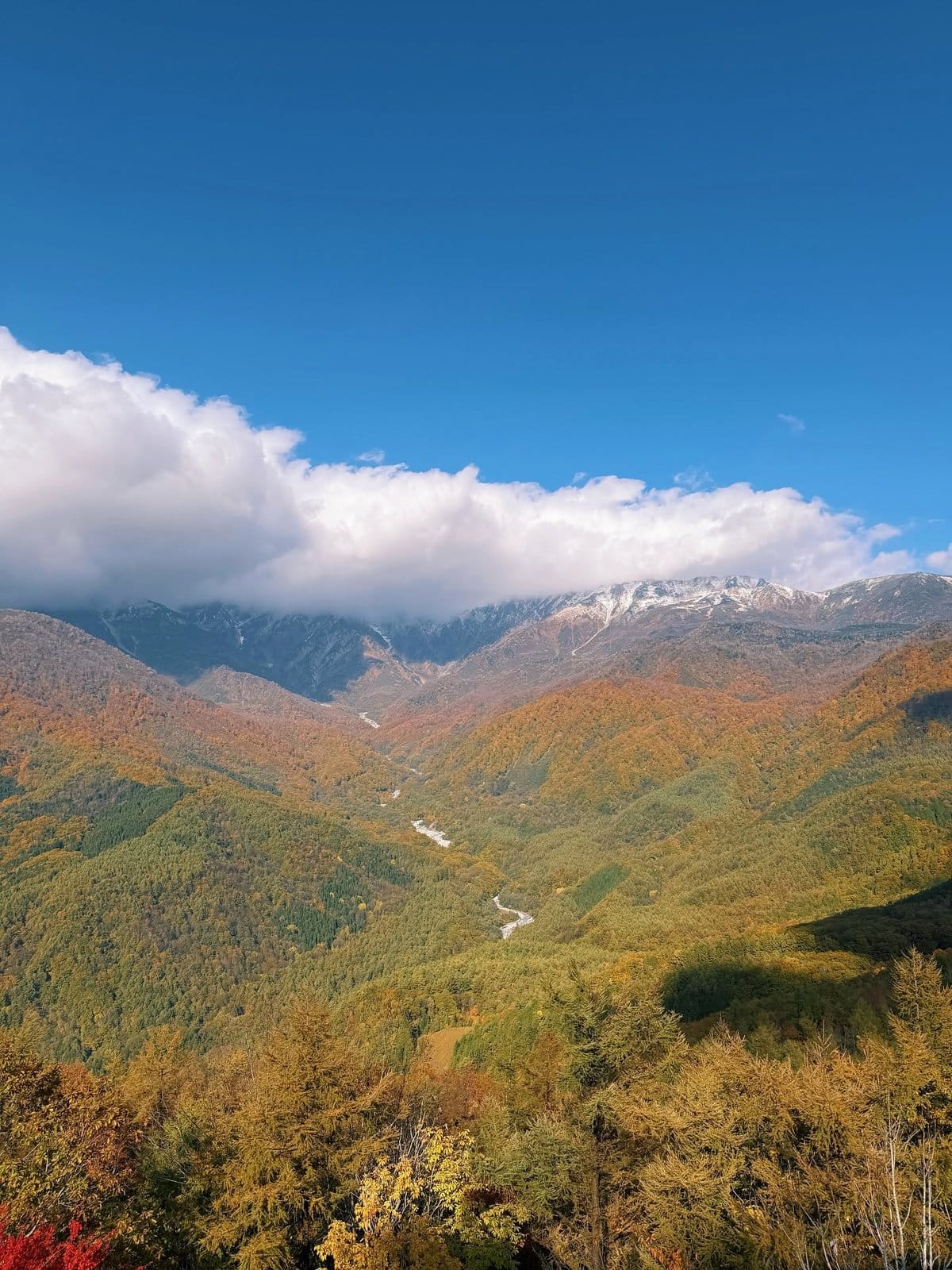
"What should I do with one day in Nagano?" sounds like a small question. It isn't. Nagano is Japan's fourth-largest prefecture, and its three headline destinations — Zenkoji temple in Nagano city, the Kamikochi valley in the Northern Alps, and the Karuizawa highlands — sit in three directions, two to three hours apart. No itinerary combines them in a day.
So this isn't one "complete Nagano" day. It's three separate itineraries, one per direction, with real clock times, honest costs, and the part most guides skip: the last service home. A day trip from Tokyo buys six to eight hours on the ground for four to six in transit — so if you can steal a second day, steal it, and use the two-day Nagano autumn itinerary instead.
One rule covers all three: every time below is an approximation, not a timetable. Shinkansen, local lines and mountain buses all shift with the season. Confirm first and last services on the official JR East, Alpico Kotsu and Nagano Dentetsu pages and screenshot them — mountain signal is patchy, and 4pm at a bus stop is a bad time to find out.
Plan A — Nagano City: Zenkoji, the temple approach, Obuse
The plan I recommend to most people, for an unglamorous reason: widest margin for error, least weather risk. No ropeway to close in wind, no mountain bus to miss. It is also the least beautiful of the three.
6:30–8:15am — Tokyo to Zenkoji
The Hokuriku Shinkansen reaches Nagano in roughly 1h20 to 1h50 depending on the service, so a 6:30 departure has you on the platform around 8:00; buy tickets the evening before, as reserved seats sell out on autumn weekends. Zenkoji is two kilometres on — fifteen minutes by bus, thirty on foot. Walk up, bus down.
8:15–9:30 — The temple just after opening
Zenkoji predates the split of Japanese Buddhism into sects, belongs to none of them, and admits everyone. Its dawn service is timed to sunrise, so in autumn it begins well before anyone from Tokyo can arrive. You'll miss it — but what you get instead matters more here: between roughly 8:30 and 9:30 the forecourt is close to empty. By eleven it's a different place.
Pay the small admission for the inner sanctuary and the Okaidan, a pitch-black passage under the main hall where you feel along the wall for a metal key.
9:30–10:30 — The approach street
The road down from the Niomon gate is my favourite hour here: a centuries-old pilgrimage road of timber warehouses now holding cafés and sweet shops. Eat oyaki, the steamed vegetable-stuffed parcel that is Nagano's real signature. Save soba for later — autumn brings shin-soba, from the freshly harvested crop, on signs from late October.
11:15am–2:30pm — Obuse: chestnuts and Hokusai
Get there on the Nagano Dentetsu, a private line not covered by the JR Pass, twenty-five to thirty-five minutes from Nagano station. Obuse crosses on foot in twenty minutes and is famous for two things.
Chestnuts, grown here since the Edo period as tribute to the shogun. Autumn is harvest: kuri kanoko (whole chestnuts in syrup), kuri okowa (savoury sticky rice, filling enough to be lunch), chestnut ice cream, mont blanc. The old confectioners run weekend waiting lists, so add your name and then wander.
Hokusai, who spent his last years here under a merchant's patronage. The Hokusai-kan museum holds the late work, including two festival floats with ceilings he painted himself; an hour does it properly.
Optional: 2:30–6:00pm — the Jigokudani snow monkeys
Nagaden onward to Yudanaka (30–40 min), bus to Kanbayashi Onsen (about 15), then roughly 1.6 km of forest trail — unpaved, uphill, thirty to forty minutes each way, no shortcut.
Manage expectations: in autumn the monkeys mostly aren't in the hot pool. That steaming-macaque-in-snow shot is a winter photograph. Adding this is greedy anyway, so if monkeys are the point, drop Obuse.
Turnaround and what to cut
The last shinkansen from Nagano to Tokyo usually leaves around 9pm, though some late services stop short of Tokyo. Without the monkeys you're back at the station by 3pm, with an afternoon free for proper soba. With them, leave the park by 4pm — Nagaden services toward Yudanaka are thin, and missing one costs forty minutes.
Running late? Drop Hokusai-kan, then Obuse. Zenkoji and the approach street are why you came.
Cost: shinkansen return ¥16,000–18,000; Nagaden return ¥1,400–2,000; Hokusai-kan ¥500–1,200; food ¥3,000–4,500. Roughly ¥22,000–27,000 per person, plus ¥4,000–5,000 with Jigokudani.
Plan B — Kamikochi plus Matsumoto: the most beautiful, the tightest
This produces the photographs and is the plan most likely to break. Plainly: you will not see dawn mist on Taisho Pond on a Tokyo day trip. That window is ninety minutes after first light and needs a bed at Sawando, Hirayu Onsen or in the valley — the case I make in the one-day Kamikochi itinerary. Accept that, and the rest still earns its place.
6:30–11:00am — Shinjuku into the valley
The Azusa limited express reaches Matsumoto in about 2h30–3h, arriving around 9:00–9:30; reserve, as it has far fewer seats than a shinkansen. Then the Alpico line to Shin-Shimashima (30 min) and a bus in (about an hour). Combination return tickets at the counter beat buying legs separately.
Two non-negotiable facts. Private cars are banned outright, rentals included. And the valley closes for the season, typically opening around mid-April and shutting around mid-November; dates move, so check the official Kamikochi page before booking a November trip.
11:00am–2:00pm — Taisho Pond to Kappa Bridge
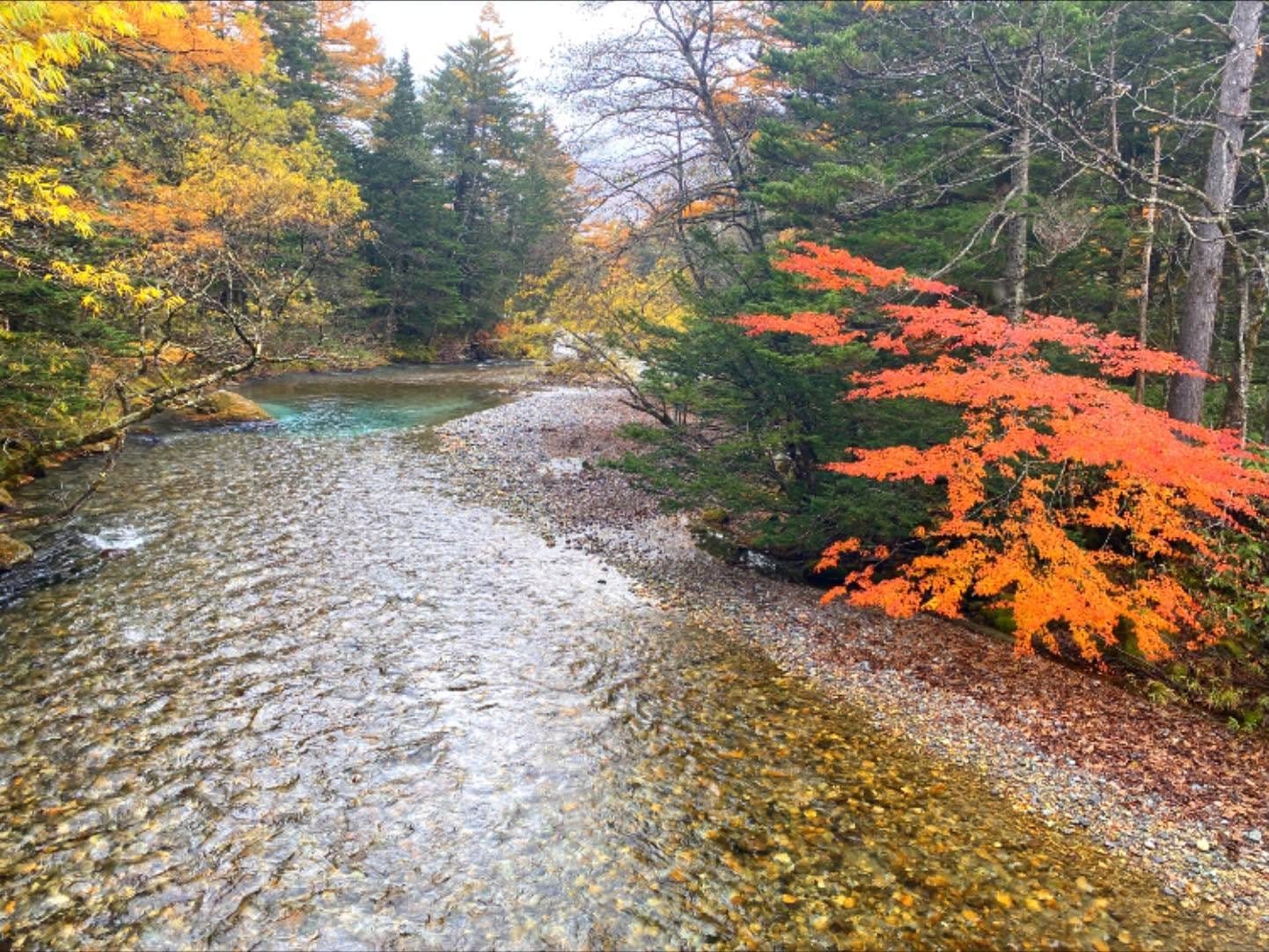
Get off at Taishoike, not the terminal, and walk upstream along the Azusa: 3.5 km of boardwalk and flat trail, 1h15 to 1h45 with photo stops. The mist is gone, but Taisho Pond still holds something found nowhere else in Japan — bare dead trunks standing in the water, left when Mt. Yakedake erupted last century and dammed the river, the Hotaka range behind usually already dusted with first snow. Most people sprint this stretch. Don't; it's the most Kamikochi part of Kamikochi.
Lunch near the terminal around 12:30, twenty to thirty percent above valley-town prices because everything is trucked in. There is no convenience store in Kamikochi, many counters are cash-only, and signal is unreliable. And skip Myojin Pond — that round trip is two and a half hours you don't have.
2:00–5:30pm — Matsumoto Castle in late light
Buses down at 2pm reach Matsumoto around 3:45–4:00; on peak weekends the terminal queue can run several bus-loads deep, so be there twenty minutes early. The castle is fifteen minutes on foot from the station — one of Japan's few surviving original keeps, black-boarded and mirrored in its moat. Entry closes earlier than most expect, but the moat circuit is free and the best angle is from across the water anyway: black boards raked by low sun, Alps behind.
Turnaround and what to cut
Here's where Plan B bites. The last Azusa to Shinjuku leaves in the early evening, not at 10pm, and so does the last Shinano north to meet the shinkansen. Know both numbers before you board the morning bus.
Running late? Drop the castle: straight to the station, eat there, protect your train. Behind from the morning instead? Cut the walk — ride to the terminal, loop Kappa Bridge, go home on time.
Cost: Azusa return ¥13,000–16,000; Alpico train plus bus ¥5,000–6,000; castle ¥700–1,000; food ¥3,000–4,500. Roughly ¥23,000–28,000 per person.
Plan C — Karuizawa: the shortest hop
If these are three levels of ambition, Karuizawa is the lowest, and that's the point. It's about an hour to 1h10 by Hokuriku Shinkansen, so you leave at 8am rather than 6:30 and still get a full day. This is the plan for a bad forecast, for parents or small children, or for when you want a day off rather than a day out.
9:20–10:30am — Kumoba Pond in morning light
Check your train actually stops at Karuizawa; some run straight through. Twenty minutes on foot from the station's north side is Kumoba Pond, with a twenty-minute loop that mirrors the whole ring of trees at peak colour — usually late October into early November here. Come early for the reason that applies at every mountain pond: still air, flat water, almost nobody before 10am. Entry is free, and a rented bicycle saves your legs.
10:45am–12:30pm — Shiraito Falls
Buses up the Kusatsu road reach Shiraito Falls in twenty-five to thirty minutes, but frequency is modest — check both directions before setting off. Shiraito is only about three metres high and nearly seventy wide, and the water doesn't fall from a river: it seeps straight out of the rock face, groundwater from Mt. Asama filtering through lava beds into hundreds of white threads. Spring-fed, its flow barely changes with the season, which makes it a rare spot that's good in the rain.
2:00–5:00pm — pick one: the old street or the outlet
Fine weather: Kyu-Karuizawa Ginza, the town's spine since it was a summer retreat for Western missionaries and diplomats — hence the small wooden churches and old European-style bakeries. Turn off into the forest lanes for the Karuizawa I like best: timber villas among maples.
Rain, or shoppers in the group: Karuizawa Prince Shopping Plaza, minutes from the south exit, mostly open-air but plenty covered, and close enough to the platform that you cannot miss your train.
If you'd rather not manage the bus timings — Karuizawa's one weak point — this Karuizawa day tour from Tokyo goes by coach and links stops public buses can't cover comfortably in a day.
Turnaround and what to cut
The last shinkansen toward Tokyo typically leaves around 9:30pm, a little later than Nagano's. In practice you rarely watch the clock here; it's the only one of the three where you can sit down to a real dinner first. Running late? Drop Shiraito, the most bus-dependent piece. Kumoba plus the old street is a complete Karuizawa day.
Cost: shinkansen return ¥11,000–12,500; Shiraito bus ¥2,200–2,800; local buses or bike hire ¥1,000–2,500; food ¥3,000–4,500. Roughly ¥17,000–22,000 per person — cheapest of the three, because the train leg is shorter.
So which one?
By weather. Rain or low cloud rules out B outright: Kamikochi loses most of its value when the Hotaka range is invisible, and that range is what you paid for. A bad forecast means C (Shiraito is good wet, the outlet is covered) or A (a temple and a museum don't care). Clear skies and decent legs: B.
By fitness. B is five to seven kilometres of trail plus Matsumoto on top; A is four to five on flat paving; C is three to four, or none at all on a bicycle.
By company. Elderly parents or children under ten: C, no argument. A keen photographer: B, but warn them about the length of the day. Someone who likes food and history but not climbing: A — also the right first visit, because it teaches you the region before you come back for the mountains.
By date. The high Alps turn early-to-mid October, Karuizawa from late October into early November, and Nagano city and Obuse last, in the second half of November. Go late in the season and A is your only option with colour left, since Kamikochi will already be shut; the Nagano autumn overview compares timing in detail.
And if you want both Kamikochi and Hakuba?
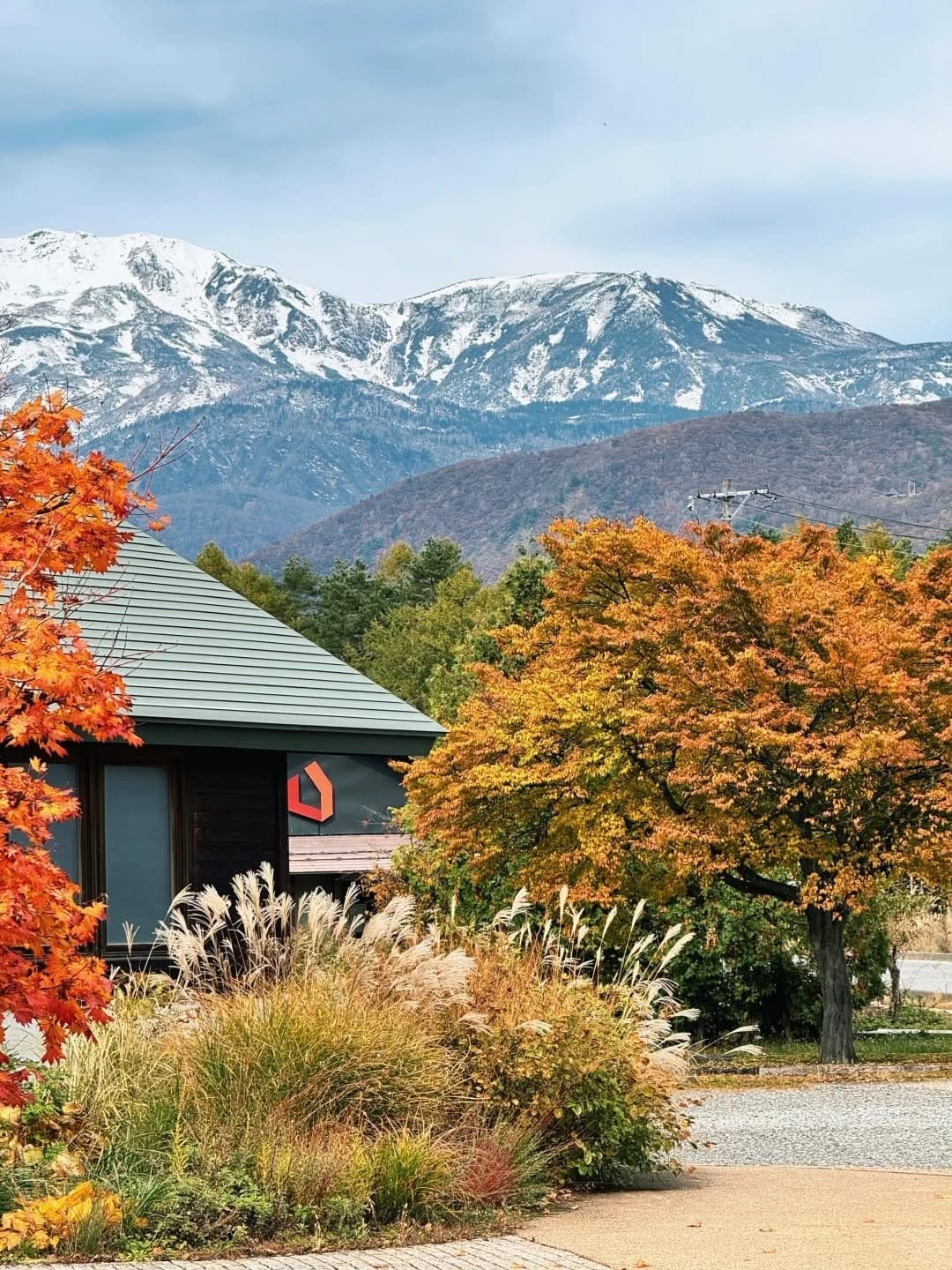
Bluntly: not in one day. They look close on a map but sit at opposite ends of the Northern Alps with no decent direct link — three to four hours apart via Matsumoto, several changes. Add that each is best shortly after dawn and the puzzle has no solution inside twenty-four hours. You need two days: Kamikochi, a night in Matsumoto or Hirayu Onsen, then Hakuba and home from Nagano. If assembling that chain yourself doesn't appeal, a two-day Kamikochi and Hakuba autumn tour runs exactly this route from Tokyo.
FAQ
Does the JR Pass cover all three plans?
Not evenly. The shinkansen to Nagano and Karuizawa and the Azusa to Matsumoto are JR. But the Nagano Dentetsu line to Obuse and Yudanaka is private and not covered, and neither is the Alpico train or the Kamikochi bus. For one day a nationwide pass won't pay for itself.
Do I need to book trains in advance?
Shinkansen seats are usually available same-day, but reserved cars sell out on peak autumn weekends and unreserved means standing. Book the Azusa outright, and note that express buses running direct from Shinjuku into Kamikochi must be reserved.
Is driving worth it?
For A and C, yes — more flexible than the buses, especially around Karuizawa. For B, no: Kamikochi bans private vehicles, so you park at Sawando and ride the shuttle regardless.
It's forecast to rain all day. Should I cancel?
Change plan instead — that's why this article has three. Rain sends you to C or A, both largely indoors or under trees. An empty Zenkoji forecourt in drizzle is one of the better mornings I've had in Japan.
How much better is two days, really?
More than you'd think, and almost all the difference is the early morning — mist on Taisho Pond, Kumoba before the wind picks up, Zenkoji before the tour groups. None of those windows is reachable by anyone leaving Tokyo the same morning. Still weighing routes? The guide to getting from Tokyo to Nagano compares trains, buses and rental cars properly.
More from this region — Chubu (Nagano, Kanazawa)
View all →Two Days and One Night in Nagano in Autumn: The Alps Loop or the Northern Loop
15 min · tips
Nagano in Autumn: Beating the Crowds and Controlling the Cost
11 min · tips
Autumn in Nagano: the foliage here is an altitude ladder, not a date
11 min · tips
Nagano's Onsen in Autumn: Which Cluster to Choose, and How to Use Them
11 min · tips