
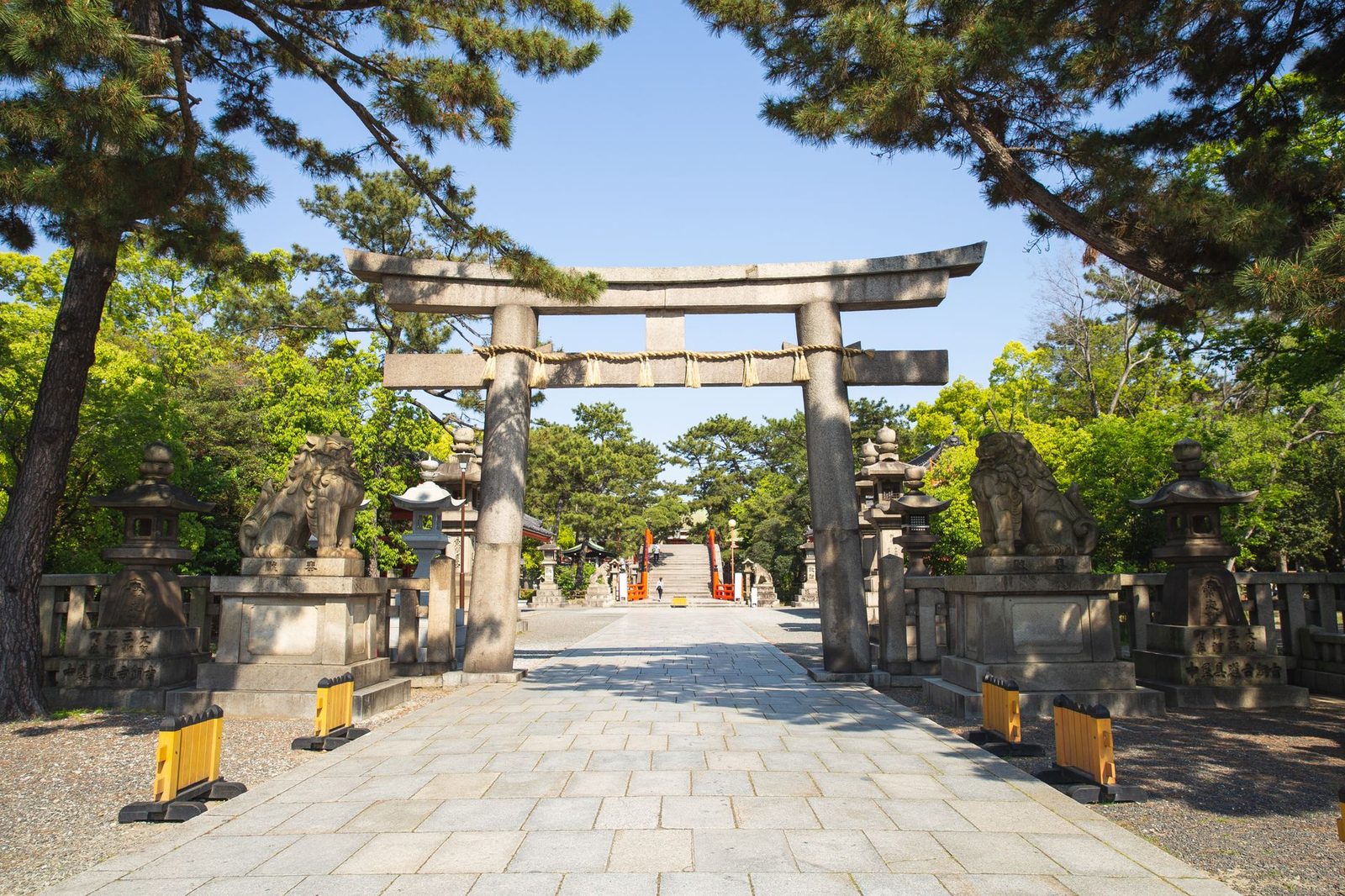
Rest Day at Ise Jingu: A Group Coach Day Trip From Nagoya
Group coach day trip from Nagoya to Ise Jingu during the Asian Games: 2 hours by road, Geku then Naiku, Okage Yokocho lunch, and back for an evening session.
Sep 5, 2026·✍️ olablog·⏱ 7 min read
Group coach day trip from Nagoya to Ise Jingu during the Asian Games: 2 hours by road, Geku then Naiku, Okage Yokocho lunch, and back for an evening session.
Tap a region to browse articles
Ise Jingu in Mie Prefecture is about two hours from Nagoya by road, which makes it the classic rest-day trip for a group following the Asian Games Aichi-Nagoya 2026. Leave after breakfast, walk the two main shrine precincts, eat in the old street outside, and be back in Nagoya before an evening session.
The trip only works well by coach if you respect the clock. Two hours each way plus a shrine visit plus lunch is a full day, and the return leg runs into late-afternoon traffic on the expressway. This itinerary is built around that constraint.
Why Ise suits a Games group
Three reasons this trip keeps coming up for supporter groups, school parties and corporate guests:
- It is a genuine change of pace after stadium days. Gravel paths, forest, quiet.
- It is a single destination with one parking stop and one long walk, so the group is not repeatedly boarding and unboarding.
- The timing fits between Games sessions. A rest day, or a day when your team is not competing, is enough.
What it is not: a quick half-day. If your group holds tickets for a 13:00 session in Nagoya, Ise is not the trip for that day.
The route and what it costs in time
From central Nagoya the coach heads out on the Higashi-Meihan and Isewangan expressway network towards Mie. Allow about two hours each way, traffic-dependent. Tolls are paid roads and are one of the cost lines in your quote, alongside hours, distance, parking and the driver's meals.
The road time is the reason to depart early. A 07:30 departure gets a group to the shrine before the mid-morning crowds; a 10:00 departure means arriving at lunchtime and squeezing everything into the hottest hours.
Suggested timetable
| Time | Stop | Notes |
|---|---|---|
| 07:30 | Depart Nagoya hotel | Headcount before the driver moves |
| 09:30 approx. | Geku (Outer Shrine) | Traditional order is Geku first; 45 to 60 minutes is enough |
| 10:45 | Coach transfer to Naiku (Inner Shrine) | Short drive between the two precincts |
| 11:00 | Naiku | Longer walk through the forest precinct; allow 90 minutes |
| 12:30 | Okage Yokocho | The old-style street outside Naiku; lunch and souvenirs, 90 minutes |
| 14:00 | Depart Ise | Fixed departure time, announced twice |
| 16:00 to 16:30 | Arrive Nagoya | Traffic-dependent; leave a buffer before any evening ticket |
All times are traffic-dependent estimates. If your evening plan is the opening ceremony on 19 September (gates require ID checks for everyone, 18:00 start), do not do Ise that day. Save it for a day with no evening ticket or a session that starts late.
Managing the walk
Both shrine precincts are walked, not driven. Naiku in particular involves a long gravel approach across a bridge and through the forest to the main sanctuary. For a group this means:
- Set a meeting point and time at the entrance before anyone walks in. Mobile signal is fine, but fifty people looking at their phones is slower than one clear instruction.
- Older travellers should be told the distance beforehand. There are benches, but it is a real walk in warm weather.
- Late September in this region is still 20 to 30 degrees and humid. Water on the coach, hats, and a stop in the shade at Okage Yokocho matter more than they would in autumn proper.
- Photography rules apply at the inner sanctuaries. Brief the group to follow the signs.
Lunch in Okage Yokocho
The street outside Naiku is where a group eats. It is busy at midday and stalls and small restaurants fill quickly, so either split into small groups with a fixed return time or ask about a pre-arranged group lunch when you request the coach quote. A group of forty cannot walk into one small restaurant unannounced and expect to be seated together.
Give people cash options as well as cards; not every stall takes contactless.
Optional extension: Toba and Shima
If your group has no evening commitment at all, the coach can continue from Ise towards Toba and the Shima coast. This adds driving time and pushes the Nagoya return into the evening, so treat it as a separate, longer day rather than a bolt-on. Most Games groups choose the plain Ise return because the following morning usually has a session.
Rain and typhoon planning
Late September is inside typhoon season. Ise is largely outdoors, so a heavy-rain day is uncomfortable rather than impossible. Decide the day before whether to go, and have an indoor alternative in Nagoya ready: the Toyota Commemorative Museum of Industry and Technology or the SCMAGLEV and Railway Park at Kinjo-futo both absorb a group for a morning.
Ask in the quote how a weather-related change is handled. The terms differ by how close to the date it happens, so know them before you need them.
Vehicle choice for this trip
- 17 to 22-seat minibus: two or three families travelling together.
- 26 to 29-seat Coaster: mid-size groups, comfortable for two hours on the expressway.
- 44 to 53-seat coach: full supporter groups, with underfloor space for any shopping on the way back.
For couples or small parties, a private car on hourly blocks is often a better fit than a coach for this distance; the hourly tariff is on https://olachill.com/en/japan-chauffeur-hourly.
How to book with OlaChill
Send your preferred date, headcount, hotel and the time you must be back in Nagoya through the form on https://olachill.com/en/japan-charter-bus, and we reply within 24 hours with a quote for the right vehicle class and a realistic timetable for that date. If you would rather have the day arranged as a guided outing, our day tours page at https://olachill.com/en/japan-tours shows what can be organised.
FAQ
Can we do Ise Jingu and still make an evening session in Nagoya?
Yes, if the session starts late enough. A 07:30 departure and a firm 14:00 return from Ise gets a group back around 16:00 to 16:30, traffic-dependent. Build in an hour of buffer before you need to be at the gate, and skip Ise on ceremony days.
Which shrine first, Geku or Naiku?
Traditional order is Geku first, then Naiku. It also works logistically: Geku is a shorter visit, so the group warms up, and Naiku with Okage Yokocho right outside makes the long stop and lunch one seamless block.
Is the walk at Naiku suitable for seniors or small children?
It is a flat but long gravel walk through the forest to the main sanctuary and back. Most people manage it with time and shade. Tell the group the distance in advance so nobody is surprised, and set a generous meeting time.
Where does the coach park at Ise?
Coach parking is arranged by the driver on the day. Expect a short walk from the coach park to each shrine entrance rather than a door-to-gate drop. No specific bay can be promised in advance.
What is the cost for a coach day to Ise?
It depends on vehicle size, hours, tolls and parking. OlaChill's standard price for a 45-seat coach is ¥99,000 for a 10-hour day (29 seats ¥69,000, 60 seats ¥129,000), with extra hours at ¥15,000 each. Request a quote with your route so the tolls and parking can be added.
More from this region — Chubu (Nagano, Kanazawa)
View all →
Takayama and Shirakawa-go by Coach Between Asian Games Sessions
7 min · itineraries
Family of Six at the Asian Games: A Private Minivan Plan for Nagoya
7 min · tips
Travelling as a Fan Club to Aichi-Nagoya 2026: Charter Bus Logistics
7 min · tips
44–53-Seat Coach for Large Supporter Groups at Aichi-Nagoya 2026
7 min · tips