
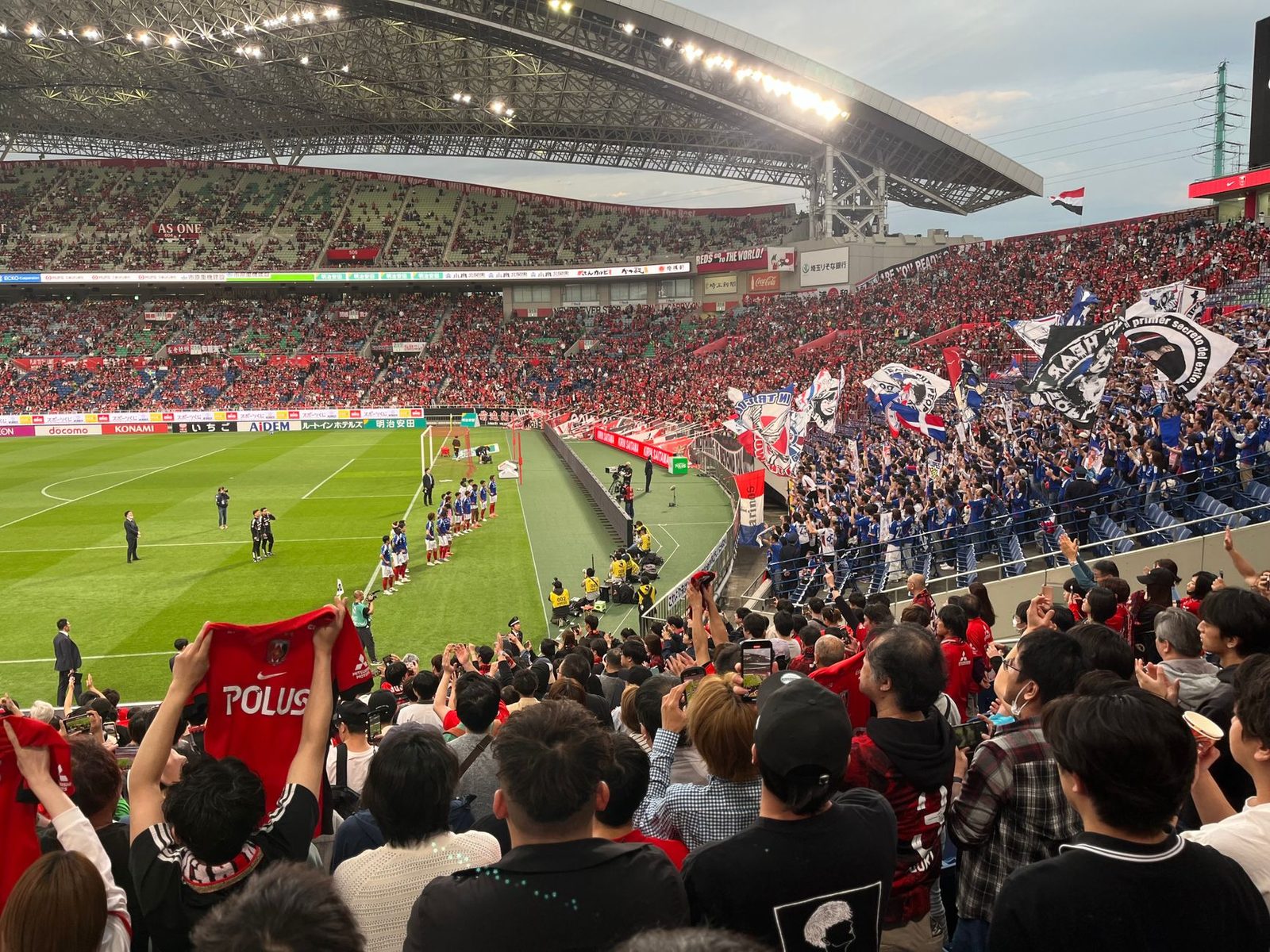
44–53-Seat Coach for Large Supporter Groups at Aichi-Nagoya 2026
How a 44–53-seat charter coach works for big supporter groups at the Asian Games in Nagoya: loading, one coach or two, boarding discipline and venue drop-off.
Sep 5, 2026·✍️ olablog·⏱ 7 min read
How a 44–53-seat charter coach works for big supporter groups at the Asian Games in Nagoya: loading, one coach or two, boarding discipline and venue drop-off.
Tap a region to browse articles
If you are bringing forty or more supporters to the Asian Games Aichi-Nagoya 2026, the full-size coach is the vehicle you will end up comparing everything else against. One driver, 44 to 53 seats, underfloor luggage space, and the whole group moving as a single unit between hotel, venue and dinner.
It is also the vehicle that punishes sloppy planning the hardest. A late passenger holds up fifty people. A drop-off point chosen without checking the venue rules turns into a fifteen-minute walk in humid September heat. This guide covers what a large supporter group needs to get right before the Games start on 19 September.
Do you really need 44 to 53 seats?
Count everyone, not just the fans. Group leaders, a local guide if you have one, a medic for older travellers, and the person carrying the flag pole all take seats. Then add a margin: a few spare seats keep coats, drums and banners off laps and make the ride bearable on a 60-minute run to Toyota Stadium.
A rough rule that works:
- 35 to 44 travellers: a 44-seat coach fits, with little room for kit.
- 45 to 50 travellers: a 49 to 53-seat coach, or you are turning people away at the door.
- Over 53: two vehicles, no exceptions. There is no legal or comfortable way to squeeze extra bodies onto a coach in Japan.
If your group hovers around 28 to 30 people, the full-size coach is probably too much. The 26 to 29-seat Coaster costs less to run and fits into tighter hotel forecourts.
Loading fifty people without losing twenty minutes
Most delays on a big coach happen at the kerb, not on the road. Three habits fix most of them:
- Luggage goes under first, then people board. Have two helpers at the underfloor bays taking suitcases while the leader checks names. Boarding and loading at the same time blocks the door.
- Assign seats once and keep them. Fixed seats mean a two-minute headcount instead of a ten-minute one. Empty seat, missing person, obvious at a glance.
- Flags, drums and poles live in one place. Agree with the driver where they go, usually the rear luggage bay or the last row. Anything in the aisle is a hazard and the driver is entitled to refuse to move until it is cleared.
One big coach or two smaller vehicles?
Large groups often ask whether splitting into two Coasters is smarter than one full-size coach. Both work; they fail in different ways.
| Factor | One 44–53-seat coach | Two 26–29-seat Coasters |
|---|---|---|
| Drivers and vehicles to coordinate | 1 | 2 |
| Keeping the group together | Automatic | Requires radios or a chat group |
| Narrow hotel driveways, old-town streets | Harder, some are impossible | Easier |
| Venue drop-off | One slot needed | Two slots, or staggered |
| Half the group wants an early night | Everyone waits or nobody goes | One vehicle returns, one stays |
| Cost | Usually lower per head | Usually higher per head |
The second-vehicle option earns its keep on days with split plans: half the group at a morning session at Nippon Gaishi Hall, half sightseeing, everyone together for the evening. For straightforward hotel-venue-hotel days, one coach is simpler and cheaper.
For a small VIP splinter group that needs its own schedule, a private car with driver on hourly blocks is often more practical than a second coach; the hourly tariff is on our chauffeur page at https://olachill.com/en/japan-chauffeur-hourly.
Boarding discipline for supporter groups
Fans are loud, excited and easily distracted after a win. Set the rules before the first ride.
- Coach identification. Coaches at busy venues look alike at night. Put a sign with your group name in the front window and tell everyone the registration or a nickname.
- Boarding time, then a hard time. Give a boarding time and a departure time five to ten minutes later. The driver leaves at the second one.
- Buddy pairs. Each person knows where one other person is. A missing traveller is spotted within a minute rather than at the final count.
- One voice to the driver. One leader talks to the driver; everyone else talks to the leader.
- Chants seated, nobody standing. Drivers will slow or stop if passengers stand in the aisle while moving.
What venue drop-off actually looks like
The organisers ask spectators to use public transport, and shuttle buses, park-and-ride and limited parking exist only at certain venues. A charter coach needs a pre-arranged drop-off and, if it waits, a pre-arranged parking spot. No operator can promise a particular bay, so plan for the coach dropping you at a point agreed with the driver and then leaving to park elsewhere.
Consequences to prepare your group for:
- A walk of several minutes from the drop-off to the gate is normal. Tell people before they put on the wrong shoes.
- For the opening ceremony on 19 September at Paloma Mizuho Stadium (18:00 to 20:00), every person in the party is registered in advance and ID-checked at the gate. A fifty-person group takes longer to process than a family of four, so arrive early.
- After a final, thousands of people leave at once. A coach cannot pull up to the exit in that crush. Agree a meeting point a few streets away that the coach can actually reach.
Peak dates for large groups
Demand for full-size coaches concentrates on a handful of days. If your group's key sessions fall on any of these, book early:
- 19 September, opening ceremony, Paloma Mizuho Stadium
- 23 to 29 September, athletics at Paloma Mizuho Stadium
- Men's football final at Toyota Stadium (tournament runs 15 September to 3 October; check the official schedule for the final date)
- 4 October, closing ceremony at the main stadium
- 18 to 24 October, Asian Para Games across Nagoya, Toyota, Okazaki, Ichinomiya, Kariya and Toyohashi
What drives the price of a 50-seat coach
OlaChill's standard price for a 45-seat coach is ¥99,000 for a 10-hour day (29 seats ¥69,000, 60 seats ¥129,000), with extra hours at ¥15,000 each. The final quote adds expressway tolls (Tomei, Shin-Tomei, Meishin, Isewangan and Higashi-Meihan are all paid roads), parking fees, and the driver's meals and accommodation on long or overnight days.
Per head, a full coach is usually the cheapest way to move fifty people in a controlled way. Split across fifty supporters, even the upper end of that range is a modest daily cost.
How to book with OlaChill
Send your dates, headcount, pickup hotel, the sessions and venues you hold tickets for, and any sightseeing stops through the form on our charter bus page at https://olachill.com/en/japan-charter-bus, and we reply within 24 hours with a quote for the right vehicle class. Include luggage and flag details so the vehicle is sized properly.
FAQ
Can we fit 55 people on a 53-seat coach if some are children?
No. Every passenger needs a seat with a belt, children included. At 54 or more you need a second vehicle, and it is worth deciding early whether that is a minibus for the overflow or two mid-size Coasters.
Will the coach wait at the venue during a three-hour session?
Only if there is somewhere legal for it to wait. Parking for coaches exists at certain venues but is limited and not guaranteed. Expect the driver to drop you, leave, and return to an agreed pickup point at an agreed time.
Can supporters bring drums and large flags on board?
Generally yes, stowed in the luggage bay or the rear seats. Check the venue's own rules on what can be brought inside; the coach can carry items that the stadium may not admit.
What if a fan misses the coach after the match?
Have the nearest station name ready. From Paloma Mizuho Stadium it is Kanayama; from Vantelin Dome, Nagoya Dome-mae Yada. Trains run late but crowds are heavy after finals, so the stray fan should expect a slow trip.
More from this region — Chubu (Nagano, Kanazawa)
View all →
Gujo Hachiman and Seki Knives: A Quiet Private Car Day From Nagoya
6 min · itineraries
Daily Private Car Commute From Gifu or Hamamatsu Hotels to the Games
7 min · tips
Staying in Gifu, Yokkaichi or Toyohashi for the Asian Games: Daily Shuttle Coaches
7 min · tips
Badminton in Ichinomiya: Group Trip Logistics From Nagoya
6 min · events