Nagano's Onsen in Autumn: Which Cluster to Choose, and How to Use Them
An honest comparison of Shibu, Nozawa, Bessho, Hirayu, the Kaida and Norikura highlands, Asama, Tobira and Hakuba's day-use baths — grouped by the trip they suit, plus rotenburo etiquette, the tattoo question, and how to fit a soak into a foliage day.
Aug 14, 2026·✍️ olablog·⏱ 11 min read
An honest comparison of Shibu, Nozawa, Bessho, Hirayu, the Kaida and Norikura highlands, Asama, Tobira and Hakuba's day-use baths — grouped by the trip they suit, plus rotenburo etiquette, the tattoo question, and how to fit a soak into a foliage day.
Tap a region to browse articles
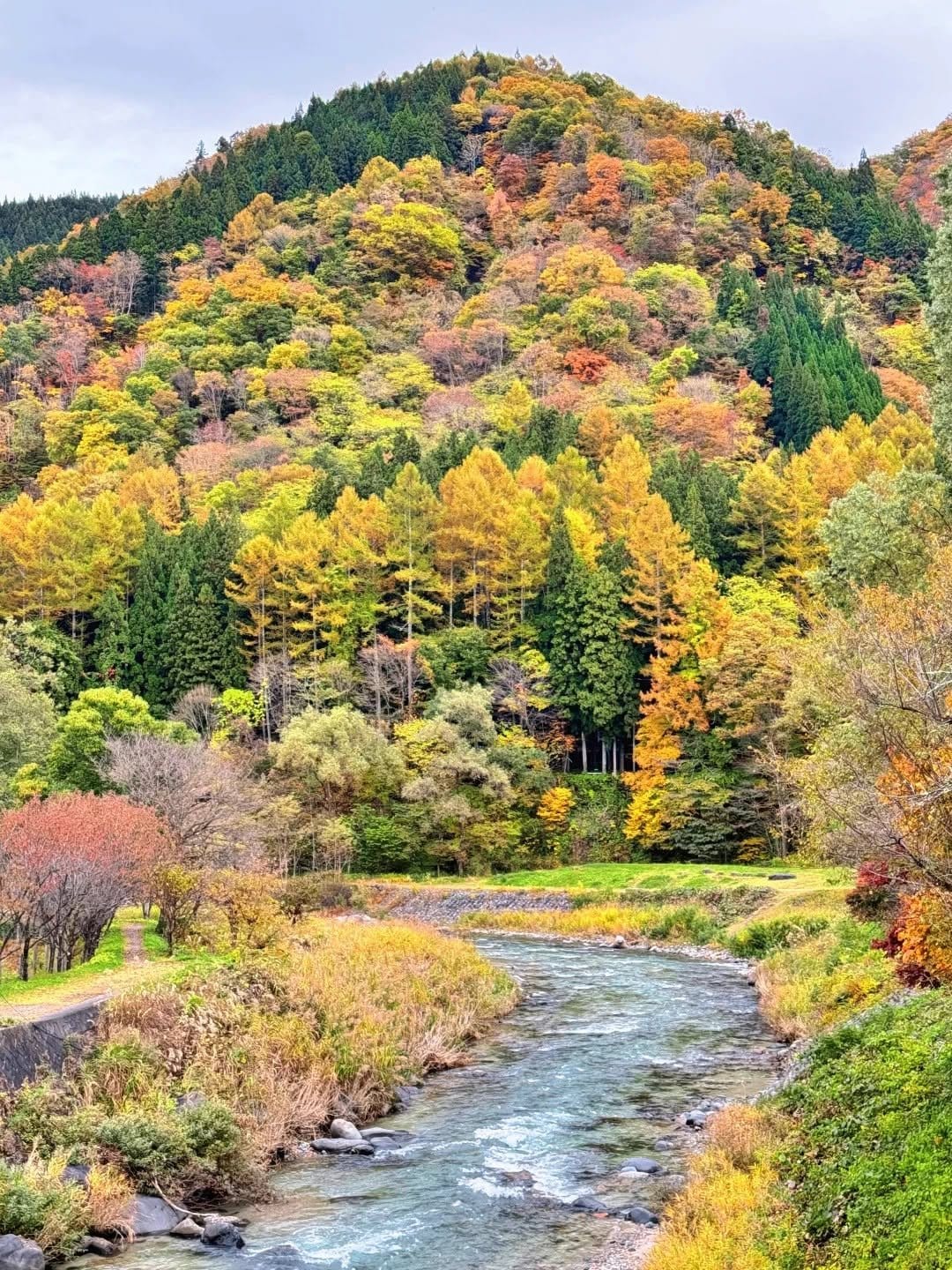
Anyone who has used an open-air bath in Nagano in late October remembers the same moment. You step out into air hovering around 5°C, your skin protests for three seconds, then you lower yourself into 42°C water and your body lets out a sigh you did not authorise. Summer cannot give you that; winter can, but the forest above the bath is bare. Autumn is the only overlap — cold enough that the heat is a reward, mild enough that the trees still have their colour.
Nagano has more hot-spring resorts than almost any prefecture in Japan. The question is never which is prettiest — they all are — but which matches the trip you are taking. This guide sorts the clusters that way, then covers the practical half: etiquette, tattoos, day-use versus staying over, the first snow, and how to fit a soak into a walking day.
Why autumn is the right season
Nagano's foliage does not arrive everywhere at once. Ground above 1,500 m — Kamikochi, Norikura, upper Hakuba — usually peaks in the second half of October; the lower valleys, where most onsen towns sit, run one to three weeks behind. That is an advantage: for about a month some elevation band is always at its best, and the bathing towns ripen after the ground you hiked that morning. Temperature does the rest — once valley mornings drop below 10°C, a rotenburo works as designed. For the prefecture-wide picture, start with the Nagano autumn overview.
Choosing a cluster
Shibu and Yudanaka — old wooden streets, nine baths, the monkeys
The best-known cluster among foreign visitors, mostly because Jigokudani Monkey Park sits above it. From Nagano Station the Nagaden line runs about 45 minutes to Yudanaka, with Shibu a few minutes further by taxi.
What makes Shibu worth it is the street: narrow stone paving, three-storey wooden inns leaning over it, lanterns, the clack of geta all evening. Guests move between nine small public bathhouses in yukata, collecting stamps and finishing at the shrine above the village.
Two caveats. Those nine baths are for guests staying in Shibu — your inn hands you the key, and day visitors can usually enter only one. And it gets busy: on autumn weekends the Jigokudani shuttle is packed and the trail into the park runs roughly 1.6 km each way, so go midweek and arrive at opening.
Nozawa Onsen — a village of free public baths
My favourite in the prefecture. A steep village in northern Nagano, known abroad for skiing, but its year-round distinction is the soto-yu: thirteen small public bathhouses maintained by residents themselves, with no admission — just a wooden donation box at the door. These are the villagers' actual baths, not attractions.
The water is genuinely hot; several tubs sit where a newcomer lasts a few minutes, so get in slowly. And because this is communal space, the rules are held more strictly than at commercial facilities: wash thoroughly, keep quiet, no photos. In the centre stand Ōyu, with its temple-style roof, and Ogama, where boiling spring water surges up in the open street.
The drawback is access: about 25 minutes by bus from Iiyama Station, then a village steep enough that dragging a suitcase up it counts as exercise. In exchange, rates outside ski season beat Hakuba or Shibu comfortably.
Bessho Onsen — quiet, temples, easy from Ueda
If you want hot water without mountains, crowds or logistics, Bessho is the tidiest answer in the prefecture. From Ueda — a shinkansen stop about 90 minutes from Tokyo — a local line runs half an hour through rice fields into the village. No transfer, no mountain pass, no anxious arithmetic about the last bus.
Bessho is called "the Kamakura of Shinshu" for its old temples: a three-storey wooden pagoda, halls above the valley, walkable in an afternoon and quiet enough in autumn that you hear leaves land. There are small public baths at a few hundred yen and a free foot bath on the street. Bessho is not dramatic — no rotenburo facing the Alps — but it offers calm and ease, which with older parents is the point.
Hirayu and the Okuhida side — mountain-view rotenburo
Administratively Hirayu belongs to Gifu, but in travel terms it belongs to Matsumoto's world: buses run up from Matsumoto Station, and this is Kamikochi's western gateway.
This is the cluster for people whose main goal is walking and whose onsen is the reward. Private cars are banned in Kamikochi, so everyone passes through here anyway and the bus deposits you at the bathhouse door. The large public complex beside Hirayu's terminal has outdoor tubs spread through forest at reasonable day-use pricing, and you can leave luggage at the terminal, soak, eat hot soba and continue to Takayama without booking a room. Further in, Shinhotaka's ropeway climbs past 2,100 m for foliage from above. Bus timing and the other gateways are in bathing around Kamikochi; the Kamikochi–Hakuba two-day tour bundles the walking and the overnight together.
Kaida, Norikura, Asama and Tobira — the car-shaped options
Kaida sits below Mt Ontake in the southwest, Norikura above Matsumoto — broad highland country where autumn looks nothing like an onsen town: empty road and mountain, baths attached to individual inns. Both effectively require a car; buses are sparse and seasonal, and several Norikura routes stop entirely once winter arrives.
Closer in, Asama Onsen is fifteen minutes by bus from central Matsumoto, an old bathing quarter that once served the domain's samurai — not postcard-pretty, but unbeatable on convenience if you are seeing the castle anyway. Tobira Onsen, further into the mountains east of the city, is the quiet forest option, and there too a car beats waiting for a bus.
Hakuba — day-use baths for people not staying over
A common situation: you came for the gondolas and a walk around the lakes, you must be back in Nagano or Tokyo tonight, and your legs are finished. Hakuba handles this. Day-use bathhouses are spread through the valley, concentrated around Happo, some a few minutes from the bus terminal, generally a few hundred to around a thousand yen and most selling or renting towels.
One warning, expanded in the Hakuba onsen guide: closing times and last bus times do not always line up. Subtract at least ninety minutes from your last departure before deciding how far to walk.
How to bathe properly
The sequence, which never varies
Undress completely in the changing room — no swimsuit, no underwear; baths are gender-separated and everyone is naked. Wash thoroughly at the seated showers, rinsing off every trace of soap: the rule that matters most. Enter slowly, splashing your limbs first, hair tied up. Towel off before returning to the changing room.
What not to do: swim, wash clothing in the tub, use a phone or camera, talk loudly, or drink alcohol before soaking. The last sounds obvious, yet every season someone faints because of it.
The towel question
You need two: a small towel for the bathing area, a large one left in the changing room. The small one is for modesty while walking, for scrubbing, and for folding on your head while you sit — that classic image keeps your head cool while your body heats. Never dip it in the bath. Day-use facilities in the larger towns sell small towels for a couple of hundred yen; Nozawa's free soto-yu provide nothing, often not even soap.
Tattoos: the honest answer
There is no prefecture-wide answer, and anyone telling you "mountain Nagano is relaxed about tattoos" is overstating it. Policy varies facility by facility, sometimes between two bathhouses on the same street. Small locally run baths tend to scrutinise less than large modern complexes — but a tendency is not a guarantee, and community soto-yu are places to be respectful in, not places to test your luck.
Three options, in order of certainty: a room with its own private bath, the only stress-free route for large work; an hourly kashikiri bath, widely offered at inns in Hirayu, Shibu and Norikura; cover-up patches from a drugstore, only for small pieces. And the step most people skip — ask by email when you book.
Day-use or staying the night
Day-use bathing (higaeri onyoku) suits you when the onsen is a supporting act: a walking plan, a hotel elsewhere, an hour of hot water before the train. The catch is that inns open to outside bathers in a narrow window, often midday until their own guests start bathing, and may suspend it when full — so never build a rigid plan around one day-use bath.
Staying over differs in kind, because it gives you two soaks day visitors never get: at dusk and early the next morning. In the evening the forest loses its light, the steam thickens, and the only sound left is running water. After a cold night, the surface smokes and the maples are furred with frost.
Budgeting: day-use is usually a few hundred to 1,000–1,500 yen; inns with two meals run from about 10,000 yen per person at a simple minshuku to 20,000 and up for a full kaiseki dinner. Peak-foliage weekends cost more and sell out early.
What the first snow changes
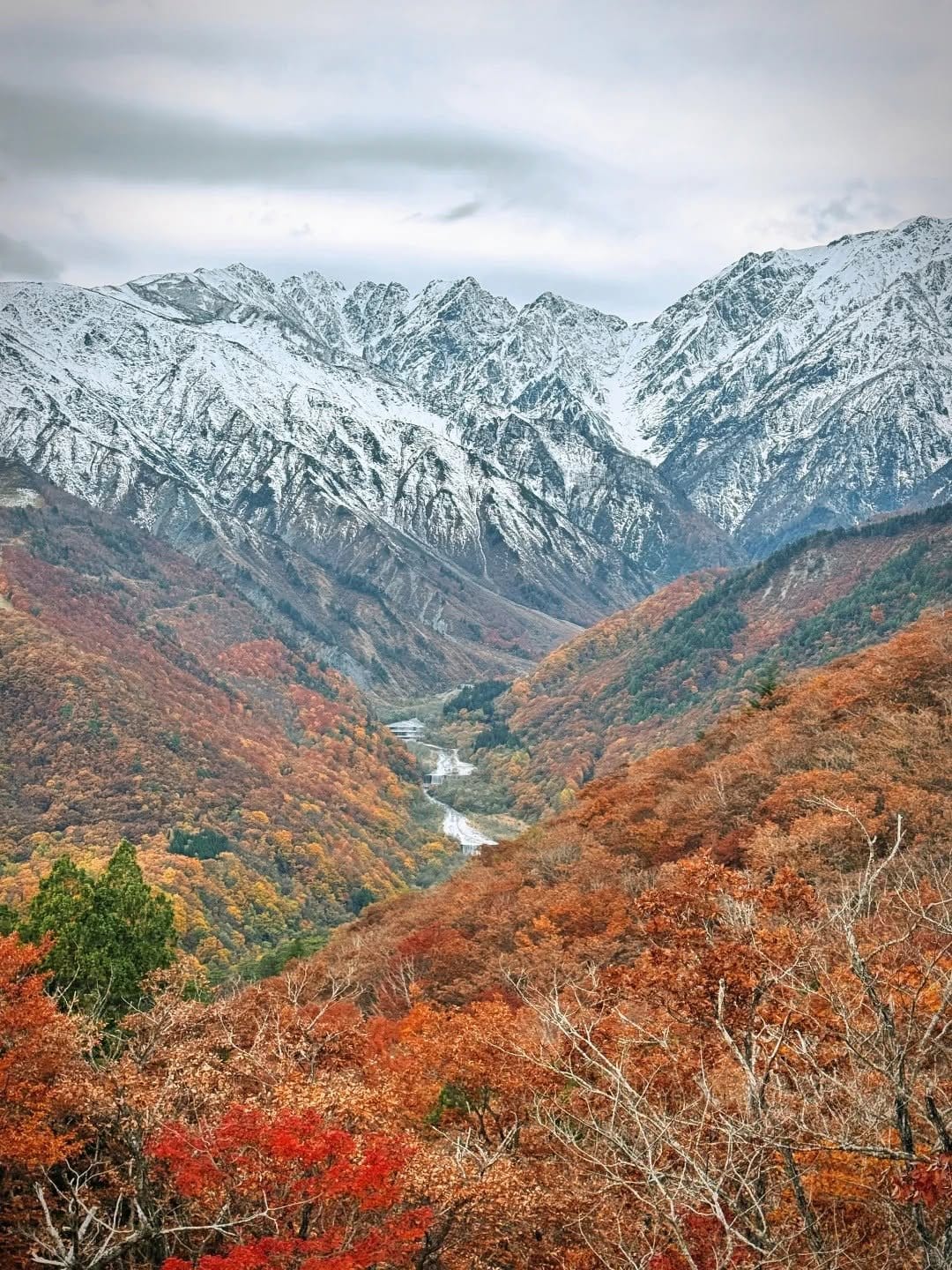
Snow reaches the peaks first and works downward. During those overlap weeks Nagano produces its signature view: three bands of colour in one frame — white summit, orange-red mid-slope, still-green valley floor. Sitting in a rotenburo looking at exactly that is why many regulars prefer late autumn.
It also changes the rules. Mountain bus routes, Norikura most obviously, reduce or stop as winter sets in, and passes may require winter tyres. Outdoor decking under a film of ice is treacherous and you are barefoot: walk slowly, use the handrails. The gap between near-freezing air and 42°C water can cause dizziness, especially for older travellers, so warm up indoors first and pick a place with an indoor tub adjoining the outdoor one. And this is not a joke: dry your hair before stepping outside.
Fitting a soak into a foliage day
The usual mistake is bolting the onsen onto the end of a full day, then spending your thirty remaining minutes watching the clock. Three rules fix it.
Count backwards from the last departure. Screenshot it before you set out, then subtract ninety minutes for the whole bathing block — washing, soaking, dressing, drying hair, walking to the stop. Time in the water is only thirty to forty minutes of that; the rest is what people forget to count.
Do not walk to your limit. Twelve kilometres and an unhurried bath beats eighteen and a hurried one.
Bathe before dinner, not after. Soaking on a full stomach leaves you heavy and light-headed. Walk until early afternoon, rest fifteen minutes, bathe, then eat. And carry a plastic bag for wet items, plus light flip-flops for the bathhouse.
Building a two-day trip around walking and bathing? The two-day Nagano autumn itinerary works as a skeleton — swap in whichever cluster you chose.
FAQ
Can I bathe if I have tattoos? It depends on the facility; there is no prefecture-wide rule. Small mountain bathhouses tend to scrutinise less than large modern complexes, but that is a tendency, not a guarantee. The reliable routes are a private bath in your room or an hourly kashikiri bath — and asking by email when you book.
Can I go if I'm not staying the night? Yes, easily. Hakuba, Hirayu and the larger onsen towns have baths open to outside visitors, generally a few hundred to just over a thousand yen. Shibu is the exception: its nine baths are for staying guests, and day visitors can usually enter only one. Inn day-use windows are narrow and can be suspended when busy, so keep a second option.
When in autumn should I go? Ground above 1,500 m usually peaks in the second half of October; the lower onsen valleys follow one to three weeks later. Follow local foliage reports about two weeks ahead.
Which cluster works with elderly parents, and do I need a car? Bessho — direct train from Ueda, no transfer, flat village, walkable temples; Asama near Matsumoto is also good for convenience. Avoid Nozawa, steep with very hot water. Shibu, Nozawa, Bessho, Asama, Hakuba and Hirayu are all reachable by train plus bus, but Kaida, Norikura and Tobira realistically need a car.
Is there still foliage in November, or only snow? There is, and at valley level it is often the best window of all: the peaks have gone white while the forest around the onsen towns is only just ripening. The trade-off is deeper cold, shorter days, and some high-country buses already shut.