
Alkaline Onsen in Hakuba: Four Baths for an Autumn Afternoon After Hiking
Happo-no-yu, Mimizuku-no-yu, Obinata-no-yu, or Juro-no-yu? Compare admission fees, opening hours, mountain-view outdoor baths, and how to plan a soak for first-timers.
Aug 12, 2026·✍️ olablog·⏱ 17 min read
Happo-no-yu, Mimizuku-no-yu, Obinata-no-yu, or Juro-no-yu? Compare admission fees, opening hours, mountain-view outdoor baths, and how to plan a soak for first-timers.
Tap a region to browse articles
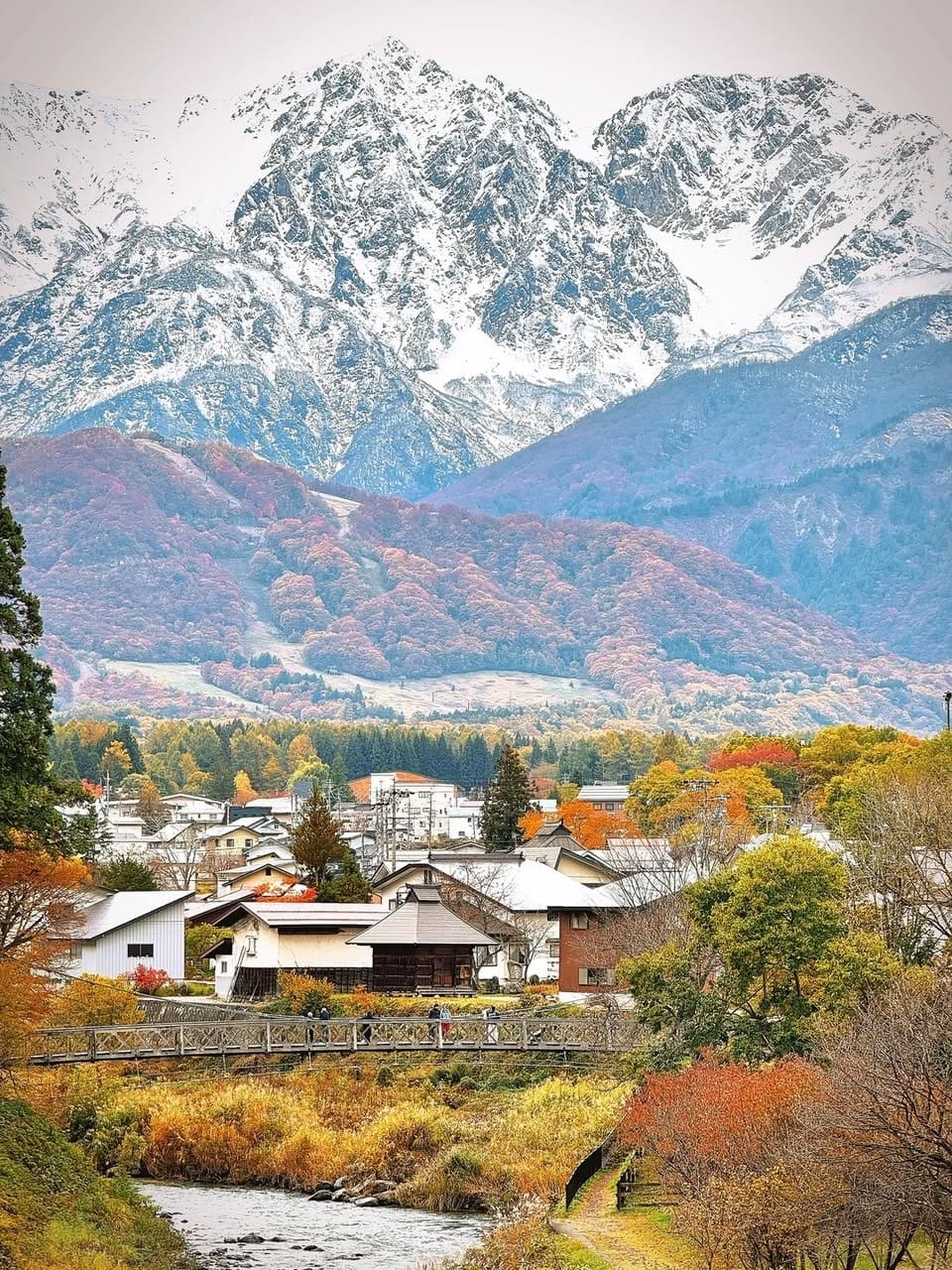
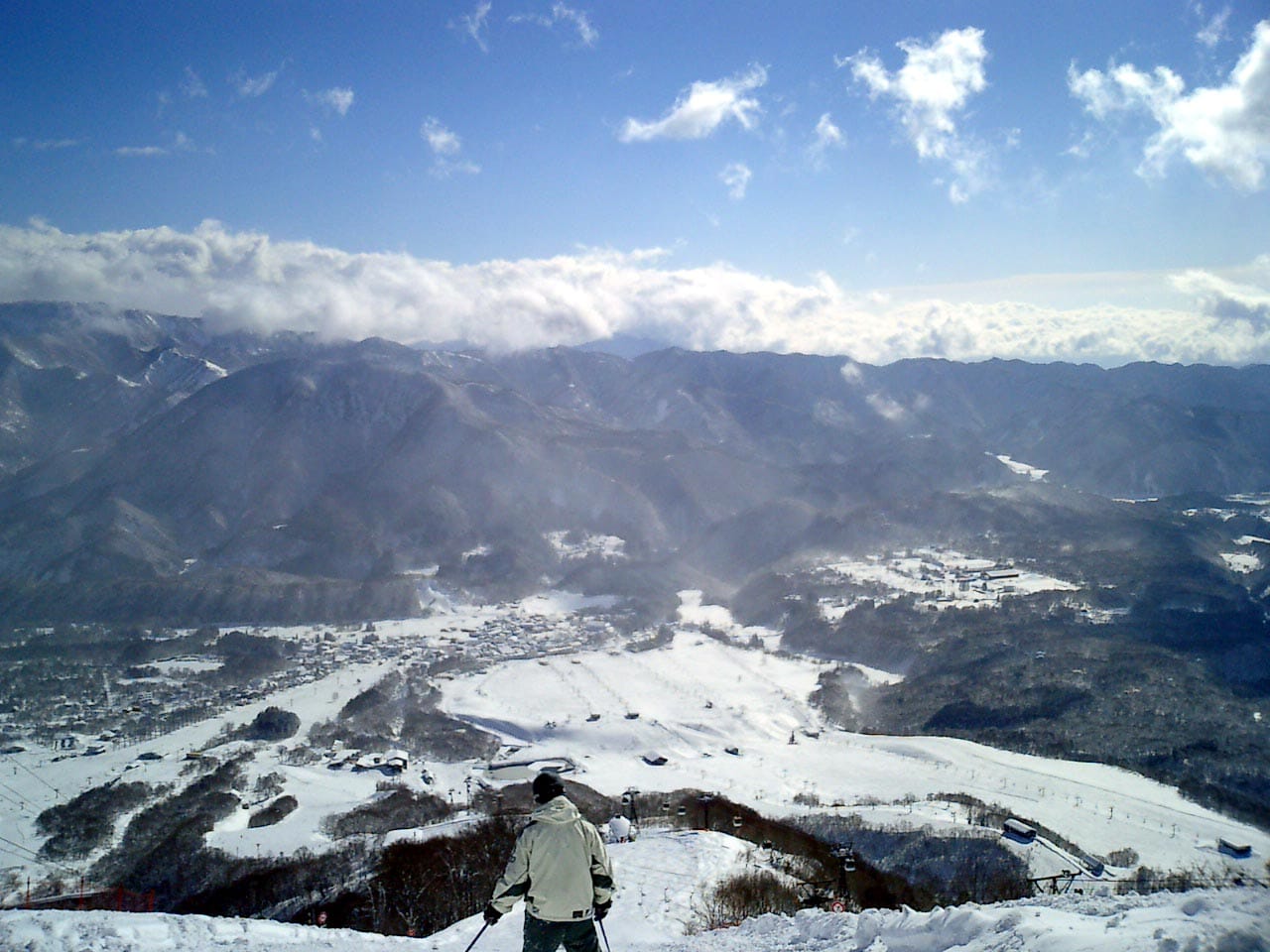
There is a feeling I can only describe as uniquely Hakuba in October: you have just stepped off the chairlift after four hours of hiking, both calves are tight, mountain wind is blowing through your still sweat-damp clothes, and you know that in just ten minutes you will be sitting in an outdoor hot spring, tilting your head back to look straight up at the mountain range you just climbed. The slope that was beneath your feet a moment ago now towers in front of you, its lower half glowing red with momiji while the upper half is already dusted with the first snow of the season.
Many Vietnamese travelers know Hakuba as Nagano’s ski capital, and it is certainly packed in winter. But what keeps bringing me back in autumn is not just the foliage—it is the water. The hot springs in this valley belong to a rare group of strongly alkaline waters, with a pH commonly advertised as around 11, among the highest of any currently operating hot springs in Japan. Once you get in, your skin feels slippery as if you have rubbed it with soap—a distinctive sensation that is hard to find in Hakone or Kusatsu.
This article focuses on the practical details: how Hakuba’s four most worthwhile day-use baths—Happo-no-yu, Mimizuku-no-yu, Obinata-no-yu, and Juro-no-yu—differ, which has the best mountain-view outdoor bath, what to expect in terms of prices and hours, and how to fit an onsen visit neatly into an afternoon hiking schedule. At the end, you will find basic onsen etiquette for first-timers, along with a few tips specific to this kind of strongly alkaline water.
pH ~11 alkaline water—the feature that sets Hakuba’s onsen apart
The hot springs around Happo are classified as strongly alkaline water, with a faint sulfur base, clear and almost colorless. The pH figure often mentioned by local facilities is around 11. That may sound abstract, but the sensation is unmistakable: as soon as you step into the bath, your skin feels slick, as though you have just applied bath oil. This happens because the alkaline environment softens the keratin and oils on the surface of your skin. The Japanese call this kind of water bijin-no-yu, or “beauty water,” and with strongly alkaline water, the name is not merely a marketing gimmick.
A few things to know before you soak:
- The water generally does not have the strong rotten-egg smell found in more intensely volcanic areas, so it is comfortable even for people who are sensitive to smells. Depending on the bath, you may notice a very faint hint of sulfur.
- Because the water is strongly alkaline, soaking for too long can leave your skin dry afterward, especially during crisp autumn weather. I usually rinse lightly with warm water and apply moisturizer as soon as I dry off.
- Silver jewelry can tarnish very easily because of the sulfur compounds. Take it off and put it in a locker—do not wear it into the bath.
The biggest advantage for hikers is that alkaline water leaves you feeling refreshed, and all of these baths are just a few minutes by car from the starting points of the main hiking routes. You do not have to drive another half hour back to your hotel before you can bathe.
Hakuba’s autumn colors descend from the heights—how to time your visit
Hakuba Valley sits at an elevation of around 700 meters, while the peaks behind it rise to nearly 3,000 meters. As a result, the foliage does not change all at once but gradually “flows” downhill over the weeks:
- Late September to mid-October: the high elevations around 1,800–2,000 meters are at their best, including the areas reached by gondola and chairlift. This is also when you are most likely to catch the classic three-layer view: snow on the summits, red foliage halfway down, and green forest below.
- Mid-October to early November: the colors spread down the middle slopes and into the forests around the valley, Lake Aoki, and the road toward Sarukura.
- Early to mid-November: the valley turns golden and gradually loses its leaves, the cold becomes noticeable, and some high-elevation facilities and roads begin their seasonal closures.
For an onsen trip specifically, I think the ideal window is the second half of October: the trees around the lower-elevation baths have changed color, afternoon temperatures drop to around single digits, and the roads have not yet iced over. Soaking in a rotenburo in weather like that feels perfectly balanced—your face and shoulders are cool while the rest of you stays warm.
Quick comparison of the four baths
One general note before you read the table: admission fees and opening hours in Hakuba change by season and by year, especially between summer, the foliage season, and winter. The figures below are only estimates to help you plan your budget. Before going, check the official website of each facility or Hakuba Village’s tourism website for the latest information.
| Bath | Main strength | Outdoor bath | Typical price | Best for |
|---|---|---|---|---|
| Happo-no-yu | Central location, right in the Happo area; modern and clean | Yes, with views toward the mountain slopes | around 800–900 yen | Happo hikers and travelers without a car |
| Mimizuku-no-yu | The most open mountain views | Yes, the best mountain view of the group | around 600–800 yen | Scenery lovers and sunset photographers |
| Obinata-no-yu | A rustic forest rotenburo, open seasonally | Mainly an outdoor bath | around 600–800 yen | Hikers returning from the Sarukura route |
| Juro-no-yu | Spacious, with a sauna and a comfortable relaxation area | Yes | around 600–800 yen | Families and people who want to relax for a while |
Happo-no-yu—the most convenient if you do not have a car
Happo-no-yu is right in the Happo area, close to the central bus terminal and a short walk from the base of the Happo-one lifts. It is the newest and most polished of the group: multiple floors, a tidy reception desk, a relaxation area, spacious changing rooms, and an elevator. If you arrive at Hakuba Station by train and take a bus up to Happo, this is almost the default choice because you do not need to go any farther.
The indoor bath is fairly large, while the outdoor bath is smaller and faces the mountain slopes. The view is not as dramatic as the one from Mimizuku-no-yu because there are buildings nearby, but in late October, the trees behind the bath are colorful enough to make the soak worthwhile.
Opening hours usually extend into the evening, which works well for a “hike all day, bathe after an early dinner” schedule. During the off-season, however, the facility may shorten its hours or close for regular maintenance, so remember to check the official website.
One small tip: several Happo hot spring facilities draw from the same water source, and depending on the season there may be multi-entry tickets or combination tickets covering several baths. If you are staying in Hakuba for two or three nights and plan to bathe every day, ask at the reception desk whether one is available—it is usually cheaper than paying separately each time.
Mimizuku-no-yu—the best outdoor-bath views
If you can choose only one place for the scenery, I would pick Mimizuku-no-yu. This bath is in an open location near the Wadano area, and its outdoor bath faces the Hakuba Sanzan—the three iconic peaks of the region. There are no tall buildings blocking the view and no fully enclosed wall, so from the bath you can see the entire mountainside.
In autumn, the view from the outdoor bath looks almost like a postcard: a foreground of vivid red and golden foliage, with freshly snow-covered peaks behind it. The best time is late afternoon, when the sun is low and its golden light washes across the mountain walls. The Japanese call the phenomenon of mountains turning pink at dusk akayake. If the sky is clear, getting into the bath about one hour before sunset is ideal.
The trade-off is that the facilities are simpler than those at Happo-no-yu: the complex is smaller, the relaxation area is modest, and on autumn-season weekends it can get fairly crowded, with cramped changing rooms. There is a parking lot, but it is not large. If possible, I recommend visiting on a weekday.
Also keep in mind that this place relies heavily on its view. On foggy or rainy days, Mimizuku-no-yu loses almost its biggest advantage. If the forecast calls for a lot of low cloud, switching to another option will not feel like a loss.
Obinata-no-yu—a forest rotenburo for hikers
Obinata-no-yu is the most rugged option in the group—and also the most demanding. The bath sits along the road toward Sarukura, the gateway to the famous Daisekkei route on Mount Shirouma, surrounded by forest and beside a mountain stream. The focus here is the outdoor bath; the indoor area is extremely basic, with little more than washing facilities and changing space.
The appeal is soaking to the sound of running water, surrounded by trees, with almost no other structures in sight. In late October, the canopy above the bath turns red and gold, and leaves occasionally drift onto the surface. For someone coming down from a long day in the mountains, this is the place that feels most like a true reward.
But there are three things you need to know:
- It is a seasonal facility. Because it is deep along a mountain road, Obinata-no-yu usually opens only from late spring until around early November, then closes for the snowy season. The final closing date varies each year, so you must check in advance.
- Its opening hours are much shorter. It usually closes in the late afternoon rather than staying open into the evening like the baths in the valley. Do not plan to bathe here after 6 p.m.
- You will almost certainly need a car. It is not conveniently served by buses like the Happo area. Without your own vehicle, you will need a taxi or one of the seasonal buses running toward Sarukura.
Juro-no-yu—a place to stretch out after your soak
Juro-no-yu is in the lower part of the valley, farther from the central ski area, so it sees considerably fewer foreign visitors. Its strength is not the mountain scenery but comfort: the space is large, there is a sauna, and the relaxation area is a good place to lie down after your bath. The atmosphere is distinctly local, with village residents coming in for their daily soak.
If you are traveling with family, with older adults, or simply want to lie down for half an hour after bathing before driving back, this is the most comfortable choice. Sauna enthusiasts should also put Juro-no-yu high on their list.
The downsides are that the view from the outdoor bath cannot compete with Mimizuku-no-yu, and the location is inconvenient without a car. Check the closing time and weekly holidays before you go as well, since village-scale facilities often have fixed days off.
Besides these four, Hakuba has several other baths that accept day visitors, and some hotels open their large communal baths to outside guests during certain hours. To find more options, search for "白馬 日帰り温泉" on your map app.
How to fit an afternoon soak into your hiking schedule
My rule is simple: hike first, soak afterward, and do not bathe too close to dinner. If you still have to climb uphill after your soak, it is both a waste and an easy way to exhaust yourself. Bathing immediately before eating can also leave your stomach uncomfortable.
Scenario 1—hiking to Happo-ike without a car
Take the gondola and chairlift in the Happo-one area in the morning, walk for about 90 minutes up to Happo Pond, take photos, have a light snack, and head back down. Arriving at the mountain base around 3–4 p.m. is perfect. Walk straight to Happo-no-yu, soak for around 45–60 minutes, then have dinner at one of the restaurants around Happo. You will not need a car all day.
Scenario 2—with a car and mountain views as the priority
Spend the morning at Tsugaike or on one of the high-elevation boardwalk routes, then come down into the valley for a late lunch in the early afternoon. Around 3 p.m., drive to Mimizuku-no-yu in time for the afternoon light on the mountains. Soak for about an hour and come out as dusk begins. If you still have energy, take a loop past Lake Aoki or return to the Happo area for dinner.
Scenario 3—coming down from the Sarukura route
This is where Obinata-no-yu fulfills its purpose perfectly: after coming down exhausted, stop there on the way back, soak in the forest, and then take your time returning to your accommodation. Just watch the closing time—a late descent can mean missing it.
Scenario 4—a rainy day or a trip with children
Forget the idea of chasing scenic views and choose Juro-no-yu. Bathe, use the sauna, lie down and rest, and have a light meal. Hakuba has more cloudy days than you might expect, and having a backup plan like this can save the entire afternoon.
One note about stamina: after a long hike, your body has usually lost a fair amount of water. Drink at least one bottle of water before getting into the bath, and do not soak continuously for more than 10–15 minutes at a time—get out and rest, then go back in. Soaking nonstop for half an hour after hiking is the easiest way to get dizzy.
Onsen etiquette for first-time visitors
This section is for anyone who has never used a public onsen in Japan. It may sound like a lot, but it all comes down to one rule: the water in the bath is shared, so you must be clean before entering.
Before entering
- The bathing areas are separated by gender. Red curtains usually indicate women and blue indicates men, with the characters 女 and 男. Check carefully before walking in.
- Remove all your clothes in the changing room and place them in a basket or locker. Do not wear a swimsuit into the bath unless the facility clearly says it is allowed.
- Bring two towels: a large towel for drying off, which stays in the changing room, and a small towel to take into the bathing area.
In the bathing area
- Sit on the low stool in front of the shower and wash and shampoo thoroughly before entering the bath. This is the most important step.
- Rinse away all the soap and rinse the stool and the area where you sat for the next person.
- Do not dip the small towel into the water. Japanese bathers usually fold it and place it on their head or beside the bath.
- Do not swim, splash, or speak loudly. Tie up long hair.
- Do not bring your phone or camera into the bathing area. This is an absolute rule, even if you want to capture the “incredible view.”
After getting out
- Use the small towel to wipe yourself down before entering the changing room so you do not leave the floor soaking wet.
- With strongly alkaline water like Hakuba’s, I recommend rinsing again with warm water and applying moisturizer, especially during dry autumn weather.
- Drink water immediately after bathing. Vending machines selling water and cold milk are available almost everywhere.
Tattoos
This is the question I get most often. Many public baths in Japan still turn away guests with tattoos. Hakuba is accustomed to international visitors, so it is generally more relaxed than the national average, but each facility has its own policy, and policies can change. If your tattoo is small, you can buy a cover patch—look for the keywords タトゥーシール or タトゥーカバーシール—at a large pharmacy. For larger tattoos, the safest option is to book a private bath by the hour (kashikiri) at a ryokan, or call ahead to ask before visiting.
A few health precautions
Do not bathe immediately after drinking alcohol. Anyone with high blood pressure or heart disease, as well as anyone who is pregnant, should consult a doctor and avoid soaking for long periods. The temperature difference between hot water and the autumn air can be significant, so stand up slowly when leaving the bath rather than jumping up suddenly.
Costs and transportation
From Tokyo, the most common route is to take the Shinkansen to Nagano and then connect to an express bus to Hakuba, or take a long-distance bus directly from Shinjuku. Within the village, local buses connect Hakuba Station with the Happo and Wadano areas, while more distant destinations such as Sarukura generally require a private car or taxi.
For budgeting purposes, a day-use bath in Hakuba usually costs around 600–900 yen per adult, plus a few hundred yen if you rent or buy towels on-site. Bringing your own towel is the easiest way to save money. If you are staying for several nights, ask at the reception desk about multi-entry tickets or combination tickets for facilities in the same group.
Finally, there are two things you should put in your hiking backpack: a small towel and a plastic bag for wet items. With those two things on hand, you can stop at any bath on the way back without returning to your accommodation to pick up supplies—and believe me, after an afternoon walking through a forest of red autumn leaves, you will want to stop.
Frequently asked questions
Which bath should I choose if I can only go once?
On a clear day, Mimizuku-no-yu, because its view of the mountain range is something you will not find elsewhere. In bad weather or if you do not have a car, choose Happo-no-yu.
Which places can I reach without a car?
Happo-no-yu is the easiest, located in the central Happo area with bus service. Mimizuku-no-yu is still possible if you are willing to walk or take a short taxi ride. Obinata-no-yu and Juro-no-yu are best visited with a car.
When is the autumn foliage season in Hakuba?
The high elevations are usually at their best from late September to mid-October, while the valley is generally best from mid-October to early November. The timing varies by a few days each year, so about one week before your trip, check Nagano’s foliage reports or the websites of the lift areas.
Are any baths open year-round?
The baths in the valley generally operate year-round, while Obinata-no-yu is seasonal and usually closes during the snowy season. Check the official website for its reopening date and final closing date of the season.
Is it okay to go with young children?
Yes. Children generally pay lower admission fees, and all of these baths have proper washing areas. Juro-no-yu is the most comfortable option for families because it has a spacious relaxation area. Just remind children not to run on the wet floor or stay in the bath too long.
Do I need to make a reservation?
These day-use baths generally do not take reservations; simply arrive and buy a ticket at the reception desk. However, the parking lots and changing rooms can become overcrowded on autumn-season weekends, so going early or choosing a weekday will be much more pleasant.
How long should I soak?
With strongly alkaline water and after a day of physical activity, 10–15 minutes per round, for a total of 45–60 minutes including breaks, is reasonable. Soaking longer does not mean it is better.
More from this region — Chubu (Nagano, Kanazawa)
View all →
Chasing Autumn Colors in Hakuba: 10 Frames and the Golden Hours for Shooting
22 min · tips
Hakuba 2026 — The Complete Camp & Outdoor Guide
2 min · tips
Hakuba in Autumn and the “Three-Tiered Fall Foliage” Phenomenon: Catch the Right Two Weeks in Late October
20 min · tips
Hakuba Valley Guide to 10 Ski Resorts: Happo-One, Tsugaike, and Top Picks for Advanced Skiers
18 min · スキー