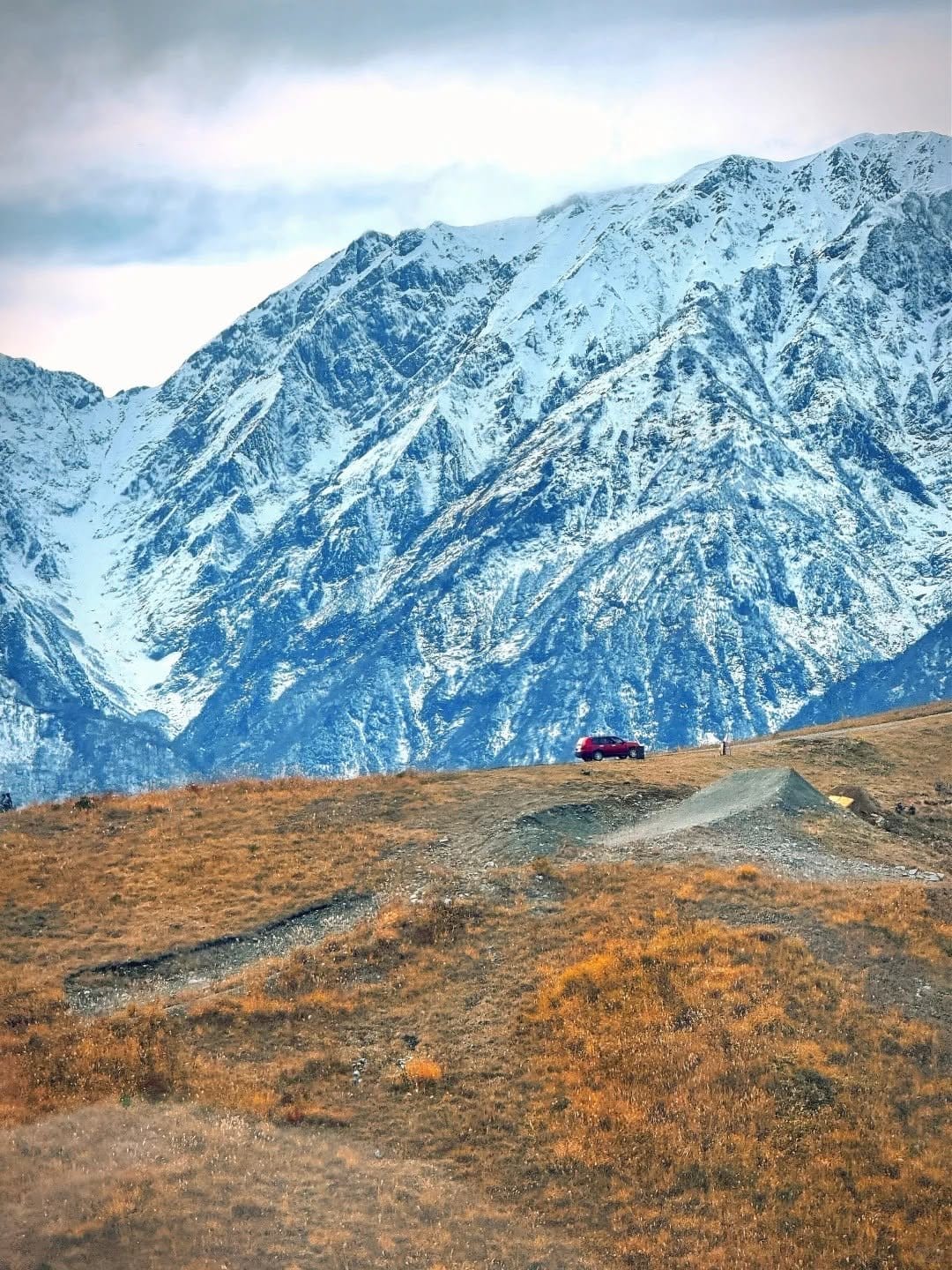
Nagano in Autumn: Beating the Crowds and Controlling the Cost
Which weeks are worst, the three real pinch points, why every viewpoint is quiet before 9am, the altitude trick, where your money actually goes, and a two-day budget in bands.
Aug 14, 2026·✍️ olablog·⏱ 11 min read
Which weeks are worst, the three real pinch points, why every viewpoint is quiet before 9am, the altitude trick, where your money actually goes, and a two-day budget in bands.
Tap a region to browse articles
Every autumn I hear the same sentence from people back from Nagano: "we got unlucky — it was heaving, and it cost a fortune." Almost every time, there was no luck involved. They travelled on a Saturday in the two-week peak, booked ten days out when everything reasonable had been gone since summer, and reached the gondola base at half past ten.
Nagano in foliage season is genuinely crowded and genuinely expensive — this isn't a piece promising an empty mountain and a cheap room. But the crowding and the expense are not spread evenly. They concentrate into a few specific days, a few specific hours, a handful of bottlenecks, and one spending category that swallows most of the bill. Most of what people call bad luck is a booking decision made three weeks earlier.
The mechanism is simple. Peak colour at any altitude lasts roughly two weeks, valley room supply is fixed, ropeways have fixed hourly capacity, and Kamikochi bans private cars year-round. Supply and demand, not luck — good news, because supply-and-demand problems have levers. Prices and timetables shift year to year, so every figure below is a planning band only; check each area's official site before you go.
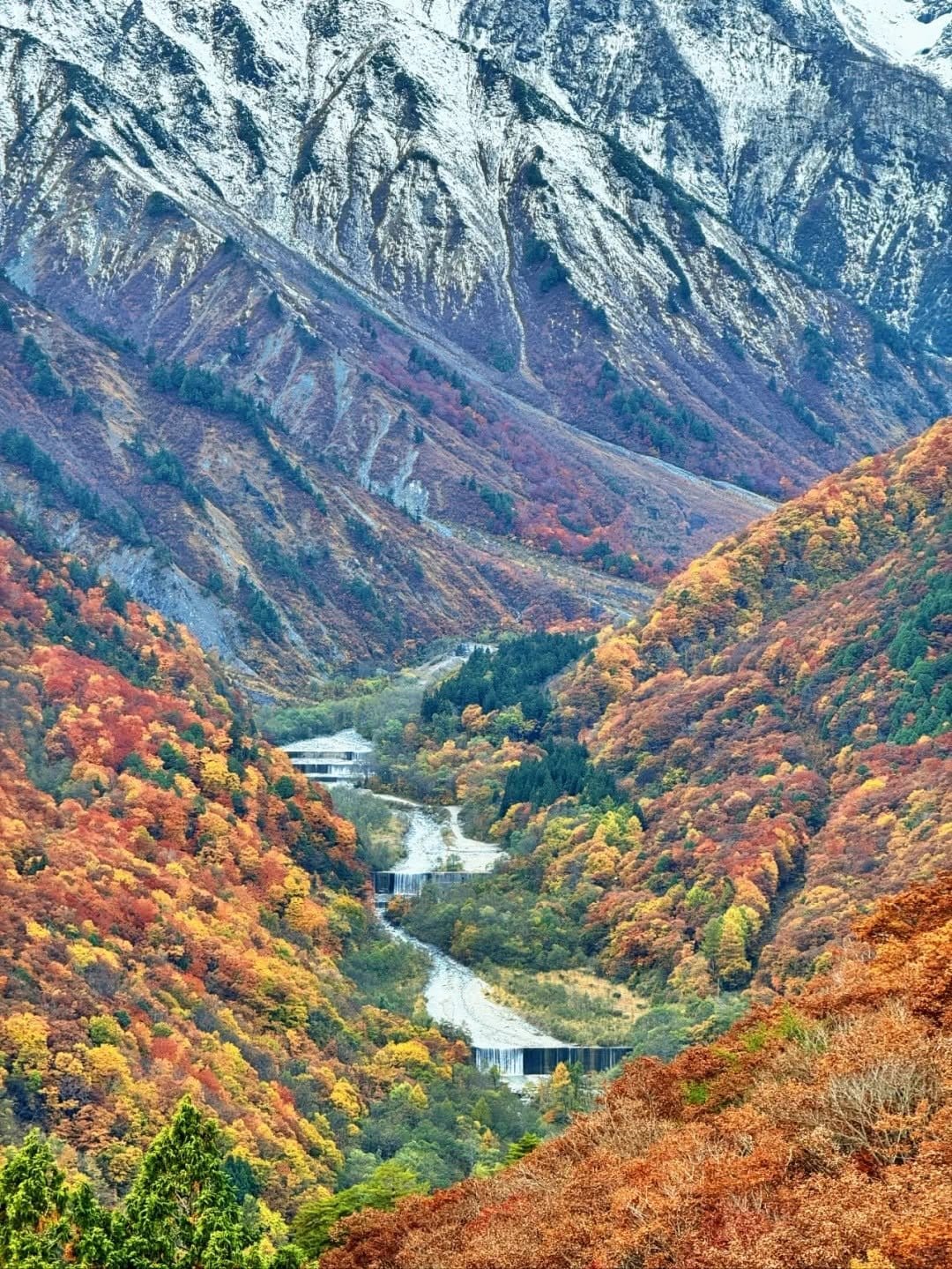
The crowd calendar
Weekends in the peak fortnight are the worst possible choice
One line to remember: a Saturday or Sunday inside an area's two-week peak is the worst day you can pick. Not "a bit busier" — a categorically different day: car parks fill before dawn, buses add services and still fall behind, and you queue in order to wait some more. Worse still are the long holiday clusters around Sports Day in October and Culture Day in early November. The dates move each year, so check that year's calendar.
Tuesday to Thursday is a different prefecture
The highest-leverage move here, and it costs nothing but annual leave. Same destination, same week, same colour: midweek there is space in the car park, buses run to schedule, and — the part people forget — midweek room rates are usually meaningfully lower than weekend rates in the same season, sometimes by a whole hotel category. If a weekend is unavoidable, trade instead: stay overnight beside the area you care about, so you own the late afternoon and early morning, the two windows day-trippers never touch.
The three pinch points
The Kamikochi shuttle terminals. With cars banned, everyone transfers to a bus at Sawando or Hirayu/Akandana. Car parks fill before sunrise, and between roughly 2pm and 4pm the outbound queue can eat an hour. Leave before about 1pm or after 4:30pm; the middle is what you avoid. More on that valley in avoiding crowds and costing a Kamikochi trip.
The first gondola at Happo-one. Counterintuitive, since I generally push early starts — but photographers know that too, so on a peak weekend the day's longest queue forms around the first cabin. Unless you're chasing mist, the second or third departure walks straight on.
The Jigokudani trail. The forest path in to the hot-spring monkeys is narrow, so a crowd slows you disproportionately: a half-hour walk becomes forty-five minutes of shuffling. Here the hour matters more than the day — opening time, or the last hour before closing, is a different world from 11am to 2pm.
The time-of-day trick
Best effort-to-payoff ratio on the list: almost every viewpoint in Nagano is quiet before 9am and after 3pm.
The reason is mundane. Most visitors come by train or coach from Tokyo, Nagoya and Osaka; their earliest realistic departure plus a bus connection lands them between 9:30 and 11, and they withdraw around 3 for the return leg. The crowd is a hump between 10 and 3, and both ends belong to people sleeping nearby or willing to get up early.
Those windows are also the best light of the day, while midday is flat and harsh — people queue to shoot in the worst light available. So take one headline sight for early morning, one for late afternoon, and give the middle to things crowds don't ruin: lunch, an onsen soak, the transfer between areas.
Altitude arbitrage
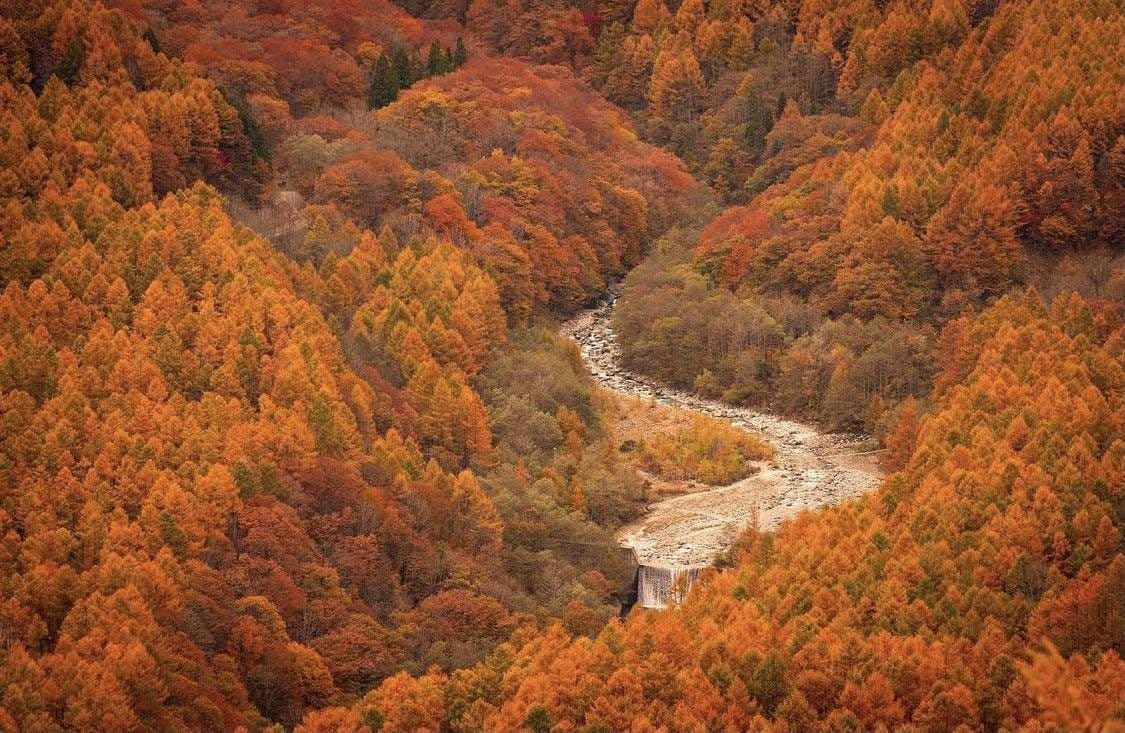
Each week the foliage bulletins name a band of altitude at peak: around 1,500m this week, 1,000m the next, then the valley floor. Every domestic traveller reads the same bulletin and converges on the same band in the same week.
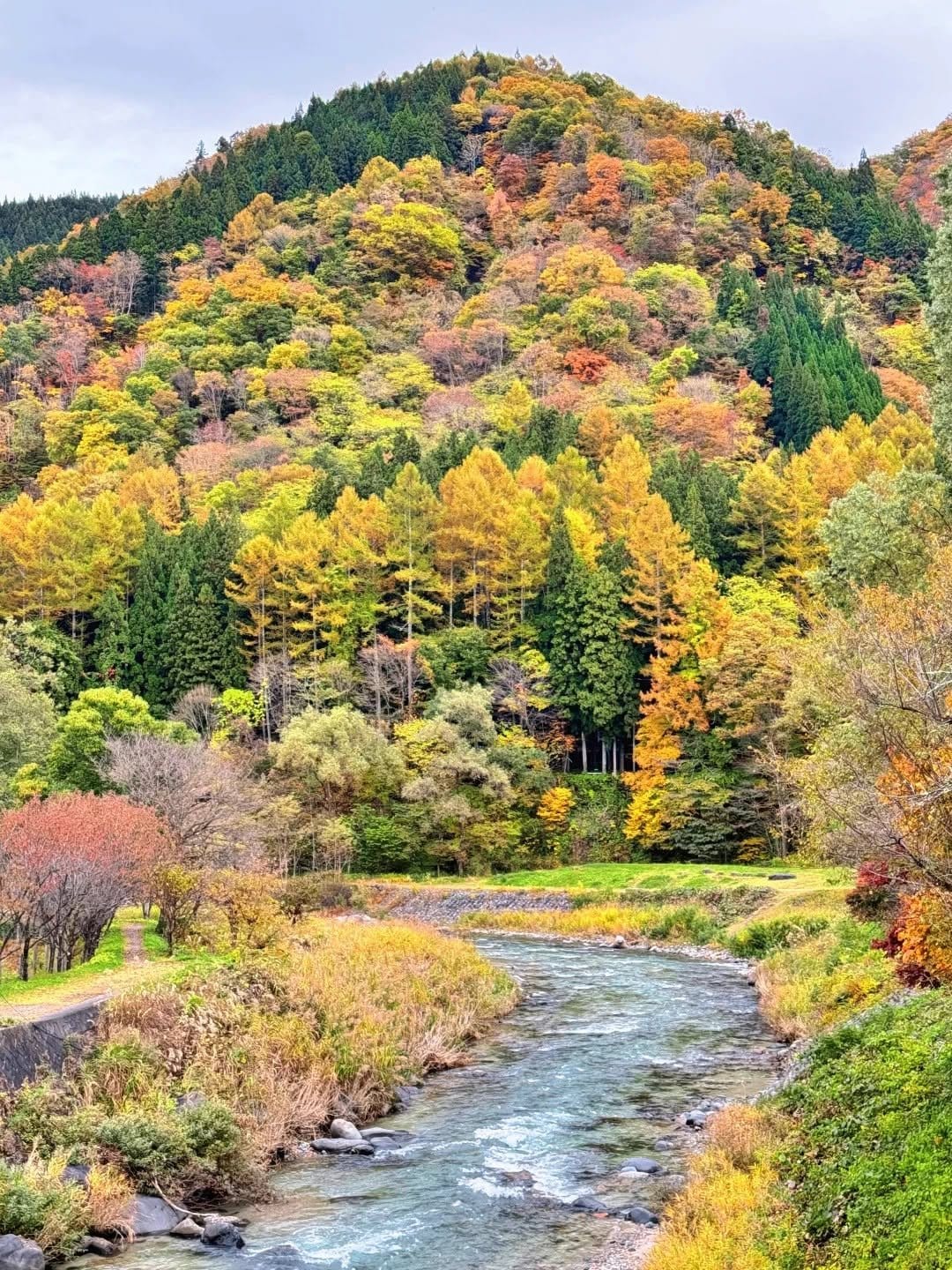
So go one band higher or lower than whatever is in the news. Colour moves down a gradient, not by a switch, so a spot 300–500m higher is typically just past peak — still full of colour, plus a trail carpeted in fallen leaves. The same distance lower is just short of peak, gold threaded with green. Either gives the same photographs with roughly a third of the people.
To see how the colour moves before committing to dates, start with the week-by-week Nagano foliage calendar; the Nagano autumn overview gives the prefecture-wide picture.
Where the money actually goes
People worry about the wrong line items. For a two-day trip the order, heaviest to lightest, is accommodation, then ropeways, then transport, then food.
Accommodation is a third to a half of the total and by far the most volatile — the same room costs a different tier of money on a peak Saturday than midweek off-peak. Every saving effort goes here first.
Ropeways are the underestimated second; it's easy to ride two or three systems in two days without noticing. Useful filter: the lifts worth paying for reach a view or trail you have no other way to get to; the rest just shorten an easy walk.
Transport is predictable and barely negotiable. Two things move it: a highway bus instead of the shinkansen, or splitting a rental between a group — remembering fuel, tolls and parking. Getting from Tokyo to Nagano in autumn compares the options properly.
Food is the lightest of the four and gives back the most per yen. Skipping the new-harvest soba while paying peak weekend room rates is optimising the wrong thing. Economise on one thing only: buy your mountain food down in the valley, where it hasn't been carried uphill.
Book ahead, or leave open
The rule: book what has fixed supply, leave the weather-dependent things open.
Book early: accommodation above all (a few months out is not excessive for the peak fortnight in a famous valley), plus highway bus seats, reserved shinkansen seats around holiday clusters, and mountain huts. If your dates aren't firm, choose flexible cancellation rather than waiting.
Leave open: lift tickets — usually fine on the day, and suspendable by wind anyway — plus which sight you'll do tomorrow morning.
Combo tickets and rail passes
Short version: they pay when you travel a lot in a short window, and they're a trap when you buy them for peace of mind.
Area cable-car combos are good value if you use everything, but mountain plans break — wind stops a chairlift, rain writes off an area. Ask at the counter on the morning itself, once you know the weather; if the bundle wins, staff will say so.
A rail pass pays when you cover several long legs in few days, so a two-day Tokyo–Nagano round trip usually isn't enough to beat point-to-point tickets. The bigger trap isn't price but coverage: many legs that matter here are local bus companies, private railways or cable cars, which a rail pass does not automatically include. Check the pass's own coverage page, and if it doesn't say clearly, treat it as not covered.
Sleep one valley over
Room rates fall quickly the moment you step away from the famous name. Sleep in the town at the foot rather than inside the resort, twenty to forty minutes off the headline spot; for the same budget you usually move up a category. The cost is half an hour each morning and evening. In exchange you get more places to eat and a bad-weather fallback, since gateway towns have museums, old streets and onsen that ignore the forecast.
The one case for paying to sleep inside the famous valley is when what you want lives before 8am: mist on the water, an empty trail. There you're buying time, not comfort. The same arithmetic applies in Karuizawa, where the gap between the centre and the surrounding towns is just as wide.
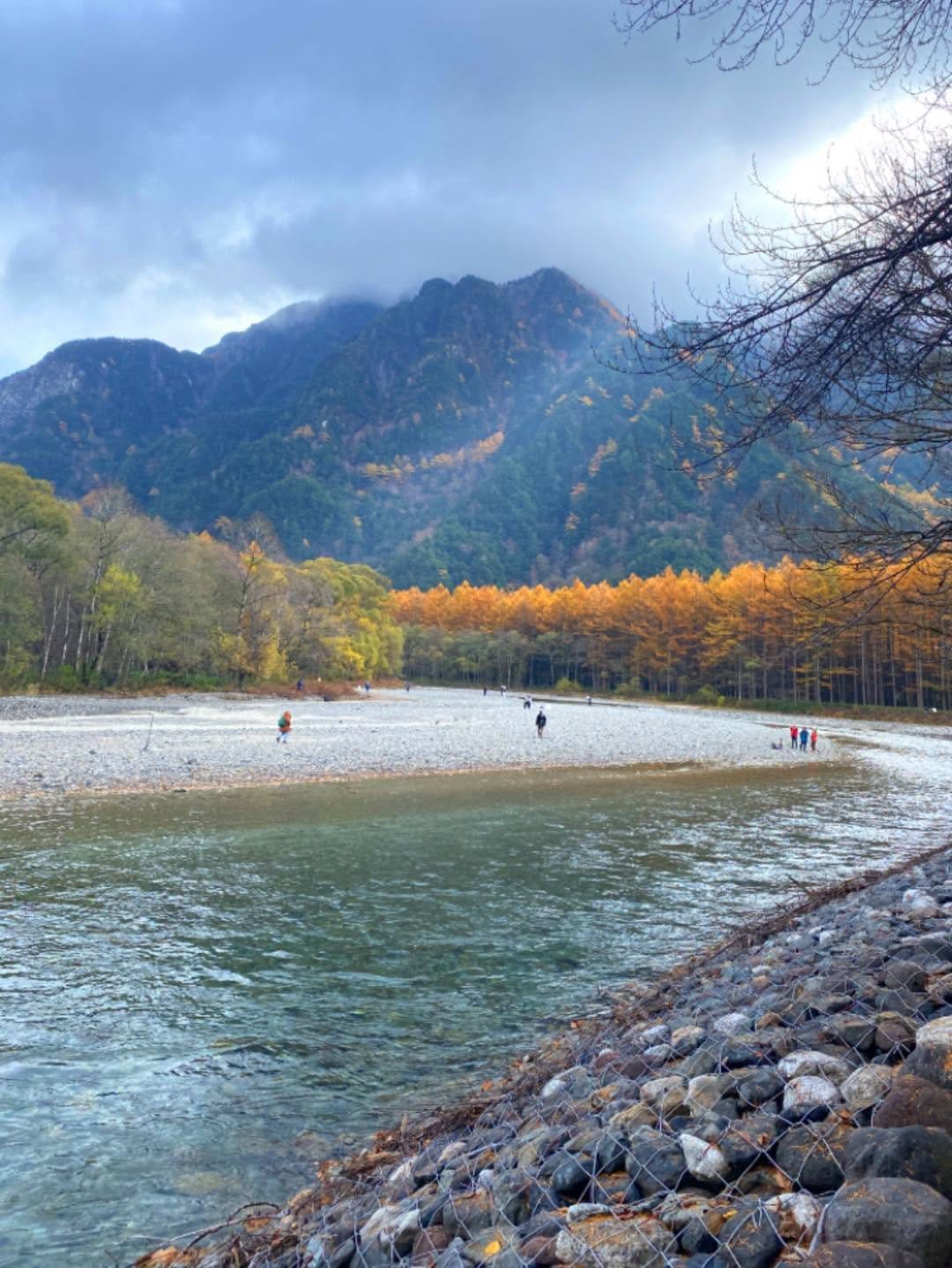
When a guided coach is the right answer
A guided coach genuinely solves the three most draining costs of a foliage trip here: no parking hunt, no shuttle queue, one price instead of a running total of train, bus, lift and parking. For a first-timer, for anyone travelling with parents or small children, or for someone with one free day, that's a legitimate answer, not a second-class one. The two-day Kamikochi and Hakuba tour from Tokyo puts both valleys in one itinerary; from Nagoya, the Kamikochi day hike removes the connections.
The other side has to be said. A coach runs on the coach's clock, so you usually reach the headline sight during the busiest window — the 10-to-3 hump this article tells you to dodge — with no waiting for the cloud to open and no switching valleys because the bulletin favours the next one. Priority is less hassle? The coach wins. Priority is empty trails and good light? Independent wins, and it isn't close.
A two-day budget, in bands
Peak-season rates swing too hard for precise numbers to mean much. All three bands are per person, two days and one night, including travel from Tokyo.
Lean — midweek, a gateway city or modest inn one valley over, highway bus, convenience-store food carried up, one lift system: roughly ¥25,000–35,000.
Balanced — mid-range hotel or ryokan with dinner, shinkansen one way, two lift systems: roughly ¥45,000–65,000.
Comfortable — inside the famous valley or an onsen ryokan with kaiseki, shinkansen both ways, taxis instead of bus queues: from roughly ¥80,000 up.
The proportions barely change between them: accommodation a third to a half, transport a quarter to a third, lifts a tenth to a fifth, food the rest — which tells you that negotiating your dates and your bed matters many times more than negotiating your meals. Leave a buffer, too, and screenshot the last departures: last lift down, last bus to the station, last train to Tokyo. Signal here is patchy, and one missed connection in peak season becomes an unplanned hotel night — the most expensive item of the trip, arriving at the worst moment.
FAQ
If I can only change one thing, what should it be? Your dates. Saturday to Wednesday does more than every other tip combined — it thins the crowd and usually lowers the room rate at the same time.
How far ahead should I book a room? For the peak fortnight in a well-known valley, as early as you can; a few months is not excessive. For gateway towns or midweek off-peak, three to six weeks usually still leaves decent options.
Is a rail pass or an area combo ticket worth it? For a two-day Tokyo–Nagano round trip a pass usually isn't; point-to-point tickets tend to win unless Nagano is one leg of a longer route. Check the pass's own coverage page for every bus, local line and cable car you plan to ride.
Does a guided coach get me away from the crowds? It removes the hassle — parking, queues, connections — but not the timing, since coaches run fixed schedules and tend to arrive at midday.
Should I cancel if the forecast is bad? Don't cancel, change the script. Light rain deepens the colour and empties the trails. You just need a low-altitude fallback decided in advance — a gateway town, a cedar-forest shrine, an onsen. The person inventing a plan B at a bus stop in the rain is the one who has a bad day.