
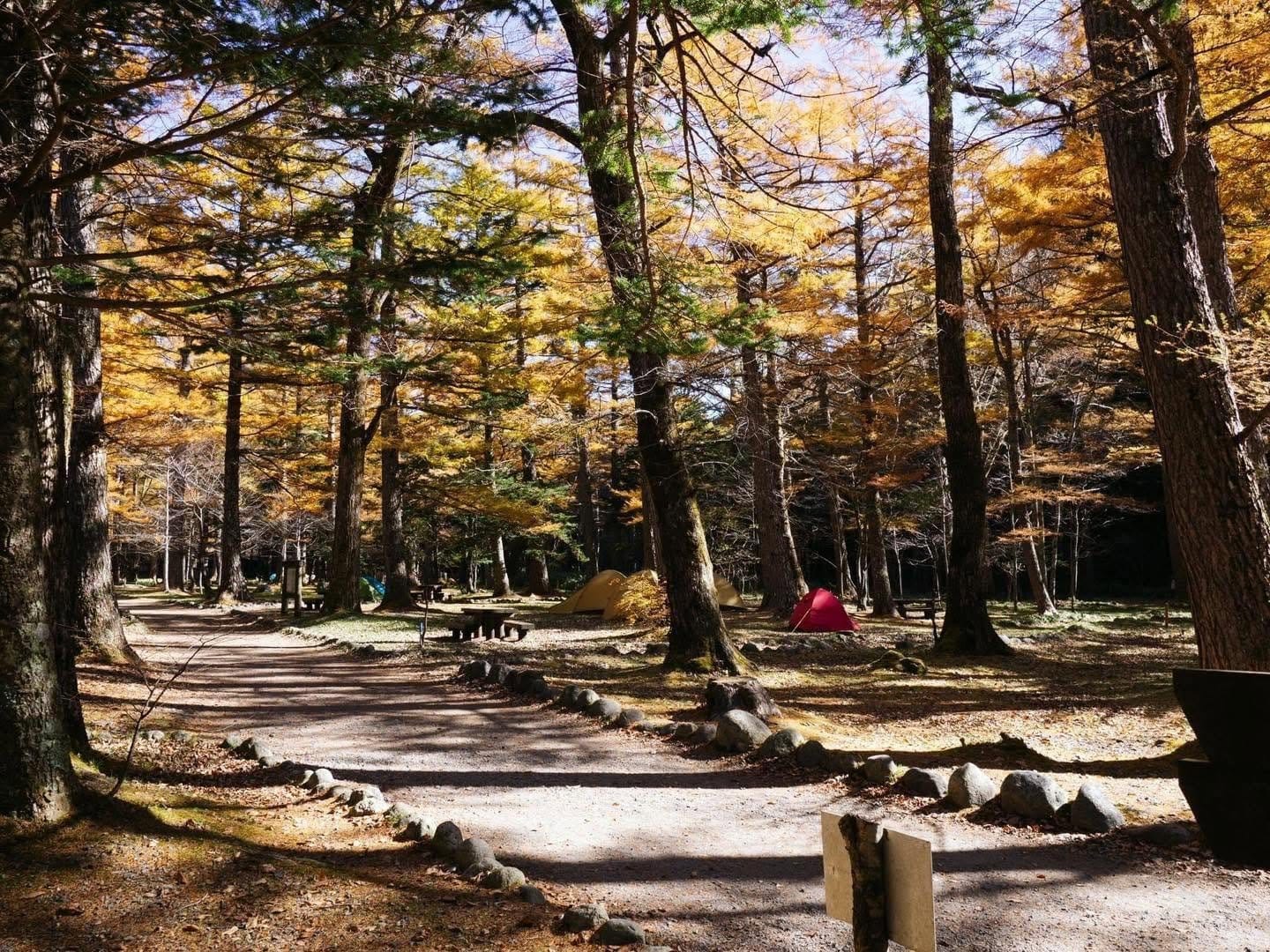
Kamikochi in Fall: Avoiding the Crowds and Calculating the Full Cost for 1–2 Days
Why you should enter the valley before 8 a.m., which weeks are busiest, which trails are still quiet, and a budget breakdown ranging from ultra-budget to comfortable for a 1–2-day trip.
Aug 12, 2026·✍️ olablog·⏱ 17 min read
Why you should enter the valley before 8 a.m., which weeks are busiest, which trails are still quiet, and a budget breakdown ranging from ultra-budget to comfortable for a 1–2-day trip.
Tap a region to browse articles
There’s a slightly harsh truth about Kamikochi in autumn: the photo of Kappa Bridge you have saved on your phone — the lightly snow-dusted Hotaka Range in the background, golden deciduous forests on both sides, and the Azusa River so clear you can see every pebble — was almost certainly taken before 7 a.m. on a weekday. Take that same shot at 11 a.m. on the last Saturday of October, and it will include around two hundred extra people, three tour groups holding up guide sticks, and a few minutes of queuing just to stand in the right spot on the bridge.
Kamikochi is not the kind of destination where you can “just show up and figure it out.” Private cars are prohibited year-round, so everyone entering the valley has to pass through one of just two bus gateways: Sawando on the Nagano side, or Hirayu/Akandana on the Gifu side. On top of that, the valley is open only from around late April to mid-November — meaning the fall foliage season lands in the final three or four weeks before everything closes for winter. An entire high season is compressed into a short window and funneled through a narrow entrance. It’s the perfect recipe for congestion.
The good news is that Kamikochi is easy to “dodge” once you understand its rhythm. The crowds aren’t spread evenly — they concentrate at certain hours, on a few days of the week, and along roughly three kilometers of trail around Kappa Bridge. Step outside those three factors, and you can feel as if you have the entire valley to yourself. This guide brings together the most practical information: what time to enter, which weeks to avoid, which trails are still quiet, and, just as importantly, how much the trip will cost, from ultra-budget to comfortable. Ticket prices and bus schedules in Japan change from year to year, so use the figures below as a budgeting guide, and check the official Kamikochi website and the Alpico/Nohi bus operators’ websites before you travel.
Why arriving before 8 a.m. can determine your entire trip
The daily rhythm in Kamikochi during the fall foliage season is fairly predictable. The first buses from Sawando usually start running before dawn (around 5–6 a.m. during peak season, depending on the year and the day — check the timetable in advance). These early passengers are mostly hikers and photographers: they enter the valley, disperse in different directions quickly, and barely make the place feel crowded. From around 9:30 to 11 a.m., the second wave arrives — tour buses from Nagoya, Tokyo, and Osaka drop off groups of thirty or forty people at the Kamikochi Bus Terminal. This is also when the mist lifts, the sun comes out, and everyone wants to head to Kappa Bridge. From then until around 15:00 is the busiest period.
Arriving early gives you three things money can’t buy. First, the mist. Around 6–7 a.m. in late October, Taisho Pond and the riverside meadows are often covered in a thin layer of mist rising from the cold water, along with frost clinging to the grass — this is Kamikochi at its most beautiful, and most of it disappears after 9 a.m. Second, the light: in the morning, the sun comes from the east and illuminates the Hotaka cliffs, while midday light makes everything look flat and harsh. Third, genuine quiet — the sound of running water, birdsong, and, occasionally, a Japanese macaque crossing the trail.
There’s also a very practical reason: the afternoon bus queues. From around 14:00 to 16:00, the Kamikochi Bus Terminal becomes the gathering point for everyone trying to leave the valley at once. On peak-season weekends, waiting 40–90 minutes is normal, and on some days the line is even longer. If you enter early, you can leave early too — depart before 13:00, or take your time and stay until after 16:30, when the crowds have thinned. Both options are much more comfortable than being stuck in the human traffic at 15:00.
A one-day itinerary for early arrivals
- Around 4:30–5:00: leave your accommodation in Sawando, Hirayu, or Matsumoto (if you’re staying in Matsumoto, you’ll need to get up even earlier, around 3:30–4:00 if driving yourself).
- Around 5:30–6:30: take the bus/taxi; it takes around 25–35 minutes to reach the Kamikochi Bus Terminal.
- 6:30–9:00: the best stretch of the day. Walk down toward Taisho Pond while the mist is still thick, then loop back along the riverside trail.
- 9:00–12:00: leave the Kappa Bridge area and head toward Myojin or Tokusawa — against the flow of arriving tour groups.
- 12:00–14:00: have lunch at Tokusawa or Myojin, then head back.
- Before 15:00: queue for the return bus, or take it easy if you’re staying overnight.
Weekdays beat weekends, and these are the worst weeks
The difference between a Tuesday and a Sunday in Kamikochi during the fall foliage season is not simply that one is “a little busier” — they are completely different experiences. On weekdays, there is still space in the Sawando parking lots, buses run according to schedule, and you can board and go. On peak-season weekends, the parking lots at Sawando may be full before sunrise, buses have to run extra services continuously and still cannot keep up, and traffic backs up all the way from the highway below. For the same money and the same journey, a weekday can save you several hours of standing in line.
If you have to go on a weekend, trade it for another advantage: stay overnight in the valley (or in Sawando/Hirayu) so you don’t have to fight the crowds in either the morning or afternoon. If your days are flexible, Tuesday through Thursday is the obvious choice.
The busiest weeks of the season
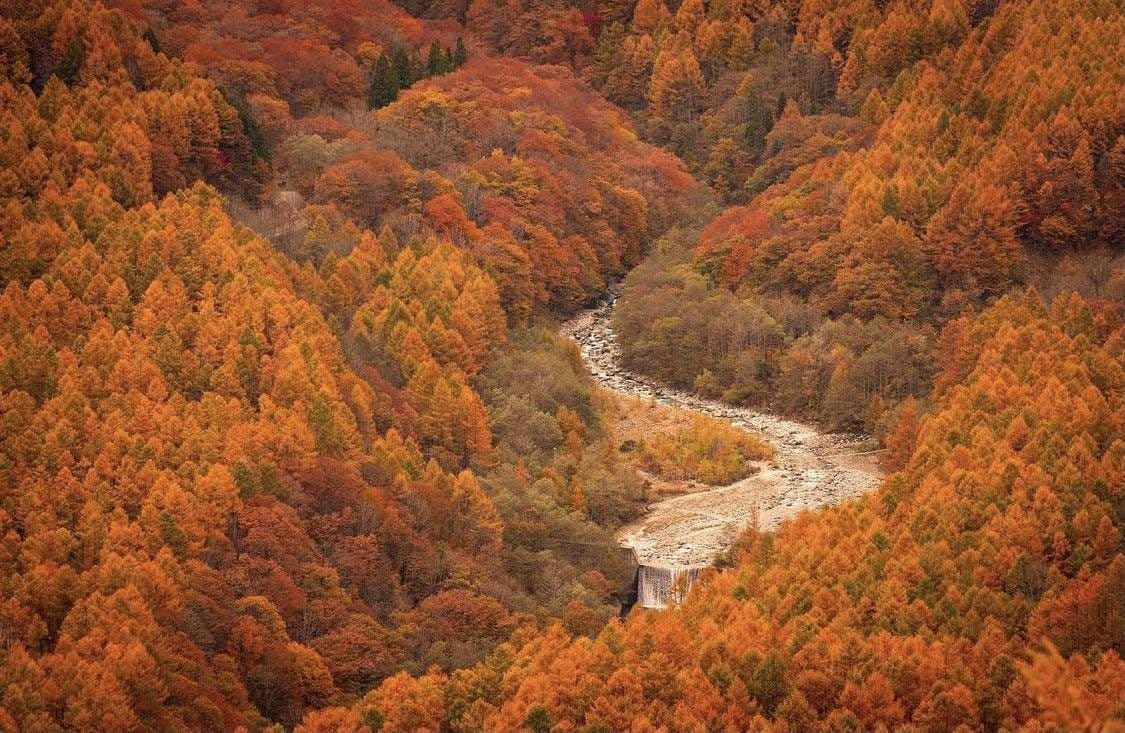
Kamikochi’s fall colors usually arrive in two waves. The first is the turning of maples, beeches, and other deciduous trees, generally from early to mid-October at higher elevations and from mid- to late October on the valley floor. The second — what gives Kamikochi its distinctive character — is the karamatsu (larch) forest turning golden, usually at its brightest from late October to early November. This is when the entire valley glows gold, and it is also when the crowds are thickest.
Mark these periods in red and avoid them (or prepare yourself mentally):
- The three-day holiday cluster around Sports Day (Sports no Hi, the second Monday of October) — the first peak period.
- The final two weekends of October — coinciding with peak golden larch season, these are usually the busiest of the entire season, amplified by the “go before the valley closes” effect.
- The holiday period around Culture Day on 3/11 (Bunka no Hi) — the final peak, especially when it falls within a long weekend.
- The final few days before Kamikochi closes for the season (usually around mid-November) — when locals and photographers come to say goodbye to the season.
Japan’s public-holiday calendar shifts from year to year, so check that year’s calendar before booking to see when the holiday clusters fall. One small tip: if a public holiday lands on a Monday or Friday, skip that entire weekend.
Trails that are still relatively quiet
Here’s something few people mention: most visitors to Kamikochi stay within a little over a kilometer of Kappa Bridge, take photos, have lunch, and leave. Walk just a little farther, and the crowds thin out noticeably.
The right bank of the Azusa River, from Kappa Bridge to Myojin
There are two routes from Kappa Bridge to Myojin: the left bank is broad, flat, and easy — and crowded. The right bank is a forest trail with some wooden boardwalk sections, passing wetlands and crystal-clear pools. The distance and time are about the same (around one hour each way), but the right bank is much quieter. The standard tip is to go up via the right bank and return via the left, or reverse the route if you want to avoid the sun.
Tokusawa and Yokoo
Beyond Myojin, another hour or so brings you to Tokusawa — a broad meadow in the middle of the forest, with a mountain lodge, a campground, and a direct view of the Maehotaka cliffs. This is the best destination for anyone who wants “Kamikochi without the crowds”: the trail is still flat, with almost no inclines, but the number of people drops almost magically. Walk another hour and you’ll reach Yokoo, the gateway to Karasawa — from here onward, you’ll mostly encounter serious hikers.
Tashiro-ike and Taisho Pond before the mist clears
Many people get off at the Kamikochi Bus Terminal, head straight to Kappa Bridge, and completely skip the lower section. Yet Taisho Pond (formed after the eruption of Yakedake in the early 20th century, with dead tree trunks standing in the water) and Tashiro Marsh on the trail toward Kappa Bridge are two of the most beautiful places in the early morning. A useful tip: get off at Taisho-ike Bus Stop instead of riding to the final stop, then walk uphill toward Kappa Bridge — you’ll be going in the opposite direction from almost everyone else.
Dakesawa — trade sweat for solitude
If you have good shoes and enough stamina, the trail up to Dakesawa (turning off near Kappa Bridge and climbing toward Hotaka) leads to a mountainside viewpoint overlooking the entire golden valley. The route is steep, includes loose-rock sections, requires you to return the way you came, and takes around half a day round trip to the Dakesawa lodge. In exchange, you may be able to count the people you meet along the way on one hand. Only attempt it in good weather, starting early and with proper mountain experience.
Beautiful, but don’t expect solitude: Karasawa
Karasawa — a glacial cirque famous for its carpet of fall colors — really is one of the most beautiful autumn scenes in Japan, but it is also the most crowded destination. It takes around 6 hours to walk one way from Kamikochi to Karasawa, meaning you have to stay at a mountain lodge or camp, and during peak-season weekends the cirque is packed with tents and the lodges are full. This is a trip that requires early reservations and good fitness, not a “beat the crowds” option.
A practical cost breakdown for a 1–2-day trip
This is the part people most often underestimate. Kamikochi has no entrance fee, but the cost of “getting your feet into the valley” is very real, and everything inside the valley costs more than down below because supplies have to be transported uphill.
Costs that are almost unavoidable
| Item | Estimated cost | Notes |
|---|---|---|
| Sawando ↔ Kamikochi bus | around 1,500 yen one way, around 2,500–3,000 yen round trip | roughly equivalent from Hirayu/Akandana |
| Parking at Sawando/Akandana | around 700 yen/day | arrive before sunrise during peak season |
| Taxi instead of the bus (if you miss your bus) | around 4,000–5,000 yen/car | not too expensive if split among 4 people |
| Valley restrooms | donation box, around 100 yen/use | keep some coins handy |
| Admission to Myojin Pond (Okumiya) | around 500 yen | check locally |
| Lockers at the bus terminal | around 300–600 yen | very worthwhile if you have luggage |
If you travel from Matsumoto by public transportation (the Alpico train to Shinshimashima, then transfer to a bus), the total one-way cost is around 2,500–3,000 yen; operators often offer cheaper round-trip passes than buying separate tickets. Direct highway buses run from Tokyo, with prices varying widely by date and seat class. Around 6,000–9,000 yen one way is a common range — on peak-season weekends, tickets often sell out early.
Budget package: day trip, one person
| Item | Estimate |
|---|---|
| Round-trip train/bus from Matsumoto | around 5,000–6,000 yen |
| Packed food (bought at a konbini down below) | around 1,000–1,500 yen |
| Restrooms, drinks, hot coffee | around 500–800 yen |
| Total for the day | around 7,000–8,500 yen |
This excludes accommodation in Matsumoto (a business hotel costs around 7,000–12,000 yen/room). If two people drive to Sawando and split the fuel and parking costs, the total can be even lower. The secret to this package is simple: bring all your food from down below. There are no konbini in the valley, and a hot meal at a hotel restaurant usually costs around 1,200–2,000 yen.
Balanced package: 2 days, 1 night at a mountain lodge
| Item | Estimate |
|---|---|
| Round-trip transportation (from Matsumoto or Sawando) | around 5,000–6,000 yen |
| One night at a Tokusawa/Myojin-style mountain lodge, including 2 meals | around 12,000–15,000 yen/person |
| Lunches and snacks for two days | around 2,000–3,000 yen |
| Day-use onsen (Sawando/Hirayu on the way back) | around 700–1,000 yen |
| Miscellaneous (restrooms, souvenirs, lockers) | around 1,000–1,500 yen |
| Total | around 21,000–27,000 yen/person |
In the experience of most frequent visitors, this is the best-value option. Staying overnight in the valley gives you the two most beautiful and quietest periods — late afternoon and early morning — without having to get up at 4 a.m. or fight the bus queues.
Comfortable package: 2 days, 1 night at a hotel in the valley
| Item | Estimate |
|---|---|
| Round-trip highway bus from Tokyo | around 12,000–18,000 yen |
| One night at a hotel in the valley, including 2 meals | around 20,000–35,000 yen/person (luxury options are much higher) |
| Meals, coffee, and souvenirs | around 3,000–5,000 yen |
| Private taxi for the Sawando leg (to avoid the queue) | around 4,000–5,000 yen/car |
| Total | around 40,000–60,000 yen/person |
At this level, you are not really buying luxury so much as time: no queues, no early wake-up, a proper dinner after a day of walking, and the chance to step straight into the scenery the next morning.
Costs people often forget
- Cash. Some small stalls, restroom donation boxes, and mountain lodges still prefer cash. There are almost no convenient ATMs in the valley like those found down below.
- Warm clothing. In late October, mornings at an elevation of around 1,500 meters can fall to around 0 degrees, with frost on the ground. If you have to buy a jacket or gloves in a hurry, local prices will not be pleasant.
- Contingency costs. Heavy rain, delayed buses, or missing your train home — set aside a buffer of around 3,000–5,000 yen.
- Insurance or a hiking registration form if you plan to climb Dakesawa or travel farther afield.
Preparing for the cold at 1,500 meters
The most common mistake Vietnamese travelers make when visiting Kamikochi during the fall foliage season is dressing for Tokyo’s weather. When it feels like a comfortable 20 degrees down below, it may be bitterly cold at 6 a.m. here, while by 11 a.m. the sun can make it hot enough to shed layers. The rule is to wear several thin layers rather than one thick coat, always carry a windproof layer, and bring thin gloves and a beanie for the morning. At minimum, wear athletic shoes with good traction; if you’re going as far as Tokusawa or beyond, or if rain is expected, waterproof hiking shoes are worth every yen.
A few small but important things: there are almost no trash cans in the valley, so take your rubbish with you; mobile reception becomes patchy beyond Myojin, so download an offline map; bears and monkeys live in the area, so never feed them or leave food exposed, and wear a bear bell on quieter trails. Also remember to bring a thermos or buy coffee at the bus terminal — holding a warm cup while watching the mist over Taisho Pond is one of the most comforting experiences this trip has to offer.
A specific 2-day, 1-night itinerary for avoiding the crowds
Day 1 (Tuesday or Wednesday is best): travel from Matsumoto to Sawando in the morning, enter the valley around 9–10 a.m., leave your luggage at the bus terminal, and head straight to Myojin via the right bank before continuing to Tokusawa. Have a late lunch at Tokusawa, check in at the mountain lodge, and spend the late afternoon wandering around as the sunlight filters through the larch forest and day-trippers have all gone home.
Day 2: get up before sunrise and walk back toward Kappa Bridge while the mist is still thick, stopping at Taisho Pond and Tashiro Marsh before 9 a.m. Have a late breakfast near the bus terminal, then leave the valley before 12:00, while the queue is still manageable. Stop at an onsen in Sawando or Hirayu on the way back, and spend the night in Matsumoto for easier train connections the following day.
This entire itinerary has one goal: always travel against the flow of the crowds. Enter before they arrive, stay after they leave, and walk the trails they skip.
Frequently asked questions
Can I make a day trip from Tokyo?
In theory, yes, thanks to direct highway buses and overnight services, but you’ll have only a few hours in the valley and will almost certainly be there during the busiest period. If you have only one day, stay in Matsumoto the night before and enter early instead — the quality of the trip is completely different.
When is the foliage at its best?
For the larch forests on the valley floor, it is usually best from late October to early November, while the higher slopes change color earlier, from early October. The timing shifts depending on the weather each year, so check Kamikochi’s official fall foliage reports and updated photos before you go.
How far can I go if I’m not used to walking long distances?
The Taisho Pond–Kappa Bridge and Kappa Bridge–Myojin sections are both almost flat, with good paths, and are suitable for children and older adults if you walk slowly and break the route into smaller sections. Allow around one hour each way for Kappa Bridge–Myojin, and don’t overpack your schedule.
Are there konbini or ATMs in the valley?
There are no convenience stores like those down below. There are a few food stalls, hotel restaurants, and vending machines, but prices are higher and supplies may run out during peak periods. Buy your food, small change, and a spare battery before heading up.
Should I go if it rains?
If it’s only light rain, yes — mist hanging across the mountain slopes and the wet forest can look beautiful, and there will be far fewer people. But rain at 1,500 meters is cold, so bring a proper rain jacket or waterproof outer layer and a change of clothes. If strong winds or prolonged heavy rain are forecast, change your plans and avoid steep sections such as Dakesawa.
Is staying in the valley much more expensive than staying down in Sawando?
Yes, usually by a significant amount, but in return you get the two best times of day without having to squeeze onto a bus. If your budget is tight, a middle-ground option is to stay at a Tokusawa-style mountain lodge or camp at Konashidaira instead of booking a hotel — it’s cheaper while still allowing you to remain in the valley.
What should I book in advance?
Accommodation (both in the valley and in Sawando/Hirayu/Matsumoto) and highway bus tickets if you’re traveling from Tokyo — these are the two things that sell out earliest during the fall foliage season. Sawando bus tickets can usually be purchased on-site, but on peak-season weekends, allow at least an extra hour for queuing. Before your trip, recheck the timetable and seasonal closing date on the official website, since Kamikochi closes surprisingly early by many visitors’ expectations.
More from this region — Chubu (Nagano, Kanazawa)
View all →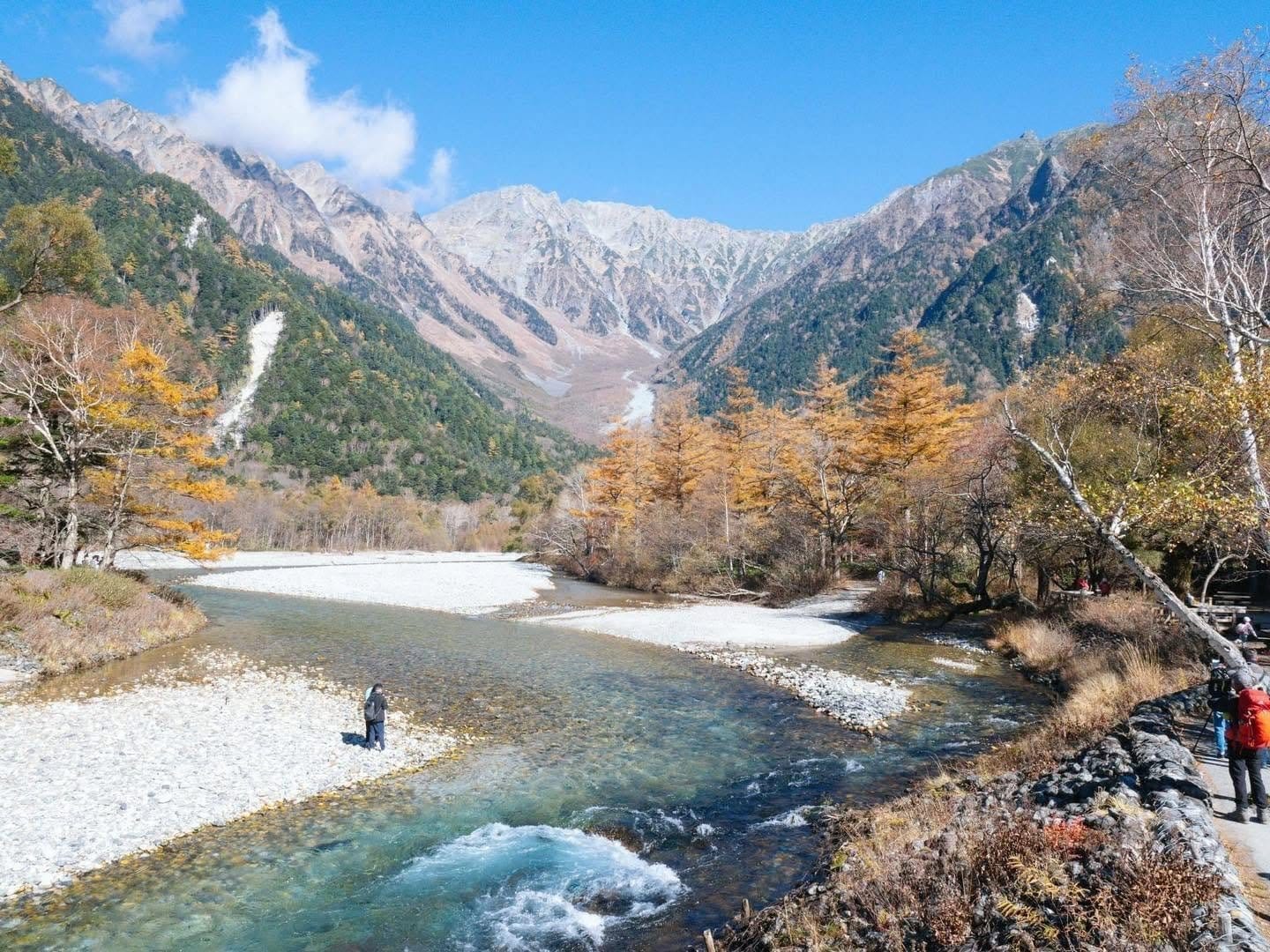
Kamikochi in Autumn: A Golden Valley Along the Azusa River
19 min · tips
Sore Legs in Kamikochi—Which Onsen Should You Choose: Hirayu, Sawando, or Shirahone?
17 min · tips
Kamikochi Summer Hiking Trails: The Complete Guide from Kappa Bridge to Myojin Pond, Tokusawa, and Yokoo
12 min · ハイキング
Kanazawa
23 min · destinations