Kyoto’s Autumn Foliage Onsen: Kurama, Arashiyama, and Ohara
Soak in hot springs surrounded by autumn forests, choose a ryokan with a bath overlooking the mountains ablaze with fall color, and learn how to get there from central Kyoto, how much it costs, and the basic onsen etiquette for first-timers.
Aug 12, 2026·✍️ olablog·⏱ 17 min read
Soak in hot springs surrounded by autumn forests, choose a ryokan with a bath overlooking the mountains ablaze with fall color, and learn how to get there from central Kyoto, how much it costs, and the basic onsen etiquette for first-timers.
Tap a region to browse articles
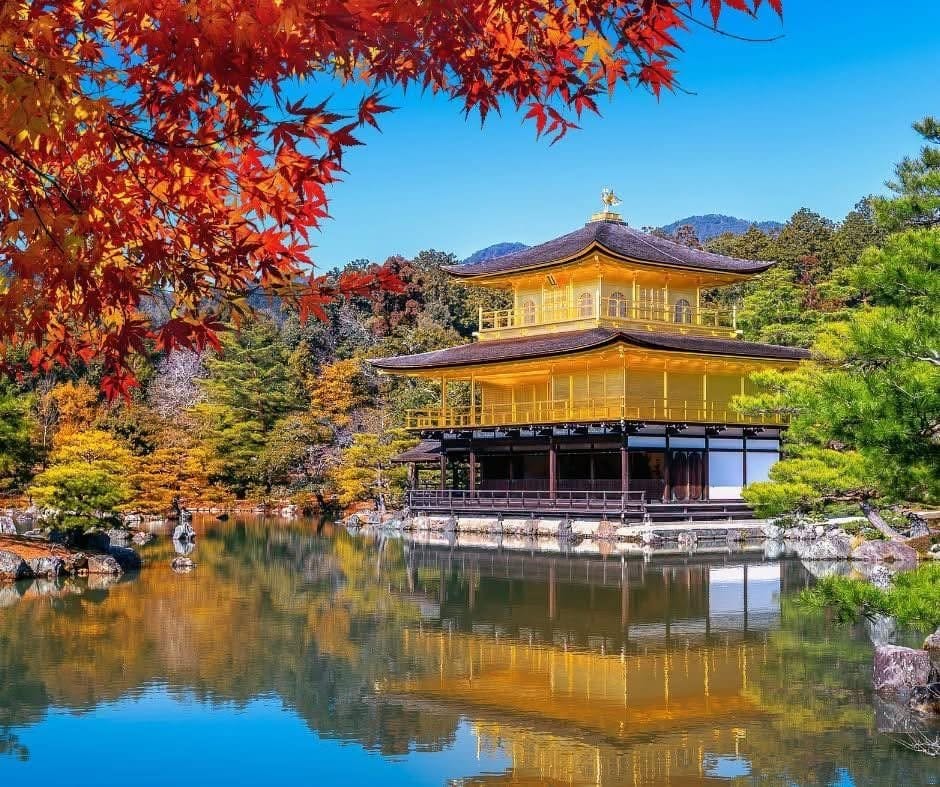
In November, Kyoto presents a familiar paradox: it has the most beautiful scenery of the year, but it is also at its most crowded. You can spend an hour waiting in line at Kiyomizu-dera, squeeze through the crowds on Togetsukyo Bridge, and hold up your camera only to find that every shot is filled with... the backs of strangers’ heads. I went through exactly that on my first autumn-leaf trip, returned to the hotel with aching legs, and wondered: was I here to admire the leaves or to practice enduring crowds?
On my next trip, I changed tactics. Instead of racing through a checklist of temples and shrines, I paired each day of foliage viewing with a soak in an onsen. That was when Kyoto’s autumn truly began to sink in. Sitting in an outdoor hot-spring bath, steam rising into the crisp air, a mountainside mottled with red and gold directly in front of me, and an occasional momiji leaf drifting onto the water — it was a feeling no camera could capture, and no crowd could intrude upon, because nobody brings a phone into the bath.
In this article, I’ll share three specific routes around Kyoto that combine hot springs and autumn foliage: Kurama in the north, with an outdoor bath in the forest; Arashiyama, with ryokan offering baths overlooking the autumn-colored mountains; and Ohara, a peaceful valley that works well as a day trip. I’ll also cover how to get there from central Kyoto, the pros and cons of day-use bathing versus an overnight stay, and the basic onsen rules for anyone entering a Japanese bathhouse for the first time.
Why add an onsen to an autumn foliage trip?
There is one detail about the autumn foliage season that many people overlook: the leaves do not turn red across all of Kyoto at the same time. Mountain areas in the north, such as Kurama, Kibune, and Ohara, usually change color about one to two weeks earlier than central Kyoto — typically from early to mid-November, while central Kyoto is at its best from the latter half of November into early December (depending on the year, you should check the koyo forecast before finalizing your itinerary). This means that if you arrive “a little early” for peak foliage in the city center, heading into the mountains for an onsen is actually the right move.
The second reason is more practical: viewing autumn leaves involves a lot of walking, and the temperature drops as afternoon approaches. A soak in hot water after half a day of climbing does more than simply “reward yourself” — it genuinely helps you recover so you can keep exploring the next day, especially on packed 4–5-day itineraries.
And the third reason: Kyoto is not as famous for onsen as Hakone or Kusatsu, so many visitors automatically leave it off their plans. As a result, the hot-spring spots around Kyoto are often much quieter than the “must-see” foliage destinations. Fewer people, hot water, red leaves — the full package.
Kurama: an outdoor soak in the northern autumn forest
The Eizan train and the “maple tunnel”
The journey to Kurama is part of the experience in itself. Take the Eizan Railway from Demachiyanagi Station (connected to the Keihan Line, or accessible by bus/taxi from central Kyoto), and after about 30 minutes you’ll arrive at Kurama Station. Between Ichihara and Ninose is the “momiji tunnel” — two dense rows of maple trees running close to the tracks, through which the train passes beneath a vivid red canopy in autumn. During the peak season, trains often slow down along this stretch, and on some evenings the trees are illuminated. A small tip: choose a carriage with seats facing the windows (some Eizan trains are specifically designed for sightseeing), and go early in the morning if you want a good standing spot.
The bathing experience and the cost
Kurama Onsen is about a 10–15-minute walk from Kurama Station along a mountain road (during some periods, the bathhouse operates a shuttle from the station, so ask when you arrive). The main attraction here is the rotenburo — an open-air bath looking directly onto the forest-covered slopes of Mount Kurama, a sacred mountain. In autumn, you can soak in hot water with an entire hillside of changing foliage in view, the cold mountain air touching your face while your body stays warm — exactly the “hot inside, cold outside” contrast that makes the Japanese love onsen in the colder seasons.
As for prices, a day-use bathing ticket (higaeri nyuyoku) for the outdoor baths is generally around 1.000–1.500 yen, while a package covering both the indoor and outdoor areas costs more; an overnight stay with two meals is priced per person, usually from around 15.000–20.000 yen or more depending on the room and season. These are estimates to give you a rough idea — exact prices vary by date.
One important note: Kurama Onsen has periodically suspended operations for repairs and renovations. Before making plans, be sure to check the official website or call to confirm that it is open — you do not want to make the journey into the mountains only to find the doors closed. If Kurama Onsen happens to be closed, nearby Kibune has several ryokan that offer bathing and lunch packages, making it a worthwhile backup option.
Pairing it with the Kurama-dera–Kibune hiking route
The best way to visit Kurama in autumn is to combine a hot-spring soak with a mountain hike: head up to Kurama-dera in the morning (the route is steep but very scenic, and there is even a short cable car for those who would rather avoid some of the climbing), cross through the ancient cedar forest to Kibune, have lunch in the village of Kibune beside the stream, then return toward Kurama for an afternoon onsen before catching the train back. The entire hike takes about 1,5–2 hours, not including sightseeing. The trail includes steps and steep sections, so be sure to wear proper shoes. The sequence of “hike first, bathe afterward” sounds obvious, but many people do it the other way around and regret it.
Arashiyama: ryokan with baths overlooking the autumn leaves
Why stay overnight
Arashiyama is unbelievably crowded during the day in autumn — that is simply the reality. But Arashiyama at 7 a.m. and after 5 p.m. feels like a completely different place: Togetsukyo Bridge is nearly deserted, and the calm surface of the Katsura River reflects the entire range of autumn-colored mountains. The only way to “have” those two time slots to yourself is to stay overnight, and staying at a ryokan with a foliage-view bath accomplishes two things at once.
Along the river and the foothills of Arashiyama, you’ll find a range of ryokan from mid-range to luxury. The kind of experience to look for is a communal bath on an upper floor or an open-air bath facing the Arashiyama mountains. For something more luxurious, choose a room with a private outdoor bath on the balcony (these rooms are extremely difficult to book during foliage season and usually need to be reserved several months in advance). Some familiar names among long-time Kyoto travelers include Hanaikada and Togetsutei near Togetsukyo Bridge, Ranzan farther inland, and, in the luxury category, Suiran right beside the river. I won’t list individual prices because they fluctuate considerably by season; during the autumn foliage season, an overnight stay with a kaiseki dinner and breakfast generally starts at around 25.000–30.000 yen per person, and weekends during peak foliage can be much more expensive. Book as early as possible — attractive November rooms often sell out before summer even begins.
One thing to know: the hot water in the Arashiyama area comes from a mineral spring extracted locally (“Arashiyama Onsen”). It is gentle and does not have a strong sulfur smell, making it suitable for first-time bathers and people with sensitive skin.
What about day-use bathing if you are not staying overnight?
If your budget does not allow an overnight stay, you still have two options. The first is Fufu no Yu — a public hot-spring bathhouse near Randen Arashiyama Station that accepts walk-in visitors, with admission costing roughly 1.000–1.500 yen (check again before you go). The baths here do not look directly onto a maple forest, contrary to what many people expect, but they are still well worth visiting after a full day of walking around the bamboo grove and temples. The second option is a “lunch + bath” day-use plan offered by some ryokan near Togetsukyo Bridge. You have a Japanese-style lunch and then use the ryokan’s bathing facilities during a designated time slot, usually for a few thousand to ten thousand yen depending on the meal. It is a way to “sample” the ryokan atmosphere at about one-third the cost of staying overnight.
How to get there from central Kyoto
Arashiyama is the easiest of the three destinations in this article to reach. There are three main routes: the JR Sagano Line from Kyoto Station to Saga-Arashiyama Station (about 15–20 minutes, fast and convenient if you are staying near Kyoto Station); the Randen tram from the Shijo-Omiya area directly to Randen Arashiyama Station in the heart of the neighborhood; or the Hankyu train to Arashiyama Station south of the bridge — a good option if you are coming from Osaka or the Kawaramachi area. During peak foliage season, avoid returning to central Kyoto between 4–6 p.m. if you do not want to be packed onto the train.
Ohara: a day trip to the hot springs in a quiet valley
A completely different Kyoto, just one bus ride from the center
Ohara is an agricultural valley in northeastern Kyoto, known for Sanzen-in Temple and its thickly carpeted moss gardens. In autumn, the entire valley looks like a painting: green vegetable fields, old tiled roofs, and surrounding mountains glowing red and gold. What I like most about Ohara is its pace — even during the peak season, it retains the peaceful rhythm that central Kyoto lost long ago.
Getting there is simple: take a Kyoto Bus (number 17 is the most familiar route) from Kyoto Station or Demachiyanagi, riding for about an hour from Kyoto Station (the trip from Demachiyanagi is shorter). A time-saving tip: take the Karasuma subway line to Kokusaikaikan Station, then transfer to a short bus ride up to Ohara — this is often faster and less prone to traffic jams during the autumn foliage season. Buses can be crowded from early morning during peak season, so you should set out before 8 a.m.
Where to bathe in the valley
Around Sanzen-in, there are several small family-run hot-spring inns. The best known is Seryo — a small ryokan beside the approach to the temple, with an open-air bath overlooking the garden and mountains. It accepts both day-use bathers and guests taking a lunch-and-bath package. There is also Ohara no Sato, a rustic hot-spring inn with an outdoor bath surrounded by rural scenery. Day-use bathing in this area is generally cheaper than in Arashiyama, estimated at around 1.000 yen or more for bathing alone. A package with lunch featuring local specialties (miso hot pot, mountain vegetables, tofu) costs a few thousand yen — confirm the exact price with each property, as many places require advance reservations for lunch packages.
A suggested one-day itinerary
Take an early bus to Ohara in the morning, then walk up the gentle slope lined with shops selling pickled vegetables to Sanzen-in. In autumn, the moss garden is covered with fallen red leaves against a green carpet of moss, beautiful in a quiet, contemplative way rather than a loud and dazzling one. Stop by nearby Hosen-in to enjoy tea while looking at the “framed picture” view of the ancient pine. Have lunch with a bathing package, then soak for an hour to loosen every tired muscle. If you still have energy in the afternoon, cross to the other side of the valley to visit Jakko-in — the temple associated with the tragic story of Empress Kenreimon-in in Japanese history. Take the bus back to central Kyoto before dark. It makes for a full day without completely exhausting you.
Day-use bathing or an overnight stay: what offers the best value?
This is the question I get most often when advising friends. My general rule is:
- Choose day-use bathing if: you are traveling for only a few days, have a limited budget, or want to “try” an onsen for the first time to see whether you enjoy it. The cost is only around 1.000–2.500 yen per visit, plus a few thousand yen more for a lunch package. The downside is the limited time window (many places only accept day visitors from midday to afternoon), and you miss out on bathing at night and early in the morning — the two most beautiful times for an onsen.
- Choose an overnight stay if: this is your final autumn trip and you want the complete experience. Staying at a ryokan is not just about having a place to sleep — it is an entire experience: a multi-course seasonal kaiseki meal, wearing a yukata around the property, bathing at 10 p.m. when the baths are completely empty, then bathing again at 6 a.m. while mist still hangs over the forest. A room with two meals starting at around 20.000 yen per person may sound expensive, but after deducting the cost of two excellent meals and the bathing experience, the portion you are paying for the room itself is not unreasonable.
- The hybrid formula I often use for a 4–5-day trip: stay in an affordable hotel in central Kyoto on the other nights for convenient transport, and reserve exactly one night at a ryokan with an onsen — usually in the middle of the trip, when your legs are at their most tired.
One booking note for autumn foliage season: small ryokan often open reservations several months ahead and fill up quickly, especially on weekends in the middle and latter half of November. If your schedule is flexible, choose a weekday night — it is easier to book and often cheaper.
Onsen etiquette for first-timers
If this is your first time entering a Japanese bathhouse, do not worry — the rules may sound lengthy, but they all follow one basic principle: keep the water in the bath clean for everyone. Specifically:
- Wash thoroughly before entering the bath. The bathing area always has rows of showers with low stools. Sit down, rinse yourself, scrub with the provided soap, and rinse away all the suds. This step is mandatory, not optional.
- Enter the bath without wearing anything. Swimsuits are not permitted in traditional onsen. Everyone is in the same situation, and in reality you will forget your initial embarrassment after just a few minutes.
- Do not put the small towel in the water. Each person has a small towel for drying off and covering up while moving around; when soaking, fold it neatly and place it on your head or on the edge of the bath.
- Tie up long hair so it does not touch the water.
- Do not swim or splash, and keep your voice down. An onsen is a place to relax, not a swimming pool.
- Never bring your phone or camera into the bathing area — this is the most sensitive rule in Japan.
- As for tattoos: many traditional onsen still refuse guests with large tattoos. If you have a small tattoo, a tattoo-covering patch (available at drugstores) is usually enough; for larger tattoos, ask the facility in advance or choose a private bath (kashikiri / private onsen), which many ryokan rent by the hour.
- Drink water before and after soaking. Each soak should last only 10–15 minutes before you get out and rest, especially if you have just been hiking or drinking alcohol (do not bathe when drunk). The temperature difference between indoors and outdoors can be significant in autumn, so stand up slowly to avoid dizziness.
- Dry yourself roughly before returning to the changing area so you do not leave the floor soaking wet.
Follow these nine rules and you will already have better manners than many visitors — and the Japanese bathers will treat you very kindly.
A few final tips for an autumn onsen trip
- Check the foliage forecast one week in advance. Japanese koyo forecast sites are updated continuously by region; remember that Kurama and Ohara turn red earlier than central Kyoto.
- Bring a small bag for wet items and a bottle of water; some public bathhouses charge to rent towels, so bringing your own can save money.
- Do not schedule an onsen immediately before an activity that requires you to stay alert. After soaking in hot water, your body will only want to... sleep. The ideal time to bathe is at the end of the day.
- Cash is still king in the mountains. Many small bathhouses in Kurama and Ohara may not accept cards, so keep some cash on hand.
- Check the day-use bathing hours. Ryokan day-use hours are often limited and may change by season — checking the official website or calling ahead is the safest option.
Frequently asked questions
When is the best time to combine onsen bathing with autumn foliage viewing around Kyoto? The mountain areas of Kurama, Kibune, and Ohara are usually at their best from early to mid-November; Arashiyama and central Kyoto are at their best from the latter half of November to early December. The timing varies slightly each year, so monitor the koyo forecast closely as your travel dates approach.
I do not speak Japanese. Is going to an onsen difficult? Not at all. The process is the same everywhere (buy a ticket — remove your shoes — change clothes — wash — soak), and facilities that receive many tourists, such as those in Arashiyama, often have signs in English. Learn the basic rules in this article and you will have enough confidence to go.
Can I use an onsen if I have a tattoo? It depends on the facility. The safest option is to choose a ryokan with a private bath that can be rented by the hour, or a room with its own outdoor bath — you avoid tattoo restrictions and it is also ideal for couples or families who want to bathe together. Small tattoos may be covered with a patch.
Can I visit Kurama and Ohara on the same day? Geographically, both are in northern Kyoto and there is a bus route connecting Kurama and Ohara, so it is theoretically possible. However, I recommend spending two separate days there: each place deserves a full, unhurried day, and the whole point of this kind of trip is to slow down rather than rush from one stop to the next.
Do I need to reserve a day-use bath in advance? A ticket for bathing alone at a public bathhouse does not usually require a reservation. For ryokan lunch-and-bath packages, however, it is best to book ahead, especially during the autumn foliage season — many properties accept only a limited number of guests each lunchtime.
How far in advance should I book a ryokan during the autumn foliage season? For rooms with beautiful bath views in Arashiyama, the safest approach is to book around 3–6 months in advance. The hot-spring inns in Ohara are easier to reserve, but weekends in the middle of November should still be booked several months ahead.