English Tea Ceremony in Kyoto: How to Choose, What to Expect
How to choose an English-language tea ceremony in Kyoto: the kinds of venues, what happens in the tea room, etiquette, seating, what to wear and when to book.
May 4, 2026·✍️ olablog·⏱ 5 min read
How to choose an English-language tea ceremony in Kyoto: the kinds of venues, what happens in the tea room, etiquette, seating, what to wear and when to book.
Tap a region to browse articles
Kyoto is where the Japanese tea ceremony took the form it has today, and it is still the easiest city in Japan to sit in on one with an English-speaking host. The choice can be confusing, though. A "tea ceremony experience" might mean a 45-minute session for ten people in a converted townhouse, a quiet bowl of matcha on a temple veranda, or a private lesson with a teacher who has practised for decades. This guide explains the options, what actually happens in the tea room and how to pick the one that suits you.
Why Kyoto is the home of tea
In the late sixteenth century, Sen no Rikyu, tea master to the warlords Oda Nobunaga and Toyotomi Hideyoshi, refined a style of tea built on simplicity, small rooms and rough, handmade bowls. His descendants founded the three Sen family schools, Omotesenke, Urasenke and Mushakojisenke, and all three are still headquartered in Kyoto. Rikyu's ideals are often summed up in four words: harmony, respect, purity and tranquillity. A short guest ceremony will not teach you the Way of Tea, but a good host shows you how those ideas shape every movement.
Kyoto also sits next to Uji, Japan's most famous tea town, an easy half-day trip if the ceremony leaves you curious about where matcha comes from.
The kinds of English-language tea experiences
Dedicated tea rooms in Gion and Higashiyama. The most common option: a traditional townhouse turned into a tea room, a host who explains each step in English, and a small group of visitors. Sessions usually last 45 minutes to an hour, include a sweet and a bowl of matcha, and often let you whisk your own. They run several times a day, which makes them easy to fit into a sightseeing schedule.
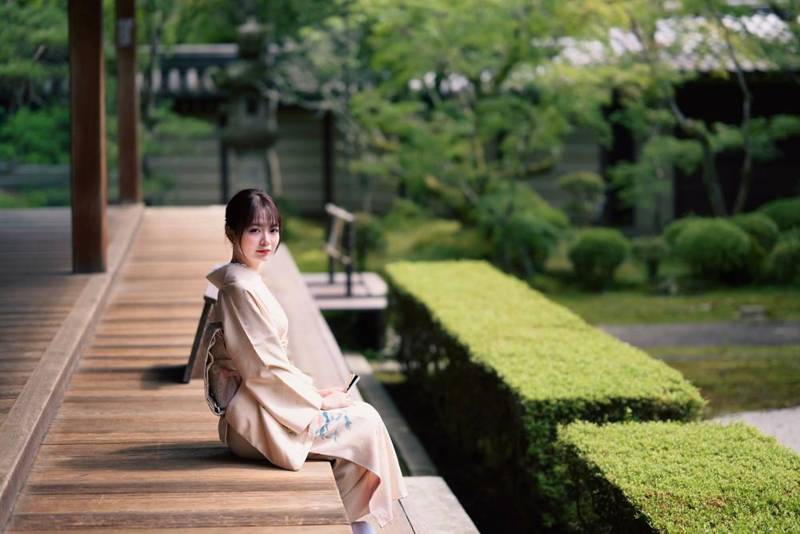
Kimono and tea combined. Some venues dress you in a kimono first and then seat you for the ceremony, so you walk out into Gion already dressed. It is a good choice if you want both experiences without two separate bookings.
Temple tea. A number of temples serve matcha and a sweet to visitors, sometimes included with admission. In Ohara, for example, Hosen-in serves tea to visitors who sit and look out over its garden. This is not a lesson and explanations are usually in Japanese, but for many people it is the most memorable bowl of tea of the trip.
Private sessions. A private booking with a teacher costs more but lets you ask questions, stay longer and go at your own pace. It suits people who already know the basics or are travelling with a particular interest in tea.
When comparing options, check that the listing clearly says the host speaks English, how many guests share a session, how long it lasts, whether you make your own tea and whether chairs are available.
What happens during a guest ceremony
You take off your shoes and enter the tea room, sometimes through a low doorway that makes every guest bow. Take a moment to look at the hanging scroll and the flower in the alcove, chosen for the day and the season. The host greets you, and a small sweet arrives first; it is meant to be eaten before the tea, because the sweetness softens the bitterness that follows.
The host then cleans each utensil with deliberate, practised movements, measures the powdered tea, adds hot water and whisks it to a fine foam. The bowl is placed in front of you with its decorated front facing you. You pick it up, turn it slightly so you do not drink from the front, finish it in a few sips, and set it down. Many sessions end with each guest whisking a bowl of their own, which is harder than it looks.
Etiquette that actually matters
- Wear clean socks. You will be walking on tatami, and bare feet are considered impolite in a tea room.
- Take off rings, bracelets and watches before handling tea bowls, which may be old and fragile.
- Skip strong perfume, which competes with the scent of the tea.
- Try not to step on the fabric borders of the tatami mats.
- Kneeling (seiza) is traditional, but hosts expect visitors to shift or sit cross-legged. If your knees are a concern, ask for a chair when you book.
- Ask before taking photos, and keep your phone away while the tea is being made.
The tea year
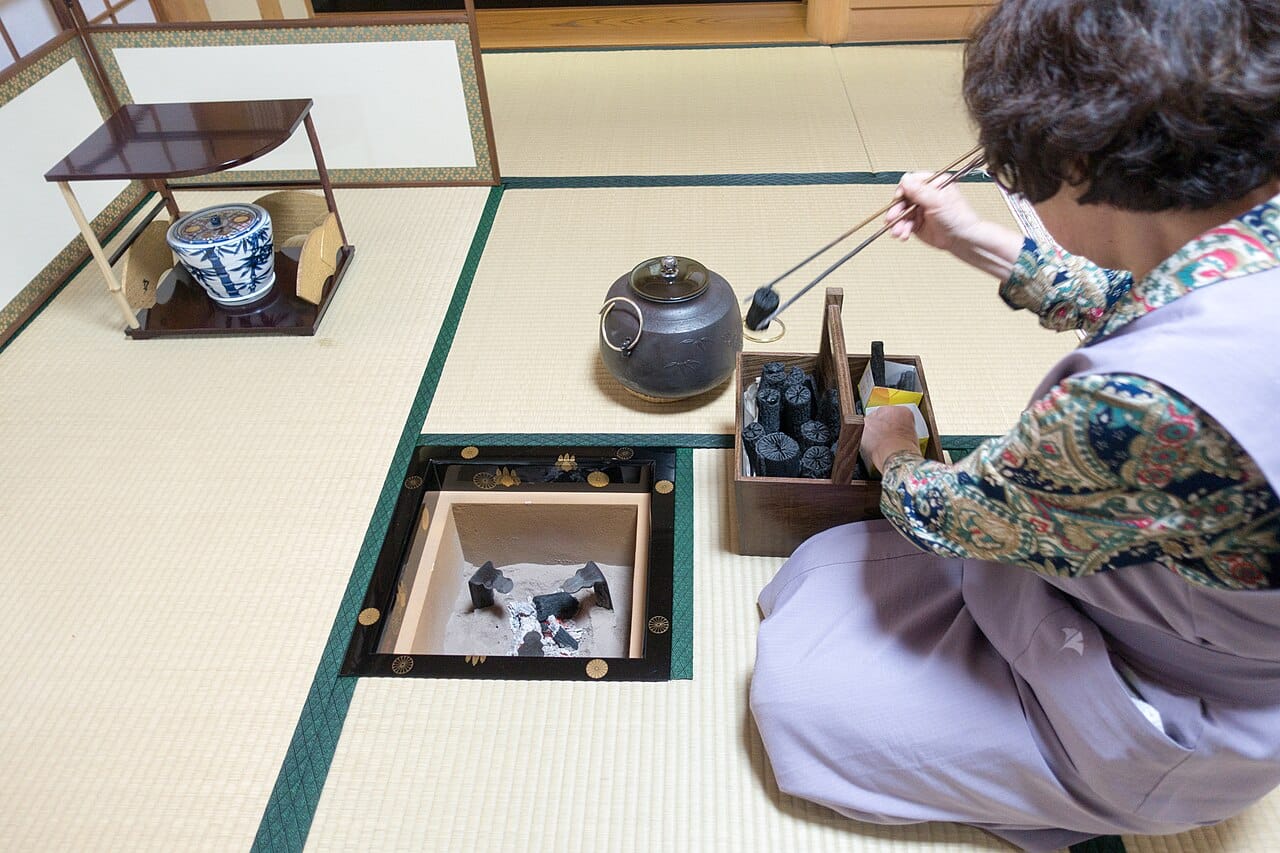
The tea room follows the seasons. From May to October the water is heated on a portable brazier; in November the sunken hearth in the floor is opened and used through the colder months, an occasion tea practitioners mark with special gatherings. The sweets change every month too, from cherry-blossom shapes in spring to autumn leaves and chestnuts later in the year, so a ceremony in November feels quite different from one in July.
Kyoto is busiest during cherry blossom season in late March and early April and the autumn colours of November. Book at least a week ahead in those periods, and earlier for private sessions.
Getting there and timing your day
Most English-language tea rooms are in and around Gion and Higashiyama. From Kyoto Station, city buses and taxis reach the area easily, and the Keihan Line's Gion-Shijo Station and the Hankyu Line's Kyoto-kawaramachi Station are both close. Book an afternoon slot after lunch, since matcha on an empty stomach can be harsh, and let the ceremony be the calm centre of a day spent walking the slopes around Kiyomizu-dera.
Plan your trip
If this is your first tea ceremony, a small-group session with an English-speaking host is the right place to start. To combine it with a kimono, the Kyoto Kimono and Tea Ceremony in Gion covers dressing and the ceremony in one booking, and our full-day plan for kimono and tea in Gion shows how to build the rest of the day around it.