
Nara in a Day
Discover Nara's iconic bowing deer, the majestic Todai-ji Great Buddha, and tranquil backstreets. Essential tips for Indian/Bangladeshi travelers, including veg food and costs.
Jul 10, 2026·✍️ olablog·⏱ 22 min read
Discover Nara's iconic bowing deer, the majestic Todai-ji Great Buddha, and tranquil backstreets. Essential tips for Indian/Bangladeshi travelers, including veg food and costs.
Tap a region to browse articles
Just an hour's train ride from the bustling hubs of Kyoto and Osaka lies Nara, a city where ancient history breathes freely alongside over 1,200 wild sika deer. For first-time or even second-time visitors from India and Bangladesh, Nara offers a uniquely captivating experience that feels a world away from the fast pace of Japan's larger metropolises, all without breaking the bank. A single pack of deer crackers costs around ¥200 (approx. ₹112), offering an unforgettable interaction that sets the tone for your day.
Getting to Nara: Your Journey from Kyoto or Osaka
Nara is exceptionally well-connected, making it a perfect day trip from either Kyoto or Osaka. Understanding your transport options is key, especially when considering cost and convenience, much like navigating local trains versus express services back home.
From Kyoto: You have two primary railway choices: JR and Kintetsu.
- JR Nara Line: If you hold a Japan Rail Pass (which we highly recommend for extensive country-wide travel), the JR Nara Line is your best bet as it's covered. The Miyakoji Rapid Service is the fastest option, taking approximately 45 minutes from Kyoto Station to JR Nara Station. Without a JR Pass, a one-way ticket costs around ¥720 (approx. ₹403). Local services are also available but take longer, around 70 minutes, for the same price.
- Kintetsu Kyoto Line: For many, the Kintetsu Line is the more convenient choice as Kintetsu Nara Station is significantly closer to Nara Park and the main attractions. The Kintetsu Limited Express whisks you from Kyoto Station directly to Kintetsu Nara Station in about 35 minutes, costing ¥1,280 (approx. ₹717) for a reserved seat (including a ¥520 limited express surcharge). A Kintetsu Express train is a good value option, taking slightly longer at around 44-50 minutes and costing ¥760 (approx. ₹425) without the reserved seat surcharge.
From Osaka: Similarly, both JR and Kintetsu offer routes from Osaka.
- JR Yamatoji Line: If you're departing from JR Osaka Station (Umeda area) or Shin-Osaka Station (Shinkansen hub), the JR Yamatoji Rapid Service is convenient. It takes about 50 minutes from JR Osaka Station to JR Nara Station and costs ¥820 (approx. ₹459). If you're near JR Namba Station, a local Yamatoji Line train to Kyuhoji Station with a transfer to the Yamatoji Rapid Service will get you to JR Nara Station in about 51 minutes for ¥580 (approx. ₹325). This route is fully covered by a Japan Rail Pass.
- Kintetsu Nara Line: For the fastest access to Nara Park from Osaka, the Kintetsu Nara Line is often preferred. From Osaka-Namba Station, a Rapid Express train reaches Kintetsu Nara Station in approximately 36-39 minutes, costing ¥680 (approx. ₹381). A Limited Express service is also available, cutting the travel time by a few minutes but increasing the fare to around ¥1,200-¥1,300 (approx. ₹672-₹728).
Choosing Your Train: Consider your starting point in Kyoto or Osaka and whether you have a Japan Rail Pass. If you have the pass, JR is the economical choice. If not, and you prioritise direct access to Nara Park, Kintetsu often provides a slight edge in convenience due to its station's proximity to the main sights. Luggage storage is available at both JR Nara and Kintetsu Nara stations, typically costing around ¥500-¥800 per bag (approx. ₹280-₹448).
| Route | Line | Service Type | Duration (Approx.) | Cost (¥) | Cost (₹ Approx.) | Covered by JR Pass? |
|---|---|---|---|---|---|---|
| Kyoto to Nara | JR Nara Line | Miyakoji Rapid | 45 mins | 720 | 403 | Yes |
| Kyoto to Nara | Kintetsu | Express | 45-50 mins | 760 | 425 | No |
| Kyoto to Nara | Kintetsu | Limited Express | 35 mins | 1,280 | 717 | No |
| Osaka (Umeda) to Nara | JR Yamatoji | Rapid Service | 50 mins | 820 | 459 | Yes |
| Osaka (Namba) to Nara | Kintetsu | Rapid Express | 36-39 mins | 680 | 381 | No |
The Deer of Nara Park: A Gentle Introduction (and Important Etiquette)
Stepping out of Kintetsu Nara Station, you'll almost immediately encounter the city's most famous residents: the sika deer. These aren't just any animals; they are considered sacred messengers of the gods in Shinto belief and are designated a natural treasure. With approximately 1,200 deer roaming freely throughout Nara Park and the temple grounds, interacting with them is undoubtedly a highlight of any visit.
Deer Cracker Etiquette (Shika Senbei): The primary way to interact is by feeding them "shika senbei," special crackers made for the deer. Vendors sell these throughout the park for ¥200 (approx. ₹112) per bundle.
- Buy Smart: Purchase crackers from the official vendors. You'll spot them easily.
- Bow for a Bow: Many deer in Nara have famously learned to bow their heads to ask for crackers. If you hold a cracker out and bow gently, they often reciprocate, creating a charming and photogenic moment.
- Offer One at a Time: Do not hold out the entire bundle. The deer can be quite assertive, especially if they see a stack of crackers. Offer one cracker at a time with a flat palm.
- Show Empty Hands: Once your crackers are gone, show the deer your empty hands (palms up). This signals that you have no more food, and they will usually move on.
Safety with Kids: While generally docile, the deer are wild animals and can sometimes be pushy, particularly if they are hungry or if you hesitate with food.
- Supervise Closely: Always keep a close eye on children. Younger children should be held or kept very close.
- Small Portions: Give kids only a couple of crackers at a time to manage their interaction and prevent overwhelming the deer (or the child).
- No Teasing: Emphasize to children not to tease the deer by holding out crackers and then pulling them away. This can make the deer frustrated and nip.
- Hand Washing: After feeding, ensure everyone washes their hands thoroughly. Hand sanitiser is a good idea to carry.
- Avoid Other Food: Do not feed the deer any human food other than the designated shika senbei. It can be harmful to them.
- Stay Calm: If a deer nudges you or gets too close, remain calm. Don't run or scream, as this can startle them further. Simply show your empty hands and slowly back away.
Mistakes to Avoid:
- Hiding Crackers: Deer have an excellent sense of smell. Hiding crackers in bags or pockets will only lead to them nudging or even nipping at your belongings. Keep them visible and ready to distribute.
- Underestimating Numbers: One bundle of crackers is usually enough for a full deer experience. If you buy too many, you might find yourself surrounded by an eager herd!
- Ignoring Signs: Pay attention to any warning signs around the park. They often provide updated information on deer behaviour.
Interacting with Nara's deer is a truly unique experience, a blend of wildlife encounter and cultural tradition. Approach it with respect and a little caution, and you'll have memories to cherish.
Todai-ji Temple: Beholding the Great Buddha (Daibutsu)
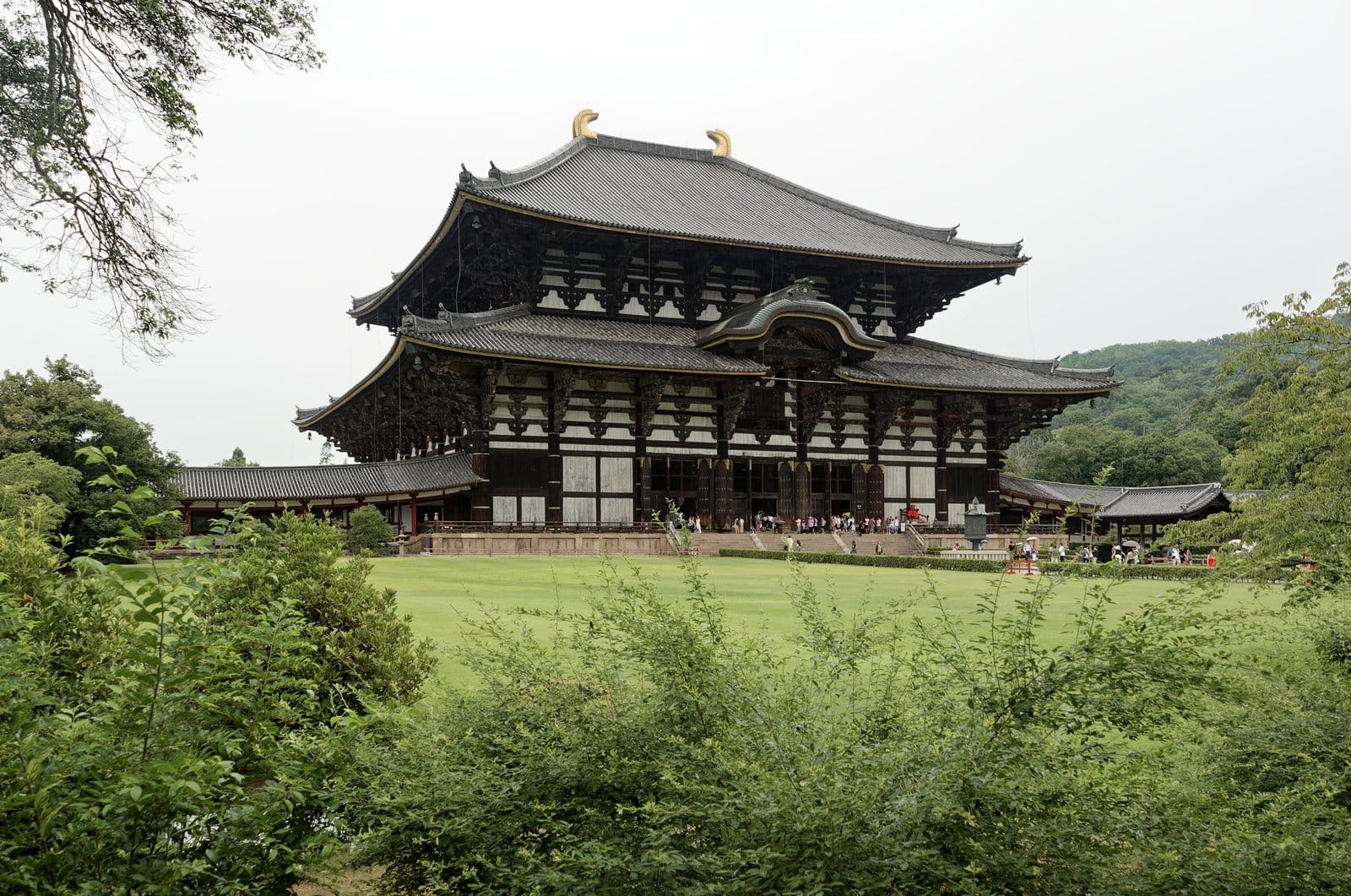
Beyond the endearing deer, Nara's profound historical and spiritual heart lies within Todai-ji Temple. As you approach, you'll first pass through the magnificent Nandaimon Gate, guarded by two imposing wooden Nio guardian statues. The sheer scale of this gate, a National Treasure, offers a hint of the grandeur awaiting you.
The main attraction is the Daibutsuden (Great Buddha Hall), which holds the remarkable distinction of being the world's largest wooden building. Though the current structure, rebuilt in 1709, is only two-thirds the size of its original, its dimensions—57 metres wide, 50 metres deep, and 48 metres tall—are still breathtaking. This monumental structure houses the Daibutsu, a colossal 15-meter-tall seated bronze Buddha statue. Cast in 752 AD and weighing 500 tons, its presence is truly awe-inspiring, a testament to ancient Japanese craftsmanship and devotion. The scale needs to be experienced in person to be properly understood; photographs simply cannot capture its majesty.
Entry Fees and Timings:
- Admission to the Great Buddha Hall: ¥1,000 (approx. ₹560) for adults. Children aged 6-12 are charged ¥400 (approx. ₹224). There is also a combination pass available for the Great Hall and the Todai-ji Museum for ¥1,200 (approx. ₹672) for adults.
- Opening Hours: Todai-ji's Great Buddha Hall is generally open from 7:30 AM to 5:30 PM between April and October, and from 8:00 AM to 5:00 PM from November to March. Last entry is usually 30 minutes before closing.
Best Time to Visit: To avoid the largest crowds, particularly during peak tourist seasons (cherry blossom in spring, autumn foliage in fall), consider visiting Todai-ji either early in the morning, shortly after opening, or later in the afternoon, about an hour or two before closing. This allows for a more serene experience, particularly inside the Great Buddha Hall.
The Pillar Hole Challenge: Inside the Daibutsuden, you'll find a wooden pillar with a hole carved through its base. Legend has it that anyone who can squeeze through this opening will be granted enlightenment or good luck. The hole is said to be the same size as one of the Great Buddha's nostrils. While a fun challenge, especially for children, it can be a tight squeeze for adults, so assess your comfort level before attempting!
Architectural Significance: Todai-ji's importance extends beyond its size. It was once one of the most powerful temples in Japan, playing a crucial role in the country's early Buddhist history. Its influence was so profound that it was a key reason the capital was moved away from Nara to diminish the temple's political power. The architecture, even in its rebuilt form, showcases the pinnacle of ancient Japanese temple design, incorporating elements that have inspired generations of builders. Allow 60 to 90 minutes to fully explore the main hall and its immediate surroundings.
Beyond the Deer and Daibutsu: Exploring Nara's Quieter Charms
While the bowing deer and the majestic Great Buddha are Nara's undeniable headliners, the city offers a wealth of other serene and culturally rich experiences. Venturing slightly beyond the busiest paths reveals a different side of Nara, one of ancient shrines, traditional gardens, and charming old streets.
Kasuga Taisha Shrine: A short, pleasant walk through Nara Park from Todai-ji, often still accompanied by deer, brings you to Kasuga Taisha Shrine. This UNESCO World Heritage site is Nara's most celebrated Shinto shrine, established alongside the capital itself over 1,300 years ago. It's instantly recognisable by its striking vermilion colour and the thousands of bronze and stone lanterns that line its approaches and hang from its buildings. These lanterns are only lit during two special festivals each year – Setsubun Mantoro in February and Obon Mantoro in August – creating a truly magical atmosphere.
- Admission: Entry to the outer grounds and the offering hall is free. To access the inner sanctuary for a closer look at the main shrine buildings, there is an admission fee of ¥700 (approx. ₹392). Children aged 6-12 years old generally enter free.
- Opening Hours: The main sanctuary is open from 6:30 AM to 5:30 PM from March to October, and from 7:00 AM to 5:00 PM from November to February. The inner area has slightly shorter hours, typically 9:00 AM to 4:00 PM.
Nara National Museum: For those interested in delving deeper into Japan's artistic and Buddhist heritage, the Nara National Museum is a must-visit. Located within Nara Park, it's Japan's second-oldest national museum, housing an impressive collection of Buddhist art, including statues, paintings, and artifacts from the Asuka to the Kamakura periods. The museum offers English explanations, making it accessible for international visitors.
- Admission: General admission to the permanent collection (Buddhist Sculpture Hall) is typically ¥700 (approx. ₹392). College students pay ¥350 (approx. ₹196), while youth 18 and younger, and seniors 70 or older, receive free entry with proof of age/ID. Special exhibitions may have varying fees.
- Opening Hours: Generally 9:30 AM to 5:00 PM, with last entry 30 minutes before closing. It is usually closed on Mondays (or the following weekday if Monday is a national holiday) and from December 28th to January 1st.
Isuien Garden and Yoshikien Garden: These traditional Japanese gardens offer tranquil escapes, perfect for a moment of calm reflection. Isuien Garden is a beautiful "stroll garden" known for its borrowed scenery, incorporating Todai-ji's Nandaimon Gate and Mount Wakakusa into its design. Adjacent to it is Yoshikien Garden, which is particularly appealing for international visitors: it offers free entry upon presentation of your passport. Both gardens showcase seasonal beauty, from vibrant spring blossoms to fiery autumn leaves, and provide a peaceful contrast to the bustling temple grounds.
- Isuien Garden Admission: ¥1,200 (approx. ₹672), which often includes entry to the Neiraku Art Museum within its grounds.
- Yoshikien Garden Admission: Free for foreign tourists (show passport).
Naramachi: Nara's Traditional Merchant District: For a glimpse into Nara's past daily life, wander through Naramachi, the city's old merchant quarter. This charming district is characterised by narrow lanes, traditional wooden machiya (townhouses), and a slower pace. Many machiya have been converted into quaint cafes, artisan shops, or guesthouses. It's a fantastic place to simply stroll, discover local crafts, and soak in the atmosphere. You might find unique souvenirs or enjoy a quiet tea break here. This area is also home to some of the vegetarian and halal food options we will discuss.
Savouring Nara: Vegetarian-Friendly Lunch and Snack Options
For many visitors from India and Bangladesh, finding suitable vegetarian or halal food can be a genuine concern while traveling in Japan. Nara, thankfully, has several options that cater to these dietary needs, allowing you to enjoy local flavours without anxiety.
Understanding Japanese Food and Dietary Needs: Traditional Japanese cuisine often uses dashi (fish stock) as a base, even in seemingly vegetarian dishes like miso soup. Therefore, it's essential to communicate your dietary requirements clearly. Learning a few key phrases can be very helpful:
- "Watashi wa bejitarian desu." (I am vegetarian.)
- "Niku o tabemasen." (I don't eat meat.)
- "Sakana o tabemasen." (I don't eat fish.)
- "Dashi nuki de onegaishimasu." (Please omit dashi.)
- "Halal desu ka?" (Is it halal?)
Vegetarian Lunch Picks: Several establishments in Nara are known for accommodating vegetarians:
- Kinatei (喜菜亭): Located a short walk from JR Nara Station, Kinatei is a dedicated vegetarian restaurant. It offers set lunches with a variety of small dishes, brown rice, and miso soup, with free refills on rice and soup. The owner is often praised for being English-speaking and friendly, happy to explain dishes and ensure they are plant-based. Reservations are recommended for dinner.
- Vegan Cafe Ramuna: Tucked away in a quiet street, this all-vegan cafe is a lovely spot for lunch. It's run by a single owner who prepares fresh, often Japanese-inspired, dishes like bento boxes, burgers, and tantan noodles. While the wait might be a little longer due to being a one-person operation, the food is highly regarded.
- Onwa: Another small, 100% vegan restaurant located west of the city centre, known for using locally-grown seasonal vegetables.
- Cafe Koyomi: Offers all-vegan options and is accessible from both Kintetsu Nara and JR Nara stations.
- China Dining Hiten: Located near Kintetsu Nara Station, this Chinese restaurant offers a dedicated vegan menu, including dishes like Sichaun mapo tofu and sweet & sour soy meat.
Halal Options: For halal food, Nara also has growing options:
- Halal Ramen Naramachi Jinniyah: Situated in the Naramachi district, this establishment is halal-certified and offers Japanese dishes like ramen, teriyaki chicken rice bowls, and grilled chicken. They also have tatami seating for a traditional dining experience. Note that a reservation 2 days in advance and a minimum purchase of ¥1,000 (approx. ₹560) per person may be required.
- PY Halal Kitchen: A spacious, halal-certified restaurant near Kintetsu Nara Station, offering a diverse menu inspired by South Asian and Southeast Asian cuisines, including Indian and Pakistani dishes.
- Umemori Sushi School: While primarily a sushi school, they offer halal-friendly sushi-making workshops and dining options. Reservations are required.
The Mochi-Pounding Show at Nakatanidou: A visit to Nara isn't complete without witnessing the incredibly energetic mochi-pounding (mochitsuki) demonstration at Nakatanidou. This shop is famous for its high-speed technique, where two men rhythmically pound glutinous rice with mallets, one pounding while the other quickly turns and folds the dough, all at an astonishing pace. It's a captivating spectacle that draws crowds and is usually accompanied by enthusiastic shouts.
- Location: Nakatanidou is conveniently located on Sanjo Dori, between JR Nara and Kintetsu Nara stations. It's about a 4-minute walk from Kintetsu Nara Station and 10 minutes from JR Nara Station.
- Timing: There is no fixed schedule for the mochi pounding. The staff prepare fresh batches based on demand, often roughly every 30 minutes, especially when a crowd gathers. Your best chance to see it is usually from after noon to early evening. If you arrive and the pounding isn't happening, wait a little; it's short but memorable.
- Cost: Watching the show is free. A single freshly pounded, still-warm mochi usually costs around ¥130 (approx. ₹73). It's cash-only. The mochi is delightfully soft, chewy, and typically filled with sweet red bean paste and coated in kinako (roasted soybean flour). It's a must-try!
Other Local Snacks:
- Kakinoha-zushi (Persimmon Leaf Sushi): Nara's unique local sushi, where small blocks of sushi rice topped with cured mackerel or salmon are wrapped in persimmon leaves. The leaves impart a subtle aroma and have preservative qualities. While traditionally with fish, some shops might offer vegetarian versions, so always inquire.
- Warabi Mochi: A soft, jelly-like sweet made from bracken starch, often served chilled and dusted with kinako and drizzled with kuromitsu (brown sugar syrup). It's a refreshing treat, typically vegetarian.
- Vegan Ice Cream: Some spots in Nara Park, like Tsuru no Chaya and Mikasa-kankokaikan, offer black sesame soy milk ice cream which is vegan-friendly (no milk or egg).
Always double-check with restaurant staff regarding ingredients, especially if you have strict dietary requirements. Google Translate with its camera function can be a lifesaver for reading menus or signs.
A Sample Day in Nara: Optimising Your Itinerary
Planning your day in Nara efficiently will help you make the most of your visit, especially if you're combining it with Kyoto or Osaka. Here’s a suggested itinerary, keeping in mind travel times, crowd levels, and specific interests for visitors from India and Bangladesh.
Morning (8:30 AM - 12:30 PM): Arrival and Iconic Sights
- 8:30 AM - 9:30 AM: Travel to Nara.
- From Kyoto: Take the Kintetsu Express (¥760, approx. ₹425) from Kyoto Station to Kintetsu Nara Station (approx. 45-50 minutes). This puts you closest to the park. If using a JR Pass, take the JR Nara Line Miyakoji Rapid Service (covered by pass, approx. 45 minutes) to JR Nara Station and prepare for a slightly longer walk or a short bus ride.
- From Osaka: Take the Kintetsu Rapid Express (¥680, approx. ₹381) from Osaka-Namba Station to Kintetsu Nara Station (approx. 36-39 minutes). If using a JR Pass, take the JR Yamatoji Rapid Service (covered by pass, approx. 50 minutes) from JR Osaka Station to JR Nara Station.
- 9:30 AM - 10:30 AM: Nara Park & Deer Interaction.
- From Kintetsu Nara Station, it's a short walk to Nara Park. If you arrived at JR Nara Station, walk east along Sanjo Dori (about 15-20 minutes) or take a local bus (City Loop Bus) to the Todai-ji Daibutsuden bus stop.
- Purchase a bundle of shika senbei (¥200, approx. ₹112) and enjoy the unique experience of feeding and bowing with the deer. Remember the etiquette, especially if traveling with children. This early hour means fewer crowds and potentially more relaxed deer.
- 10:30 AM - 12:30 PM: Todai-ji Temple and Great Buddha.
- Walk through the Nandaimon Gate and proceed to the Daibutsuden (Great Buddha Hall).
- Spend time marveling at the sheer scale of the wooden hall and the colossal bronze Daibutsu. Don't forget to try the pillar hole challenge!
- Admission: ¥1,000 (approx. ₹560) for adults.
Mid-Day (12:30 PM - 2:30 PM): Lunch and Mochi Magic
- 12:30 PM - 1:30 PM: Vegetarian/Halal Lunch.
- Head towards the Naramachi district or closer to JR Nara Station for your lunch.
- Vegetarian: Consider Kinatei or Vegan Cafe Ramuna for dedicated plant-based meals. Expect to pay around ¥1,000-¥2,000 (approx. ₹560-₹1,120) per person for a set lunch.
- Halal: Halal Ramen Naramachi Jinniyah in Naramachi offers certified halal Japanese cuisine, but remember to check reservation requirements. PY Halal Kitchen is another option for Indian/Pakistani cuisine.
- 1:30 PM - 2:30 PM: Nakatanidou Mochi-Pounding Show.
- Walk to Nakatanidou on Sanjo Dori. The pounding shows are frequent in the afternoon, so you'll likely catch one. Enjoy the spectacle and then savour a fresh, warm mochi (¥130, approx. ₹73).
Afternoon (2:30 PM - 5:30 PM): Cultural Immersion and Quiet Exploration
- 2:30 PM - 4:00 PM: Kasuga Taisha Shrine.
- Walk from Nakatanidou through Nara Park to Kasuga Taisha. Explore the vermilion shrine buildings and the thousands of lanterns.
- Consider entering the inner sanctuary (¥700, approx. ₹392) for a closer look.
- 4:00 PM - 5:30 PM: Naramachi or Garden Stroll.
- Option A (Naramachi): Wander through the charming old streets of Naramachi. Browse local shops, admire the traditional architecture, and perhaps enjoy a coffee or tea at a quaint cafe.
- Option B (Garden): For a peaceful end to your sightseeing, visit Yoshikien Garden (free for foreign tourists with passport) or Isuien Garden (¥1,200, approx. ₹672).
- 5:30 PM onwards: Departure.
- Make your way back to Kintetsu Nara or JR Nara Station for your return journey to Kyoto or Osaka.
Estimated Costs for the Day (per person, excluding inter-city transport):
- Deer crackers: ¥200 (approx. ₹112)
- Todai-ji Temple admission: ¥1,000 (approx. ₹560)
- Kasuga Taisha inner sanctuary (optional): ¥700 (approx. ₹392)
- Lunch: ¥1,000 - ¥2,000 (approx. ₹560 - ₹1,120)
- Mochi: ¥130 (approx. ₹73)
- Total estimated activities & food: ¥3,030 - ¥4,030 (approx. ₹1,697 - ₹2,257)
This itinerary offers a comprehensive Nara experience, balancing popular sights with quieter cultural exploration and ensuring your dietary needs are considered. Remember to wear comfortable shoes, as you'll be doing a lot of walking!
Key Takeaways
- Nara is an easily accessible and budget-friendly day trip from Kyoto or Osaka, offering a unique blend of history, culture, and nature.
- The sika deer are sacred and generally polite, but always follow etiquette when feeding them crackers (shika senbei, ¥200 / approx. ₹112) to ensure a safe and enjoyable interaction, especially with children.
- Todai-ji Temple, housing the world's largest wooden building and the colossal Great Buddha, is a truly awe-inspiring sight not to be missed.
- Nara offers diverse vegetarian and halal dining options, with specific restaurants like Kinatei and Halal Ramen Naramachi Jinniyah catering to these dietary needs.
- Witnessing the high-speed mochi-pounding at Nakatanidou is a delightful cultural experience, and sampling the fresh, warm mochi is a must.
- Beyond the main attractions, explore tranquil spots like Kasuga Taisha Shrine with its thousands of lanterns or the traditional Naramachi district.
- Choose your train based on your starting location and JR Pass status: Kintetsu for direct access to Nara Park (closer station), JR if using a JR Pass.
- Always carry some cash (yen) for smaller purchases like deer crackers and some temple admissions, as not all vendors accept cards.
FAQ
Q. Is Nara worth a day trip from Kyoto or Osaka, or should I stay longer? Nara is absolutely worth a day trip, as the main attractions (deer park, Todai-ji, Kasuga Taisha) can be comfortably explored in 5-7 hours. However, if you wish to delve deeper into its quieter charms, museums, or enjoy the evening atmosphere, an overnight stay can be rewarding. For most first-time visitors, a full day trip is sufficient.
Q. How do I ensure I find vegetarian food in Nara, especially without knowing Japanese? Many vegetarian-friendly restaurants, like Kinatei or Vegan Cafe Ramuna, have English menus or staff who speak English. Having key Japanese phrases written down or using a translation app for "I am vegetarian," "no meat," "no fish," and "no dashi (fish stock)" can be very helpful. Look for restaurants advertising 'vegan' or 'vegetarian' clearly.
Q. Are the deer in Nara Park dangerous, especially for young children? The deer are generally docile and accustomed to humans. However, they are wild animals and can become assertive or nudge if they see or smell crackers. For safety, always supervise children closely, offer crackers one at a time, show empty hands when you have no more food, and avoid teasing the deer.
Q. What is the best way to get to Nara Park from the train stations? From Kintetsu Nara Station, Nara Park is just a short walk away. From JR Nara Station, it's about a 15-20 minute walk east along Sanjo Dori, or you can take a local bus (City Loop Bus) directly to stops near the park and Todai-ji Temple.
Q. Is it necessary to buy a Japan Rail Pass for a day trip to Nara? A Japan Rail Pass is only cost-effective if you plan extensive train travel across multiple regions of Japan. For just a day trip to Nara from Kyoto or Osaka, individual train tickets on either the JR or Kintetsu lines will likely be cheaper than purchasing a JR Pass, especially if you opt for the Kintetsu Express service. Compare the cost of individual tickets against the price of a JR Pass for your overall itinerary.
More from this region — Kyoto, Nara & Kansai
View all →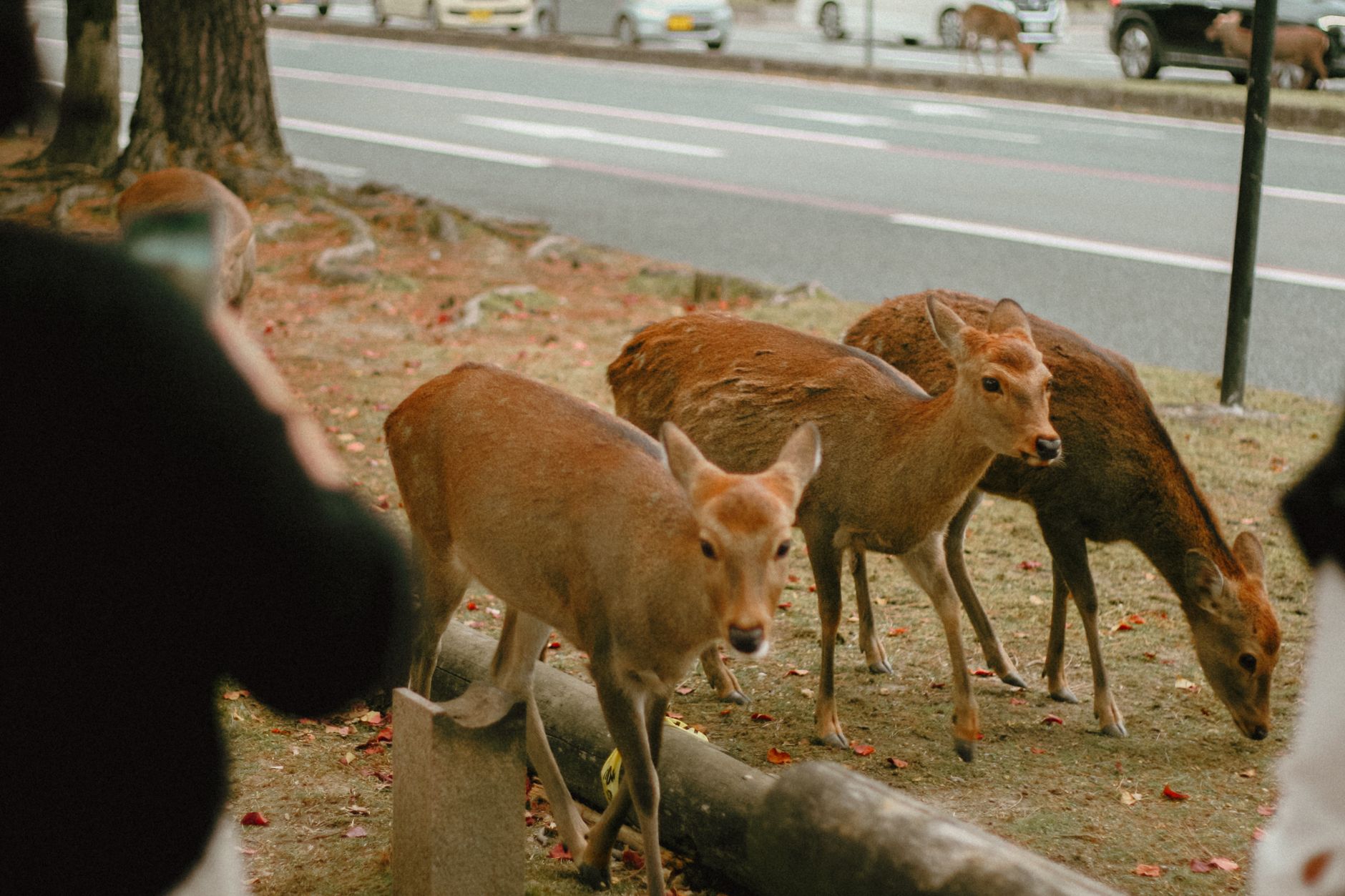
Nara — Meet 1,200 Sacred Deer in a Single Day
3 min · destinations
Nara Park in Kimono: Deer, Todaiji and a Day Trip from Kyoto
7 min · culture
Nara Park in Spring – Cherry Blossoms, Friendly Deer, and Pure Magic
6 min · destinations

Private Car and Kimono Photoshoot Days: How a Driver Changes a Kimono Day in Tokyo and Kyoto
8 min · culture