Private Car and Kimono Photoshoot Days: How a Driver Changes a Kimono Day in Tokyo and Kyoto
What a kimono day looks like with a chauffeured car in Tokyo or Kyoto: sample routes, how to sit without crushing the obi, and how car and kimono are booked.
Sep 14, 2026·✍️ olablog·⏱ 8 min read
What a kimono day looks like with a chauffeured car in Tokyo or Kyoto: sample routes, how to sit without crushing the obi, and how car and kimono are booked.
Tap a region to browse articles
A kimono day on foot and by train is the standard, and for one neighbourhood it is the right choice. The moment you want two or three places that are not walking distance apart, a car with a driver changes the arithmetic: no stairs at stations, no standing on a packed train with an obi against a stranger's backpack, no hair undone by platform wind, no luggage problem, and a rain plan that is a door away. This guide is about how such a day actually runs, in Tokyo and in Kyoto, and what the car cannot do.
How the booking works
OlaChill runs two separate services and they are booked separately:
- Kimono rental at the Tokyo Asakusa shop or the Kyoto Kiyomizu shop: 14 styles from ¥3,000 (children's yukata) to ¥25,000 (Design Furisode), with the photo option (¥15,000 and up, 30 minutes, about 30 retouched images), hair set (¥1,500), makeup (¥5,000) and next-day or hotel return (¥1,100 each) as add-ons.
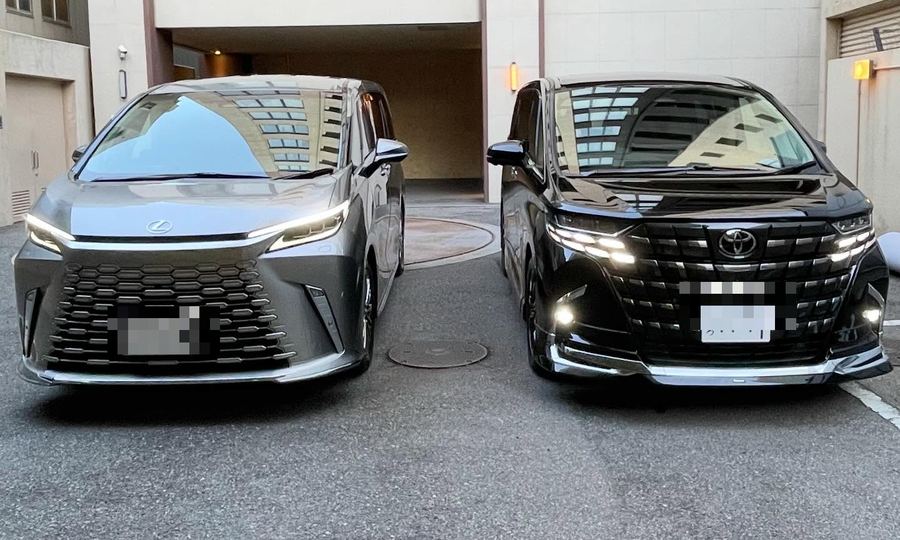
- Chauffeured cars (private car with driver for up to six guests in an Alphard or Lexus LM class vehicle, charter buses for larger groups): the car is booked by the day, one price per car (Alphard ¥49,000 per day in Tokyo and Kyoto; tolls and parking extra), not per person.
There is no fixed "car plus photoshoot" bundle. The car is booked by the day on the private car page (the Alphard has a fixed day price; other models are confirmed by email), and the kimono and photographer are reserved on the kimono page. Doing it this way means you are not paying for a package shape that does not fit your day.
Sitting in a car in kimono
The obi is tied at the back in a knot that is 10 to 15 cm deep. Lean back into a car seat and you crush it, which shows in every photo after. The technique:
- Enter sideways: sit on the edge of the seat first, then swing the legs in together, hem held.
- Sit forward on the seat with the back straight and the knot clear of the seat back. On longer drives, a small cushion behind the lower back keeps you forward without effort.
- Sleeves folded onto the lap, not trailing in the door.
- Seat belt over the shoulder as normal; it does not harm the collar.
Drivers who work kimono days know this and will hold the door and give you time. In a Lexus LM or Alphard the rear seats recline and have space to sit forward comfortably; it is why these vehicles are the usual choice.
A Tokyo day with a car
| Time | Stop | Why the car matters |
|---|---|---|
| 09:00 | Dressing at the Asakusa shop; the car waits at Kaminarimon | Luggage goes straight into the car; no lockers to come back for |
| 09:45 | Sensoji, Nakamise, the pagoda on foot (photographer for the first 30 minutes if booked) | Walking distance; the car meets you at Sumida Park |
| 11:00 | Drive to Meiji Jingu (about 30 minutes) | Avoids the Ginza line and a Harajuku platform in kimono |
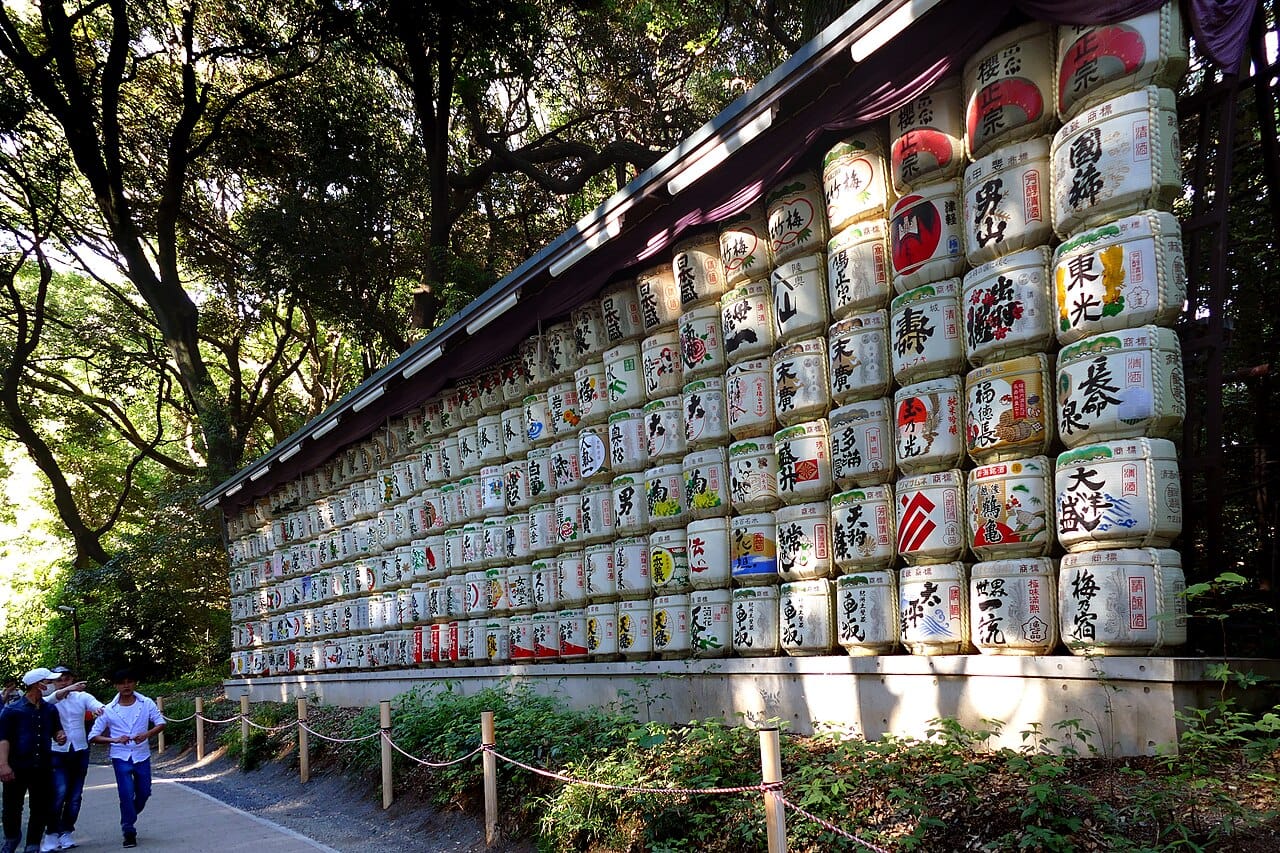
| 11:30 | Meiji Jingu forest approach and the shrine | Gravel path; the car waits at the Harajuku gate |
| 12:45 | Lunch in Omotesando or Aoyama, sitting down | The driver knows restaurants with tables and parking |
| 14:00 | Drive to Hamarikyu Gardens (about 25 minutes), or the Imperial Palace East Gardens | Tidal garden with skyscrapers behind, a different photo from Asakusa |
| 15:30 | Drive back via Tokyo Station's Marunouchi facade for a five-minute photo stop | Only possible with a car; there is no sensible station approach in kimono |
| 16:30 | Back in Asakusa for the gold-light Skytree shot at Azumabashi | Drop at the river, the car waits |
| 17:30 | Return the kimono before 18:00, or hotel return | If hotel return is booked, the car takes you straight to the hotel |
A Kyoto day with a car
| Time | Stop | Why the car matters |
|---|---|---|
| 09:00 | Dressing at the Kiyomizu shop; the car waits on Gojo-zaka | No walking down to Keihan later |
| 09:45 | Kiyomizu-dera and Sannenzaka on foot | These are walking lanes; the car meets you at Yasaka Pagoda |
| 11:00 | Drive to Fushimi Inari (about 20 minutes) | Straight in, no station walk |
| 11:15 | Torii tunnels above Okusha | The car waits at the shrine car park |
| 12:30 | Drive to Arashiyama (40 to 50 minutes); lunch by the river | The single leg that makes two sides of Kyoto possible in one day |
| 14:00 | Tenryu-ji garden, the bamboo grove, Togetsukyo | Walking; the car parks near the bridge |
| 16:00 | Drive back to Higashiyama (about 40 minutes) | Sitting down while the train crowd stands |
| 16:45 | Yasaka Pagoda in gold light, Gion's Shirakawa canal | Drop at Yasaka-dori |
| 17:45 | Return before 18:00, or hotel return and dinner in Gion | Same as Tokyo |
Nara can replace Arashiyama in the Kyoto day: 50 to 70 minutes from Fushimi Inari, and the car waits at the park while you walk with the deer. Our Nara in kimono guide has the on-foot version for comparison.
What the car cannot do
- Get you into the lanes. Sannenzaka, Nakamise, the bamboo grove and Gion are pedestrian. The car drops and collects at the ends; you still walk in zori. Budget the same blister plasters.
- Beat the crowds at 09:00. The shops open at 09:00, so the first stop is still mid-morning. For dawn photos, the pattern is kimono taken the day before with next-day return, car at 06:00.
- Park everywhere. Around Kiyomizu-dera and Kaminarimon on weekends, drop-off is quick but waiting is not; drivers meet you at the nearest agreed corner. Keep the driver's number on your phone.
- Replace the photographer. The photo option is a separate person with a separate booking; the driver drives.
Who this is for
- Families with small children in kimono, where a stroller, snacks and a change of clothes live in the car.
- Groups of three to six who want two sides of a city in one day.
- Anyone renting a Furisode (¥19,000) or Design Furisode (¥25,000): long sleeves and stations are a poor mix, and a formal kimono deserves a formal arrival.
- Rainy days: the car is the rain plan, and the rainy-day kimono guide has the rest.
- Guests with limited mobility, for whom a kimono day is otherwise all stairs.
Checklist
- Kimono booked on the kimono page; car booked separately by the day, itinerary attached
- Photographer slot aligned with the first stop, if booked
- Hotel return booked if the day ends away from the shop
- A small cushion for the lower back (ask the driver)
- Driver's number saved; agreed meeting corners for each pedestrian stop
FAQ
Is a car worth it for one neighbourhood? No. Asakusa alone or Higashiyama alone is a walking day; see the Asakusa photo route and the Kyoto photo route. The car earns its quote when the day has two or more distant stops.
Can the driver take photos? Drivers will happily take a phone photo at a stop, but they are not the photo service. Book the photographer for the shots that matter.
How many people fit? Up to six in an Alphard-class car (6 with 2 suitcases, or 4 with 4); for seven or more, a small charter bus; both are on the private car and charter bus pages.
Can the car go on to Kamakura or Nara? Yes; day trips are the natural use. The Kamakura in kimono guide and the Kamakura and Enoshima private day show the shapes.
What does the car price cover? The day price covers the vehicle, driver and fuel; expressway tolls and parking are billed separately. Send the date, start point, stops and end time with the booking so the driver can plan the route.
Plan a kimono day with a driver
Reserve the kimono and add-ons on the kimono rental page, then book the car by the day on the private car page, adding the itinerary above or your own version of it.