Kyoto Kimono Photoshoot Route: Kiyomizu-dera, Sannenzaka, Yasaka Pagoda and Gion
A kimono photoshoot route through Higashiyama, Kyoto: Kiyomizu-dera, Sannenzaka, Yasaka Pagoda, Nene-no-michi and Gion, ordered by light and crowds.
Sep 14, 2026·✍️ olablog·⏱ 7 min read
A kimono photoshoot route through Higashiyama, Kyoto: Kiyomizu-dera, Sannenzaka, Yasaka Pagoda, Nene-no-michi and Gion, ordered by light and crowds.
Tap a region to browse articles
The 3-kilometre walk from Kiyomizu-dera down through Sannenzaka and Ninenzaka to Yasaka Shrine and Gion is the most photographed stretch of Japan, and it was made for kimono: stone steps, wooden shopfronts, a five-storey pagoda at the end of a lane, and a geisha district at the bottom. It is also crowded from 10:30 until 16:00 every day of the year. This route starts at OlaChill's Kyoto Kiyomizu shop, which sits a few minutes below the temple, and orders the stops so that you are in each one when the light and the crowd are on your side.
The route at a glance
| Stop | Walk from previous | Best time | The shot |
|---|---|---|---|
| Kiyomizu-dera (清水寺), Niomon gate and the stage | 10 minutes uphill from the shop | 08:30 to 09:30 (temple opens 06:00) | Vermilion gate with the pagoda; the city from the stage |
| Sannenzaka (三年坂) | 5 minutes | 09:30 to 10:15 | Looking up the stone steps with shop lanterns |
| Ninenzaka (二年坂) | 3 minutes | 10:15 | The wooden fronts, the tatami-room Starbucks doorway |
| Yasaka Pagoda (八坂の塔, Hōkan-ji) | 5 minutes | 10:30, or 16:30 for gold light | From Yasaka-dori looking up the lane at the pagoda |
| Nene-no-michi (ねねの道) and Ishibei-koji (石塀小路) | 5 minutes | 11:00 | Stone-walled alley, no cars, few people |
| Maruyama Park and Yasaka Shrine (八坂神社) | 8 minutes | 11:30, or after 17:00 with the lanterns lit | Weeping cherry in spring; the lantern hall of the shrine |
| Gion: Hanamikoji (花見小路) | 5 minutes | 12:00 or 16:00 | Machiya tea houses; walk, do not pose in front of doors |
| Shirakawa and Tatsumi bridge (巽橋) | 5 minutes | 16:30 | Willows over the canal; the classic Gion picture |
Stop by stop
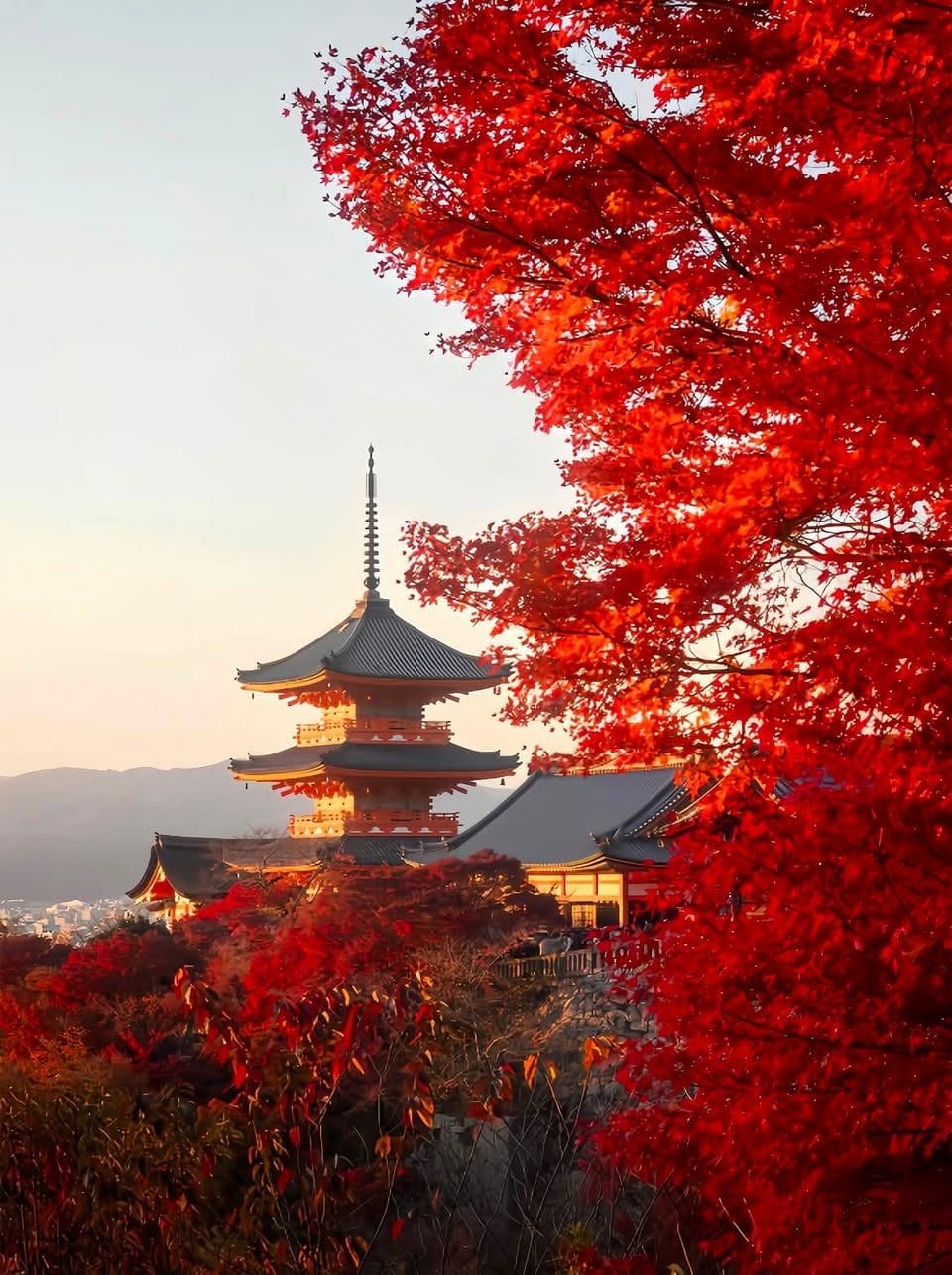
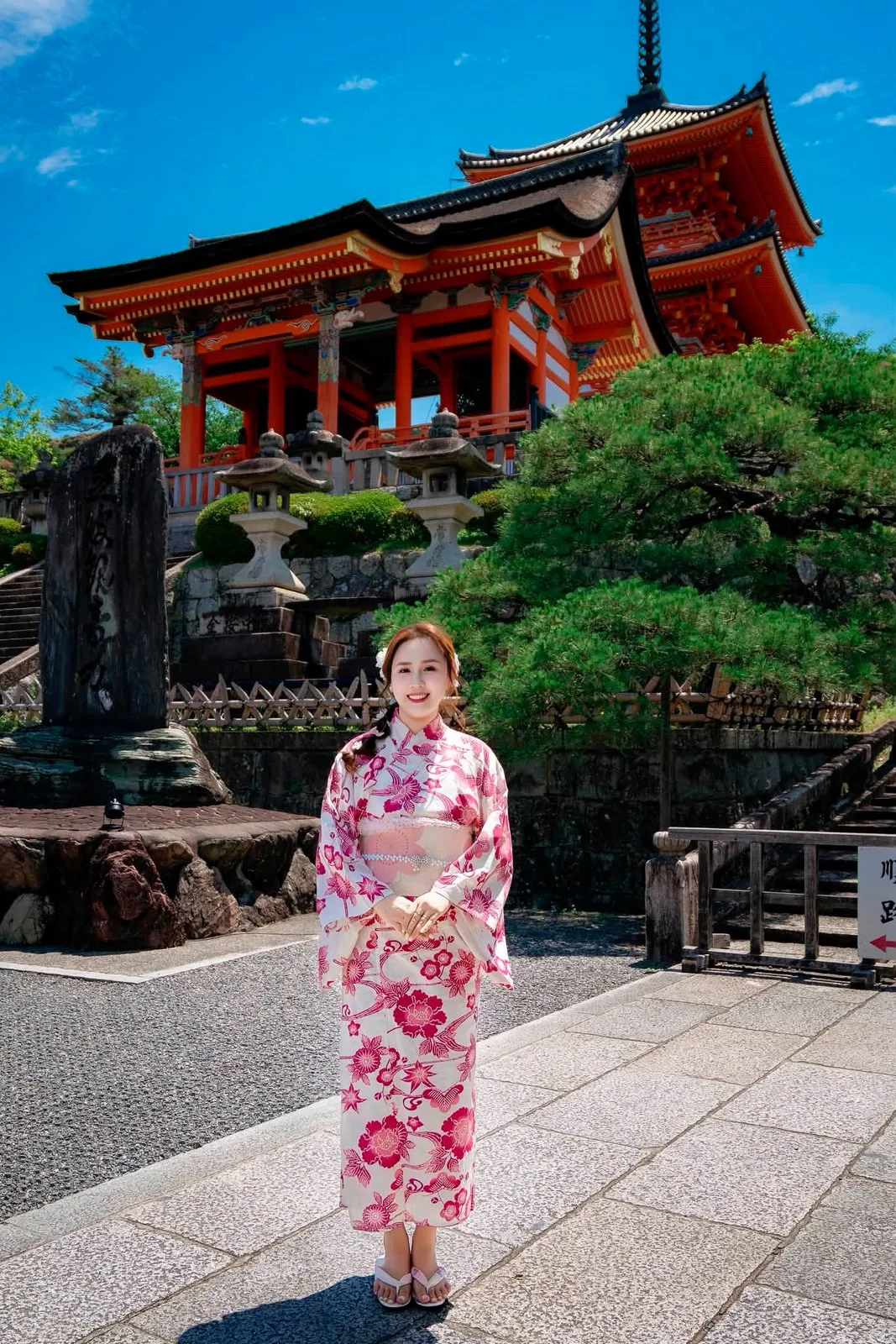
Kiyomizu-dera. Be at the Niomon gate by 08:30. The gate and the three-storey pagoda beside it are the temple's colour; the main hall and stage are dark wood. Admission to the hall is ¥500. From the stage the city spreads west; from the Okunoin hall opposite, you get the stage itself in frame, the postcard shot. Steps are steep and polished; take them slowly in zori.
Sannenzaka. The steepest and prettiest of the lanes. Superstition says a fall here brings three years of bad luck, which is a fair description of what a fall in kimono feels like anyway. Shoot from the bottom looking up so the steps and lanterns stack behind you. By 10:30 the lane is a queue.
Ninenzaka. Gentler, with the wooden fronts and the famous Starbucks in a two-storey machiya (photograph the doorway, not the logo). The side alleys off Ninenzaka are where to step for a quiet portrait.
Yasaka Pagoda. Turn onto Yasaka-dori and look east: the pagoda closes the lane. Morning light is on the near face; from 16:30 the low sun lights the whole tower gold. This is the single most-shot kimono frame in Kyoto and the best time is the late one, when the tour groups have left.
Nene-no-michi and Ishibei-koji. Flat, stone-paved, lined with walls and tea houses. Ishibei-koji, a stone-walled alley off Nene-no-michi, is residential: keep quiet and do not block doorways. Kōdai-ji, at the top, is worth the admission for its bamboo grove and mirror pond.
Maruyama Park and Yasaka Shrine. The park is where you sit down. The shrine's main hall is hung with hundreds of lanterns that light at dusk; the west gate on Shijo-dori is the famous vermilion frame.
Gion. Hanamikoji is a working street of tea houses. Walk it, photograph it, but do not pose in front of private doorways, follow or touch geiko and maiko, or enter the side alleys marked private. Shirakawa, to the north, is the gentler alternative: willows, a canal, the Tatsumi bridge and a small shrine, and at 16:30 the light comes down the water.
Kimono choices for Higashiyama
The backdrop is dark wood, grey stone and vermilion, so a light or vivid kimono reads best. OlaChill's Kimono Ren (¥7,000, large bold patterns) and the pale-toned Komongi (¥5,500) are the everyday choices; the Furisode (¥19,000) is the formal spectacle; for men, the traditional kimono (¥5,000) or the Montsuki with hakama (¥10,000) against the pagoda is a strong picture. Add the hair set (¥1,500); Higashiyama wind on the stage will find loose hair.
Photographer or phone?
A phone and a friend cover this route well if you follow the timing. The photo option (¥15,000 and up, 30 minutes, about 30 retouched images) is best spent on the two hardest stops for amateurs: the Kiyomizu stage at 08:30 and Yasaka Pagoda from the lane. Tell us when booking and we start at the temple.
More spots across the city are in our Kyoto kimono photo-spot map; what to expect from the rental itself is in Kimono rental in Kyoto: how to choose.
Plan your day
- 09:00 Shop opens; dress and hair. For the 08:30 temple slot, book the earliest dressing time and walk straight up.
- 09:45 Kiyomizu-dera.
- 10:30 Sannenzaka, Ninenzaka, Yasaka Pagoda (first pass).
- 11:15 Nene-no-michi, Ishibei-koji, Kōdai-ji.
- 12:15 Lunch in the Kōdai-ji area or Maruyama Park (yudofu, or a set lunch with tables).
- 13:30 Yasaka Shrine, then the flat walk along Shijo to the river; rest at a cafe on Pontocho.
- 15:30 Back to Shirakawa for the canal light, then Hanamikoji.
- 16:30 Return up Yasaka-dori for the gold-light pagoda shot.
- 17:30 Down to the shop before 18:00, or add next-day return (+¥1,100) for the shrine lanterns and a Gion evening. Our Gion evening tour is a good way to do it.
Checklist
- Earliest slot booked
- ¥500 coins for Kiyomizu-dera, cash for Kōdai-ji
- Blister plasters; Sannenzaka's steps are uneven
- Parasol in summer, shawl in November
- A phone with storage; you will take more photos here than anywhere else in Japan
FAQ
How long does the full route take? About six hours with lunch and the return for the evening pagoda shot; four if you skip Gion.
Is Sannenzaka doable in zori? Yes, with small steps and the handrail. Our walking in zori guide has the technique.
Where are the bathrooms? Kiyomizu-dera, Maruyama Park, Yasaka Shrine and the Gion Corner area. Plan around them; kimono and a hurried search do not mix.
What if it rains? Higashiyama in rain is atmospheric and the shop lends umbrellas. Skip the temple stage (slippery) and spend the time in Ishibei-koji and Gion.
Can we shoot at sunrise? Kiyomizu-dera opens at 06:00, but the shop opens at 09:00. With next-day return from the previous day, you can be at the temple at dawn in kimono.
Book your Higashiyama kimono day
Reserve the earliest slot at the Kyoto Kiyomizu shop, add the photo option for the temple and pagoda, and see all styles on the kimono rental page.