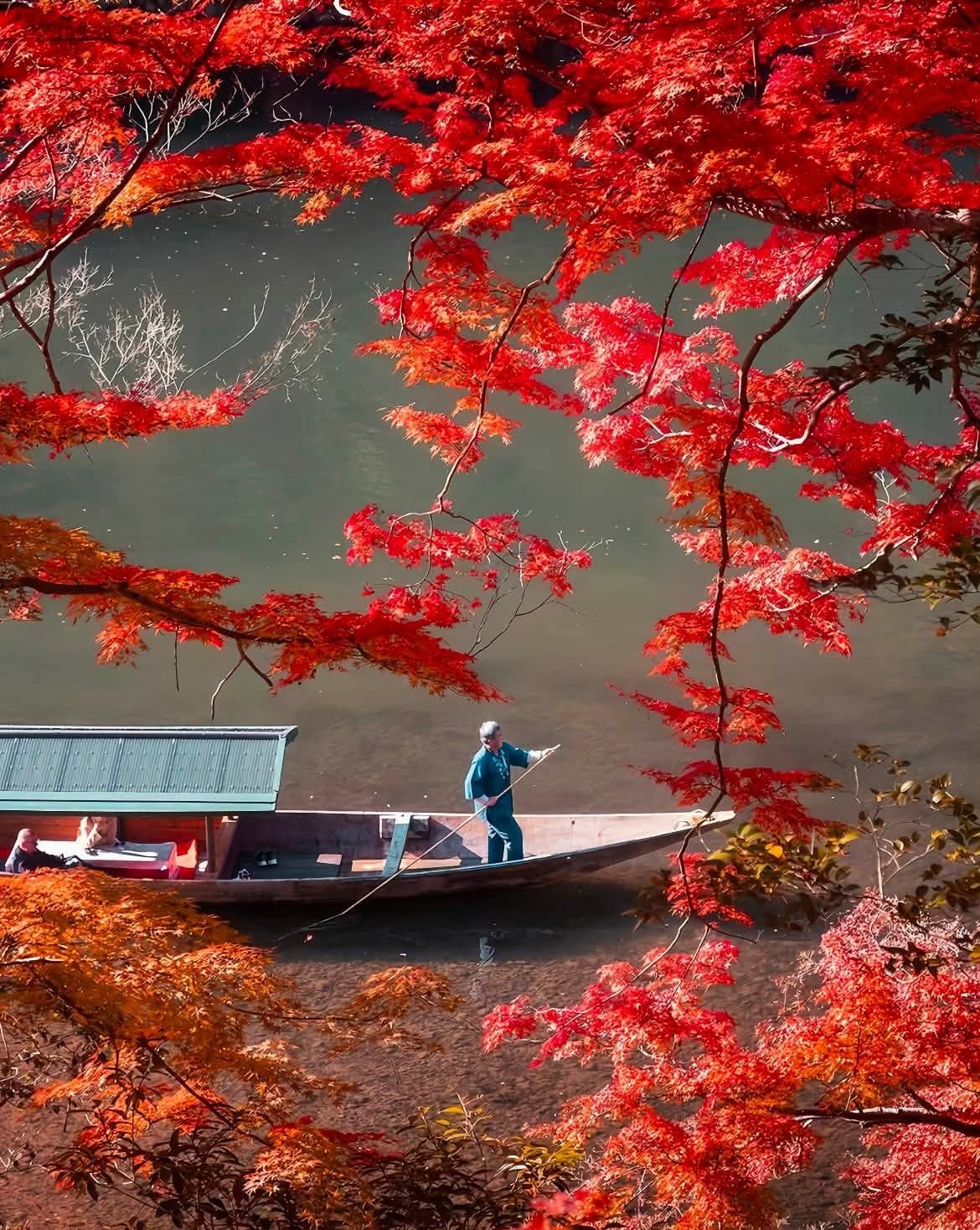
A Day of Chasing Kyoto’s Autumn Colors, Hour by Hour
A full day covering Tofukuji, Fushimi Inari, Kiyomizu-dera, and Eikando during the autumn foliage season: less-crowded time slots, estimated admission costs, and backup plans for rainy days.
Aug 12, 2026·✍️ olablog·⏱ 16 min read
A full day covering Tofukuji, Fushimi Inari, Kiyomizu-dera, and Eikando during the autumn foliage season: less-crowded time slots, estimated admission costs, and backup plans for rainy days.
Tap a region to browse articles
On my first trip to Kyoto in autumn, I made the exact mistake that 90% of first-time visitors make: I arrived at Kiyomizu-dera at 10 a.m. The result was a Kiyomizu-zaka slope packed like a festival, inching forward through a forest of selfie sticks, while my “once-in-a-lifetime” autumn foliage photo included a whole dozen strangers’ heads. By the time I returned to Kyoto Station, my legs were exhausted and I felt like I had spent the day sightseeing... people, not leaves.
The following season, I did the complete opposite: I got up early and arranged the sights according to each location’s rhythm of crowds and quiet rather than their popularity. And it turned out that Kyoto during autumn foliage season isn’t actually as “overloaded” as people complain — the crowds are simply concentrated in the wrong places at the wrong times. Visit the same temple two hours apart, and you can have two completely different experiences.
This is a one-day itinerary I’ve tried several times and refined: Tofukuji early in the morning → Fushimi Inari around noon → Kiyomizu-dera in the afternoon → Eikando light-up in the evening. For each leg, I’ll explain why you should go at that time, the best hours for photos, estimated admission costs, and, just as importantly, what to do if it rains. One note from the outset: this itinerary is for people who prioritize autumn foliage and beautiful light — if you’re visiting Kyoto to collect goshuin (temple stamps), your schedule will be different, since goshuin depend on the stamp counter’s closing time, not the direction of the sunlight.
Why this order?
At first glance, it seems a little counterintuitive: Tofukuji and Fushimi Inari are in the south, while Kiyomizu-dera and Eikando are in the east, so why not group them by location to minimize travel? The answer lies in three factors that experienced Kyoto autumn travelers know by heart:
First, crowd patterns. Tofukuji is one of Kyoto’s most famous autumn foliage spots, to the point that photography on the bridge may be prohibited during peak season because of congestion. The only way to experience Tofukuji while it can still “breathe” is to arrive before opening. Fushimi Inari, on the other hand, is open around the clock and visitors are spread throughout the day, so placing it around noon — the “dead zone” for most other sights — makes the most sense.
Second, the direction of the sunlight. Autumn leaves look their best when hit by slanting sunlight filtering through the canopy. Tofukuji’s Sengyokukan Valley catches the early morning light beautifully, while Kiyomizu-dera’s wooden stage faces the western side of the city — meaning that in the late afternoon, when the sun is low, the entire foliage-covered mountainside looks as if it has been set ablaze. Visiting Kiyomizu in the morning means missing half its beauty.
Third, the light-up. Kyoto has a tradition of evening illuminations at certain temples during autumn, and Eikando is the undisputed “king” of them all. The light-up only takes place at night, so it naturally brings your day to a close.
The first three stops fit neatly along the Keihan railway line (Tofukuji → Fushimi Inari → Kiyomizu-Gojo), while the final stop requires only a short bus or taxi ride. Getting around all day is actually quite manageable.
Itinerary at a glance
- 7:30 – 8:00: Arrive at Tofukuji and queue before opening
- 8:00 – 10:00: Tofukuji — Tsutenkyo Bridge and the autumn foliage valley
- 10:30 – 13:00: Fushimi Inari — hike through the torii gates and have lunch on the street in front of the shrine
- 14:00 – 16:30: Kiyomizu-dera — the wooden stage and afternoon sunlight
- 16:30 – 17:30: Stroll through Sannenzaka – Ninenzaka and take a coffee break
- 17:30 – 19:30: Eikando light-up
- After 19:30: Dinner in Gion or return to Kyoto Station
You’ll spend around 8–9 hours standing and walking, so wear genuinely comfortable shoes. This is the most serious advice in the entire article.
7:30 a.m. — Tofukuji: the race to Tsutenkyo Bridge
Tofukuji is exactly one train stop from Kyoto Station (get off at Tofukuji Station; either the JR Nara Line or Keihan Line works), followed by a walk of about 10 minutes. During peak autumn foliage season (usually from mid to late November), the temple often opens earlier than usual — but the hours vary from year to year, so remember to check the temple’s official website before you go.
Your goal is to arrive around 20–30 minutes before opening. It may sound painful, but this is the most rewarding investment of the entire day: the first visitors entering Tofukuji get a magical 30–45 minutes while the foliage valley is still quiet, early mist lingers in the air, and sunlight begins to slant through the maple canopy.
What is the golden hour here?
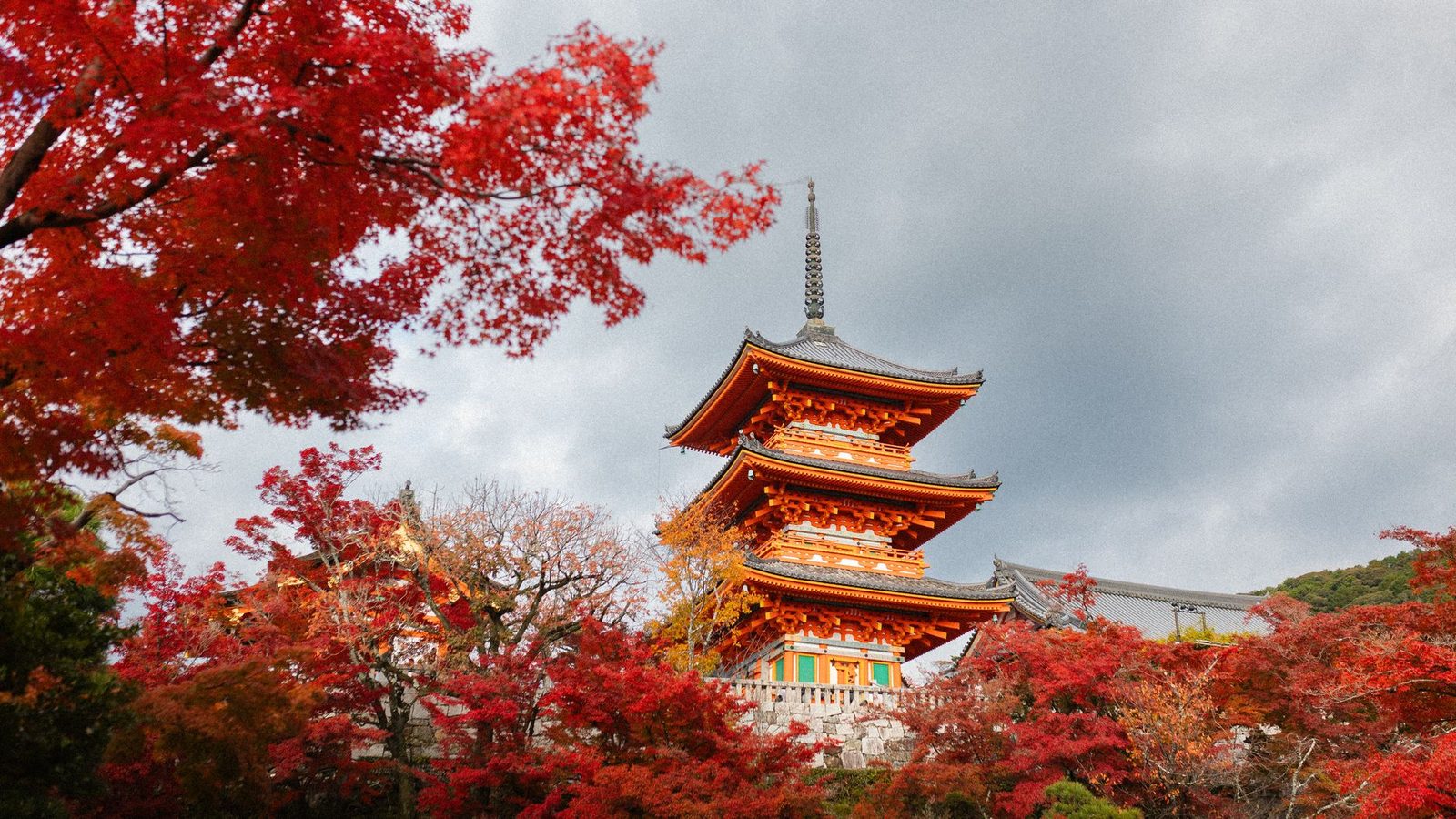
Tofukuji’s iconic view is from Tsutenkyo Bridge, looking down over Sengyokukan Valley — a “sea” of red and orange maple leaves spread out below. Kyoto’s autumn morning sunlight usually begins reaching into the valley during the first hour after opening, creating a gorgeous backlit glow through the leaves. Besides the main bridge, don’t miss Gaunkyo Bridge on the opposite side — the view of Tsutenkyo from there is the angle you often see on posters.
One small tip: once through the gate, most people head straight for Tsutenkyo Bridge. If you go the other way, descend into the valley first and then make your way up to the bridge. You’ll avoid the first wave of congestion and can capture scenes beneath the maple canopy with almost no people in the frame.
Tickets and things to note
The Tsutenkyo–Kaisando garden charges a separate admission fee, and the price is usually adjusted upward during autumn foliage season, to around 1,000 yen give or take; the Hojo rock garden costs an additional few hundred yen if you want to visit it. Check the temple’s website for the exact figures each season, as they often change from year to year. During the busiest periods, the temple may ban photography on the bridge to prevent congestion — don’t be surprised if you see signs, and don’t try anyway, because the staff enforce the rule quite firmly.
Around 9:30–10:00, when tour groups begin arriving and the bridge starts to fill up, that’s your cue to make a graceful exit. You’ve already seen the best of Tofukuji.
10:30 — Fushimi Inari: noon is actually the smart time
From Tofukuji Station, take the Keihan Line one stop south to Fushimi-Inari Station, then walk a few minutes to the shrine. Fushimi Inari is free and open 24 hours a day — which is why it belongs in the midday slot: you don’t spend money on admission during an unfavorable time, and in reality the shrine is busy from morning through afternoon, so there is no genuinely “quiet hour” except the very early morning or late at night (and those slots are already reserved for Tofukuji and Eikando).
To be clear: Fushimi Inari is not an autumn foliage destination. Its signature color is the vermilion orange of thousands of torii gates — but that vivid orange is exactly the perfect “seasoning” in a day otherwise filled with maple leaves. Midday sunlight filtering through the gaps between the gates creates beautiful dappled patterns in the torii tunnel, the kind of light you don’t get early in the morning or late in the afternoon.
The strategy here is all about gaining elevation: the first stretch of Senbon Torii is always packed, but once you pass Okusha Shrine and climb to the Yotsutsuji intersection (about 30–45 minutes uphill, depending on your legs), the crowds gradually thin out and you’ll find stretches of torii gates that feel almost completely deserted. The panoramic view over southern Kyoto from Yotsutsuji is also well worth the climb. If you have the energy, complete the loop to the summit (about 2 hours round trip); otherwise, turning back at Yotsutsuji makes for a perfectly good itinerary.
Have lunch on the street in front of the shrine: the area is known for wild-bird grill restaurants, fried tofu inari-zushi (the perfect “specialty” for the Inari deity), and fragrant castella cakes baked at street stalls. A quick meal costing around 1,000–2,000 yen is enough, leaving room for dinner.
14:00 — Kiyomizu-dera: the wooden stage in the afternoon sun
From Fushimi-Inari Station, take the Keihan Line north again and get off at Kiyomizu-Gojo Station, then walk uphill for about 20 minutes (or take a bus/taxi to save your legs — remember, you still have the entire evening ahead).
Kiyomizu-dera charges admission to the main hall area, around 500 yen for adults — the most affordable admission fee among the paid temples on today’s route, though check the official website to be sure.
Why visit in the afternoon?
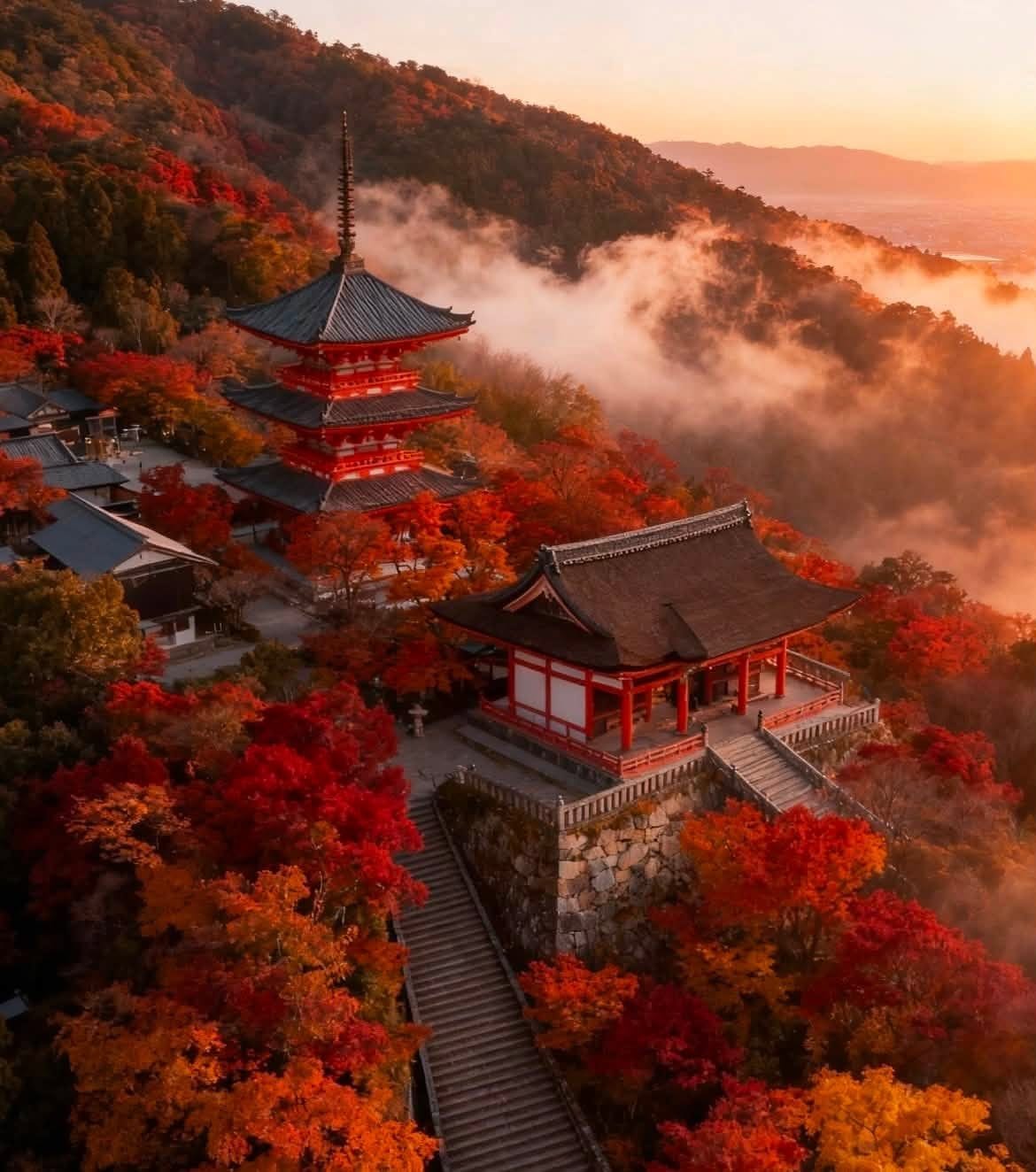
Kiyomizu-dera’s famous wooden stage (butai) projects out from the mountainside and faces west toward the city. In the morning, you’ll be shooting into the sun, while the foliage-covered slope below the temple remains in shadow. From around 15:00 onward, however, the low western sun shines directly onto the temple and the sea of maple leaves around Koyasu Pagoda — everything takes on a rich, warm golden-orange glow. On a clear day, the evening light seen from the wooden stage, with Kyoto spread out in the distance, is one of the most memorable views of the entire trip.
The “classic” photo angle — the wooden stage floating above a sea of red leaves — is from the Okunoin observation deck opposite it. Just follow the flow of visitors along the route and you’ll get there. Be patient for a few minutes to claim a spot along the railing, and your photos will look completely different.
A warning so you won’t be shocked: Kiyomizu-dera is still crowded in the afternoon. There is no quiet time here during autumn foliage season; I’m choosing this slot simply for the best light. On the plus side, the temple grounds are spacious and people keep moving, so it doesn’t feel as completely gridlocked as Tofukuji at 10 a.m.
16:30 — Take a break in Sannenzaka and Ninenzaka
Leave the temple and walk down the two historic stone slopes of Sannenzaka – Ninenzaka. This is the “reward” portion of the itinerary: traditional tiled-roof streets, tea and sweets shops, and lanterns beginning to glow in the romantic late afternoon. Find a café to rest your feet and enjoy a matcha latte or a warm bowl of tofu pudding — you’ll need to recharge, because the final battle of the day is the one worth waiting for.
17:30 — Eikando: when the autumn leaves light up
From the Kiyomizu/Gion area, take a taxi (around 10–15 minutes; splitting the fare among 3–4 people makes it affordable) or take a bus toward the Nanzenji area, then walk a little farther to Eikando Zenrin-ji — the temple that people in old Kyoto summed up in one sentence: “When it comes to autumn leaves, it’s Eikando.”
During autumn foliage season, Eikando holds an evening light-up: the temple closes after its daytime hours, then reopens around dusk for a separate evening session with its own admission fee — usually around 700 yen to 1,000 yen, depending on the year, and only during a limited period from November to early December. The exact dates and hours differ each year, so this is something you must check on the official website before your trip. Missing the light-up means missing the soul of this itinerary.
A hard-learned lesson: queue up around 20–30 minutes before the evening session opens. The line at Eikando can become extremely long during peak season, but arriving early means you’ll see the most beautiful moment of transition — the sky still deep blue (what photographers call the “blue hour”), the lights just switched on, and red maple leaves reflected in the still surface of Hojo Pond. The reflection of the autumn leaves on the pond, with Tahoto Pagoda illuminated on the hill behind it, is the photo that draws people all the way here. Half an hour later, the sky will be completely dark and the pond will be surrounded by crowds — you’ll understand why you needed to arrive early.
Take your time walking through the grounds. Lights shining up through the maple canopy create vivid red “ceilings” that are even more beautiful to the naked eye than in photos. Leave the temple around 19:30, then walk or take a ride back to Gion for dinner to bring the day to a perfect close.
What if it rains? Don’t cancel just yet
The good news is that Kyoto’s autumn rain is usually light, and rain-soaked maple leaves are far more intensely colored — many photographers actually prefer overcast skies to harsh sunlight because the leaves don’t get washed out. Here’s how to adjust the itinerary:
- Light rain or drizzle: Keep the entire itinerary as planned. Bring a compact umbrella and waterproof shoes. Tofukuji and Eikando can feel even more magical in a drizzle — mist drifting through the valley and stone surfaces catching the glow of the lights. A huge bonus: tour groups tend to avoid the rain, so every site becomes noticeably quieter.
- Moderate, persistent rain: Skip the climb at Fushimi Inari (the slopes become slippery), and only visit the Senbon Torii and Okusha sections before turning back. Use the extra time for an indoor attraction: the Sanjusangendo museum, with its 1.001 Kannon statues (near the Kiyomizu area and entirely covered), is a very worthwhile alternative.
- Heavy rain and strong winds: Skip Fushimi Inari entirely and rearrange the day as Tofukuji in the morning → Sanjusangendo or Nishiki Market at noon → Kiyomizu-dera in the late afternoon, when the rain usually eases → Eikando in the evening. Keep in mind that wooden floors and stone paths at the temples become very slippery when wet, so take it slowly.
- Eikando specifically: The light-up still takes place in light rain, and nighttime rain + lights + autumn leaves make for a strangely beautiful combination. Only when conditions become extremely severe will the temple make adjustments — another reason to monitor the official announcements during the day.
A general tip: buy a clear umbrella at a konbini (around a few hundred yen) — it’s convenient and looks much better in photos than a raincoat.
How much does the whole day cost?
Here’s a quick estimate of the “fixed” costs for one adult; prices are approximate, and you should check each temple’s official website before going:
- Tofukuji (Tsutenkyo Garden in autumn): around 1,000 yen
- Fushimi Inari: free
- Kiyomizu-dera: around 500 yen
- Eikando light-up: around 700–1,000 yen
- Keihan trains + bus/taxi for the day: around 1,000–2,000 yen depending on how you get around
Admission and transportation come to around 3,500–4,500 yen in total, excluding food. For a day spent at the peak of Kyoto’s most beautiful season, I’d say that’s excellent value.
A few final words before you pick up your camera
This itinerary is designed for people who treat autumn foliage as the main event: every time slot revolves around light and crowds, not checking off every possible sight. If you also want to collect goshuin at each temple, add 15–20 minutes at each stop for the queue at the stamp counter, and remember that goshuin counters often close before the temple itself does — during the evening light-up session, many places do not offer stamps, so don’t save Eikando for that purpose.
Finally, the peak foliage period varies from year to year, usually ranging from mid-November to early December. A few days before your trip, check the koyo (紅葉情報) forecasts on Japanese weather websites so you can catch the leaves at their best. If you visit during the peak week, this one day could be the highlight of your entire trip to Japan.
Frequently asked questions
Is this itinerary suitable for people traveling with young children or older adults?
Yes, but make a few adjustments: skip the climb to Yotsutsuji at Fushimi Inari (just visit the first torii section and turn back), take a bus or taxi up the slope to Kiyomizu, and accept a slightly later start. The original itinerary involves a fairly demanding amount of walking, around 15.000–20.000 steps.
Do I need to buy tickets online in advance?
Fushimi Inari does not require a ticket. Traditionally, tickets for the other three temples are purchased at the gate, but in recent years some Kyoto temples have started experimenting with advance tickets or timed-entry tickets during peak season — policies change from year to year, so check each temple’s official website about a week before your trip.
If I can drop only one stop to make the day more relaxed, which should it be?
Fushimi Inari — because it isn’t an autumn foliage destination and is open around the clock, you can return another evening during your trip (at night, it becomes surprisingly quiet and atmospheric). In exchange, you’ll have a leisurely lunch around Gion before heading up to Kiyomizu-dera.
Is the itinerary still worthwhile if I miss the peak foliage week?
Absolutely, as long as you adjust your expectations. Go early (in early November) and the leaves may only be starting to change, but the crowds will be much lighter; go late (the first week of December) and many trees may have shed their leaves, but the carpet of red leaves on the ground at Tofukuji offers a different kind of beauty. Eikando’s light-up, however, only runs on fixed dates, so if you miss that window entirely, replace it with another temple that still has an illumination or take a nighttime stroll through Gion.
Where is the most convenient place to have dinner after Eikando?
From Eikando, walk or take a ride back to the Gion–Kawaramachi area, about 15–20 minutes away. This is Kyoto’s liveliest nighttime dining district, with everything from affordable udon to kaiseki. Keep in mind that many Kyoto restaurants stop accepting their final customers fairly early, so don’t wait until after 20:30 to start looking for somewhere to eat.