Kyoto’s Autumn Foliage Calendar: Changing Colors Week by Week
From Takao and Kurama in early November to Tofukuji and Eikando, then ending at Shimogamo in early December—with how to read the koyo forecast and tips for choosing the best week to fly from Vietnam.
Aug 12, 2026·✍️ olablog·⏱ 16 min read
From Takao and Kurama in early November to Tofukuji and Eikando, then ending at Shimogamo in early December—with how to read the koyo forecast and tips for choosing the best week to fly from Vietnam.
Tap a region to browse articles
I once met someone at Kyoto Station who looked utterly miserable, standing there with a suitcase and staring at the train departure board. They had flown over from Saigon on November 5 because they had “heard that Kyoto’s autumn leaves are beautiful in November.” That morning, they had just come back from Eikando—and most of the leaves were still green. They asked me, “Does Kyoto not have red leaves this year?” It did. They had simply arrived about two weeks too early for Eikando. Meanwhile, less than an hour from the city center by bus, the mountains of Takao were glowing red, and they had no idea.
That is Kyoto’s biggest autumn trap: people imagine that the fall colors are a citywide “event” that erupts everywhere at once, like fireworks. In reality, they are more like a slow-moving red river flowing down from the mountains into the central basin, lasting around five weeks—from early November through the first week of December. Arrive at the wrong place during the right week, or the right place during the wrong week, and you can be equally disappointed.
In this article, I’ll map out that flow week by week—where the colors appear first and where they arrive later—then show you how to read koyo forecasts like someone who has lived in Japan for years. Finally, we’ll tackle the most practical question for Vietnamese travelers: which week should you book your flight to maximize your chances of catching peak foliage?
Why Kyoto’s Autumn Leaves Don’t Change Color All at Once
Kyoto lies in a basin surrounded by mountains on three sides. Momiji—the Japanese maple—changes color when nighttime temperatures drop, usually after several consecutive days with nights below roughly 8–10 degrees. And the cold arrives at higher elevations first: the mountains north and northwest of Kyoto sit several hundred meters higher than the city center, so their nights turn cold up to a week earlier, and their leaves “ripen” accordingly.
As a result, Kyoto’s autumn foliage season has three fairly distinct zones:
- Mountain zone (Takao, Kurama, Ohara): the earliest colors, usually from early to mid-November.
- Central zone (Tofukuji, Eikando, Nanzenji, Arashiyama, Kiyomizu-dera): peak color from mid- to late November—this is the “high season” when visitors from around the world descend on Kyoto.
- Late-season zone (Shimogamo, Toji, Jonangu): colors linger through late November and often into the first, or even middle, week of December.
Once you understand these three zones, you’ll see that there is almost NO week between 1/11–10/12 when Kyoto has “nothing to see.” The only question is whether you know where to go that week.
One important note: in recent years, as autumns have grown warmer, Kyoto’s peak foliage has tended to arrive later. Some years, the central areas do not truly become spectacular until the end of November, and early December can still be beautiful. So treat all the dates in this article as a “multi-year reference window.” Your final decision should always be based on that year’s forecast—the section on reading forecasts below goes into more detail.
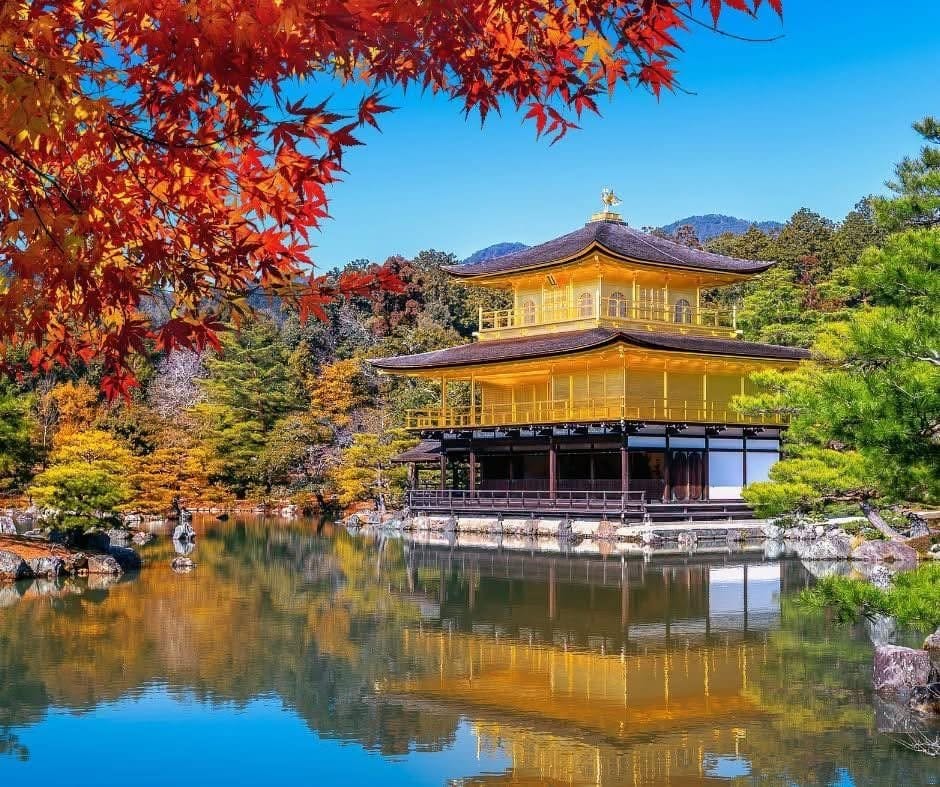
The Week-by-Week Autumn Foliage Timeline
Weeks 1–2 of November: Head for the Mountains—Takao, Kurama, and Ohara
If you arrive in Kyoto in early November, don’t wander around the city center and wonder why everything still looks green. Head into the mountains.
Takao is Kyoto’s earliest area for autumn colors, located in the northwest and about 50 minutes by JR bus from Kyoto Station. The main temple here is Jingo-ji, which requires climbing a long flight of stone steps to reach. It is genuinely tiring, but the reward is a view of momiji carpeting the Kiyotaki River valley—a place tour groups almost never reach. At Jingo-ji, you can also throw small earthenware discs (kawarake) into the valley to cast away bad luck. Watching the pieces sail through a sea of red leaves is immensely satisfying. Takao usually starts changing color in late October and looks best from the first week to the middle of November.
Kurama and Kibune lie to the north and are about 30 minutes by Eizan Railway from Demachiyanagi Station. The train ride through the “momiji tunnel” between Ichihara and Ninose is one of Kyoto’s best-value autumn experiences. During peak season, trains even slow down so passengers can enjoy the view, and some evenings feature illuminations. You can hike from Kurama-dera over Mount Kurama to Kibune, a forest trail that takes several hours, then have lunch beside the river in Kibune. The best window is usually from the first week to mid-November.
Ohara, home to Sanzen-in, sits in a northeastern valley about an hour by bus from Kyoto Station. Sanzen-in’s lush green moss gardens make a beautiful backdrop for the red leaves, creating a scene with a distinctly Zen-like contrast. Ohara usually reaches its best around mid-November, a little later than Takao.
The biggest advantage of this period: fewer visitors, Kyoto hotels are not yet fully booked, and prices have not reached their annual peak.
Week 3 of November: The Transition—The City Center Begins to Turn
Around November 15–22 is Kyoto’s “changeover” week. The mountain areas are beginning to pass their peak and shed leaves, while the central areas are shifting from “just starting to change” to “nearly at their peak.” This is actually a very pleasant time to visit: there is color everywhere, even if nowhere is at its absolute most vibrant.
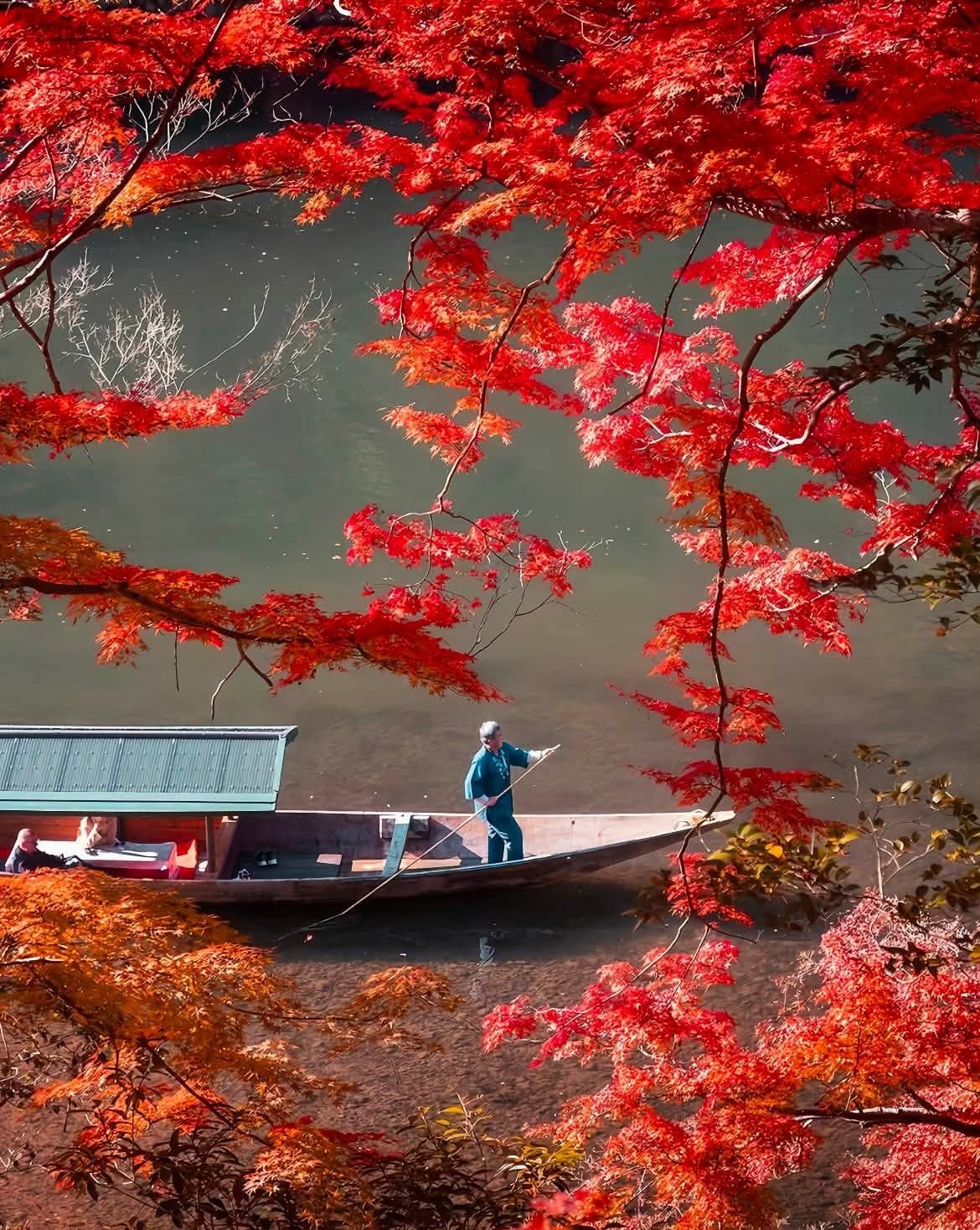
Arashiyama usually begins changing a little earlier than the central temples because it sits close to the mountains. From Togetsukyo Bridge, the hillsides spread out in patches of yellow, orange, and red like an oil painting. Many people actually prefer this mottled stage to a landscape of uniformly red leaves. In Arashiyama, Jojakko-ji and Nison-in are two excellent foliage spots that are significantly less crowded than the bamboo grove.
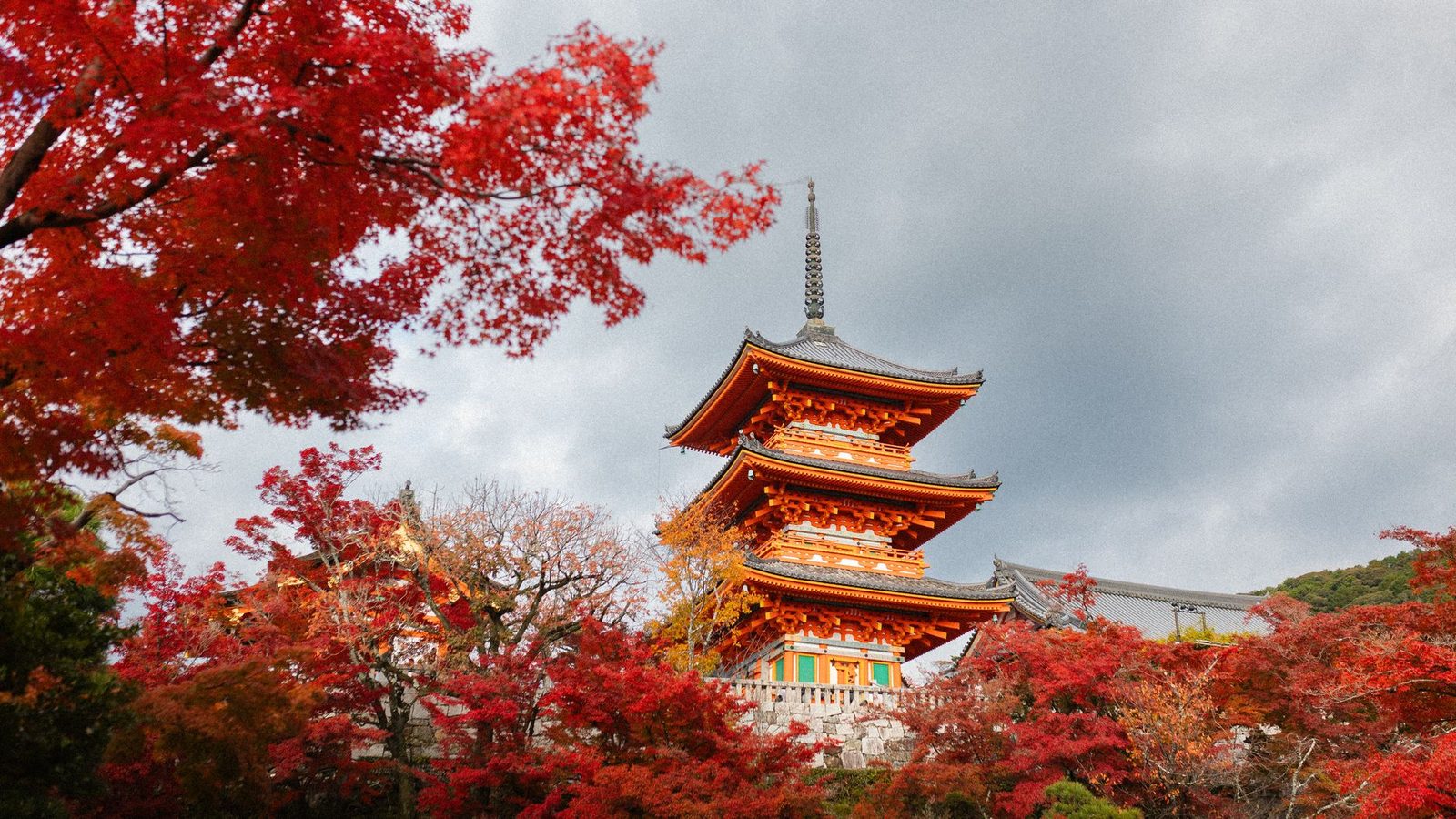
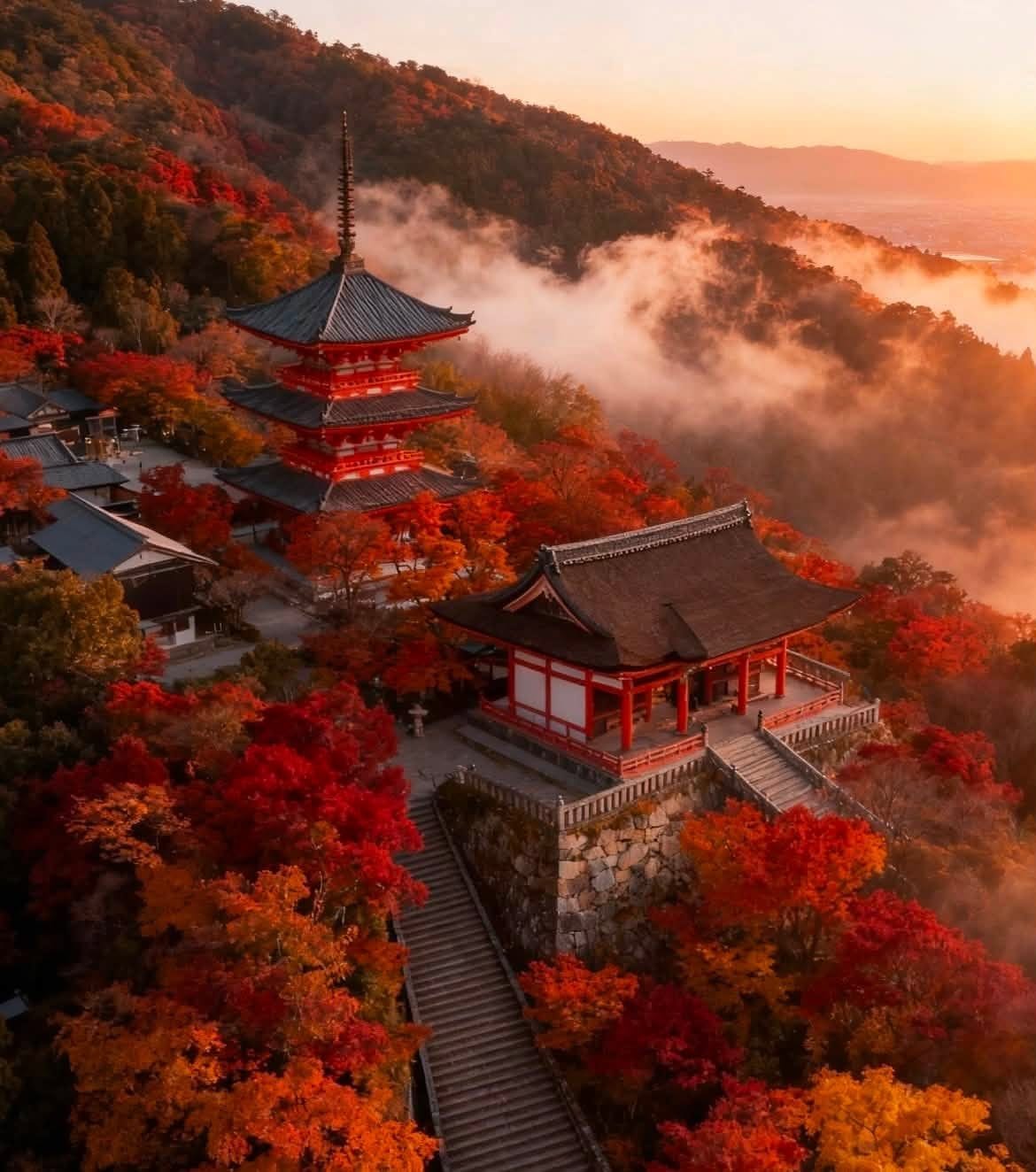
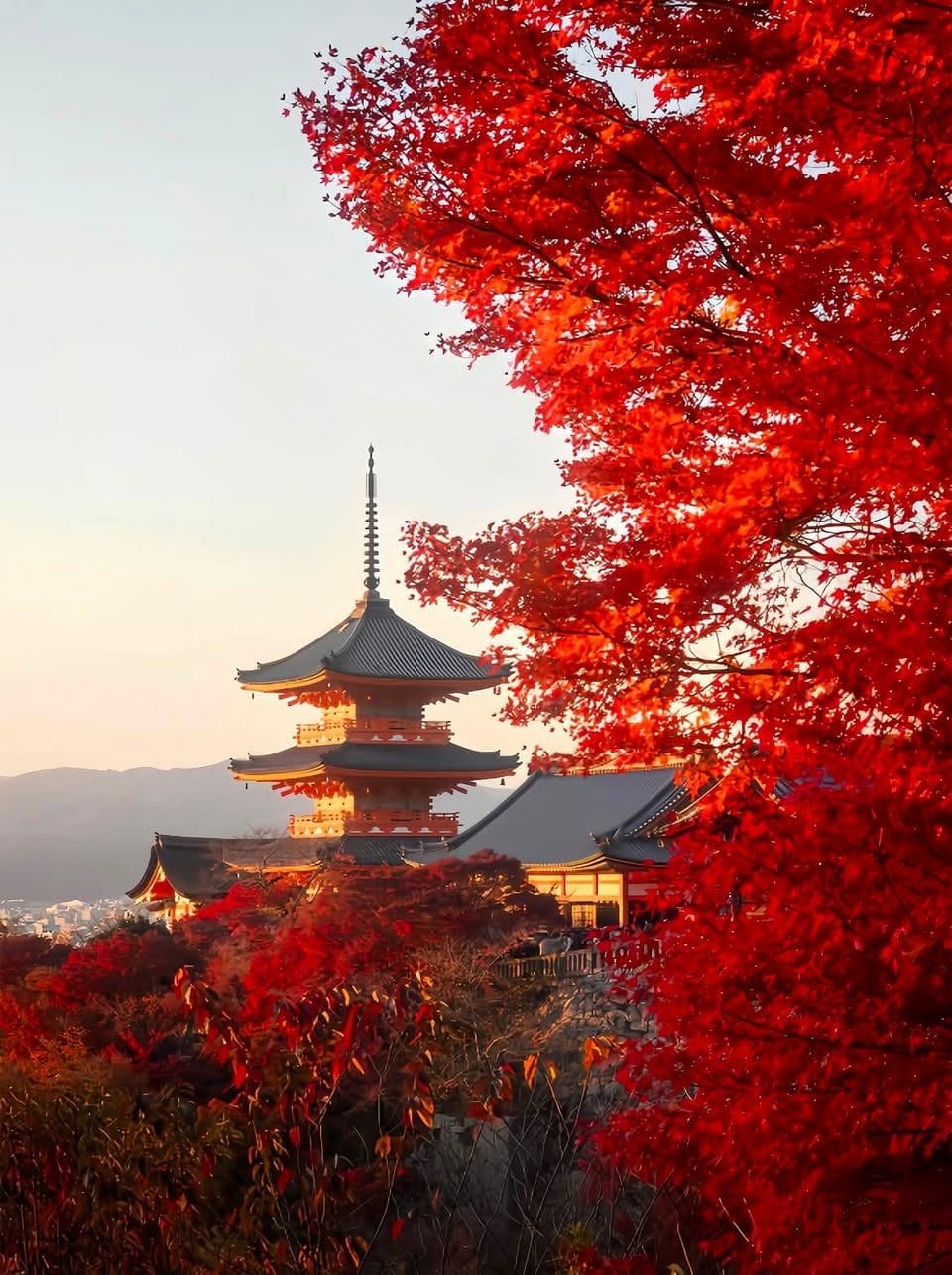
Kiyomizu-dera and Kodai-ji in the Higashiyama area also begin showing color during this week, and the nighttime illumination events (light-up) are often already underway. Visiting a light-up when the leaves are just beginning to turn has its own charm: the lights make the foliage look considerably more flattering than it does in daylight.
Week 4 of November: Peak of the Peak—Tofukuji, Eikando, and Nanzenji
Around November 20–30 (in many recent years, the peak has shifted toward the latter part of this window), central Kyoto erupts into color. This is the week when both Japanese and international visitors pour into the city—and for good reason.
Tofukuji is, in my opinion, Kyoto’s number-one autumn foliage view. Standing on Tsutenkyo Bridge and looking down into a valley flooded with momiji feels like floating above a red-orange cloud. That is also why it becomes unbelievably crowded: on peak weekends, the line to enter the bridge can stretch for an hour. The survival tip is to go on a weekday and arrive about 30 minutes before opening (opening hours during peak season may change, so check the official website before visiting). Tofukuji is close to the station, just one stop from Kyoto Station by JR or Keihan train, making it easy to visit early in the morning.
Eikando (Zenrin-ji) is so famous that there is a Japanese saying, “momiji no Eikando”—when people talk about autumn leaves, they talk about Eikando. Around three thousand maple trees surround the Hojo Pond, and the nighttime illumination reflected on the water is one of Kyoto’s most beautiful evening scenes. Admission during the autumn foliage season is considerably more expensive than usual (daytime and nighttime tickets are sold separately), but it is worth every yen. The line for the light-up can be extremely long, so arrive early, before the evening gates open.
Nanzenji, right next to Eikando, offers a classic photo opportunity: the enormous Sanmon Gate framed by red leaves on both sides. The red-brick aqueduct (Suirokaku) is also exceptionally photogenic this time of year. The outer grounds of Nanzenji are free, making it convenient to combine with nearby sights. From Nanzenji, you can walk along the Philosopher’s Path (Tetsugaku no michi) to Ginkaku-ji. In autumn, the route is a mix of gold and red, and taking it slowly can easily fill an entire afternoon.
The trade-off this week is the highest hotel prices of the year and crowds at popular sites from morning to night. The general strategy: visit famous spots before 8 a.m. or after 4 p.m., and spend the middle of the day at lesser-known temples.
Late November–Early December: The Late Peak—Shimogamo and the Last to Turn
Here is a secret many Vietnamese travelers do not know: Kyoto’s autumn foliage season does not end when November does.
Shimogamo Shrine, with its primeval Tadasu no Mori forest, is Kyoto’s latest foliage spot. It usually reaches its peak in the first week of December, and in some years not until the middle of December. The forest lies between two branches of the Kamo River. Its tall trees let the winter sunlight filter through golden and red leaves in the morning, creating a mesmerizing scene—and, importantly, it is quiet. It offers the kind of tranquility you will never find at Tofukuji during peak season.
Toji Temple, home to Japan’s tallest five-story pagoda, also changes color late. Its nighttime illumination, with the pagoda reflected in the pond alongside the red leaves, often continues until around the middle of December. Jonangu in the south and Shimogamo make an excellent combination for a final foliage sweep.
And don’t overlook the beauty of fallen leaves. The moss-covered grounds of Gio-ji and the entrance path to Adashino Nenbutsu-ji in Arashiyama are blanketed in red leaves in early December. For photographers, this “bamboo grove of fallen leaves” can be even more impressive than the foliage still on the trees. Hotel prices have clearly cooled off by this point, and although the weather is colder (early mornings can dip to around 5 degrees), Kyoto’s winter skies are often clear and wonderfully crisp for photography.
How to Read Koyo Forecasts Like a Longtime Japan Resident
The koyo (紅葉) forecast can make or break your trip. It is easier to read than you might think once you know a few key terms:
- 色づき始め (irozuki hajime) — “beginning to change color”: only scattered leaves have turned, and it is not yet worth going far specifically for the foliage. It usually takes about 1–2 weeks from this stage to reach peak color.
- 見頃 (migoro) — “best viewing period”: this is the golden phrase you want to see. Migoro usually lasts around 7–10 days at each location, not just a single day, so do not obsess over hitting the “exact date.”
- 落葉 (rakuyo) — “fallen leaves”: the peak has passed. But as mentioned, at some locations, rakuyo is actually the most beautiful stage.
Sources worth following include the Japan Meteorological Corporation’s koyo forecast page (the first version usually comes out around early September, followed by several updates during the season), Walkerplus, which provides conditions for individual locations, and the Weathernews app, whose koyo section is updated almost daily with real photos submitted by users. You can also search for the temple’s name plus “紅葉” on X (Twitter) or Instagram within the past 2–3 days. Photos from someone who has just visited are the most reliable data of all—no forecast can beat them.
A few unwritten rules for reading the forecasts:
- A warm autumn means a later peak. If Japan is still unusually hot in October that year (something that is happening more and more often), automatically add about one week to all historical dates.
- You need cold nights, not cold days. A cold front arriving in early November is a good sign: the leaves will change quickly and develop deeper colors.
- Watch out for strong rain and wind during the season. One heavy, windy storm can strip peak foliage in a single night. If a late typhoon or heavy rain is forecast, prioritize locations that are at their peak IMMEDIATELY before the rain.
- September forecasts are only for booking flights. The updates from late October to early November are accurate enough to finalize a day-by-day itinerary.
Choosing Your Flight Week from Vietnam: Three Scenarios
To get from Vietnam to Kyoto, you will fly into Kansai International Airport (KIX). Vietnam Airlines and Vietjet both offer direct flights from Hanoi and Ho Chi Minh City, taking about 4,5–5 hours. From there, the Haruka train or a bus takes around 75–100 minutes to reach Kyoto. Autumn flights should be booked 2–3 months in advance; Kyoto hotels in November sell out even earlier, with well-located rooms at reasonable prices often gone by August–September.
The problem for Vietnamese travelers is that visas, leave requests, and flight bookings all have to be finalized months in advance, while the foliage cannot be predicted precisely until the last minute. So which week should you choose? Here are three scenarios:
Scenario 1 — Fly during the first week of November (around 1–10/11): ideal for people who dislike crowds and enjoy light trekking. You will catch Takao, Kurama, and Ohara at their peak. The city center will only just be starting to turn, but in exchange it will be quieter, hotel prices will be easier to manage, and you can comfortably add Osaka and Nara to the trip. The drawback: you will not see Tofukuji and Eikando glowing deep red. This is best for a second Kyoto visit, or for travelers who prioritize experiences over “Instagrammable” photos.
Scenario 2 — Fly around 18–28/11: the classic option, with the highest chance of catching peak color in the central areas. Given the recent trend toward later peaks, the latter part of this window is even safer. You can visit Tofukuji, Eikando, Nanzenji, and Arashiyama at or near their peak, along with plenty of nighttime light-ups. The trade-off: the year’s highest hotel prices, the year’s largest crowds, and the need to be disciplined about getting up early. If you will visit Kyoto in autumn only once in your life, choose this scenario.
Scenario 3 — Fly from late November to around 8/12: the “smart” option. You can still catch the tail end of the central areas’ peak (especially in years when the foliage is late), enjoy Shimogamo, Toji, Jonangu, and carpets of fallen leaves, while both flights and hotels are noticeably cheaper. The weather is colder and the days are shorter (it is already getting dark around 4:30 p.m.), but in return, Kyoto feels much more relaxed. This is a good choice for travelers visiting with their parents or working with a moderate budget.
A general tip for all three scenarios: book rooms with free cancellation as soon as you have your flights, then check the updated forecast in mid-October. If the foliage is unusually early or late, you will still have the option of changing your hotel dates or rearranging the number of days between Kyoto and Osaka. And if your flights end up out of sync with central Kyoto, do not panic: arrive early and head into the mountains; arrive late and go down to Shimogamo—the foliage river is always flowing somewhere around the city.
How to Plan Your Days to “Catch” Multiple Foliage Zones on One Trip
Even if you are staying in Kyoto for only 4–5 days during any given week, you can still experience 2–3 foliage zones with careful planning:
- Use the morning for popular spots: Tofukuji or Eikando at opening time, when the light is best and the crowds are smallest.
- Travel farther during the middle of the day: harsh midday sunlight is not ideal for photography, so use this time to travel to Takao/Ohara (if you are visiting early in the season) or head over to Arashiyama.
- Save late afternoon and evening for light-ups: Eikando, Kodai-ji, Toji... one location per night—do not try to fit in two.
- Leave one “floating day”: do not book anything fixed. Check the forecast and recent social media photos after you arrive, then decide. This often turns out to be the best day of the trip.
Finally, a word from someone who has visited Kyoto in autumn many times: do not turn your trip into a chase for the perfect “peak.” Changing color is a process, and every stage—early yellow, brilliant red, or a carpet of leaves underfoot—has its own beauty. Catching peak color is wonderful, but even if you miss it by a few days, Kyoto can still leave you speechless.
Frequently Asked Questions
Which month is the safest bet for seeing autumn leaves in Kyoto?
If you can choose only one window, aim for November 18–30: this gives you the highest chance of catching peak color at central locations such as Tofukuji and Eikando, especially since peak foliage has tended to arrive later in recent years. But the truly safest approach is to follow koyo forecasts from mid-October and keep your itinerary flexible.
Will there be red leaves to see if I visit Kyoto in early November?
Yes, but you will need to head into the mountains. Takao (Jingo-ji), Kurama–Kibune, and Ohara are usually beautiful from early to mid-November, 1–2 weeks ahead of the city center. At that point, the central areas will only just be starting to change color.
Is it too late to see autumn leaves in Kyoto in early December?
No. Tadasu no Mori at Shimogamo Shrine, Toji Temple, and Jonangu often reach their peak in early December, and in some years the season lasts into the middle of the month. Add the carpets of fallen leaves in Arashiyama, and early December becomes a highly rewarding “last chance” season—one that is also much quieter and cheaper.
Where can I check the autumn foliage forecast, and which terms should I look for?
Follow the koyo forecast from the Japan Meteorological Corporation, Walkerplus, or the Weathernews app. The most important term is 見頃 (migoro—at its most beautiful, lasting around 7–10 days); 色づき始め means the leaves have only just begun to change, around 1–2 weeks before peak. As your trip approaches, also search social media using the temple’s name plus 紅葉 to find recent photos.
How far in advance should I book flights and hotels from Vietnam?
Flights to Kansai should be booked around 2–3 months in advance. Hotels in Kyoto for the second half of November should be booked from August–September because the best rooms sell out very early. Prioritize rooms with free cancellation so you can still adjust your plans when updated forecasts arrive in late October.
Tofukuji and Eikando are extremely crowded. How can I make the visit easier?
Go on a weekday rather than a weekend and arrive about 30 minutes before opening (hours during peak season may change, so check the temple’s official website). For the Eikando light-up, queue before the evening gates open. Avoid the 10 a.m. to 3 p.m. window at popular spots—that is when tour groups arrive in the greatest numbers.