
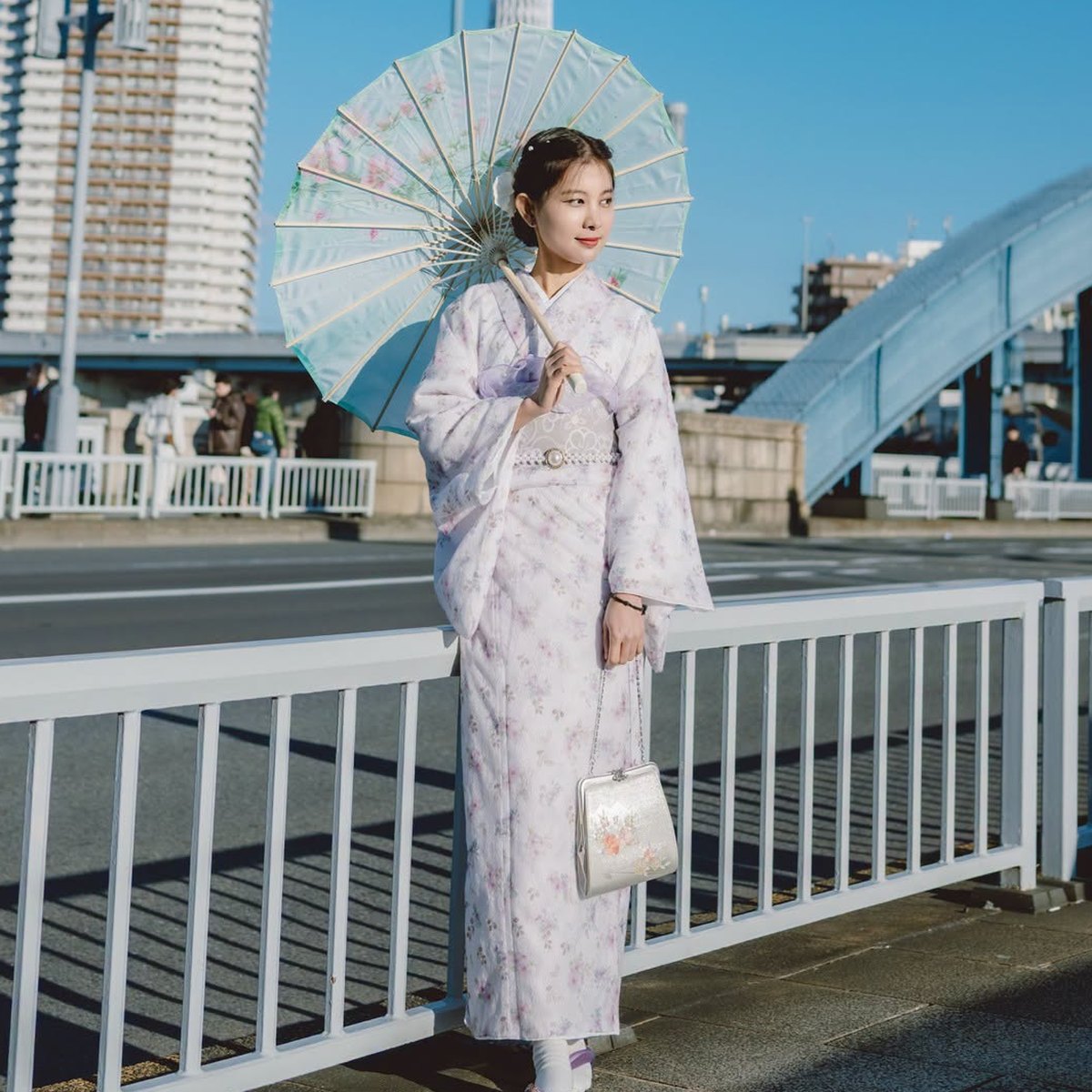
Kimono on a Rainy Day: Umbrellas, Hem Protection and Indoor Photo Ideas
Wearing a rental kimono in the rain: what the shop lends, how to hold the umbrella and hem, which fabrics cope, and covered photo spots in Asakusa and Kyoto.
Sep 14, 2026·✍️ olablog·⏱ 6 min read
Wearing a rental kimono in the rain: what the shop lends, how to hold the umbrella and hem, which fabrics cope, and covered photo spots in Asakusa and Kyoto.
Rain does not cancel a kimono day. It cancels the temple stage and the riverbank, changes which lanes you walk, and gives you the photograph that dry days cannot: a paper umbrella, wet stone, lanterns reflected in the street. Rental kimono are cleaned after every use and a damp hem is expected in June. What you need is a technique for the hem, a plan for the feet, and a list of covered places. Here they are.
What the shop provides on a wet day
OlaChill's Tokyo Asakusa and Kyoto Kiyomizu shops lend umbrellas free of charge on rainy days. Ask for a paper-style parasol if you want it in photos, or a plain clear umbrella if you want to keep the kimono the star. The shop also has free lockers, so a wet coat and a change of shoes can wait for you.
Light rain on the fabric is fine. Heavy staining from mud is another matter: it can carry a cleaning fee, so the goal of the day is to keep the hem clean, not dry.
The hem: how to hold it
- Lift the front of the hem with your left hand, gathering the kimono and the juban together, about 5 cm, whenever you step off a kerb, onto stairs or through a puddle.
- Keep the umbrella in your right hand, tilted forward into the rain, not straight up. Rain runs off the front, not down the back onto the obi.
- Take shorter steps than usual. Wet stone and zori are a combination for careful feet; our walking in zori guide has the technique.
- In heavy rain, ask the shop about a rain cover or a lightweight coat over the kimono. A plastic poncho is ugly but it works for the ten minutes between doorways.
Feet
Tabi socks are cotton and soak in a minute. Options: bring a spare pair of tabi in your bag and change at lunch; ask whether the shop has rain covers for zori; or accept wet feet and change into your own shoes at return. The shop will not mind wet tabi.
Which kimono for rain
Polyester kimono, which is what most rental sets are, dries fast and does not water-spot; silk formal sets do. On a wet forecast, choose the Komongi (¥5,500) or Kimono Ren (¥7,000) rather than a Houmongi or Tomesode, and save the Furisode (¥19,000) for a dry day, because long sleeves and puddles find each other. Yukata (¥4,500) in a summer shower dries on you within an hour. Dark colours hide splashes; a white kimono shows every drop, which can look beautiful in photos and terrible at return.
Covered and indoor photo spots
Asakusa
- Nakamise is a covered arcade; shoot down the length with wet stone outside the ends.
- The deep eaves of Sensoji's main hall and the Hozomon gate keep you dry with the pagoda in frame.
- Denboin-dori's shopfronts have awnings, and a rickshaw in the rain is a classic.
- Tokyo Skytree's Solamachi and the Sumida River Walk deck under the railway bridge are dry with the tower in view.
- Kappabashi's kitchen-tool shops (10 minutes west) are indoor and very Japanese.
Kyoto
- Kiyomizu-dera's main hall and covered corridors; skip the open stage in heavy rain.
- Ninenzaka's shops and the tea houses of Nene-no-michi; Ishibei-koji's stone walls glow when wet.
- Kōdai-ji's covered walkways and tea room.
- Gion's Hanamikoji has eaves on both sides; Shirakawa in rain, with willows dripping into the canal, is the best wet photograph in the city.
- Nishiki Market (a covered 400-metre arcade) and the tea shops of Teramachi for the afternoon.
For a full wet-weather day, a chauffeured car is the rain plan: door to door between covered spots, obi intact. Our private car and kimono guide explains how it runs.
Plan a rainy day
- 09:00 Dress; choose a polyester kimono in a mid or dark tone; hair set (¥1,500) so an umbrella does not undo it.
- 09:45 Temple corridors and covered gates while the day crowd shelters in cafes.
- 11:00 Covered arcade (Nakamise or Ninenzaka), photos with the parasol.
- 12:30 Long lunch somewhere with a view of the rain.
- 14:00 A museum, a tea ceremony (Gion tea ceremony in kimono), or Nishiki Market.
- 16:00 If the rain stops, the wet-stone shot in Shirakawa or at the Sumida riverside.
- 17:30 Return before 18:00; wet tabi are fine.
Checklist
- Umbrella from the shop (free)
- Spare tabi in the bag
- A small towel
- Hem in the left hand, umbrella in the right
- Dark or patterned kimono, not white silk
FAQ
Can I cancel if the forecast is bad? Cancellation is free up to two days before; the day before is 50%, the same day is 100%. Changing the date is free with 24 hours' notice, which is the better option for a wet forecast.
Will the shop charge me if the hem gets wet? No. Water is expected. Mud, ink or food that needs professional cleaning is the case where a fee applies; ask at the counter.
Is a paper parasol waterproof? The oiled-paper wagasa is; the decorative parasols used for photos are not. Ask which one you are being lent.
What about typhoon days? On a typhoon warning, the temples may close and trains stop. Change your date; the shop will work with you.
Does rain ruin the hair set? Not under an umbrella; an updo pinned by the shop survives drizzle. Loose hair is the style that suffers.
Book, whatever the forecast
Reserve at the Tokyo Asakusa shop or the Kyoto Kiyomizu shop, and if the forecast turns, move the date with a day's notice. Dry-day routes are in the Asakusa photo route and the Kyoto photo route.
More from this region — Other
View all →
Kimono Sizes for Tall, Petite and Plus-Size Visitors: What Rental Shops Can Fit
6 min · culture
Kimono Return Times: Same-Day Deadlines, Next-Day Return and Hotel Return Explained
6 min · culture
What Is the Difference Between Kimono and Yukata? How to Tell Them Apart for Your Trip to Japan
7 min · culture

Kimono, Yukata and Hakama: Differences, Seasons and Which One to Rent
6 min · culture