Kimono, Yukata and Hakama: Differences, Seasons and Which One to Rent
Kimono, yukata and hakama explained: fabric, layers, season, formality and who wears which, with rental styles and prices so you choose the right one.
Sep 14, 2026·✍️ olablog·⏱ 6 min read
Kimono, yukata and hakama explained: fabric, layers, season, formality and who wears which, with rental styles and prices so you choose the right one.
Kimono is the family name; yukata and hakama are members of it that get confused with it. A yukata is a kimono made of one layer of cotton for summer. A hakama is not a kimono at all but a pleated, trouser-like garment worn over one, by men for formal dress and by women for graduation and archery. Knowing which is which decides how hot you will be, how formal you will look and what you will pay. This guide sets the three side by side, then maps them to the styles on the rental rack.
The three at a glance
| Kimono | Yukata | Hakama (over a kimono) | |
|---|---|---|---|
| Fabric | Silk or polyester, lined in cool months | Cotton or thin polyester, unlined | Silk or polyester, pleated |
| Layers | Juban under-robe, kimono, obi | Yukata, obi; no juban | Kimono, obi, hakama tied over |
| Season | October to May (lined), June to September (unlined) | June to September | Any; formal |
| Footwear | Tabi socks and zori | Barefoot with geta, or tabi and zori | Tabi and zori or geta |
| Formality | Everyday to very formal, depending on type | Casual, evening, festivals | Formal for men; formal or ceremonial for women |
| Time to dress | 30 minutes | 15 minutes | 25 to 35 minutes |
| Where you see it | Temples, tea, weddings, New Year | Fireworks, summer festivals, ryokan | Coming of Age Day, weddings, graduation, martial arts |
Kimono: the types you can rent
Within "kimono," formality is set by the pattern and the sleeves, not the cut.
- Komon (小紋). Small repeating pattern all over; the everyday kimono. OlaChill's Komongi (¥5,500) is this: the right choice for sightseeing, temples and photos in any cool month.
- Modern-pattern kimono. Large bold motifs, contemporary colours. Kimono Ren (¥7,000). Same use as komon with more presence in photographs.
- Houmongi (訪問着). A pattern that flows across the seams; semi-formal, worn to tea, weddings as a guest, formal visits. Houmongi (¥12,000).
- Tomesode (留袖). Black or coloured with a pattern only at the hem and family crests; the most formal women's kimono, worn by married women at weddings. Tomesode (¥12,000).
- Furisode (振袖). Long swinging sleeves; the formal kimono of unmarried young women, worn on Coming of Age Day. Furisode (¥19,000) and Design Furisode (¥25,000). The Coming of Age Day guide explains the sleeves.
- Men's kimono. A plain or subtly patterned kimono with a haori jacket. Men's traditional kimono (¥5,000).
- Children's kimono. Girl's and boy's sets (¥8,000 each), the Shichi-Go-San outfit.
Yukata: summer, and only summer
Yukata began as bath-house wear and became the summer festival garment. One cotton layer, bright prints, an easy half-width obi, geta with bare feet. It is the coolest thing you can wear to fireworks in July and the wrong thing to wear to a temple in April, when it reads as pyjamas. Women's yukata (¥4,500), men's (¥4,000), girls' (¥4,000) and boys' (¥3,000) at OlaChill. The Sumida River Fireworks guide is the classic yukata evening; the summer yukata guide covers the rest.
If you are choosing between kimono and yukata in June or September, the deciding number is 28°C: above it, yukata.
Hakama: the pleated layer
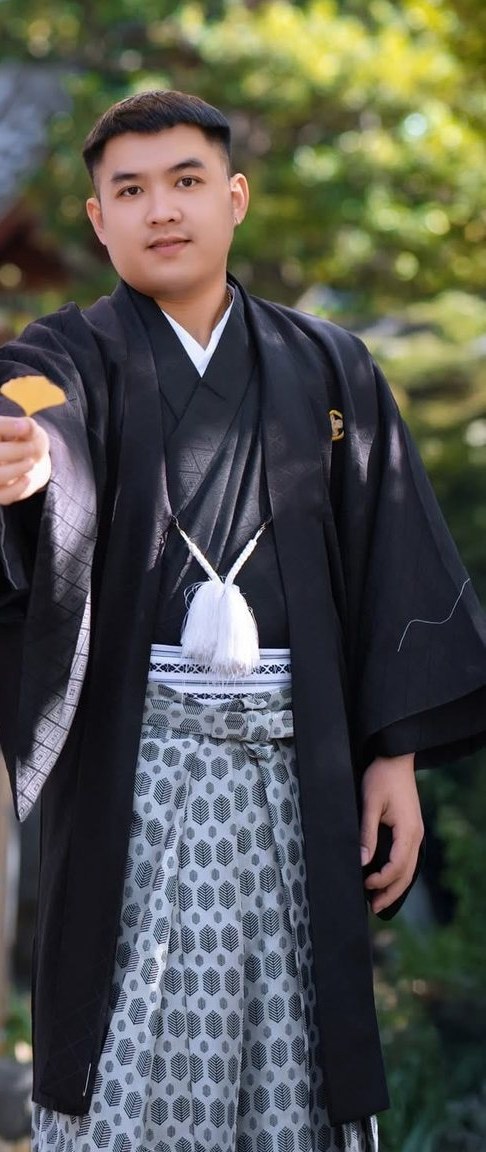
Hakama tie at the waist over a kimono and fall to the ankle in seven pleats. For men, a black kimono with a crested haori and striped hakama is the most formal outfit there is: weddings, Coming of Age Day, ceremonies. Montsuki (¥10,000) at OlaChill is this set. It is also what you see in kendo and archery, and what women wear for university graduation in March, usually in maroon or navy over a bright kimono.
Practical notes: hakama are easy to walk in (the legs are free), harder to sit in (the pleats must be arranged), and warm. A man renting for a formal photograph, a proposal or simply to match a Furisode chooses Montsuki; for a day of sightseeing, the plain men's kimono is lighter and looks more natural.
Which one for your day
| Your day | Rent |
|---|---|
| Temples and lanes, October to May | Komongi or Kimono Ren |
| Fireworks, summer festival, ryokan evening | Yukata |
| Formal photo, New Year, tea ceremony | Houmongi, Tomesode, or Montsuki for men |
| Birthday, proposal, Coming of Age look | Furisode or Design Furisode; Montsuki for him |
| Family shrine visit | Children's kimono sets with a Komongi and men's kimono for the parents |
| A hot day in June with a temple on the list | Yukata with tabi and zori (ask), which dresses the look up a step |
Season by season detail is in the best season to wear kimono guide.
Checklist
- Month of your visit decides kimono or yukata
- Occasion decides the formality within kimono
- Men: plain kimono for sightseeing, Montsuki for formal
- Sleeves: Furisode for the occasion, not for a hike
- Time: 15 minutes for yukata, 30 for kimono, up to 45 for Furisode or Montsuki
FAQ
Can I wear a yukata in spring? You can, and you will be cold and slightly underdressed at a temple. April is lined-kimono weather.
Is a kimono uncomfortable in summer? A lined kimono in July is hard work. An unlined summer kimono exists, but the rental yukata is the sensible version.
Do women wear hakama? For graduation, archery and some shrine roles, yes. It is not a rental style at OlaChill; women choose from the kimono and yukata sets.
What is a haori? A jacket worn open over a kimono, for men always with formal dress and for both sexes in cool weather. The shop lends one on cold days.
Which is the cheapest? Boys' yukata (¥3,000), then men's yukata (¥4,000); the cheapest women's set is the yukata (¥4,500), and the cheapest cool-month kimono is the men's traditional kimono (¥5,000) or the Komongi (¥5,500). Booking online takes 10% off each.
Choose and book
The full 14-style list with prices is on the kimono rental page; reserve at the Tokyo Asakusa shop or the Kyoto Kiyomizu shop. For the kimono-versus-yukata question in more detail, see what is the difference between kimono and yukata.