Kindergarten Field Trip Buses in Japan: Safe, Simple Group Travel
Plan a safer kindergarten outing in Japan with the right minibus, practical supervision, nearby destinations, and an easy organizer checklist.
Aug 21, 2026·✍️ olablog·⏱ 8 min read
Plan a safer kindergarten outing in Japan with the right minibus, practical supervision, nearby destinations, and an easy organizer checklist.
Why a private minibus works well for a kindergarten outing
A kindergarten field trip in Japan is exciting, but moving a group of young children between a school, a sightseeing spot, and a lunch venue takes careful planning. A private bus keeps the group together, avoids platform changes and crowded train stations, and gives teachers a controlled space for headcounts.
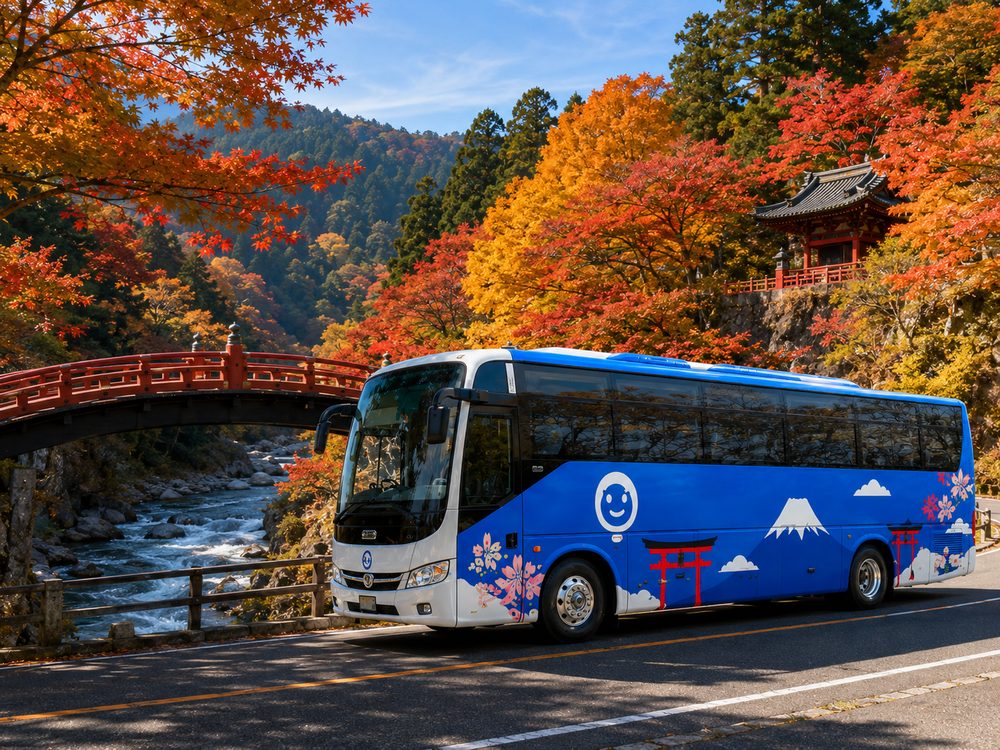
For many small international schools, preschools, and family groups, a 26–29-seat Toyota Coaster class minibus is a practical choice. It is smaller than a full-size coach, so it can suit roads and entrances that are difficult for larger vehicles. At the same time, it offers more structure than arranging multiple taxis or relying on public transport.
A charter bus with a licensed Japanese operator can also make the day easier for overseas organizers. The driver handles local roads and parking while teachers and accompanying adults focus on the children.
Choosing seating that suits young children
The right seating plan matters more than simply filling every seat. Before booking, ask the operator for the exact vehicle layout and seat-belt configuration. Toyota Coaster class vehicles can differ depending on the operator and interior specification.
Keep these points in mind:
- Every child should have an assigned seat. Avoid allowing children to move around while the vehicle is in motion.
- Confirm seat belts in advance. Ask whether belts are available at every passenger seat and how they are fitted.
- Do not assume child seats are included. If your school requires booster seats or child restraints, confirm availability, compatibility, and installation before payment.
- Seat younger or less mobile children near supervising adults. The front rows may be convenient for teachers, but a seat near the middle can sometimes make boarding and supervision easier.
- Leave room for small bags. Large backpacks should not block the aisle or exits. Ask where luggage will be stored.
- Plan for motion sensitivity. Children who feel travel sickness may do better with a forward-facing seat, fresh air during approved stops, and easy access to an adult.
- Avoid overloading the bus. A “29-seat” vehicle may have less usable capacity once teachers, assistants, luggage, and equipment are counted.
If your group includes children who need mobility support, sensory accommodations, or medical equipment, tell the charter company at the inquiry stage. A Coaster class minibus may not be suitable for every accessibility requirement, and an alternative vehicle may be safer.
How many adults should accompany the children?
There is no single adult-to-child ratio that applies to every kindergarten outing in Japan. The appropriate number depends on your school’s policy, the children’s ages and needs, the destination, travel distance, and whether the group will walk through busy public areas.
Instead of choosing a ratio by habit, build supervision around specific responsibilities:
- One lead organizer responsible for the schedule and communication with the driver
- Teachers or guardians assigned to small groups of children
- An adult responsible for the front and rear of the walking line
- A person carrying the attendance list and emergency contacts
- An adult who can stay with a child if they need first aid, reassurance, or a quiet break
Count adults before boarding, after leaving the bus, before meals, and whenever the group changes location. Use a simple buddy system or small colored groups so teachers can check children quickly.
You should also confirm your school’s safeguarding procedures, first-aid arrangements, and permission requirements. The bus operator can advise on vehicle capacity and routing, but the school remains responsible for its supervision plan.
Nearby destinations are often the safest choice
A kindergarten trip does not need a long journey to feel special. Destinations close to major cities reduce time on the road and leave more energy for play and learning. Shorter transfers also make it easier to return to the bus for a scheduled rest or toilet break.
Depending on your departure city, consider destinations such as:
- Tokyo: Ueno-area museums, indoor children’s facilities, Odaiba, or parks around the city outskirts
- Osaka: Osaka Castle Park, aquarium-area attractions, Expo ’70 Commemorative Park, or family activity centers
- Kyoto: railway-related attractions, spacious temple grounds on quieter routes, or nearby nature areas
- Nagoya: science and technology museums, large parks, or family-friendly cultural facilities
- Fukuoka: seaside parks, museums, and attractions around the city’s accessible waterfront areas
Check the practical details before choosing a venue. Look for coach or minibus drop-off points, a safe waiting area, toilets near the entrance, indoor shelter in bad weather, and a location where a full group can gather without blocking other visitors.
Some popular Japanese attractions have strict arrival slots or limited vehicle access. A destination may appear close on a map but still require a long walk from the bus parking area. Ask the venue and charter operator about the final approach, not just the driving distance.
Comparing transport options for a small kindergarten group
| Option | Strengths | Points to check |
|---|---|---|
| 26–29-seat Toyota Coaster class minibus | Keeps the group together, suits many urban routes, and allows a private schedule | Confirm seat belts, luggage space, child-seat needs, and the vehicle’s access to the destination |
| Full-size charter coach | More capacity and storage for larger groups or bulky equipment | May need wider roads, larger parking areas, and a longer walking route from the drop-off point |
| Public trains and local buses | Useful for independent travel and some central attractions | Requires platform changes, crowd management, separate fares, and more complex headcounts |
| Multiple taxis or vans | Flexible for very small groups and short transfers | Splits teachers and children across vehicles and makes coordination more difficult |
A Coaster class minibus is often most useful when the group is large enough to need coordination but small enough that a full-size coach would be unnecessary. The final choice should be based on the number of children, adults, bags, and any special equipment—not only the advertised seat count.
Organizer checklist before departure
Use this checklist during planning and again on the morning of the trip.
Booking and vehicle
- Confirm the passenger count, including teachers and guardians.
- Ask for the exact vehicle class, seating layout, and seat-belt details.
- Explain child-seat, accessibility, medical, or luggage requirements.
- Confirm the licensed Japanese driver and the best contact method on the day.
- Share the destination’s bus access instructions and parking information.
- Request an itinerary with realistic boarding, walking, toilet, and rest times.
Children and supervision
- Prepare an assigned seating chart and small-group list.
- Bring emergency contacts, consent information, allergies, and medication instructions.
- Give each child a visible group marker, such as a color card or name tag.
- Brief adults on headcounts, road-crossing procedures, and what to do if a child is separated.
- Pack water, tissues, hand sanitizer, basic first-aid supplies, and weather-appropriate clothing.
On the day
- Arrive before the scheduled departure time so children can board calmly.
- Count children and adults before boarding and after every stop.
- Keep the aisle clear and make sure bags are safely stored.
- Tell the driver about motion sickness or any urgent needs before departure.
- Allow extra time for traffic, seasonal crowds, rain, and toilet breaks.
- Keep the driver’s contact details and the day’s itinerary with the lead organizer.
A 26–29-seat minibus is ¥69,000 for the 10-hour day, plus expressway tolls and parking. The exact quote comes from the booking form, so provide your dates, passenger count, departure point, and itinerary details when requesting a price.
Request a free charter-bus quote from OlaChill—the team replies within 24 hours.
FAQ
Can a 26–29-seat Toyota Coaster carry kindergarten children comfortably?
It can be a practical choice for a small school group, but comfort depends on the number of adults, luggage, seat layout, and any child restraints required. Confirm the actual configuration before booking rather than relying only on the vehicle’s maximum seat count.
Are child seats provided on Japanese charter buses?
Not always. Child-seat policies vary by operator and vehicle. Ask specifically about child seats, booster seats, seat belts, and installation requirements when requesting your quote.
Is a private bus better than trains for a kindergarten field trip?
A private bus can simplify supervision by keeping everyone together and providing door-to-door movement. Trains may be suitable for some central destinations, but they require more planning around crowds, platforms, transfers, and headcounts.
How far in advance should we plan?
Start once you know the approximate date, group size, and destination. Popular seasons, school holidays, and busy sightseeing periods can reduce vehicle availability, so early inquiries give you more flexibility.
What information should we include in a quote request?
Include the travel date, departure and return locations, destination, estimated timetable, number of children and adults, luggage needs, and any seating or accessibility requirements. This allows the operator to recommend a suitable vehicle and provide an accurate quotation.