
Kimono Sizes for Tall, Petite and Plus-Size Visitors: What Rental Shops Can Fit
Kimono rental sizes explained: how a kimono is fitted by height and hips, the range shops stock, what to tell the shop, and tips for tall and larger guests.
Sep 14, 2026·✍️ olablog·⏱ 6 min read
Kimono rental sizes explained: how a kimono is fitted by height and hips, the range shops stock, what to tell the shop, and tips for tall and larger guests.
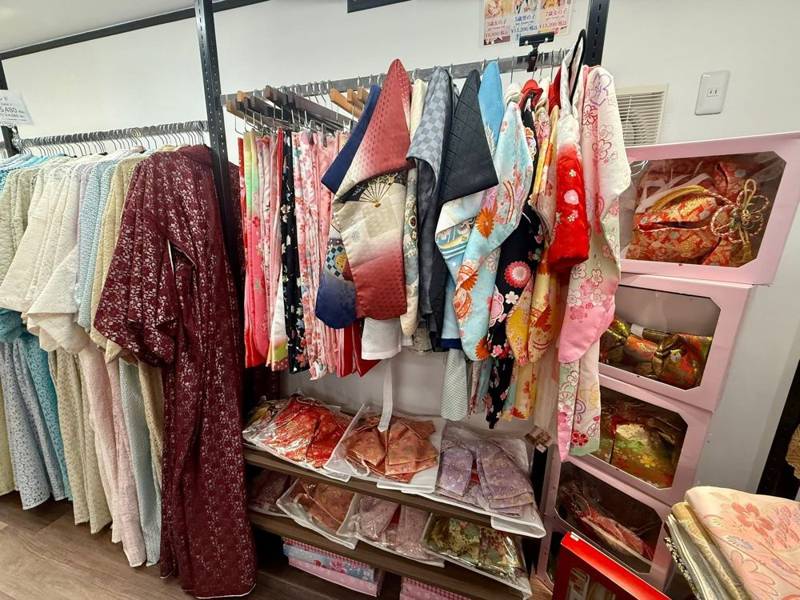
A kimono is not sized like a dress. It is a flat garment adjusted on the body: the length is folded at the waist to fit your height, the width is overlapped to fit your hips, and the dresser pads or pulls to make the line straight. That is why one rental kimono fits a range of people and why the shop asks for your height rather than a dress size. It also means there are limits, and this guide explains where they are and how to get the best fit if you are tall, petite or larger than the Japanese average.
How a kimono is fitted
| Measurement | How it is handled | Where it runs out |
|---|---|---|
| Height | The kimono is longer than you; the excess is folded at the waist (ohashori) and hidden under the obi | Very tall guests: not enough length to fold, so the hem sits high and the ohashori fold is thin |
| Hips and waist | The front panels overlap; a wider body needs a wider kimono | Larger guests: a standard kimono overlaps too little and gapes when you walk |
| Bust | Flattened with a towel or pad under the obi | A larger bust is padded around, not squeezed |
| Arms | Sleeves are cut wide; wrist length is fixed | Long arms: the sleeve shows more wrist, which is acceptable |
| Feet | Zori are open-backed; the heel hangs a little over the back by design | Large feet: a heel hanging 2 cm over the back is correct, 5 cm is not |
What OlaChill's shops stock
Both shops (Tokyo Asakusa and Kyoto Kiyomizu) fit guests from about 145 cm to about 185 cm in height, with wider-cut kimono for larger builds. Tell us your height and, if you are broad or tall, your approximate hip measurement or usual clothing size when you book, and the shop puts the right length and width aside before you arrive. This is the single most useful thing you can do; a walk-in on a Saturday takes whatever is on the rack.
Children's sets (kimono ¥8,000, yukata from ¥3,000) run from toddler to about 140 cm.
Tall guests
At 180 cm and above, the challenge is length. A woman's kimono should show a neat fold at the waist; when the kimono is only just long enough, the dresser makes a shallow fold and sets the hem a touch higher, at the ankle bone rather than the floor. This looks fine and is what tall Japanese women do. Men's kimono have no fold and are simply worn at the length they are; a hem above the ankle on a tall man looks casual, not wrong.
Furisode and formal sets come in fewer lengths; if you are very tall, say so when booking and we will confirm which formal sets can be made to fit.
Petite guests
Under 150 cm, the problem is the opposite: too much fabric to fold. A skilled dresser folds twice or tucks the excess, and the obi hides it. Choose a smaller pattern (Komongi, ¥5,500) rather than a large-print Kimono Ren; big motifs on a short frame can look like wallpaper. Zori come in small sizes; ask.
Larger guests
A wider kimono is the fix, and the shop has them. Beyond that: the obi is tied at the natural waist, and a soft, non-wired bra makes the line straighter. Sit with the back straight and forward on the seat, as everyone should, to keep the overlap closed. A Kimono Ren or Komongi in a vertical or diagonal pattern lengthens the line; a wide horizontal stripe does not. Yukata (¥4,500) are cut generously and are the easiest fit of all in summer.
Men and shoulders
Men's kimono (¥5,000) and Montsuki (¥10,000) fit a range of chests because the front simply overlaps more or less; a broad chest needs a wider kimono, which the shop has. The haori jacket has a set shoulder width; broad shoulders look best in a kimono without the haori, which is an ordinary choice in warm months.
What to tell the shop when booking
- Height in centimetres
- Usual clothing size or hip measurement if above a Japanese L
- Shoe size in centimetres or EU size, for tabi and zori
- Whether you want a formal set (Furisode, Houmongi, Montsuki), which have fewer sizes
- Any mobility concern: a shorter hem is set for guests who use a stick
Checklist
- Height and shoe size in the booking note
- Non-wired bra, low-neck base layer (see what to wear under a kimono)
- Arrive on time so the set-aside kimono is still yours
- Allow the standard 30 to 45 minutes for dressing (see how long dressing takes)
FAQ
I am 190 cm. Can I rent a kimono? Yes, in most styles; the hem will sit at the ankle. Tell us in advance. The formal sets are the ones to confirm.
Will the obi be uncomfortable if I am larger? The obi is tied to the same firmness on everyone: snug, not tight. If it presses, tell the dresser at once; it is retied in two minutes.
Do you have wide zori? Yes, in the larger sizes. The heel hanging slightly over the back is normal; ask for a larger pair if the strap pinches.
Can two people of different heights rent matching kimono? The pattern is the same; the length is adjusted on each body. Matching couples and groups are common; see the group kimono guide.
Does a wider kimono cost more? No. Every style is one price regardless of size.
Book with your measurements
Reserve at the Tokyo Asakusa shop or the Kyoto Kiyomizu shop and put your height in the note. Styles and prices are on the kimono rental page.
More from this region — Other
View all →
Kimono Return Times: Same-Day Deadlines, Next-Day Return and Hotel Return Explained
6 min · culture
What Is the Difference Between Kimono and Yukata? How to Tell Them Apart for Your Trip to Japan
7 min · culture
Kimono, Yukata and Hakama: Differences, Seasons and Which One to Rent
6 min · culture
Kimono with Glasses, Short Hair or Long Hair: Styling Choices That Look Right
6 min · culture