
Shun — Seasonal Japanese Cuisine: What to Eat and When for the Authentic Flavor
Discover 'shun' — Japan's philosophy of seasonal eating: bamboo shoots and sakura mochi in spring, unagi in summer, sanma and matsutake in autumn, crab hot pot in winter, and where to eat them.
Aug 8, 2026·✍️ olablog·⏱ 8 min read
Discover 'shun' — Japan's philosophy of seasonal eating: bamboo shoots and sakura mochi in spring, unagi in summer, sanma and matsutake in autumn, crab hot pot in winter, and where to eat them.
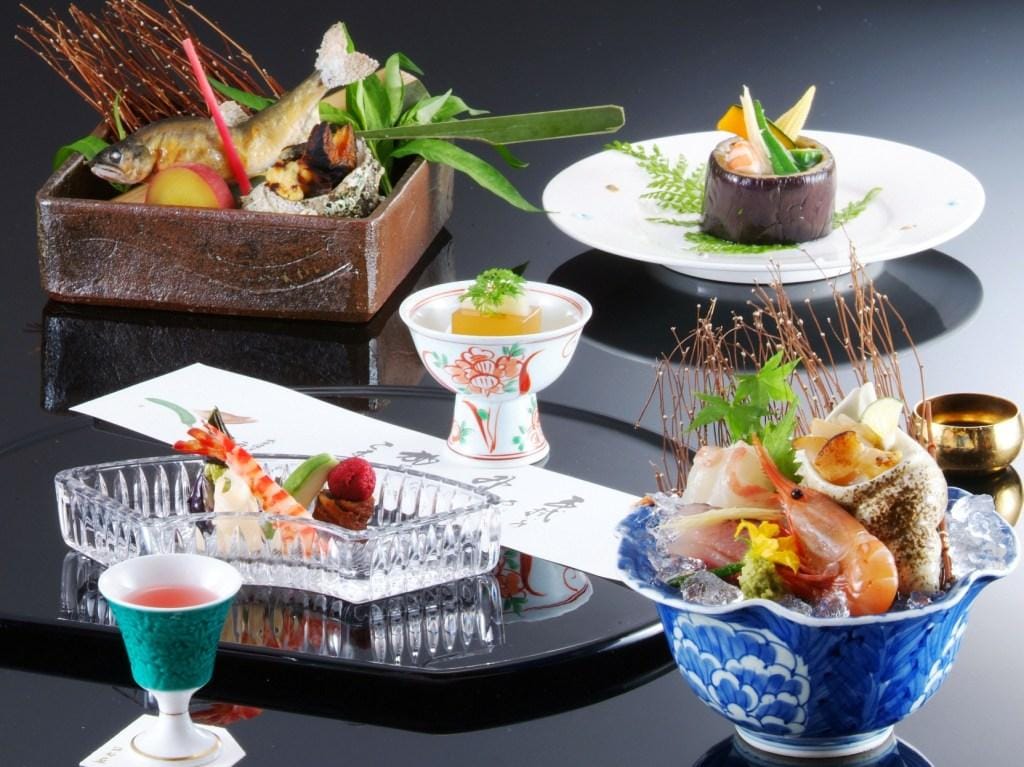
Ask a Japanese chef what matters most in their craft, and the answer likely won't be knife skills or dashi stock, but a concise word: shun (旬) — the exact moment when an ingredient reaches peak perfection during the year: the fattest fish, the tenderest bamboo shoot, the sweetest persimmon. The Japanese organize their entire culinary world around this concept: restaurant menus shift monthly, supermarkets showcase seasonal produce, and even bottled drinks release limited seasonal editions. For travelers navigating with their JR Pass or SUICA IC cards, understanding shun means holding the true culinary map of Japan: which month to visit, what to eat, and where to find it. Let us journey through the four seasons on the Japanese dining table.
Spring (March–May): Bamboo Shoots, Mountain Vegetables, and Sakura Pink
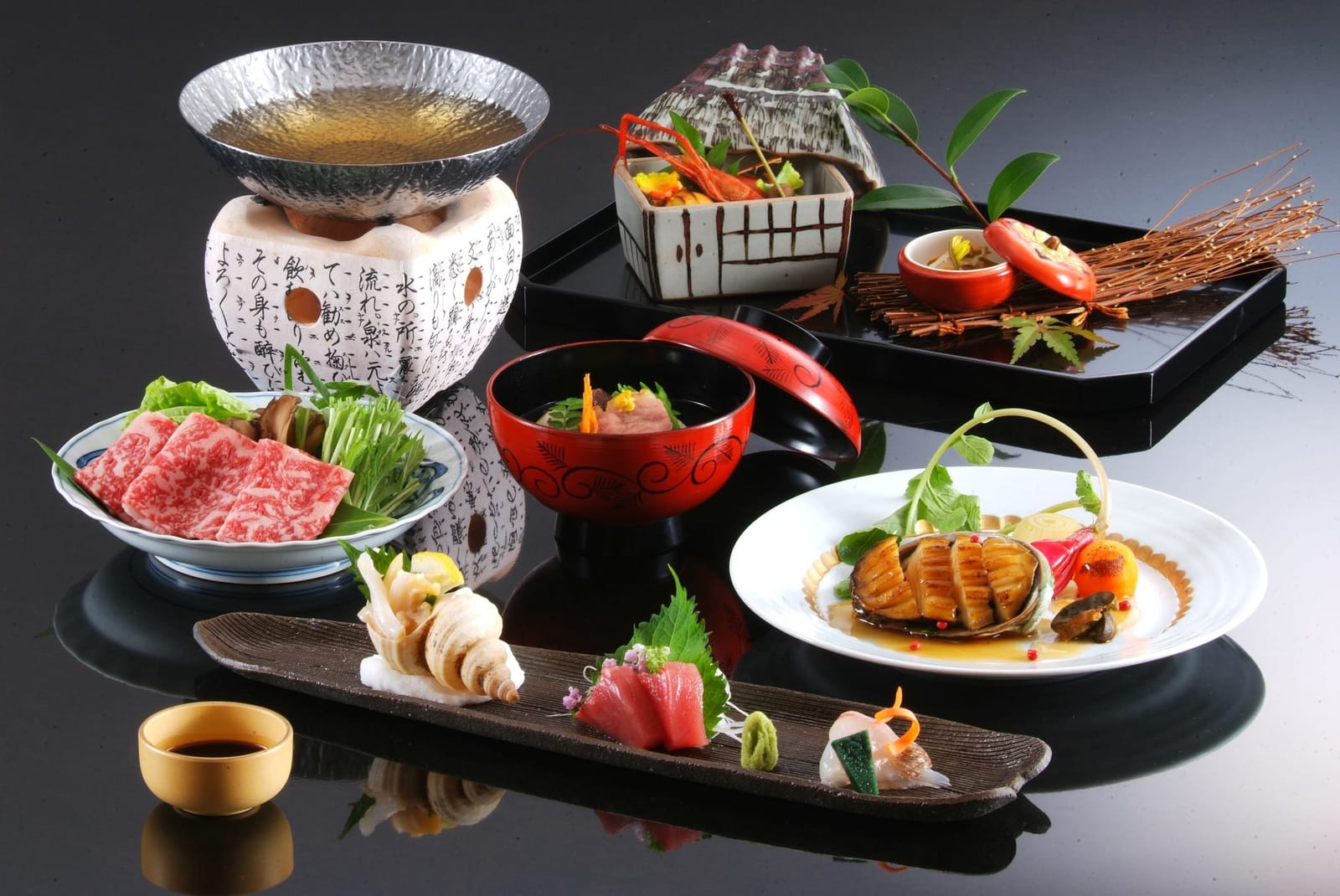
Spring in Japan arrives on the dining table long before the cherry blossoms bloom. The star ingredient is takenoko — fresh bamboo shoots harvested the very same day, so naturally sweet and crisp that cooks prepare them with extreme simplicity to highlight their pure flavor: bamboo shoot rice, dashi-simmered bamboo shoots, or simply grilled over charcoal. Alongside them is sansai — wild mountain sprouts with a subtle bitterness considered "the flavor of spring that awakens the body after winter," typically lightly battered and served as crispy tempura. Seasonal seafood features asari clams cooked in savory rice dishes and clear soups, as well as sea bream (tai), a celebratory fish whose peak season aligns perfectly with the sakura blooms, earning it the affectionate moniker "sakura-dai."
When it comes to sweets, spring belongs to sakura mochi — pink rice cakes filled with sweet red bean paste and wrapped in a salted cherry blossom leaf, creating a delightful harmony of sweet and savory notes; whether to eat the leaf or discard it remains an endless debate among Japanese locals. An essential experience to try: pick up a seasonal bento box and fresh sakura mochi, then enjoy a hanami (flower viewing) picnic under a canopy of blooming cherry blossoms in a park — where food and scenery move in perfect seasonal harmony.
Summer (June–August): Energizing Unagi and Refreshing Chilled Noodles
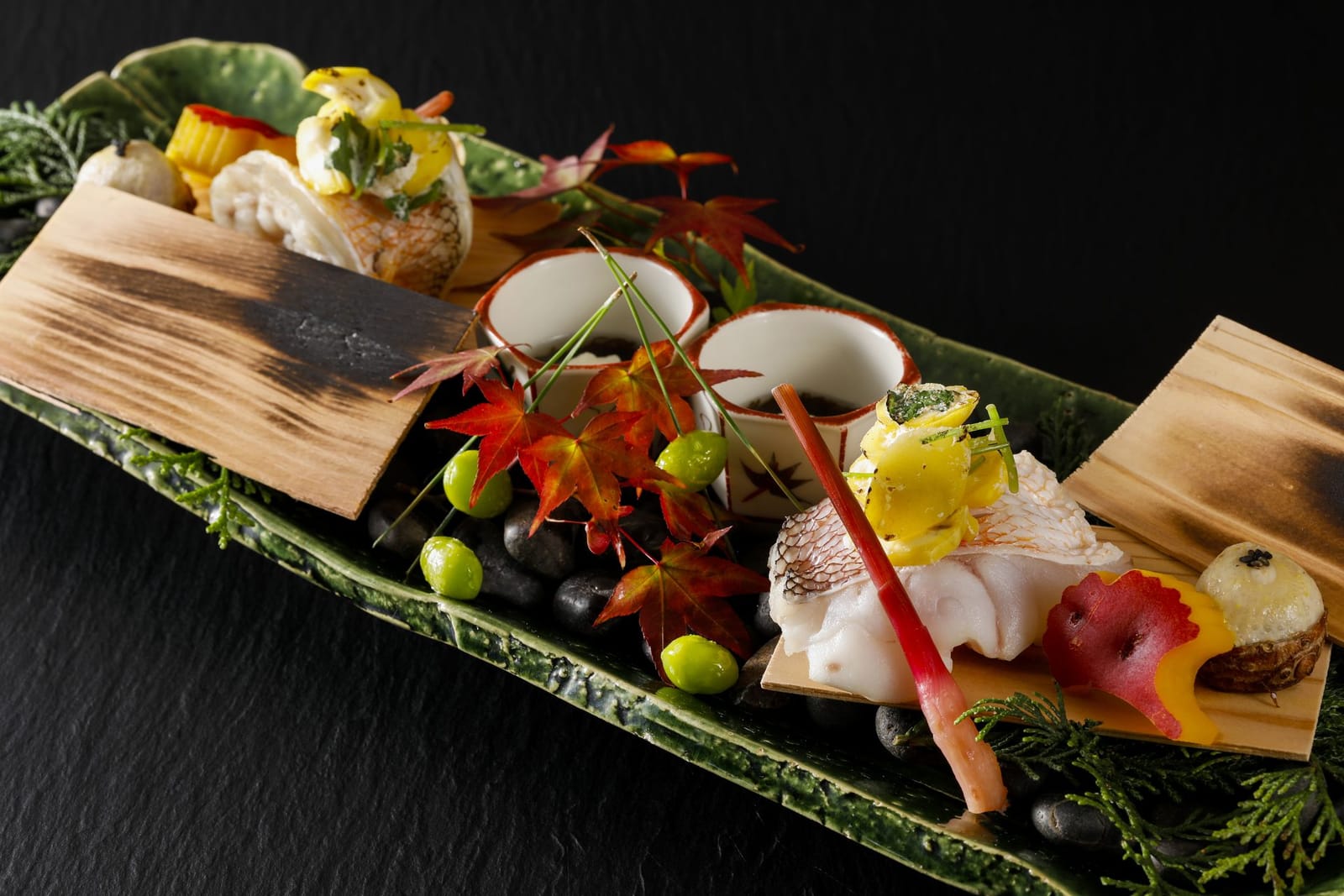
Summers in Japan are intensely hot and humid, and the seasonal cuisine revolves around two main goals: restoring stamina and beating the heat. Championing the stamina side is unagi — freshwater eel grilled over glowing charcoal while brushed with a sweet and savory tare glaze, served over hot steamed rice as unaju. The Japanese celebrate an official "Midsummer Day of the Ox" (Doyo no Ushi no Hi, late July) specifically to eat eel and regain stamina against the muggy heat — a custom dating back to the Edo period. A proper meal of unaju is not cheap, typically costing around 3,000 to 5,000 JPY ($20–$33 USD), but it is worth every single yen. Historic eel districts in 東京都(Tokyo), 名古屋(Nagoya) — famous for its local hitsumabushi variation — or around 浜名湖(Lake Hamana) are prime destinations to seek out this delicacy.
Cooling down is the duty of chilled noodle dishes: zaru soba dipped in savory tsuyu broth, hiyashi chuka topped with refreshing cucumber, egg crepe strips, and ham, and somen — delicate, hair-thin white noodles served over ice water. The most whimsical dining experience is nagashi somen: noodles flowing down a flume of split bamboo in cold running spring water, where diners stand along the trough to catch them with chopsticks — a summer tradition hosted by mountain restaurants in 京都(Kyoto) and 鹿児島(Kagoshima). Don't forget to try modern kakigori (shaved ice) crafted with snow-soft ice shavings and real fruit syrups, alongside lusciously sweet peaches and muskmelons harvested in 山梨県(Yamanashi Prefecture) and 岡山県(Okayama Prefecture).
Autumn (September–November): Sanma, Chestnuts, and Matsutake "The King of Mushrooms"
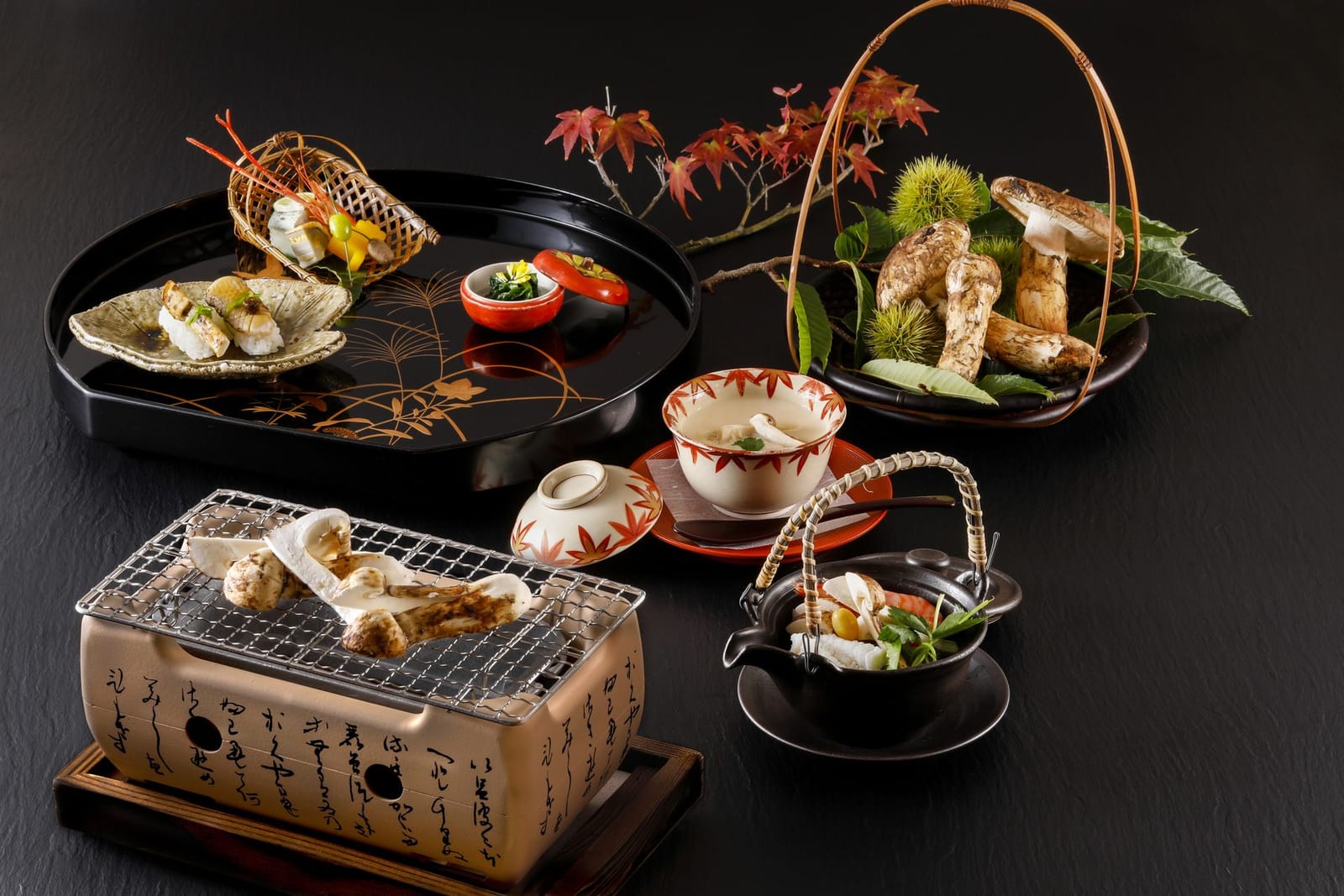
The Japanese fondly refer to autumn as "shokuyoku no aki" — the appetite-stimulating autumn — because it marks the most bountiful harvest of the year. The undisputed seasonal emblem is sanma (pacific saury): a slender, silvery fish salted and grilled whole over charcoal until the skin turns blistered and crispy while the flesh remains rich and fatty, served alongside grated daikon radish and a squeeze of fresh sudachi citrus. This humble comfort dish appears on the menus of nearly every local eatery and izakaya tavern throughout September and October. Accompanying it are savory chestnut rice (kuri gohan), roasted sweet potatoes sold from sweet-smelling pushcarts roaming city streets, crisp persimmons, juicy Kyoho grapes, and sweet, round Japanese pears.
The absolute pinnacle — in terms of both fragrance and price — is matsutake, a wild pine mushroom that resists artificial cultivation. High-grade domestic matsutake can fetch tens of thousands of yen per kilogram (often upwards of $100–$200 USD per piece), but tasting it doesn't require breaking the bank: during fall, many traditional restaurants offer dobin mushi — aromatic matsutake steamed inside a small earthenware teapot with dashi stock, succulent shrimp, and ginkgo nuts — providing a much more accessible way to enjoy its full pine essence (~$10–$20 USD). Autumn is also the season of freshly harvested rice (shinmai), yielding the year's most fragrant and glossy white rice — reason enough to order an extra bowl wherever you dine.
Winter (December–February): Steaming Hot Pots and Northern Sea Crab Season
Winter is the glorious season of nabe (Japanese hot pot): rich yosenabe filled with seafood and vegetables, hearty chanko nabe famously eaten by sumo wrestlers, beef offal motsunabe from 福岡(Fukuoka), and oden — simmered daikon radish, boiled eggs, and fish cakes steeped in warm dashi broth, sold piping hot right at convenience store cash registers nationwide. Winter wild yellowtail (buri) reaches its peak fat content during this cold season, known as kanburi, tasting extraordinary whether sliced raw for sashimi or flash-poached in shabu-shabu. Plump oysters harvested along the coasts of 広島県(Hiroshima Prefecture) and 宮城県(Miyagi Prefecture) are also at their prime.
However, the winter crown indisputably belongs to crab. Starting in November, the Sea of Japan fishing grounds open for snow crab (zuwai-gani), celebrated through famous regional brands like Matsuba crab from the 山陰地方(San'in Region) and Echizen crab from 福井県(Fukui Prefecture), while 北海道(Hokkaido) contributes sweet horsehair crab (kegani) and massive king crab (tarabagani). The cozy hot spring town of 城崎温泉(Kinosaki Onsen) near 京都(Kyoto) practically breathes crab in winter: ryokan guests stroll snowy streets dressed in traditional yukata robes before returning indoors to indulge in a multi-course crab kaiseki banquet — crab sashimi, charcoal-grilled leg meat, steaming crab hot pot, and rich crab rice porridge to finish. A complete multi-course crab feast usually costs around 10,000 to 20,000 JPY per person ($65–$130 USD), representing one of the most rewarding culinary investments you can make in Japan.
Where to Eat Seasonally: Practical Tips for Travelers
- Look for the characters 旬 (shun) or 季節限定 (kisetsu gentei — seasonal limited): Spotting these kanji characters on menus, store displays, or packaging indicates that an ingredient or dish is currently at its absolute flavor peak.
- Choose local omakase counters or teishoku set-meal diners over major chains: Independent neighborhood shops that adjust their menus daily based on morning market runs are where shun truly comes alive. Modest eateries recognized in Michelin's Bib Gourmand guide across 東京都(Tokyo) and 大阪(Osaka) often serve seasonal lunch sets at very reasonable prices (~$10–$20 USD).
- Explore local markets and depachika: Open-air food markets like 錦市場(Nishiki Market) in 京都(Kyoto) or 近江町市場(Omicho Market) in 金沢(Kanazawa), alongside depachika (basement food halls beneath department stores), serve as free admission "museums of the four seasons." Simply look at what is prominently displayed in abundance — that is your cue for what is in shun.
- Travel to the true home of the ingredient: Head to 城崎温泉(Kinosaki Onsen) or 金沢(Kanazawa) for winter crab, 名古屋(Nagoya) for charcoal-grilled unagi, and 北海道(Hokkaido) for pristine cold-water seafood — the very finest ingredients rarely travel far from their origin.
- Stay a night at a ryokan for the ultimate shun masterclass: The multi-course kaiseki dinner served at a traditional Japanese inn is meticulously designed around seasonal, hyper-local ingredients. Many itineraries in OlaChill's Japan tour collection naturally feature a ryokan stay complete with a seasonal kaiseki banquet.
Dining according to shun is the most rewarding way to experience deep Japanese travel culture without stretching your budget: for the exact same price, seasonal food is consistently tastier, fresher, and often more affordable than off-season produce. So before booking your flight, ask yourself not just "which season is prettiest?" but also "which season is most delicious?" — you'll find plenty of inspiration on OlaChill's Japan travel and food blog. Who knows? Your next journey to Japan might just be planned around a perfectly salt-grilled saury or a piping hot pot of winter snow crab.
More from this region — Other
View all →American Chains in Japan — Starbucks, McDonald's + 12 More Surprises
6 min · food
Solo Travel Safety in Japan — A Complete Guide for First-Timers
7 min · tips
Eating Alone in Japan — No Need to Feel Self-Conscious, Because the Whole Country Supports You
7 min · tips
Comiket Guide for First-Timers: Dates, Venue, Tickets and What to Wear
14 min · culture