
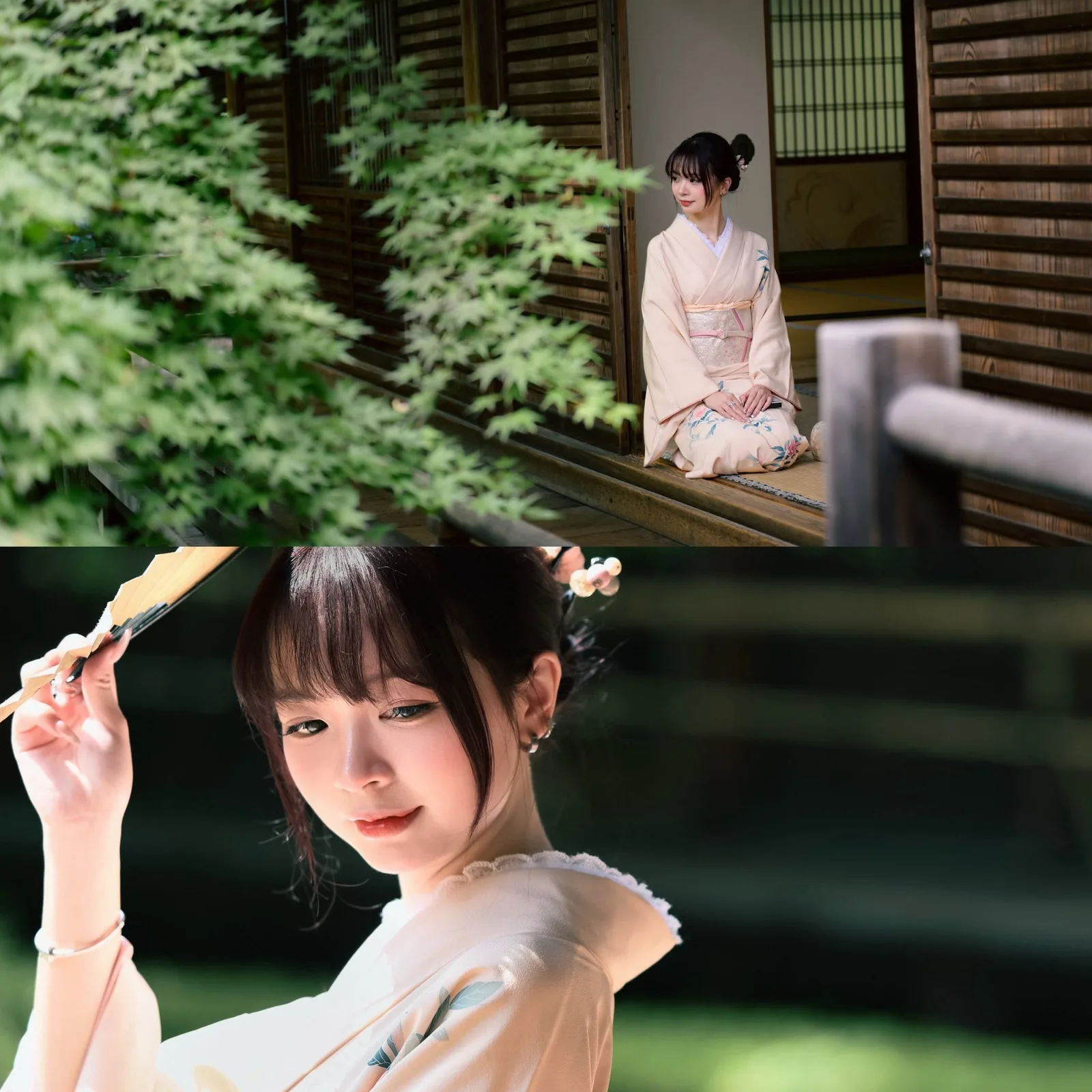
Aoi Matsuri in Kimono: Procession Route, Viewing Spots and Dress Tips
Aoi Matsuri in Kyoto on May 15 in kimono: the Heian court procession route from the Imperial Palace to Shimogamo and Kamigamo, viewing spots and what to wear.
Sep 14, 2026·✍️ olablog·⏱ 6 min read
Aoi Matsuri in Kyoto on May 15 in kimono: the Heian court procession route from the Imperial Palace to Shimogamo and Kamigamo, viewing spots and what to wear.
Aoi Matsuri (葵祭) is the oldest of Kyoto's three great festivals and the most elegant. On May 15 every year, about 500 people in Heian-period court dress, plus horses and ox-drawn carts, walk 8 kilometres from the Kyoto Imperial Palace to Shimogamo Shrine and on to Kamigamo Shrine. There are no floats, no food stalls and no shouting; the whole point is the slow procession of silk robes with hollyhock (aoi) leaves pinned to every hat and cart. It is the one Kyoto festival where wearing a proper kimono, rather than a yukata, feels exactly right.
Date, timing and the rain rule
The date is fixed: May 15. If heavy rain is forecast, the procession moves to May 16. The decision is usually announced early on the morning of the 15th, so check before you leave your hotel.
| Point on the route | Approximate time | Notes |
|---|---|---|
| Kyoto Imperial Palace (Kyoto Gosho), Kenreimon gate | 10:30 departure | Paid seats; the best view of the full procession leaving |
| Marutamachi-dori and Kawaramachi-dori | 10:45 to 11:30 | Free street viewing, sidewalks fill by 10:00 |
| Shimogamo Shrine (下鴨神社) | 11:40 arrival, rituals until 14:20 | Paid seats along the approach through Tadasu-no-mori forest |
| Kitaoji and Kamo River embankment | 14:20 to 15:30 | Free, spacious, the procession walks along the river |
| Kamigamo Shrine (上賀茂神社) | 15:30 arrival | Final rituals, open grounds |
The procession is led by the imperial messenger on horseback; the figure everyone waits for is the Saio-dai, a young woman of Kyoto chosen each year to represent the imperial princess, carried in a palanquin in twelve-layer robes.
Where to stand in kimono
You will be standing for at least an hour, so choose your spot for shade and an exit, not just the view.
- Kyoto Gosho, free area near the Sakaimachi gate. Arrive by 09:30. Trees along the gravel give some shade. The gravel is hard on geta, so stand still rather than pacing.
- Kawaramachi-dori south of Marutamachi. The procession passes close, and you can step back into a cafe afterwards. Crowds are two or three deep by 10:15.
- Kamo River embankment between Demachiyanagi and Kitaoji. Our favourite for kimono photos. There is space, grass, and the procession moves slowly along the water in the mid-afternoon light. Fewer people know the second leg exists.
- Paid seats at the Gosho and at Shimogamo go on sale in April through Kyoto City tourism channels and sell out. They give a guaranteed front row and a chair, which matters in kimono.
What to wear for Aoi Matsuri
Mid-May in Kyoto is around 24 to 26°C, sunny more often than not, with cool mornings. A single-layer (hitoe) or standard lined kimono is comfortable. Yukata would look out of place at this festival; it is a spring ceremony and the crowd dresses up.
Colour guidance from the season itself: the festival's leaf is the hollyhock, and the whole route is fresh green. Pale greens, cream, soft blue and light purple photograph beautifully against Shimogamo's forest and the river. Avoid heavy dark colours in the sun.
From OlaChill's Kyoto Kiyomizu shop, the Komongi at ¥5,500 (everyday small-pattern kimono) is the natural choice; the Houmongi at ¥12,000 is the more formal option if you want to match the tone of the day. Men's traditional kimono is ¥5,000. All sets include obi, sandals and bag. Add the hair set (¥1,500) so your hair survives a windy river walk, and a parasol for the Gosho gravel.
Getting there from Kiyomizu in kimono
Dressing takes about 30 minutes; be at the shop when it opens at 09:00 to make the 10:30 departure.
- Walk down to Kiyomizu-Gojo Station on the Keihan line (15 minutes).
- Ride north to Jingu-Marutamachi (about 6 minutes) for the Imperial Palace: walk west along Marutamachi-dori for 10 to 15 minutes to the palace grounds.
- Or ride to Demachiyanagi (about 9 minutes) for Shimogamo Shrine: the shrine is a 10-minute walk north through the forest.
Taxis are the comfortable alternative for the first leg, but note that from about 10:00 the streets around the palace are closed to cars.
Plan your day
- 09:00 Dressing at the Kiyomizu shop, hair set, bags into the free lockers.
- 09:45 Keihan to Demachiyanagi. Coffee and a bathroom stop near the station; there are almost no facilities along the forest approach.
- 10:15 Take a place along the Tadasu-no-mori approach or at the river.
- 11:40 to 12:30 Procession arrives at Shimogamo. Watch the horse ceremony from the free area if you are near the shrine grounds.
- 12:30 Lunch. Demachi Futaba (famous mame-mochi) and the cafes around Demachiyanagi are a short walk.
- 14:20 Walk with the procession along the Kamo River toward Kitaoji for the photos.
- 16:00 Keihan back south, or bus to Kiyomizu-michi, and return the kimono before 18:00. If you want to stay for an evening in Gion, add next-day return (+¥1,100).
Checklist
- Rain-date awareness (May 16 fallback)
- Parasol or a wide-brim hat you can carry
- Flat cushion or folding stool if you have a paid seat ticket
- Small cross-body bag under the sleeve, not a backpack, which crushes the obi
- Water; there are no stalls on this festival route
FAQ
Is Aoi Matsuri worth it compared with Gion Matsuri? They are different animals. Gion is a month of lanterns, food and crowds; Aoi is a single morning of quiet ceremony. If you want photos of yourself in kimono in a calm setting, Aoi wins.
How crowded is it? Roughly 80,000 people across the route, far fewer than Gion Matsuri. The river section in the afternoon feels almost empty.
Can I walk the whole route with the procession? Not on the road itself, but you can follow on the sidewalk for the first leg and along the riverbank for the second. In kimono, pick one leg; 8 km in zori is too much.
Is there something to see the days before? Yes: the Yabusame horseback archery at Shimogamo on May 3 and the Mikage Matsuri ritual on May 12 are both free and beautiful in kimono, with a fraction of the crowd.
Can OlaChill hold my luggage while I attend? Yes, the shop has free lockers for the day of your rental.
Book your kimono for Aoi Matsuri
Reserve a Komongi or Houmongi at the Kyoto Kiyomizu shop for May 15, and pick the 09:00 slot. For where else to wear kimono around the city, see our Kyoto photo-spot map, and for the full style list, the kimono rental page.
More from this region — Other
View all →
Esports at Aichi Sky Expo, Tokoname: Group Transport and Timing
7 min · events

Athletics Week at Paloma Mizuho Stadium: Group Transport Planning
6 min · events
When to Book a Charter Bus for the Asian Games (and What Happens If You Wait)
7 min · tips
Driving in Japan for the Asian Games: Licence, IDP and Rental Checklist
7 min · tips