
Kyoto Gion Festival 2026 Complete Guide — July 1-31: The 1100-Year-Old Yamahoko Processions and Yoiyama
A complete guide to the 2026 Gion Festival, one of Japan's three major festivals, held annually in Kyoto from July 1-31. Covers the Saki-matsuri and Ato-matsuri yamahoko processions, how to enjoy Yoiyama, reserved viewing seats, access, and tips for avoiding the crowds.
Feb 14, 2026·✍️ olablog·⏱ 4 min read
A complete guide to the 2026 Gion Festival, one of Japan's three major festivals, held annually in Kyoto from July 1-31. Covers the Saki-matsuri and Ato-matsuri yamahoko processions, how to enjoy Yoiyama, reserved viewing seats, access, and tips for avoiding the crowds.
Tap a region to browse articles
The Kyoto Gion Festival is a month-long celebration held from July 1 to 31 as a festival of Yasaka Shrine. With a history spanning more than 1100 years, it is one of Japan's three major festivals, alongside Tokyo's Kanda Matsuri and Osaka's Tenjin Matsuri. It is also registered as a UNESCO Intangible Cultural Heritage event. In particular, the yamahoko processions on July 17 (Saki-matsuri) and July 24 (Ato-matsuri) are Kyoto's biggest events, drawing visitors from around the world.
Event Information
| Item | Details |
|---|---|
| Festival period | Wednesday, July 1, 2026〜Friday, July 31 ※Fixed dates every year |
| Saki-matsuri Yamahoko Procession | Friday, July 17 9:00〜 |
| Ato-matsuri Yamahoko Procession | Friday, July 24 9:30〜 |
| Saki-matsuri Yoiyama | July 14〜16 18:00〜around 23:00 |
| Ato-matsuri Yoiyama | July 21〜23 18:00〜around 21:00 |
| Main venue | Shijo-Karasuma〜Kawaramachi〜Oike-dori (Nakagyo-ku and Shimogyo-ku, Kyoto) |
| Typical attendance | More than approximately 1 million visitors during the festival |
1-Month Schedule Highlights
July 1〜5 — Kippu-iri Ritual ceremonies marking the start of festival preparations in each yamahoko neighborhood.
July 10 — Mikoshi-arai-shiki A ceremony to purify the mikoshi at Shijo Bridge. Construction of the hoko floats also begins the night before.
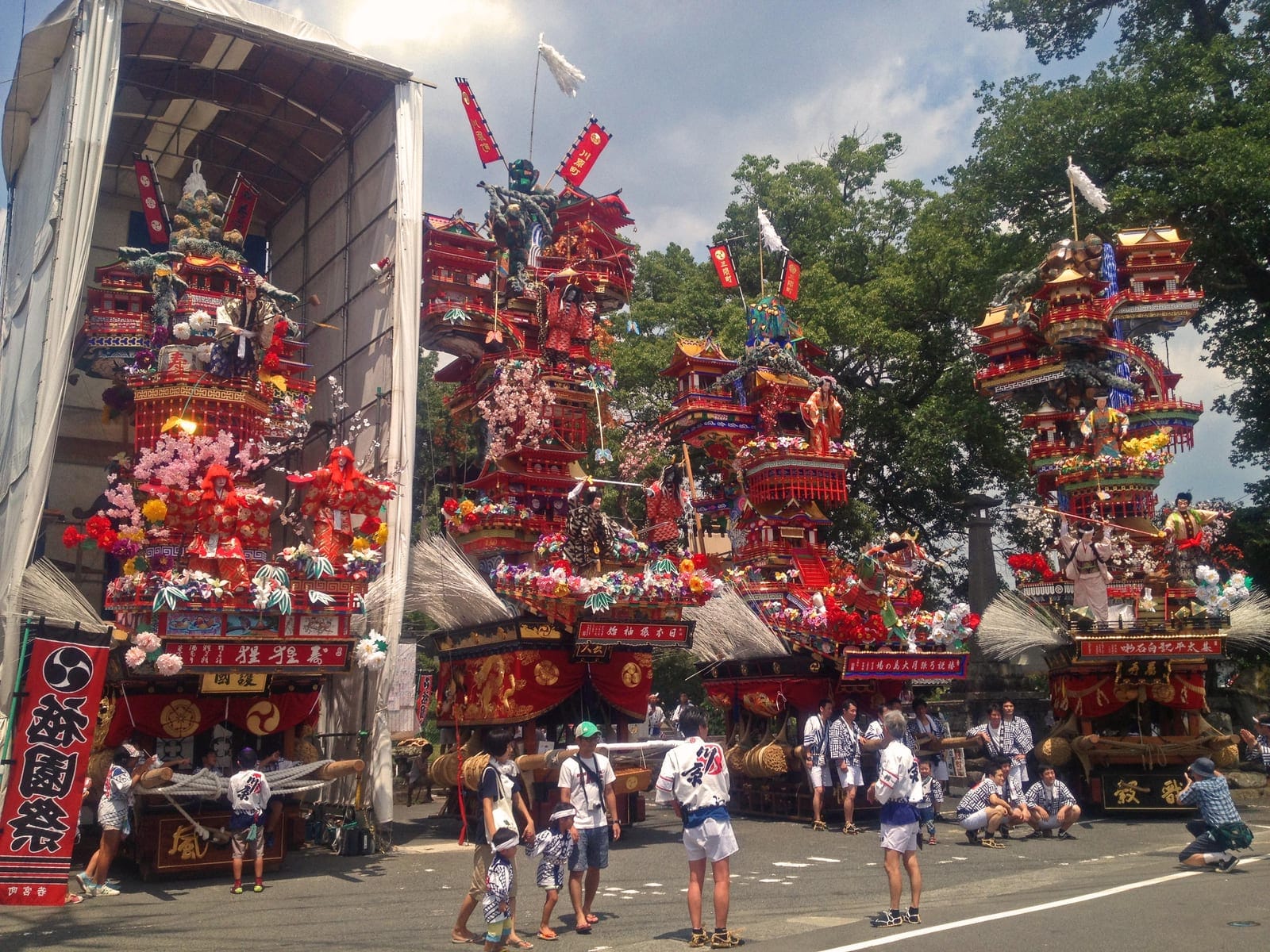
July 14〜16 — Saki-matsuri Yoiyama The area from Shijo-Karasuma to Karasuma-Oike becomes a pedestrian zone. 23 yamahoko floats line the streets, while the distinctive “kon-chiki-chin” Gion festival music echoes through Kyoto at night. Visitors can enter some of the floats (some require a fee).
July 17 — Saki-matsuri Yamahoko Procession 23 yamahoko floats travel from Shijo-Karasuma → Kawaramachi → Oike → Shinmachi. Led by the Naginata Hoko, the procession takes approximately 3 hours. The tsuji-mawashi (turning 90 degrees at intersections) is a major highlight.
July 21〜23 — Ato-matsuri Yoiyama Smaller in scale than the Saki-matsuri, but increasingly popular for its more relaxed atmosphere.
July 24 — Ato-matsuri Yamahoko Procession + Hanagasa Procession 11 yamahoko floats travel along the reverse route of the Saki-matsuri. The Hanagasa Procession is also held on the same day.
July 31 — Eki Shrine Natsukoshi Festival The closing ceremony of the festival, featuring the ritual of passing through a chinowa ring at Eki Shrine on the grounds of Yasaka Shrine.
Tips for Watching the Yamahoko Processions
Reserved Viewing Seats (Kyoto City Tourism Association)
- Special seating is set up along Oike-dori. Approximately ¥4,000〜5,500 per person. Sales typically begin in June.
- Purchase tickets through the official Kyoto City Tourism Association website.
Free Viewing Spots
- Shijo-Karasuma〜Shijo-Kawaramachi (the starting point and the most crowded area)
- The tsuji-mawashi point at Kawaramachi-Oike (the most popular spot; arriving early in the morning to claim a place is essential)
- Shinmachi-dori (the latter part of the route; a relatively uncrowded hidden gem)
How to Enjoy Yoiyama
During Yoiyama, local merchants and traditional machiya townhouses open their treasured folding screens and furnishings to the public in an event known as the “Byobu Matsuri.” Food stalls also line Karasuma-dori, which becomes a pedestrian zone, creating a unique atmosphere where tradition and modern life intersect. The evening of the 16th is the most crowded, so visiting on the 14th or 15th offers a little more breathing room.
Access
By Train
- Hankyu Kyoto Line: “Karasuma Station” or “Kawaramachi Station” is closest
- Direct access from “Shijo Station” on the Kyoto Municipal Subway Karasuma Line
- 5 minutes by subway from JR Kyoto Station (2 stops)
On procession days, Shijo-dori, Kawaramachi-dori, and Oike-dori are completely closed to traffic from around 9:00〜13:00, and city buses and taxis take major detours. Walking + the subway is the most reliable option.
Accommodation
Kyoto sees more tourists in July during the Gion Festival than at any other time of year. As a rule, reservations should be made 6 months〜1 year in advance. Trade-offs between accommodation budget and location include:
- Around Kyoto Station (convenient transportation, sharply higher prices)
- Karasuma-Oike and Kawaramachi (the heart of the festival, extremely expensive)
- Staying in Osaka or Otsu and attending as a day trip (a budget-friendly option)
What to Wear and Bring
Kyoto in July has temperatures around 35℃ and relatively high humidity.
- Hat, parasol, and UV-protection arm covers
- Drinking water (even convenience stores may run low)
- Comfortable walking shoes (you may be standing for 2-3 hours during the yamahoko procession)
- Yukata (renting one is recommended for Yoiyama)
- Folding fan and cooling towel
- Rain gear (sudden thunderstorms can occur in July)
More from this region — Kyoto, Nara & Kansai
View all →
Kyoto — The Ultimate Guide to Japan's Ancient Imperial Capital
3 min · destinations
Kyoto Hanatouro in Kimono: Lantern-Lit Evenings in Higashiyama and Arashiyama, and What Replaced the Festival
6 min · culture
Kyoto Kimono Photoshoot Route: Kiyomizu-dera, Sannenzaka, Yasaka Pagoda and Gion
7 min · culture
Kyoto’s Autumn Colors Beyond the City: Ohara, Kurama–Kibune, and Takao
17 min · tips