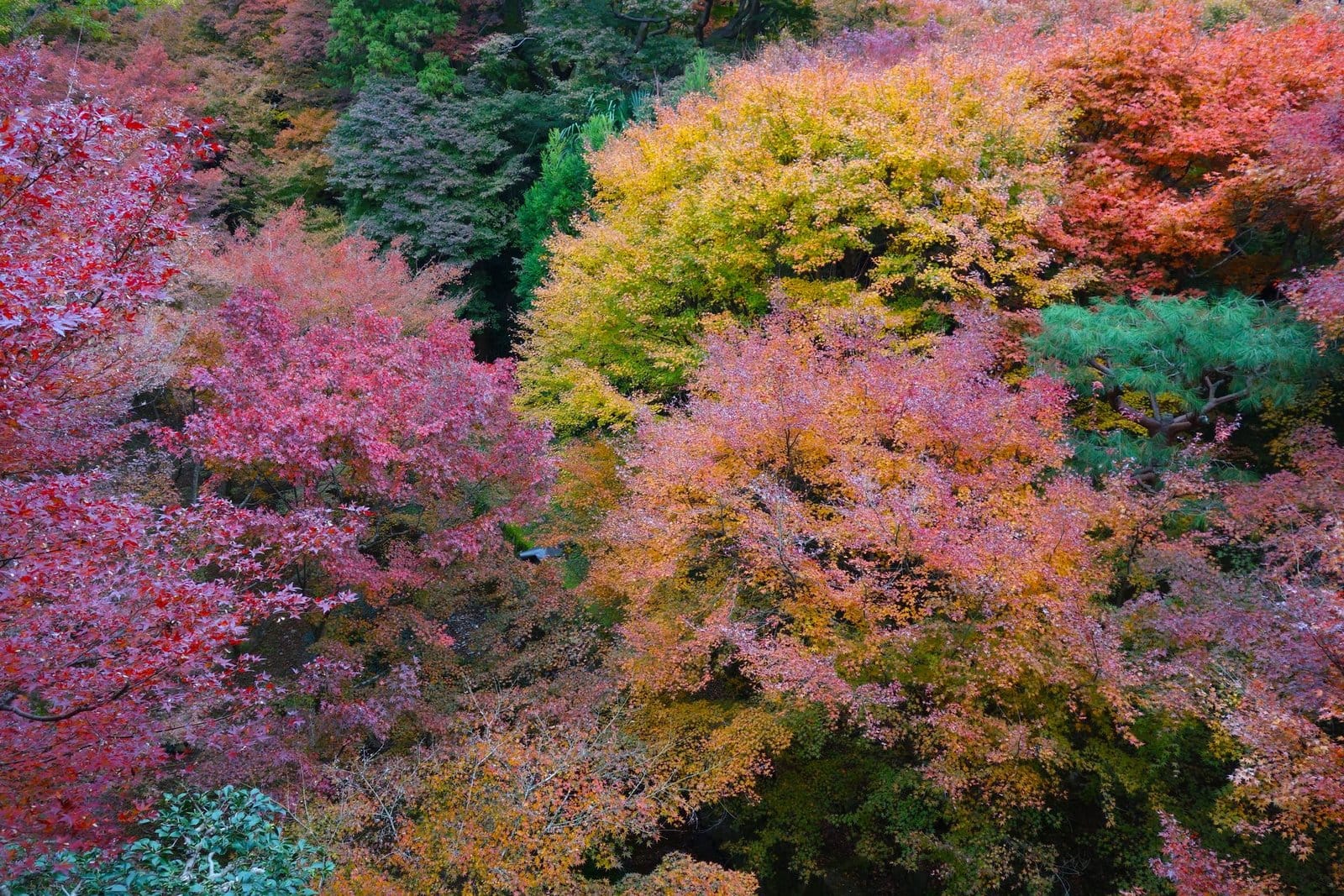
Koyo in Kyoto – 10 Best Spots to See Fall Foliage in Japan's Ancient Capital
The 10 best places to see autumn leaves in Kyoto, from Tofuku-ji and Eikando to Arashiyama and Kifune, with usual peak times, nearest stations, practical tips and a 2-day koyo itinerary.
Jan 15, 2026·✍️ olablog·⏱ 7 min read
The 10 best places to see autumn leaves in Kyoto, from Tofuku-ji and Eikando to Arashiyama and Kifune, with usual peak times, nearest stations, practical tips and a 2-day koyo itinerary.
Tap a region to browse articles
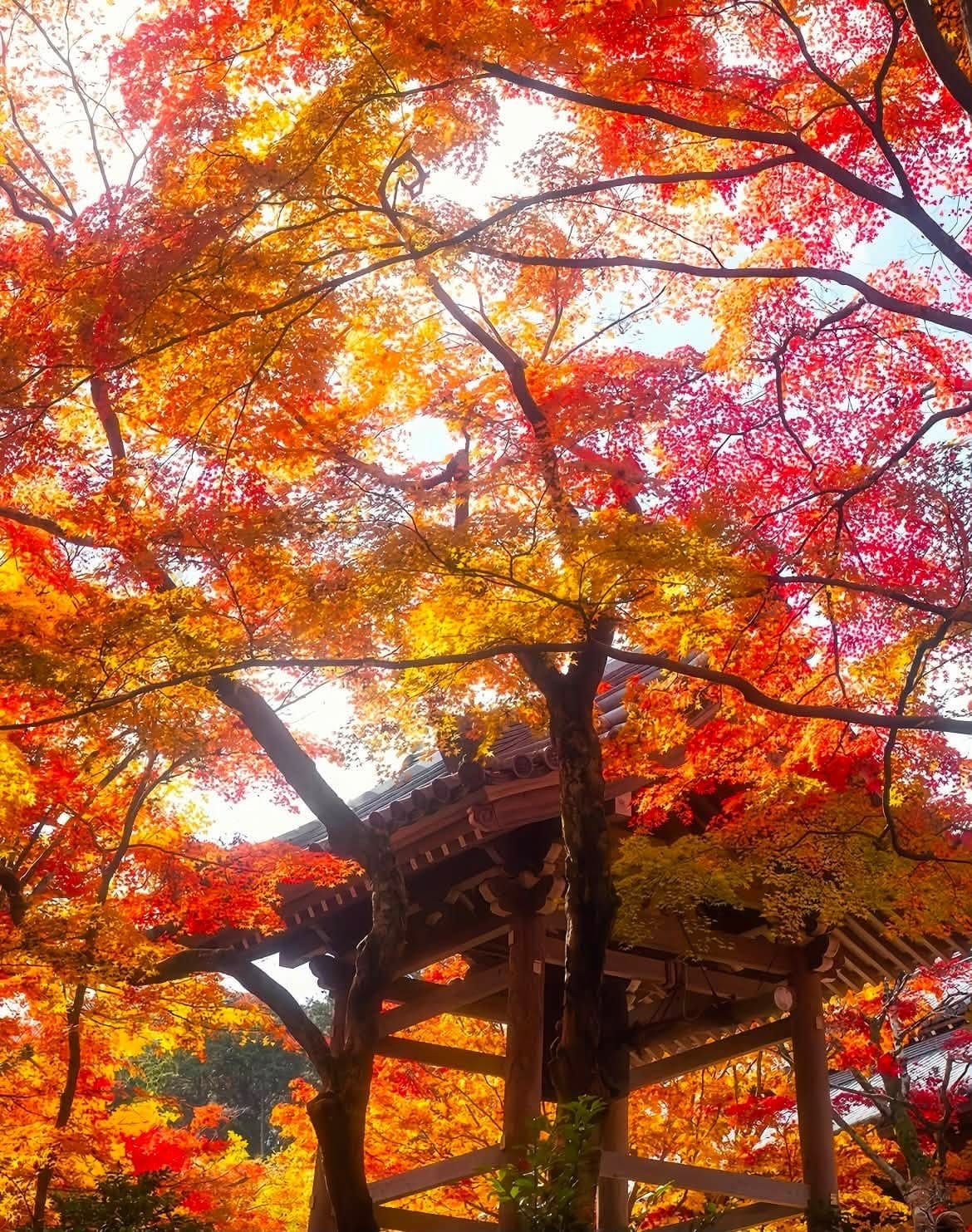
Kyoto's autumn foliage (koyo) is one of Japan's great seasonal sights. For a few weeks each year, maples around the city's temples, gardens and hillsides turn crimson, orange and gold. This guide covers the 10 spots most worth your time, when they usually peak, how to reach them, and how to beat the crowds.
1. When Do the Leaves Peak in Kyoto?
In central Kyoto, the leaves usually peak from mid-November to early December. Spots in the northern mountains, such as Kifune and Kurama, often turn a little earlier because the air there is cooler. Timing shifts by a week or more from year to year, so check a current foliage report shortly before your trip.
The best light for photos is early morning and late afternoon, and early morning is also when the crowds are thinnest. Many temples hold evening illuminations during the season, which are a different experience altogether.
2. The 10 Best Koyo Spots in Kyoto
Tofuku-ji (東福寺)
Tofuku-ji is often called Kyoto's finest autumn view: the wooden Tsutenkyo Bridge spans the Sengyokukan Valley, where roughly 2,000 maples turn red.
- Usual peak: mid- to late November
- Nearest station: Tofukuji Station (JR Nara Line / Keihan Line), then about a 10-minute walk
- Tip: Stopping to take photos on Tsutenkyo Bridge is not allowed during the foliage season. Take your shots from the paths around the valley or from Gaun-kyo Bridge instead.
Eikando (永観堂, Zenrin-ji)
Known locally as "Eikando of the autumn leaves," this temple has about 3,000 maple trees, and its evening illumination is one of the most popular in the city.
- Usual peak: mid- to late November
- Nearest station: Keage Station (Tozai Subway Line), about a 15 to 20-minute walk; the Nanzenji-Eikando-michi bus stop is about 5 minutes away
- Tip: Evening viewing is ticketed separately from daytime entry, so check the times and tickets on the official website.
Kiyomizu-dera (清水寺)
Around 1,000 maples surround Kiyomizu-dera's famous wooden stage, so the view looks out over a sea of red toward the city.
- Usual peak: late November to early December
- Nearest bus stop: Gojo-zaka or Kiyomizu-michi, then a 10-minute uphill walk
- Tip: The temple holds a limited autumn night viewing; the approach streets are packed in the evening, so allow extra time.
Arashiyama and Tenryu-ji (嵐山・天龍寺)
In Arashiyama, the hills behind Togetsukyo Bridge turn color, and the Sogenchi pond garden at Tenryu-ji, a UNESCO World Heritage temple, is one of the classic autumn views.
- Usual peak: mid-November to early December
- Nearest station: Arashiyama Station (Randen/Keifuku Line), about 2 minutes on foot; JR Saga-Arashiyama Station, about 10 minutes
- Tip: Go at opening time. During the second half of November, the Tenryu-ji garden has in recent years opened earlier than usual, at 7:30 AM.
Nanzen-ji (南禅寺)
Maples line the stone path to Nanzen-ji's huge Sanmon Gate and frame the brick Suirokaku Aqueduct inside the temple grounds.
- Usual peak: mid-November to early December
- Nearest station: Keage Station (Tozai Subway Line), about a 10-minute walk
- Tip: Eikando is a short walk away, so the two make an easy half-day pairing.
Kitano Tenmangu Momiji-en (北野天満宮 もみじ苑)
The shrine's maple garden runs along the Kamiya River, with about 350 maples on earthworks built in 1591 under Toyotomi Hideyoshi. During the autumn opening, admission includes tea and a traditional sweet.
- Usual peak: mid-November to early December
- Nearest bus stop: Kitano Tenmangu-mae
- Tip: The garden is lit up in the evening during the season. Tripods are not allowed inside.
Ruriko-in (瑠璃光院)
Ruriko-in is famous for the "reflected maples": the leaves outside are mirrored on the polished desk and floor of the upstairs study. It opens to the public only during special spring and autumn periods.
- Usual peak: mid- to late November
- Nearest station: Yase-Hieizanguchi Station (Eizan Railway), about a 5-minute walk
- Tip: Advance reservations have been required for peak autumn days in recent years, so check the booking dates on the official website well ahead.
Daigo-ji (醍醐寺)
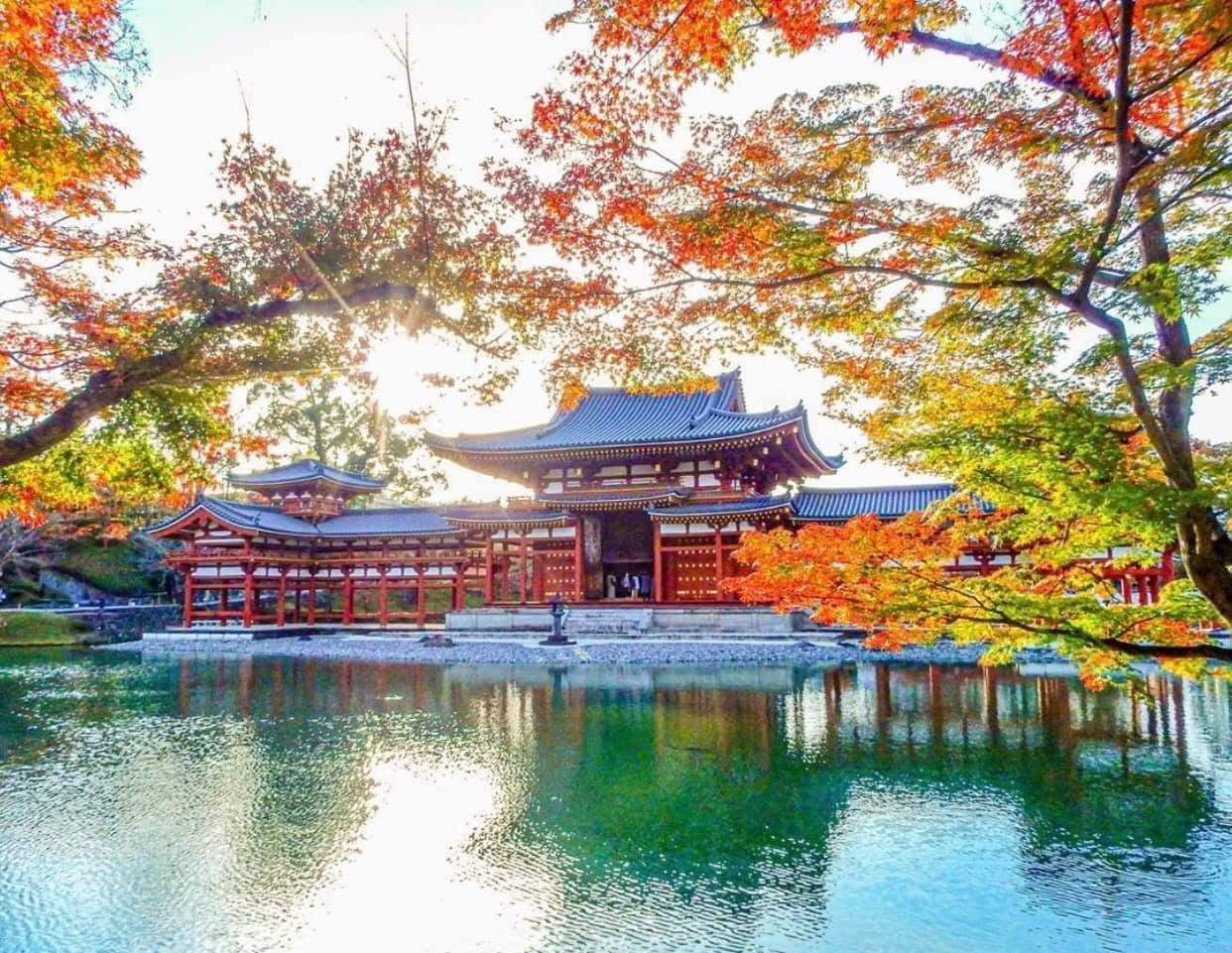
This large World Heritage temple in the southeast of Kyoto is best known for the vermilion Bentendo Hall, whose autumn leaves reflect in the pond in front of it.
- Usual peak: mid-November to early December
- Nearest station: Daigo Station (Tozai Subway Line), about a 10 to 15-minute walk
- Tip: Daigo-ji is away from the main sightseeing areas, so it is usually calmer than the temples in Higashiyama.
Shinnyo-do (真如堂)
A quieter alternative in the hills of northern Higashiyama, Shinnyo-do has a three-story pagoda and main hall framed by maples, plus a moss garden.
- Usual peak: mid-November to early December
- Nearest bus stop: Shinnyo-do-mae (about a 5-minute walk, but uphill) or Kinrin Shako-mae (about 8 minutes on a gentler route)
- Tip: Visit when Eikando and Nanzen-ji are at their busiest; Shinnyo-do sees a fraction of the crowds.
Kifune and Kurama (貴船・鞍馬)
North of the city, the Eizan Railway's Kurama Line runs through the "Momiji Tunnel," about 250 m of maples between Ichihara and Ninose stations, before reaching the mountain villages of Kifune and Kurama.
- Usual peak: often a little earlier than central Kyoto, from early to mid-November
- Nearest station: Kibuneguchi or Kurama Station (Eizan Railway Kurama Line, from Demachiyanagi)
- Tip: In the evening, the Momiji Tunnel is illuminated and trains slow down with the cabin lights off, while tall lanterns are lit on the approach to Kifune Shrine.
3. Getting Around
Most of these spots are easy to reach by train and bus, and during the peak weeks public transport is usually faster than driving: roads near popular temples are congested and parking is very limited. The subway Tozai Line links Keage (for Nanzen-ji and Eikando) with Daigo, and the Eizan Railway from Demachiyanagi covers Ruriko-in, Kifune and Kurama.
A car with a driver is useful if you want to combine outlying areas in a single day, for example Daigo-ji in the southeast with Kifune and Kurama in the north, or if you are traveling with elderly relatives or small children.
✨ Pro tip: Hire a private car through OlaChill to link Kyoto's more spread-out foliage spots at your own pace.
4. Sample 2-Day Koyo Itinerary
Day 1: Eastern Kyoto
- Early morning — Tofuku-ji at opening time, before the tour groups arrive
- Late morning — Kiyomizu-dera and the slopes of Higashiyama
- Afternoon — Nanzen-ji and the Suirokaku Aqueduct, then Shinnyo-do or Eikando
- Evening — An illumination at Eikando or Kiyomizu-dera
Day 2: West and North
- Early morning — Tenryu-ji's Sogenchi garden and Arashiyama
- Midday — Kitano Tenmangu Momiji-en
- Afternoon — Ruriko-in (if you have a reservation), then the Eizan Railway to Kifune
- Evening — The Momiji Tunnel light-up on the ride back to Demachiyanagi
If you have an extra half day, Daigo-ji fits well on a morning before you leave Kyoto.
5. Practical Tips
- 🌅 Start early: Popular temples are far calmer in the first hour after opening, and the morning light is better for photos.
- 🎟️ Check special openings: Illuminations, Ruriko-in and Kitano Tenmangu Momiji-en run only for set periods, and some need advance booking.
- 🚌 Use public transport: Buses are crowded in November, so combine subways and trains where you can and keep an IC card topped up.
- 📷 Respect photo rules: Some spots ban tripods or stopping on bridges during the season.
- ☁️ Watch the foliage reports: Peak dates move every year, so check an up-to-date forecast in the days before your visit.