
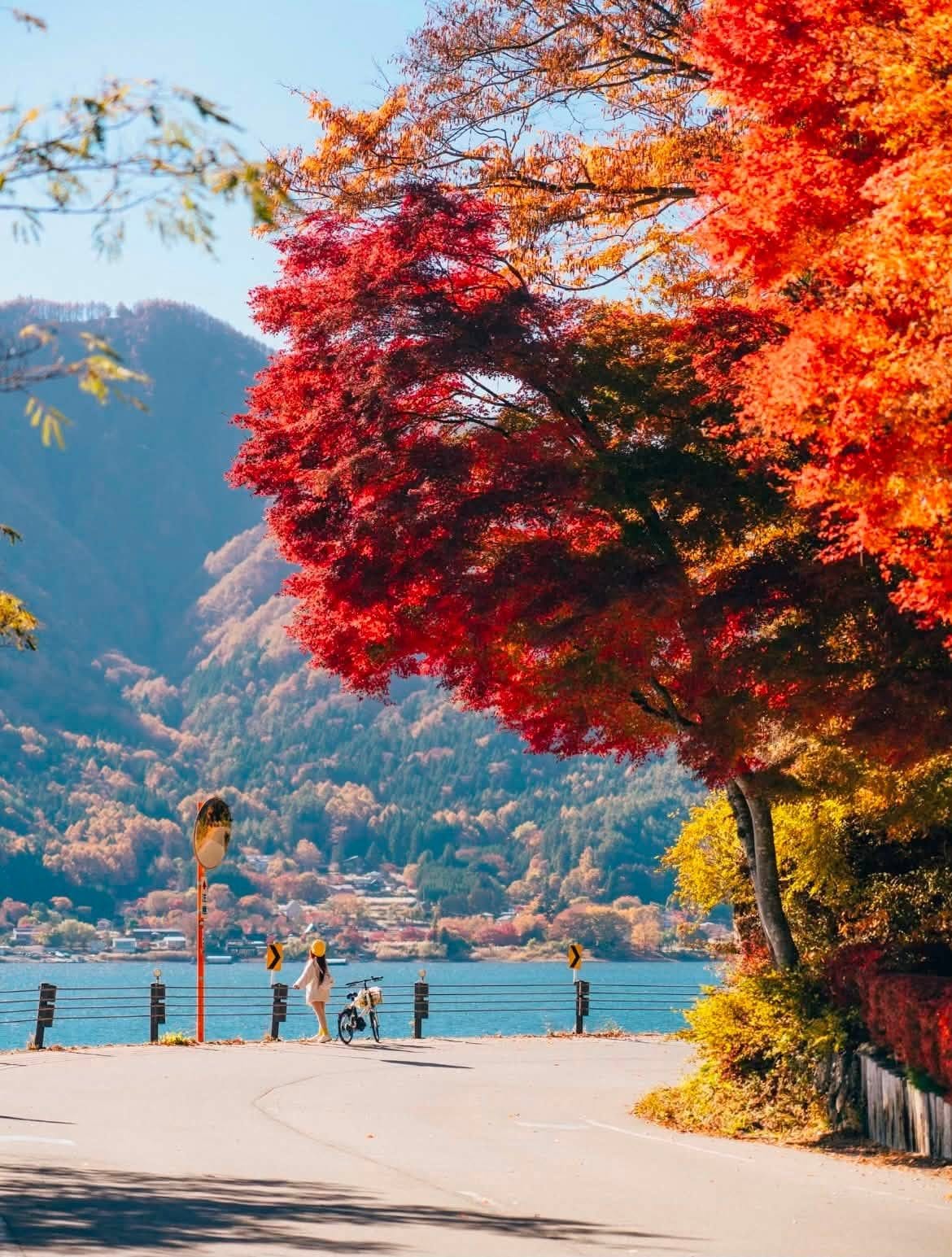
Nighttime Autumn Leaves in Kyoto: Tickets, Hours, and Queueing Strategies
Eikando, Kodaiji, Kiyomizu-dera, To-ji, and Rurikoin all open in the evenings during autumn. Tips on choosing the right day, buying tickets in advance, avoiding long lines, and taking beautiful night photos.
Aug 12, 2026·✍️ olablog·⏱ 16 min read
Eikando, Kodaiji, Kiyomizu-dera, To-ji, and Rurikoin all open in the evenings during autumn. Tips on choosing the right day, buying tickets in advance, avoiding long lines, and taking beautiful night photos.
Tap a region to browse articles
The first time I went to see Kyoto’s autumn leaves at night, it was a late-November evening after a day of squeezing through the crowds in Arashiyama until all I wanted to do was collapse at the hotel. Standing in front of Eikando’s gate as darkness fell, I muttered to myself, “It probably won’t be anything special.” Then I stepped through the gate, and an entire canopy of blazing red maples burst into view beneath the lights, reflected in a lake black as a mirror. I stood there for several minutes, completely forgetting how badly my legs hurt.
That is something daytime simply cannot give you. During the day, Kyoto’s autumn foliage is beautiful but packed with people; everyone is in a hurry, and your photos end up full of selfie sticks. At night, the temples illuminate only their most beautiful trees, leaving everything else in shadow. Your eyes pick out the reds, yellows, and outlines of the historic architecture as if they were on a stage. The atmosphere is completely different—quieter, more atmospheric, more distinctly “Kyoto.”
But light-up events (人気のライトアップ — nighttime illumination events) are also a game of planning: each temple opens in the evening for only a few weeks a year, daytime and nighttime tickets are usually separate, some places require advance reservations, and queues at the most popular spots can last a full hour. In this guide, I’ve gathered my experience visiting Kyoto’s 5 best light-up destinations—Eikando, Kodaiji, Kiyomizu-dera, To-ji, and Rurikoin—along with queueing strategies and nighttime photography tips so you can get the most out of a single visit.
How Kyoto’s autumn light-ups work
Before getting into each destination, there are a few general rules to understand, because nearly every temple follows the same pattern:
- They only open during the peak autumn foliage season, usually from around mid-November to early December. The start and end dates vary slightly each year, so be sure to check the temple’s official website (or Kyoto’s tourism website) for the exact year of your visit.
- Daytime and nighttime tickets are separate. Most temples clear out all daytime visitors, close for a short period in the late afternoon, and then reopen for the evening session with new tickets. In other words, you cannot enter during the day and simply “stay put” until night. If you want to see both, be prepared to buy two tickets.
- Nighttime tickets are usually a little more expensive than daytime tickets, commonly ranging from around 600 to over 1.000 yen depending on the temple, while particularly special places such as Rurikoin may cost considerably more. Exact prices change from year to year, so check the official website before you go.
- Evening sessions usually begin around 17:30–18:00 (Kyoto gets dark very early in late November, with dusk setting in around 5 p.m.) and admit visitors until around 20:30–21:00. The crowds thin out toward the end of the session.
- Camera tripods are almost always prohibited at temples. Don’t carry one around unnecessarily—I’ll explain how to shoot handheld later.
Once you understand this rhythm, all that remains is choosing your destinations and arranging your schedule wisely.
Eikando — Kyoto’s “king” of light-ups
There is a saying in Kyoto that Eikando is the “Eikando of maple leaves” (Momiji no Eikando)—in other words, the temple’s name is practically synonymous with autumn foliage. And in the evening, it is, in my opinion, the most beautiful light-up in Kyoto, no question.
The main highlight is Hojo Pond: rows of red maples are lit up and reflected in the still water, with Tahoto Pagoda glowing in the distance on the hillside. From the stone bridge, looking across the pond, the scene feels almost unreal. Beyond the pond, wooden corridors connect the halls on the hillside. Walking through the warm golden light with red leaves on either side feels wonderfully cinematic.
Practical tips:
- Eikando is Kyoto’s busiest light-up destination, especially on weekends between 20–30/11. The queue to buy tickets before opening can stretch several hundred meters along the road in front of the temple.
- There are two strategies: arrive early (queue 30–45 minutes before the evening session opens and enter with the first group, while there is still a little blue light in the sky—the “blue hour” is fantastic for photography), or arrive late (after around 19:30–20:00, when the line becomes much shorter, in exchange for having less time to explore).
- In recent years, Eikando has offered advance online tickets for certain time slots—if this option is available in the year you visit, buy one to avoid waiting in the ticket line. Check the temple’s official website before your trip.
- You can get there from Keage Station (subway) or by bus, followed by a short walk. The area is close to Nanzenji and the Philosopher’s Path, making it easy to combine with an afternoon itinerary.
Kodaiji — the most “artsy” light-up, with projection mapping
If Eikando represents classic beauty, Kodaiji is the most adventurous of the group. This temple, associated with Nene (Toyotomi Hideyoshi’s wife), is famous for its projection mapping show on the dry landscape garden. The theme changes every year, with moving images projected across the white gravel. It is unusual, visually striking, and very different from the other temples.
In addition to the dry garden, Kodaiji has Garyu-chi Pond, where illuminated red maple branches are reflected in the water. The pond is dark and still, making the reflections look almost like a painting. There is also a small bamboo grove lit up at the end of the walking route. It has its own mysterious nighttime atmosphere and is far less hectic than Arashiyama’s bamboo grove.
Practical tips:
- Kodaiji usually stays open later than most other temples, admitting visitors until around 21:30, depending on the year. That makes it an excellent final stop after visiting another temple earlier in the evening.
- Nighttime tickets are moderately priced, and there is often a combination ticket with Entoku-in, directly across the street. Entoku-in is small, but its illuminated dry garden is especially beautiful when viewed from inside a tatami room. You can actually sit and take it in instead of being swept along with the crowd.
- The temple is in Higashiyama and can be reached on foot from Kiyomizu-dera via the slopes of Ninenzaka and Sannenzaka. That is why Kiyomizu + Kodaiji make such a popular pairing for one evening.
Kiyomizu-dera — the most spectacular, and also the busiest
Kiyomizu-dera during a light-up is a “sea of people, but still worth it” kind of experience. The enormous wooden stage of the main hall juts out over a valley filled with illuminated autumn leaves, looking from a distance like a ship floating on a sea of fire. Kiyomizu’s signature feature is the blue beam of light shooting straight into the night sky from the temple, symbolizing Kannon’s compassion. You can see it even from the streets below.
The best view is from the Okunoin observation platform across from the main hall, looking back over the entire stage and the foliage-filled valley. Everyone stops here to take photos, so this section is always congested.
Practical tips:
- Kiyomizu-dera holds several nighttime opening periods throughout the year—in spring, summer, and autumn—but the autumn session is the busiest. The temple closes in the late afternoon to change over to the evening session and then reopens at night. Don’t arrive right at opening time, when the line is longest.
- The road up to the temple, Kiyomizu-zaka, is lined with shops and becomes extremely crowded on autumn evenings. Allow extra time to “swim” through this stretch.
- My strategy is to visit Kiyomizu at the very start of the evening session, before it gets completely dark. The sunset from the wooden stage is beautiful. Then stroll down through Ninenzaka—the historic streets are lit by lanterns at night and are a beautiful free attraction in their own right—and finish at Kodaiji.
- Nighttime tickets are inexpensive considering how impressive the experience is. You can usually buy them at the gate without an advance reservation; you just need to be willing to queue.
To-ji — a five-story pagoda reflected in the water, closest to Kyoto Station
To-ji is the smart choice for anyone staying near Kyoto Station or working with only a short evening. The temple is home to Japan’s tallest five-story pagoda, and during the light-up, the classic view is of the illuminated pagoda and rows of red maples reflected in Hyotan-ike Pond on the grounds. It is just one composition, but it is one of Kyoto’s most beautiful nighttime scenes—pagoda, autumn leaves, and water all in one frame.
The grounds at To-ji are more spacious and open than those at Eikando or Kiyomizu, so the crowds move more comfortably and there is less of a feeling of being herded along.
Practical tips:
- It is about a 15-minute walk from Kyoto Station, making it a good light-up destination for the day you return from another prefecture, or for the evening before catching a Shinkansen the next morning.
- In recent years, To-ji has increasingly shifted to selling advance online nighttime tickets for specific time slots. In some years, advance tickets have been almost mandatory on peak dates. This is the destination on this list where you should check and book earliest (apart from Rurikoin).
- Around the pond, everyone wants to stand at the perfect angle for the pagoda’s reflection, so an informal “photo queue” naturally forms. Be patient—the line moves fairly quickly.
Rurikoin — small, far away, expensive, and advance booking required—but completely unique
Rurikoin is located in Yase, at the foot of Mount Hiei in northern Kyoto. Take the Eizan Railway from Demachiyanagi Station, and the mountain scenery along the way makes the journey worthwhile on its own. This small temple is famous around the world for one particular view: red maple branches in the garden reflected on a glossy black lacquered tabletop in an upstairs room. It looks like two symmetrical worlds suspended opposite each other.
Rurikoin is not open year-round. Instead, it welcomes visitors during “special public opening” periods in spring, summer, and autumn, with autumn being the most popular. On certain peak dates, the temple also offers an illuminated nighttime viewing session.
Practical tips:
- This is a destination that requires advance planning: depending on the year, the temple may require online reservations for specific time slots or distribute numbered tickets, and autumn tickets sell out very quickly. Admission is also among the most expensive of Kyoto’s temples—well above the usual range and potentially several thousand yen. Check Rurikoin’s official website as soon as you finalize your Kyoto dates.
- Because you have to reserve a time slot, Rurikoin is not suitable for a casual stop along the way. Treat it as a separate outing: take the Eizan Railway up to Yase in the afternoon, visit Rurikoin at your allotted time, and return to central Kyoto in the evening.
- In the room with the reflective table, you are generally not allowed to place your camera on the table, and visitors are expected to remain quiet. People in line take turns at the photography spot. Take your time—everyone will get a turn.
- If you cannot get a ticket for Rurikoin, the Eizan Railway line near Kurama has a “maple tunnel” illuminated at night during autumn. The train slows down as it passes through, making for a charming alternative experience.
Queueing strategy: which days and what time
This is the part that determines whether your light-up experience feels like “heaven” or exhausting:
- Avoid weekends and public holidays at all costs. Around 20/11–1/12 is peak foliage season in Kyoto in most years, and Saturdays and Sundays during this period are exceptionally crowded. If your schedule allows, go on a Monday through Thursday evening.
- Choose one of two time windows: very early or fairly late. Arrive 30–45 minutes before the evening session opens to enter with the first group and catch the beautiful twilight sky, or arrive after 19:30–20:00, when tour groups have started to leave. The worst window is 18:00–19:30—when everyone, just like you, thinks, “Let’s go after dinner.”
- A little rain can be an opportunity. The crowds thin out dramatically, and wet stone and water surfaces reflect the lights even more beautifully than they do on a dry day. Bring a compact umbrella and a warm, moisture-resistant jacket, and you’ll be fine.
- Visit no more than two temples per evening. Trying to fit in three is just rushing from place to place, without truly experiencing any of them. The best pairing is Kiyomizu-dera (early evening) + Kodaiji (final stop), or Eikando (early evening) + a walk along the Philosopher’s Path.
- Buy tickets in advance wherever possible. To-ji and, depending on the year, Eikando offer online tickets for specific time slots; Rurikoin is practically mandatory. Kiyomizu and Kodaiji can usually be handled at the gate.
- Dress more warmly than you think you need to. Waiting outside on a late-November night in Kyoto can be bitterly cold, especially when you are standing still for 30–40 minutes. Thin gloves that work with a smartphone touchscreen are something I always bring.
Beautiful night photos without a tripod
Since tripods are prohibited almost everywhere, you will need to shoot handheld. Here are a few tips I’ve picked up over many seasons:
- A modern smartphone is enough. The Night Mode on current iPhones and Android phones handles light-up scenes very well. The key is to keep the phone completely still for 2–3 seconds—rest your elbows on a railing or wooden post, or hold the phone firmly against your body, and hold your breath when you press the shutter.
- Lower the exposure instead of letting the phone decide. Light-up scenes feature intensely bright areas against a black background, so the camera often meters the scene too evenly and blows out the leaves. Tap on the illuminated leaves and drag the exposure down slightly. The leaves will retain their deep red color, while the darker background will look even more elegant.
- Look for reflections. Hojo Pond (Eikando), Garyu-chi (Kodaiji), and Hyotan-ike Pond (To-ji)—photos with reflections always outperform those without them. Stand a little lower and place the waterline in the middle of the frame for a symmetrical composition.
- For a standalone camera: use the widest available aperture, raise the ISO to 1600–6400 depending on your camera, and avoid shutter speeds slower than 1/30s when shooting handheld (unless the lens has effective image stabilization). Shoot in RAW so you can recover shadow detail in post-processing.
- Respect the space: no flash (it ruins the photo and bothers other visitors), do not block the walkway while photographing the same angle endlessly, and occasionally… put the camera away. There are corridors at Eikando where I simply walked slowly and looked around without taking a single photo. Those turned out to be the moments I remembered longest.
A reliable two-evening itinerary
- Evening 1 (Higashiyama area): Arrive at Kiyomizu-dera at 16:30 and queue for the first evening session → watch the sunset from the wooden stage → stroll down Ninenzaka at 18:30 and grab a snack along the way → enter Kodaiji at 19:30 to see the dry-garden projection show, finishing with the bamboo grove.
- Evening 2 (east side + central Kyoto): Walk along the Philosopher’s Path in the afternoon while there is still daylight → queue at Eikando at 17:00, enter with the first group, and spend a full 1,5–2 hours there → if you still have the energy and time, take a taxi or bus to To-ji and photograph the reflected pagoda before closing (remember to book in advance if required that year).
- Rurikoin: Set aside a separate afternoon on the day for which you manage to get tickets; do not try to squeeze it into another itinerary.
One final note: all opening schedules, ticket prices, and reservation procedures mentioned in this article are general patterns based on previous seasons—each temple makes adjustments every year. About 1 month before your trip, spend 30 minutes checking the official website of each temple (or Kyoto’s tourism information website). That is the safest way to make sure everything is up to date.
Frequently asked questions
When does Kyoto’s autumn light-up season take place?
Usually from around mid-November to early December, coinciding with peak autumn foliage. Each temple has different start and end dates, and they change from year to year, so check the official website of each temple for the exact year of your visit.
Do I need to buy tickets in advance?
It depends on the temple. Rurikoin practically requires advance reservations, To-ji has sold nighttime tickets online for specific time slots in recent years, and Eikando sometimes offers advance booking. Kiyomizu-dera and Kodaiji can usually be visited with tickets purchased at the gate; you simply need to be prepared to queue.
Can I use a daytime ticket in the evening?
Usually not. Temples generally close for a short period in the late afternoon to switch sessions. Daytime visitors must leave, and evening visitors enter with new tickets. If you want to see both the daytime and nighttime views, you need to buy two tickets.
If I can visit only one light-up destination, which should I choose?
Eikando. It offers Kyoto’s most beautiful and complete light-up experience overall: reflective ponds, a hillside pagoda, wooden corridors, and dense maple foliage. The trade-off is the queue—arrive before opening or after 19:30.
Can I bring a tripod for photography?
Nearly all temples prohibit tripods (and selfie sticks in many places) during light-up events because the walkways are crowded. Practice shooting handheld with Night Mode, brace your hands against a railing, and lower the exposure to preserve the color of the leaves.
Is a light-up visit suitable for young children or older adults?
Yes, if you choose the right destination. To-ji is the easiest option, with flat, spacious grounds near Kyoto Station. Eikando and Kiyomizu-dera have many stairs, slopes, and heavy crowds, making them more challenging. Wherever you go, dress warmly, as you may be standing outdoors at night for quite some time.
More from this region — Kyoto, Nara & Kansai
View all →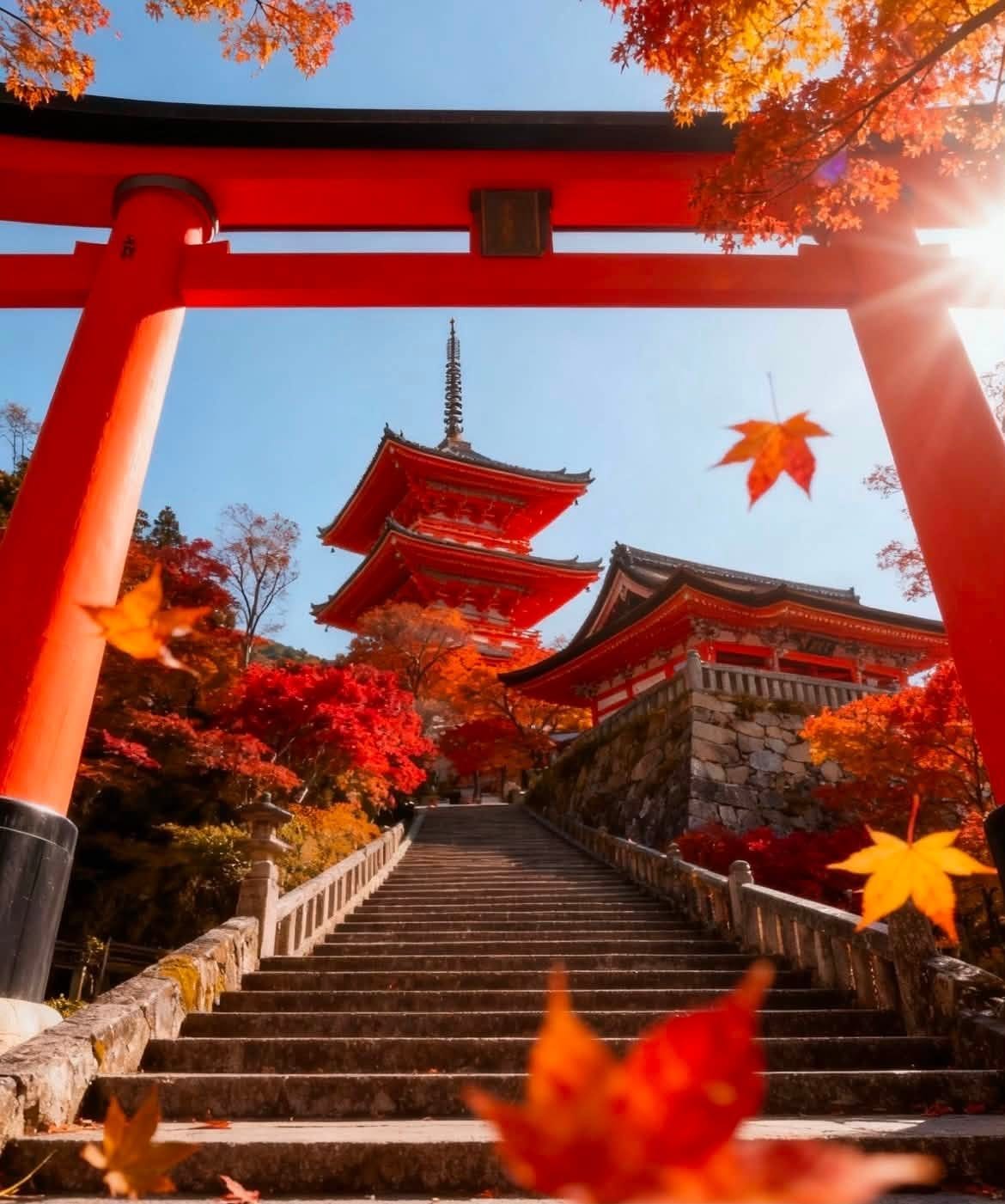
Kyoto in the Fall Foliage: Take the Train Instead of the Bus to Avoid Getting Stuck in the Crowds
17 min · tips
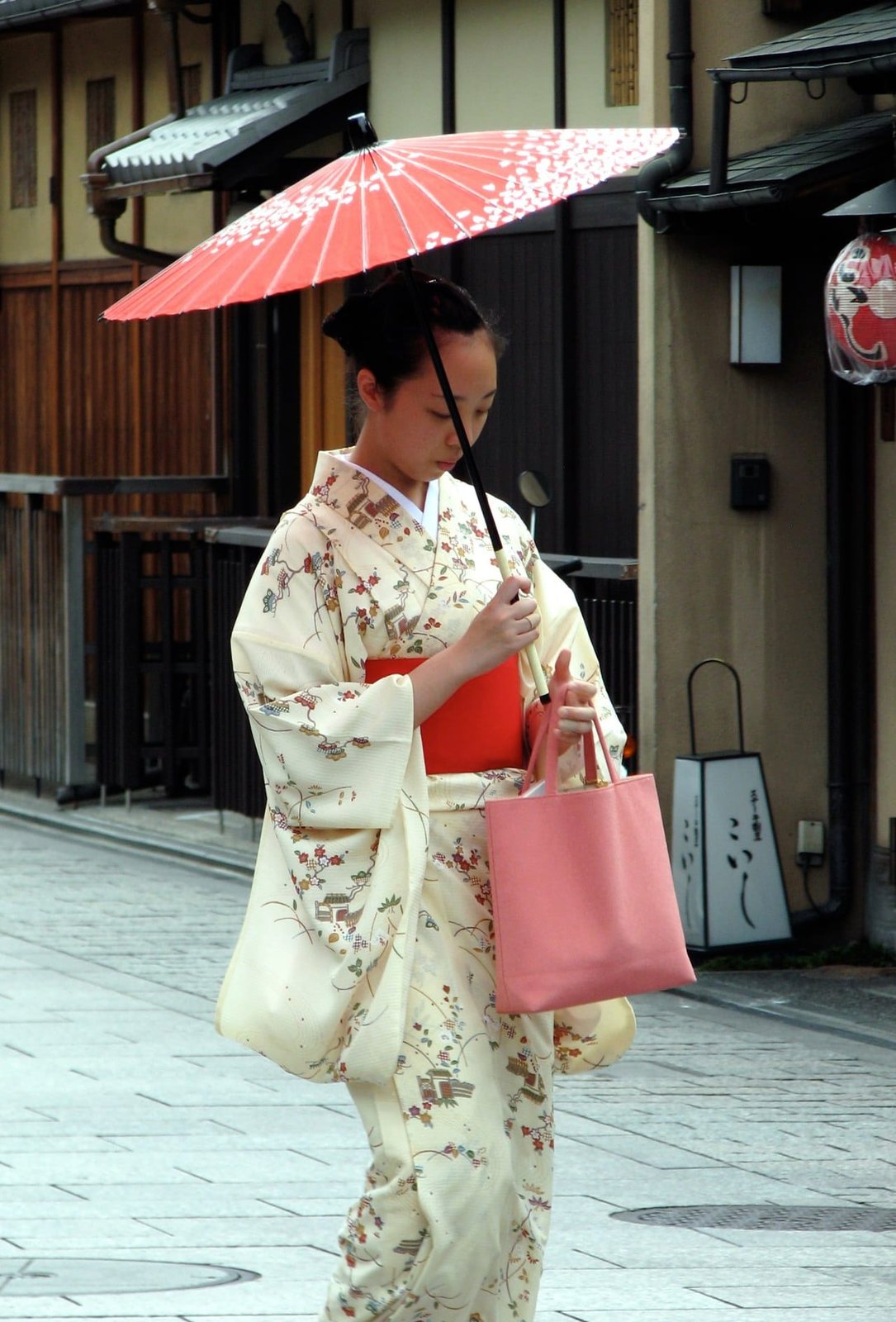
Kyoto Gion Festival 2026 Complete Guide — July 1-31: The 1100-Year-Old Yamahoko Processions and Yoiyama
4 min · events
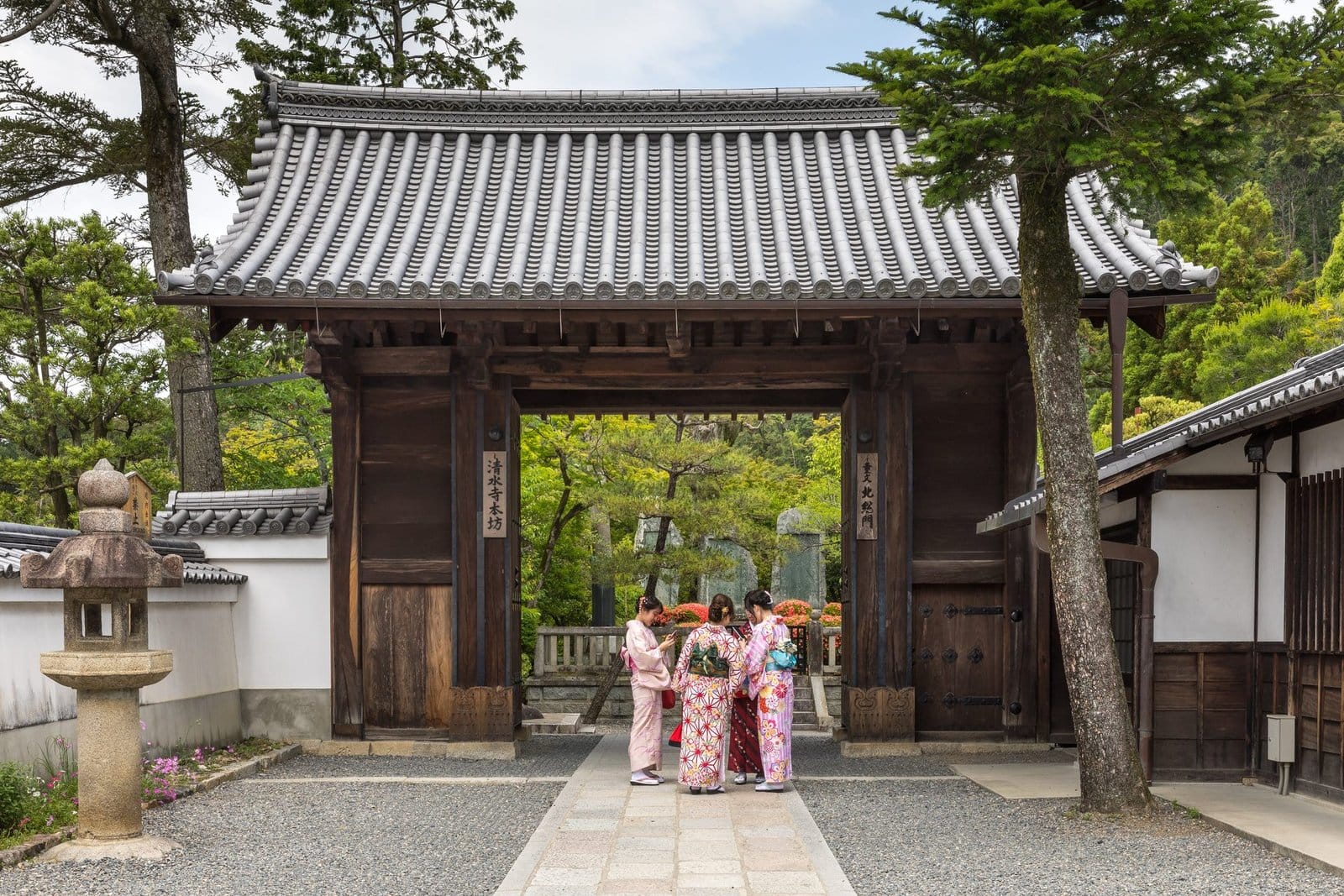
Kyoto — The Ultimate Guide to Japan's Ancient Imperial Capital
3 min · destinations
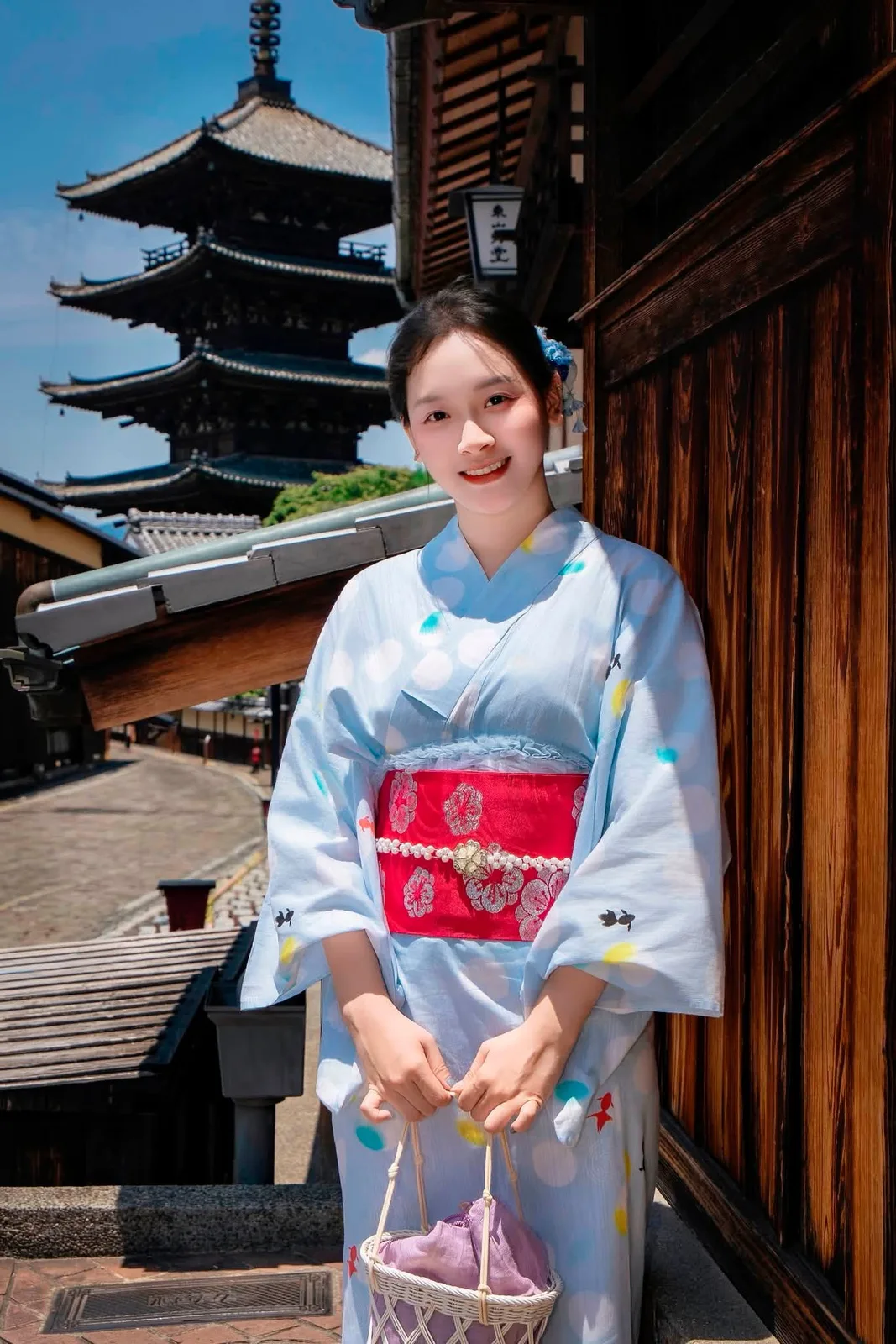
Kyoto Hanatouro in Kimono: Lantern-Lit Evenings in Higashiyama and Arashiyama, and What Replaced the Festival
6 min · culture