
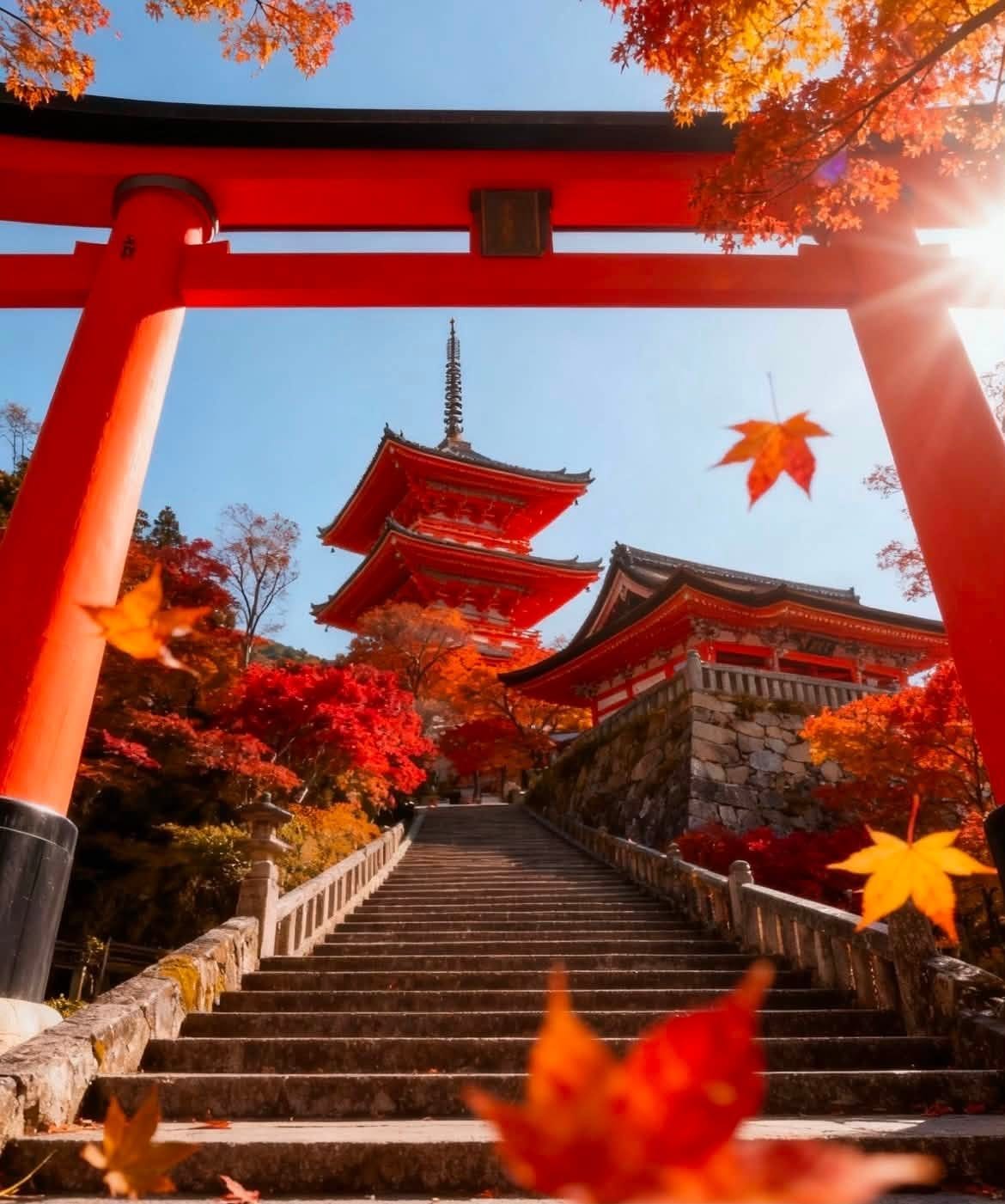
Kyoto in the Fall Foliage: Take the Train Instead of the Bus to Avoid Getting Stuck in the Crowds
From KIX airport to the old city, whether to choose the Haruka or limousine bus, why to avoid bus 206, which passes are worth buying, and where to leave your luggage — real advice for peak season.
Aug 12, 2026·✍️ olablog·⏱ 17 min read
From KIX airport to the old city, whether to choose the Haruka or limousine bus, why to avoid bus 206, which passes are worth buying, and where to leave your luggage — real advice for peak season.
Tap a region to browse articles
If you have ever stood at the bus stop in front of Kyoto Station on a late-November morning, you will understand why this article exists. The line for bus 206 to Kiyomizu-dera winds around three times, staff members use loudspeakers to organize the queue, and every bus that pulls up is already packed from the previous stop. Some people wait through three buses without managing to board, and even once they do, they are squeezed in like sardines for twenty minutes on a journey that should take only ten minutes by car. Kyoto’s fall foliage is truly beautiful, but if you get around the city the wrong way, the price is hours spent stuck on Higashioji Street.
The irony is that most visitors stranded on buses are not there because Kyoto lacks trains, but because they assume Kyoto “doesn’t have a decent rail system.” The opposite is true: Kyoto’s rail network — Keihan, the JR Nara Line, the Randen tram, and the two subway lines — covers nearly all the famous autumn foliage spots, runs on time regardless of traffic, and shows its greatest advantage precisely during peak season.
This guide brings together everything you need to know about getting around Kyoto in the fall: which airport to fly into, how to get from the airport to the city, why you should plan your itinerary around train lines instead of buses, which pass to buy or whether an IC card is all you need, and where to leave your luggage so you can enjoy the foliage hands-free. This is all based on the kind of advice passed down by travelers who have been there before. For exact fares and schedules, check the official websites before you go, as services in Japan are occasionally adjusted.
Which Airport to Fly Into and How to Get to Kyoto
Kyoto does not have its own airport. For travelers flying from Vietnam, the main gateway is Kansai International Airport (KIX), located on an artificial island in Osaka Bay. There are many direct flights from Vietnam to KIX, and getting from KIX to central Kyoto takes around an hour and a half, depending on the mode of transport. Some travelers fly into Narita or Haneda (Tokyo) and then take the shinkansen south, which is also an option, but if Kyoto is the main destination of your trip, flying directly to KIX is generally the most sensible choice in terms of both time and cost.
Haruka Train: Fast, Comfortable, and Direct to Kyoto Station
The Haruka is a JR limited express train that runs directly from Kansai Airport Station to Kyoto Station, taking around 75–80 minutes with no transfers. This is the option I recommend for most people, especially if you are carrying a large suitcase: the train has luggage racks for oversized bags, comfortable seats, and, most importantly, it never gets stuck in traffic.
A one-way Haruka ticket for an ordinary seat costs a little over 3,000 yen, but there are a few useful things to know. First, JR West sells discounted Haruka tickets to foreign visitors through its online booking website, and buying in advance is usually cheaper than purchasing at the counter — check the official JR West website before your trip. Second, if your itinerary includes Osaka, Nara, or Kobe, JR’s Kansai-area passes often include the Haruka, making them excellent value. Third, during the peak fall foliage season (mid-November to early December), trains can be crowded. If you want to guarantee seats together for your group, consider reserving designated seats.
Limousine Bus: Slightly Cheaper and Convenient if Your Hotel Is Near a Stop
The limousine bus from KIX to Kyoto stops around Kyoto Station (on the Hachijoguchi side) as well as at a few other locations. The journey takes around 85–100 minutes when traffic is moving freely. Its advantage is that you do not have to drag your suitcase through train stations: simply place your luggage in the luggage compartment and sit back for a nap. The drawback is contained in the words “when traffic is moving freely.” Highways around Osaka can be completely jammed during rush hour or on fall weekends, and there is nothing you can do about it. In my experience, the bus is fine when traveling from the airport into the city, but when heading back to the airport for your flight home, take the Haruka if your schedule is tight. Train delays are extremely rare, whereas no one will compensate you for missing a flight because of a traffic jam.
The Budget Option: Local Trains or a Nankai Connection
If you are traveling on a tight budget and want to save as much as possible, you can take JR’s Kanku Rapid to Osaka and then transfer to a local train for Kyoto, or take the Nankai Line to Namba and change to another train. The total journey takes about 30–45 minutes longer than the Haruka, and you will need to transfer at least once while handling your luggage. Since the price difference is not particularly large, I recommend this option only if you are traveling light or plan to stop in Osaka first.
Why You Should Take the Train Instead of the Bus in Fall
Bus 206 and the Higashiyama Nightmare
Bus 206 is the “everybody’s choice” route for tourists because it loops past nearly all the popular spots in the east: Kiyomizu-dera, Gion, Yasaka, and then northward. That convenience is precisely why it becomes a victim of its own popularity during the fall foliage season: everyone piles onto the 206, Higashioji Street is narrow and congested, buses inch forward by the meter, and passengers are packed so tightly that drivers have to skip stops because there is no room for anyone else. Waiting 30–40 minutes just to board, then sitting — or rather standing — for another 30 minutes to cover a distance of 3 kilometers is entirely possible on a peak-season weekend. In recent years, Kyoto has even had to introduce additional express buses specifically for tourists to ease the pressure, which gives you some idea of how serious the problem is.
Kyoto’s buses are not bad — on ordinary days, when they are not crowded, they can be a pleasant way to get around. But during the fall foliage season, my rule is simple: if you can get there by train, take the train. Use the bus only for a short final leg when there is no other option, and if that final leg is under 2 kilometers, walking may actually be faster — and you get to enjoy the streets along the way.
Keihan: The Backbone of the Eastern Foliage Route
The Keihan Line, which runs along the Kamo River, is the most useful train line for Kyoto in autumn that many visitors do not know about, because it does not depart from Kyoto Station. From Tofukuji Station, where it connects with JR, Keihan takes you directly to Fushimi Inari (Fushimi-Inari Station), Shichijo (walk to the National Museum and Sanjusangendo), Kiyomizu-Gojo (around 20 minutes on foot uphill to Kiyomizu-dera — slightly farther than the bus, but without the wait), Gion-Shijo (right in the heart of Gion), and finally Demachiyanagi in the north. There, you can transfer to the Eizan Railway for Kurama and Kibune, two valleys filled with breathtaking fall foliage. An entire eastern sightseeing corridor is neatly covered by one train line that runs every few minutes and never gets caught in traffic.
Tofukuji Temple itself — one of Kyoto’s top fall foliage spots, with the Tsutenkyo Bridge overlooking a maple-filled valley — is only about ten minutes on foot from Tofukuji Station on both the Keihan and JR lines. This area becomes unbelievably crowded during peak season, so arriving by train is the only sensible choice.
JR Nara Line: Tofukuji and Fushimi Inari from Kyoto Station
If you are staying near Kyoto Station, the JR Nara Line is an excellent shortcut: it is just one stop to Tofukuji and two stops to Inari, the station directly in front of the entrance to Fushimi Inari Shrine and even closer than the Keihan station. Trains run frequently, and the journey takes only a few minutes. Anyone with a JR Pass or a Kansai-area pass can ride this line for free. One small tip: make sure you board a local train, because rapid trains may skip Inari Station — check the electronic display before boarding.
Randen: The Vintage Tram to Arashiyama
Randen, also known as the Keifuku Line, is a charming single-car tram that runs from the Shijo-Omiya area to Arashiyama, with a branch line heading northwest to Kitano-Hakubaicho. This is the most pleasant way to reach Arashiyama during peak season, when the roads into the area are hopelessly congested. The Kitano branch is even more useful for foliage lovers: from stations along the line, you can walk to Ninna-ji, Ryoan-ji (famous for its rock garden), and the terminus at Kitano-Hakubaicho, which is not far from the maple groves at Kitano Tenmangu Shrine. The ride itself is also an experience — the old-fashioned tram rattles through residential neighborhoods, with some sections sharing the road with cars like a European streetcar.
Also remember that the JR Sagano/Sanin Line from Kyoto Station to Saga-Arashiyama Station takes only about 15 minutes — faster than any other option if you are starting from the central station. From there, it is about a ten-minute walk to the bamboo grove and Togetsukyo Bridge.
Subway: Only Two Lines, but They Reach the Critical Spots
Kyoto has only two subway lines — the north–south Karasuma Line and the east–west Tozai Line. That may sound limited, but they reach the places where buses struggle most. The Tozai Line has Keage Station: walk a few minutes from the exit to the steep Keage Incline, Nanzen-ji Temple with its enormous Sanmon Gate and red-brick aqueduct, and then follow the leafy Philosopher’s Path toward Eikando and farther on to Ginkaku-ji. Taking the bus through this whole area during peak season is torture, whereas taking the subway to Keage and walking turns it into one of Kyoto’s most beautiful routes. The Tozai Line also continues to Daigo, the station near Daigo-ji Temple, a major foliage destination that few Vietnamese visitors know about. The Karasuma Line is useful for moving quickly between Kyoto Station, the busy Shijo area, and the north. Transferring to a short bus ride to Kinkaku-ji from one of the northern stations is far less congested than taking a bus all the way from Kyoto Station.
Bonus: Eizan to Kurama — A Train Ride Through a “Maple Tunnel”
From Demachiyanagi Station, the terminus of the Keihan Line, the Eizan Railway heads into the northern mountains toward Kurama and Kibune. Between Ichihara and Ninose, the train passes through a canopy of maple trees that glows red on both sides in autumn. Locals call it the momiji tunnel, and during peak season it is sometimes illuminated in the evening. If you have a full day and want to escape the crowds in the city center, the Kurama–Kibune route — taking the train up, hiking the mountain trail between the two villages, soaking your feet in an onsen, and then returning — is the highlight of many people’s trips.
One-Day Pass or IC Card: What Should You Buy to Avoid Losing Money?
An IC Card Is the Default; Buy a Pass Only When the Math Works
The general rule is simple: with an IC card — an ICOCA purchased in Kansai, or a Suica/Pasmo you already have from Tokyo, including a Suica on your iPhone — you can ride almost everything in Kyoto: JR, Keihan, the subway, Randen, and buses. Just tap your card and go. For the kind of peak-season itinerary I recommend — one temple in the morning, one neighborhood in the afternoon, with fewer stops and more time at each — the total cost of train fares in a day is usually not high enough for every pass to be worthwhile. Do not buy a pass automatically.
One-Day Subway Pass and Subway + Bus Combination
An important note: Kyoto’s one-day bus-only pass — once a tourist favorite — was discontinued several years ago, partly because of bus overcrowding. The options currently available include a one-day subway pass (around 800 yen) and a one-day subway + bus pass (around 1,100 yen). Check these figures again on the Kyoto City website. The one-day subway pass is worthwhile if you make several trips along the Karasuma/Tozai corridors, such as on a day devoted to the Keage–Nanzenji–Daigoji area. The subway + bus combination works for days when you have to take the bus for a few legs, such as getting to Kinkaku-ji or Ginkaku-ji. But on days when you visit Fushimi Inari, Tofukuji, or Arashiyama using JR, Keihan, and Randen, these passes are useless because they do not cover private railway operators — just tap your IC card instead.
Private Railway Passes: Check Your Itinerary Before Buying
Keihan offers several one-day visitor passes that allow unlimited travel along the line. They are suitable for a day spent “sweeping” through the eastern route from Fushimi Inari to Demachiyanagi, and some even include the Eizan Railway to Kurama. Randen also has its own one-day pass, worth considering for a day in the west combining Arashiyama with the Ninnaji/Ryoanji area. These passes are generally sold at counters in major stations or as electronic tickets. Prices and conditions change from year to year, so check the operator’s official website before you travel. My formula is simple: write out your itinerary for each day, estimate the cost of individual fares, and buy a pass only if the total exceeds its price.
Luggage Storage: You Can’t Enjoy the Foliage with Your Hands Full
If you check out in the morning but do not leave Kyoto by train until the evening, dragging your suitcase around while sightseeing is the easiest way for the day to go wrong. Here are several tried-and-tested options:
Coin lockers at Kyoto Station. Kyoto Station has numerous clusters of lockers in various sizes, payable with coins or an IC card. The only problem is that during peak season, large lockers in easy-to-find locations usually sell out quickly after 9–10 a.m. Try looking for locker banks on lower floors, near the Hachijo Gate, or by less-used exits — they tend to remain available longer. Other major stations, such as Gion-Shijo, Demachiyanagi, and Katsura, also have lockers, but far fewer of them.
Staffed luggage counters. Around Kyoto Station, there are staffed luggage-storage counters that accept bags by the day, including JR West’s hands-free services and private companies. They can take oversized pieces that will not fit in a locker. The price is charged per item per day and is usually slightly higher than a locker, but you do not have to hunt for an available compartment.
Send your luggage directly to your hotel (takkyubin). This is the trick most people living in Japan use: send your suitcase from KIX directly to your hotel in Kyoto through the delivery counters in the arrivals hall. Depending on the time you drop it off, delivery is usually the same day or the next day. Alternatively, send your luggage from your Kyoto hotel to the airport or your next destination a day in advance. The cost is around a few thousand yen per item, but in return you can take the Haruka, ride the Randen, and squeeze through Gion feeling completely unburdened. For families with small children or older travelers, it is worth every yen.
Hotel luggage storage. Most hotels and many guesthouses will store your luggage free of charge before check-in and after check-out on the same day. Just ask at the front desk; this is perfectly normal in Japan.
A One-Day “All by Train” Fall Foliage Itinerary
To give you an idea of how it all fits together: early in the morning, take the JR Nara Line from Kyoto Station to Inari, then climb through Fushimi Inari while the air is still cool and the crowds are light. After coming back down, walk to the Keihan station and take the train one stop in the opposite direction to Tofukuji, where you can see the maple-filled Tsutenkyo valley before the lunchtime rush. Continue on Keihan to Kiyomizu-Gojo, have lunch, and then take a relaxed walk uphill to Kiyomizu-dera through the Sannenzaka slopes. In the late afternoon, walk downhill to Gion, then take the Keihan Line back from Gion-Shijo in the evening. You will spend the entire day without boarding a single bus, never get stuck in traffic, and pay only a few hundred yen per train leg.
Kyoto’s fall foliage crowds are unavoidable, but your experience is not — you can change it simply by changing how you get around. Choose the train, start early, send your suitcase ahead, and save your energy for the moments truly worth squeezing in for: a brilliant red maple canopy glowing in the slanting afternoon sun, not the entrance of bus 206.
Frequently Asked Questions
From KIX to Kyoto, is the Haruka or the limousine bus better?
Both are fine when heading into the city, so choose based on your hotel’s location and the fare you can get. But when traveling back to the airport for your flight home, prioritize the Haruka because the train is not affected by traffic. Missing a flight because of a jam on the highway is not a risk worth taking.
Do I need to buy the nationwide JR Pass for a trip to Kyoto?
Usually not if your trip is limited to the Kansai region — the nationwide pass has become much more expensive and is difficult to make worthwhile. Consider JR West’s Kansai-area passes, which often include the Haruka, or simply use an IC card and pay for each leg. Then do the math yourself based on your specific itinerary.
Can I get around Kyoto by train if I do not speak Japanese?
Absolutely. Station signs all include English, station names are announced bilingually, and Google Maps is highly accurate for train routes in Japan, including departure times and platform numbers. Just be careful to distinguish local trains from express trains so you do not pass the station where you need to get off.
Do children need tickets?
As a general rule in Japan, young children below elementary-school age are often free or discounted when traveling with an adult, while elementary-school children pay around half the adult fare. The exact rules vary slightly by operator, so check the railway company’s official website before traveling.
When is Kyoto’s fall foliage at its best?
The peak usually falls between mid-November and early December, but the timing varies from year to year and depending on elevation. Mountain areas such as Kurama turn red first, followed by the city center. As your travel date approaches, check koyo forecasts on Japanese weather websites so you can time your visit for the best conditions.
What time should I take bus 206 to make the journey less painful?
If you absolutely must take it, go before 8 a.m. or after 6 p.m., and avoid the 10 a.m. to 4 p.m. period on weekends at all costs. Always ask yourself: is there a train station within a 15-minute walk of this destination? In Kyoto during autumn, your feet are often more reliable than the bus.
More from this region — Kyoto, Nara & Kansai
View all →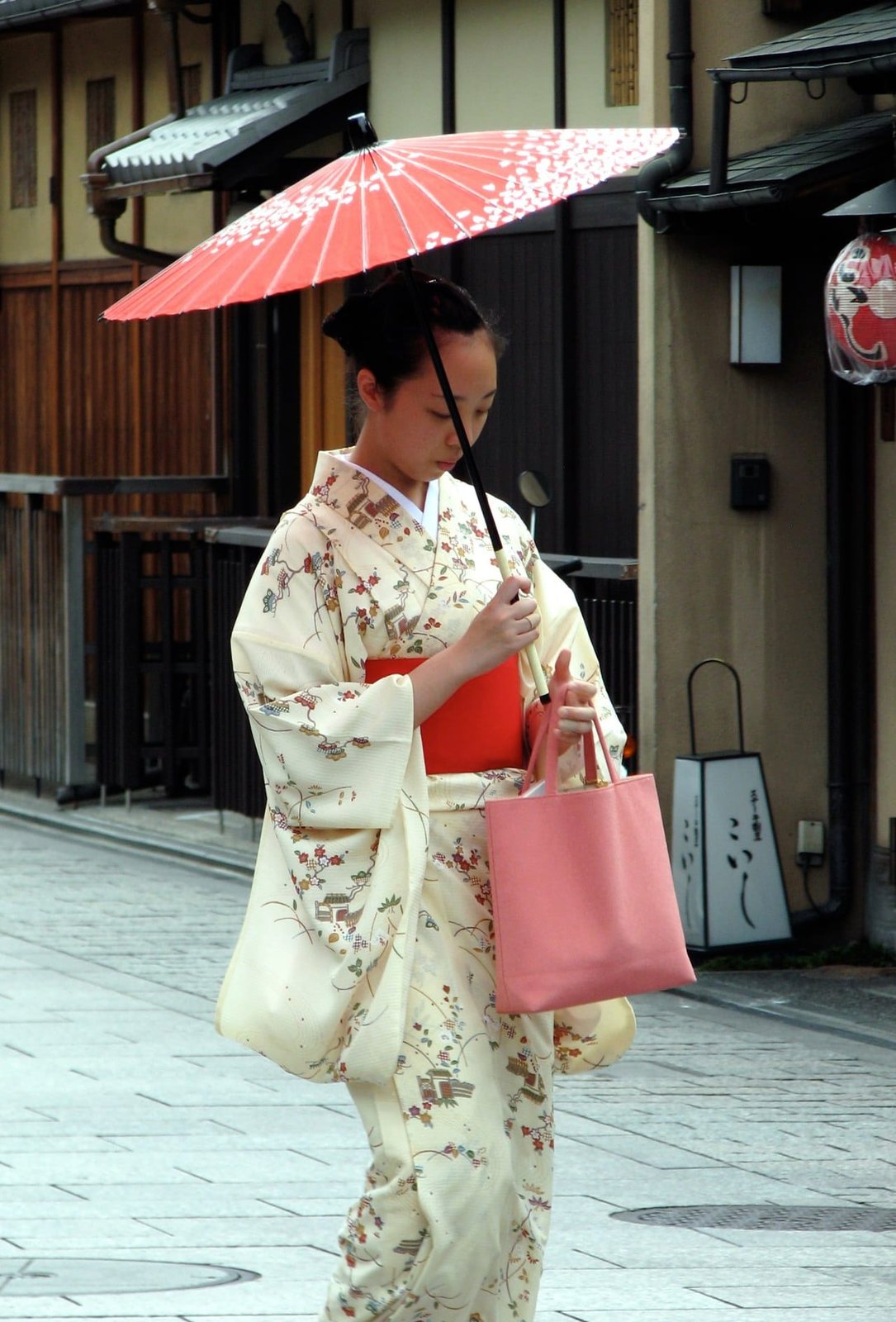
Kyoto Gion Festival 2026 Complete Guide — July 1-31: The 1100-Year-Old Yamahoko Processions and Yoiyama
4 min · events
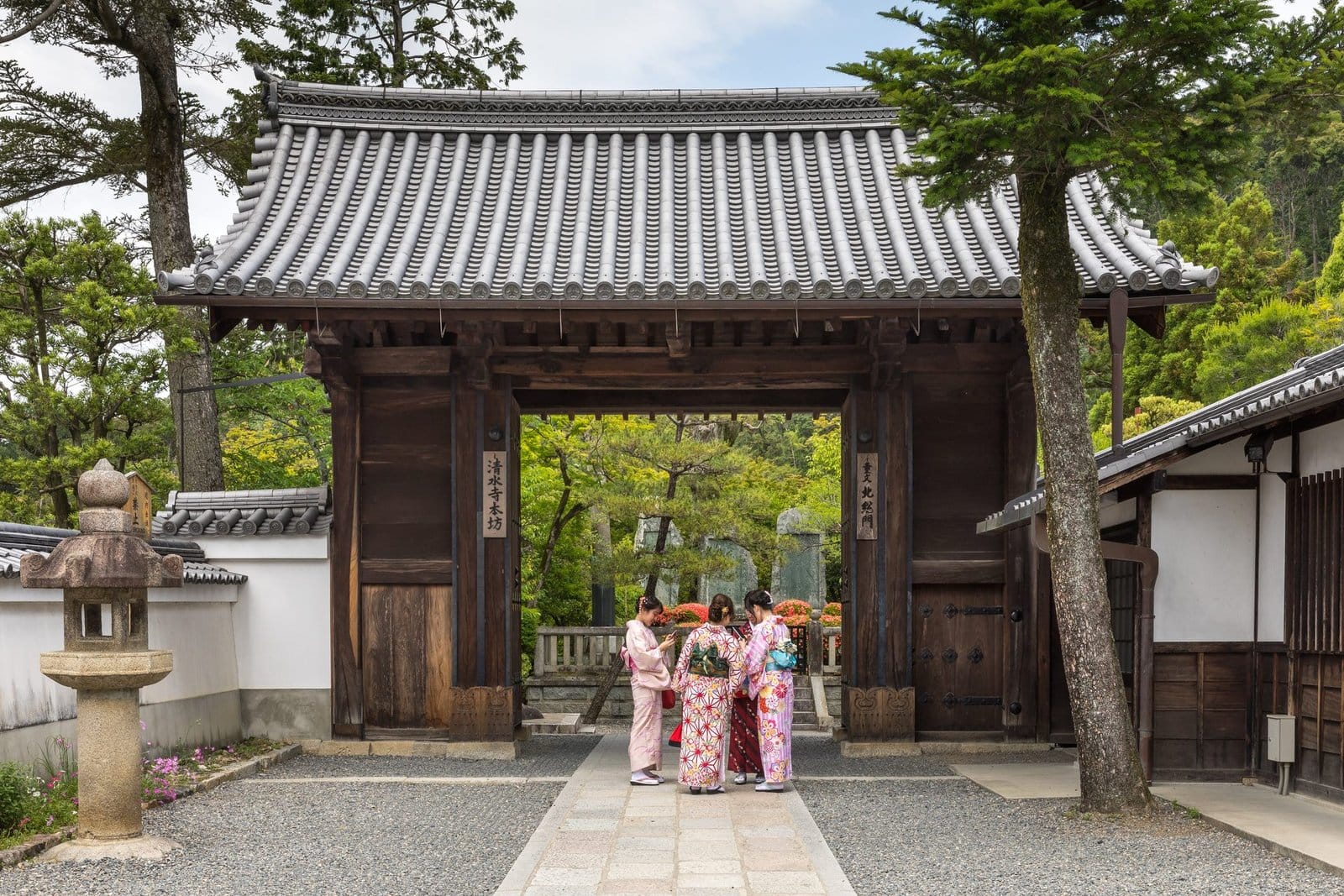
Kyoto — The Ultimate Guide to Japan's Ancient Imperial Capital
3 min · destinations
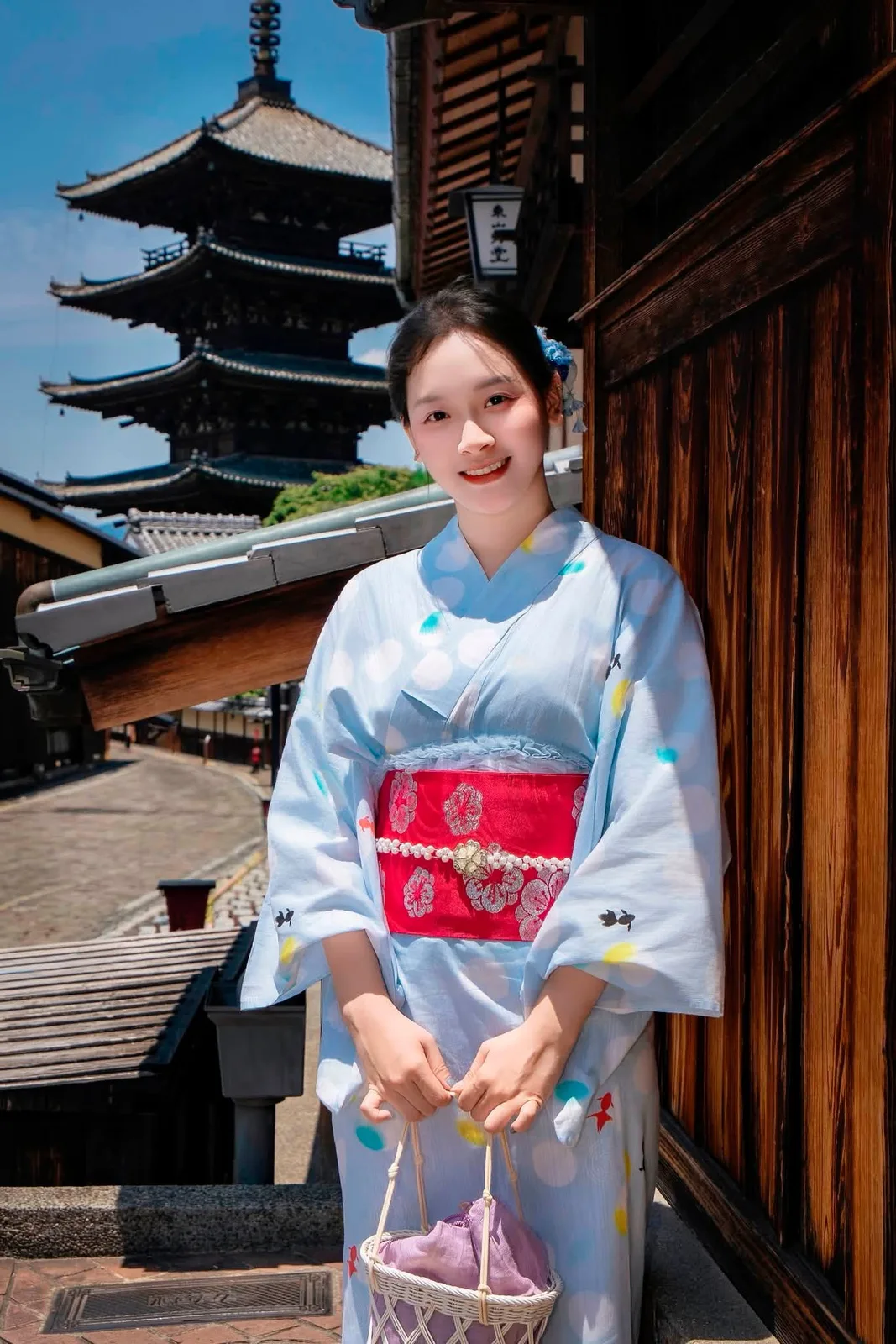
Kyoto Hanatouro in Kimono: Lantern-Lit Evenings in Higashiyama and Arashiyama, and What Replaced the Festival
6 min · culture
Kyoto Kimono Photoshoot Route: Kiyomizu-dera, Sannenzaka, Yasaka Pagoda and Gion
7 min · culture