
Nagano's Autumn Foliage: Which Places Are Actually Worth the Journey
Twelve places across two thousand metres of altitude, each with an honest verdict: what makes it different, roughly which weeks it peaks, how hard it is to reach, how crowded it gets, and who should skip it.
Aug 14, 2026·✍️ olablog·⏱ 12 min read
Twelve places across two thousand metres of altitude, each with an honest verdict: what makes it different, roughly which weeks it peaks, how hard it is to reach, how crowded it gets, and who should skip it.
Tap a region to browse articles
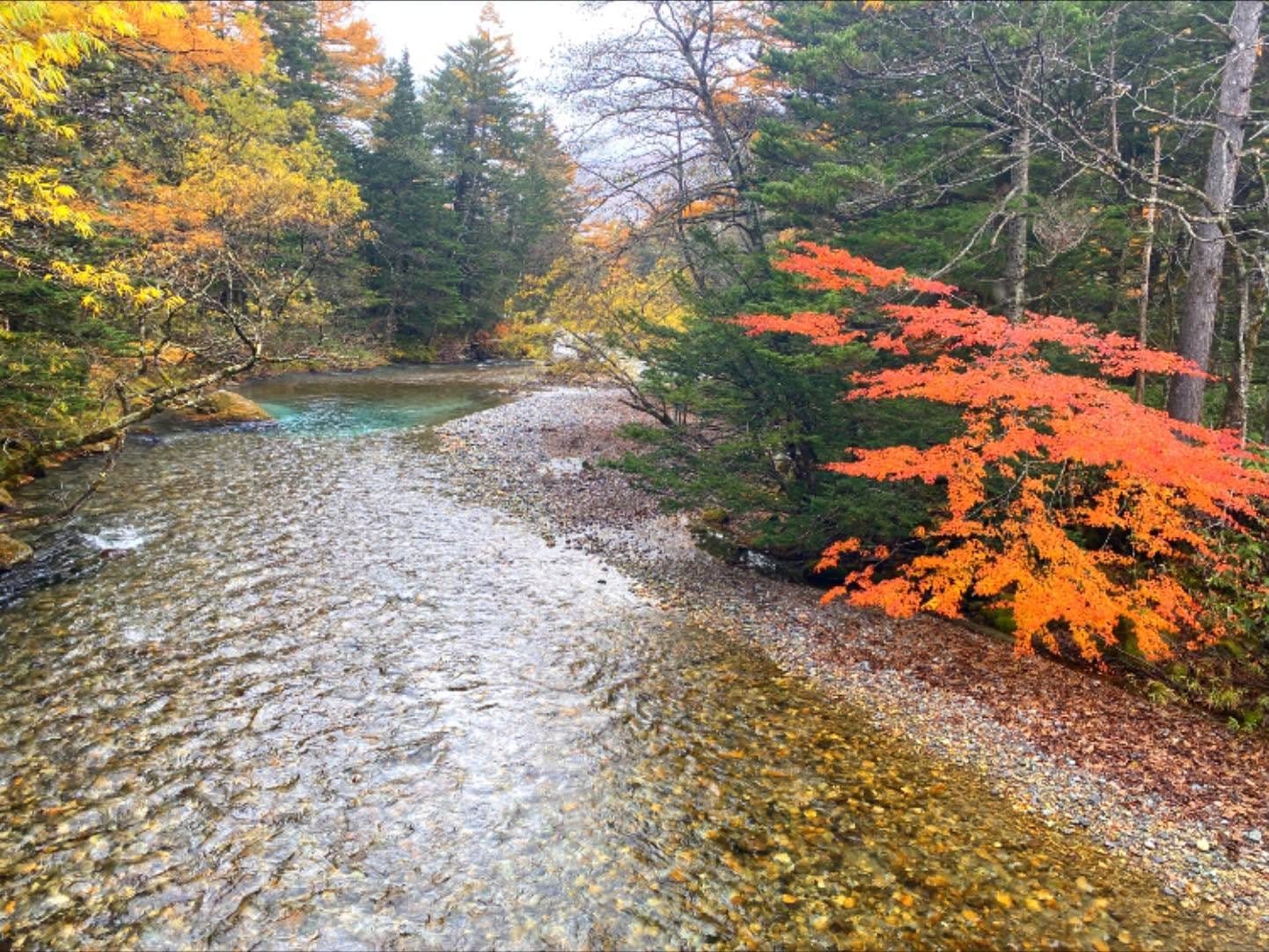
Nagano offers something almost no other Japanese prefecture can: a two-thousand-metre altitude range within a few hours' driving. Autumn here does not happen once. It rolls downhill from glacial cirques at 2,600 metres to post towns at 400 metres over six or seven weeks.
Which makes "where is the best autumn colour in Nagano" the wrong question. Almost everything below is beautiful. The real question is which week you are here, and which altitude band the colour is in that week. Arrive at Senjojiki three weeks late and you get grey rock; arrive in Obuse three weeks early and you get a green town with nothing to photograph.
So this is not a countdown but twelve places with a verdict attached. Every timing here is an altitude average, not a calendar — peak moves by up to a week and a half with September weather, so check official pages before you go.
Read the season as a ladder
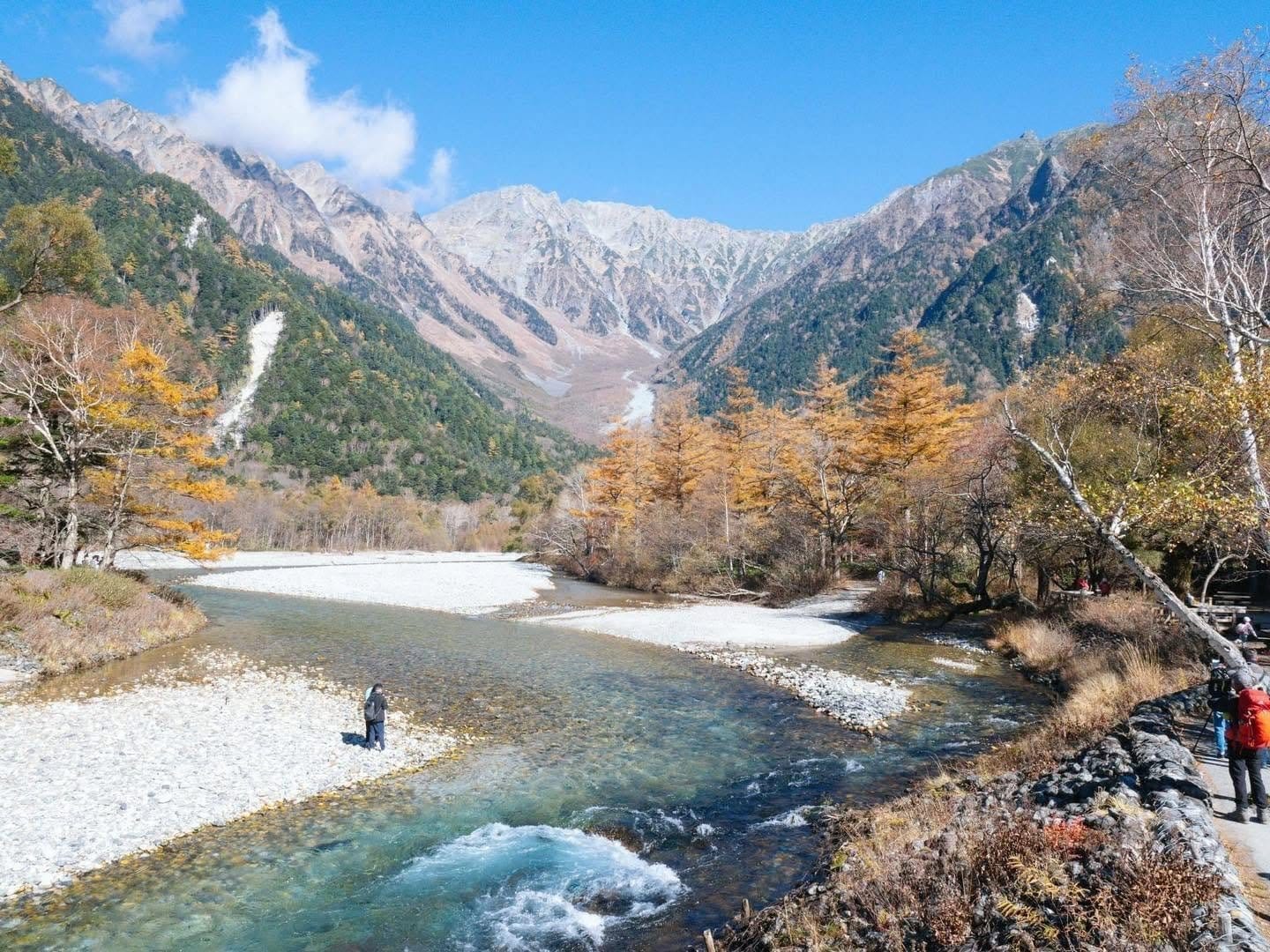
Colour starts above 2,500 metres around the last week of September, then drops 200 to 300 metres a week: mid-October at 1,500 to 1,800 metres, late October at 1,000 to 1,300, early to mid-November in the valleys and towns below 600.
So plan by altitude band, not by region. Mid-October is the crowded sweet spot because it is the one window where a single view holds three layers — first snow on the summits, red on the flanks, green at the base. Sandan momiji: not marketing, arithmetic.
Above 1,800 metres: autumn before October
Senjojiki Cirque, Central Alps
A glacial bowl at roughly 2,600 metres above Komagane, and the most visually alien place here. At this altitude there are essentially no trees: the red is alpine grass and low shrub turning rust, ochre and wine across the whole amphitheatre, under vertical grey rock.
It peaks earliest in the prefecture — the last week of September into early October for the bowl, two to three weeks later for the forest below. Access is easy but fiddly: bus, then cable car, since cars cannot reach the top. The real difficulty is altitude; sea level to 2,600 metres in a morning gives plenty of people a headache.
Skip it if you are prone to altitude sickness or only have two days — Senjojiki sits far south and pairs with nothing else here.
Norikura Tatamidaira and the highland waterfalls
Tatamidaira, around 2,700 metres, is the highest point in Japan a public bus will take you. The top is alpine shrub much like Senjojiki, but Norikura has a second act: a waterfall highland at around 1,500 metres, with big falls inside broadleaf forest. Bare summit in the morning, forested waterfalls in the afternoon.
Tatamidaira peaks around the last week of September, the highland and falls mid to late October. Research this one carefully: private vehicles are banned from the Norikura mountain road, and the route is seasonal and can close at short notice for early snow. Check the official site and keep your plans loose around it.
Skip it if you dislike cold and wind — late September up there can be a few degrees with serious gusts — or if a closure would wreck your schedule.
Happo-one and Happo Pond, Hakuba
The poster image of the region, and it earns that for about three hours a day. A pond above 2,000 metres mirroring the whole Shirouma ridge under its first snow needs dead-still air. Come early on a clear morning, or you get a small pond among rocks.
The pond peaks late September to mid-October, the valley floor mid-October to early November; mid-October catches both in a day. A gondola and two chairlifts reach 1,800 metres, then comes a genuine mountain trail — 1.5 km, 60 to 90 minutes each way, rocky and exposed. Mid-October weekends are the busiest thing in the valley all year.
Skip it if you cannot walk an hour on uneven rock — but do not skip Hakuba. Stop at the top lift station, or go to Iwatake, where a gondola delivers you onto a viewing deck. Angles and light: Hakuba autumn photo spots.
Tsugaike Nature Park
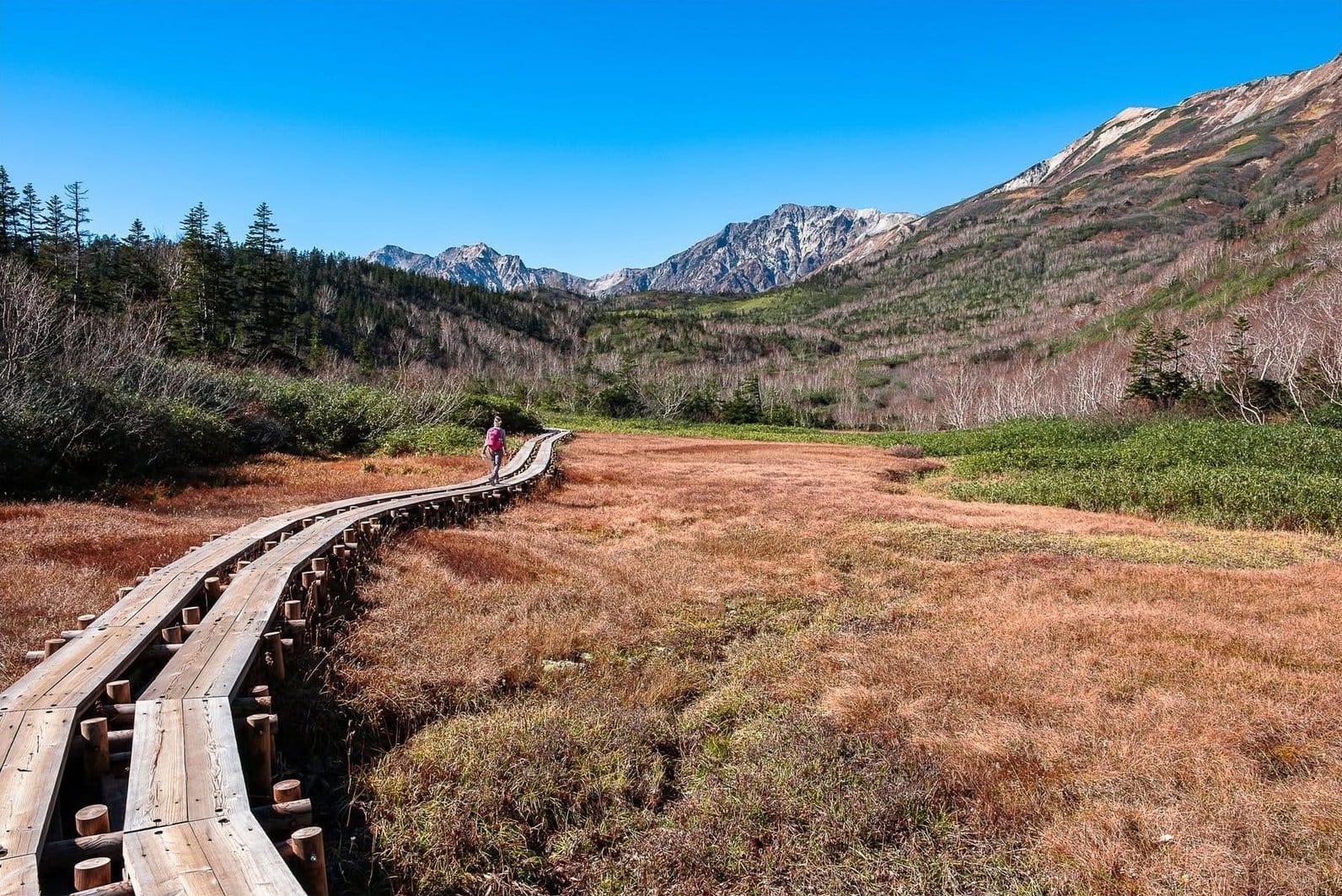
If Happo is a fitness test, Tsugaike is the reward for not taking one: a high marsh at 1,900 metres with a boardwalk loop. Not dramatic rock but golden marsh grass, small pools reflecting sky, scarlet shrubs, a snow-tipped ridge behind — gentle rather than overwhelming, and walkable in ordinary trainers.
The marsh peaks late September to mid-October, the forest below two weeks later. Lift and gondola reach the gate, then it is flat boardwalk, two to three hours for the loop and very slippery when wet or frosted.
Skip it if you came for jagged alpine drama. Tsugaike does not do drama.
1,200 to 1,700 metres: the heart of it
Kamikochi
If someone has one day in Nagano in October, the answer is almost always this valley, for two reasons. Taisho Pond at first light — formed when Yakedake erupted and drowned a stretch of forest, leaving bleached trunks in the water as a foreground nothing else matches, the Hotaka summits going pink while the valley floor stays cold blue. And the larch forest, a deciduous conifer that turns gold and drops, a colour layer maples cannot produce.
Maples peak in the second half of October, golden larch late October into early November — arriving late trades red for gold rather than missing out. The trails are flat; the difficulty is logistics. Private cars are banned from the valley, so you park at Sawando or Hirayu and transfer, and Kamikochi is seasonal with shifting opening dates. Crowds are heavy, but density collapses thirty minutes upstream toward Myojin.
Skip it if — nobody, really. But if you hate early starts and bus queues you will only ever see half of it. Camera positions and light timing are in the Kamikochi foliage photography guide; from Tokyo, a two-day Kamikochi and Hakuba autumn trip covers both bands and puts you in the valley by morning.
The Venus Line, Kirigamine to Tateshina
The odd one out, because it is a road rather than a place. It crosses open highland at 1,500 to 1,900 metres with no forest blocking the view — rolling grassland, long sightlines to the Alps and, on clear days, to Fuji. Autumn here is the silver-bronze of susuki grass moving in wind, not fiery maple.
Susuki peaks early to mid-October, the lower Tateshina forest late October. You need a car or it barely works. Driving is easy, though roads this high can close with early snow, and viewpoint car parks fill fast on fine weekends.
Skip it if you are not driving. Route notes are in the Venus Line guide.
Togakushi
Highland northwest of Nagano city at around 1,200 metres, and the only entry whose beauty comes from architecture and old trees rather than mountains. The avenue of ancient cedars to Okusha shrine is two colonnades of enormous trunks along a dirt path, light dropping through in shafts; in autumn, yellow and red litter falls across dark earth and green moss.
Peak is mid to late October. An hour by bus from Nagano station is easy; the walk to the inner shrine is about forty minutes each way with a steep final stretch — longer than most people expect. Early morning is emptiest and best lit.
Skip it if you want one overwhelming view. Togakushi rewards walking slowly.
Below 1,000 metres: towns and valleys
Karuizawa: Kumoba Pond and Shiraito Falls
Tokyo's classic mountain resort, at its most justified in autumn. Kumoba Pond is small and shallow, ringed by broadleaf forest, famous because the surface goes glassy at dawn for near-perfect symmetry. Shiraito Falls is the opposite: a wide rock arc where water seeps across the whole face in hundreds of fine white threads. Neither is huge. What Karuizawa sells is civilised access — walk or cycle everywhere, proper coffee, comfort the high mountains do not provide.
Peak is late October into early November, and it is the easiest destination here, just over an hour by shinkansen from Tokyo. Weekends are heavy around Kumoba mid-morning; before eight you have it nearly to yourself.
Skip it if you want wilderness — this is landscaped nature with an outlet mall by the station. With older relatives or young children it is the best choice here, and there is a Karuizawa day trip from Tokyo if you would rather not work out local buses. More in the Karuizawa autumn photo guide.
Jigokudani snow monkeys, as an autumn trip
Everyone knows the winter photograph: monkeys in a hot pool, snow on their heads. Winter is also the coldest, busiest and iciest way to do it. In autumn, the valley walk in is beautiful and almost nobody photographs it — a forest path along the slope, red and gold on both sides, steam drifting through the trees. The monkeys are here year-round; they simply sit in the bath less when it is not freezing.
Peak is late October to early November, and from the car park it is a thirty-minute walk on a climbing forest path with no alternative transport. Crowds are far easier than in winter, which is the main argument for coming now.
Skip it if you came specifically for the snow shot — wait for winter rather than be disappointed in October.
The Kiso valley: Narai, Tsumago, Magome
Human autumn rather than mountain autumn, and for many travellers the most memorable part of the trip. Three preserved post towns on the old Nakasendo highway. Narai is the longest and least foreign-visited, and sits higher so it turns earlier. Tsumago allows no visible wires or modern signage, and is best in late afternoon as the lanterns come on. Magome is steep, opens onto a wide valley, and is busiest. The trail linking the last two takes about three hours and is one of the finest autumn walks in Japan.
Narai peaks late October, Tsumago and Magome early to mid-November. Local trains plus short buses make it slow but uncomplicated.
Skip it if you only care about mountains — here they are backdrop. Route notes are in the Kiso valley Nakasendo guide.
Zenkoji and Nagano city
One of Japan's oldest and largest wooden temples, whose autumn appeal is not dense foliage but the contrast between an enormous blackened timber roof and a handful of red maples. The approach street runs about a kilometre, lined with restaurants, bakeries and miso shops — the best evening eating in the region.
Peak is early to mid-November, the latest here along with Obuse, and it is a short bus from Nagano station. Busy at midday, empty at dawn, and the early morning ceremony is worth the alarm.
Skip it if — nobody, but do not travel to Nagano for Zenkoji. It is the evening of the day you come down from the mountains.
Obuse: chestnuts and Hokusai
A small town half an hour by train from Nagano, and the usual last-day recommendation — for two reasons, neither of them scenery. Chestnuts: the whole town runs on them, and in autumn every confectioner sells chestnut sweets, chestnut rice, chestnut ice cream. This is the one entry where food is the reason to come. And Hokusai, who spent his final years here; the town keeps a museum of his work and a painted ceiling he left behind. Peak is around mid-November and access is very easy.
Skip it if you are chasing views. With half a day and a camera, go to Togakushi instead.
Putting it together
Late September to early October: Senjojiki or Norikura, Tsugaike and Happo, the Venus Line if you drive. Ignore the low country. Mid-October: the golden window — Kamikochi, Hakuba and Togakushi, three days that each look completely different. Late October to mid-November: Karuizawa, Jigokudani, Kiso, Zenkoji, Obuse, while the high country goes bare and mountain roads shut.
And the rule that outranks all of it: three places done properly beats six done in a rush.
FAQ
With only three days, what should I choose?
By the week you arrive, not by reputation. Mid-October: Kamikochi, Hakuba, Togakushi plus Zenkoji. Early November: Kiso, Karuizawa, Jigokudani plus Obuse. Do not mix the sets — they are a season apart.
How much do I lose without a car, and are weekends really that bad?
Without a car you lose the Venus Line and little else; at Kamikochi and on the Norikura road private cars are banned anyway. As for weekends: at Kamikochi, Happo and Senjojiki a Tuesday beats every crowd-avoidance trick combined, while Kiso, Obuse and Togakushi cope fine.
Which single place is most worth it?
Kamikochi, in the second half of October: the only spot delivering reflecting water, turquoise river, golden larch and high rock walls at once. Outside that window it changes — late September, Senjojiki; mid-November, the Kiso valley.
Is anywhere overrated?
Obuse, if you come for scenery: charming town, good food, foliage no better than a dozen other small towns. And Kumoba Pond at weekend midday — rippled water, crowds three deep, and the photo you saw online was shot at seven on a weekday.
What do I do if the weather turns?
Go down. Rain and low cloud erase most of the value above 1,800 metres but improve Togakushi, Kiso and Zenkoji: wet timber darkens, moss greens, crowds thin. Always have a low-altitude alternative in mind before setting out.
Should I worry about road closures?
Yes, and most people do not. The Norikura road, parts of the Venus Line corridor and Kamikochi's opening dates are all seasonal and can be suspended at short notice for early snow or bad weather. Check the official pages, and never put your riskiest destination on the last day.
More from this region — Chubu (Nagano, Kanazawa)
View all →Nagano in Autumn Without the Climbing: A Guide for Small Children and Elderly Parents
14 min · tips
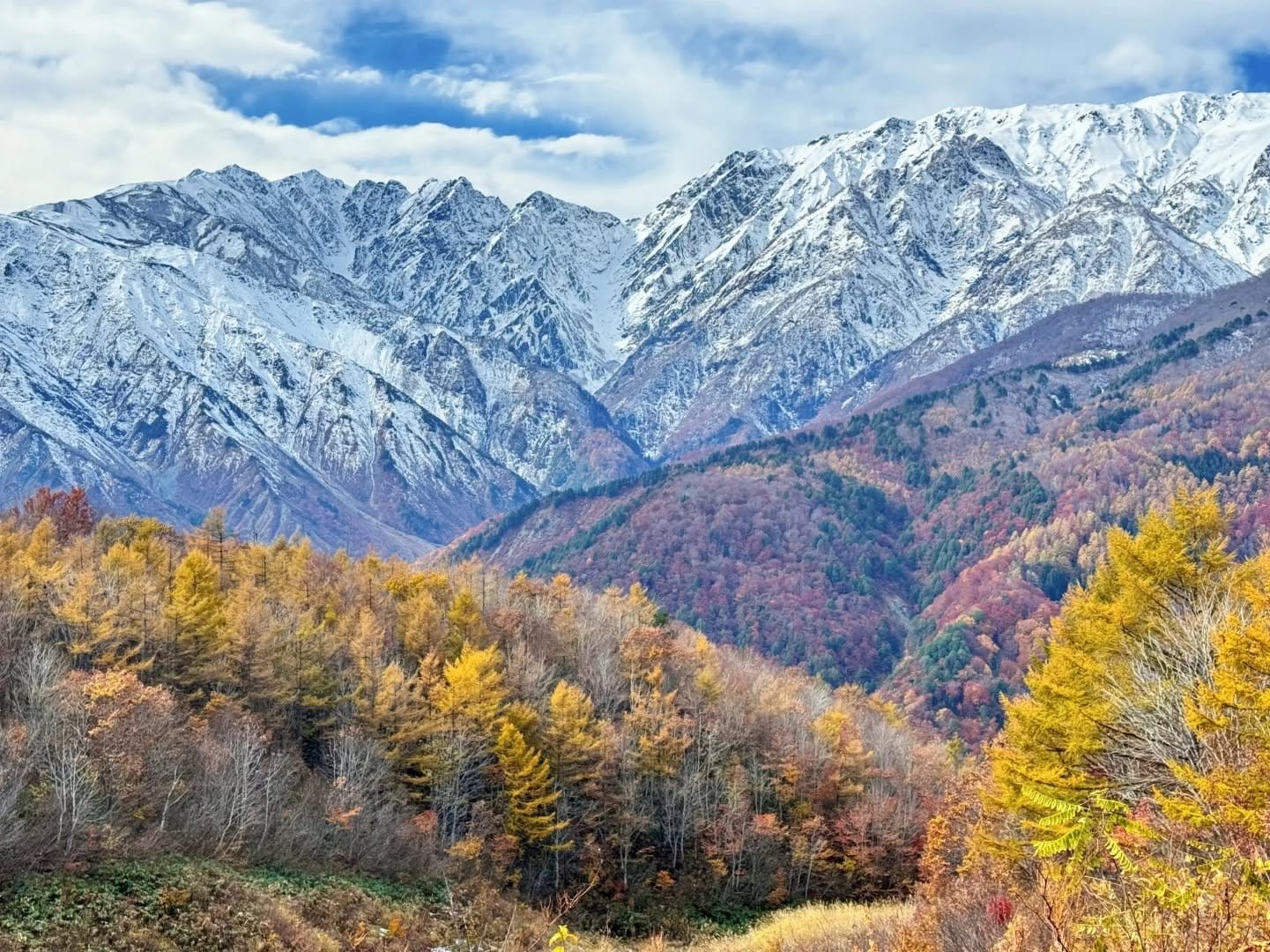
Nagano's Autumn Colour Ladder: A Week-by-Week Calendar by Altitude
12 min · tips
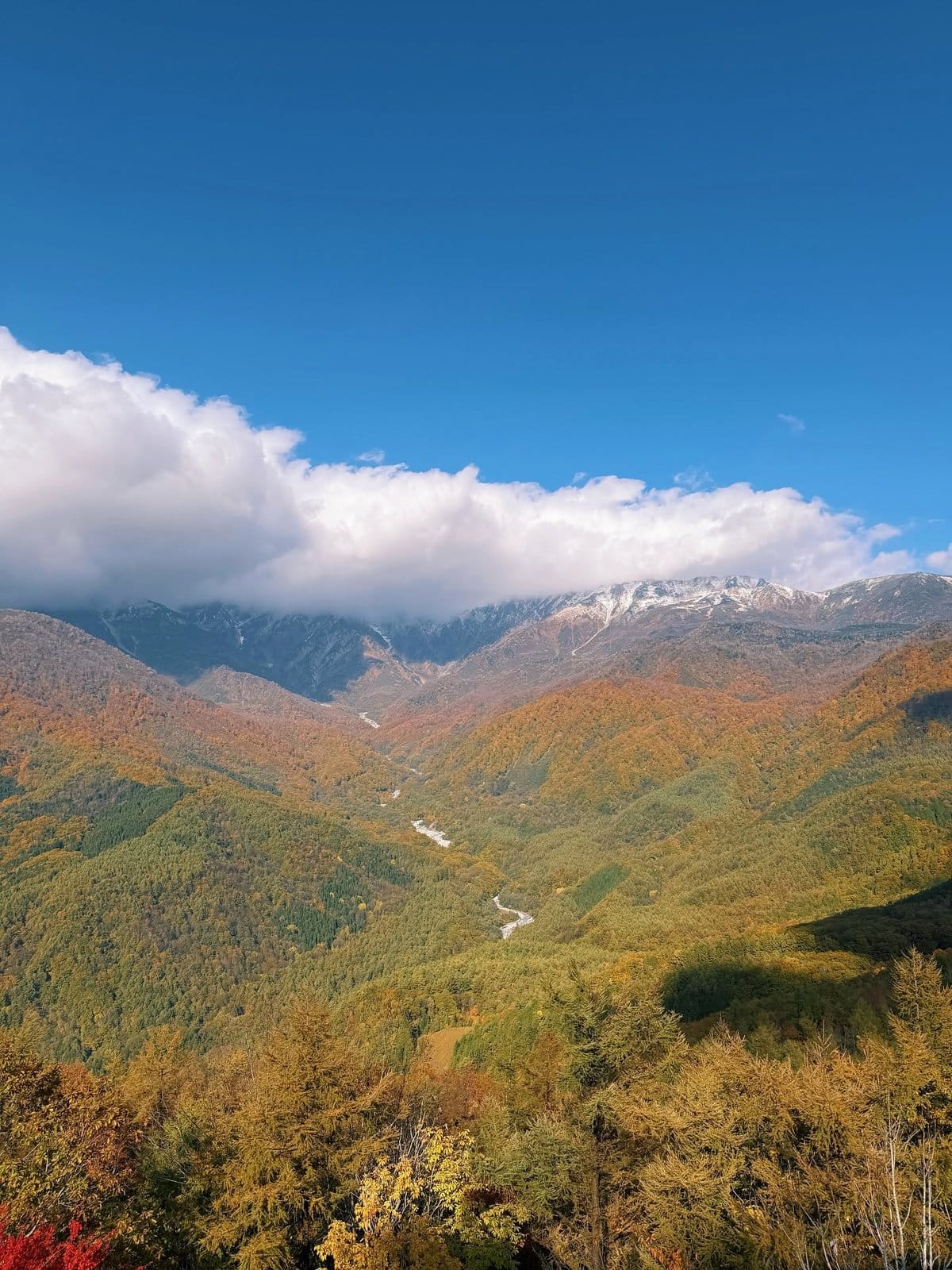
One Day in Nagano in Autumn: Three Itineraries, and Why You Have to Pick One
12 min · tips
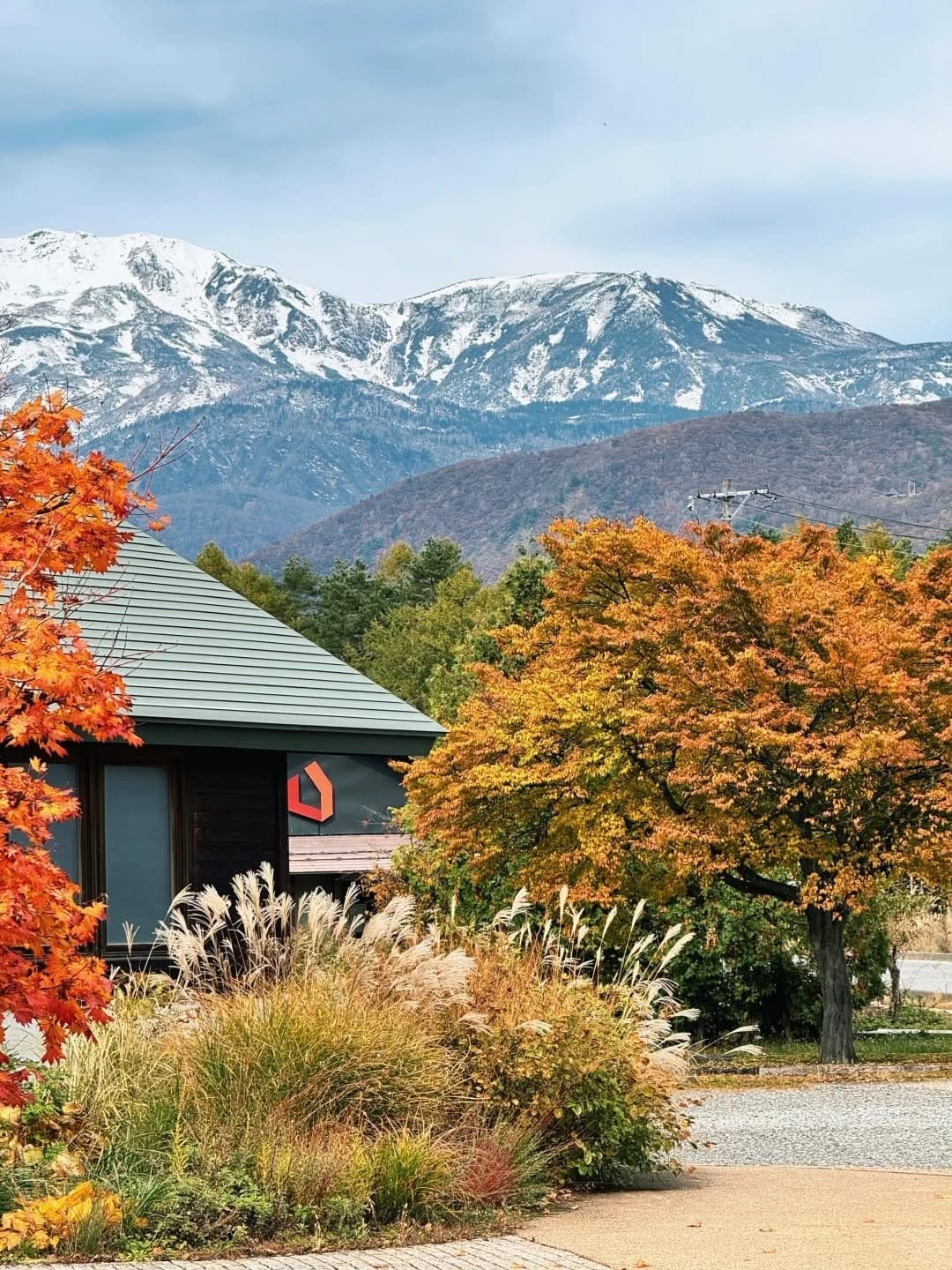
Two Days and One Night in Nagano in Autumn: The Alps Loop or the Northern Loop
15 min · tips