
Hunting for Autumn Photos in Karuizawa: Where to Stand and When to Shoot
A guide to the golden hours, shooting spots, and tips for photographing autumn foliage at Kumoba-ike, Shiraito Falls, Harunire Terrace, and more—plus a few small rules for taking beautiful photos without disturbing anyone.
Aug 12, 2026·✍️ olablog·⏱ 16 min read
A guide to the golden hours, shooting spots, and tips for photographing autumn foliage at Kumoba-ike, Shiraito Falls, Harunire Terrace, and more—plus a few small rules for taking beautiful photos without disturbing anyone.
Tap a region to browse articles
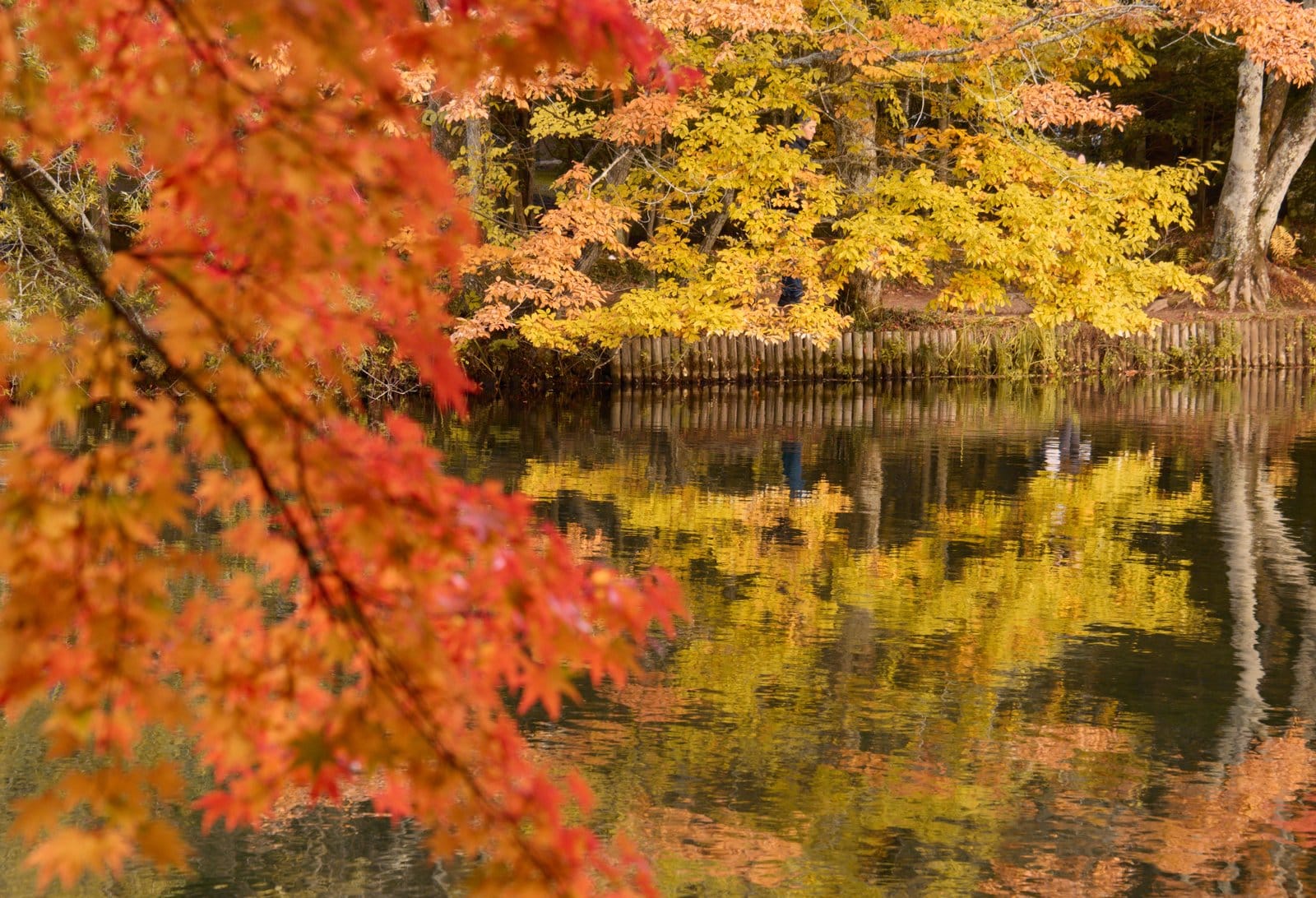
The first time I visited Kumoba-ike on a late-October morning, it was so cold that my breath came out in clouds. I stood rooted to the spot by the lakeshore for nearly five minutes, forgetting even to take out my phone. The water was as smooth as glass, perfectly reflecting an entire band of red, orange, and yellow forest upside down. The reflection was so clear that, even after looking at the photos, I couldn’t tell which trees were real and which were their reflections. Around 9:00, the first groups of visitors began arriving, the breeze started rippling the surface, and that “mirror” disappeared. My first lesson in autumn photography in Karuizawa: the scenery may stay for a whole month, but the perfect moment is there for only a few dozen minutes each day.
Karuizawa is a resort town on the Nagano highlands, just over an hour from Tokyo by Shinkansen, so crowds during the autumn foliage season are inevitable. The good news is that Karuizawa’s most photogenic spots are remarkably friendly to photographers: a lake with mirror-like reflections, a waterfall with a soft veil of water, a uniquely designed stone church, and old streets framed by brilliantly golden trees. Each place has its own ideal window of light, and with a little careful planning, you can cover all five spots in one day without having to fight through crowds.
I wrote this as a practical shooting guide: what time to arrive at each spot, where to stand, how to work with the light, how to get photos from your phone that can hold their own against a camera, and—just as importantly—how to behave thoughtfully when everyone around you is trying to get a beautiful shot too.
When Is Karuizawa’s Autumn Foliage Season?
Because it sits at an elevation of around 1,000 meters, Karuizawa enters autumn considerably earlier than Tokyo. Leaves usually start changing color around mid-October, with the best displays typically appearing from late October through early or mid-November, depending on the year. The deciduous larch trees (karamatsu) around the old town usually turn golden a little later, so a trip in early November can sometimes deliver both red maple leaves and golden conifers at their peak.
Before you go, check the kōyō forecast on Japanese websites or Karuizawa’s official tourism site, since a difference of an entire week from one year to the next is perfectly normal. And bring proper warm clothing: early-autumn mornings up here can drop to nearly 0 degrees. If you’re shivering while waiting for the lake to go still, your hands won’t be steady enough to hold the camera.
Kumoba-ike — A Mirror for the Entire Forest
If I could choose just one autumn photography spot in Karuizawa, I’d pick Kumoba-ike without hesitation. The lake is small—it takes only about 20–25 minutes to walk around it—but the compositions feel as though someone arranged them especially for photographers: layers of colorful trees embracing the water, a small wooden bridge, and one open viewpoint after another along the trail. The lake is just a short walk from Kyu-Karuizawa and has no admission fee.
Golden Hour: Before 8:00
The soul of Kumoba-ike is its reflections, and reflections need two things: still water and soft light. Both appear in the early morning. In my experience, you should arrive before 8:00, ideally around sunrise. A thin mist still lingers over the lake, while the low, angled sunlight makes the red leaves seem to glow from within. After around 9:00–10:00, the wind picks up, visitors arrive, and the surface becomes rippled, meaning you may have to wait quite a while for a calm moment.
Late afternoon can also be beautiful, with warm light and attractive backlighting, but the reflections are usually not as “clean” as they are in the morning.
Suggested Shooting Positions
- The lakeshore by the main entrance: The classic angle, looking along the length of the lake and capturing both the forest and its reflection. Lower your camera close to the water so that the reflection fills half the frame—the symmetry is incredibly satisfying.
- The small wooden bridge: Both a natural focal point for landscape shots and a lovely spot for portraits. When photographing someone, place them off to one side of the frame, with the red forest behind them.
- The trail along the opposite shore: Less crowded, with the morning light shining directly onto the trees on the far side. It’s ideal for telephoto shots that compress the layers of color into a wall of foliage.
A small tip: if the lake is slightly rippled, don’t give up and leave. The wind comes and goes in waves here, and if you stand still for a few minutes, you’ll often get a calm patch long enough to take your shot.
Shiraito Falls — A Soft Veil of Water in the Autumn Forest
Shiraito means “white threads,” and the name perfectly captures the spirit of the waterfall. This is not a roaring torrent plunging from a great height, but hundreds of slender streams seeping from an arc-shaped rock face and falling like a curtain. The falls are only a few meters high but stretch for dozens of meters. Because the water comes from underground springs, it stays crystal clear year-round. In autumn, the rock face above is covered in yellow and red leaves, giving the white curtain a vivid natural frame.
The falls are located along the Shiraito Highland Way north of Karuizawa. If you’re not driving, you can take a bus from Karuizawa Station; the ride takes about 25 minutes. Buses run fairly regularly during the high season, but you should check the timetable in advance, especially for the return trip in the afternoon.
Light and Timing
The falls are tucked inside the forest, so they remain in shade for almost the entire day—which is actually good news. The even, diffused light means you can photograph them at any time without worrying about the harsh, blown-out highlights that occur in direct sunlight elsewhere. On a bright midday when other locations are difficult to shoot, Shiraito is often at its best, which is why I usually schedule the falls for the middle of the day. Early mornings sometimes bring a soft mist drifting through the forest, so anyone who likes a more mysterious atmosphere should go early.
Suggested Shooting Positions
- Straight on, from a little farther back: Capture the full arc of the falls together with the canopy above. This is the most reliable “money shot.”
- From an angle on either side: Compress the layers of falling water, add depth, and avoid the crowd gathered in the middle.
- Lower the camera close to the stream in front of the falls: Use the stream as a leading line guiding the eye toward the waterfall. Add a few red leaves floating on the water and the image immediately has a story.
To make the water look soft and silky, you’ll need a slow shutter speed—I’ll explain this in more detail in the phone vs. camera section below. Note that the path beside the stream is fairly narrow, with slippery sections in places. Set up your tripod compactly along the edge and don’t block other people’s way.
Stone Church — Architecture Rising from the Earth
Stone Church (the Uchimura Kanzo Memorial Stone Church) in the Nakakaruizawa area is one of the strangest structures I’ve seen in Japan. Its layers of stone and glass arches resemble waves; from a distance, it looks like part of the hillside rather than a constructed building. In autumn, red leaves surround the gray stone arches, creating such a beautiful color contrast that the scene barely needs any editing.
Important Things to Know Before You Go
This is an active church and a very popular wedding venue. When a ceremony is taking place, the area is closed to visitors, and photography inside the church is generally not permitted. There is no admission fee to visit, as far as I know, but opening hours vary depending on the wedding schedule—so check the official website before going, and be prepared to simply take your chances.
What to Photograph and How
Since photography is restricted inside, focus on the exterior:
- The approach to the church: A narrow path winds between the stone arches, with trees changing color on both sides. Stand low and angle your camera upward so the overlapping arches fill the frame—this angle also works beautifully for cinematic portraits.
- The wide view from a distance: Step back to show the building “growing” out of the autumn forest, emphasizing the idea of architecture blending into nature.
- Timing: In the afternoon, angled sunlight brings out warm tones in the stone. Early morning is quieter, with softer light filtering through the forest. Avoid the harsh midday sun, which can make the gray stone look flat.
One more thing: if you happen to encounter a wedding, absolutely do not point your camera at the bride and groom. Someone else’s big day is not a backdrop for your photos.
Harunire Terrace — A Lifestyle Corner in the Forest
Located in the Hoshino Area, Harunire Terrace is a row of wooden buildings connected by boardwalks and built around roughly a hundred mature Japanese elm trees (harunire), with a small stream running below. There are cafés, bakeries, and handicraft shops here—the kind of place where you take “lifestyle” photos rather than purely scenic landscapes: a steaming cup of coffee on a wooden table, golden leaves scattered across the boardwalk, and people walking by in sweaters and heavy coats.
Timing and Shooting Angles
- Early morning before the shops open: The boardwalk is completely empty, and angled sunlight filters through the trees, casting branch shadows across the wooden floor. This is the best time for architecture and portraits without strangers in the frame.
- Midday: It’s busier but full of atmosphere; switch to close-ups of food and drinks, leaf details, and everyday moments.
- Early evening when the yellow lights come on: Warm light spills from the glass windows against a deep-blue blue hour sky, creating images with a wonderfully romantic “winter is knocking” feeling.
My favorite shooting position is the section of boardwalk running alongside the stream. Stand at one end and shoot along the path, using the wooden posts and harunire canopy as leading lines. Harunire Terrace also connects to Stone Church via a forest walking path. In autumn, the route is carpeted with fallen leaves, so you can easily pick up a whole batch of extra photos along the way.
Kyu-Karuizawa and the Golden Tree-Lined Streets
The old Kyu-Karuizawa Ginza district is where you can photograph “autumn with people”: a small shopping street lined with long-established bakeries, jam shops, and souvenir stores, with tree-lined roads branching off from it that are every bit as beautiful in autumn as the more famous sights.
The standout is Mikasa Avenue—a perfectly straight road lined with two rows of karamatsu larches. Around early to mid-November, they turn a brilliant gold, creating a tunnel of light. Cars still use the road, so absolutely do not stand in the middle to pose. Instead, stay close to the edge and use a telephoto lens to compress the two rows of trees into a wall of gold. The effect is even stronger than standing in the middle of the road, and it’s much safer. Early morning is when traffic is lightest and the angled sunlight is at its best.
The surrounding area also has small paths leading to Karuizawa Shaw Church—a small wooden church associated with the early history of the resort town, set amid red autumn foliage and filled with a distinctive nostalgic atmosphere. The slopes and side streets of the old town are also among my favorite places for street photography in the late afternoon, when shop lights come on and the streets begin to empty.
Phone or Camera?
The honest answer: in Karuizawa, a modern phone can capture 80% of what a camera can do—if you know a few tricks.
When a Phone Is Enough
- Reflections at Kumoba-ike: Phones handle these very well and may even be more convenient because you can easily lower them close to the water. Tap to meter on the leaves rather than the water, then lower the exposure slightly to preserve the rich leaf colors.
- Harunire Terrace and the old town: Lifestyle shots, close-ups, and portraits are where phones shine. Portrait mode with the red foliage blurred in the background can produce excellent results.
- General tip: Wipe the lens before shooting. It sounds silly, but condensation from the cold is one of the most common causes of hazy photos. Turn on RAW/high-quality capture if your phone supports it, and turn the flash off completely.
When a Camera Clearly Wins
- Silky water at Shiraito Falls: You’ll need an exposure of around half a second to several seconds, which means a tripod and ideally an ND filter. Phones can simulate this with long-exposure or Live Photo modes, and the results are acceptable, but they’re harder to make look truly refined.
- Telephoto compression: The rows of trees along Mikasa Avenue and the wall of foliage across the lake really require a long focal length. Cranking up a phone’s digital zoom will result in grainy images.
- Low-light mornings and blue hour: A camera’s larger sensor preserves shadow detail much more cleanly.
If you’re bringing a camera, my compact setup suggestion is: a wide-angle lens for the lake and church, a mid-range telephoto for the tree-lined roads and waterfall, a small tripod, and ND and CPL filters. A polarizing filter can make the lake’s reflections clearer or reduce glare on the leaves—try rotating it in both directions and see which look you prefer. Keep a spare battery in an inside coat pocket; cold weather drains batteries quickly.
Etiquette for Photographing in Crowded Places
During foliage season, almost everyone visiting Karuizawa has a camera. Here are a few principles I always remind myself of, and hope you will too:
- Don’t monopolize a good spot. Take a few shots, then let someone else have a turn. If you want more, get back in line. Standing rooted to the spot at the edge of Kumoba-ike for 15 minutes while a dozen people wait behind you is simply inconsiderate.
- Use tripods thoughtfully. Set one up only where there is enough space, never block the path, and in crowded places it’s best to shoot handheld. Some locations may restrict tripods—if you see a sign, follow it without arguing.
- Don’t break branches or shake trees to create a “leaf rain” effect. Those leaves belong to next season and to the visitors who come after you.
- Stay on the trail at Kumoba-ike and around the falls. Leaving the path is both dangerous and harmful to the vegetation along the shore.
- Respect sacred spaces. At Stone Church, keep quiet, don’t photograph inside when signs prohibit it, and never photograph strangers’ wedding ceremonies.
- Strangers in the frame: It’s fine to photograph a scene where people happen to pass through, but if you clearly point your camera at someone’s face, ask permission. Don’t photograph other people’s children unless their parents agree.
- Never stand in the middle of a road with traffic to pose, even if you see someone else doing it. No photo is worth the risk.
- Drones: There are many restrictions in this area. Don’t fly one without carefully checking Japan’s drone laws and local regulations.
In short: a considerate photographer is someone whose presence doesn’t ruin anyone else’s experience—and they’re often the person who gets the best photos, precisely because they know how to wait.
A Streamlined One-Day “Photo Hunt” Itinerary
- 6:30–8:30: Kumoba-ike while the lake is still. This is the top priority; everything else comes after it.
- 9:00–10:30: Walk over to Kyu-Karuizawa, photographing Mikasa Avenue and Shaw Church while the streets are still quiet.
- 11:00–13:00: Take the bus to Shiraito Falls—the shade at the falls is actually beautiful in the middle of the day.
- 14:00–16:00: Return to the Hoshino area and photograph Stone Church in the warm afternoon light (remember to check the opening schedule first).
- 16:00 to evening: Harunire Terrace—take a break with tea and pastries, then stay for blue hour when the yellow lights come on.
Use buses or taxis to travel between the different clusters of sights. Renting a bicycle is also a good option for the old town and the lake, but the road to the falls is steep and far, so don’t push yourself.
Frequently Asked Questions
Which week is the safest bet for autumn foliage in Karuizawa? There’s no absolute guarantee because every year is different, but late October to early November is usually the peak. If you want the golden larches along Mikasa Avenue, aim for early to mid-November. Check the kōyō forecast a few days before you go to finalize your plans.
Can I visit Kumoba-ike early in the morning on a day trip from Tokyo? It’s difficult, since even the earliest Shinkansen arrives around mid-morning. If you’re serious about capturing the reflections, stay overnight in Karuizawa—the hotels can fill up during the high season, so book several weeks in advance. If you’re visiting for the day, arrive at the lake as early as possible and be prepared to wait for moments when the wind dies down.
Should I go if it’s raining or overcast? Yes—in fact, it can be an advantage. Overcast skies create beautiful diffused light for Shiraito Falls and the forest; wet leaves take on much deeper colors; and mist at Kumoba-ike can give your photos even more atmosphere than sunshine. Just bring a lens cloth and rain protection for both yourself and your camera.
Is it worth going if I don’t know much about cameras and only have a phone? Absolutely. Four of the five locations in this guide photograph beautifully with a phone; only the silky-water effect at the falls is difficult. The most important thing is still arriving during the right light—the right time with a phone beats the wrong time with an expensive camera.
Do these places charge admission? Kumoba-ike, Harunire Terrace, and the old town have no admission fee. Stone Church is free to visit when no wedding ceremony is taking place. At Shiraito Falls, you’ll need to pay for the bus or the road toll if you’re driving. Check each location’s official website for exact hours and minor fees before you go, since these may change seasonally.
More from this region — Chubu (Nagano, Kanazawa)
View all →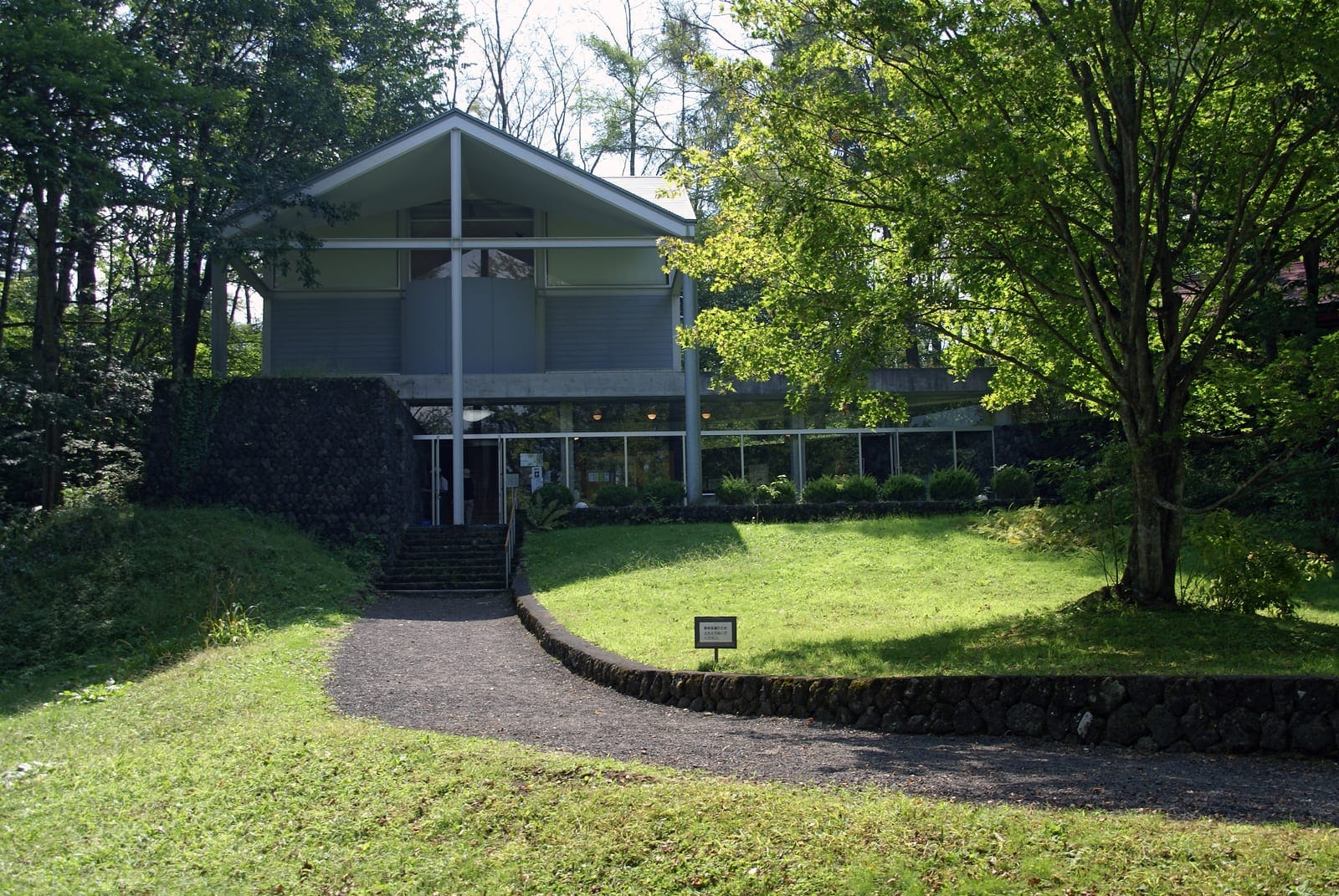
Karuizawa Highland Drive – Japan's Coolest Escape (Literally)
5 min · tips
Branching out from Karuizawa: 2–3 autumn days through Kusatsu, Asama, and Usui Pass
15 min · tips
Karuizawa’s Week-by-Week Fall Foliage Calendar
16 min · tips
Karuizawa in Autumn Foliage: Avoid the Crowds, Spend Wisely
14 min · tips