
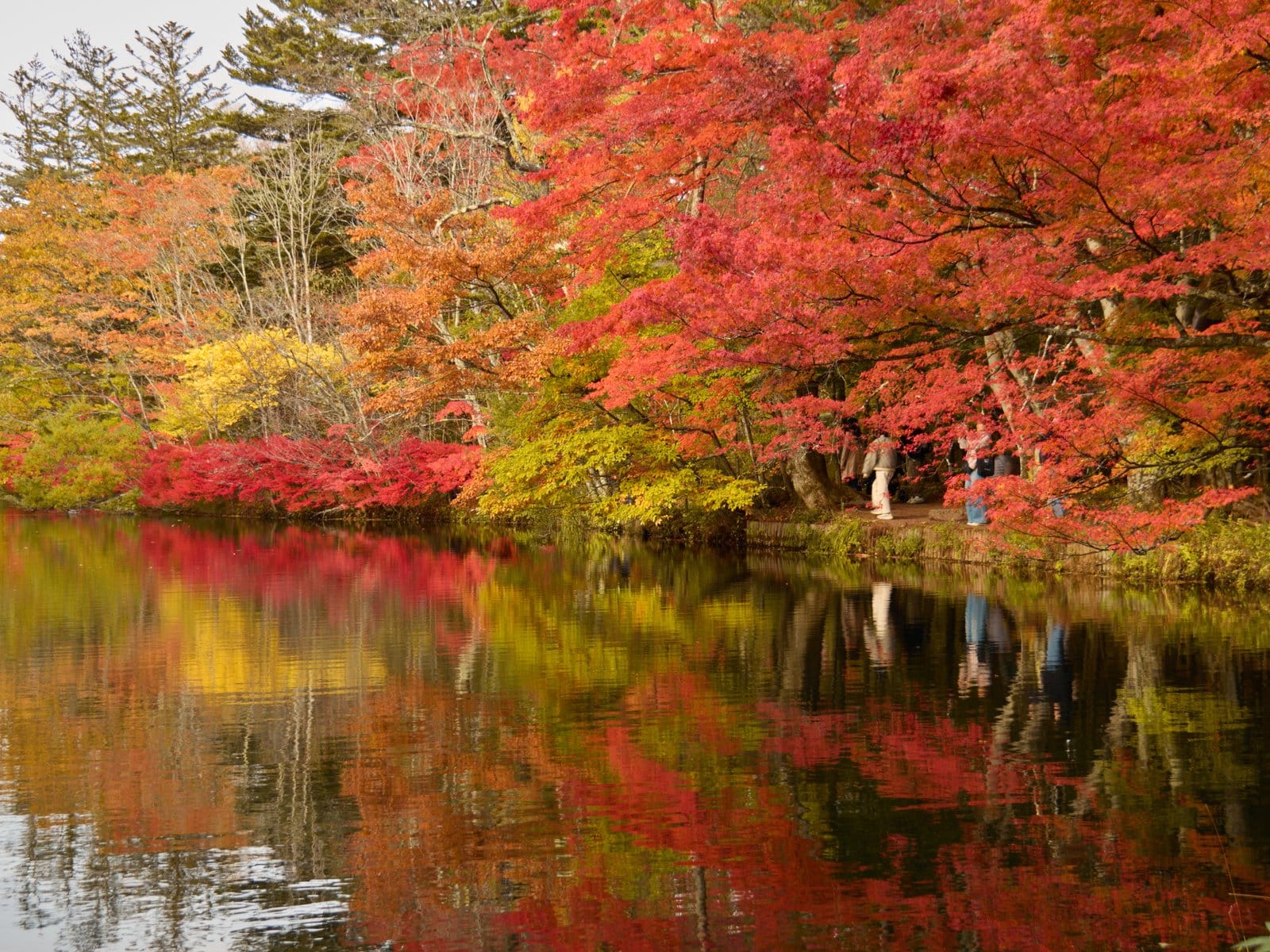
Karuizawa’s Week-by-Week Fall Foliage Calendar
Each week from late September to mid-November, Karuizawa takes on a different color. Follow the timing of momiji, ginkgo, and karamatsu to choose the right week—and know how to recover if you miss peak season.
Aug 12, 2026·✍️ olablog·⏱ 16 min read
Each week from late September to mid-November, Karuizawa takes on a different color. Follow the timing of momiji, ginkgo, and karamatsu to choose the right week—and know how to recover if you miss peak season.
Tap a region to browse articles
If you’ve ever searched Google for “when to see fall foliage in Karuizawa” and received a brief answer like “late October,” here’s what I wish someone had told me before my first trip: that answer is both right and wrong. Right, because central Karuizawa really is beautiful in late October. Wrong, because Karuizawa doesn’t have just “one” foliage season—it has a whole succession of them stretching across nearly two months, flowing down from the mountains into town like a slow-moving waterfall. I once watched two friends visit exactly ten days apart: one came home proudly showing photos of Lake Kumoba glowing red in its reflections, while the other was disappointed because “the trees were still too green.” Both had visited Karuizawa in October.
The secret lies in elevation. Central Karuizawa sits at around 950m above sea level, but the viewing spots around it range from over 1.300m (around the foot of Mount Asama) down to just a few hundred meters (toward Yokokawa below Usui Pass). For every additional 100m of elevation, the foliage season arrives several days to a week earlier. That means you can “chase” autumn during a single trip: admire peak color at a high-altitude spot in the morning, then head down into town in the afternoon to see leaves just beginning to turn yellow—or choose a travel week that matches the exact place you most want to see.
This article is that “foliage calendar,” broken down week by week from late September to mid-November. It also explains how to tell apart the three trees that define autumn in Karuizawa—momiji, ginkgo, and especially karamatsu, the golden deciduous conifer that is far less abundant in many other parts of Japan—as well as how to read Japan’s koyo forecasts and what to do if your trip misses peak season.
Why Karuizawa doesn’t have just “one” foliage peak—but three
The Japanese call the autumn foliage season koyo (紅葉). At most tourist destinations, koyo is a single stretch: the leaves change, peak, and fall, all within two or three weeks. Karuizawa is different for three reasons.
First, there is the elevation difference mentioned above: from the slopes of Mount Asama down to the Usui Valley, the foliage gradually “drifts” downhill over six or seven weeks.
Second, different tree species change at different times. Momiji (Japanese maple) turns red first, ginkgo turns yellow afterward, and karamatsu (Japanese larch) brings up the rear. These three species are separated by roughly one to two weeks, so even at the same location, the “red peak” and the “yellow peak” do not coincide.
Third, Karuizawa has its own distinctive climate. As a highland resort, its nights become cold earlier and more intensely than in Tokyo. Foliage develops its best colors when the days are bright and dry and nighttime temperatures fall below around 8°C—the kind of weather Karuizawa gets in abundance from early October onward. That is why the leaves here often appear deeper and more vivid than those in the lowlands.
The practical takeaway: don’t ask “When is peak foliage in Karuizawa?” Ask instead, “What elevation is the place I want to visit, and do I prefer red or yellow?”
Recognizing the three signature colors: momiji, ginkgo, and karamatsu
Momiji — classic red
Momiji refers to Japanese maple species with small, beautifully spread leaves featuring five or seven lobes—the kind of foliage printed on every autumn postcard. In Karuizawa, momiji is concentrated around Lake Kumoba, the Kyu-Karuizawa area, Lake Shiozawa (Taliesin), and along the old villa roads. Its colors range from golden orange to deep crimson, looking best when slanting morning or late-afternoon sunlight filters through the canopy. Peak momiji in central Karuizawa usually falls from late October to early November.
Ginkgo — brilliant lemon yellow
Ginkgo (icho, ginkgo) leaves are fan-shaped. When they change color, they turn an even, almost dyed-looking yellow, and when they fall, they create a golden carpet beneath the trees—many people love the carpet stage even more than the leaves on the branches. Ginkgo usually changes about a week later than momiji, so if you visit Karuizawa in early November and the momiji has begun to fade, look for ginkgo trees around the old town and the parks— they should be at their best. One small warning: fallen ripe ginkgo fruit has a rather “distinctive” smell, so watch where you step while taking photos.
Karamatsu — Karuizawa’s signature
This is the character first-time visitors often overlook, but the one Karuizawa lovers remember most. Karamatsu is Japanese larch—yes, it sounds contradictory, but it is a conifer that changes color and sheds its needles in autumn just like a broadleaf tree. Karamatsu was planted extensively in Karuizawa from the late 19th century onward, and today these straight, orderly forests cover the hillsides and line almost every road. The poet Kitahara Hakushu even wrote a famous poem about the karamatsu forests here.
In late October, the needles begin shifting from green to bronze, then turn brilliantly golden—as if lit from within—from early to mid-November, when most of the momiji has already faded. The most spectacular moment comes when the karamatsu sheds its needles: millions of tiny golden needles blow through the air like a fine golden drizzle, affectionately called “karamatsu rain” by locals. Walk through a karamatsu forest at that moment and your hair and clothes will be dusted with gold—an experience that, to me, feels “very Karuizawa,” even more so than momiji.
A quick way to tell them apart when you’re standing in the forest: red-orange leaves spread like little fans are momiji; lemon-yellow fan-shaped leaves are ginkgo; and a whole stretch of tall, straight trees glowing bronze-gold in the distance as though covered in flames—that is karamatsu.
Week-by-week foliage calendar: from late September to mid-November
The calendar below is based on patterns from recent years. Important note: timing can vary by about a week from year to year depending on the weather, and the general trend is for foliage season to move later as autumns grow warmer—so use this calendar to set a rough timeframe, then confirm your dates with the koyo forecast (I explain how to read it in the next section).
The final week of September — the high mountains get started
Central Karuizawa is still green at this point, but autumn has begun above 1.300m around the foot of Mount Asama. Onioshidashi Rock Park—the spectacular lava field created by Mount Asama’s 18th-century eruption—is where the season starts earliest. Bright red nanakamado (Japanese rowan) shrubs stand out against the black volcanic rock. If you have to visit in late September, this is the direction to head, along with the occasional pleasure of seeing Mount Asama wearing a thin veil of smoke around its summit.
Week 1 of October — the belt above 1.100m begins to turn
Onioshidashi and the Kita-Karuizawa area are at their best. Old Usui Pass (Kyu-Usui Toge), with its observatory at around 1.200m, begins to show patches of golden orange. From here you can see the rolling mountain ranges toward Gunma, and on clear days the layered hills changing color make for an unforgettable view. Down in town, the leaves have only just begun to shift—and that is the appeal: you can experience “two seasons” in a single day.
Week 2 of October — Shiraito Falls and forest trails
The belt around 1.100m starts to come alive. At Shiraito Falls, where a delicate curtain of water hangs like silk, golden and red leaves begin to frame the cascade, while Kose Rindo—the old forest road leading from the Kose area toward the falls—grows more beautiful by the day. This is also the ideal time for people who prefer forests to town: the trails are still quiet, the morning air has a gentle bite, and the foliage is only about halfway through its transformation, creating every shade from green to red across the canopy.
Week 3 of October — the transition zone, with karamatsu beginning to turn
Shiraito and Kose Rindo usually reach or approach their peak this week. In the center of town, Lake Kumoba begins to “catch color”—with scattered red leaves along the shoreline, beautiful enough for photos but not yet at its climax. The real highlight this week is karamatsu: the hills around town begin shifting from deep green to a bronze-tinged green, signaling that the main performance is about to begin. If you visit around this time, a good one-day plan is Shiraito and Kose Rindo in the morning, followed by a stroll around Kyu-Karuizawa in the afternoon.
Week 4 of October to Week 1 of November — peak season in central Karuizawa
This is Karuizawa’s “golden week” in the literal sense. Lake Kumoba reaches its peak: in the early morning, the still surface reflects a complete arc of red-orange and golden momiji. Arrive before around 8 a.m. to catch the moment before the water ripples and the crowds arrive. The Lake Shiozawa–Taliesin area, Kyu-Karuizawa Ginza, and the villa roads shaded by momiji are all ablaze with color. The town’s ginkgo trees are also glowing golden at exactly the right time. On the hillsides, karamatsu has clearly turned bronze-gold, and from a high viewpoint the entire valley looks as though someone has coated it in golden glaze. If you can choose only one week of the year for Karuizawa, choose this period. The trade-off is that it is also the busiest time: book accommodation early for weekends and avoid driving around the old town during peak hours.
Week 2 of November — karamatsu season and golden showers
Momiji in central Karuizawa is beginning to pass its peak, but don’t be disappointed just yet: this is when karamatsu shines brightest. The forests around Hoshino, along the road to Naka-Karuizawa, and across the hillsides glow golden in the sunlight, and a single gust of wind can send a rustling “shower of golden needles” cascading down. Harunire Terrace, set among the trees, is an ideal place to sit with a coffee and watch the season. The carpet underfoot—red momiji, yellow ginkgo, and tiny karamatsu needles—is every bit as thick and beautiful as the foliage overhead. There may be early-season frost in the morning, and the sight of red leaves edged with white frost is a reward for anyone willing to get up early and dress warmly.
Mid-November — the season winds down, but there is still plenty to see
Central Karuizawa has mostly shed its leaves, and the town begins to take on its distinctive, crisp early-winter atmosphere. Karamatsu drops its final needles, gradually revealing bare branches and giving you a much clearer view of Mount Asama. Many people love Karuizawa’s “post-foliage” season precisely for this quiet, crystalline atmosphere. If you still want to chase fall color, head downhill—the backup options below are for you.
How to read Japan’s koyo forecasts
Japan’s autumn foliage forecasts are every bit as systematic as its cherry blossom forecasts, and knowing how to read them will help you choose your dates more accurately than any blog post—including this one. Here are the essentials:
- Where to look: major weather sites such as tenki.jp and Weathernews, as well as Walkerplus’s dedicated koyo pages, list 紅葉 (koyo) information for individual locations. Simply search for "軽井沢 紅葉" (Karuizawa koyo) to see updated conditions for spots such as Kumoba-ike and Shiraito. The first nationwide forecast is usually released around early September, followed by regular updates.
- Three stages to remember: 色づき始め (irozuki-hajime—leaves beginning to change color), 見頃 (migoro—at their most beautiful, essentially “peak season”), and 落葉・見頃過ぎ (fallen leaves / past peak). As a rule of thumb, it usually takes around one to two weeks for a location to go from “beginning to change color” to “migoro,” and migoro lasts about a week, sometimes longer if there is little wind and no heavy rain.
- Foliage forecasts are based on temperature, so check the weather forecast too: leaves change quickly and develop their best colors when nights are cold and days are sunny. A strong cold spell can bring migoro forward by a full week compared with an earlier forecast; conversely, an unusually warm October will push everything later. The biggest enemies of foliage season are late-season typhoons and strong winds or rain—a single powerful storm at peak season can strip half the canopy overnight. If strong winds are forecast just before your trip, be prepared for the scenery to look different from the photos online.
- Don’t rely on a single source: about a week before your trip, compare two or three websites and check the latest photos posted by visitors under location hashtags on social media. Real-life photos from the past few days are the most reliable “forecast” of all.
What if you miss peak season? Backup plans
You booked your flights and requested time off months in advance, only for foliage season to shift by a week—that is completely normal. Fortunately, in Karuizawa there is almost always a way to adjust, thanks to the golden rule: if you arrive early, go higher; if you arrive late, go lower.
If you arrive before peak season
The center is still green? Focus your itinerary on higher-altitude spots: Onioshidashi and the Kita-Karuizawa area, Old Usui Pass and its observatory, and the forest trails around Shiraito. A difference of a few hundred meters in elevation is enough to “jump” one or two weeks ahead on the foliage calendar. In the afternoon, return to town and enjoy Karuizawa before the crowds arrive—cafés, bookstores, and smoky grilled food in the crisp air are not a bad way to experience autumn either.
If you arrive after peak season
This is when karamatsu comes to the rescue. Faded momiji does not mean foliage season is over: the golden larch forests often remain beautiful through mid-November, and the sight of golden needles falling in the wind is unique to this later stage. You can also head downhill. Take the Shinano Railway less than half an hour to Komoro, where Kaikoen Park—a castle ruin with momiji gardens—often holds its color later than Karuizawa. Or descend Usui Pass toward Yokokawa (Gunma), where the famous red-brick Megane-bashi Bridge sits in a valley whose colors peak later than those higher up the pass. And if Tokyo is your next stop, there is even less reason to worry: ginkgo in the capital reaches its peak from late November to early December. You can simply continue chasing autumn into the lowlands.
If it rains or the wind strips the leaves
Your in-town Plan B: Harunire Terrace, with its row of shops and restaurants beneath the forest canopy (wet leaves can sometimes look even richer than they do in sunshine); Karuizawa’s peaceful art museums; and a hot onsen bath overlooking the forest. The crisp chill of autumn is exactly when an onsen feels most satisfying. Opening hours and holiday schedules vary by season, so check each venue’s official website before you go.
A few tips for your foliage-hunting trip
- Stay at least one night. The shinkansen from Tokyo takes only a little over an hour, so many people make a day trip of it. But the most beautiful time at Kumoba is early morning—something day-trippers can never experience.
- Dress for two seasons. At lunchtime, long sleeves may be enough in the sun, but early mornings and late evenings in November can see temperatures fall to around 0°C. A warm jacket, scarf, and a thermal base layer are essential if you plan to get up early for photos.
- Rent a bicycle for the central area, and save a car or bus for outlying spots. Kumoba, Kyu-Karuizawa, and the villa district are all easy to reach by bicycle through the leafy streets; Shiraito and Onioshidashi require a bus or private vehicle.
- Avoid the peak weekends at the end of October if possible—this is when Karuizawa is busiest, along with the summer season. Visit midweek and you may practically have the golden-leafed roads to yourself.
Frequently asked questions
If I can choose only one week, when should I go?
From around the final week of October to the first week of November. This is when central Karuizawa (Lake Kumoba and the old town) reaches peak momiji, the ginkgo turns richly golden, and the karamatsu begins to change—the only week when you have a chance of seeing all three colors at once. Still, confirm your dates with the koyo forecast about a week before your trip, since the timing can shift from year to year.
Is a day trip to Karuizawa from Tokyo enough to see the foliage?
Yes—the shinkansen from Tokyo takes only a little over an hour, and one day is enough for Kumoba and the old town, or Shiraito and one central-area spot. But if you can arrange one night, you will have the early morning: the most beautiful, quietest, and mistiest time of day during Karuizawa’s foliage season.
What is karamatsu, and why does every article about Karuizawa mention it?
It is Japanese larch—a rare conifer that turns brilliantly golden and then sheds its needles in autumn. Karamatsu forests were planted throughout Karuizawa more than a century ago, so the species is part of the landscape here like a “signature.” Karamatsu’s golden peak comes later than momiji, usually from early to mid-November, along with the “golden needle rain” that occurs when the needles fall in the wind.
What should I do if I arrive and the leaves have not changed—or have already fallen?
Remember the rule: if you arrive early, go higher (Onioshidashi, Old Usui Pass, and the Kita-Karuizawa area); if you arrive late, go lower (Komoro’s Kaikoen Park and the Yokokawa Valley), or shift your focus to the karamatsu forests, which hold their color about a week later than momiji. Because Karuizawa’s foliage season unfolds across multiple elevations, there is almost always somewhere looking beautiful every week from late September to mid-November.
Where can I find koyo forecasts, and when do they start?
Sites such as tenki.jp and Weathernews, along with Walkerplus’s dedicated koyo pages, begin issuing nationwide forecasts around early September and update them regularly. Search for "軽井沢 紅葉" to check the status of individual spots, paying attention to the three stages: beginning to change color (色づき始め), at its best (見頃), and past peak/fallen leaves. Combining this with the latest social media photos from a few days before your trip is the safest approach.
More from this region — Chubu (Nagano, Kanazawa)
View all →Karuizawa in Autumn Foliage: Avoid the Crowds, Spend Wisely
14 min · tips
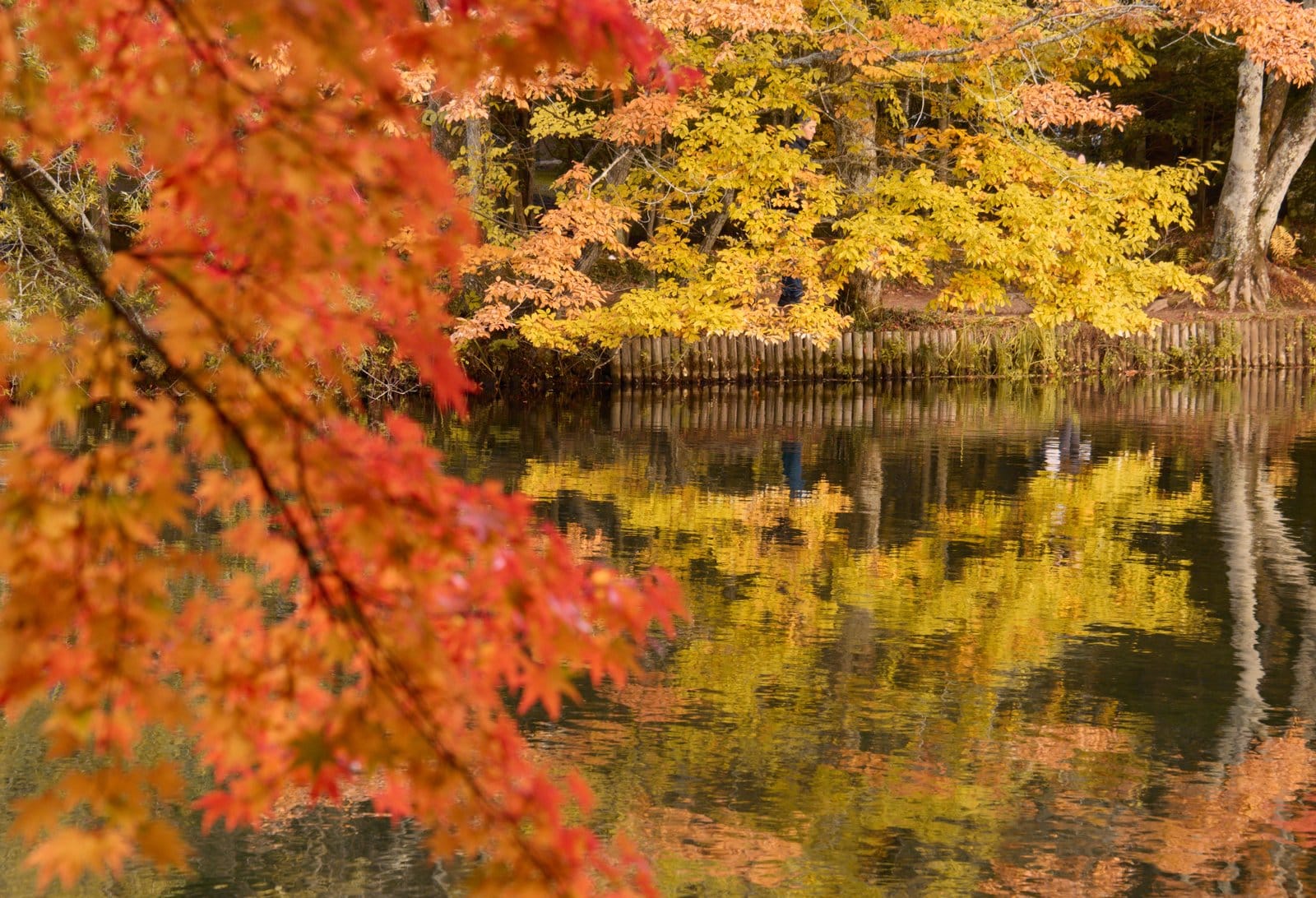
Karuizawa in Autumn Foliage: A Complete Guide to Nagano’s Highland Fall
14 min · tips
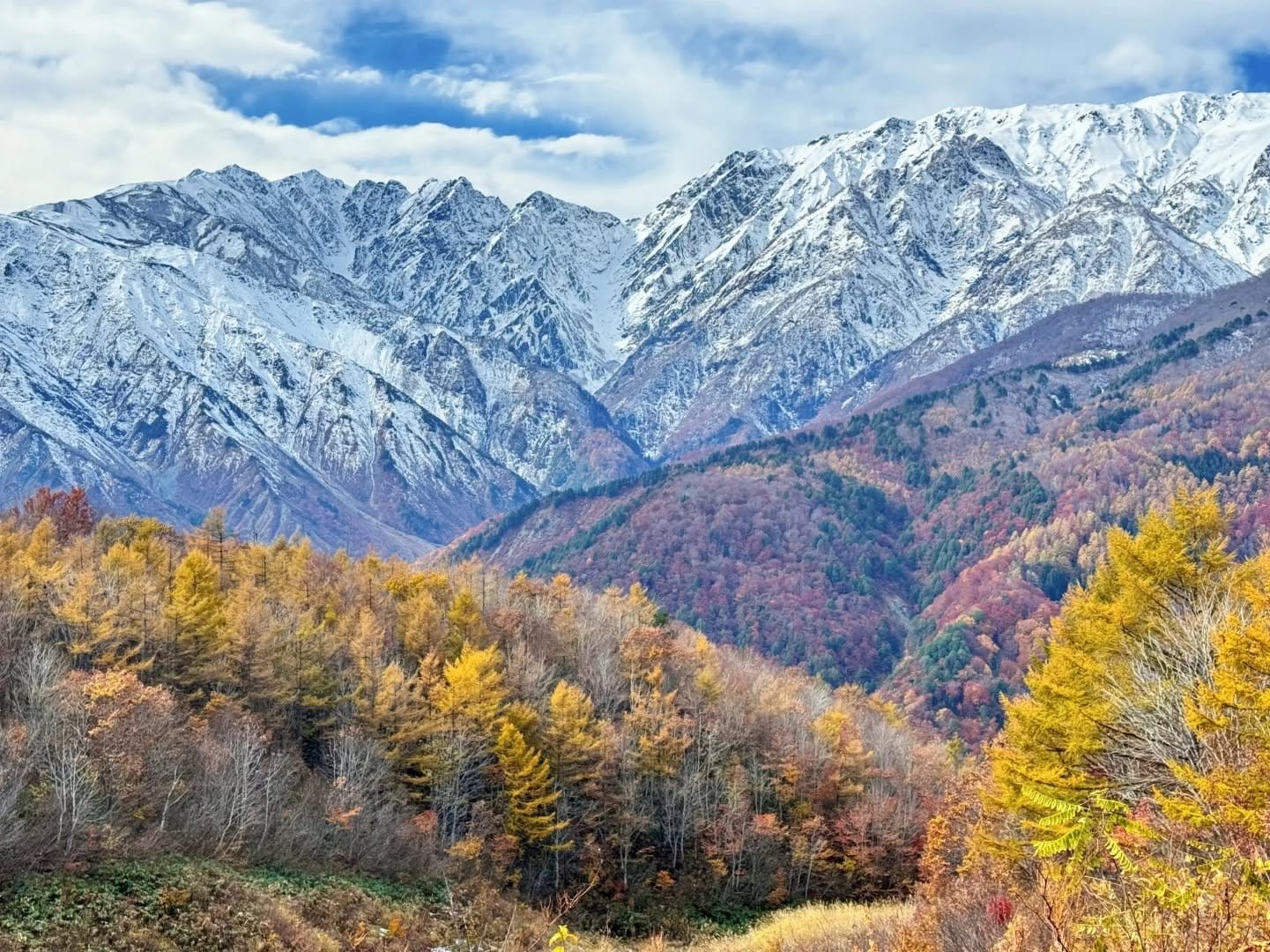
Autumn Leaves Onsen in Karuizawa: Soaking in a Forest Bath at Tombo-no-yu
17 min · tips
Kimono in Gifu: Where to Wear It, Best Photo Spots and How to Plan the Day
7 min · culture