
Autumn Leaves Onsen in Karuizawa: Soaking in a Forest Bath at Tombo-no-yu
Soak in hot spring water amid an autumn forest, choose a bathhouse that accepts day visitors, fit a relaxing half-day into your foliage-viewing itinerary, and learn the essential rules for first-time visitors.
Aug 12, 2026·✍️ olablog·⏱ 17 min read
Soak in hot spring water amid an autumn forest, choose a bathhouse that accepts day visitors, fit a relaxing half-day into your foliage-viewing itinerary, and learn the essential rules for first-time visitors.
Tap a region to browse articles
There is one moment I think anyone visiting Japan in autumn should treat themselves to at least once: sitting in an outdoor hot spring bath while steam fogs up the windows, the air outside is around ten degrees, and right in front of you is an entire stretch of forest turning color—ginkgo yellow, momiji red, and the deep brown of oak trees. Every now and then, a leaf drifts down onto the water, floating lazily beside your shoulder. No phone, no notifications—just the sound of running water and a faint mineral scent in the air.
Karuizawa is one of the easiest places to enjoy that kind of moment if you are starting from Tokyo. This resort town sits at an elevation of around 1.000 meters, takes only a little over an hour by shinkansen from Tokyo, and by the end of October it is cold enough for a hot spring soak to feel like a genuine “reward” rather than something you do just for the experience. What many people do not know is that Karuizawa is home to Tombo-no-yu—the Hoshino Area’s public bathhouse, with outdoor baths overlooking the forest and admission available to day visitors who are not staying overnight.
In this article, I will take a close look at the autumn-leaf-viewing bath experience at Tombo-no-yu, introduce a few other day-use bathing options around Karuizawa, suggest an easy way to fit a half-day onsen visit into a foliage-viewing itinerary, and finish with what many readers ask about most: onsen etiquette for first-timers and the rules regarding tattoos.
Why autumn foliage is the “best value” time to enjoy an onsen in Karuizawa
You can enjoy an onsen in any season, but there are two reasons autumn in Karuizawa is especially well suited to it.
The first is the temperature difference. Karuizawa sits on a plateau, and temperatures can fall into the single digits early in the morning and in the evening toward the end of October. The pleasure of a rotenburo (outdoor bath) lies in that contrast: your face and shoulders feel cool while the rest of your body is immersed in hot water. A rotenburo can feel “too hot” in summer, but in autumn the balance is strangely perfect—you can sit longer, breathe more slowly, and really take in the scenery around you.
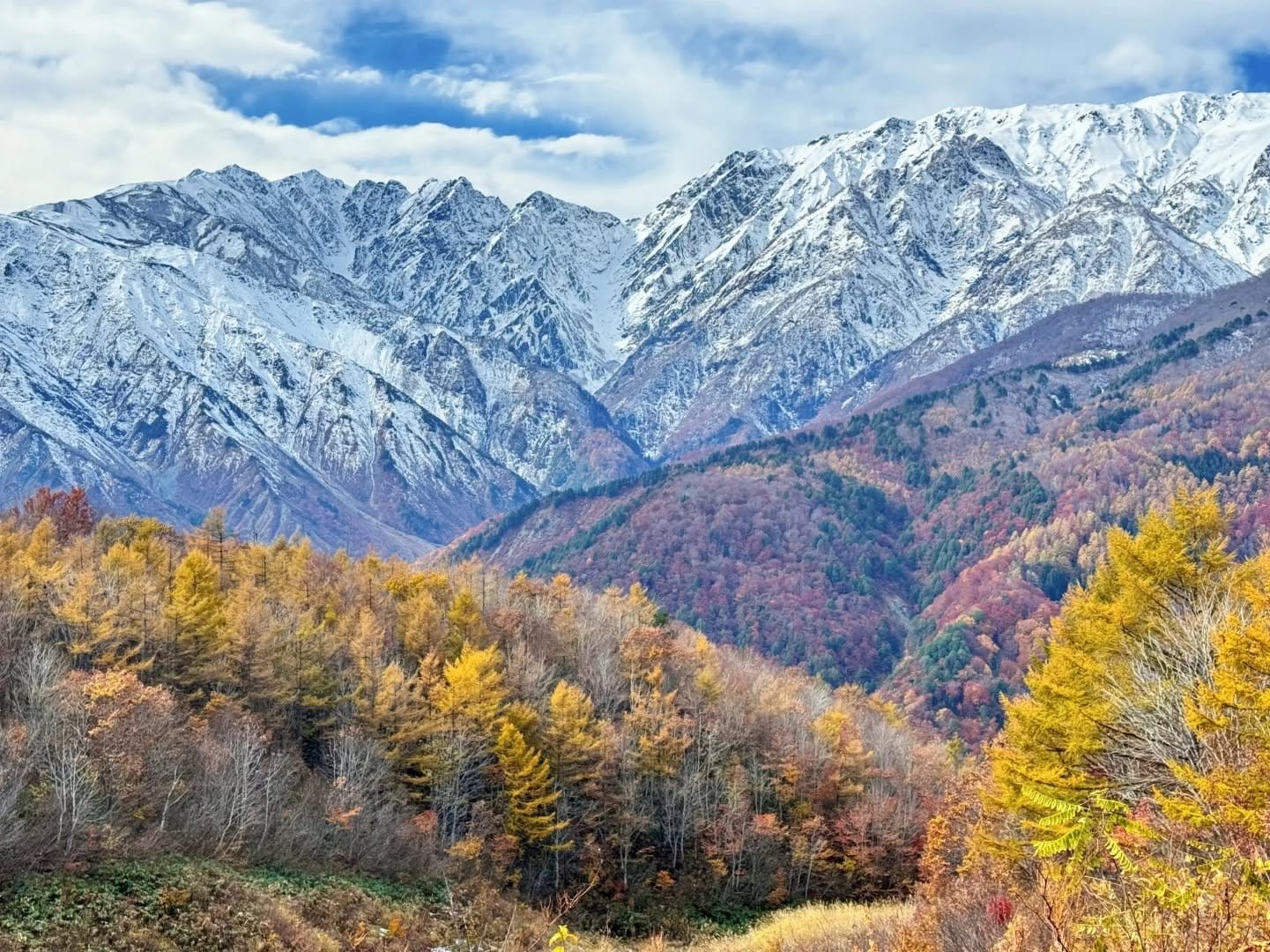
The second is the scenery itself. Karuizawa’s autumn foliage usually appears from around mid-October to early November, though it may arrive a little earlier or later depending on the year. Because the town is surrounded by forest, colorful leaves are almost everywhere you look: Lake Kumoba, Shiraito Falls, the road climbing toward Usui Pass, and even the woods surrounding the bathhouses themselves. Enjoying an onsen here in autumn means you do not have to choose between “seeing the leaves” and “relaxing”—the two happen at the same time.
Another advantage for people living in Japan is that Karuizawa is entirely doable as a day trip from Tokyo. Even if you only have one free weekend day, the formula “see the leaves in the morning—soak in an onsen in the afternoon—go home in the evening” works beautifully.
Tombo-no-yu: an outdoor bath in the Hoshino Area forest
A bathhouse with more than a century of history
Hoshino Onsen is one of Karuizawa’s historic hot spring sources, developed during the Taisho era and therefore more than a century old. In the past, the area was frequented by writers and intellectuals who came to Karuizawa to escape the summer heat. Today, it forms part of the Hoshino Area operated by Hoshino Resorts, next to the Harunire Terrace dining district and not far from the famous Stone Church.
Tombo-no-yu—literally “dragonfly bath”—is the area’s bathhouse for day visitors. In other words, you do not need to stay at Hoshinoya or any other accommodation; simply buy a ticket and bathe as you would at an upscale sento. For day-trippers, it is the most affordable way to experience Hoshino-style service.
The water is a gentle alkaline mineral spring. After soaking, your skin feels soft and slightly smooth—the kind of water Japanese people often call “beautifying water.” It does not have the strong sulfur smell found in some volcanic hot spring areas, so it is also comfortable for anyone sensitive to odors.
The real experience during autumn foliage season
Tombo-no-yu’s biggest draw is its outdoor bath. It is fairly spacious, gently constructed, and opens directly onto the forest behind it. There are no tall walls or fully enclosed roofs, and the view is of a real forest rather than a “decorative garden,” as you often find at city bathhouses. In autumn, that forest becomes a wall of color: red maple leaves mixed with yellow foliage, and on windy days, leaves fluttering down into the bathing area itself. In the late afternoon, as dusk begins to fall and the bathhouse lights come on, the scenery takes on a much deeper tone than it has at midday—if possible, time your visit for sunset.
Inside, there is a large hot bath, a fully equipped washing area with showers and basic amenities, and usually a sauna as well. After bathing, you can relax in the rest area; Harunire Terrace is just a few minutes away on foot for coffee or dinner. This combination of “soak first, eat afterward” is exactly why I often recommend scheduling Tombo-no-yu in the afternoon.
A few practical notes:
- Admission is around 1.500 yen per adult, depending on the time of year; during peak periods such as the autumn foliage season or the New Year holidays, prices are generally higher than on ordinary days. Check the Hoshino Area’s official website before you go for the exact price and opening hours.
- Towels can usually be rented or purchased on-site, but if you want to save money, bring your own small towel and bath towel.
- Crowds: the Hoshino Area can be very busy on autumn foliage weekends, and both the parking lot and bathhouse may involve a wait. Going on a weekday or during an earlier or later time slot is much more comfortable.
How to get there
From Karuizawa Station (the shinkansen station), resort shuttle buses and local buses run toward the Hoshino Area, taking around 15–20 minutes; a taxi takes roughly the same amount of time. If you take the Shinano Railway to Naka-Karuizawa Station, it is about a 15–20-minute walk from the station. The route through the open woodland is quite pleasant—the walk itself becomes a small foliage-viewing experience in autumn. Bus schedules change seasonally, so check the Hoshino Area website in advance or ask at the station information desk.
Other day-use bathing options around Karuizawa
Tombo-no-yu is the best-known option, but it is not the only one. If you want to avoid the crowds or your itinerary takes you to another part of town, here are a few names worth considering. As a general rule, small facilities in Japan often change their hours for day visitors (higaeri nyuyoku). Some close midweek without updating their map listings, so always check the official website or call ahead before visiting.
Sengataki Onsen: quieter, with a “thicker” forest
Located in the Sengataki area north of Naka-Karuizawa, this is a favorite among locals and people looking for a more peaceful setting than the Hoshino Area. The bathhouse is tucked into the forest, with an outdoor bath looking out onto dense greenery. In autumn, the leaves change color right beside the bath. The atmosphere feels more “seasoned,” and there are far fewer foreign visitors—if you want an onsen experience with a genuinely local feel, this is a good place to try. It is not convenient to reach on foot from the station, so it is best suited to those driving themselves or willing to take a taxi.
Shiotsubo Onsen: a historic hot spring source
Also in the Sengataki direction, Shiotsubo Onsen is a hot spring source that has been mentioned in the area’s history for a very long time, associated with old stories of healing injuries and illnesses. The hotel accepts day visitors for bathing during set hours. It is small and not particularly flashy, but in return you get the feeling of soaking in a water source with real roots in the region—ideal for anyone who enjoys the charmingly old-fashioned character of a traditional ryokan.
Kose Onsen and hotels that welcome day visitors
On the way from central Karuizawa to Shiraito Falls is Kose Onsen, a small hot spring inn set in the forest and easy to combine with a visit to the falls. In addition, some resort hotels around Karuizawa open their spas or large communal baths to outside guests during specific hours. Policies vary by property and change seasonally, so the safest approach is to search for “日帰り温泉 軽井沢” (higaeri onsen Karuizawa) or check the “Day use / 日帰り入浴” section on each hotel’s website.
A quick rule of thumb: for convenience and an all-around polished experience, choose Tombo-no-yu; for a quieter, more local atmosphere, head toward Sengataki; to combine bathing with Shiraito Falls, choose Kose.
How to fit a half-day onsen visit into a foliage-viewing itinerary
My general rule is: see the leaves in the morning and soak in an onsen in the afternoon. The reason is purely practical—the morning light is best for autumn foliage, especially at Lake Kumoba, where the still surface reflects the forest most clearly early in the day. After half a day of walking, a hot soak feels much more satisfying. If you still have to climb hills and continue sightseeing after your bath, you waste some of that relaxed feeling and are more likely to get tired.
Sample itinerary 1: a day trip from Tokyo
- Morning: Take the shinkansen to Karuizawa Station and leave your luggage in the station lockers. Walk or rent a bicycle to Lake Kumoba to see the foliage reflected on the water—the earlier you go, the fewer people you will encounter. Continue to Kyu-Karuizawa Ginza for a stroll and some snacks.
- Lunch: Travel to the Hoshino Area and have lunch at Harunire Terrace beside the stream. The autumn foliage here is beautiful, making it a viewing spot in its own right.
- Early afternoon: Enter Tombo-no-yu, soak leisurely for 60–90 minutes, relax, and drink some water.
- Late afternoon: Have coffee at Harunire Terrace, then make your way back to the station and return to Tokyo. Dozing off on the shinkansen after an onsen is one of the best sleeps in the world—I can guarantee it.
Sample itinerary 2: staying one night
- Day 1: Arrive in the afternoon, check in, walk around Kyu-Karuizawa at sunset, and have dinner.
- Morning of Day 2: Visit Shiraito Falls or head up to a viewpoint at Usui Pass—these are two of the region’s strongest foliage-viewing spots, but you will need to travel by bus or car.
- Afternoon of Day 2: Return to town and visit an onsen—Tombo-no-yu, or Kose if it is convenient on the way back from Shiraito Falls—then head to the station.
A few seasonal tips
- Karuizawa can have heavy traffic on weekends in the middle of the foliage season, especially on the roads around Kyu-Karuizawa. If you can go on a weekday, the experience is completely different.
- Temperatures vary widely throughout the day: lunchtime may feel warm, but by the time you finish bathing and step outside at dusk, it can be very cold. Bring a sufficiently warm jacket, especially if your hair is still damp—dry it thoroughly before leaving the bathhouse.
- Avoid bathing immediately after a heavy meal or after drinking beer or alcohol. Leave at least one hour, and longer if alcohol is involved.
Onsen etiquette for first-time visitors
If this is your first time at an onsen, do not worry—the rules may seem numerous, but they all come down to one principle: keep the bathwater clean and the space quiet for everyone. Once you understand that spirit, you can work out almost everything else.
Before entering the bath
- Remove all your clothes in the changing room and place them in a locker or basket. Onsen bathing is completely nude: do not wear a swimsuit or wrap a large towel around yourself in the bathing area. Feeling self-conscious during the first 5 minutes is normal, but you will soon realize that nobody is looking at anyone else.
- Wash yourself thoroughly first at the shower area. Sit on the small stool and use the soap and shampoo provided. This is the most important rule and must not be skipped.
- Pour water over yourself (kakeyu) before entering the bath: scoop up water and pour it over your body, starting at your feet and gradually working upward so your body can adjust to the temperature.
- Tie long hair up high so it does not touch the water.
In the bath
- Do not put your towel in the water. Fold the small towel you brought and place it on your head or leave it at the edge of the bath.
- Do not swim, splash, or speak loudly. Quiet conversation with your companion is fine, but an onsen is fundamentally a place where people come to enjoy silence.
- Never use your phone or take photos in the bathing area, even if you are “just photographing the scenery.” This is the strictest taboo.
- Do not try to stay in too long. Onsen water is usually hotter than a home bathtub. Soaking for 5–10 minutes, getting out to rest, and repeating this a few times is more comfortable than staying in continuously. If you feel dizzy, get out immediately, sit down, and drink some water.
After bathing
- Dry yourself before entering the changing room so you do not leave the floor wet.
- Japanese people generally do not rinse off with fresh water after soaking, in order to leave the minerals on their skin. This is up to you and depends on the type of water; if you have sensitive skin, a light rinse is perfectly fine.
- Drink water to rehydrate and rest for a while before going out into the cold. A cold bottle of milk from the vending machine in the rest area is the classic way to end an onsen visit—try it once for the full experience.
What if you have tattoos?
This is the question I receive most often whenever I write about onsen. To be direct: most public bathhouses in Japan, including many facilities around Karuizawa, still refuse or restrict guests with visible tattoos. This is not specifically aimed at foreign tourists; it stems from historical prejudice in Japanese society. Whatever one thinks of the policy, it is still the rule in someone else’s establishment, and we should respect it.
So what options do you have?
- Check the policy in advance. Every facility is different, and policies may change over time. Some places have relaxed their rules, while others accept small tattoos if they are fully covered. Look for “タトゥー” or “tattoo” on the official website, or email ahead—asking in advance is always better than being asked to leave halfway through, losing the admission fee, and feeling awkward.
- Tattoo cover seals. For small tattoos—roughly palm-sized or smaller—many places will accept you if you cover them completely with a specialized seal. These can be bought at Don Quijote, large pharmacies, or online. It is best to purchase one before leaving home rather than count on finding one on-site.
- Private baths (kashikiri buro / private onsen). Many ryokan and hotels around Karuizawa have private baths that can be rented by the hour or rooms with their own rotenburo. They cost more than a communal bath, but you can soak comfortably without worrying—and during the autumn foliage season, a private bath overlooking the forest is well worth the money for two people, especially if you are traveling with someone special.
- Choose a facility that explicitly welcomes tattoos. The number of these facilities is gradually increasing in Japan. Websites compiling tattoo-friendly onsen—search for “tattoo friendly onsen”—are a good starting point, but you should still confirm directly because online information can quickly become outdated.
For the specific bathhouses mentioned in this article, tattoo policies may change, so I will not make claims on their behalf. Treat checking the official website or messaging ahead as a mandatory part of your preparation, just like checking the weather forecast.
Frequently asked questions
When is the autumn foliage season in Karuizawa?
Usually from mid-October to early November, with the best colors often appearing toward the end of October. Because Karuizawa is at a high elevation, the leaves change color a few weeks earlier than in Tokyo. Every year is different, so check the koyo forecast (紅葉情報) on Japanese weather websites about one week before your trip.
Can I visit Tombo-no-yu if I am not staying at a Hoshino hotel?
Yes. Tombo-no-yu is a bathhouse for day visitors, so you can simply arrive and buy a ticket. Just note that admission is usually more expensive during peak periods and the bathhouse may be crowded, so check the Hoshino Area’s official website for opening hours and prices before you go.
Can I use an onsen if I do not speak Japanese?
Absolutely. The process is the same everywhere: buy a ticket—many places use ticket machines—store your shoes, enter the correct men’s or women’s changing room, wash yourself thoroughly, and then enter the bath. Facilities that welcome visitors, such as Tombo-no-yu, generally have clear English signage.
Can I bring a young child?
Most bathhouses allow children to enter with a parent, and young children may use either the men’s or women’s bathing area depending on the facility’s age rules. Keep in mind that onsen water can be very hot for children, so they should only soak for a very short time. Specific rules—such as the age up to which a boy may enter the women’s side—vary by facility, so ask at reception to be sure.
What should I bring for a day-use bath?
A small towel for use in the bathing area, a large towel for drying off, a hair tie if you have long hair, a bottle of water, and your own skincare products if you are particular about them. Most places provide body wash and shampoo, while skincare products vary. If you forget everything, it is not a problem—larger bathhouses rent or sell towels on-site, for a small additional fee.
How long should I soak in an onsen?
For beginners, a total of around 15–20 minutes in the water, divided into 2–3 sessions, is reasonable. Sit and rest between sessions to let your body cool down. Do not set out to “get your money’s worth” by soaking as long as possible—the pleasantly light, relaxed feeling after bathing is what you are paying for, and it comes from soaking in moderation rather than staying in too long.
I hope you enjoy a truly autumnal afternoon in Karuizawa: tired feet from viewing the foliage, a warm body from the mineral water, and a wonderfully light head on the train ride home.
More from this region — Chubu (Nagano, Kanazawa)
View all →
Kimono in Gifu: Where to Wear It, Best Photo Spots and How to Plan the Day
7 min · culture
Kimono in Nagano: Where to Wear It, Best Photo Spots and How to Plan the Day
7 min · culture
Kimono in Niigata: Where to Wear It, Best Photo Spots and How to Plan the Day
7 min · culture
Kimono in Toyama: Where to Wear It, Best Photo Spots and How to Plan the Day
6 min · culture