
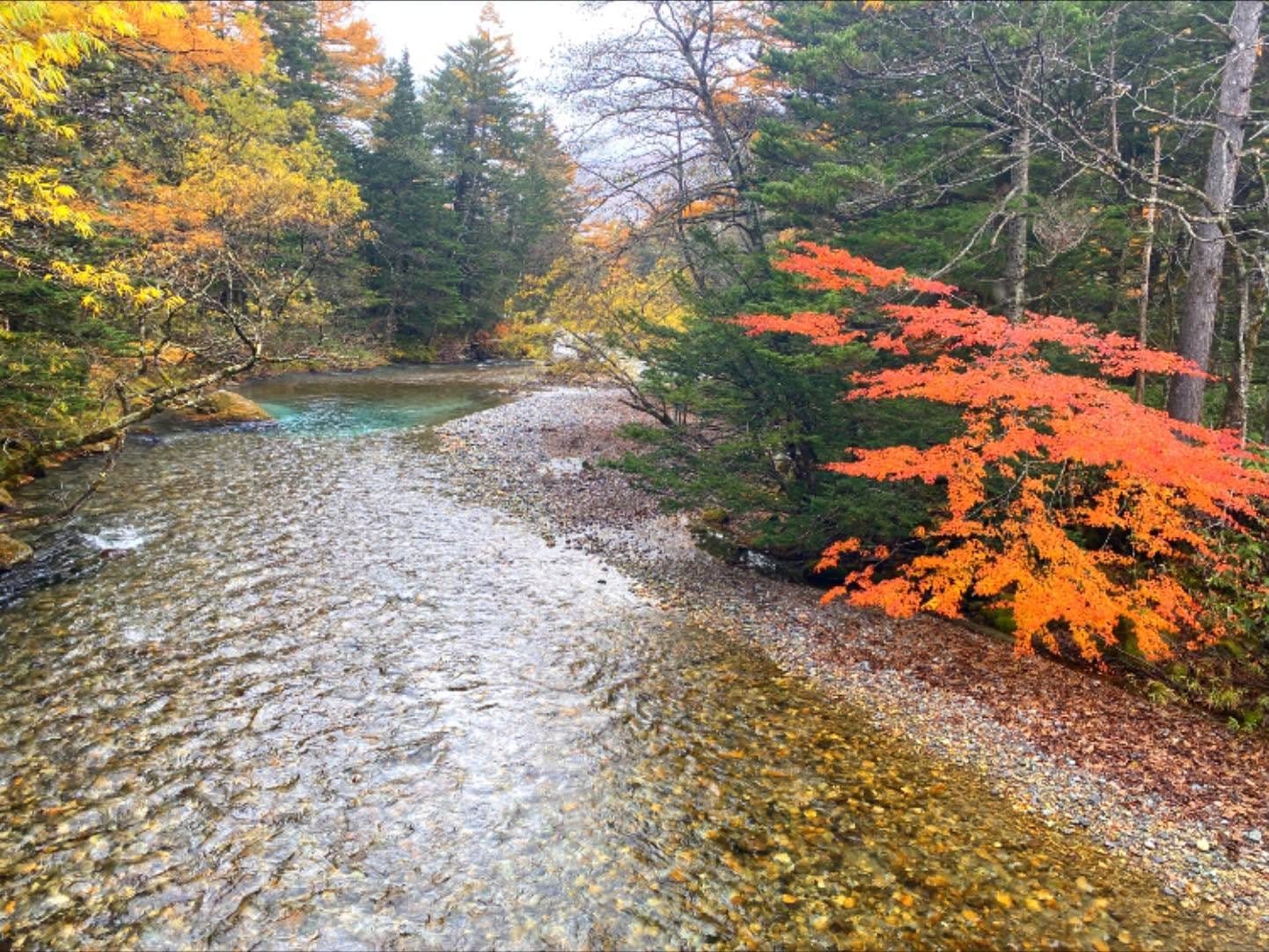
A Guide to the Best Angles for Kamikochi’s Autumn Colors: Where and When to Shoot
From the mirror-like surface of Taisho Pond at dawn to the golden karamatsu forest in Tashiro: choose the right light, shooting direction, and ways to avoid the crowds in the valley during peak season.
Aug 12, 2026·✍️ olablog·⏱ 16 min read
From the mirror-like surface of Taisho Pond at dawn to the golden karamatsu forest in Tashiro: choose the right light, shooting direction, and ways to avoid the crowds in the valley during peak season.
Tap a region to browse articles
At five forty on a late-October morning, you’re standing beside Taisho Pond, your hands so cold that even adjusting the aperture feels clumsy. The surface of the pond is as smooth as freshly polished glass, mist rises in thin ribbons, and the distant Hotaka range is still dull gray. Then, in about three minutes—exactly three minutes—the peaks turn pink and orange, the mist at your feet catches the light, and everyone standing around the pond falls silent. It’s the kind of moment anyone who has seen it once will return to Kamikochi for again and again.
The problem is that most visitors never see that moment. They take the first bus from Sawando or Hirayu, arrive around seven thirty or eight, and find that the mist has already lifted, the valley breeze has picked up, and ripples have spread across the pond. Then they walk to Kappa Bridge around midday, take a photo with thirty people in the frame, go home to discover that their picture looks nothing like the ones online, and blame their camera. It isn’t the camera. It’s the timing.
This is a guide to the best shooting angles for the autumn colors in the valley: four classic locations, where to stand at each one, which direction to face, what time to arrive, and how to keep your frame clear of people during peak season. I’ve written it the way a photographer actually plans a shoot—following the sun rather than the tourist map.
Understand the Terrain Before Choosing Your Angle
The Valley’s Axis Determines Everything
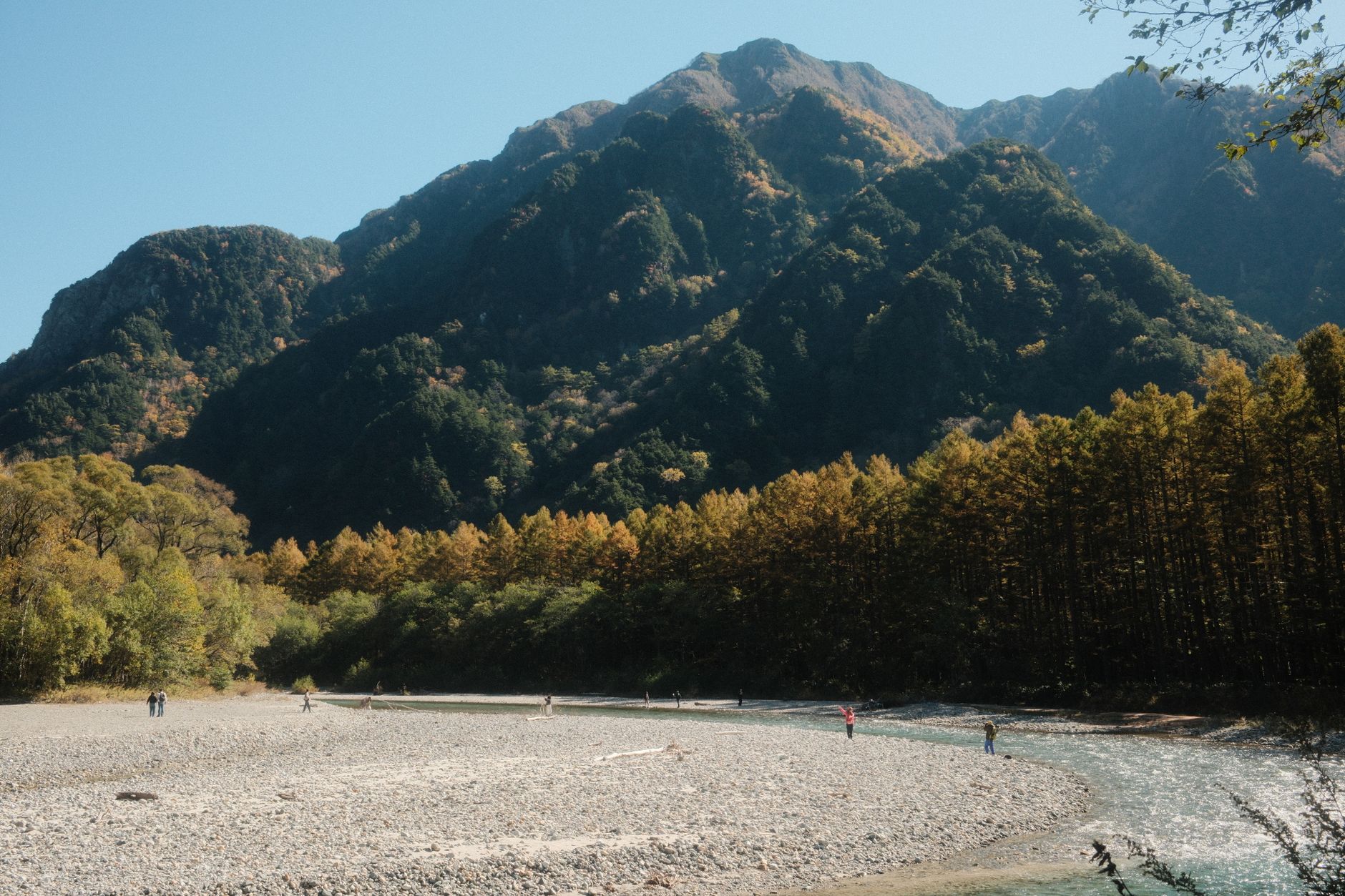
Kamikochi is a narrow valley running along the Azusa River at an elevation of around 1,500m. The river flows from the upper reaches around Tokusawa and Yokoo to the northeast, through Myojin and Kappa Bridge, past the Tashiro wetlands, and finally to Taisho Pond in the southwest.
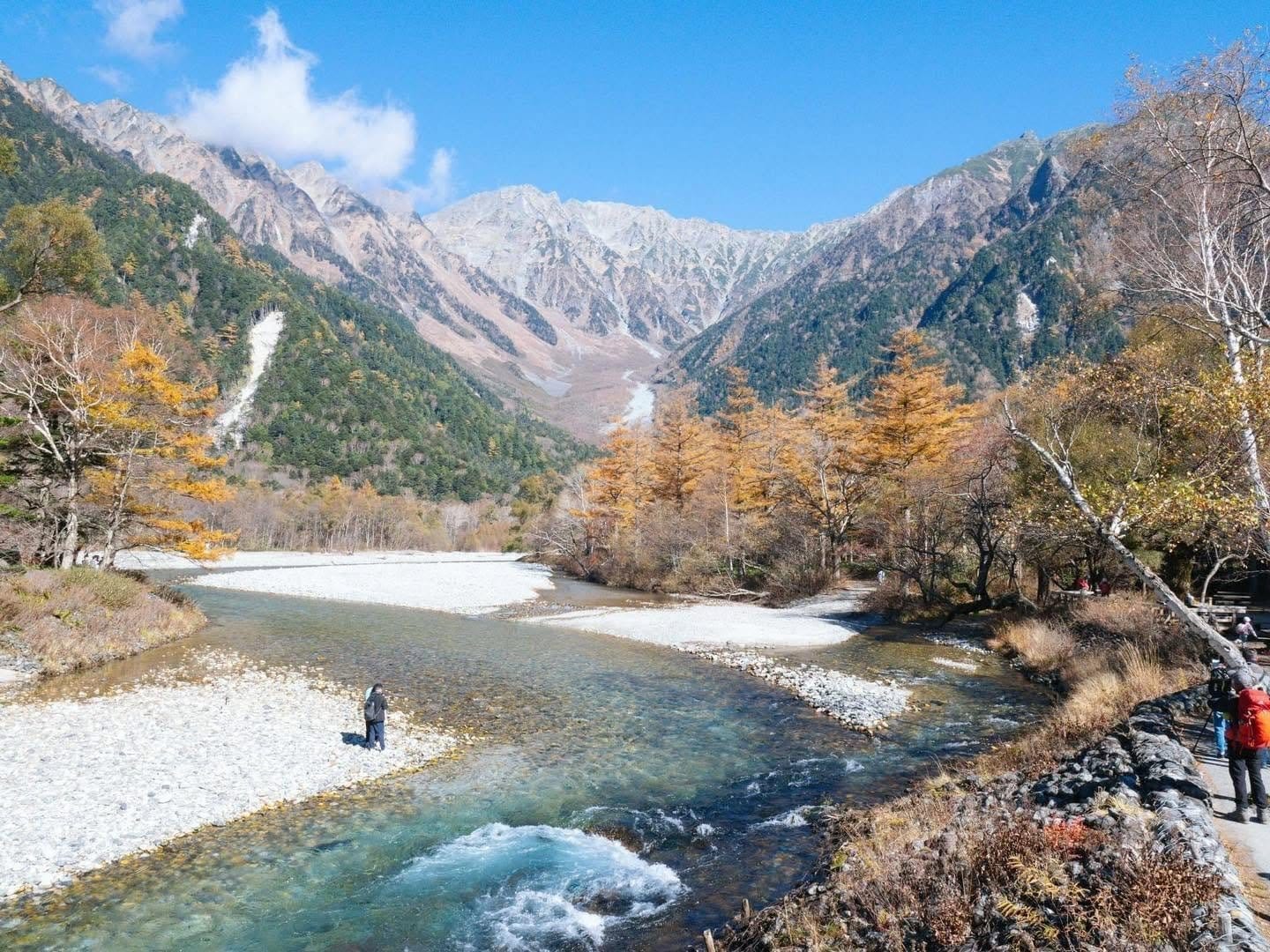
Just remember one thing: look upstream to see the Hotaka range, and downstream to see the volcano Yakedake. Nearly every “classic” Kamikochi photo is a variation on facing upstream, using Hotaka as the backdrop and the water as the foreground. Once you’ve internalized this axis, you can work out the light without an app.
Sunlight at 1,500m Is Different from Sunlight on the Plains
This is where many people get their calculations wrong. The sunrise time shown in an app refers to sunrise over a flat horizon. In Kamikochi, the eastern side of the valley is blocked by a huge wall of mountains, so direct sunlight reaches the valley floor considerably later than the official sunrise time—often by around an hour, and sometimes more. In the afternoon, by contrast, the sun disappears behind the western slopes very early; in late October, the area around Kappa Bridge may already be in mountain shadow while the sky is still bright.
The practical consequences:
- The most beautiful morning light isn’t when sunlight finally reaches your position, but when the mountain peaks have turned pink while the valley floor remains in cool blue shade. That warm–cool contrast is something no amount of post-processing can truly recreate.
- The afternoon “golden hour” arrives early and doesn’t last long. If you’re expecting a lowland-style sunset, you’ll miss it.
- From 10h–14h, the light is flat and harsh—and this is also when the crowds are at their worst. Use this time to walk between locations or have lunch, not for serious shooting.
Four Shooting Locations and When to Be There
Taisho Pond — A Mirror at Dawn
This is the number-one spot, and also the most logistically demanding, because you need to arrive before daylight.
The pond was formed after an eruption of Yakedake early in the last century. The rising water drowned an entire section of forest, and the dead tree trunks standing in the water are the foreground that made this pond famous (their numbers have declined considerably over the years, so don’t expect it to look exactly like older photos).
Where to stand: from the Taisho Pond bus stop, walk down to the water’s edge, then follow the shore toward the trail leading to Tashiro. Don’t stop at the busiest spot right by the access path; walk a few more minutes and you’ll find more open stretches of shoreline, with dead tree trunks to use as focal points.
Which way to face: upstream, toward the north–northeast, with Hotaka in the background and the water acting as a mirror. To include Yakedake, turn around toward the southwest; the volcano is close and steep, so a moderately wide-angle lens is enough.
Timing: arrive at the pond at least 30–40 minutes before the official sunrise time. The sequence usually goes like this: mist rises while it’s still dark—the Hotaka peaks turn pink—sunlight gradually spreads down the slopes—and finally reaches the water. After that, the valley wind begins to pick up and the mirror-like surface slowly disappears.
Conditions for mist and a glassy surface: a clear, calm night with a sharp drop in temperature; rain the previous day makes it even more likely. Cloudy or windy weather almost certainly means no mirror effect—know that in advance so you won’t be disappointed.
Technical tip: the difference in brightness between the pink mountain peaks and the dark pond is huge, so shoot a bracketed sequence and blend it, or use a GND filter. Be careful with a polarizer: turn it too far and you’ll eliminate the reflection—the very thing you got up early to photograph.
Kappa Bridge — The Classic View toward Hotaka
This wooden suspension bridge is the center of the valley, and also its busiest location. But crowded doesn’t mean it’s not worth shooting.
Where to stand: there are three options, each producing a completely different photograph.
- On the bridge, facing upstream: the classic composition, with the wooden railings leading the eye and Hotaka centered in the background. The advantage is that you’re standing above the crowds on the riverbanks.
- In the riverbed downstream from the bridge: go down to the gravel bank and use the bridge itself as the foreground, with Hotaka behind it. This is the most unmistakably “Kamikochi” composition, but there will be people on the bridge—either accept them and use them for scale, or wait.
- In the riverbed upstream from the bridge: leave the bridge completely out of the frame and capture only the river, gravel bank, trees, and mountains. This is the least-photographed angle and the easiest one to keep free of people, because lowering the camera hides the walking path along the bank.
Timing: in the morning, light comes from the east, illuminating the Hotaka cliffs diagonally from the right and giving the mountains depth and dimension. In the late afternoon, sunlight from the southwest hits the mountain face directly, making it warmer and flatter in character, but the valley floor will already be dark, so you’ll need to accept strong contrast. If you can choose only one time: early morning, just as the sunlight begins to touch the larch forest and the mist over the river has yet to clear.
Lenses: use a wide-angle lens for compositions that include the bridge, but don’t overlook a 70–200mm telephoto for compressing distance and isolating a section of mountain wall with a swath of golden leaves at its base. These telephoto shots are often much “cleaner” because you can deliberately select an area without people.
Tashiro — Golden Karamatsu Forest and Small Wetlands
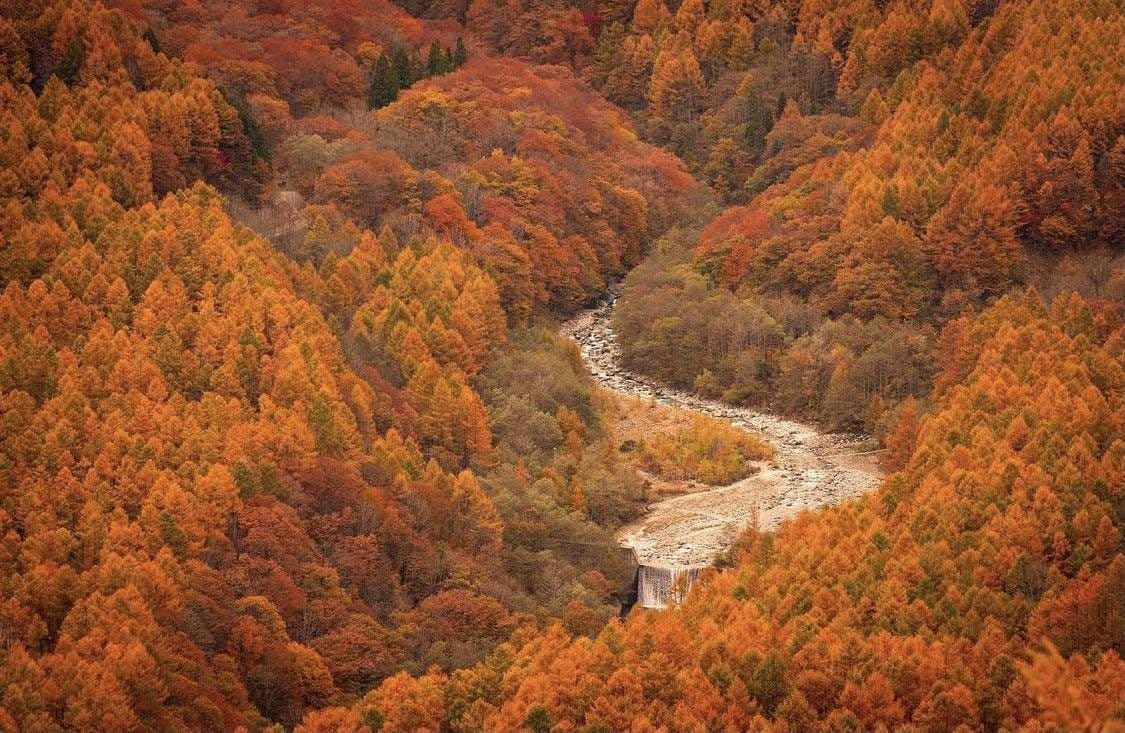
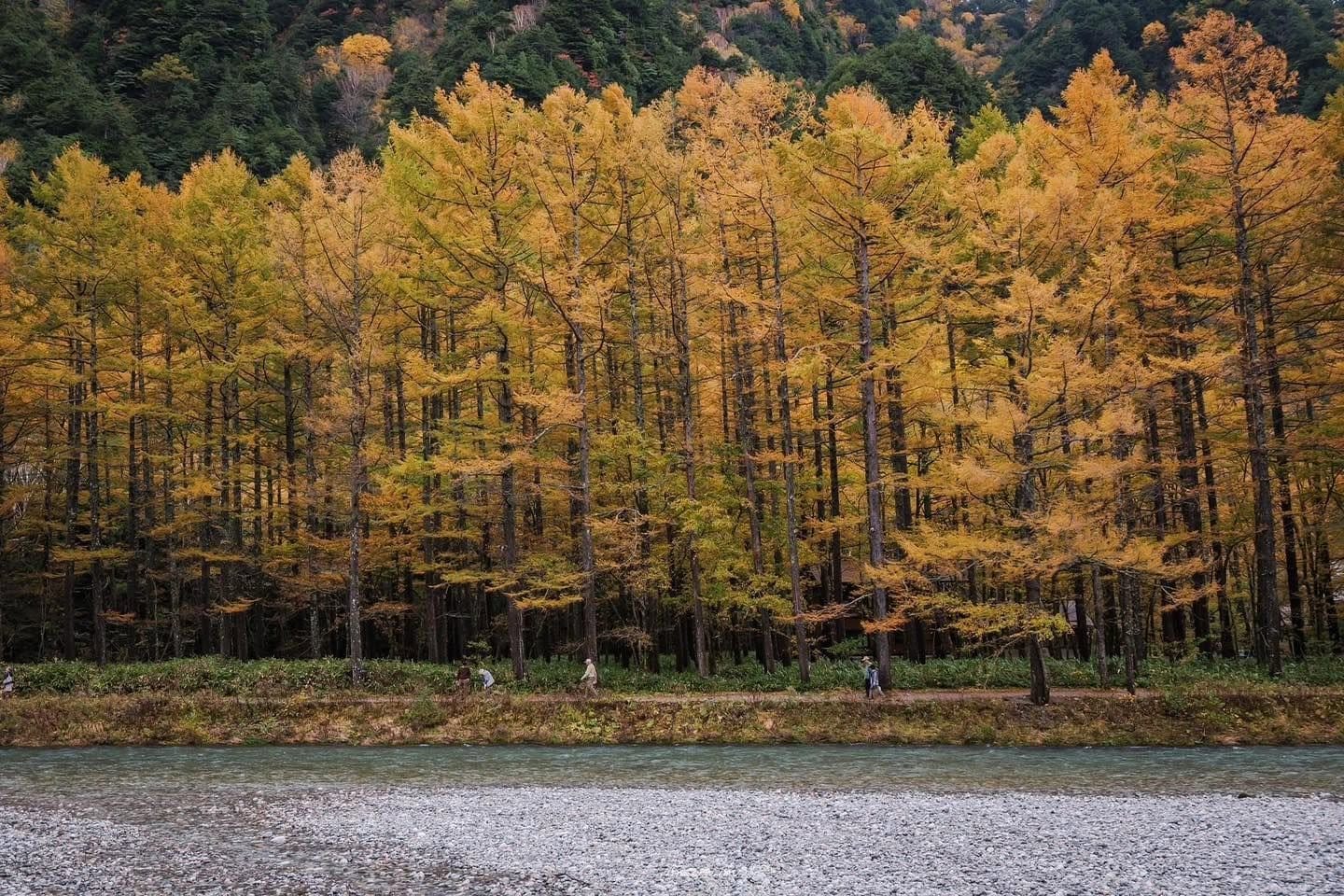
Karamatsu are deciduous conifers—the rare type of conifer that turns golden before shedding all its needles in autumn. This is what makes autumn in Kamikochi different from anywhere else in Japan: it isn’t just about red momiji, but also layers of golden forest that glow like gold dust.
Karamatsu change color later than the red leaves, usually from late October into early November. If you arrive a little late in the season and the momiji have already fallen, don’t be disappointed—that’s when the karamatsu forest is at its most beautiful.
Where to stand: on the wooden boardwalk between Taisho Pond and Kappa Bridge, around the Tashiro wetlands. The wetlands here are shallow and small, with plenty of grass, and by late October they’re often covered in morning frost—a sparkling white foreground that only early risers get to see.
Which way to face and when: this is the only one of the four locations where I recommend shooting into the light. In the morning, when angled sunlight from the east shines through the karamatsu canopy, the golden needles catch the light and the entire forest seems to glow from within; if mist is still present, you may also see rays of sunlight filtering through the trunks. Shade your lens, accept a little flare, and meter for the leaves rather than the sky.
The ideal time is after Taisho Pond, while walking back toward Kappa Bridge—just as the sunlight begins to spread down into the valley. This is also why the itinerary in this guide runs from downstream to upstream, rather than the other way around.
Myojin Pond — Stillness within the Shrine Grounds
Walk upstream from Kappa Bridge for about an hour and you’ll reach the Myojin area. Myojin Pond lies within the grounds of Hotaka Shrine (the inner shrine area), which charges an admission fee. The fee is modest, but check the official information before you go and remember to bring cash.
What makes this pond special is that it sits directly beneath the Myojin-dake cliffs, so the pond remains in mountain shadow until close to noon. As a result, the light is soft and diffused rather than harsh—ideal conditions for photographing reflections, moss, crystal-clear water, and the occasional duck swimming past.
Timing: mid-morning, after you’ve finished taking advantage of the dawn light downstream. Don’t try to get here at sunrise—it will be dark and there won’t be much to photograph.
Where to stand: walk the entire loop around the pond. The area near the dragon-headed wooden boat is the familiar angle, but move just a few meters to the side and use a drooping branch as a natural frame for a much more distinctive shot. This is a place for slow, detailed photography, not sweeping grand landscapes.
Getting there: there are two banks from Kappa Bridge. The forest-side bank has sections of wooden boardwalk and takes a little longer, but it’s far quieter and considerably more beautiful, passing through the Dakesawa wetlands, which many visitors overlook. The other bank is wider, flatter, and faster—save it for the return journey when your legs are tired.
An Itinerary That Follows the Sun
If You’re Staying Overnight in the Valley
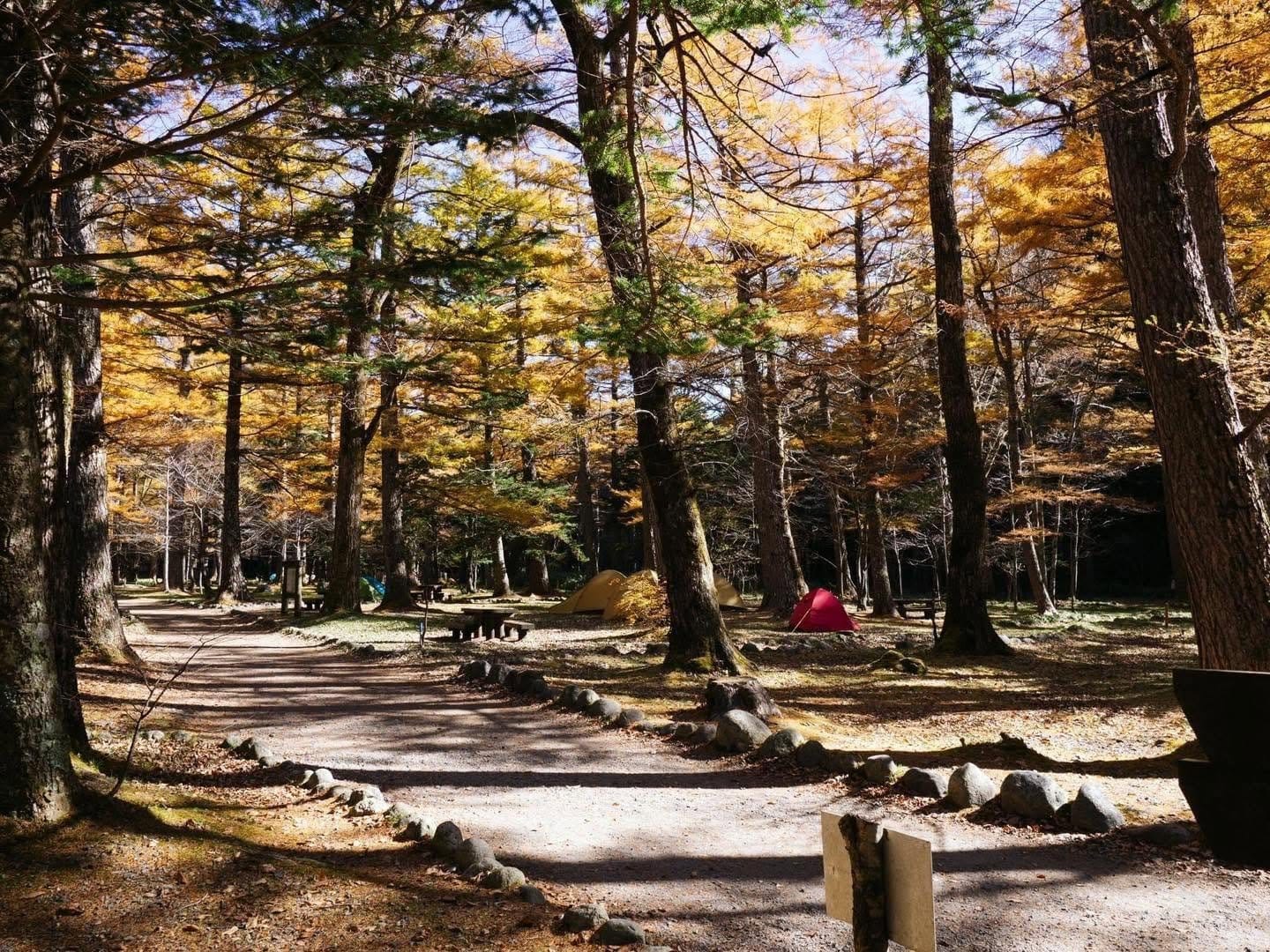
This is the only way to catch sunrise at Taisho Pond without taking a gamble on the bus schedule. The valley has hotels, mountain lodges, and a campground; during peak season, you’ll need to book several months in advance. There is accommodation right beside Taisho Pond, while most other places to stay are clustered around Kappa Bridge and Myojin.
A suggested day: get up before dawn and head to Taisho Pond; walk upstream through Tashiro as the sunlight begins to reach the valley; arrive at Kappa Bridge in the late morning; have a light meal; take the forest route to Myojin in the middle of the morning; rest at midday or continue on to Tokusawa if you still have the energy; then return to Kappa Bridge in the afternoon to catch the last light on the mountain cliffs.
If You’re Visiting on a Day Trip
You’ll miss sunrise; accept that and optimize the rest of the day. Private vehicles are not allowed into Kamikochi. You’ll need to park in Sawando (on the Matsumoto side) or around Hirayu–Akandana (on the Takayama side), then transfer to a bus or take a taxi. Taxis are allowed to operate and can leave earlier than the buses—but they’re considerably more expensive, so ask about the fare in advance if you’re serious about making it for sunrise.
A tip for day-trippers: get off at the Taisho Pond stop instead of riding all the way to the final terminal, then walk upstream. You’ll be moving against the flow of people coming down from Kappa Bridge and will reach the scenic spots before they do. Note that not every bus stops here, so check the timetable beforehand.
Keeping People Out of Your Frames during Peak Season
Kamikochi is genuinely crowded in late October—on clear weekends, the bus queues in Sawando can become extremely long. A few practical strategies:
- Go on a weekday. The difference between Tuesday and Sunday is greater than all the technical tricks combined.
- Work both ends of the day. Before eight in the morning and after around four in the afternoon, the valley becomes noticeably quieter because day-trippers have to catch their buses back. In the late afternoon, the light is still warm on the mountain cliffs, while down in the valley you’ll be almost alone.
- Head upstream. The farther you go toward Myojin and Tokusawa, the faster the crowds thin out. Just walking for another half hour can make a dramatic difference.
- Lower the camera. Set up on the gravel riverbed and lower your tripod; the riverbank will hide the walking path and remove people from the frame.
- Use a telephoto lens to crop. Compress the scene with a long lens and select a section of mountain and forest without people—it’s far more effective than trying to clear a wide-angle frame.
- Stack multiple shots. Put the camera on a tripod, take a series of images a few seconds apart, and blend them using the median function in your software. Moving people will disappear, leaving only the static scenery. This can save many shots at Kappa Bridge.
- Be patient. The crowds here move to the rhythm of the buses. Wait 30–60 seconds and you’ll often get a clear opening.
- Don’t block the path. The wooden boardwalks are narrow; setting up a tripod across the way during busy periods is the fastest way to get told off. Flying a drone in the national park is basically not allowed, so don’t show up planning to test the rule.
Practical Preparation for Photographers
- It’s colder than you expect. Temperatures here can drop to around freezing before dawn in late October. Dress in layers, wear thin gloves that still let you operate the camera, and bring a wool hat. Batteries drain quickly in the cold—bring spares and keep them in an inner pocket.
- A lightweight but sturdy tripod. You’ll carry it all day along mostly level trails, but the river winds are real.
- Filters: a GND for dawn, an ND for long exposures of the river, and a polarizer used sparingly.
- A lens cloth for condensation and mist—small, but capable of saving an entire morning.
- Waterproof walking shoes. The main paths are easy, but grass wet with dew and gravel banks can be slippery.
- Cash, a bear bell, and take your trash with you. Cell service is intermittent, facilities are limited, and there are almost no public trash cans in the valley.
- A limited operating season. Kamikochi closes in winter and is open only seasonally; opening and closing dates, as well as bus schedules, change from year to year, so check the official website before finalizing flights or booking accommodation.
Frequently Asked Questions
When is peak autumn foliage here?
Usually during the second half of October for the red leaves, and from late October into early November for the golden karamatsu forest. Because of its high elevation, the valley changes color considerably earlier than Matsumoto or Takayama. Exact timing varies with the weather each year, so follow updates close to your trip rather than relying on the previous year’s calendar.
Can I drive all the way there?
No. Private vehicles are prohibited from entering the valley. Park on the Sawando side or at Hirayu–Akandana, then transfer to a bus or taxi. During peak season, the lots fill very early, so plan to arrive at dawn.
Can I visit all four locations in one day?
Yes, if you walk from Taisho Pond up to Myojin and then loop back. But you’ll have to sacrifice sunrise unless you stay overnight. If you only have one day and aren’t staying overnight, I recommend skipping Myojin and focusing your time on Taisho Pond, Tashiro, and the viewpoints around Kappa Bridge.
Is it worth staying overnight in the valley?
For photographers, absolutely—and it’s the biggest difference between a trip with “some nice photos” and one with “photos that look like everyone else’s.” The trade-off is that rooms must be booked very early and peak-season rates aren’t cheap.
Should I skip the trip if it’s cloudy or raining?
Not necessarily. Low clouds clinging to the Hotaka cliffs can create wonderfully atmospheric images, while the softer light suits Myojin Pond, the karamatsu forest, moss, and water details. What you’ll miss is the mirror reflection and the pink glow on the mountain peaks at dawn.
Which lenses should I bring if I can choose only two?
A 16–35mm wide-angle lens for Kappa Bridge and Taisho Pond, plus a 70–200mm telephoto for compressing the mountains and cropping out the crowds. If you can bring only one lens, a 24–70mm is the safest choice.
Is there an admission fee for Myojin Pond?
Yes. The pond is within the shrine grounds and charges an admission fee; the amount is modest, but prepare cash and check the official website for current information and opening hours, as they may vary by season.
Is walking between the locations tiring?
The main trails are almost flat and don’t involve mountain climbing. It takes about an hour at an easy pace from Taisho Pond to Kappa Bridge, and a similar amount of time from Kappa Bridge to Myojin. The challenge isn’t the difficulty of the trails, but the total distance covered in a day—combined with the weight of the gear on your back.
More from this region — Chubu (Nagano, Kanazawa)
View all →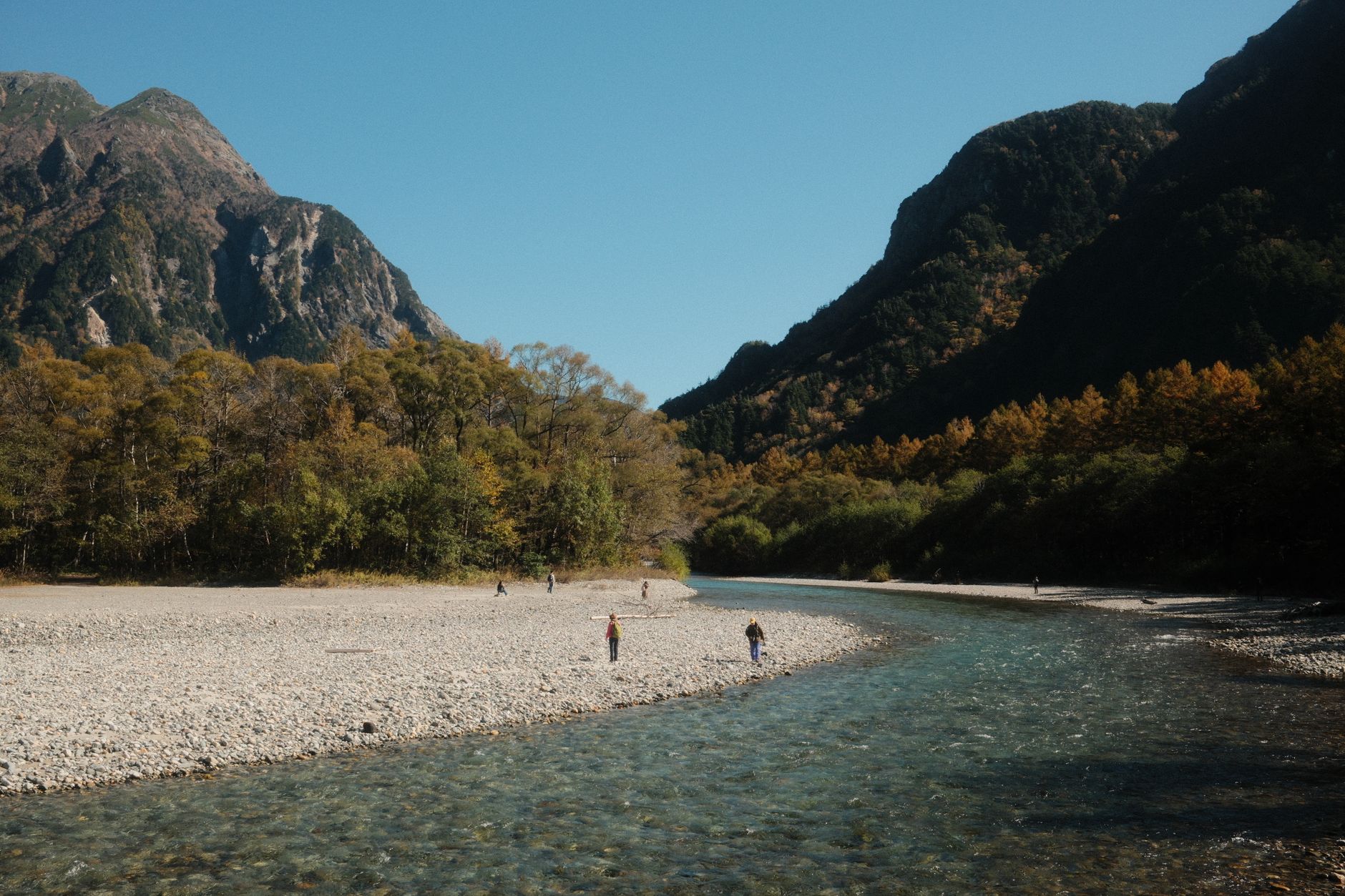
Kamikochi in 3–4 Days: Pairing Matsumoto and Norikura with the Progression of Fall Colors
16 min · tips
Kamikochi in Fall Foliage: Tracking the Golden Wave by Elevation
17 min · tips
Kamikochi in One Autumn Day: Catch the Early-Morning Mist and Make the Afternoon Bus
20 min · tips
Kamikochi in Fall: Avoiding the Crowds and Calculating the Full Cost for 1–2 Days
17 min · tips