
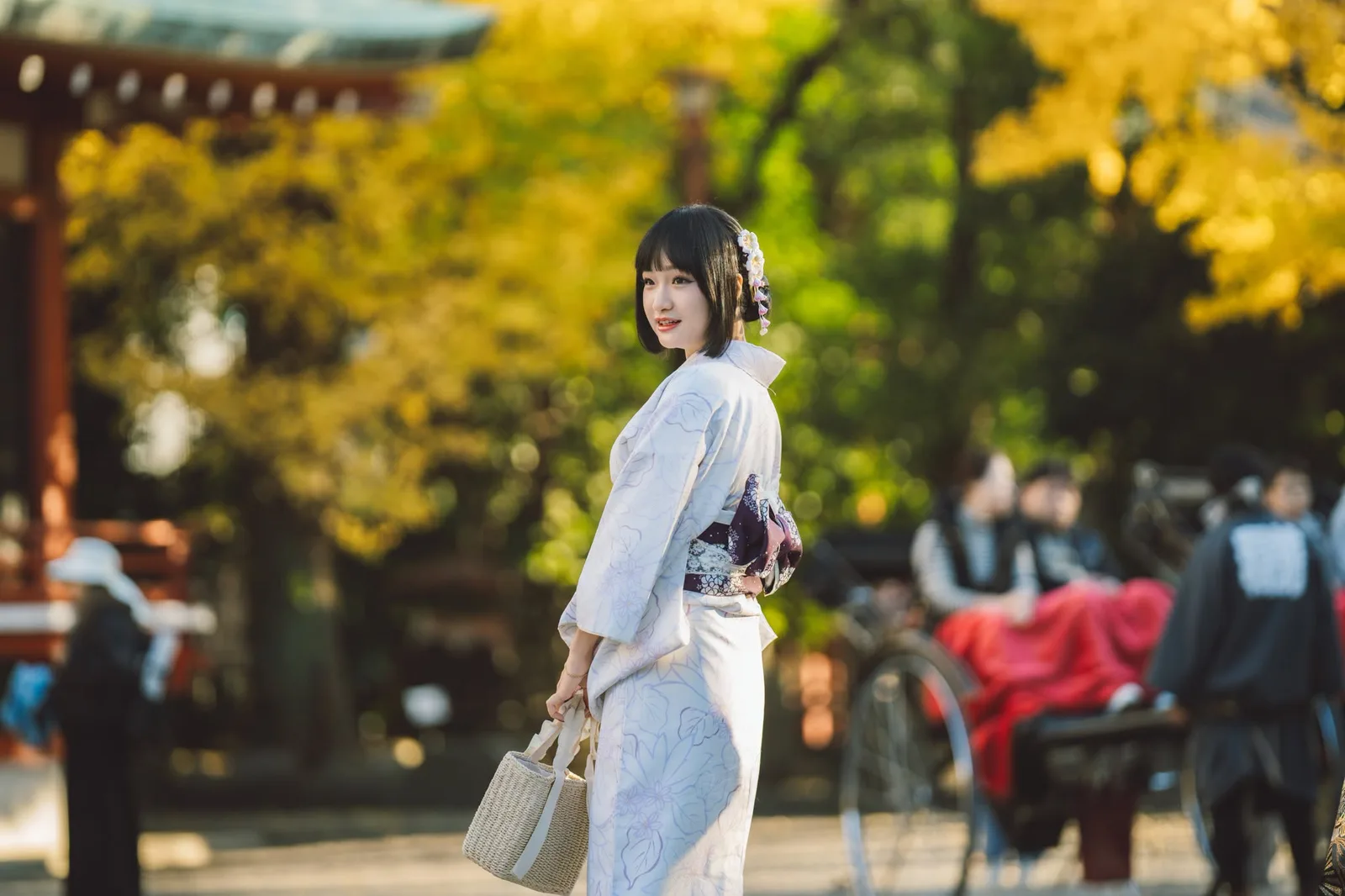
Kimono Experience in Asakusa: Strolling Through Old Japan
What a kimono day in Asakusa feels like — the walk from Kaminarimon along Nakamise to Sensō-ji, the quieter streets behind it, the Sumida River and Skytree — with how the rental works, what it costs, and the hours that make the difference.
May 4, 2026·✍️ olablog·⏱ 6 min read
What a kimono day in Asakusa feels like — the walk from Kaminarimon along Nakamise to Sensō-ji, the quieter streets behind it, the Sumida River and Skytree — with how the rental works, what it costs, and the hours that make the difference.
Tap a region to browse articles
Asakusa is the district where Tokyo keeps its older self: a temple founded in the seventh century, a shopping street that has sold the same rice crackers and paper fans for generations, alleys of low wooden eateries, and rickshaw runners calling to passers-by in front of a gate hung with a lantern the size of a small car. It is also, not by coincidence, the one place in Tokyo where a person in kimono looks entirely at home. Put the outfit on here and the district stops being a sight you are looking at and becomes a street you belong to. This article describes what that day is like and how the practical side works.
The shape of the district
Everything in Asakusa is arranged along one axis. At the southern end stands Kaminarimon, the Thunder Gate, with its great red lantern. Through it runs Nakamise-dōri, 250 metres of stalls under tiled roofs, straight to Hōzōmon, the inner gate, and beyond that the courtyard of Sensō-ji with its main hall and five-storey pagoda. West of the axis are the quieter streets — Denbōin-dōri with its Edo-style signboards, the covered arcades, the alleys of tempura and eel restaurants. East, a five-minute walk, is the Sumida River, with the Azuma Bridge and the Tokyo Skytree rising on the far bank.
That layout is why the district works so well in kimono: the whole of it fits inside a comfortable three-hour walk on flat ground, with something to photograph every fifty metres and somewhere to sit every hundred.
Choosing kimono or yukata
The choice is made by the calendar more than by taste. From roughly June to September, when Tokyo is hot and humid, a yukata — a single layer of cotton, worn with a light obi and bare feet in geta — is the outfit; it is what local people wear to the summer festivals and the Sumida River fireworks, and it is the coolest thing you can be dressed in. For the rest of the year a lined kimono is the choice, and it is both warmer and more elegant in photographs. At OlaChill Tokyo Asakusa the yukata plans are ¥4,000 (men) and ¥4,500 (women); the everyday kimono plans are Komongi ¥5,500 and Men's Traditional Kimono ¥5,000, and the long-sleeved Furisode is ¥19,000 for a day built around photographs. Every price includes tax and the full accessory set — obi, footwear, bag, under-robe and socks — and children's plans start at ¥3,000. Hair styling is a ¥1,500 add-on and takes about a quarter of an hour. Our guide to kimono versus yukata explains the difference in detail.
Being dressed
You choose the garment from the rack; the staff choose an obi and small accessories to go with it and dress you layer by layer. The whole thing takes about half an hour, and the two pieces of advice you receive at the end — take short steps with the toes turned slightly inward, and do not loosen anything yourself during the day — are the only technique you need. Your own clothes and bag go into a free locker; you walk out with a phone and a wallet in the small pouch that comes with the plan.
The shop is at Kaminarimon 2-3-7, on the fourth floor of Duel Asakusa IV, open 09:00 to 18:00, which puts the gate itself a few minutes away.
The walk
Start at Kaminarimon. Early in the morning the lantern is photographable without a crowd; by eleven it is not. Then Nakamise, which is at its most photogenic looking straight along the street so that the lanterns and banners stack up into a tunnel. Buy a ningyō-yaki cake or a stick of dango — they are the district's snacks and they give your hands something to do in a picture — but hold the sleeves clear of the griddles.
Through Hōzōmon the ground opens out, and the classic composition is the pagoda over one shoulder from the front courtyard. Waft the incense from the great burner over your sleeves as everyone around you is doing, draw an omikuji fortune, and then leave the axis for the side streets: Denbōin-dōri, the arcades, the alleys behind, where the wooden walls and low eaves make the close portraits and where the foot traffic is a fraction of the main street's.
Finish at the river. From the embankment park the picture is the one nowhere else in the world can offer: traditional dress in front of the Skytree, old and new Tokyo in one frame, with the late-morning light coming over your shoulder.
The hours that make the difference
Asakusa is one of the most visited places in Tokyo, and the crowd is the single variable that decides how the day feels. Before ten the streets belong to you; between eleven and four the main axis is dense and the side streets are the refuge; after five the stalls close, the crowd thins and the temple is lit, and the grounds become quiet and beautiful again. Booking the earliest slot the shop offers is the best decision of the day. If you want the illuminated evening as well, a next-day return (¥1,100, back before ten the following morning) or a hotel return (¥1,100) frees you from the 18:00 closing time.
For the full sequence with times, see our step-by-step Asakusa guide, and for posing and the best angles at each spot, our Asakusa photography guide.
What's included, price, where, how to book
- Included: the kimono or yukata, obi, footwear, bag and accessory set; dressing by staff; free locker; umbrella loan in rain. Tax included.
- Price: yukata from ¥4,000; kimono from ¥5,000; children from ¥3,000; hair styling ¥1,500; make-up ¥5,000. Online payment is 10% off.
- Where: OlaChill Tokyo Asakusa, Taito-ku, Kaminarimon 2-3-7, Duel Asakusa IV, 4F. Open 09:00–18:00.
- How to book: plan → date and time → your details → payment on the Asakusa booking page. Free cancellation up to two days before.
Book an early slot: OlaChill Tokyo Asakusa — dressed by 09:30, at Kaminarimon before the crowd.
More from this region — Tokyo & Kanto
View all →
Kimono in Chiba: Where to Wear It, Best Photo Spots and How to Plan the Day
6 min · culture
Kimono in Tokyo: Where to Wear It, Best Photo Spots and How to Plan the Day
7 min · culture
Kimono Rental in Asakusa: Step by Step, Plus a Half-Day Route
10 min · culture
The Ultimate Kusatsu Onsen Guide: Yubatake, Jikan-yu, Local Cuisine, and More
19 min · destinations