
The Ultimate Kusatsu Onsen Guide: Yubatake, Jikan-yu, Local Cuisine, and More
Feb 8, 2026 · ✍️ olablog · ⏱ 19 min read
A deep dive into the appeal of Kusatsu Onsen, one of Japan’s three most famous hot spring resorts. From the dramatic Yubatake and traditional Jikan-yu bathing to outstanding local cuisine, accommodation, access, and etiquette, this comprehensive guide is designed for domestic travelers and Japanese-speaking visitors.
“Come to Kusatsu at least once”—that famous phrase naturally comes to mind when thinking of Kusatsu Onsen, one of Japan’s most celebrated hot spring destinations. In 2026, it was once again selected as “Japan’s Most Popular Hot Spring Resort” for the 3rd consecutive year, a testament to its enduring appeal. Its strongly acidic waters boast Japan’s highest natural spring output, at more than 32,000 liters per minute, and have soothed countless visitors for centuries. In this article, the OlaChill editorial team takes an in-depth look at everything from Yubatake, the symbol of the steam-filled hot spring town, to Jikan-yu, Kusatsu’s distinctive bathing method, as well as local cuisine, recommended accommodations, access, and essential etiquette.
What Makes Kusatsu Onsen Special? Why Is It One of Japan’s Three Most Famous Hot Springs?
Along with Arima Onsen in Hyogo Prefecture and Gero Onsen in Gifu Prefecture, Kusatsu Onsen is counted as one of Japan’s “three most famous hot springs.” Its greatest appeal lies in its abundant water volume and exceptional spring quality. Kusatsu’s waters are a strongly acidic sulfur spring with a pH of 2.05, known for their powerful antibacterial properties. They are even said to be capable of curing any illness except lovesickness, and are expected to provide benefits for neuralgia, muscle pain, joint pain, chronic skin conditions, and skin beautification. The sulfurous scent rising around Yubatake creates the distinctive atmosphere of a hot spring resort and transports visitors into a world far removed from everyday life.
This abundant natural spring output, together with the bathing culture handed down through the centuries, is why Kusatsu Onsen continues to be loved by so many people. During the Edo period, it was described as “Arima in the west, Kusatsu in the east,” establishing its position as one of Japan’s leading hot spring destinations. Today, traditional practices such as yumomi are carefully preserved, continuing to showcase Kusatsu’s appeal alongside its atmospheric streetscape.
An In-Depth Guide to Yubatake, the Symbol of Kusatsu Onsen
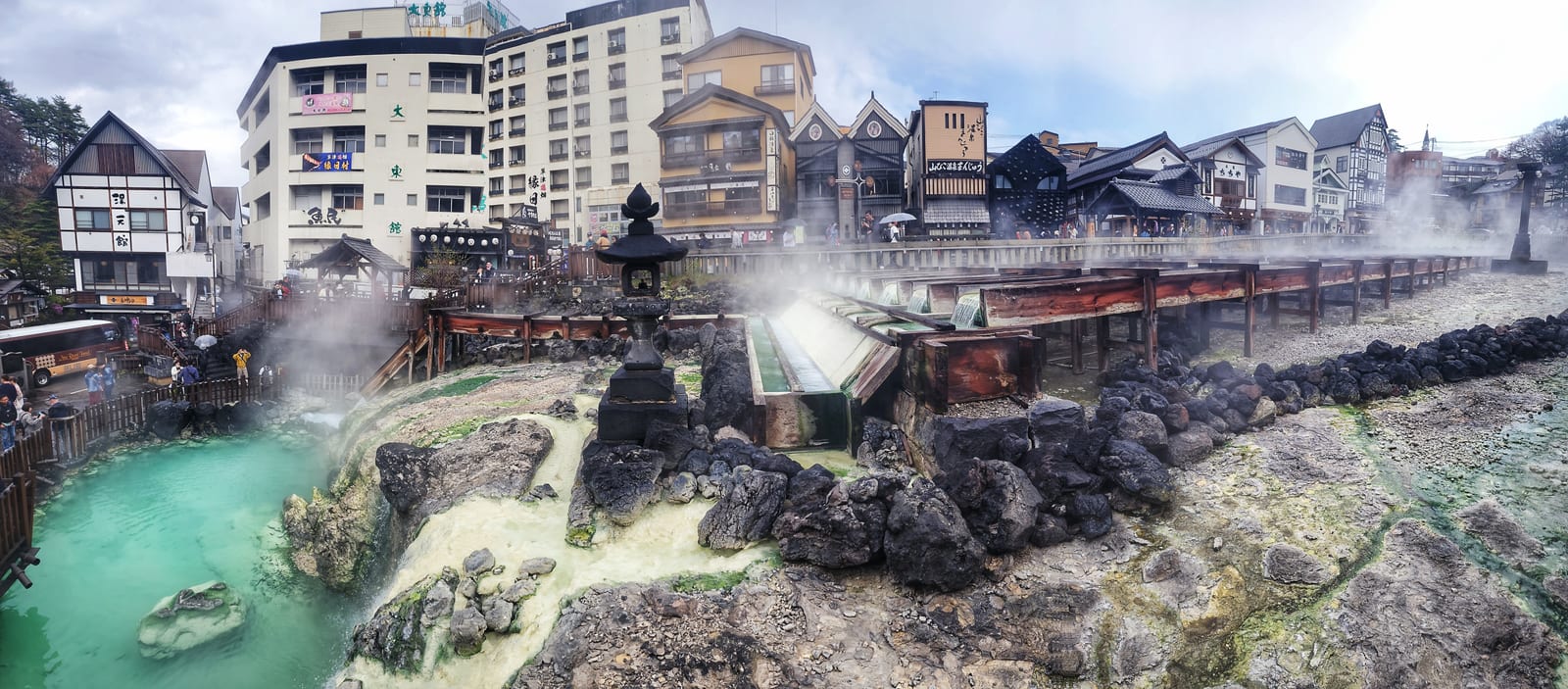
Located in the heart of Kusatsu Onsen, Yubatake—with great clouds of steam rising from it—is the resort’s symbol and its biggest sightseeing attraction. Approximately 4,000 liters of hot spring water gush out every minute. It is cooled by being channeled through 7 wooden troughs and exposed to the outside air before being supplied to individual ryokan and public bathhouses. As hot spring minerals condense and settle in these wooden troughs, they form yu-no-hana, or “hot spring flowers.” The name Yubatake means “a field where hot spring flowers can be harvested.”
During the day, visitors can enjoy a lively scene filled with steam and the scent of sulfur, while from sunset until 25:00, the area is illuminated and takes on a dreamlike atmosphere. Yubatake is especially captivating at night, when it has a completely different character from the daytime. Hand baths and footbaths are also scattered around the area, making it easy to experience Kusatsu’s hot spring waters.
- Hours: Yubatake itself can be viewed 24 hours a day. The light-up runs from sunset until 24:00.
- Admission: Free.
- Access: Approximately 5 minutes on foot from the Kusatsu Onsen Bus Terminal.
- Seasonal highlights:
- Spring–autumn: This is a beautiful time of year, when the contrast between fresh greenery or autumn leaves and the rising steam is especially striking.
- Winter: The sight of steam rising amid snowy scenery is the very essence of a Japanese hot spring resort. The illuminated scene at night is particularly special.
- Events: On certain Saturdays, the candle event “Yume no Akari” is held on the steps below the Sanmon gate of Kosenji Temple, enveloping Yubatake in an even more magical glow. It is scheduled for 2026年4月11日, 5月16日, 6月20日, and other dates.
- Local food nearby: The streets around Yubatake are lined with excellent spots for eating while walking, including the onsen manju shops “Matsumura Manju” and “Honke Chichiya,” “Kusatsu Onsen Pudding,” and “Sugi Bee Garden Kusatsu Onsen Store.”
- Tips and precautions: The area around Yubatake has many stone-paved surfaces, which can become slippery in winter, so comfortable walking shoes are recommended. It also gets cold at night, so bring an extra layer. If you plan to use a footbath, bottoms that can easily be rolled up to the knees are convenient.
Try Kusatsu’s Unique Bathing Method: Jikan-yu!
Kusatsu Onsen has a distinctive traditional bathing therapy known as Jikan-yu. It involves bathing briefly in extremely hot spring water to maximize the therapeutic benefits of the onsen. Rather than simply getting into the bath, bathers first adjust the water temperature through yumomi, acclimate their bodies with ladled water, and then enter the bath according to commands from the yu-cho, or bathing leader. Yumomi is a traditional technique in which water close to 50 degrees is stirred with large wooden boards to lower its temperature without adding water. This allows bathers to acclimate themselves without diluting the hot spring’s therapeutic properties.
Today, the facility at the back of Chiyo-no-yu is primarily known as a place where tourists can experience Jikan-yu. Unlike the yumomi shows designed for tourists, an actual Jikan-yu bathing experience offers a valuable opportunity to encounter a more authentic form of Kusatsu’s traditional bathing culture.
- Hours: Held 4 times a day at 9:00, 11:00, 14:00, and 17:00 (information current as of 2012; checking the official website is recommended as of 2026).
- Fee: 560円 per session (information current as of 2012; checking the official website is recommended as of 2026).
- Access: Located behind the public bathhouse “Chiyo-no-yu.” Approximately 10 minutes on foot from the Kusatsu Onsen Bus Terminal.
- Tips and precautions:
- Dealing with the heat: Kusatsu’s spring water is extremely hot. Never get straight into the tub; always use kakeyu, pouring water over yourself first to acclimate your body.
- Stay hydrated: Be sure to drink plenty of water before and after bathing.
- Don’t overdo it: If it is your first time trying Jikan-yu, start with a short bath of around 5~10 minutes and enjoy it at a comfortable pace according to how you feel. Staying in too long can put a strain on your body.
- Etiquette: Local residents also use the public bathhouses. Follow basic etiquette, such as greeting others, keeping noise down, and avoiding bathing after drinking alcohol, so everyone can enjoy the facilities comfortably.
Enjoying Local Cuisine Around Kusatsu Onsen: From Street Food to Regional Specialties
Kusatsu Onsen’s appeal extends far beyond its hot springs. Around Yubatake, you’ll find everything from perfect street food for eating while walking to regional specialties made with local ingredients.
Street Food
- Onsen manju: A quintessential Kusatsu treat. Many long-established shops, including “Matsumura Manju” and “Honke Chichiya,” line the streets around Yubatake. Freshly steamed, piping-hot manju are especially recommended.
- Kusatsu Onsen Pudding: The pudding served at “Kusatsu Tamago Farm,” directly in front of Yubatake, is popular for its rich flavor.
- Hana-ingen amanatto: Sweetened beans made from hana-ingen, a Gunma specialty, are a signature product of “Kusatsu Kasho Seigetsudo.” They are characterized by their refined sweetness and plump, tender texture.
- Yaki manju: Gunma’s soul food, yaki manju, can be enjoyed at places such as “ELF Kusatsu Onsen Yaki Manju.” Its sweet-and-savory miso sauce is irresistibly appetizing.
- Nure-okaki: At “Okaki-dokoro Terakoya Honpo Kusatsu Store,” you can enjoy freshly grilled handmade rice crackers. The skewered nure-okaki are ideal for eating while strolling.
Regional Cuisine and Restaurants
The hot spring town is also home to many restaurants serving dishes made with local ingredients. You can enjoy dishes featuring Joshu beef, salt-grilled river fish, udon, and more. In the evening, relaxing at a footbath café while admiring Yubatake’s lights—or enjoying a drink at a local izakaya—is highly recommended.
- Budget: Street food starts at a few hundred yen per item. For a meal at a restaurant, expect around 1,000円~3,000円 per person.
- Note: Opening hours vary by establishment, so checking in advance is recommended. Be aware that many shops close after the evening begins.
Recommended Places to Stay in Kusatsu Onsen and How to Choose
Kusatsu Onsen offers a wide range of accommodations, from traditional long-established ryokan and modern hotels to secluded hot spring inns. Choose the one that best suits the purpose and budget of your trip.
Examples of Recommended Accommodations
- Hotel Ichii: A long-established ryokan located directly in front of Yubatake. Guests can enjoy water from 2 sources: the Yubatake source and the Bandaiko source.
- Kusatsu Onsen Naraya: A historic inn founded in 1877, known as the accommodation where a yu-mori, or hot spring custodian, looks after Kusatsu’s oldest source, the Shirahata source. It is also close to Yubatake, making it ideal for enjoying the atmosphere of a traditional hot spring town.
- Hotel Sakurai: A large hot spring resort with convenient access, located approximately 9 minutes on foot from Yubatake. Its appeal includes one of Kusatsu’s largest public baths, supplied by 3 spring sources without added water. A yumomi and Sakura Taiko show is also held at night.
- La Vista Kusatsu Hills (Kyoritsu Resort): A Western-style resort hotel on elevated ground overlooking the Kusatsu hot spring town, renowned for its views. Every guest room includes a private open-air bath supplied with natural hot spring water.
- KAI Kusatsu: A hot spring ryokan scheduled to open on 2026年6月7日 by Hoshino Resorts. Its concept is to offer both the lively atmosphere of the hot spring town and the tranquility of the inn, connected by an exclusive tunnel for guests leading directly to the Kusatsu hot spring town.
Points to Consider When Choosing Your Accommodation
- Location: If you want to enjoy walking around and sampling food near Yubatake, an inn close to Yubatake is convenient. If you prefer a quieter stay, an accommodation on elevated ground a little farther away may be a good option.
- Spring source: Kusatsu Onsen has multiple spring sources, and the source used varies by accommodation. If you have a preference for a particular source, check in advance.
- Facilities: Check whether the accommodation offers the facilities and services you want, such as guest rooms with open-air baths, private baths, spa treatments, and your preferred dining style, such as kaiseki cuisine or a buffet.
- Budget: Accommodation prices vary considerably depending on the season, plan, and room type. Around 15,000円~30,000円 per person per night is common, although some periods offer rates in the 10,000円 range, while luxury accommodations may cost more.
Suggested Kusatsu Onsen Itineraries: Half-Day and Full-Day Plans
Because Kusatsu Onsen’s highlights are concentrated in a compact hot spring town, it is possible to enjoy plenty even in half a day. Here is a model itinerary for experiencing the best of Kusatsu efficiently.
Half-Day Plan (Arriving in the Afternoon and Staying Until Dinner)
- 13:00 Arrive at JR Naganohara-Kusatsuguchi Station → Take a bus to the Kusatsu Onsen Bus Terminal
- From the Tokyo area, take the JR limited express “Kusatsu-Shima” to Naganohara-Kusatsuguchi Station (approximately 2 and a half hours).
- From in front of the station, take a JR bus to the Kusatsu Onsen Bus Terminal (approximately 25 minutes, fare 710円).
- 14:00 Arrive at the Kusatsu Onsen Bus Terminal → Head to Yubatake
- Yubatake is approximately 5 minutes on foot from the bus terminal. Start by taking in its dramatic scenery.
- 14:30 Sample food and explore around Yubatake
- Browse the souvenir shops around Yubatake while enjoying onsen manju, Kusatsu Onsen pudding, and other treats.
- Try Kusatsu’s hot spring water at the hand baths and footbaths around Yubatake.
- 15:30 Watch the “Yumomi and Dance” show at Netsu-no-yu
- See a yumomi show, one of Kusatsu’s traditional cultural performances. The powerful sight of the water being stirred is sure to impress.
- Showtimes: 9:30, 10:00, 10:30, 15:30, 16:00, 16:30 (6 performances per day).
- Admission: Adults 700円, elementary school students 350円.
- 16:30 Explore Sainokawara Park
- Walk approximately 10 minutes from Yubatake to Sainokawara Park. This beautiful park, through which the Yukawa River flows, features natural hot spring water bubbling up in various places.
- 17:30 Check in at your accommodation
- Make your way to your accommodation while enjoying the atmosphere of the hot spring town.
Full-Day Plan (From Morning to Evening)
- 9:00 Arrive at the Kusatsu Onsen Bus Terminal → Head to Yubatake
- As with the half-day plan, make your way to Yubatake and begin by enjoying the morning steam.
- 9:30 Watch the “Yumomi and Dance” show at Netsu-no-yu
- Catch the morning performance and experience Kusatsu’s culture.
- 10:30 Sample food and look for souvenirs around Yubatake
- Choose souvenirs while enjoying local treats such as onsen manju, pudding, and hana-ingen amanatto.
- 11:30 Sainokawara Park and Sainokawara Open-Air Bath
- Explore the expansive park and enjoy the scenery of naturally occurring hot spring water flowing through it.
- Experience an open-air soak at Sainokawara Open-Air Bath, one of the largest outdoor baths in Japan.
- Hours: 7:00~20:00 (from 9:00 during winter).
- Fee: Adults 600円, children 300円 (information as of February 2023).
- Access: Approximately 15 minutes on foot from Yubatake.
- 13:30 Lunch
- Enjoy a meal made with local ingredients at one of the restaurants in the hot spring town.
- 14:30 Visit public bathhouses or experience Jikan-yu
- Kusatsu has several free public bathhouses, including “Shirahata-no-yu,” “Chiyo-no-yu,” and “Jizo-no-yu.” The water quality may differ from one bathhouse to another, making it fun to visit several.
- You can also try Jikan-yu for an authentic experience of Kusatsu’s distinctive bathing culture.
- 16:00 Take a café break around Yubatake
- Take a break at a footbath café or similar spot and reflect on the memories of your trip.
- 17:00 Begin your journey home from the Kusatsu Onsen Bus Terminal
- Take a bus to Naganohara-Kusatsuguchi Station, then continue toward Tokyo by limited express train or highway bus.
Tips, Precautions, and Etiquette for a Smooth Kusatsu Onsen Trip
Here are some useful tips, precautions, and hot spring etiquette to know so you can enjoy Kusatsu Onsen comfortably.
Tips for Avoiding Mishaps
- Gather information in advance: Hours, prices, and transportation options may change. Keeping “as of 2026” and “check the official website” in mind, confirm the latest information before your trip.
- Clothing: Because Kusatsu is at a high elevation, the climate is cool throughout the year. It can be particularly chilly in the mornings and evenings or on bad-weather days, so even in summer it is reassuring to bring an extra layer. Wear warm clothing so you do not get chilled after bathing. Bottoms that can easily be rolled up to the knees are convenient when using a footbath.
- Choosing transportation: From Tokyo, highway buses are convenient and economical because they require no transfers (around 4,000円 one way, taking approximately 4~5 hours). If you travel by train, the JR limited express “Kusatsu-Shima” takes approximately 2 and a half hours to Naganohara-Kusatsuguchi Station, followed by a bus transfer (approximately 25 minutes).
- Book your accommodation early: Demand is especially high on weekends, during consecutive holidays, and in the autumn-leaf and snow seasons, so booking early is recommended.
Precautions and Etiquette
- Hot spring bathing etiquette:
- Rinse before entering: Kusatsu’s waters are very hot, so always pour water over yourself before bathing to acclimate your body.
- Avoid long baths: Around 3 baths per day is generally considered a guideline. Staying in too long can put a strain on your body.
- Stay hydrated: Drink plenty of water before and after bathing to help prevent dehydration.
- Bathing after drinking: Avoid bathing after consuming alcohol, as changes in blood pressure and the risk of falling can be dangerous.
- Rinsing after bathing: It is said that leaving the hot spring minerals on your skin enhances their benefits. However, sulfur can adhere to clothing and potentially cause discoloration or deterioration, so take care when putting on a yukata or other garments.
- Using public bathhouses:
- Public bathhouses are primarily facilities for local residents. Tourists may also use them, but remember that residents have priority and be considerate by taking turns.
- Avoid bringing valuables, making loud noises, or walking around unclothed, and behave sensibly at all times.
- Sorting trash: Help keep the hot spring town clean by sorting and disposing of trash properly.
Enjoying Kusatsu Onsen Through the Seasons and the Best Time to Visit
Kusatsu Onsen offers different attractions in every season, so it is enjoyable to visit year-round.
- Spring (April~May):
- As the snow melts, fresh greenery begins to emerge, creating a season full of vitality.
- At “Zazenso Park,” skunk cabbage is at its best from late March through early April.
- You can enjoy activities amid lingering snow, including the “Snow Corridor Walking” event and the “Tour de Kusatsu” along the “Shiga-Kusatsu Kogen Route.”
- In early May, the “Hana Matsuri” flower festival is held at Kosenji Temple, bringing the area to life with food stalls and other attractions.
- Summer (June~August):
- Thanks to its high elevation, Kusatsu is popular as a relatively cool and comfortable summer retreat.
- On June 1, the traditional “Himuro Festival,” held to pray for freedom from illness, takes place.
- From July~August, Nikko kisuge lilies bloom at “Lake Nozori,” while komakusa flowers bloom on Mt. Shirane, offering beautiful alpine flora.
- The “Shirane Shrine Festival” takes place on July 17 and 18, with mikoshi portable shrines parading through the hot spring town.
- From August 1~3, the “Kusatsu Onsen Thanksgiving Festival,” an expression of gratitude for the hot springs, is held mainly at Yubatake Square. This is the busiest period of the year.
- In August, the “Kusatsu Summer International Music Academy & Festival” takes place, offering classical music concerts.
- Autumn (September~November):
- This is the season of beautiful autumn foliage, when the entire hot spring town is covered in brilliant fall colors.
- Seasonal events include hot spring flower harvesting experiences and stargazing sessions.
- The view of steam rising from Yubatake in the clear autumn air is especially spectacular.
- Winter (December~March):
- This is the season when the contrast between snowy scenery and rising steam is at its most beautiful.
- The lights at Yubatake reflect off the snow, creating a magical atmosphere.
- At the “Kusatsu Onsen Ski Resort,” visitors can enjoy skiing and snowboarding, while activities such as “Winter Forest Watching” by snowshoe are also popular.
- Events that brighten winter nights, including “Yubatake Candle ‘Yume no Akari,’” are also held.
Best time to visit: Every season has its own appeal, but “autumn foliage” and “winter snow scenery” can especially be considered the best times to experience the distinctive atmosphere of Kusatsu Onsen. If you want to avoid the crowds and enjoy a more relaxed visit, weekdays in spring or early summer are also recommended.
Summary: Key Points to Remember
- Kusatsu Onsen is a celebrated strongly acidic hot spring resort with Japan’s highest natural spring output, offering a wide range of therapeutic benefits.
- The lively daytime atmosphere at Yubatake and its magical illuminated scenery at night are must-see highlights.
- Experience traditional culture at the “Yumomi and Dance” show, and if possible, try Jikan-yu for a more authentic bathing experience.
- Street food around Yubatake, including onsen manju, Kusatsu Onsen pudding, and hana-ingen amanatto, is one of the great pleasures of a trip.
- When choosing accommodation, consider location, spring source, facilities, and budget, and book early. In particular, “KAI Kusatsu” is scheduled to open on 2026年6月7日 and is attracting attention.
Frequently Asked Questions (FAQ)
Q. What is the best way to get to Kusatsu Onsen?
A. From the Tokyo area, highway buses are convenient because they require no transfers. Direct buses run from Shinjuku, Tokyo Station, and other locations to the Kusatsu Onsen Bus Terminal, taking approximately 4~5 hours and costing around 4,000円. By train, take the limited express “Kusatsu-Shima” from JR Ueno Station to Naganohara-Kusatsuguchi Station, which takes approximately 2 and a half hours, then transfer to a JR bus for approximately 25 minutes.
Q. What time does the Yubatake light-up run?
A. The Yubatake light-up runs from sunset until 24:00. At night, Yubatake offers a magical atmosphere that differs from the daytime scene.
Q. Can I experience yumomi at Kusatsu Onsen?
A. You can watch the “Yumomi and Dance” show at Netsu-no-yu, next to Yubatake. This show is designed for tourists and is performed 6 times a day. At the facility behind the public bathhouse “Chiyo-no-yu,” it may also be possible to experience yumomi as part of the more authentic Jikan-yu bathing experience (information current as of 2012; checking the official website is recommended as of 2026).
Q. Can tourists use the public bathhouses at Kusatsu Onsen?
A. Yes, several public bathhouses are open to tourists, including “Shirahata-no-yu,” “Chiyo-no-yu,” and “Jizo-no-yu.” However, these facilities were originally created for local residents, so visitors should remember that residents have priority and follow proper etiquette.
Q. When is the best season to visit Kusatsu Onsen?
A. Kusatsu Onsen has something to offer in every season, but the autumn foliage and winter snow scenery are especially beautiful, enhanced by the rising steam, making them ideal times to visit. If you want to avoid the crowds, weekdays in spring or early summer are also recommended.
More from this region — Tokyo & Kanto
View all →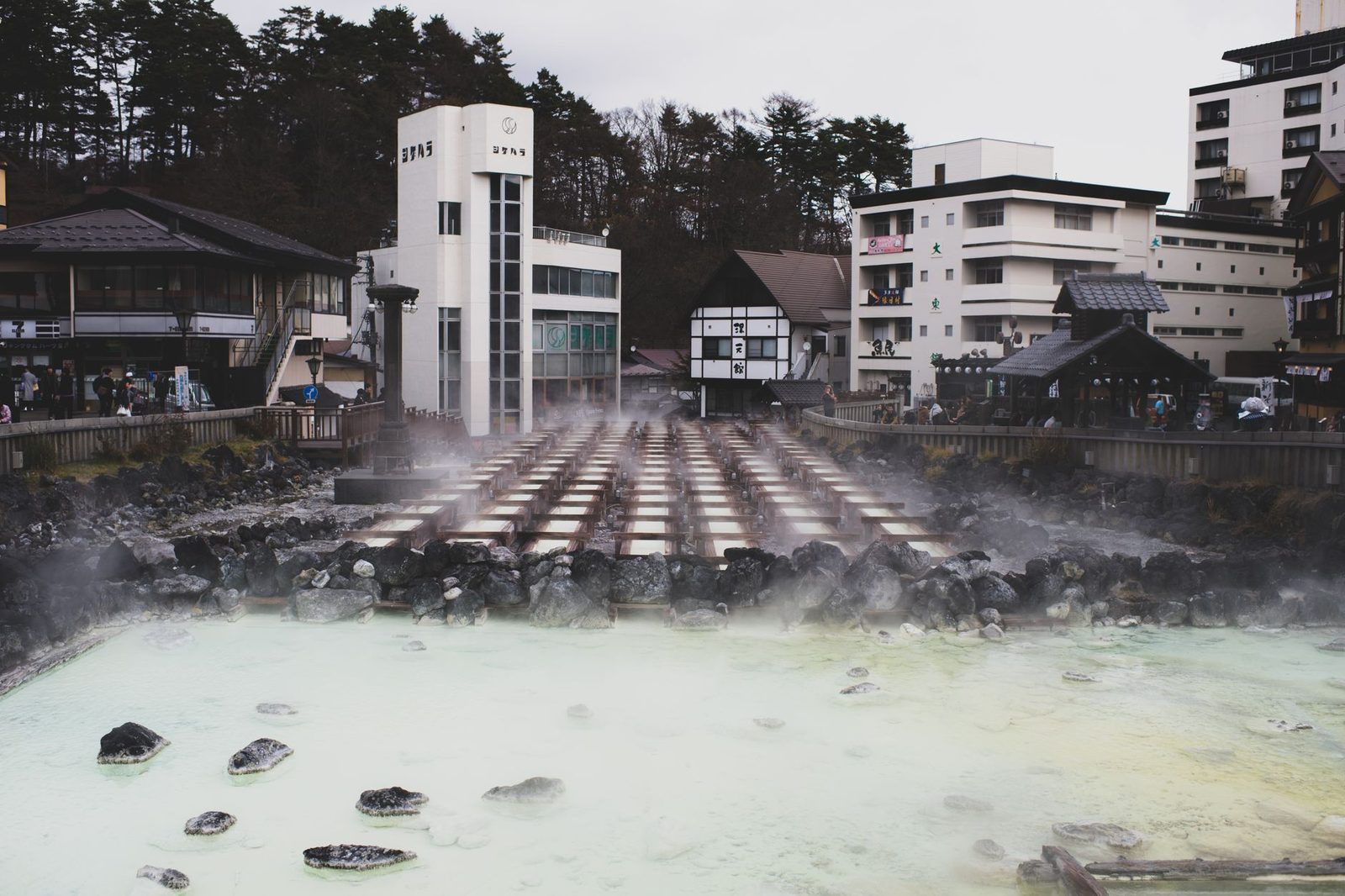
Kusatsu Onsen by Group Bus: A Practical Guide from Tokyo
8 min · tips
5-Day Tokyo Itinerary for First-Timers: The Perfect Blend of Historic Charm and Modern Energy
7 min · itineraries
Minato Mirai Smart Festival
6 min · events
Complete Mt. Takao Day-Hike Guide: Comparing 6 Trails, Yakuo-in Temple & the Beer Garden
21 min · ハイキング