Wearing Kimono for Photos in 浅草(Asakusa): Top Spots Around 浅草寺(Sensoji Temple) and Posing Tips
A guide to kimono photography in 浅草(Asakusa), Tokyo: top photogenic spots around 浅草寺(Sensoji Temple), 仲見世商店街(Nakamise Shopping Street), off-peak hours, and tips for natural poses.
Aug 8, 2026·✍️ olablog·⏱ 8 min read
A guide to kimono photography in 浅草(Asakusa), Tokyo: top photogenic spots around 浅草寺(Sensoji Temple), 仲見世商店街(Nakamise Shopping Street), off-peak hours, and tips for natural poses.
Tap a region to browse articles
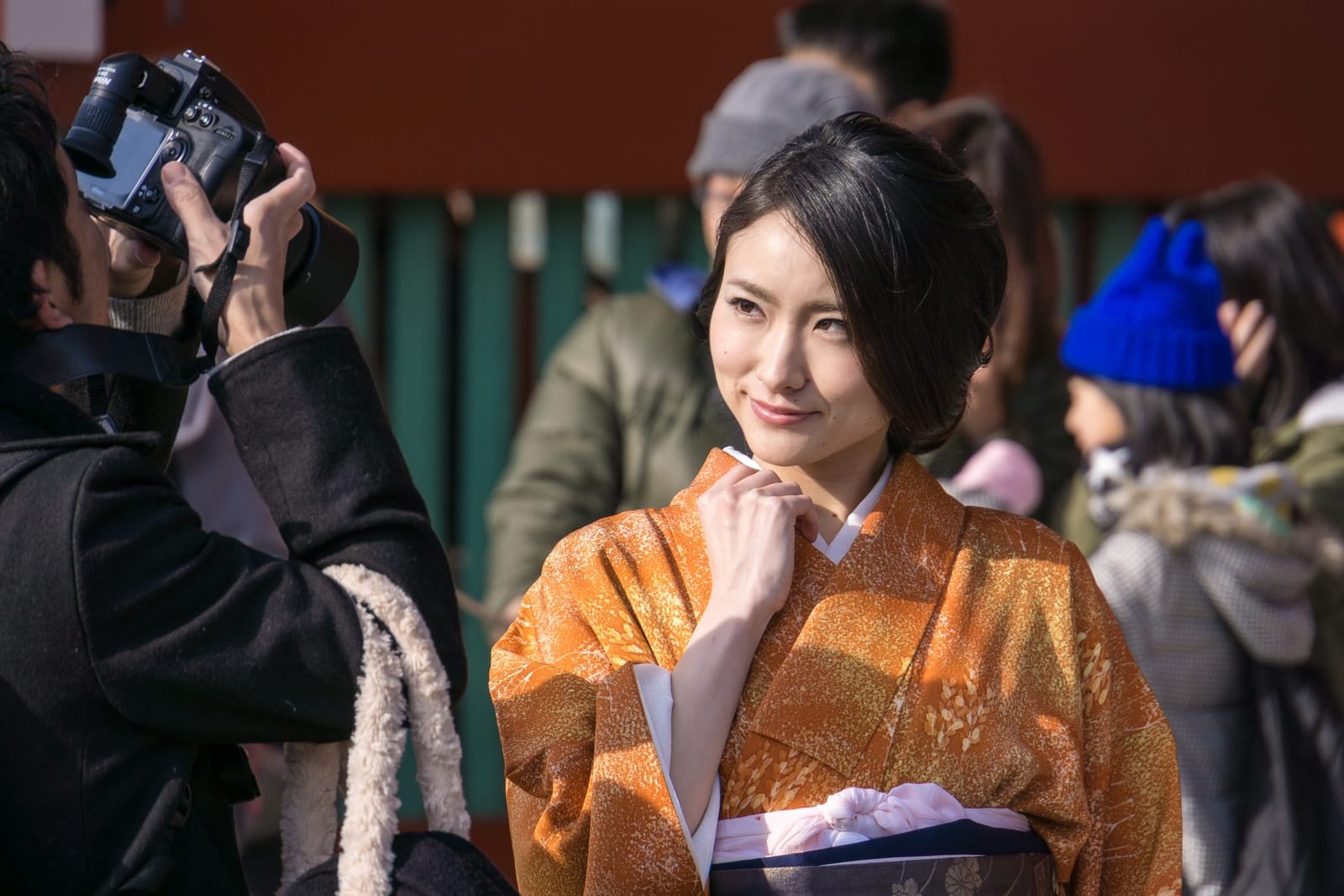
If 京都(Kyoto) is the kimono Mecca of the Kansai region, then in 東京(Tokyo), that title undoubtedly belongs to 浅草(Asakusa). The historic neighborhood surrounding 浅草寺(Sensoji Temple) is a rare enclave in the modern capital that still retains the authentic atmosphere of old 江戸(Edo): a towering red lantern gate, a centuries-old shopping street, wooden alleyways, and rickshaws clattering down the streets. Strolling here in a traditional kimono not only gives you a breathtaking backdrop for photos, but also offers easy access to famous local snack stalls. This guide brings together the best photo spots around 浅草寺(Sensoji Temple), off-peak hours to avoid the crowds, and practical posing tips so your kimono photos look effortlessly natural.
Where to Start: Kimono Rental in 浅草(Asakusa)
Around 浅草駅(Asakusa Station), you will find numerous kimono rental shops, mostly located within a 5-to-10-minute walk of 浅草寺(Sensoji Temple). The process is similar to Kyoto: choose your outfit, get dressed by professionals, have your hair styled, and store your luggage safely at the shop. At OlaChill Tokyo Asakusa (Kaminarimon 2-3-7, 4F, open 09:00–18:00) the plans run from ¥4,000 for a men's yukata and ¥4,500 for a women's yukata, through Komongi at ¥5,500 and Men's Traditional Kimono at ¥5,000, up to Furisode at ¥19,000; every price includes tax and the full accessory set, and hair styling is a ¥1,500 add-on. It is best to book an early morning slot—the exact reasons for which will become clear in the time section below. You can choose a plan, a date and a time slot, and pay online with 10% off, on the OlaChill Tokyo Asakusa booking page; our step-by-step Asakusa guide walks through the whole morning.
The Best Photo Spots Around 浅草寺(Sensoji Temple)
雷門(Kaminarimon Gate): The giant red lantern standing nearly four meters tall is the ultimate symbol of 浅草(Asakusa) and an absolute must-have photo. To avoid the heavy crowd, stand slightly to the side of the gate rather than directly in the center, and shoot from a low angle aiming slightly upwards to capture both the entire lantern and the gate's majestic roof structure.
Main Hall and Five-Story Pagoda: After passing through 宝蔵門(Hozomon Gate), the temple courtyard opens up to the grand Main Hall and the soaring 五重塔(Five-Story Pagoda) on the left. The classic shot is standing in the front courtyard with the pagoda framed diagonally behind your shoulder. The morning light hits the side of the pagoda beautifully, giving your images crisp, clear tones.
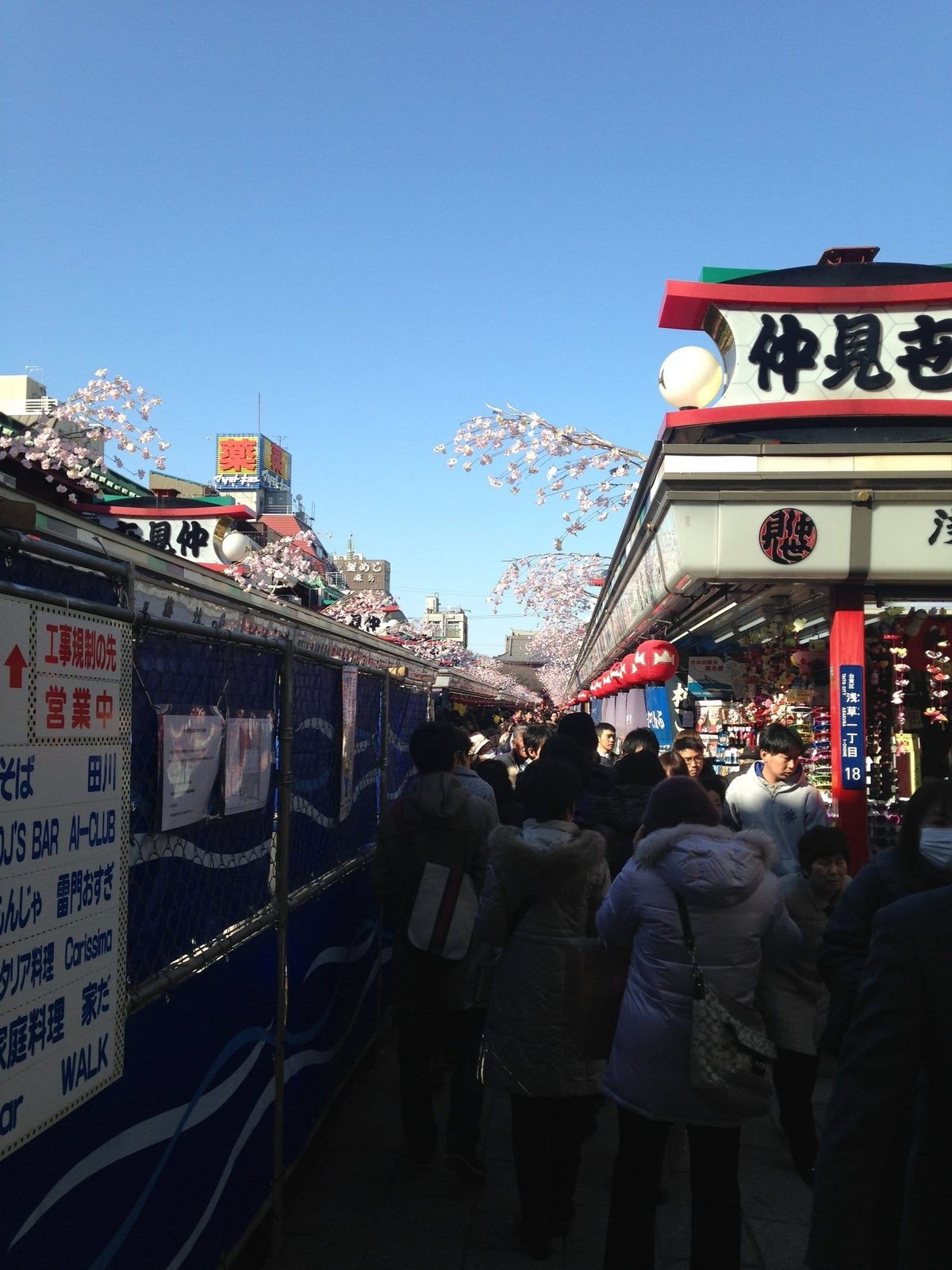
仲見世商店街(Nakamise Shopping Street): This 250-meter-long approach connecting 雷門(Kaminarimon Gate) to the main temple complex is lined with traditional tile-roofed stalls and matching fabric banners. This is the most quintessential Japanese photo setting, but also the busiest; shoot along the street axis to take advantage of the dramatic depth created by the endless line of lanterns and signs.
伝法寺通り(Denboin-dori Street): A charming cross street intersecting 仲見世商店街(Nakamise Shopping Street), decorated in Edo-period flair with wooden storefront signs and hand-painted murals. It is significantly less crowded, offering plenty of rustic wooden walls and traditional eaves that make excellent backdrops for close-up portraits.
東京スカイツリー(Tokyo Skytree) View: From the areas surrounding the temple complex and along the banks of the 隅田川(Sumida River), you can capture a striking composition: traditional kimono in the foreground with the futuristic height of 東京スカイツリー(Tokyo Skytree) rising behind you—a perfect showcase of the classic "old meets new" contrast unique to 浅草(Asakusa).
Side Alleys and Rickshaws: The narrow alleys west of the main temple retain many traditional wooden eateries with low-hanging lanterns. If your travel budget allows, taking a short ride on a traditional 人力車(Jinrikisha / Rickshaw) is both a fun experience and a great way to capture dynamic, naturally candid photographs.
Golden Hours: Arrive Early to Have the Neighborhood to Yourself
As 浅草(Asakusa) is one of the most popular tourist destinations in 東京(Tokyo), timing determines 80% of your photo quality:
- 7:00 AM – 9:00 AM: The absolute best time frame. The grounds of 浅草寺(Sensoji Temple) are open early in the morning. While the shop shutters along 仲見世商店街(Nakamise Shopping Street) are closed, their beautifully painted artistic shutter murals offer a unique background that midday visitors completely miss. If rental shops are not open yet, some offer early-bird pickup slots—it is well worth asking in advance.
- 9:00 AM – 10:00 AM: Kimono rental shops open, and the streets begin to fill up. Getting dressed in this window and taking photos before 11:00 AM is still very manageable.
- 11:00 AM – 4:00 PM: Peak crowd hours, especially along the main thoroughfares. During this time, detour to 伝法寺通り(Denboin-dori Street), secondary alleyways, or head out to the banks of the 隅田川(Sumida River).
- After 5:00 PM: Shop stalls close down, crowds thin out, and the temple lights turn on. The illuminated grounds of 浅草寺(Sensoji Temple) glowing warmly under the evening lights look stunningly romantic and surprisingly tranquil—definitely consider a late-return or next-day return package for this reason.
Kimono Posing Tips for Natural Photographs
Kimono garments have their own structured silhouette, so following a few simple guidelines will significantly elevate your photos:
- Take short steps and point your toes slightly inward: The proper way to walk in a kimono involves small steps with your posture upright. Photos captured mid-stride look far more natural and graceful than stiff, stationary poses.
- Showcase your sleeves: When holding a paper umbrella, a kinchaku cloth pouch, or a stick of dango sweet treats, gently raise your forearm so the flowing kimono sleeve opens up—this is one of the most flattering design elements of the garment.
- Capture the back and side angles: The intricate obi sash knot on the back and the elegant curve of the collar behind the neck are among the most alluring details of a kimono; do not restrict yourself to front-facing shots.
- Utilize local props: Traditional paper umbrellas rented from the shop, omikuji fortune paper tubes, or the soft incense smoke from the large burner in front of the main hall serve as natural props that give your hands something authentic to do.
- Sit down correctly: When sitting on stone steps for a portrait, keep your knees close together, angle your body slightly, and smooth down the front fabric fold before sitting down to prevent the kimono from bunching or wrinkling.
Recommended Half-Day Kimono Itinerary in 浅草(Asakusa)
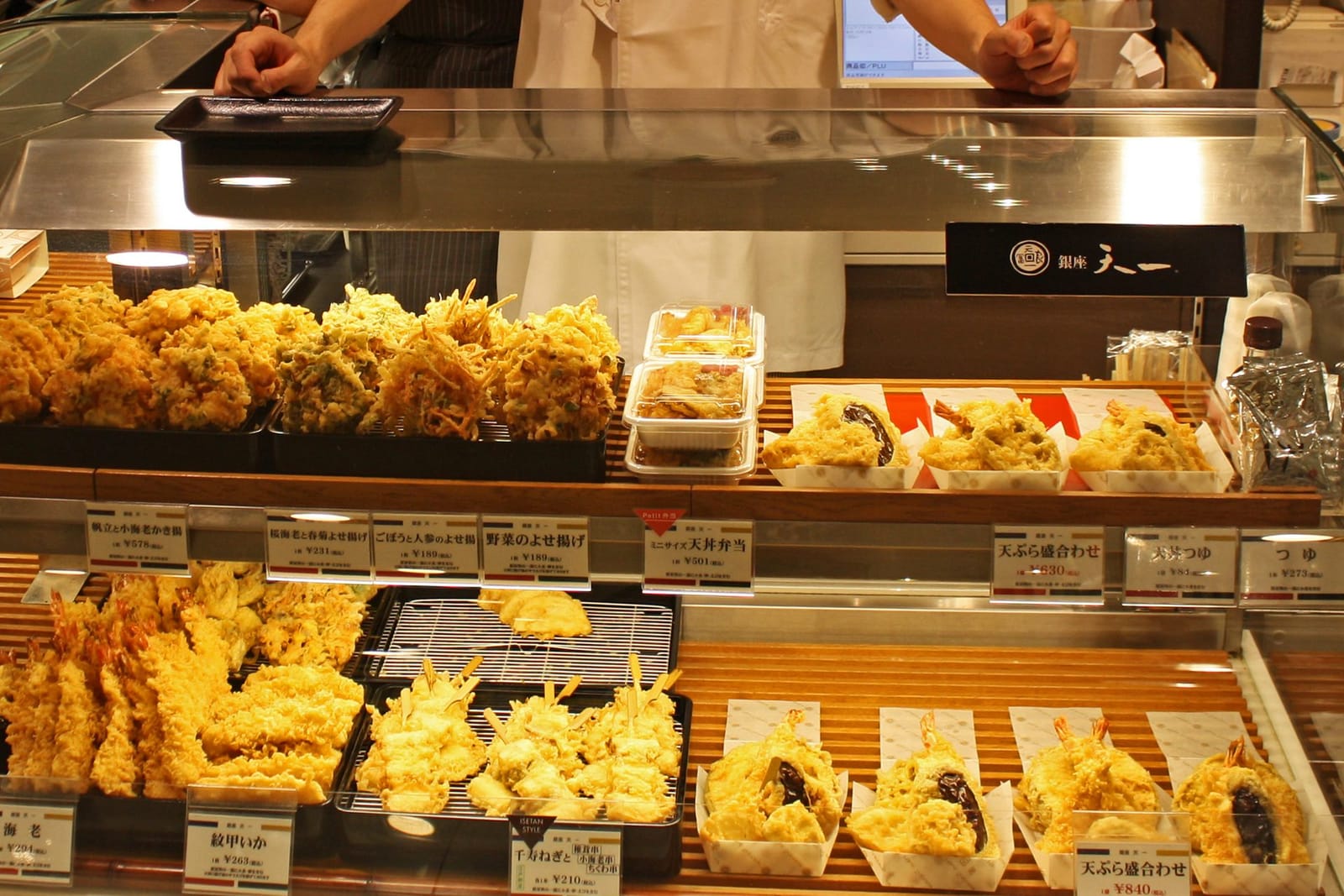
A well-planned morning schedule can be organized as follows: At 8:30 AM, pick up your kimono at a shop near 浅草駅(Asakusa Station); at 9:00 AM, photograph 雷門(Kaminarimon Gate) and stroll down 仲見世商店街(Nakamise Shopping Street) while the street is still quiet; at 10:00 AM, head into the main temple grounds to take photos with the Main Hall and 五重塔(Five-Story Pagoda), and try drawing an omikuji fortune; at 11:00 AM, wander over to 伝法寺通り(Denboin-dori Street) and quiet side alleys, taking a break with Japanese green tea and freshly baked red bean cakes; at 12:00 PM, head to the bank of the 隅田川(Sumida River) for shots featuring 東京スカイツリー(Tokyo Skytree), then return to the shop to change back into your clothes, finishing with a lunch of crispy tempura—the iconic culinary specialty of the district. (Tip: Use your IC card like Suica or Pasmo, or your JR Pass where applicable, to easily tap through Tokyo's train lines afterwards.) By afternoon, you have the rest of your schedule completely free for your next 東京(Tokyo) adventure.
Conclusion: 浅草(Asakusa) Deserves a Slow-Paced Visit
Amidst the fast-paced energy of modern 東京(Tokyo), 浅草(Asakusa) gives you a wonderful reason to slow down: step into a traditional kimono, listen to the rhythmic click-clack of wooden geta sandals on stone paths, and let centuries-old roof tiles set the stage for your memories. Simply start early, pick the right spots, and relax into your poses to bring home portraits as refined as any professional studio shoot. For more 東京(Tokyo) travel guides and sample itineraries, explore the articles on the OlaChill blog to effortlessly build 浅草(Asakusa) into your ultimate travel plan.