
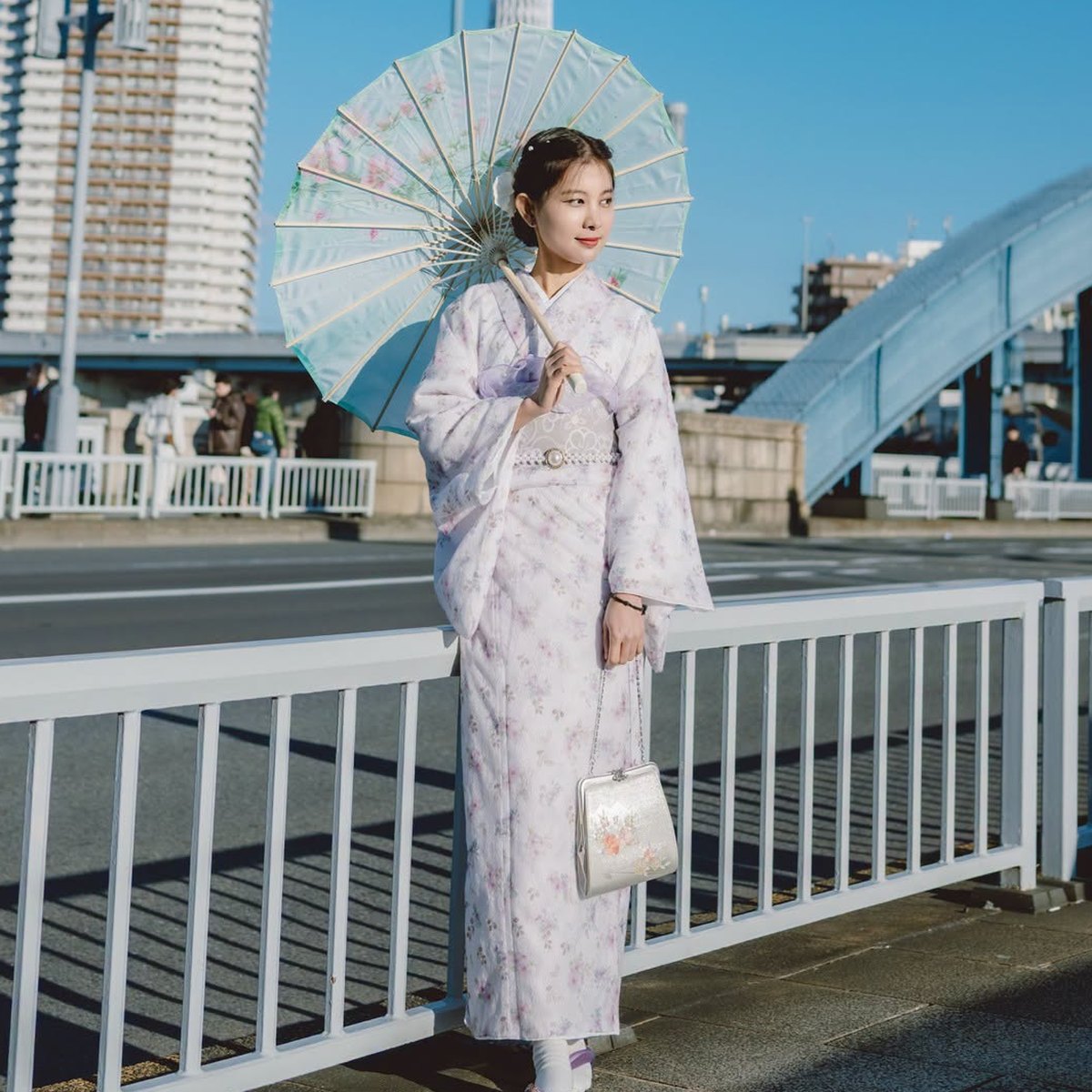
Kimono Rental in Asakusa: Step by Step, Plus a Half-Day Route
How a rental morning at OlaChill Tokyo Asakusa actually runs — booking, dressing, what to carry, when to return — and a four-hour walking route past Kaminarimon, Nakamise and the Sumida River.
Sep 14, 2026·✍️ olablog·⏱ 10 min read
How a rental morning at OlaChill Tokyo Asakusa actually runs — booking, dressing, what to carry, when to return — and a four-hour walking route past Kaminarimon, Nakamise and the Sumida River.
Tap a region to browse articles
Most first-timers picture the kimono part of a Tokyo trip as one long photo session. In practice it is a short sequence of small decisions — which plan, which time slot, what to leave in the locker, which street to walk first — and the people who get the best morning out of it are simply the ones who made those decisions before they arrived. This guide walks through a rental morning at OlaChill Tokyo Asakusa in the order it really happens, then hands you a four-hour route that starts at the shop door and ends back at it with time to spare.
Where the shop is and why the location matters
OlaChill Tokyo Asakusa is at 〒111-0034 Tokyo, Taito-ku, Kaminarimon 2-3-7, Duel Asakusa IV, 4F — the block named after the gate itself. That is the point: you are dressed a few minutes' walk from Kaminarimon, so you never have to ride a train in geta or carry a paper parasol through a ticket barrier. Everything in the route below is on foot.
The shop opens at 09:00 and closes at 18:00. Your kimono has to be back before closing unless you add a next-day or hotel return (more on that below).
Step 1 — Choose a plan before you choose a colour
The shop carries fourteen plans, and the choice is mostly about cut and formality, not colour. Colour you pick on the day from the rack. All prices include tax and the full accessory set (obi, sandals, bag; children's plans include the child-size set).
| Plan | Who it's for | Price |
|---|---|---|
| Yukata (Boy) | Children, summer | ¥3,000 |
| Yukata (Girl) | Children, summer | ¥4,000 |
| Yukata (Men) | Summer, casual | ¥4,000 |
| Yukata (Women) | Summer, casual | ¥4,500 |
| Men's Traditional Kimono | Year-round, casual (kinagashi style) | ¥5,000 |
| Komongi | Everyday-style women's kimono, small repeating pattern | ¥5,500 |
| Kimono Ren | Modern large-motif women's kimono | ¥7,000 |
| Boy's Kimono / Girl's Kimono | Children, year-round | ¥8,000 each |
| Montsuki | Formal men's kimono with crested haori and hakama | ¥10,000 |
| Houmongi | Semi-formal women's kimono, pattern flows across seams | ¥12,000 |
| Tomesode | Most formal women's kimono, pattern at the hem only | ¥12,000 |
| Furisode | Long-sleeved, the most photogenic | ¥19,000 |
| Design Furisode | Statement furisode for a special shoot | ¥25,000 |
If you only want a comfortable stroll and good photos, Komongi (women) or Men's Traditional Kimono are the sensible defaults. If the day is about one dramatic set of pictures, Furisode is the plan that reads best on camera. In July and August choose a yukata; a lined kimono in Tokyo's summer humidity is a test of patience nobody needs. Our separate guide on which kimono to rent goes deeper on the differences.
Hair styling is not part of any plan. It is a ¥1,500 add-on that takes about 15–20 minutes, and make-up is ¥5,000. Both are done in the shop right after dressing.
Step 2 — Book online and pick the earliest slot you can face
Booking runs in four steps on the Asakusa product page: store and plan → date and time → your details → payment. Paying online takes 10% off the plan price; paying at the shop (cash in yen, or Visa, Mastercard and JCB) is at the list price.
Two things to write in the notes field: your height and your usual clothing size. The dressers set the kimono length with the fold at the waist, so knowing your height in advance means the right garment is waiting on the rack instead of being hunted for while you stand in your socks.
On the time slot, the honest advice is to book 09:00 or 09:30. Dressing takes about 30 minutes in total — roughly five to pick a pattern, fifteen for the layers and obi, ten for hair if you added it — so a 09:00 slot puts you at Kaminarimon by 09:45, when the lantern is still photographable without twenty strangers in frame. Weekend slots and the cherry-blossom and autumn-leaf weeks fill first; book a few days ahead for those, and on ordinary weekdays a day or two is usually enough.
Cancellation is free up to two days before. One day before costs 50% of the plan; same-day cancellation costs the full amount.
Step 3 — What to wear and what to bring
Come in clothes that are easy to take off and put back on, with a low-cut or wide-neck top so nothing shows at the kimono collar. Underwear is worn as normal; a thin, wireless bra or a camisole works best because the layers are wrapped flat against the body. The shop provides the juban under-robe.
Bring:
- a phone and a small wallet — that is genuinely all you need on the walk; the kinchaku pouch that comes with the plan holds both;
- an IC card (Suica or Pasmo) if you plan to go anywhere afterwards;
- a hair tie if you skip the styling add-on but have long hair — an updo shows the back collar, which is the prettiest line of the outfit.
Leave your daypack, coat and shopping in the shop's free lockers. A backpack over an obi ruins the silhouette and, worse, crushes the knot.
Step 4 — Dressing: what happens in the 30 minutes
You pick a kimono from the rack first, then the staff suggest an obi and small accessories that sit well with it. You are dressed layer by layer — tabi socks go on first because bending later is difficult, then the juban, then the kimono with its collar set, then the obi tied at the back. Do not try to loosen or "fix" anything yourself during the day; the layers are tied to each other and pulling one loose usually undoes the shape of two more. If the obi feels too tight after lunch, walk back to the shop and ask for a small adjustment.
Once dressed, the staff will show you how to take short steps with your toes pointed slightly inward, which is the single most useful thing you will learn all morning. Wooden geta have no grip on stone steps; the small-step walk is not just etiquette, it is how you keep your balance.
The half-day route: four hours from the door
This is a loop. It starts and ends at the shop, avoids the worst of the Nakamise crush by doing the gate first, and finishes at the river where the light is best late morning.
09:45 — Kaminarimon (5 minutes' walk)
The great red lantern is the photo everyone wants and the one most people botch by standing dead centre. Step slightly to one side of the gate and shoot from a low angle so both the lantern and the roofline fit. At this hour the crowd is thin enough that a three-second gap between groups is normal.
10:00 — Nakamise-dōri while the shutters are still half up
The 250-metre approach to Sensō-ji is lined with stalls under tiled eaves. Walk down the centre line and shoot along the axis of the street; the lanterns and banners stack up into a long tunnel of pattern that looks far busier in a photo than it feels on foot. Hold your sleeves clear of the ningyō-yaki griddles.
10:30 — Hōzōmon, the five-storey pagoda and the main hall
Beyond the second gate the ground opens out. The classic composition is the pagoda over one shoulder, taken from the front courtyard. Waft the incense from the large burner over your sleeves if you like — it is what everyone around you is doing — but keep a little distance from the smoke, which clings to fabric. Draw an omikuji fortune slip for a natural prop.
11:15 — Denbōin-dōri and the side alleys
Turn west off Nakamise into Denbōin-dōri, the cross street dressed up with Edo-style signboards and painted shutters. It carries a fraction of the foot traffic and has the wooden walls and low eaves that make close portraits work. This is the stretch where you take the photographs you will actually print.
12:00 — The Sumida River and Skytree
Walk east to the river. From the embankment park you get the one composition that is unmistakably Asakusa: traditional dress in the foreground, the Skytree and the Azuma Bridge behind. Late-morning light comes from over your shoulder here, which flatters the kimono's colours.
12:45 — Back to the shop
You have been out just over three hours. Change back, collect your locker, and go for tempura or unagi — the district's two lunch specialities — in ordinary clothes, where you can eat without guarding your sleeves.
If you want the evening too
Sensō-ji is lit after dark and the grounds empty out once the shops shut. A next-day return (¥1,100, back before 10:00 the following morning) or a hotel return (¥1,100, the kimono is collected from your hotel) lets you keep the outfit for the illuminated grounds and a riverside walk without watching the clock.
What's included, price, where, how to book
- Included: the kimono or yukata, obi, footwear, bag and the full accessory set; dressing by staff; free locker; free umbrella loan if it rains. Prices include tax.
- Not included: hair styling (¥1,500), make-up (¥5,000), unlimited hair accessories (¥1,100), premium bag (¥500), professional photographer (from ¥15,000, 30-plus minutes and 30 retouched images), next-day return (¥1,100), hotel return (¥1,100).
- Price: from ¥3,000 (children's yukata) to ¥25,000 (Design Furisode); most adults spend ¥4,000–¥7,000 on the plan. Online payment is 10% off.
- Where: OlaChill Tokyo Asakusa, 〒111-0034 Tokyo, Taito-ku, Kaminarimon 2-3-7, Duel Asakusa IV, 4F. Open 09:00–18:00.
- How to book: choose plan, date and time on the Asakusa booking page, add hair or make-up if you want them, enter your details, pay online or select pay-at-store.
Book your Asakusa morning: OlaChill Tokyo Asakusa — pick a plan and a 09:00 slot. Free cancellation up to two days before.
Frequently asked questions
How early should I arrive for my slot? Five minutes before is enough. There is no long check-in; you go straight to the rack.
I'm 180 cm tall — will a kimono fit? Yes. The shop stocks a range of lengths and adjusts the fold at the waist. Note your height in the booking so the right length is set aside.
Can I walk to Ueno or take the train in the kimono? You can, but the route above deliberately stays within Asakusa because geta and stairs are an uneasy pairing. If you do ride the train, sit on the front edge of the seat so you do not crush the obi knot.
What if it rains? The shop lends umbrellas free of charge. Light rain is not a problem for the fabric; just avoid deep puddles, and the photos under a paper umbrella tend to be the best of the day.
Is there somewhere to leave a suitcase? Lockers at the shop are free and take a daypack and coat comfortably. For a large suitcase, use the coin lockers at Asakusa Station and come with hand luggage only.
Can I keep the kimono into the evening? Add next-day return or hotel return, both ¥1,100. Otherwise the outfit must be back before 18:00.
Do you dress children as well? Yes — Yukata (Boy) ¥3,000, Yukata (Girl) ¥4,000, and Boy's or Girl's Kimono ¥8,000. An accompanying adult who is not renting pays nothing to come into the shop. See the family guide.
Is the rental price per person or per group? Per person. Each person picks their own plan; couples and groups simply book the same time slot.
More from this region — Tokyo & Kanto
View all →
The Ultimate Kusatsu Onsen Guide: Yubatake, Jikan-yu, Local Cuisine, and More
19 min · destinations
Kusatsu Onsen by Group Bus: A Practical Guide from Tokyo
8 min · tips
5-Day Tokyo Itinerary for First-Timers: The Perfect Blend of Historic Charm and Modern Energy
7 min · itineraries
Minato Mirai Smart Festival
6 min · events