Which Kimono Should You Rent? Komon, Houmongi, Furisode, Tomesode and Montsuki Compared
How the five main kimono types differ in cut, occasion and photo look, with the full 14-plan price list at OlaChill so you can pick the right one for your trip.
Sep 14, 2026·✍️ olablog·⏱ 9 min read
How the five main kimono types differ in cut, occasion and photo look, with the full 14-plan price list at OlaChill so you can pick the right one for your trip.
Stand in front of a rental rack for the first time and every garment looks like "a kimono". Look closer and the rack is sorted into a handful of distinct types, each with its own sleeve length, pattern placement and level of formality — and each priced differently for good reason. Choosing well is less about taste than about matching the garment to what you are actually going to do in it: a two-hour stroll and a coffee is one thing; a single hour of dramatic photographs in front of a pagoda is another. This guide explains the five types you will meet on the rack at OlaChill, in Tokyo and Kyoto alike, and then lays out all fourteen plans side by side.
The three things that change between types
Before the names, the three variables:
- Sleeve length. Ordinary kimono sleeves end around the hip. Furisode sleeves fall to the shin or ankle. Longer sleeves photograph beautifully and are a nuisance at a café counter.
- Where the pattern sits. A small repeating motif all over (komon) is casual. A pattern that flows continuously across the seams like one painting (houmongi) is dressier. A pattern only along the hem on a black ground (tomesode) is the most formal of all.
- Family crests. Tiny circular crests on the back, sleeves and chest signal formality. Montsuki for men and tomesode for women carry them.
Once you can see those three things, the rack reads itself.
Komon — the everyday kimono
Komon means "small pattern". The whole garment is covered in a repeating motif — tiny flowers, hemp leaves, dots, stripes — with no single focal point. Historically this is the kimono a woman wore to go shopping or visit a friend, and that is exactly the role it plays for a visitor: comfortable, unfussy, easy to move in, and it looks right everywhere from a temple courtyard to a train platform.
At OlaChill the plan is called Komongi and costs ¥5,500. It is the plan to choose when the day is long, the walking is real, and the photos are a bonus rather than the purpose.
Kimono Ren — the modern large-motif kimono
The rental market has developed a second casual category that classical guides do not list: kimono in modern fabrics with bold, large-scale prints — oversized roses, peonies, geometric blocks, retro Taishō-era colour combinations. They wear like a komon but read much more strongly in a photo, especially in front of muted wooden backgrounds.
OlaChill's version is Kimono Ren at ¥7,000. If you want a casual day but a striking picture, this is the middle path between Komongi and Furisode.
Houmongi — the semi-formal "visiting" kimono
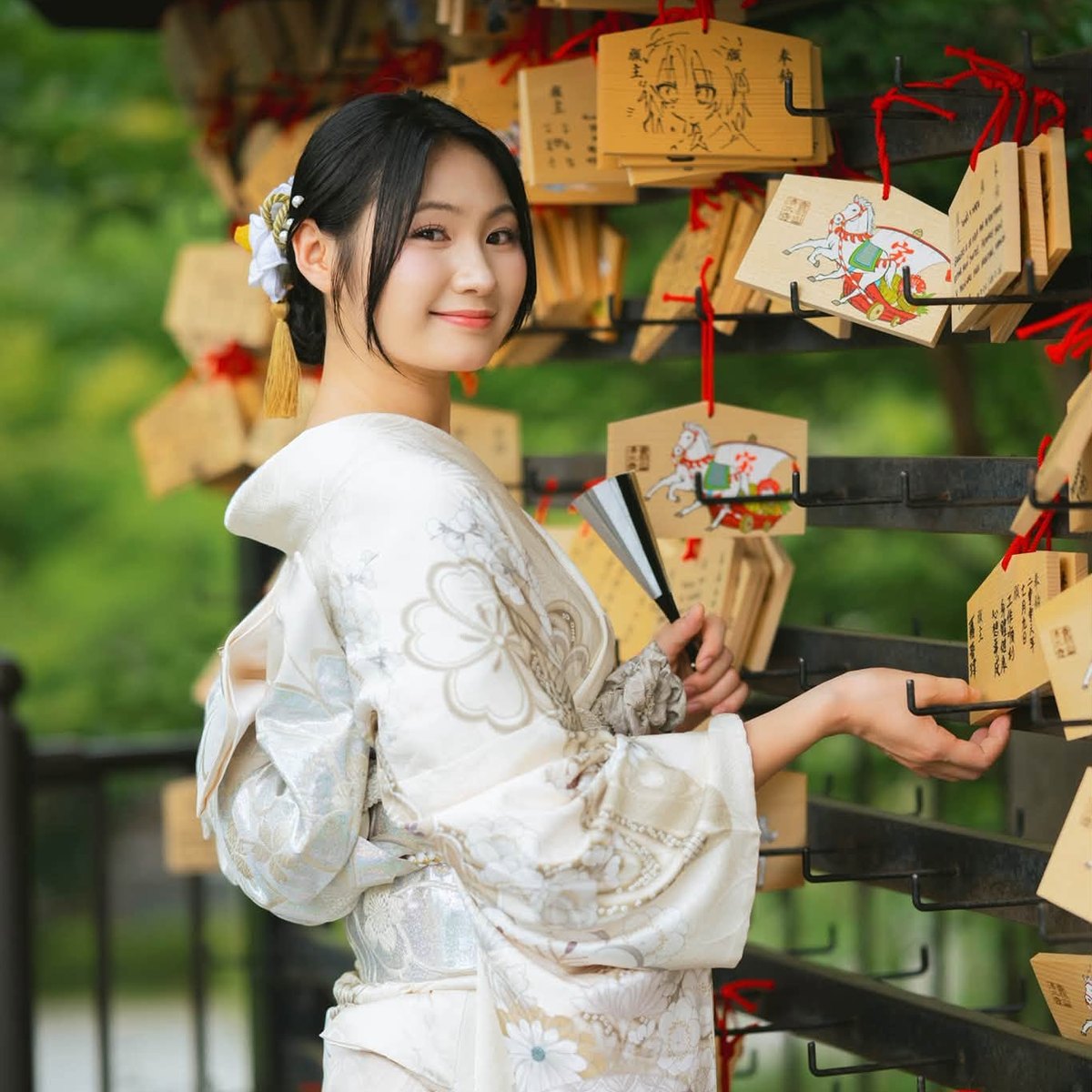
Houmongi literally means "visiting wear". Its signature is that the design is painted after the panels are sewn together, so the motif runs unbroken across the shoulder seam, down the sleeve and along the hem as one composition. Japanese women wear houmongi as wedding guests, at tea gatherings and formal lunches. It is elegant rather than showy, and the sleeves are the standard hip length, so it is no harder to wear than a komon.
The Houmongi plan is ¥12,000. It suits travellers who want the refinement of a formal garment without the long sleeves — an anniversary dinner, a tea-ceremony afternoon, photographs where the kimono should look expensive rather than playful.
Tomesode — the most formal women's kimono
Tomesode has a plain ground, most often black, family crests at five points, and a single band of pattern at the hem. Married women wear it at their own children's weddings; it is the formal end of the scale. As a rental it is a specialist choice — but a very good one for a mother in a family portrait, for a couple marking a milestone, or for anyone who wants the quiet authority of black silk and gold in a photograph.
Tomesode is ¥12,000, the same as Houmongi. Choose Houmongi for a lighter, more colourful look and Tomesode for gravity.
Furisode — the long-sleeved showpiece
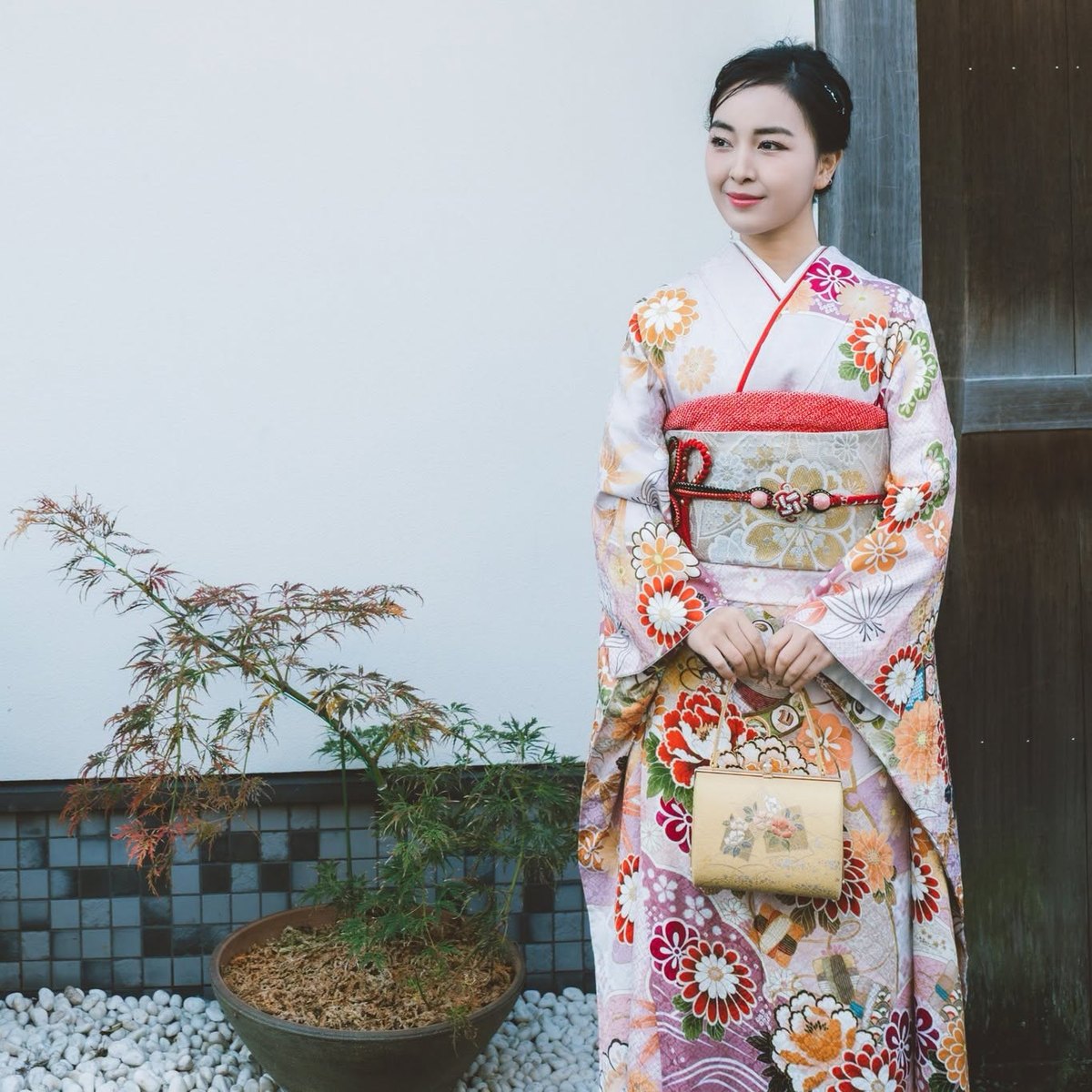
Furisode is what most people picture when they imagine a formal Japanese celebration: sleeves that swing to the ankle, an all-over pattern, a large decorative obi knot. It is the garment of Coming-of-Age Day and of young unmarried women at ceremonies. For a rental it is the type that looks most spectacular in photographs, particularly from behind and in motion — the sleeves move with you and catch the light.
Two plans: Furisode at ¥19,000 and Design Furisode at ¥25,000, the latter being the statement pieces reserved for a dedicated shoot. Furisode is also the type that benefits most from the professional photography add-on, because the sleeves need someone directing the pose.
Men's kimono — kinagashi and montsuki hakama
Men's kimono come in two silhouettes. Kinagashi is the kimono worn on its own, no hakama trousers, usually with a haori jacket over it: relaxed, easy to walk in, correct for any casual outing. Montsuki hakama is the formal version — a crested black haori over a kimono, with pleated hakama below. It is the outfit of grooms, graduates and formal ceremonies, and it is unmistakable in a photo.
At OlaChill: Men's Traditional Kimono (kinagashi style) is ¥5,000 and Montsuki is ¥10,000. We have a separate guide on men's kimono.
Yukata — the summer exception
Yukata is not a kimono type so much as a summer substitute: a single layer of cotton, worn without the under-robe, with a simple obi and bare feet in geta. From June to September it is the honest choice, and in July and August it is the only comfortable one. Adults pay ¥4,000 (men) or ¥4,500 (women); children ¥3,000 (boy) or ¥4,000 (girl). Our guide on kimono versus yukata explains the differences in full.
Side-by-side comparison
| Type | Sleeve | Pattern | Formality | Best for | Plan price |
|---|---|---|---|---|---|
| Komon (Komongi) | Hip length | Small, repeating, all over | Casual | Long walks, first-timers | ¥5,500 |
| Kimono Ren | Hip length | Large modern motifs | Casual | Bold photos on a casual day | ¥7,000 |
| Houmongi | Hip length | Flows across seams | Semi-formal | Elegant photos, tea ceremony, dinners | ¥12,000 |
| Tomesode | Hip length | Hem only, black ground, crests | Formal | Family portraits, milestones | ¥12,000 |
| Furisode | Ankle length | All over | Formal (young women) | Showpiece photos | ¥19,000 / ¥25,000 |
| Men's Traditional (kinagashi) | — | Subtle | Casual | Strolling, couples | ¥5,000 |
| Montsuki | — | Crested haori + hakama | Formal | Formal photos, ceremonies | ¥10,000 |
| Yukata (adult) | Hip length | Cotton prints | Casual, summer | June–September | ¥4,000 / ¥4,500 |
All fourteen plans are the same price at both OlaChill shops — Tokyo Asakusa and Kyoto Kiyomizu — and every price includes tax and the full accessory set. Hair styling (¥1,500) and make-up (¥5,000) are add-ons.
Choosing by what you plan to do
- A relaxed half-day walk, lunch included: Komongi or Men's Traditional Kimono. Comfort wins.
- A casual day but you want one striking photo: Kimono Ren.
- Tea ceremony, a good dinner, a "grown-up" look: Houmongi.
- A family portrait with parents and children: Tomesode or Houmongi for the mother, Montsuki for the father, Boy's or Girl's Kimono (¥8,000) for the children.
- One dramatic photo session, sleeves flying: Furisode, with the photographer add-on.
- Any day in July or August: Yukata, whatever the occasion.
What's included, price, where, how to book
- Included in every plan: the garment, obi, footwear, bag and accessory set; dressing by staff; free locker; umbrella loan in rain. Tax included.
- Add-ons: hair styling ¥1,500 · make-up ¥5,000 · unlimited hair accessories ¥1,100 · premium bag ¥500 · professional photographer from ¥15,000 · next-day return ¥1,100 · hotel return ¥1,100.
- Where: OlaChill Tokyo Asakusa (Taito-ku, Kaminarimon 2-3-7, 4F) or OlaChill Kyoto Kiyomizu (Higashiyama-ku, Kiyomizu 4-190-3, B1F). Both open 09:00–18:00.
- How to book: pick the plan on the product page, then date and time, then your details and payment. Online payment is 10% off; free cancellation up to two days before.
Ready to choose? Tokyo: book at OlaChill Tokyo Asakusa · Kyoto: book at OlaChill Kyoto Kiyomizu. The plan list on each page is in the same order as this table.
Frequently asked questions
Is a more expensive plan harder to wear? Only furisode is noticeably different, because of the sleeves. Houmongi and tomesode wear exactly like a komon; the price reflects the fabric and the dye work, not the difficulty.
Can an unmarried woman wear tomesode, or a married woman furisode? For a rental, yes — the traditional rules apply to Japanese ceremonial dress, not to visitors having their photograph taken. Staff will not stop you; choose what suits the picture you want.
I'm renting with my partner. Which pairs go together? The pairings that look balanced are Komongi with Men's Traditional Kimono, Houmongi with Montsuki, and Furisode with Montsuki. Matching colour families matters more than matching price.
Do the plans include the under-robe and socks? Yes. Juban, tabi socks, obi, sandals and a bag are all part of the accessory set. You bring your own underwear.
How long does dressing take for each type? About 30 minutes including hair for komon, houmongi, tomesode and men's plans. Furisode takes a little longer because of the larger obi knot; allow 40 minutes.
Can I change plan on the day? Yes, subject to what is on the rack. The difference in price is settled at the counter.
Does the price change with the season? No. The fourteen plans are the same price in cherry-blossom week and in February. What changes is availability, so book earlier for spring and autumn weekends.