Japan's Winter Illuminations – Millions of Lights Glowing in the Snow
From November through February, millions of LED lights transform Japan into its most magical, romantic self. Here's everything you need to plan a perfect winter lights evening.
Feb 27, 2026·✍️ olablog·⏱ 7 min read
From November through February, millions of LED lights transform Japan into its most magical, romantic self. Here's everything you need to plan a perfect winter lights evening.
Winter in Japan isn't just about powder snow and onsen soaks. After dark, millions of LED lights blaze to life across city parks, shopping plazas, and centuries-old Japanese gardens — kicking off Winter Illumination season, which runs from early November all the way through mid-February. Think less Christmas-market twinkle, more full-scale light spectacle. It's one of the most distinctly Japanese winter experiences you can have, and it's criminally underrated on most Western travel itineraries.
What exactly is Winter Illumination — and why do the Japanese go all-in?
Unlike the Christmas lights you'd find on a high street in London or a neighborhood in suburban Ohio, Japan's illuminations are a full-blown winter cultural institution. The country invests seriously: venues like Nabana no Sato (Mie Prefecture) and Ashikaga Flower Park (Tochigi) deploy more than five million LED bulbs, with an entirely new theme each year — the Milky Way, Mount Fuji, a tunnel of light stretching hundreds of meters. It's less decoration, more installation art.
For locals, illumination events are the quintessential winter date spot — the Japanese equivalent of proposing at the Eiffel Tower, but with better lighting and hot cocoa. Families stroll through them after dinner; couples queue for the perfect photo. For visitors, the payoff is equally real: these are genuinely spectacular, photo-ready backdrops that require zero editing. Just show up, point your camera, and try not to look too smug about it.
The best illumination spots in Japan
Every region has its own signature event. Here are the ones actually worth building your itinerary around:
Kantō Region (Tokyo & surrounds)
- Tokyo Midtown (Roppongi) – "Starlight Garden" with a deep-space theme; blue lights ripple like the Milky Way. Free entry.
- Caretta Shiodome – a synchronized light-and-music show every 20 minutes, right next to Shimbashi Station. Perfect if you're staying central.
- Yomiuriland Jewellumination – an amusement park decked out with 6.5 million bulbs, designed by legendary lighting designer Motoko Ishii. Entry around ¥1,800–¥2,000 (roughly $12–$13).
- Ashikaga Flower Park (Tochigi) – consistently ranked among Japan's top three illumination venues. The star attraction: a life-size "wisteria tree" recreated entirely in light. Entry around ¥1,200 (about $8).
Kansai Region (Osaka – Kyoto – Kobe)
- Kobe Luminarie – a solemn, beautiful event commemorating the 1995 Great Hanshin Earthquake, running for about ten days from late January into early February. The Italian-style illuminated archways are jaw-dropping.
- Osaka Hikari Renaissance – free light displays along the Nakanoshima riverside. A lovely post-dinner walk from Umeda.
- Kyoto Arashiyama Hanatouro – not your typical dazzling LED show. Instead: traditional paper lanterns lighting the path through Sagano Bamboo Grove. Quieter, moodier, very Kyoto.
Chūbu Region – the spiritual home of illuminations
- Nabana no Sato (Mie) – if you're anywhere near Nagoya, don't skip this. A 200-meter tunnel of light with a theme that changes annually. Entry ¥2,500 (about $17), which includes a ¥1,000 (~$7) food-and-drink voucher redeemable on-site.
- Nagashima Resort – combines illuminations with a theme park and outlet mall. Great if you're traveling with kids.
Hokkaidō – lights on a real snow canvas
- Sapporo White Illumination – Japan's longest-running illumination event (since 1981), centered on Odori Park. Pair it with the Sapporo Snow Festival in early February for the ultimate cold-weather combo.
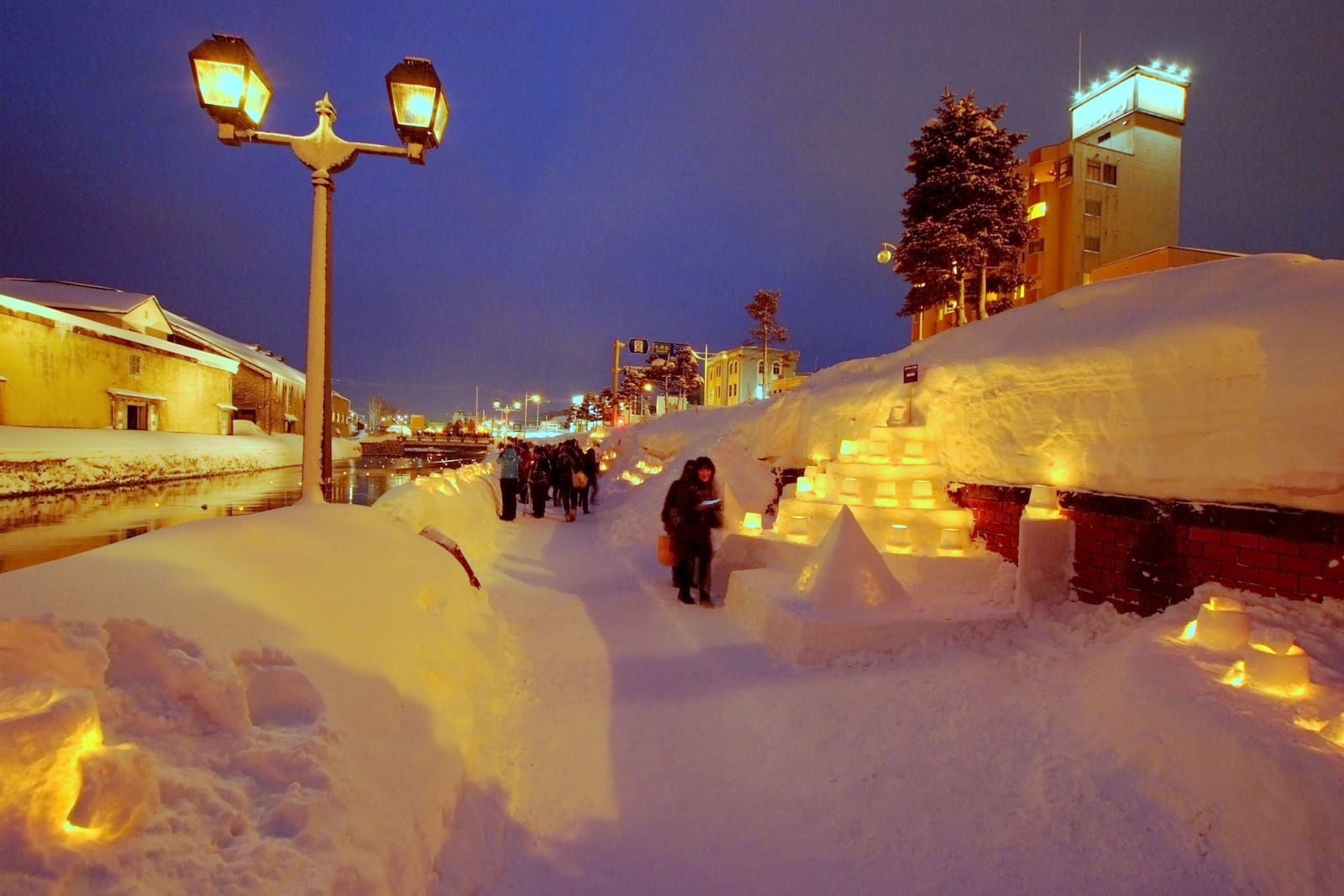
- Otaru Snow Light Path – arguably the most romantic illumination in the country. Candles set into hollows carved in snowbanks line a historic canal. Runs just ten days in mid-February.
When to go — timing matters more than you'd think
The sweet spot for illumination season is mid-November through the end of January. A few key windows to note:
| Time window | What to expect |
|---|---|
| Nov 15 – Dec 20 | Events open, manageable crowds, easy to get good photos |
| Dec 20 – Dec 25 | Peak Christmas season — expect serious crowds; Japanese couples are out in force |
| Dec 26 – Jan 3 | Many venues close for New Year's — check individual websites carefully |
| Jan 4 – Feb 14 | Crowds thin out; ideal for combining with Hokkaidō/Tōhoku snow season |
Golden hour to arrive: around 5:00–5:30 PM, just as dusk is falling. Get there 15 minutes before the lights switch on to grab a good vantage point, then stay through the transition from deep blue twilight to full dark. That narrow window — sky still indigo, lights blazing — produces dramatically better photos than shooting against a pitch-black sky.
Photography tips that will actually make a difference
This is the section most people skim and then regret skipping when they're home editing their photos:
- 📸 Turn off your flash — it overpowers the LED background and flattens the whole scene. Use Night Mode on your iPhone or Samsung instead.
- 🧤 Bring touchscreen-compatible gloves — temperatures in Japan in winter hover between 28–41°F (−2–5°C). Numb fingers and phone screens don't mix. You can grab a pair at Daiso for about ¥110 (~$1).
- 👗 Wear a neutral-toned coat (cream, camel, white) — you'll pop against the colorful light backdrop far better than in all-black.
- 🌟 Try Portrait Mode for bokeh — shallow depth of field turns the lights behind you into dreamy glowing orbs.
- ⛄ Don't go solo — illuminations are wide-angle scenes. A friend with your phone will always beat a selfie when the whole point is showing the scale.
Getting around
Most city-center illuminations — Tokyo Midtown, Caretta Shiodome, Osaka Hikari Renaissance — are right next to train stations. Load up your IC card (Suica or ICOCA) and you're set. You can check train schedules via Japan Train Search to time your arrival perfectly.
The showstoppers outside city limits — Nabana no Sato, Ashikaga Flower Park, Yomiuriland — are a different story. Public transit involves multiple train changes plus a bus, and the last connection back to the city often wraps up around 9:30–10:00 PM. If you miss it, you're stranded somewhere rural in 35°F weather. For a group of three or four people, a private car with a driver isn't just convenient — it genuinely works out cheaper per head than the hassle, and you can stay until the lights go off without watching the clock.
✨ Worth considering: book a private car through OlaChill for your illumination evening — your driver waits while you wander, and you get dropped back at your hotel on your schedule, not the train timetable's.
What it'll cost you
- Admission (where applicable): $0–$17 depending on the venue
- Dinner at the venue's food court: $10–$20 per person
- Hot cocoa or mulled wine from a vendor stall: $3–$4 — do not skip this
- Round-trip train fare from the city center: $3–$10
All-in, a winter illumination evening runs about $20–$40 per person — exceptional value for a memory that tends to outlast far more expensive experiences.
A few practical notes before you go
- Check the official website for each venue before visiting — opening schedules shift year to year, and New Year's Eve/New Year's Day closures catch people off guard.
- Dress warmer than you think you need to. Standing outside for an hour or two at night in sub-40°F temperatures is a different experience from walking between heated buildings. Down jacket, scarf, hat, gloves — the full kit.
- Bring a portable battery pack — cold weather drains phone batteries at an alarming rate. Your phone will die mid-shoot if you're not prepared.
- Avoid Saturday evenings and December 24th if you have any interest in personal space — Japanese couples plan their entire year around these dates, and the queues for popular photo spots can stretch hundreds of people long.
Winter Illumination is the one thing we consistently tell visitors to Japan in winter to make time for, even if it means reshuffling an evening. It doesn't require a special itinerary, a big budget, or even much planning — just a warm coat and a willingness to stand in the cold for a while. Do that, and you'll come away understanding exactly why the Japanese will queue for an hour in freezing temperatures just to stand under a few small lights.