
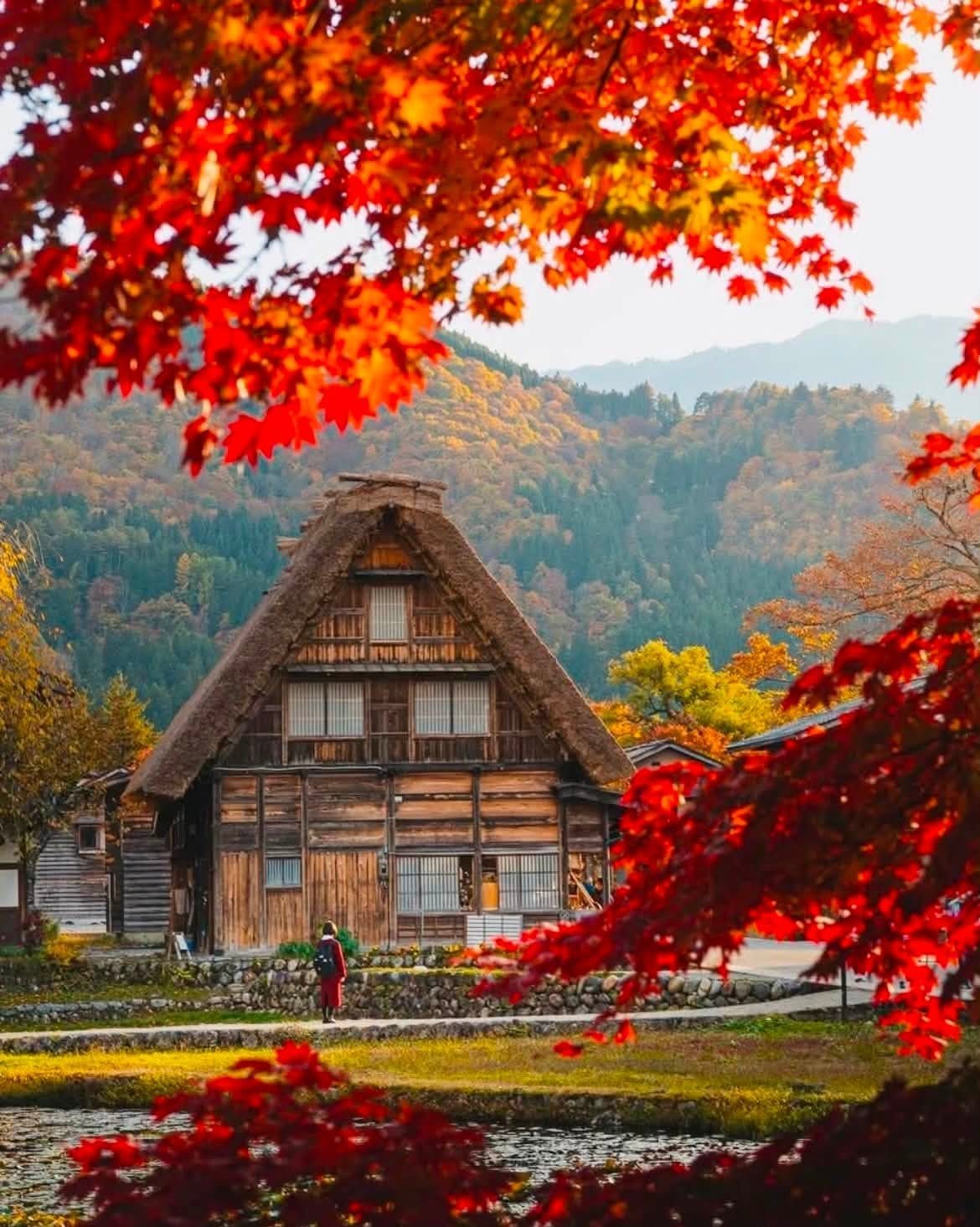
Shirakawa-go in late fall: how the leaves change week by week and when to book
From late October to mid-November, the foliage in the Shogawa Valley changes rapidly with elevation. This guide shows you how to read the forecasts and time your transport and accommodation bookings.
Aug 12, 2026·✍️ olablog·⏱ 17 min read
From late October to mid-November, the foliage in the Shogawa Valley changes rapidly with elevation. This guide shows you how to read the forecasts and time your transport and accommodation bookings.
Tap a region to browse articles
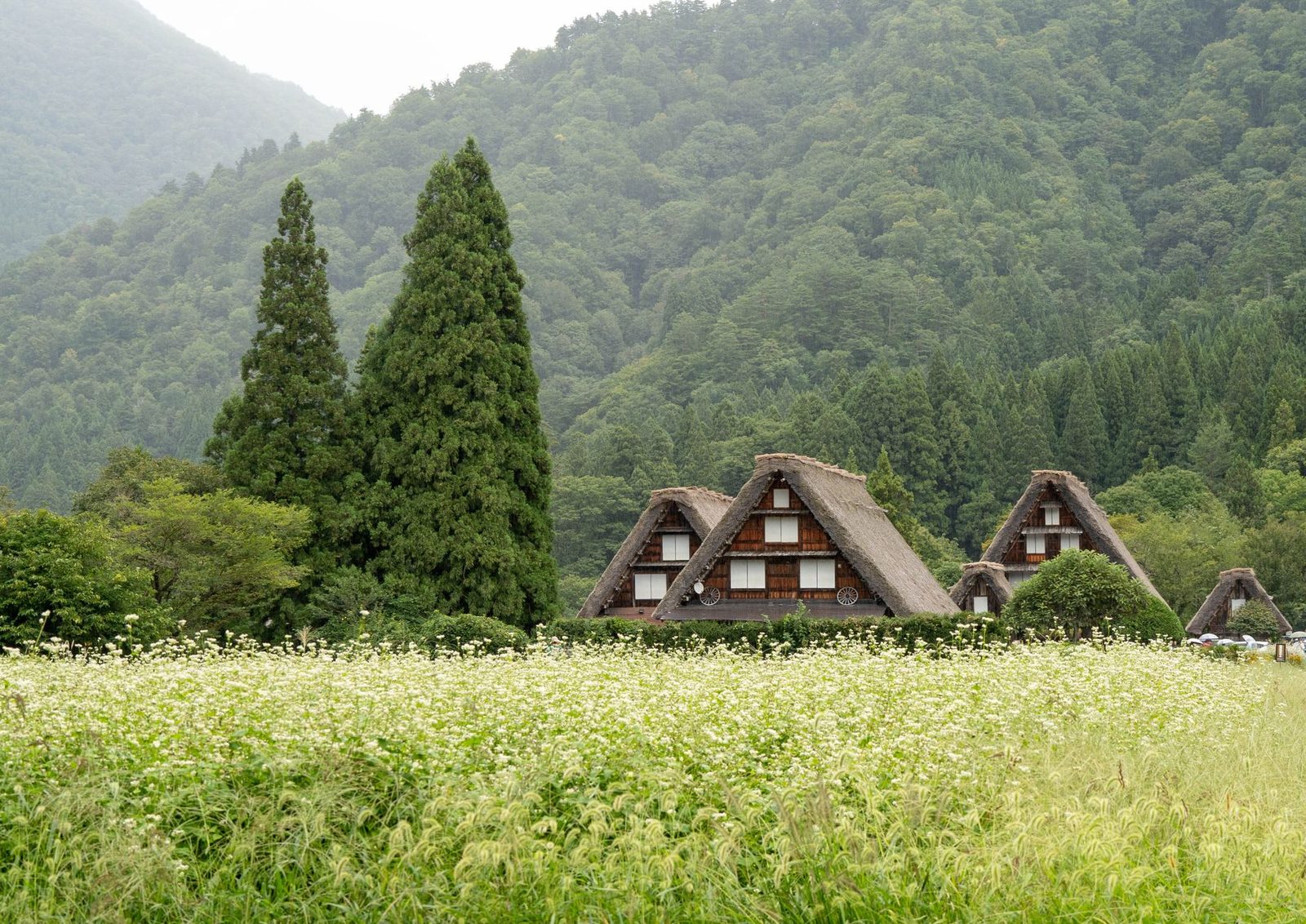
My first trip to Shirakawa-go in autumn was a complete miss. Not because anything went wrong: the bus was on time, it didn’t rain, and the village was just as beautiful as in the photos. The only problem was that I went in late October, and the leaves were… still green. Calmly, thoroughly green. The distant mountaintops were already mottled with yellow and orange, but right around the gassho-zukuri houses I had traveled half a day to photograph, the trees were still enjoying an extended summer. When I got home and opened Instagram, I saw people posting photos from the exact same spot in brilliant red—their trip had been exactly ten days after mine.
The most expensive lesson I learned is this: in Shirakawa-go, “autumn” isn’t a single month. It’s a wave of color moving down from the mountains to the valley floor, dropping by one elevation zone each week. The color you see depends on which elevation you visit and when. People who get it right on their first trip usually aren’t simply lucky—they’ve read a few simple numbers correctly before pressing the booking button.
This guide is the calendar I put together after several trips up and down the Shogawa Valley in October–November, along with the way I check the annual koyo forecasts to choose my dates. It also includes Gokayama (Ainokura, Suganuma)—Shirakawa-go’s two “younger siblings” on the same World Heritage list. Their foliage changes slightly out of sync with Ogimachi, which can be a real advantage if you know how to use it.
Why the leaves in Shirakawa-go change color out of sync with Kyoto and Tokyo
If you’re used to Kyoto’s autumn foliage peaking around the latter half of November through early December and apply that schedule directly to Shirakawa-go, you’ll arrive about two weeks too late and find mostly bare branches. On the other hand, if you’ve heard that “mountain areas change color really early, so go at the beginning of October,” you’ll arrive about a month too soon.
Elevation and the cold-trapping basin
Ogimachi—the main gassho-zukuri area of Shirakawa-go—sits in the Shogawa River Valley at an elevation of around five hundred meters. That may not sound very high, but the village is surrounded by much taller mountain ranges, including the Hakusan massif to the west, whose peaks rise above two thousand seven hundred meters. This basin-like geography does two things: it traps cold air at the bottom overnight and creates thick fog on clear late-autumn mornings after rain.
What determines when leaves change color isn’t “a general chill in the air,” but the day’s lowest temperature. Koyo watchers in Japan often use an easy rule of thumb: when minimum temperatures begin dropping below about 8 degrees, the leaves start to change; when they stay around 5 degrees or below for several nights in a row, the colors develop very quickly. In Shirakawa-go, nights like that usually begin appearing in late October.
Elevation matters: the color front moves down into the valley
There’s a popular rule of thumb used by mountain photographers: the autumn-color front descends roughly three hundred meters in elevation each week. Don’t treat it as a scientific formula, but it explains what you can see in practice very well. On the same day in early November, you may drive down from a high pass into the village and feel as if you’re traveling backward in time—leaves on the pass are almost completely gone, the middle slopes are blazing red, and by the time you reach the harvested rice fields, the trees are still green and yellow.
Along your route, the key elevations to remember are these: the Hakusan Shirakawa-go White Road climbs above one thousand meters, the Shiroyama Tenshukaku Observatory rises a few dozen meters above the village, Ogimachi sits at around five hundred meters, and Ainokura and Suganuma in Gokayama are slightly lower. The difference may sound small, but it’s enough to create a gap of several days to a week.
The trees don’t all change color at once
Shirakawa-go isn’t a pure maple forest like some parks in Kyoto. The area around the village is a mix: red momiji (Japanese maples), buna beeches and nara oaks turning brownish yellow, brilliant yellow ginkgo trees in temple grounds and around some of the old houses, plus silvery susuki grass swaying along the edges of the rice fields. That means you don’t need to wait for one moment when everything is “fully red.” The beauty here lies in the patchwork of colors against gray-brown thatched roofs, and that patchwork lasts longer than a narrow peak of perfect color.
A week-by-week autumn foliage calendar: late October to mid-November
This is the framework I use. It reflects a trend seen over many years, not a fixed timetable—an unusually warm year can delay things by a full week, while an early cold spell can bring them forward by several days. Think of each week as a different “version” of the trip, then choose the version you like best.
Week 20–26/10: autumn is up high while the village stays green
This is the best week for anyone traveling by car who loves mountain scenery. The White Road connecting Shirakawa-go with Ishikawa, along with the waterfalls along the route, is often at peak color around this time because it lies at a higher elevation. Down in the village, however, things are very different: there’s still plenty of green, with only scattered yellow patches, while the rice fields have already been harvested.
If you visit this week expecting a village glowing red, you’ll be disappointed, just as I was that year. But if you treat the village as a stop and the mountains as the main attraction, it’s well worth it: the roads are quieter, rooms are easier to book, and the weather is still comfortable.
One important note: the White Road is a toll road with a seasonal winter closure, usually closing sometime between early and mid-November; its operating hours during the day are also limited. Before planning this route, check the road’s official website, since opening and closing dates vary by year and weather conditions.
Week 27/10–2/11: the mountain slopes burst into color and the village begins to change
This is the transition week. The colors have descended to the middle elevations, and the mountains surrounding the village begin changing down from the skyline. In the village, the ginkgo trees start turning yellow, while a few maples along the stream turn red first.
This is also the week when the view from Shiroyama Tenshukaku Observatory starts to become truly compelling: thatched roofs in the foreground, with the mountains behind them mottled in yellow and orange. If your schedule isn’t flexible and you have to choose late October, aim for the final days of this week rather than the beginning.
Week 3–9/11: the golden window, with the highest chance of getting it right
If I had to bet on a single week, this is the one I’d choose. This is usually when the colors have descended to eye level in the village but the leaves haven’t fallen in large numbers yet: the mountains behind the village are at peak color, the trees in the village are turning beautifully, the rice fields are straw yellow, and if you happen to get a cold morning after rain, fog may weave between the thatched roofs.
The trade-off is that this is also the busiest week. 3/11 is a public holiday in Japan, creating a short break, and Shirakawa-go is a classic destination for day tours from Kanazawa, Takayama, and Nagoya. There’s only one main road into the village, so traffic jams near the final stretch and full parking lots by mid-morning are common.
Week 10–16/11: the valley floor is at its reddest and the leaves begin to fall
By this week, the color front has reached the valley floor. Ginkgo trees blaze yellow before carpeting the ground with fallen leaves, maples deepen to dark red, and many deciduous trees at higher elevations are already bare. The overall scene is no longer as full as it was the previous week, but the details are beautiful: leaves scattered across old thatched roofs, floating in irrigation channels, and bare branches cutting across a gray mountain backdrop.
In Gokayama, because Ainokura and Suganuma sit slightly lower than Ogimachi, this week often still has good color even after Shirakawa-go has passed its peak by several days. This is the strategy I’ve used several times to rescue a trip: if you arrive and find that Ogimachi is past its best, take a bus to Gokayama. There’s a good chance you’ll still find beautiful foliage there.
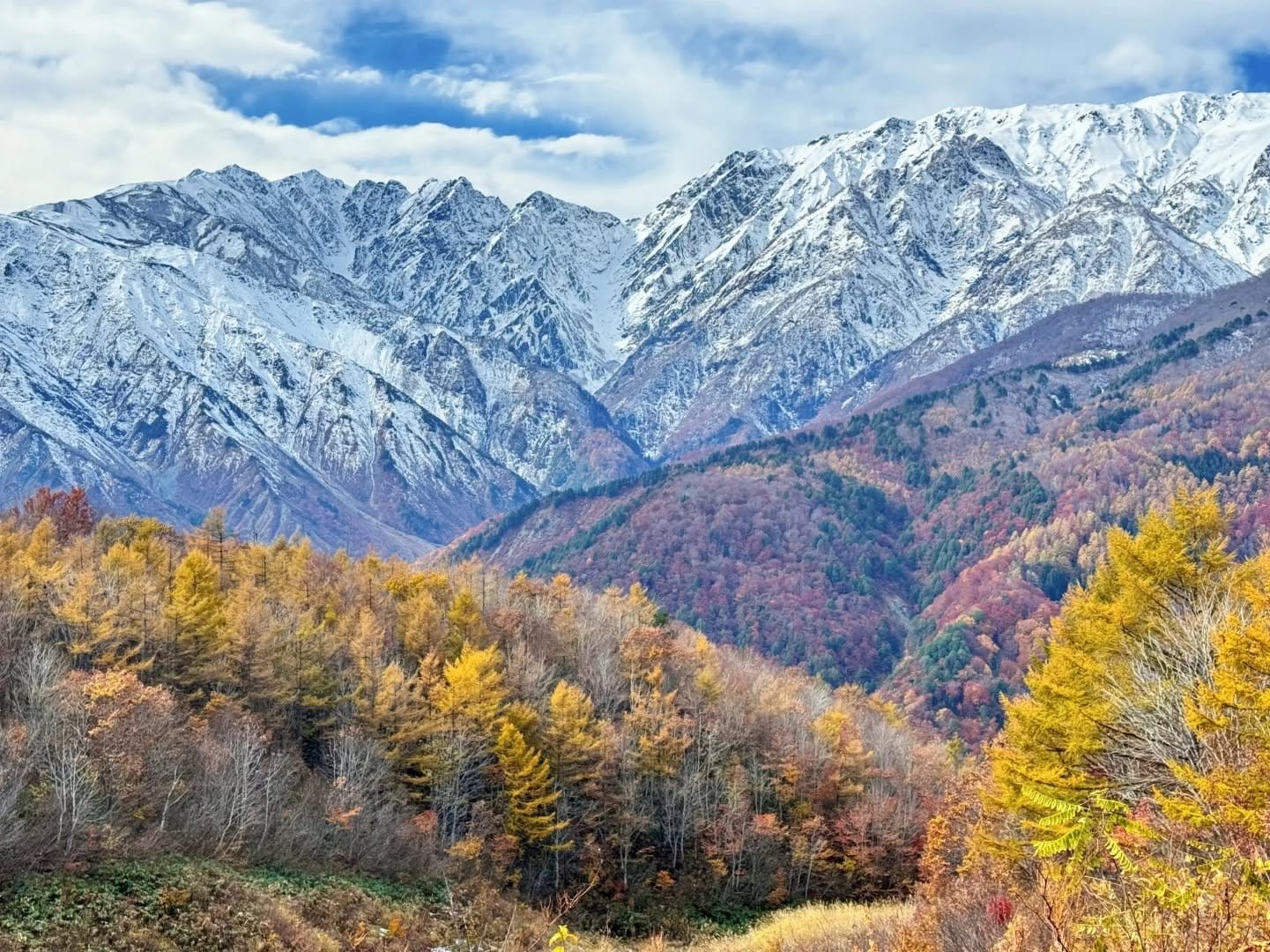
This is also when the first snow begins appearing on the higher peaks around the region. The scene of “white, snow-covered mountains above a village still framed by golden leaves” is one of Shirakawa-go’s rarest and most rewarding views—but it depends on the weather and can’t be booked in advance.
Week 17–23/11 onward: the leaves are gone, but there isn’t enough snow yet
To be blunt, this is the in-between period. Most of the leaves have fallen, while there usually isn’t enough snow in the village yet to create the classic winter scenery. There may be morning frost, but it disappears quickly. The upside is that the village is quiet, minshuku are easier to book, and you get to see Shirakawa-go in its most everyday state—something many people still haven’t experienced even after three visits.
If you’re chasing snow, the milestone to wait for is late December onward. The winter illumination events have also required advance reservations for many years now—visitors can’t simply show up and watch anymore. The details vary each year, so check the village’s official website rather than relying on old articles.
How to check koyo forecasts properly instead of guessing
People in Japan follow the koyo season very systematically, and you can use the same sources even if you don’t read much Japanese.
Three sources to check side by side
First, look at the autumn foliage forecasts from major weather services—tenki.jp and Weathernews both have dedicated koyo sections, updated for individual viewing spots. They generally classify conditions as “just starting to change,” “changing,” “at its best,” or “starting to fall.” You only need to recognize the colors used for each status to make sense of them.
Second, check travel sites that compile lists of foliage-viewing spots by prefecture. They usually give the average best period over many years for each location, which is useful for setting your initial expectations.
Third—and the source I find most effective during the final ten days before a trip—is live cameras and social media photos. Shirakawa-go has a live camera pointed toward the village. You can also search the destination’s name in Japanese on Instagram or X, then filter by the newest posts to see immediately what the leaves looked like yesterday. No forecast is as accurate as a photo taken yesterday.
Read the temperatures, not just the word “forecast”
Here’s my own trick: open the ten-day forecast for the Shirakawa-mura or Takayama area and look at the minimum-temperature column. If you see a string of days when minimum temperatures fall to around 5 degrees or below, expect the colors at village level to develop rapidly about a week later. If the minimums are still hovering above 10 degrees, don’t get excited just because the forecast says “approaching peak.”
Also watch out for warm years: an unusually warm autumn doesn’t just delay the foliage—it can also dull the colors. Leaves may dry brown and fall early instead of turning a vivid red. In those years, higher elevations—the White Road and the mountain passes—can often still save the trip.
The margin of error you have to accept
Even with careful research, the year-to-year variation is still roughly a week in either direction. So the smart way to book isn’t to search for the “perfect day,” but to choose the week with the highest probability and retain a little flexibility: book a cancellable room, leave one spare day in your schedule, and have Gokayama as a backup plan.
So which week should you book?
If you can only visit once
Aim for around 3–9/11, and within that week, prioritize weekdays over the weekend. This is the best balance between “the colors have reached the village” and “most of the leaves are still on the trees.”
If you prioritize uncrowded photos and a peaceful atmosphere
Choose the week of 10–16/11, go on weekdays, and spend one night in the village. Early morning, before the first tour buses arrive, is the best time of day in Shirakawa-go regardless of the week.
If you’re driving and prefer mountains to villages
Go in late October. Combine the White Road with the village, stay in Takayama or Kanazawa, and accept that the village itself will only just be starting to change color.
If your schedule is fixed and can’t be changed
Go anyway. Shirakawa-go is beautiful even before the leaves reach peak color, because its essential appeal lies in its architecture and valley layout. Just adjust your expectations: instead of chasing “brilliant red” photos, spend time visiting the old houses open to the public, walking the full village loop, and going up to the observatory at two different times of day.
Booking transport and accommodation: how far ahead should you plan?
Buses
Shirakawa-go has no train station. You’ll arrive by highway bus from Takayama, Kanazawa, Toyama, or Nagoya, and buses to Gokayama connect from the village bus terminal. Many of these routes require advance reservations, and the autumn foliage season coincides with peak international travel.
My advice: book at least several weeks ahead for dates between 1–16/11, and even earlier if your trip falls on a weekend or around the early-November holiday. Fares, timetables, and reservation policies change seasonally, so check the bus operator’s official website.
Driving yourself
The road to the village is scenic and easy to drive, but parking in the village area is limited, paid, and in recent years some peak periods have required advance reservations. If you’re visiting on a weekend in November, plan to arrive around 9 a.m. or be prepared to wait in line.
As for tires, winter tires are generally not needed in the village area in early November, but if you’ll be driving over high passes or traveling after mid-November, ask the rental-car company carefully. Don’t make assumptions about this.
Staying in a gassho house
There are very few rooms—only a handful in each house—and November is peak season. Many houses accept bookings only through the village’s own channels or by phone, and they often require reservations well in advance. If you’re determined to stay overnight, start looking in summer. If you can’t find a room, the sensible alternative is to stay in Takayama, where there are more rooms and more options, then take the earliest bus into the village.
Two sample itineraries
One day, without a private car. Leave Takayama on the earliest bus and arrive in the village while the fog is still lingering. Go up to the observatory first for a panoramic view, then walk around the village via the Deai suspension bridge. Have a light lunch, visit one of the old houses open to the public to learn how the thatched roofs are built, then take an afternoon bus to Kanazawa. This turns Shirakawa-go into a link between two cities rather than a time-consuming round trip.
Two days, including Gokayama. Spend the first day in Ogimachi and stay overnight in the village or a nearby town. On the second morning, get up early to photograph the village while it’s quiet, then take a bus to Ainokura in Gokayama—a smaller, steeper village with far fewer visitors, where the panoramic viewpoint is just a few minutes’ walk uphill. Add Suganuma if you still have time. These two villages together give you a much fuller feel for the gassho-zukuri region, rather than just another familiar photograph.
A few small but valuable tips
Dress in layers. The temperature difference between early morning and midday in the valley in November can be significant; your hands may freeze in the morning, while a light jacket is enough in the afternoon sun. Wear shoes with good grip, since the path to the observatory and the village lanes include steep, damp sections covered with wet leaves.
Remember that this is a real village where people live. Yards, gardens, and house entrances are private spaces, and signs clearly indicate where visitors are not allowed. Don’t fly a drone unless you’ve checked the regulations—the area is very strict about this.
Finally, restaurants and shops in the village close earlier than you might expect, especially outside the peak season. If you’re staying overnight and won’t be eating dinner prepared by your lodging, make arrangements in advance. Opening hours vary seasonally by establishment, so check the official website or ask your accommodation directly.
Frequently asked questions
Will I see autumn foliage if I visit Shirakawa-go in late October?
Usually not, at least not at village level. In late October, the colors are generally still concentrated in the higher mountains and along the mountain routes. If you’re driving and can fit a mountain road into your itinerary, it’s still well worth it; if you’re staying only in the village, expect early green-and-yellow changes.
Which week is the safest choice for booking?
If you have to choose months in advance without access to the forecast, I’d pick around 3–9/11 and prioritize weekdays. The chance of catching peak color at village level is highest then, and you still have a margin of safety on either side if that year runs earlier or later than usual.
Should I visit Shirakawa-go or Gokayama first?
If you have two days, do Ogimachi first and Gokayama second. It makes sense geographically, moving from busier to quieter, and takes advantage of the fact that Gokayama often holds its color a little longer. If you’re visiting only one place and want to avoid crowds, choose Ainokura.
Do I need to reserve the bus in advance?
Many routes to Shirakawa-go require reservations, and buses often sell out early in November. Assume that you need to book ahead. Each operator has different schedules and reservation procedures, so check the official website before finalizing your itinerary.
Is a day trip from Kanazawa or Takayama enough?
Enough to see it, but not enough to feel it. Day trips usually fall between 10 a.m. and 15:00—the busiest period and the time with the harshest light. If you want early fog, quiet streets, and evening light on the thatched roofs, you need to stay overnight.
Are there nighttime illuminations in autumn?
Shirakawa-go’s famous illumination event takes place in winter, not autumn, and advance reservations have been required for many years. Don’t plan an autumn trip around the illumination; if there are evening activities in a given year, the information will be posted on the village’s official website.
Should I still go if it rains?
Yes, if you’re not entirely dependent on blue-sky photos. Rain darkens the thatched roofs, makes the leaves shine, and the morning after rain is ideal for fog in the valley. The downside is that the paths become slippery and the observatory may be completely obscured, so leave enough time to try again at another hour.
More from this region — Chubu (Nagano, Kanazawa)
View all →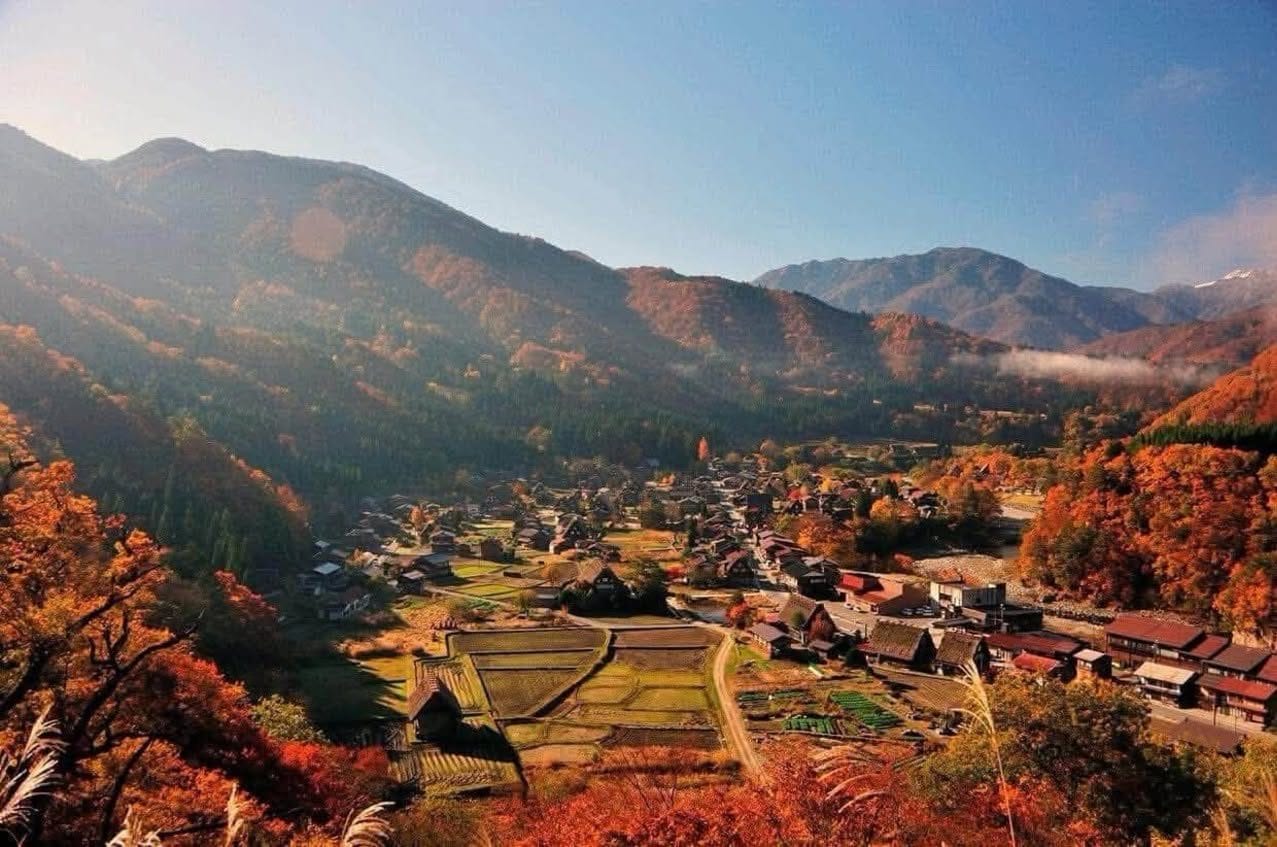
A Fall Day in Shirakawa-go: An Hour-by-Hour Itinerary for Day-Trippers
17 min · tips
Shirakawa-go in the Fall Foliage Season: The Best Times to Avoid Tour Groups and the Real Costs
18 min · tips
Autumn Onsen Around Shirakawa-go: Soak in the Village, Visit Hirase, and Stay in a Ryokan on the Way Back
17 min · tips
Shirakawa-go & Takayama
22 min · destinations