
A Fall Day in Shirakawa-go: An Hour-by-Hour Itinerary for Day-Trippers
Arrive before 9h while the mist is still hanging over the valley, hike up Shiroyama, visit the Wada and Kanda houses, walk out to Deai Bridge, then catch the right afternoon bus back to Takayama or Kanazawa.
Aug 12, 2026·✍️ olablog·⏱ 17 min read
Arrive before 9h while the mist is still hanging over the valley, hike up Shiroyama, visit the Wada and Kanda houses, walk out to Deai Bridge, then catch the right afternoon bus back to Takayama or Kanazawa.
Tap a region to browse articles
There’s an uncomfortable truth about Shirakawa-go that you won’t see in any photo online: from around 10 a.m. to 3 p.m. on a fall weekend, this peaceful thatched-roof village is no less crowded than a pedestrian street in Tokyo. Buses line up to enter the parking lot, the main road is packed with people, and the “old village in a golden-and-red valley” moment you flew halfway around the world to see is interrupted by dozens of selfie sticks.
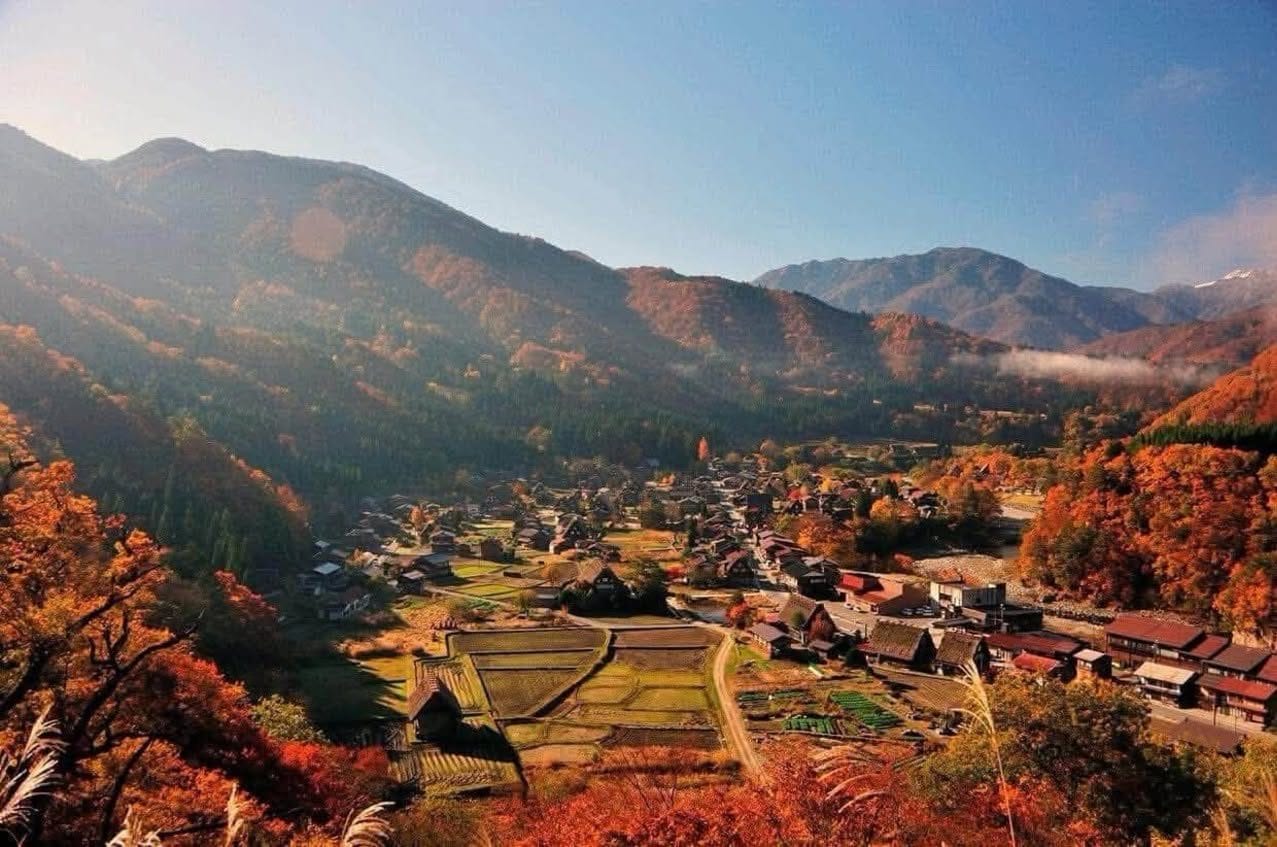
But that same village, at 8:30 in the morning, is an entirely different place. The mist over the Shogawa River has not yet fully lifted, smoke from the irori hearths is beginning to rise through the thick thatched roofs, farmers are drying persimmons beneath their eaves, and you can stand in the middle of the road to take photos without a single person getting in the frame. The gap between these two experiences is only ninety minutes — and that is the entire reason this article exists.
If you’re making a day trip from Takayama or Kanazawa, you don’t have much time for trial and error. Fall days are short, buses run on fixed schedules and often require reservations, and autumn foliage season coincides with the busiest visitor period of the year. Below is an hour-by-hour one-day itinerary I put together after several visits — including one when I did everything the wrong way, arrived at 11 a.m., and went home with exactly three usable photos.
Why fall in Shirakawa-go requires a tighter itinerary than other seasons
Everyone knows that winter’s snow and illumination events require advance reservations. In fall, many people let their guard down — and that is the trap.
First, the peak foliage window is very short. At the elevation of the Shogawa Valley, the leaves usually change color around late October and look their best during the first half of November. In warmer years, though, the peak can come a week later, while an early cold snap can cause the leaves to fall quickly after a storm. Don’t book your flights around a supposedly “standard” date — check the foliage forecasts for the Hokuriku/Gifu region during the two weeks before your trip.
Second, the short days disappear quickly. In the mountains here in early November, the sun slips behind the ridges fairly early in the afternoon, and once it does, the entire valley turns a cold gray within just a few minutes. The best light for photographing the village is realistically available from early morning until early afternoon.
Third, the buses are the bottleneck. Both the Takayama–Shirakawa-go and Kanazawa–Shirakawa-go routes are express bus services, and most departures require advance reservations. On autumn foliage weekends, the early-morning buses sell out days in advance. The last bus of the day also leaves earlier than you might expect. Check both of these details directly on the operators’ official websites (Nohi Bus for the Takayama route, Nohi/Hokutetsu for the Kanazawa route) as soon as your dates are confirmed.
And finally, if you’re driving, the road into the village and the Seseragi parking lot can become seriously congested on peak-season weekends. On some days, visitors have waited more than an hour just to enter the lot. Ironically, the bus is the “faster” option.
Choosing your starting point: Takayama or Kanazawa
From Takayama
This is the best option for a one-day itinerary. The journey takes only about 50 minutes via the Tokai-Hokuriku Expressway, and there are fairly early morning departures — enough to get you into the village before 9 a.m. if you choose the right one. Takayama also makes it easy to stay overnight, take a quick loop around the Miyagawa Morning Market after waking up, and then head straight to the bus terminal next to the station.
A practical tip: buy a round-trip ticket and lock in your return time when you purchase the outbound ticket. Don’t wait until the afternoon to ask at the counter, because the afternoon buses are the “return” buses for thousands of visitors in the village.
From Kanazawa
The journey is a little longer, taking around one hour and fifteen minutes to one and a half hours depending on the departure and road conditions. The earliest bus of the day usually leaves later than the Takayama service, which means it’s difficult to reach the village before 9 a.m. If you have to travel from Kanazawa, accept that you’ll need to reverse the itinerary: visit the observatory later and save the village walking for the latter part of the day, after the tour groups have begun to leave.
General tips for both directions
If you’re traveling “one way” from Takayama to Kanazawa (or vice versa), the best plan is not to make a day trip and then return to your starting point. Instead, take a morning bus to Shirakawa-go, leave your luggage in the lockers at the village bus terminal, and catch an afternoon bus onward to the other city. You get a full day in the village without spending time traveling the same route twice. The number and sizes of the lockers at the terminal are limited, so if you have a large suitcase, ask at the counter about luggage storage — the fee is usually just a few hundred yen.
One-day itinerary by time slot
Before 9h00 — arrive while the mist is still hanging over the village
This is the most precious time slot of the day, and it is the only part of this itinerary where I strongly advise you not to compromise. The buses carrying large tour groups and independent travelers from Kanazawa have generally not arrived yet. The main road through the village is almost entirely yours.
What to do first: walk from the bus terminal into the village, following the crystal-clear irrigation channels where koi swim, and admire the steeply pitched gassho-zukuri roofs that look like two hands pressed together in prayer. Many of the houses are still occupied private homes, so this is also when you can see the village’s real daily life: people sweeping their yards, drying persimmons, and tending their fires. After 10 a.m., that layer of everyday life disappears behind the crowds.
One small but important note: the historic-house museums usually have not opened yet at this hour. Don’t worry about missing them — use this time for walking and photography, because you can visit the museums at any point during the day, while the early light and quiet streets won’t come back.
9h00–10h00 — Shiroyama Observatory
This is the classic viewpoint: the entire village of Ogimachi nestled in the valley, harvested fields turning golden, and the mountains behind the village glowing red and orange. There are two ways to get up.
The first is on foot. A steep trail leads up from inside the village and takes about 15–20 minutes of continuous climbing. It is not difficult, but you’ll be breathing hard, and it can be slippery if it rained the day before. Shoes with good grip are essential.
The second is a small shuttle bus running from the area near Wada House directly to the observatory. During the day, buses run roughly every 20 minutes, with a fare of just a few hundred yen one way. This is a sensible choice if you’re traveling with older adults or young children. Operating hours and fares vary by season, so check the noticeboard at the bus stop when you arrive.
My preferred strategy: walk up and take the shuttle back down. The trail is quiet early in the morning, and riding down saves your legs for the rest of the day.
The observatory has a small café selling hot drinks and a railing-lined viewing area. Plan to spend around 20–30 minutes up there, unless you’re waiting for the clouds to clear. From around 10:30 onward, the area starts filling up, and taking a photo without anyone in it becomes almost impossible.
10h00–11h00 — Wada House
Return to the village and visit Wada House (Wada-ke), the largest remaining gassho-zukuri house in Ogimachi and an important nationally designated cultural property. The Wada family once served as the nagashi, or village headmen, and also made their fortune from silkworm farming and saltpeter production — two industries that supported the entire valley when it was almost cut off during winter.
Admission costs around a few hundred yen. Inside, you can climb to the attic floors where silkworms were once raised and see firsthand the wooden framework lashed together with rope rather than nails — a design that made the roof flexible enough to withstand meters of snow. The irori hearth in the center of the house burned all day, and the smoke coating the wooden frame and thatched roof was how people protected them from insects over hundreds of years. The smell of smoke will cling to your clothes all day, and honestly, it is a pleasantly nostalgic scent.
11h00–12h00 — Kanda House
Not far from Wada House is Kanda House (Kanda-ke), which I consider the most worthwhile house to enter if you only choose one. Kanda House has several interconnected attic levels, steep wooden staircases, and access all the way to the top floor — where a window looks directly down over the village roofs and the mountains beyond. In fall, that small window frames a sweep of red-and-gold mountains more beautiful than any postcard.
Another appealing feature of Kanda House is its intimate atmosphere: the caretaker often offers tea, and if you sit beside the irori hearth for a few minutes, you may hear stories about how the village replaces its thatched roofs — the entire community works together over a day or two, following a tradition known as yui that is still maintained today.
If you’re still interested and have time, nearby Nagase House (Nagase-ke) is also open. It has multiple floors and a collection of antique medical equipment, as the family once practiced medicine. But if you need to shorten the itinerary, cut Nagase.
12h00–13h00 — lunch break
This is the busiest time of day, so instead of fighting the crowds outside for photos, sit down and eat. A few practical options in the village:
- Mountain soba — The village soba restaurants use locally grown buckwheat flour, and a hot bowl is perfect on a chilly fall day. A bowl typically costs around 900–1,400 yen.
- Hida beef skewers — Sold at small stalls along the main road, these are eaten standing up and cost anywhere from a few hundred yen to more than a thousand yen depending on the portion.
- Gohei-mochi — Pounded sticky rice shaped around a skewer, coated with walnut miso, and grilled. This is a classic Chubu mountain-region dish: sweet, savory, fragrant, and inexpensive.
- Doburoku snacks and sweets — Shirakawa-go is famous for doburoku, an unfiltered cloudy rice wine associated with the Doburoku Matsuri held around mid-October at shrines in the area. If you don’t drink alcohol, you can still try doburoku-flavored ice cream and sweets.
Note: restaurants in the village are limited, seating is scarce, and many places close fairly early in the afternoon. If you’re a picky eater or traveling in a large group, picking up onigiri in Takayama/Kanazawa is a safe option. Also be aware that the village encourages visitors not to eat while walking — eat at the place where you bought the food or in a designated seating area.
13h00–14h00 — Deai Bridge and the Shogawa Riverbank
After lunch, walk to the Deai suspension bridge (Deai-bashi), which crosses the Shogawa River and connects the village to the parking area on the opposite bank. The bridge sways gently when crowded, the river below is clear blue-green, and standing in the middle while looking back toward the village gives you the “thatched roofs – river – red mountains” composition without having to climb to the observatory.
On the far side of the bridge is the Gassho-zukuri Minkaen Open-Air Museum, a collection of more than two dozen thatched-roof houses relocated here for preservation. It is often overlooked but especially worthwhile in fall: the grounds are spacious, there are plenty of maple trees, it is less crowded than the village, and some houses host traditional craft demonstrations. Admission costs around a few hundred yen; closing times vary by season, so check the sign at the entrance.
If photography matters more to you than museums: in the early afternoon, sunlight falls diagonally across the mountains behind the village, and the viewpoints from the riverbank near Minkaen looking back toward the village offer the best colors of the day.
14h00–15h00 — buffer time, and how to use it wisely
Don’t fill this time slot completely. It is your reserve for falling in love with a historic house, or simply for resting your feet. A few good ways to use it:
- Return to the main road once the tour groups begin to leave and retake photos of the angles you weren’t happy with in the morning.
- Shop for souvenirs: faceless red sarubobo dolls from the Hida region, wooden crafts, preserves, and local alcohol. The souvenir shops around the bus terminal close earlier than you might expect.
- Soak your feet or visit an onsen: there is an onsen facility near the bus terminal, which is convenient for relaxing before a long bus journey. Check its opening hours and closing days in advance on the official website.
- Have a hot coffee at a café overlooking the rice fields — it sounds ordinary, but sitting quietly for half an hour as the village shifts into afternoon colors is something many day-trippers never get to experience because they are in too much of a hurry.
15h00–16h30 — catching the bus back
The rule: be at the bus terminal at least 20 minutes before departure, and don’t make the last bus of the day your primary plan.
For Takayama, afternoon departures are fairly frequent, so there is less pressure; you can stay until mid-afternoon and still make it back in time for Hida beef in the old town. For Kanazawa, the last bus leaves the village much earlier than many people expect, and if you miss it, there are almost no alternatives — accommodation in the village is limited during peak season. Take a photo of the timetable at the terminal as soon as you arrive in the morning, and set a phone alarm for 40 minutes before departure.
A peak-season note: on autumn foliage weekends, the road out of the village can become congested, and buses may run 15–30 minutes late. If you have a shinkansen or connecting flight that evening, leave at least two hours of buffer time.
Adding Gokayama if you have a car
Gokayama lies in Toyama Prefecture, around 20–40 minutes north of Shirakawa-go by car, and the two areas are jointly recognized by UNESCO as a World Heritage site. The two main villages are Ainokura (larger and set higher on a mountainside) and Suganuma (small, with only around a dozen houses beside the river).
The key point: Gokayama is much quieter than Shirakawa-go. If what you’re looking for is the feeling of a “genuinely historic village” rather than a tourist attraction, Ainokura in the late afternoon during fall is the answer. The trade-off is that public buses between the two areas are infrequent, so combining them in one day without a car is very difficult.
If you’re driving, a sensible schedule is: spend the morning following the Shirakawa-go itinerary above, drive to Suganuma around 14:00 for a quick look, then head to Ainokura at 15h30 for sunset before continuing on to Kanazawa or Toyama. Remember to fill up beforehand, as gas stations are scarce in the mountains and close early.
Common mistakes
- Arriving at 11 a.m. and leaving at 2 p.m. This is the worst possible time slot: the crowds are at their thickest, the sun is harshest, and you won’t have time to do anything properly.
- Assuming there is a fall illumination event. Shirakawa-go’s famous illumination event takes place in winter, is limited to specific dates, and requires advance reservations through a separate system. There is no fall illumination.
- Not reserving the bus in advance. During peak foliage season, showing up at the Takayama ticket counter at 8 a.m. to ask for the 8h30 bus is almost guaranteed to fail.
- Forgetting that this is a living village. Many of the houses are private residences. Don’t enter people’s yards, don’t fly a drone (drones are restricted), and don’t point your camera into residents’ windows.
- Dressing too lightly. Early mornings in the valley in November are considerably colder than in Takayama or Kanazawa, with some mornings coming close to 0°C, while the midday sun can feel warm. Wear layers.
Quick checklist before you go
Walking shoes with good grip (the Shiroyama trail is slippery when wet), a lightweight windbreaker, a scarf, cash (many small stalls and historic-house admissions do not accept cards), a portable charger because cold weather drains phone batteries quickly, and a small bag for your trash, as there are almost no public trash cans in the village. You’ll have mobile reception, but it is not strong everywhere, so download an offline map in advance.
Frequently asked questions
Is one day enough for Shirakawa-go? Yes, if you arrive in the village before 9 a.m. If you can only get there around 10–11 a.m., you’ll see the main sights but miss the most beautiful part — the quiet morning. For a fuller experience, stay overnight in a gassho house — there are very few rooms, and they often need to be booked months in advance.
Should I visit from Takayama or Kanazawa? Takayama is more convenient for a one-day itinerary because it is closer and has earlier buses. Kanazawa is still doable, but you’ll arrive later, so reverse the order: walk through the village and visit the museums first, then go up to the observatory as visitors begin to leave.
When is the autumn foliage at its best here? Usually from around late October through mid-November, though the timing varies with the weather each year. Check the Gifu/Hokuriku foliage forecast during the two weeks before your trip and finalize your itinerary late if possible.
Do I need to reserve the bus in advance? Yes. Most departures on both the Takayama and Kanazawa routes require reservations, and buses sell out very early on autumn foliage weekends. Book online through the operator’s official website as soon as your date is confirmed, and reserve the return journey at the same time.
How much do admission tickets for the historic houses cost? Each house charges separately, usually a few hundred yen per person, with combination tickets available at certain times. Prices and opening hours vary by season, so check the village’s official website or the noticeboard at the bus terminal on the day of your visit.
Is traveling by car more convenient? It is convenient if you want to add Gokayama or travel outside the bus timetable. But on peak fall weekends, the road into the village and the Seseragi parking lot can experience long delays, so if you’re visiting only Ogimachi, the bus is generally less stressful.
Can I store luggage in the village? Yes. There are lockers at the bus terminal area, and there is usually a luggage-storage service for large suitcases for a fee of a few hundred yen. Space is limited during peak season, so arriving early gives you a double advantage: fewer visitors and a better chance of finding somewhere to leave your bags.
Can young children and older adults manage the trip? Yes. The village roads are flat, and a shuttle bus to the observatory is available instead of hiking uphill. Just note that the staircases inside the historic houses are very steep and narrow, so hold the handrail carefully.
More from this region — Chubu (Nagano, Kanazawa)
View all →
Shirakawa-go in the Fall Foliage Season: The Best Times to Avoid Tour Groups and the Real Costs
18 min · tips
Autumn Onsen Around Shirakawa-go: Soak in the Village, Visit Hirase, and Stay in a Ryokan on the Way Back
17 min · tips
Shirakawa-go & Takayama
22 min · destinations
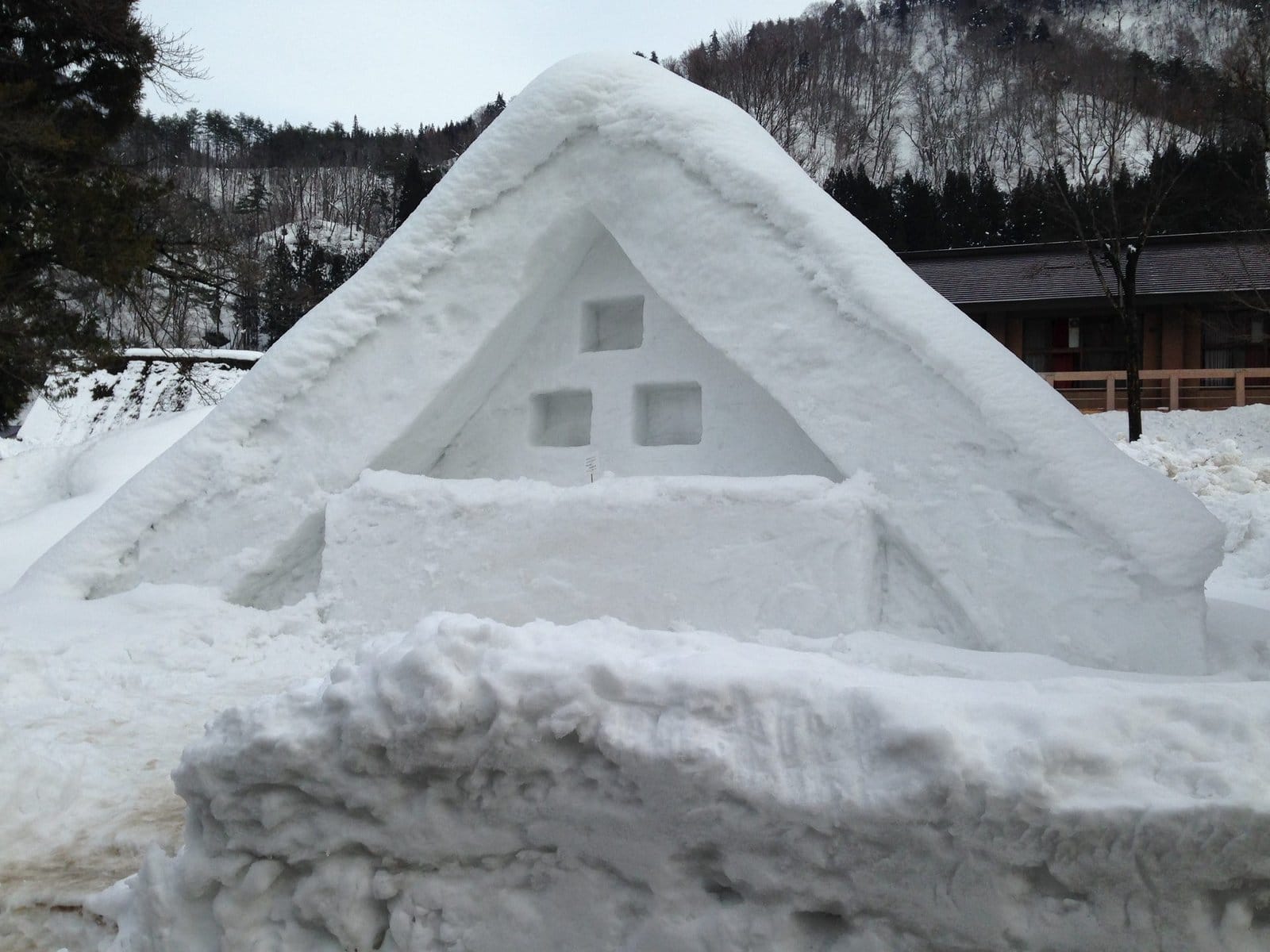
Shirakawa-go in Winter – A Snow-Covered Village at the Foot of the Japanese Alps
5 min · tips