
Connecting Shirakawa-go, Gokayama, and Kanazawa: A Three-Stop Autumn Route
Why the two thatched-roof villages on the Toyama side are quieter, how to take the heritage bus linking them, and a 2–3-day itinerary that lines up mountain fall foliage with the old streets of the plains.
Aug 12, 2026·✍️ olablog·⏱ 18 min read
Why the two thatched-roof villages on the Toyama side are quieter, how to take the heritage bus linking them, and a 2–3-day itinerary that lines up mountain fall foliage with the old streets of the plains.
Tap a region to browse articles
There is a scene almost everyone visiting Shirakawa-go encounters: it is 11 a.m. on a day in early November, you are standing on the Shiroyama Observatory, looking down at a thatched-roof valley as picturesque as any photograph—and surrounded by three layers of people holding up their phones. The tour buses have filled the parking lot below. The village’s main street is as crowded as a fairground. You get the picture you came for, but not the feeling of an “old village in the mountains.”
What few Vietnamese travelers know is that the 1995 World Heritage designation was not granted to Shirakawa-go alone. The official listing clearly says: the Historic Villages of Shirakawa-go and Gokayama—meaning it also includes two small clusters of villages across the prefectural border in Toyama, called Ainokura and Suganuma. They are less than thirty minutes by car from Ogimachi, Shirakawa-go’s main village, with the same gassho-zukuri thatched-roof houses and the same late-autumn mountain light—but the number of visitors is worlds apart. On some afternoons in Ainokura, the only sounds in the entire village are the wind and an elderly woman drying persimmons.
This article follows the route most Vietnamese visitors overlook: instead of the familiar Takayama–Shirakawa-go pairing (I have a separate article about that route), we turn toward Toyama and Ishikawa, connect Shirakawa-go and Gokayama by heritage bus, and finish in Kanazawa—a city that can be seen as the “final reward” of the route: historic streets, Japanese gardens, seafood markets, and mountain foliage that arrives roughly two weeks later. That timing is the key to why this itinerary works so well in autumn, and I’ll go into detail in the foliage section.
Why Gokayama Is Quieter and More Unspoiled Than Shirakawa-go
It is not because Gokayama is “less beautiful” or unknown. The difference comes from several very specific reasons, and understanding them will also help you know what to expect when you arrive.
The Villages Differ in Size by More Than Tenfold
Ogimachi has more than one hundred gassho houses, a main street lined with restaurants, souvenir shops, an open-air museum, a suspension bridge, an observation deck, and a large parking lot—it is big enough to “swallow” thousands of visitors a day while still running smoothly. Ainokura has only around twenty gassho houses, while Suganuma has fewer than ten. You can walk through Suganuma in roughly fifteen minutes—literally. Because they are so small, these two villages lack the infrastructure for large tour groups, and tour companies have little incentive to stop for long in places without enough room for shopping and lunch.
Tour Buses Take the Expressway, and the Expressway Leads Straight to Ogimachi
The Tokai-Hokuriku Expressway has an interchange practically at Shirakawa-go’s doorstep, so tour buses from Nagoya, Kanazawa, and Takayama can simply leave the highway and arrive at the parking lot. Gokayama stretches along the Shogawa River at a higher elevation; getting there requires turning off the main route and crawling along a prefectural road. The difference is only a few dozen minutes, but for a tour schedule such as “Kanazawa in the morning–Shirakawa-go at noon–Takayama in the afternoon,” those few dozen minutes are reason enough to cut Gokayama from the itinerary.
Gokayama Is Still a Living Village, Not an Exhibit
In Ainokura, most of the houses are still genuinely inhabited. You will see a tiller parked in a corner of a yard, laundry hanging behind a veranda, and small signs asking visitors not to step into the fields or speak loudly after nine in the evening. Many houses are not open to visitors, and that is perfectly normal. Ogimachi also has residents, but the density of tourist services makes it feel more like an “attraction.” If you want the feeling of wandering into a Japanese mountain village from decades past, Gokayama delivers it much more clearly.
One historical detail made me like Gokayama even more after I learned it: the area once produced enshō—an ingredient used to make gunpowder for the Kaga domain (present-day Kanazawa), as well as washi paper and silkworms. The wide attics of the gassho houses were not designed for beauty; they were built for raising silkworms and storing materials. The Iwase House in Nishiakao is the largest surviving gassho house, standing five stories high and once serving as the residence of a family that produced enshō. At the Murakami House in Kaminashi, the owner often sings the old Kokiriko folk song for visitors and performs with bamboo sasara clappers. It would be a shame to visit Gokayama and skip these two houses.
Three Villages, Three Personalities: Where to Stop and for How Long
Ogimachi (Shirakawa-go)—Dramatic, Convenient, and Crowded
This is still a must-see, so do not skip it simply because you dislike crowds. The view of the valley from Shiroyama Observatory is iconic, and both the Wada House and the Gassho-zukuri Minkaen open-air museum across the Deai Suspension Bridge are worth visiting. The only trick is to avoid the hours from 10 a.m. to 3 p.m. If you stay overnight in the village, you can see Ogimachi at seven in the morning, with dew still clinging to the thatched roofs and barely a visitor in sight—completely different from the village you saw at noon.
Ainokura—The “Soul” of This Route
The village sits on a high terrace overlooking the valley. From the bus stop beside the main road, it takes about five to ten minutes to walk uphill to the village. There are two small folk museums, a few restaurants, several minshuku, and most importantly, the viewpoint above the village—climb for another ten minutes or so and you will get a view of the entire thatched-roof settlement surrounded by mountains changing color. On an afternoon in early November, I find this even more relaxing than Shiroyama because you will usually be standing there with only a handful of other people.
Allow at least two hours for Ainokura. If you stay overnight, choose Ainokura rather than Suganuma—Ainokura has enough restaurants and small shops that the evening will not feel too inconvenient.
Suganuma—Tiny, Tidy, and the Easiest to Visit
Suganuma lies right beside the main road, along the river, and has a particularly Japanese touch: the parking lot and visitor center are on higher ground, with an elevator taking visitors directly down to village level, so there is almost no climbing. That makes Suganuma suitable for people traveling with elderly parents or young children. The village is tiny; a leisurely circuit takes around forty minutes to an hour. There is also a small museum explaining the former enshō industry. If time is tight and you must choose one, I would choose Ainokura; if you only have one bus with a 50-minute wait, Suganuma makes a perfectly sized stop.
Connecting the Entire Route by World Heritage Bus
This is the part that makes many people give up, but it is actually simpler than it looks. The backbone of this route is the World Heritage Bus operated by Kaetsunō, running along the following corridor: Takaoka Station–Shin-Takaoka Station–Johana Station–Suganuma–Ainokura-guchi–Shirakawa-go.
Why This Route Works Well for Travelers Starting in Kanazawa
Shin-Takaoka is on the Hokuriku Shinkansen line, just over ten minutes from Kanazawa by train. This means you can leave Kanazawa in the morning, take the Shinkansen one stop, and then board the heritage bus directly into Gokayama. The journey from Shin-Takaoka to the Gokayama area takes around an hour and a half, and continuing to Shirakawa-go takes roughly two hours in total. There are not many buses each day—only a few in each direction—so your entire itinerary has to revolve around this bus route’s timetable, not the other way around. Before finalizing your plans, check the operator’s website for the schedule on the exact day you will travel.
You generally do not need to reserve a seat on this route; boarding is first come, first served. The operator also sells multi-day unlimited-ride tickets for the route, which can be good value if you visit both Suganuma and Ainokura before continuing to Shirakawa-go—you should ask at the counter at Takaoka/Shin-Takaoka Station or check the official website, since ticket conditions may change from year to year. Carry some small cash, and do not assume you can tap an IC card as you would in the cities.
Shirakawa-go–Kanazawa
This leg is different: direct buses take around one hour and fifteen minutes to one and a half hours, operated by companies such as Nohi and Hokutetsu, and they generally require advance seat reservations. On autumn weekends, this is the fastest-selling leg of the entire route. My advice: book online as soon as your date is confirmed; do not wait until the day you go to the bus terminal. Because this leg is so convenient, many people simply travel from Kanazawa to Shirakawa-go and back in one day—and that is why Ogimachi is crowded while Gokayama remains quiet.
Tickets, Passes, and a Few Small Traps
- Some regional travel passes—combined tickets covering JR trains and buses in the Takayama–Hokuriku area—include the Kanazawa–Shirakawa-go–Takayama bus route, but do not automatically include Kaetsunō’s World Heritage Bus. Read the coverage carefully before buying; do not make assumptions.
- The stop for Ainokura is called “Ainokura-guchi” (meaning the gateway to Ainokura), not the village itself. Listen for the announcement and watch the signs so you do not remain on the bus past your stop.
- Large luggage is the enemy on this route: you will be getting on and off buses repeatedly and climbing the slope into Ainokura. Leave your suitcase in a station locker at Kanazawa or Takaoka and travel for two days with a small backpack.
- The final bus of the day is usually quite early by city standards. Miss your bus in Gokayama and you will be staying in Gokayama, end of story—taxis are scarce and expensive in this area.
Suggested Itineraries
2 Days, 1 Night (Compact and Suitable for a Weekend from Tokyo/Osaka)
Day 1: Arrive in Kanazawa in the morning (by Shinkansen from Tokyo, or via a connecting train route from Osaka). Leave your luggage at the station. Take the Shinkansen to Shin-Takaoka and transfer to the heritage bus. Visit Suganuma first—the village is small and quick to see—then take the next bus to Ainokura-guchi. Spend the afternoon entirely in Ainokura: walk through the village, climb to the viewpoint in the late-afternoon light, and have tea at a small café. Stay overnight at a gassho-house minshuku in Ainokura, with dinner featuring Gokayama tofu and grilled river fish beside an irori hearth.
Day 2: Take an early walk through the village before anyone else arrives, then catch the bus to Shirakawa-go. Spend half a day in Ogimachi: Shiroyama Observatory, the Wada House, and the open-air museum. Take the bus back to Kanazawa in the early afternoon (remember to reserve your seat). Spend the evening in Kanazawa at Omicho Market or strolling through the Higashi Chaya geisha district as the lanterns begin to glow.
3 Days, 2 Nights (The Version I Recommend If You Have Time)
Day 1—Kanazawa: Arrive in Kanazawa in the morning, check in, and spend the entire day exploring the city: Kenrokuen Garden, Kanazawa Castle Park and the adjacent Gyokusen'inmaru Garden, the Nagamachi samurai district, and the 21st Century Museum of Contemporary Art. Have seafood for dinner. Stay overnight in Kanazawa.
Day 2—Gokayama: Take the Shinkansen to Shin-Takaoka, then the heritage bus into Gokayama. Visit Suganuma in the morning, have lunch in the Kaminashi area or beside the road, visit the Murakami House or a washi paper museum if the bus schedule allows, and continue to Ainokura in the afternoon. Stay overnight in a gassho house in Ainokura. If you enjoy hot springs, there is a small onsen nearby overlooking the reservoir—ask your minshuku host; they will usually point you in the right direction and tell you the opening hours that day.
Day 3—Shirakawa-go and Home: Travel to Shirakawa-go in the morning and explore until early afternoon, then choose your onward route: take a direct bus to Kanazawa if you are flying from Komatsu, or return to Tokyo by Shinkansen; alternatively, take a bus to Takayama if you want to continue into Gifu—but if you have already visited Takayama, spending the evening in Kanazawa will be more relaxing.
What About Doing the Route in Reverse?
It is completely possible, and sometimes even more practical: travel from Takayama or Nagoya to Shirakawa-go first, stay one night in a gassho village in Ogimachi to enjoy the quiet morning, then take the heritage bus in the opposite direction through Gokayama and down to Takaoka, finishing the route in Kanazawa. This works well for travelers who have flown into Nagoya or are coming from the Kansai area. The general rule remains the same: do not put both Gokayama and Shirakawa-go on the same day without staying overnight somewhere—you will spend most of your time sitting on buses and waiting at stops.
Fall Foliage Timing: Mountains First, City Later—and How to Make the Most of It
This is why the route is particularly well suited to autumn. The three destinations sit at three different elevations, so their leaves change at different times:
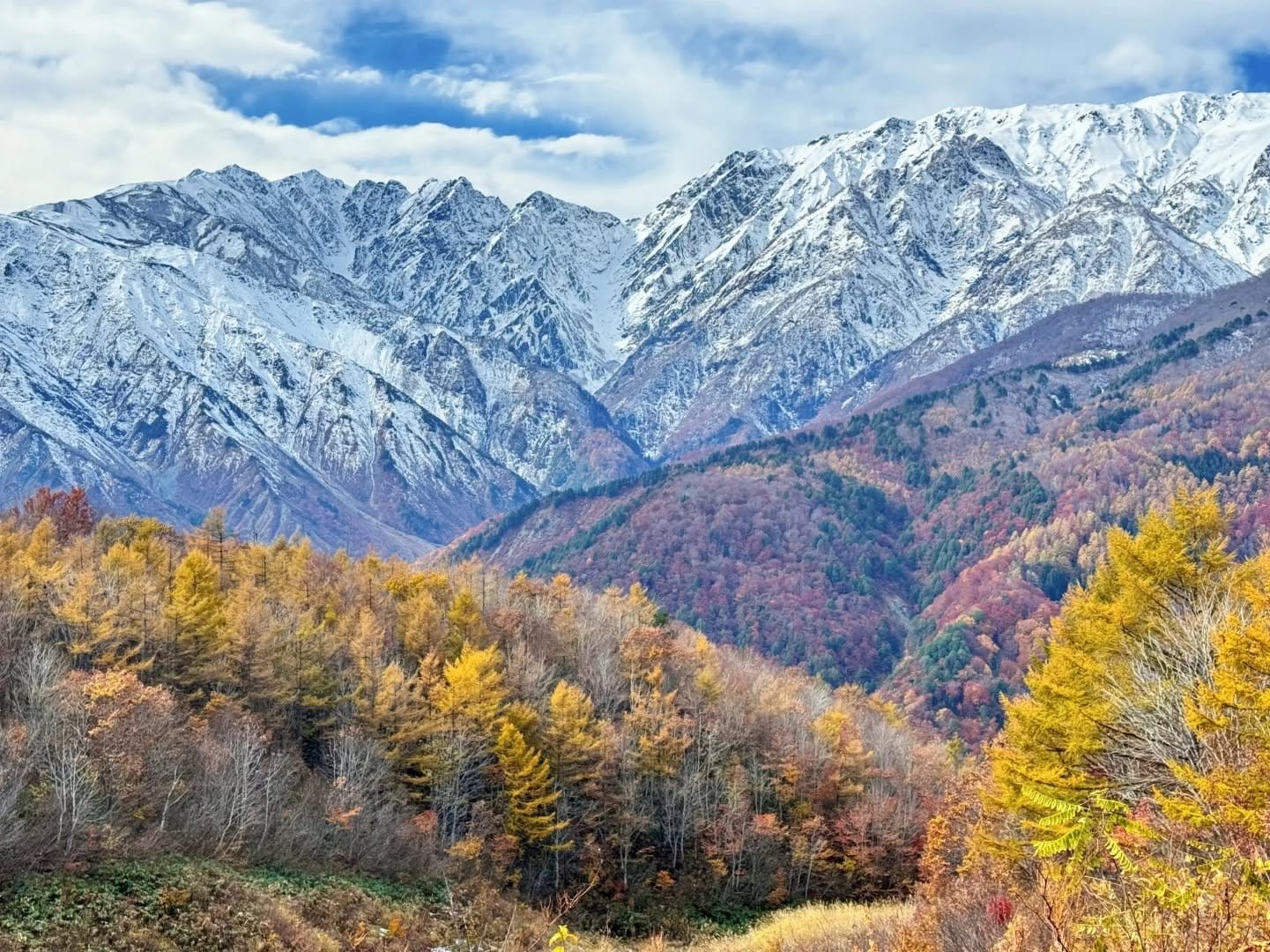
- The mountain areas around Gokayama and Shirakawa-go are usually at their best from late October to mid-November, with peak color often falling in the first days of November. The higher you go—the passes and mountain roads around Hakusan—the earlier the colors arrive.
- Kanazawa on the plains is usually later, reaching its brightest from mid- to late November; Kenrokuen’s red maples and golden ginkgo trees are often most beautiful toward the end of the month.
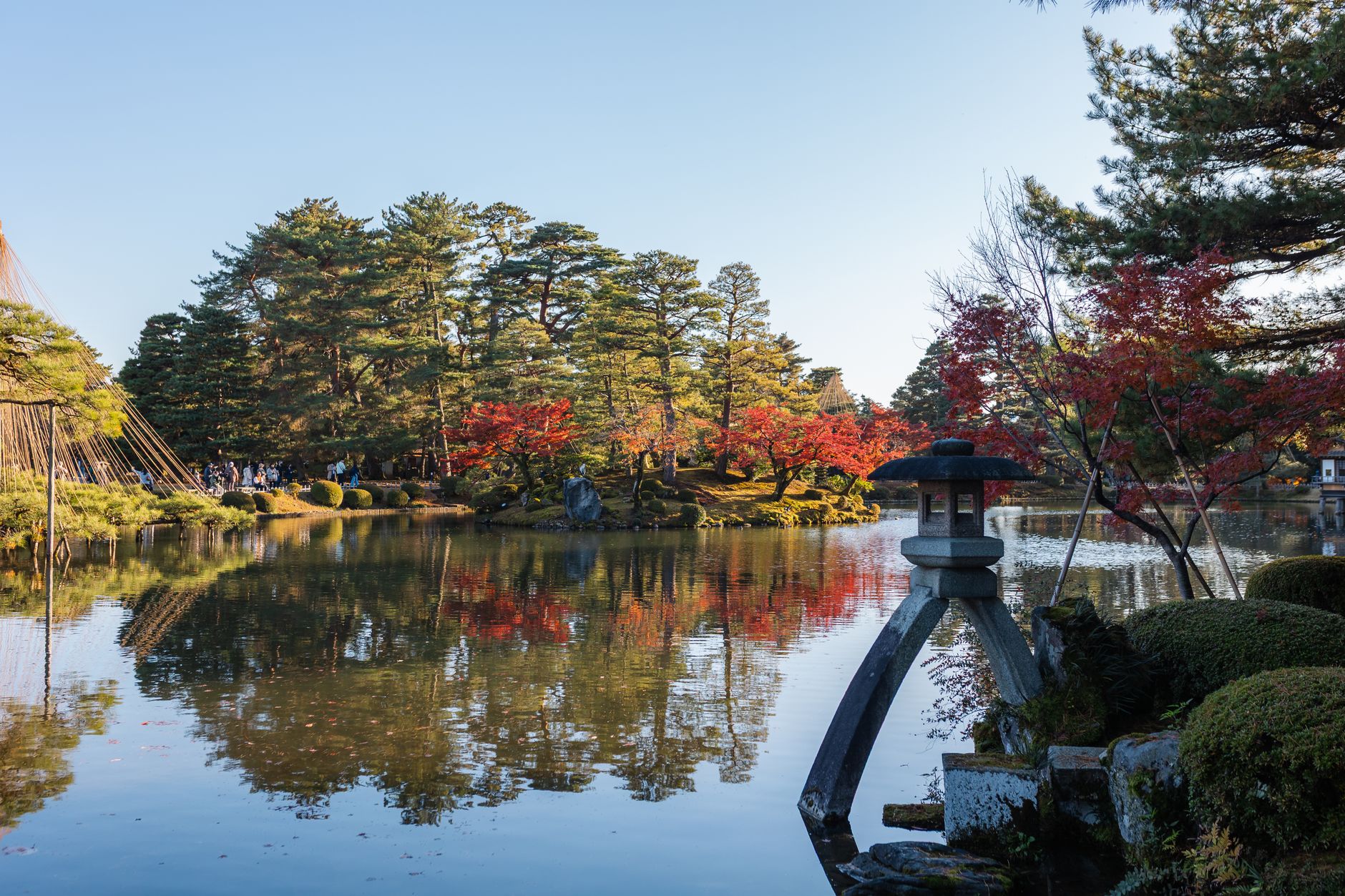
This means that if you travel in early to mid-November, you have a good chance of catching the mountains at peak color while the city is just beginning to turn—two autumn moods in a single trip. Another bonus: at Kenrokuen, the installation of yukitsuri (cone-shaped rope frameworks that protect pine branches from breaking under the weight of snow) usually begins in early November and is a uniquely Kanazawa sight. If you arrive at the right time, you will see the garden filled with red leaves and rope crowns rising against the sky.
A frank warning: these dates shift with the weather each year, and in recent years the season has tended to arrive later than before. About two to three weeks before your trip, check the latest koyo forecast before finalizing your dates if your schedule is flexible.
Gokayama sometimes holds a few autumn light-up evenings for the villages; these are small-scale events, the dates and times change from year to year, and some years they are not held at all. Check the official website of Nanto City/Gokayama rather than relying on old articles online. Shirakawa-go’s famous light-up event belongs to winter and requires advance registration, so it is unrelated to this autumn trip.
Staying in a Gassho House: Should You?
Yes—at least once. In Ogimachi, Ainokura, and Suganuma, the minshuku are mainly thatched-roof houses run by the owner’s family. The typical experience includes a tatami room, futon bedding, a shared bathroom, dinner and breakfast prepared by the hosts, and meals or relaxation around an irori hearth in the middle of the house. It is not luxurious, but it is authentic.
A few things to know in advance so you are not disappointed:
- There are very few rooms. Each village has only a handful of houses that accept guests, and each house has only a few rooms. Book several months ahead for fall foliage season and weekends.
- Many houses do not accept solo travelers, or prioritize guests staying as two or more people. Some also restrict stays for very young children.
- Fire-safety rules are extremely strict—understandably, given the thatched roofs. No smoking indoors is a given, and the daily schedule tends to start and end early.
- Nights in Gokayama in November are colder than you might expect, especially when an old house is not well sealed against drafts. Bring one warmer layer than you think you will need.
If you cannot book a minshuku in the village, reasonable backup options are staying in the Johana area, Takaoka, or returning to Kanazawa—but then you lose the most valuable part: the early morning and evening in the village after the day-trippers have gone home.
What to Eat Along the Route
In Gokayama, the must-try dish is Gokayama tofu—a tofu so firm that, according to local lore, it could once be carried by tying it to a rope. Grilled and dipped in miso, it is perfect in cold weather. Also try grilled iwana char, soba with mountain vegetables, and rustic home-style stews. Shirakawa-go also offers Hida beef and hoba-miso grilled on magnolia leaves. Once you reach Kanazawa, the flavors change completely: seafood bowls at Omicho Market, jibuni, the signature stew of Kaga cuisine, renowned late-autumn and early-winter sushi, and gold-leaf-topped ice cream for a bit of fun.
Preparation and a Few Considerate Reminders
- Wear walking shoes with good traction. The paths to the Ainokura and Shiroyama viewpoints are dirt slopes, and they are often damp in the early morning.
- Bring a light windbreaker and a warm base layer. The temperature difference between early morning and midday in the valley can be significant.
- Carry cash. Many small restaurants and minshuku in Gokayama accept cash only; villages have virtually no ATMs.
- Signal and battery. You will have reception, but it can be intermittent on some mountain roads; download offline maps and bus timetables in advance.
- Be respectful. These are villages where people actually live: do not enter yards or fields, do not open residents’ doors, do not use a drone without permission, and keep noise down in the evening. Ainokura is quiet and beautiful because the community has preserved its way of life—please do not damage that simply by visiting.
- If you are driving yourself, consider the toll mountain route connecting Shirakawa-go with the Hakusan side: the fall colors are beautiful, but the road is open only seasonally and closes early once winter arrives, so check the road conditions on the day before setting out.
Frequently Asked Questions
If I Only Have One Day, Should I Choose Shirakawa-go or Gokayama?
If it is your first visit and you want the iconic scenery, choose Shirakawa-go—Shiroyama Observatory is still the view that leaves people speechless. If you have already visited Shirakawa-go, or you are allergic to crowds, going straight to Ainokura and spending the entire afternoon there will be far more rewarding. Trying to squeeze both into one day by public transportation is a recipe for chasing bus schedules and experiencing nothing properly.
Can I Complete This Route Without Renting a Car?
Yes, and that is exactly the situation this article is written for: the Shinkansen to Shin-Takaoka, the heritage bus into Gokayama and Shirakawa-go, and an intercity bus back to Kanazawa. The only issue is the low frequency, so build your itinerary around the bus timetable first and then fit the attractions into the gaps—not the other way around.
Which Week of Autumn Is Best?
Early to mid-November is usually the best window for balancing mountain foliage with Kanazawa’s autumn colors. Late October works if you are prioritizing higher elevations. The exact timing varies each year, so check the koyo forecast a few weeks before your trip.
What Is the Difference Between Ainokura and Suganuma If I Can Visit Only One?
Ainokura is larger, sits on a high terrace, has a viewpoint overlooking the village, and offers places to eat and stay—making it better for a longer visit or an overnight stay. Suganuma is much smaller and right beside the road, with an elevator from the parking lot down to the village, so it is extremely accessible—ideal for a short stop or for travelers with elderly companions. If you can visit only one, choose Ainokura.
Should I Add Takayama to This Route?
If you have four days or more, it can work well, since buses from Shirakawa-go to Takayama are fairly convenient. But if you only have two to three days, forcing Takayama into the trip will turn it into a chain of transfers. The Takayama–Shirakawa-go route has its own rhythm and deserves a separate trip.
Is There Already Snow in Gokayama in Autumn?
Usually not, but the area is famous for having some of the heaviest snowfall in Japan, and cold spells in late November can bring early snow to the mountain passes. If you are driving yourself in late November, ask the rental company carefully about winter tires and monitor both the weather forecast and road conditions.
This route is not for people who want to quickly tick destinations off a list. It is for travelers willing to spend a night in the mountains, wait for the next bus, and in return get a morning standing among two dozen thatched-roof houses with no one else around. Then, when you descend to Kanazawa and sit down to eat a hot seafood bowl in Omicho Market, the previous two days may feel like a journey backward into the past before returning to the present—all for the price of a few bus rides.
More from this region — Chubu (Nagano, Kanazawa)
View all →
Six Days of Doburoku Festivals in Shirakawa-go in Mid-October
18 min · tips
Shirakawa-go in late fall: how the leaves change week by week and when to book
17 min · tips
A Fall Day in Shirakawa-go: An Hour-by-Hour Itinerary for Day-Trippers
17 min · tips
Shirakawa-go in the Fall Foliage Season: The Best Times to Avoid Tour Groups and the Real Costs
18 min · tips