
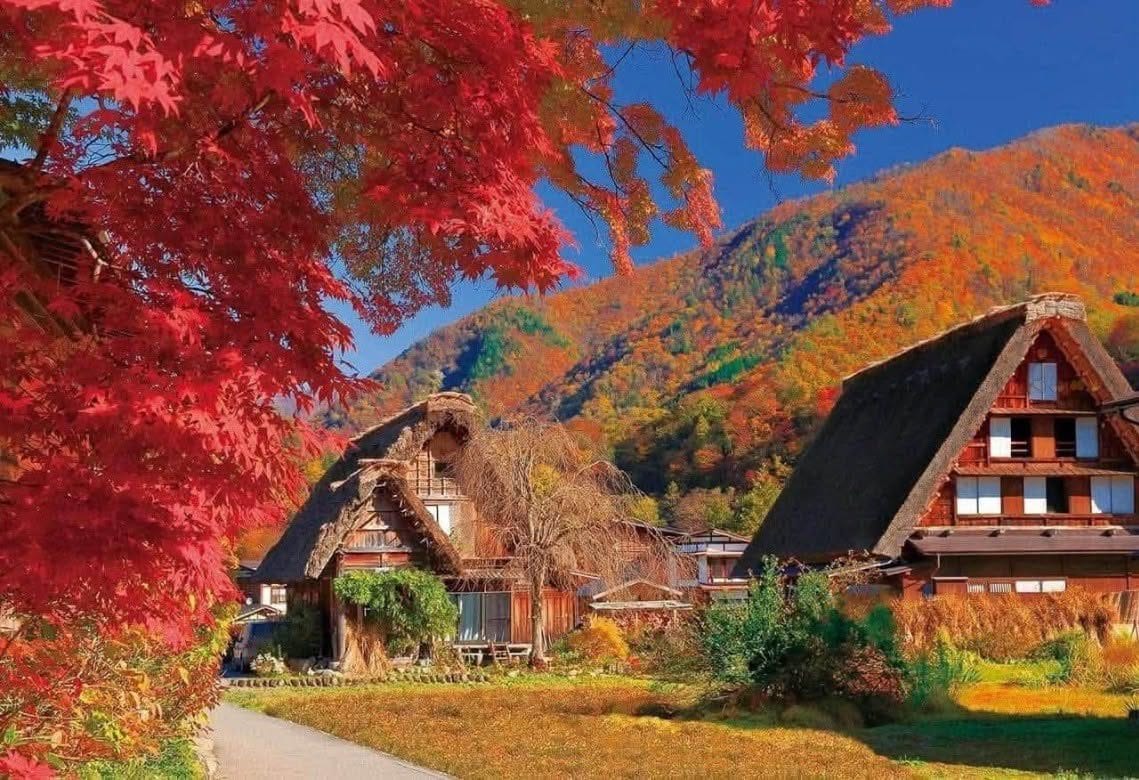
The Road to Shirakawa-go During Fall Foliage: Buses, Tickets, and Self-Driving Tips
Four departure routes from Takayama, Kanazawa, Toyama, and Nagoya, plus timetables, how to reserve seats a month in advance, estimated costs, luggage storage, and tips for driving on weekends.
Aug 12, 2026·✍️ olablog·⏱ 17 min read
Four departure routes from Takayama, Kanazawa, Toyama, and Nagoya, plus timetables, how to reserve seats a month in advance, estimated costs, luggage storage, and tips for driving on weekends.
Tap a region to browse articles
There’s one harsh truth anyone who visits Shirakawa-go in November soon discovers: the hardest part of the trip isn’t climbing up to the Shiroyama Observatory to capture that perfect shot of a gassho-roofed house surrounded by a brilliantly golden valley. It’s getting a seat on the bus. This historic village has no train station. No JR line runs here. Every route funnels into a tiny bus terminal on the edge of the village, and on fall-foliage weekends, that terminal has to absorb visitors arriving from all four directions: Takayama, Kanazawa, Toyama, and Nagoya.
I once saw a group of Vietnamese friends at the Nohi Bus counter in Takayama at 9 a.m. on a Saturday in early November, asking for tickets to Shirakawa-go, only to receive the familiar reply: the earliest bus with available seats was at 14:00. Leaving at 2 p.m. meant arriving in the village at around 3 p.m.—just enough time to wander for roughly two hours before having to catch the last bus out. Their entire morning was effectively lost. This is completely avoidable if you know one thing in advance: bus tickets to Shirakawa-go go on sale online about a month ahead, and during fall foliage season, you should book as soon as sales open.
This article brings together all the practical logistics for an autumn trip: which departure point makes the most sense, how long each bus takes, where to book, whether a round trip is cheaper, where to leave your luggage when the village has limited lockers, and how parking and the White Road work if you drive yourself. It also covers Gokayama—the neighboring group of historic villages that was jointly recognized by UNESCO, is much quieter, and gets overlooked by many travelers simply because they don’t know there are buses going there.
When does fall foliage appear in Shirakawa-go?
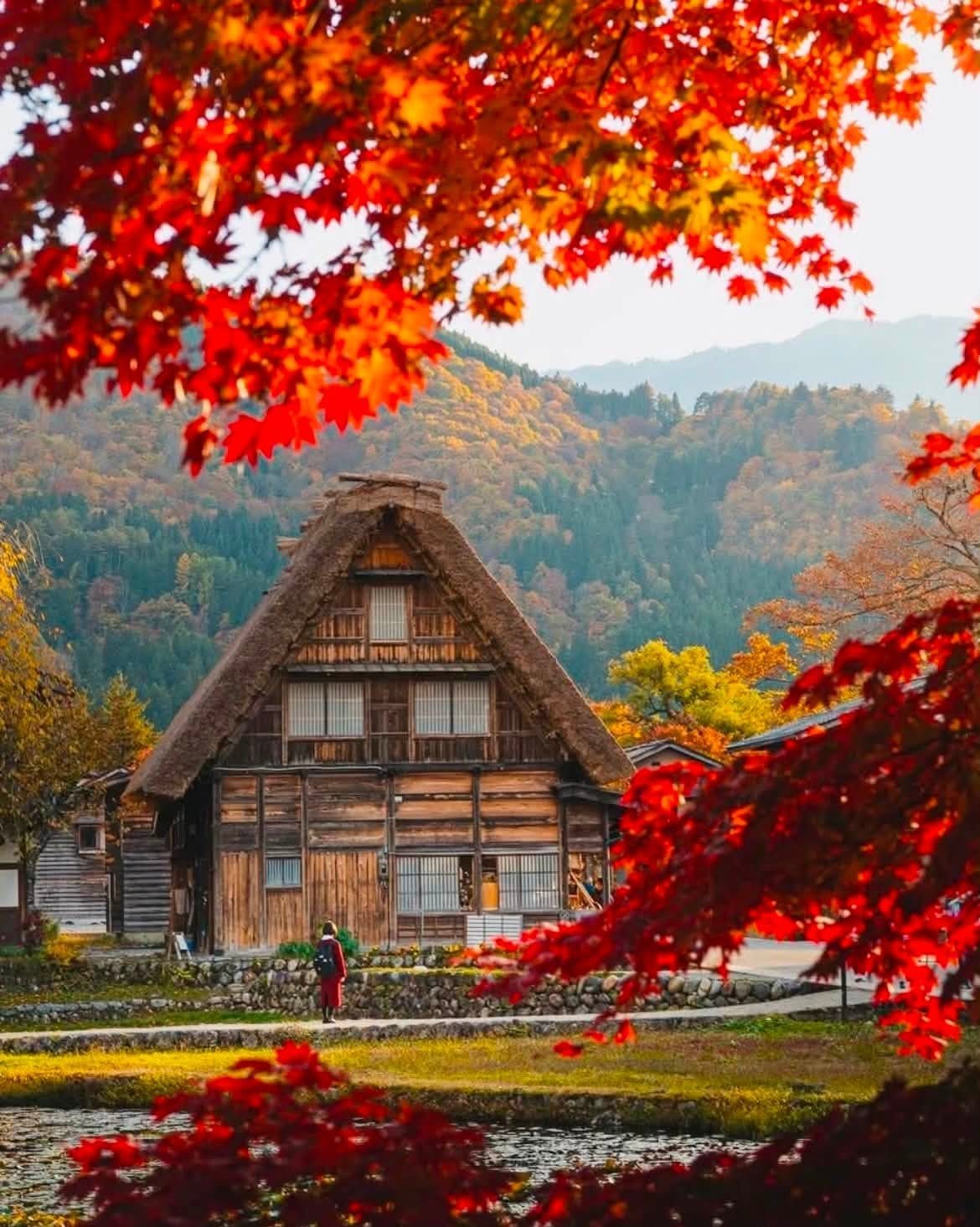
The village sits at an elevation of around 500 meters in the Shokawa River valley in Gifu Prefecture, so the leaves change considerably earlier than in Kyoto or Tokyo. Typically, the colors begin appearing around the second half of October on the mountain slopes surrounding the village, with the best displays usually from late October to mid-November. Mount Hakusan behind the village changes even earlier; in some years, golden hues can already be seen in the highlands by late September.
But this is a forecast, not a fixed calendar. The timing can shift by anywhere from a few days to a full week depending on summer temperatures and the first cold spells. Before finalizing your dates, check the koyo forecasts on sites such as Weathernews or the official Shirakawa Village website, which usually has fairly up-to-date information in October.
One small note about expectations: autumn scenery in Shirakawa-go is not a blazing-red maple forest like Arashiyama. Instead, you’ll see patches of yellow, orange, and reddish brown spread across the mountain slopes around steeply pitched thatched roofs, along with freshly harvested rice fields and early-morning mist settled in the valley. The beauty is subdued and expansive. Anyone visiting specifically to “hunt for red leaves” may feel slightly disappointed; anyone hoping to see an old Japanese village surrounded by autumn scenery will almost certainly be satisfied.
Four routes to the village and which one to choose
From Takayama — the shortest route with the most departures
This is the most popular and easiest option. Nohi Bus operates the Takayama–Shirakawa-go route, which takes about 50 minutes each way. Buses depart right from the Takayama Nohi Bus Center, next to JR Takayama Station. During peak season, there are quite a lot of departures—more than a dozen each way on some days. The first bus is usually around 8 a.m., while the last bus leaves the village in the late afternoon.
A one-way ticket costs around 2,600 yen, while a round trip costs around 4,700 yen—so buying a round trip saves roughly 500 yen. These figures may change, so check the Nohi Bus website again before traveling.
The key point: most departures use reserved seating (指定席). Some buses offer non-reserved seating, but don’t count on finding a seat that way on November weekends.
From Kanazawa — the second most popular route
The Kanazawa–Shirakawa-go route is jointly operated by Hokutetsu Bus and Nohi Bus, departing from the bus terminal on the East Exit side of Kanazawa Station. The journey takes around 1 hour 15 minutes to 1 hour 30 minutes, depending on the bus. Some services travel directly on the expressway, while others make additional stops. A one-way ticket costs around 2,600 yen, and a round trip costs around 4,600 yen.
This route almost always requires advance reservations, and in autumn it sells out just as quickly as the Takayama route because Kanazawa is a major stop on international travelers’ Hokuriku itineraries.
From Toyama — little-known and often overlooked
There is a route connecting Toyama with Shirakawa-go that takes around 1 hour 25 minutes to 1 hour 30 minutes and costs approximately 2,000 to 2,200 yen one way. There are far fewer departures than on the two routes above—usually only a few services per day—so you need to plan carefully.
The upside is that this is a sensible option if you’re traveling along the Tateyama Kurobe Alpine Route, which is also beautiful in autumn, or flying into Toyama Airport. And because there are fewer international visitors, your chances of finding a last-minute seat are slightly better—but “slightly better” still isn’t a reason to skip booking ahead.
From Nagoya — possible as a day trip, but requires careful planning
Nagoya has a direct highway bus to Shirakawa-go that takes around 3 hours each way and costs approximately 4,000 yen or more one way. The drawback is the very low frequency: during peak season, there is often only around one round trip per day, and advance reservations are mandatory.
That means if you miss the bus, you have no Plan B that day. If you’re starting from Nagoya, consider taking a limited express train to Takayama first—it takes around 2 hours 20 minutes—staying overnight in Takayama, and then taking the bus to the village the next morning. It’s safer, and you also get to enjoy another beautiful historic town.
From Takaoka or Shin-Takaoka — the only route that works well with Gokayama
This is the piece many Vietnamese travelers miss. Kaetsuno Bus operates the “World Heritage Bus” (世界遺産バス) from Takaoka Station and Shin-Takaoka Station, a Shinkansen station on the Hokuriku line, through Gokayama—both Suganuma and Ainokura—and on to Shirakawa-go.
The advantage: these buses generally use non-reserved seating, and you pay when boarding, so advance reservations aren’t required. The downside: they are slower, with the total journey from Takaoka to Shirakawa-go taking around 2 hours or more, and there are not many departures each day.
Kaetsuno also sells daily or two-day free passes for this route, which can be good value if you plan to stop at Ainokura and Suganuma before continuing to Shirakawa-go. Pass types and prices vary by season, so check the official Kaetsuno Bus website.
Booking online before peak season
Where to book
There are several main options:
- Japan Bus Online — an aggregator with an English-language interface that lets you book many highway bus routes, including routes to Shirakawa-go. International credit cards are accepted.
- Nohi Bus’s dedicated reservation website — has an English section and is used for routes from Takayama and some jointly operated services.
- The Hokutetsu Bus website for routes from Kanazawa and the Kaetsuno Bus website for the World Heritage route.
- Ticket counters at the bus terminals — tickets are still sold there, but in autumn they should be considered a backup option only.
If you’re staying in Japan for a while and are comfortable navigating Japanese-language websites, booking directly through each operator usually gives you a clearer view of seat availability. For first-time visitors, however, Japan Bus Online is the easiest place to start.
When do tickets go on sale?
Highway bus tickets in Japan generally go on sale about one month in advance. For fall foliage season, the ideal booking schedule is:
- Late September: finalize your travel dates and monitor the koyo forecast.
- As soon as the system opens sales for your travel date: book the morning outbound bus first, since morning departures always sell out earliest.
- At the same time: book your return. Many people reserve only the outbound trip, then panic when they reach the village and discover that all return buses are full.
Weekends and public holidays in early November are the most difficult. If your schedule is flexible, traveling midweek means easier ticket availability and significantly fewer visitors—the difference between a Tuesday and a Sunday in Shirakawa-go is enormous.
Round-trip tickets, passes, and the cost calculation
Round-trip tickets are slightly cheaper than two one-way tickets, but they usually come with validity restrictions, so they only make sense when you’re traveling out and back on the same route within a few days.
If your itinerary looks something like Nagoya–Takayama–Shirakawa-go–Kanazawa, check whether a regional pass works out better:
- Takayama–Hokuriku Area Tourist Pass: available to overseas visitors, covering JR trains in the region and including bus travel between Takayama, Shirakawa-go, and Kanazawa. Important: even with the pass, you still need to reserve a seat on the bus in advance—the pass does not automatically include a seat.
- Shoryudo Bus Pass from the group of bus operators in the Chubu region: available in several route variations and suitable for itineraries covering multiple destinations by bus.
Pass conditions, prices, and coverage change from year to year, so read the official information again before buying instead of relying on an old article online.
Luggage: don’t bring your suitcase into the village
This is the classic mistake. Shirakawa-go’s bus terminal has coin lockers, but there aren’t many, and during peak season they can be full by midmorning. There is also usually a paid luggage-storage counter, but you should confirm its opening hours and fees on-site or on the village’s tourism information website.
Here are some practical solutions:
- Leave it at your departure station. The coin lockers at Takayama, Kanazawa, and Toyama stations are more plentiful than those in the village. Leave your suitcase there and carry a small backpack.
- Leave it at your hotel. If you’re staying two nights in Takayama or Kanazawa, hotels will often store your luggage free of charge even on the day you check out.
- Use takkyubin. If you’re changing cities the next day, send your suitcase directly to your next hotel through Yamato or Sagawa’s delivery service. It usually costs a few thousand yen per piece, but in return you get a wonderfully light day of walking.
- Large luggage on the bus. Many highway buses have luggage compartments underneath, but some services limit the number of pieces or require you to report large luggage when booking. If you’re bringing a large suitcase, read the baggage rules carefully during the reservation process.
Inside the village, some paths are gravelly and gently sloped, and the crowds can be heavy. Dragging a suitcase across the Deai suspension bridge on a weekend is genuinely unpleasant for everyone involved.
Driving yourself: more freedom, but plan ahead
Parking and the best times to arrive
Self-driving visitors park at Seseragi Park on the other side of the river, then walk across the suspension bridge into the village. Parking for a regular car generally costs around 1,000 yen per visit, with higher fees for larger vehicles. Fees may be adjusted, so check the signs on-site.
The issue isn’t the cost but the timing. On autumn weekends, the line of cars waiting to enter the parking lot can be long, and the lot may occasionally fill up, forcing you to wait. The general advice is to arrive before 8:30 a.m. or accept entering the village after 15:00, once the tour groups have started to leave. The worst period is usually between 10:00 and 13:00.
Shiroyama Observatory
This is the spot for the classic panoramic photograph. The uphill walk takes around 15 to 20 minutes, and a shuttle bus runs from the village for a small fee. Access by private car is restricted, so don’t assume you can simply drive all the way up—read the signs or ask at the information counter.
Hakusan Shirakawa-go White Road
This toll road connecting Shirakawa-go with the Hakusan side of Ishikawa is one of the region’s most beautiful autumn drives, passing through forests and several waterfall viewpoints. The road is open only seasonally, generally from around early summer to around early November, and remains closed throughout winter. It also closes at certain hours each day and may shut unexpectedly in bad weather.
If you plan to take this route, you must check the official White Road website the day before. Many people plan for November 10 only to discover that the road has already closed early because of the season’s first snow.
Weather and tires
By late November, snow is already possible in this area, especially at higher elevations. If you’re renting a car in late autumn, ask the rental company specifically about winter tires. Shirakawa Pass and the surrounding mountain roads are not places to test your luck with regular tires.
Adding Gokayama to your trip
Gokayama is in Toyama Prefecture, north of Shirakawa-go, and consists of two clusters of gassho houses that were jointly recognized by UNESCO: Ainokura (larger, set on a hillside, with beautiful views) and Suganuma (smaller and compact, right beside the river).
The biggest advantage is the peace and quiet. On a day when Shirakawa-go is packed, Ainokura may still have only a few dozen visitors scattered around. For anyone looking for the feeling of a “real historic village” rather than a “photo spot,” this is where you should spend your time.
The most practical way to get there is on Kaetsuno’s World Heritage Bus: travel from Shin-Takaoka or Takaoka, stop at Ainokura, continue to Suganuma, and then proceed to Shirakawa-go—or do the route in reverse. Remember to photograph the timetable at the stop when you get off the bus; departures are infrequent, and missing one can mean waiting 1 to 2 hours.
Driving makes things much easier: both Ainokura and Suganuma have their own paid parking lots, and the drive from Shirakawa-go to Ainokura takes only around 30 to 40 minutes via the Tokai-Hokuriku Expressway.
Sample autumn itineraries
One day, no overnight stay (from Takayama): take a bus at around 8 a.m. and arrive in the village at around 9 a.m. Go up to Shiroyama for photos before the crowds arrive, then head down to explore open houses such as Wada-ke, have Hida beef or soba for lunch, enjoy coffee in a renovated gassho house, and take the bus back in the early afternoon. It’s a full day, but a rushed one.
Two days, with an overnight stay: spending one night in a gassho house is the most worthwhile experience here. After 17:00, once the tour buses have left, the village returns to feeling like an actual village. The problem is that there are very few rooms, most are family-run minshuku, and autumn accommodation is often fully booked several months in advance. Many places do not accept reservations through international booking sites; you may need to call or book through the village tourism association. If you can’t get a room, staying in Takayama is a good alternative.
Three days, at a relaxed pace: Kanazawa (Kenrokuen Garden in autumn) → bus to Shirakawa-go → World Heritage Bus to Gokayama → Shinkansen from Shin-Takaoka onward. This is a one-way route with no backtracking, making it ideal for people living in Japan who want to make the most of a long weekend.
A few easily overlooked tips
- People genuinely live in houses throughout the village. There are signs prohibiting entry at many points; don’t walk into someone’s yard or photograph directly into their windows.
- Autumn mornings in the valley are considerably colder than the city forecast suggests, and a difference of several degrees is normal. Bring an extra layer.
- Many restaurants and shops in the village close fairly early, around late afternoon. Don’t leave your meal until after 16:00.
- Cash is still more convenient at small restaurants and parking lots, although cards are becoming increasingly common.
- The village’s Doburoku Festival takes place every year in mid-October. If your visit coincides with it, the village will be busier than usual; if you enjoy festival atmosphere, however, that can be a bonus. Check the official website for the exact dates.
- Shirakawa-go’s famous light-up is a winter event, held in January and February on a limited number of days and requiring advance registration. There is no large-scale light-up in autumn, so don’t be misled by photos you see online.
Frequently asked questions
Do I need to reserve a bus ticket in advance, or can I just buy one at the terminal? In autumn, you should book ahead. The routes from Takayama, Kanazawa, Toyama, and Nagoya mainly use reserved seating, and morning departures are often full from the last weekend of October through mid-November. The only exception is the World Heritage Bus from Takaoka, which uses non-reserved seating and accepts payment when you board.
How far in advance can I book? Usually around one month before the travel date. If your date falls on a peak-season weekend, be ready to book on the exact day sales open.
Are round-trip tickets much cheaper? They are cheaper, but not by much—usually only a few hundred yen less than two one-way tickets, depending on the route. They’re worth buying if you’re certain you’ll return on the same route; if you’re arriving from Takayama and leaving toward Kanazawa, simply buy two one-way tickets.
Can I use a JR Pass on the bus to Shirakawa-go? Not the nationwide JR Pass, because these are privately operated buses. Some regional passes, such as the Takayama–Hokuriku Area Tourist Pass, include these bus routes, but you still need to reserve a seat separately. Conditions change from year to year, so check the official website.
Is there luggage storage in the village? There are coin lockers at the bus terminal, but they are limited and fill quickly, along with a paid luggage-storage service. The safest option is to leave your luggage at your departure station or hotel and bring only a small backpack into the village.
Should I visit as a day trip or stay overnight? A day trip is enough if you simply want to see the village and take photos. Staying overnight in a gassho house is a completely different experience, but there are very few rooms, and autumn reservations need to be made many months in advance.
Is driving yourself worthwhile? Yes, if you plan to combine the visit with Gokayama or drive along the White Road, and if you can arrive early. Not really, if you’re only visiting Shirakawa-go at noon on a weekend—in that case, the bus can be faster than driving because you avoid waiting to enter the parking lot.
When is the fall foliage at its best? Usually from late October to mid-November around the village, and earlier in the higher elevations of Hakusan. Since the timing varies each year, monitor the koyo forecast in October before finalizing your bus tickets.
Is Gokayama worth adding? Definitely, if you have an extra half day and enjoy quieter places. Ainokura is small, uncrowded, and its autumn hillside scenery is gentle and beautiful. Just remember that buses are infrequent, so you need to keep a close eye on the timetable.
More from this region — Chubu (Nagano, Kanazawa)
View all →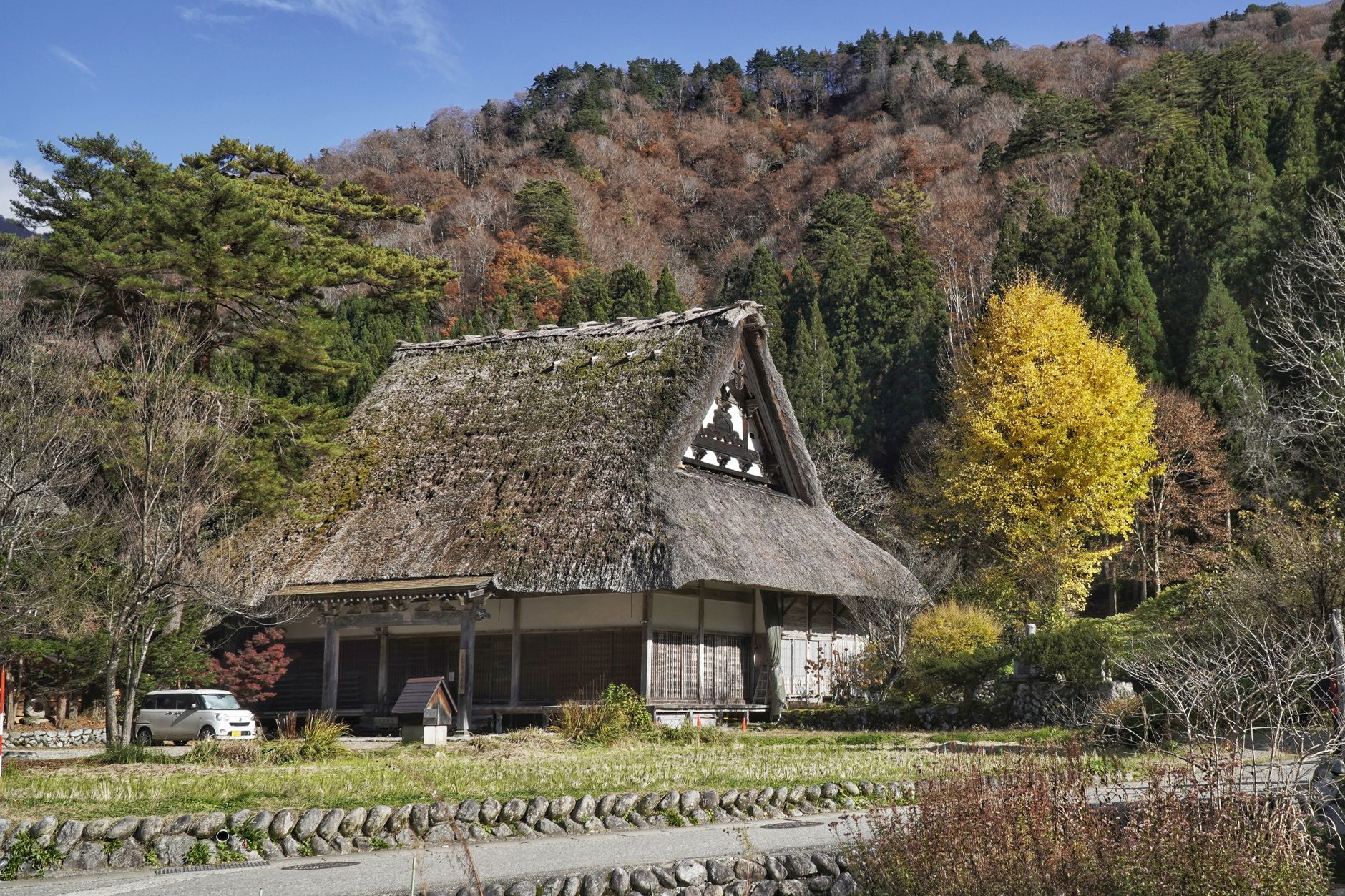
Hunting for Fall Colors in Shirakawa-go: A Map of Photo Angles and the Best Light
17 min · tips
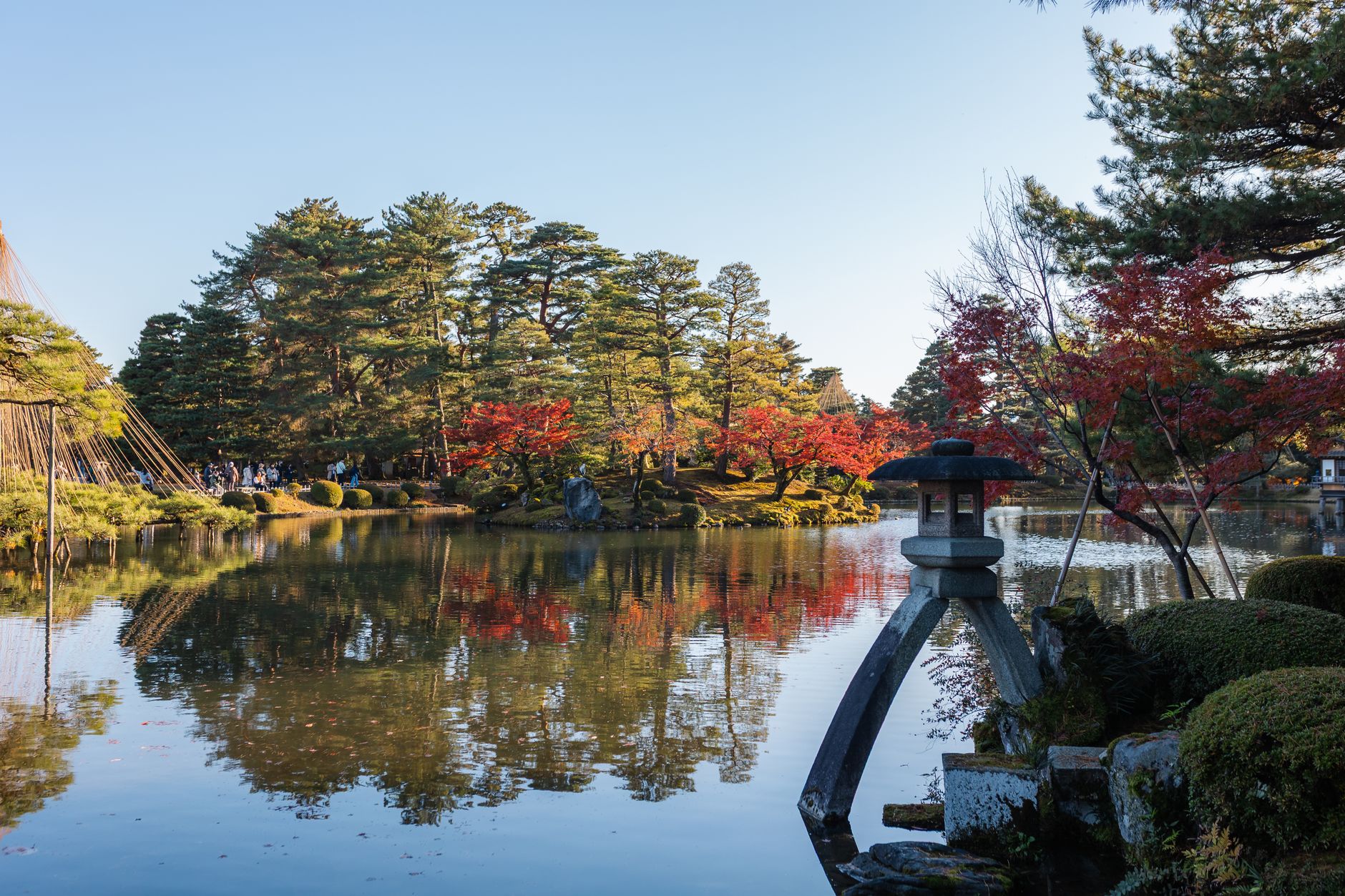
Connecting Shirakawa-go, Gokayama, and Kanazawa: A Three-Stop Autumn Route
18 min · tips
Six Days of Doburoku Festivals in Shirakawa-go in Mid-October
18 min · tips
Shirakawa-go in late fall: how the leaves change week by week and when to book
17 min · tips