
Staying Overnight in Shirakawa-go: A Night by an Irori Hearth in a Gassho-zukuri House
How to book Koemon or Magoemon minshuku, what dinner by the hearth is like, the village after dark and the early-morning mist before tour buses arrive, plus estimated costs and important lodging rules.
Aug 12, 2026·✍️ olablog·⏱ 17 min read
How to book Koemon or Magoemon minshuku, what dinner by the hearth is like, the village after dark and the early-morning mist before tour buses arrive, plus estimated costs and important lodging rules.
Tap a region to browse articles
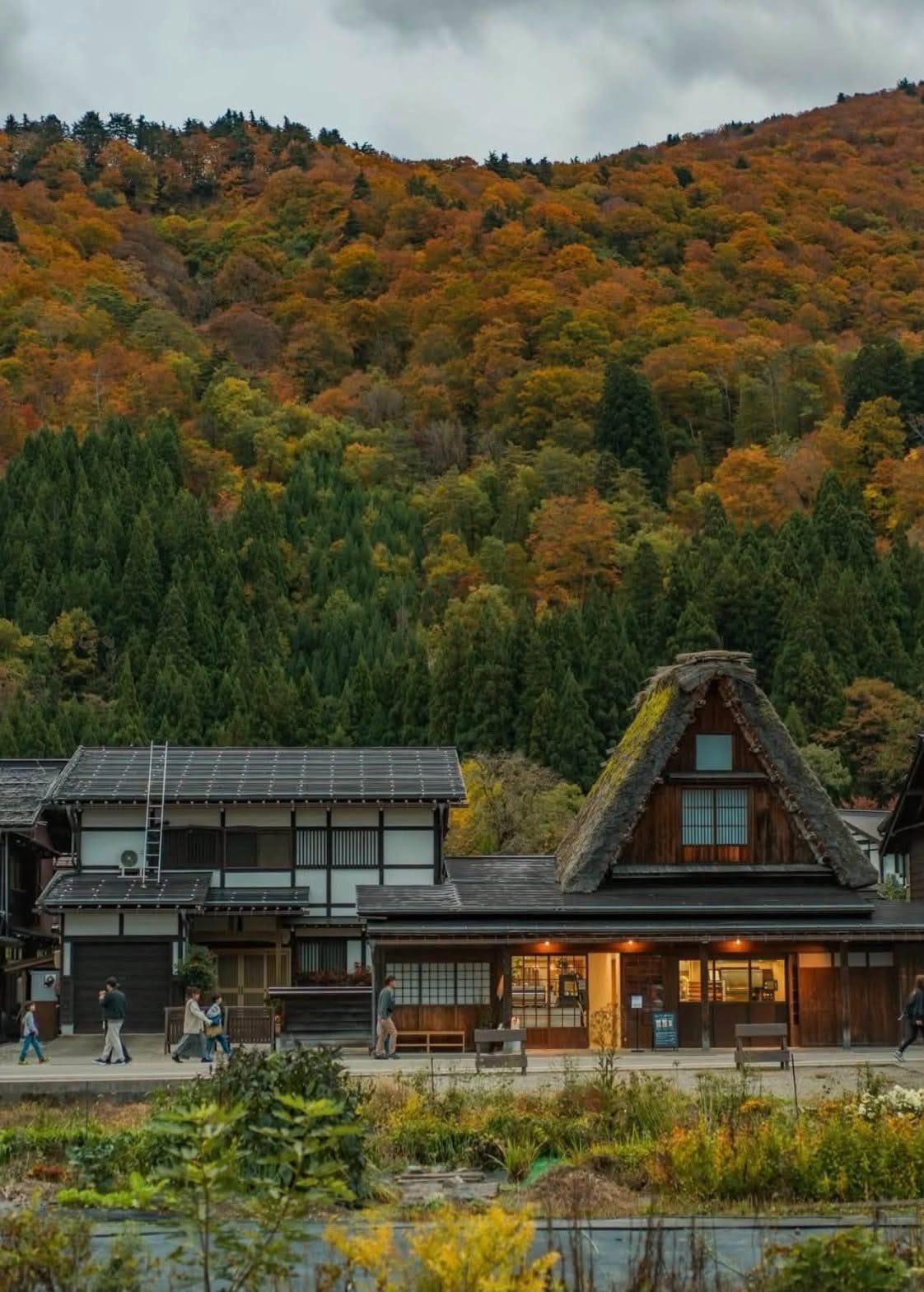
There is a moment in Shirakawa-go that almost no day-tripper ever witnesses: around 16:30 in autumn, the last bus of the day pulls away, the crowds of selfie-stick-wielding visitors thin out, and the village that was as noisy as a fairground ten minutes earlier suddenly becomes so quiet that you can hear water running through the stone-lined channels along the village road. Lights come on one by one inside the thatched-roof houses, glowing a muted yellow. Smoke rises straight from the chimneys now that the wind has died down. This is when you understand why the village was inscribed as a World Heritage Site: not because it has pretty houses to photograph, but because it is still a living village.
The catch is that you have to stay overnight to experience it. Staying in Shirakawa-go is not like booking a hotel in Kanazawa or Takayama: most places to sleep in the village are minshuku — family-run guesthouses operated by the owners themselves, with only a few rooms each. Reservations often have to be made by phone or through the local tourism association, and during the autumn foliage season, rooms are booked months in advance. Names such as Koemon, Magoemon, Yosobe, and Kanja are passed around in Japan travel groups for exactly that reason — not because they are luxurious, but because they are difficult to book.
This is a 2-day, 1-night itinerary for people who genuinely plan to stay overnight: how to find and book a minshuku, what dinner around an irori hearth is like, what the village feels like after dark and on an autumn morning before the tour buses arrive, plus estimated costs and a set of lodging rules you should read before clicking “Book” — because this is someone’s home, not a hotel.
Why You Have to Stay Overnight to See the Real Village
Shirakawa-go is one of the busiest destinations in the Chubu region for day trips. Buses from Takayama, Kanazawa, and Nagoya arrive continuously from around 9:00 in the morning until mid-afternoon; at times, visitors even have to queue at the Shiroyama Observatory on the hill to take a panoramic photo. If you only stop for two hours before leaving, the impression you take away is often “beautiful, but a little like a theme park.”
But the village has two completely different time periods: from when the last bus departs until around 9:00 the following morning. During those hours, Ogimachi returns to its true character — residents water their gardens, dry persimmons, and sweep leaves from their porches; the streetlights are sparse and golden; the main road is completely empty. Autumn offers another gift as well: the difference between daytime and nighttime temperatures in the Shogawa River valley is considerable, so on clear mornings after a humid day, mist rises to cover the rice fields, leaving only the gabled ends of the thatched roofs poking through like islands. This is the scene that 99% of travel photos are taken by people who stayed overnight.
Gokayama — the cluster of gassho-zukuri villages in Toyama, including Ainokura and Suganuma — is different: it is quiet all day long. Ainokura is much smaller than Ogimachi, with fewer shops, dirt-and-grass village paths, and a much stronger “mountain village” atmosphere. Both areas form part of the same UNESCO-recognized World Heritage Site (since 1995), so if you have 2 days, combining them makes the most sense: sleep on one side and explore the other on foot.
Choosing a Village and a House: Ogimachi or Ainokura
Ogimachi (Shirakawa-go, Gifu Prefecture) is the most popular choice. Advantages: more minshuku (several dozen), restaurants, traditional-house museums, and direct bus connections to Takayama and Kanazawa. The downside is that it gets very crowded during the day, making the privacy of the evening feel even more striking by contrast.
Ainokura / Suganuma (Gokayama, Toyama Prefecture) has fewer houses that accept guests, less frequent public transportation, and evenings that are literally pitch-black. If you want extreme quiet and do not mind complicated transportation, this is the choice for experienced travelers. Ainokura is also associated with the Kokiriko folk dance and Gokayama’s traditional washi paper-making.
Among the specific houses in Ogimachi, the names most often mentioned are Koemon (幸ェ門), Magoemon (孫右ェ門), Yosobe (与四郎), and Kanja (甚左衛門) — all genuine gassho-zukuri houses, run by the owners’ families and with limited capacity. Do not obsess over which one is “the best”: the main differences are their location in the village, whether the irori is actually used or merely decorative, and the personality of the host family. Whichever house still has a room on your dates is the best house.
One detail worth noting: not every minshuku is a thatched-roof house. Some ordinary houses in the village also accept guests. If your goal is to “sleep in a gassho-zukuri house,” make sure to confirm this when booking.
Booking a Minshuku: How to Actually Do It
Where to Book
The most official channel is the Shirakawa Village Tourism Association — the official website lists lodging facilities along with contact information, and at various times it also operates a room-search and booking system. This is the first place you should check, since the village’s booking policies change from year to year.
Other options include:
- Calling the minshuku directly: the traditional method, and still the most effective, but you will almost certainly need to speak Japanese. If your Japanese is good enough to reserve a table at a restaurant, that is probably sufficient — the necessary phrases mainly concern dates, number of guests, and number of rooms.
- Japanese booking sites such as Rakuten Travel and Jalan: some minshuku are listed there, while others are not. The Japanese interfaces often make it easier to find available rooms than the English versions.
- English-speaking minshuku/ryokan agencies: they make the booking on your behalf, for a fee or at a slightly higher rate, saving you from having to make a phone call.
If you live in Japan, your biggest advantage is having a Japanese phone number — many properties require a domestic contact number for confirmation.
How Far in Advance Should You Book?
For the autumn foliage season (usually from around late October to mid-November, depending on the year and elevation — check the koyo forecast before finalizing your dates), think in terms of months, not weeks. Weekends and public holidays during this period are the first to sell out. Many houses open reservations at a set point in advance (for example, several months ahead), so if your dates are not available yet, do not assume the rooms are gone — ask when reservations will open.
Practical tip: aim for weekdays. Tuesdays and Wednesdays in autumn are much easier to book and make the village even quieter at night.
Read Carefully Before Confirming
Confirm the following in writing (by email or message) before considering the reservation final:
- Whether the price includes 1 night with 2 meals (dinner + breakfast) — this is the standard arrangement at minshuku.
- Payment: quite a few houses accept cash only. Withdraw money before entering the village.
- Private room but shared facilities: most minshuku have shared baths and toilets; rooms are separated by fusuma paper doors and do not have locks.
- Cancellation policy: these are small properties, and losing one room means losing a full day’s revenue, so cancellation fees close to the date can be substantial.
- Check-in and dinner times: dinner at a minshuku is served at a fixed time (usually around 18:00–18:30). Arriving late does not mean eating late; it may mean missing dinner entirely.
- Vehicles: if you are driving, ask in advance about parking and how to bring your vehicle into the village, since the area has vehicle restrictions and separate parking areas for day visitors.
2-Day, 1-Night Itinerary
Day 1 — Arrive After the Peak, Wait for the Village to Empty Out
Do not try to arrive early. The ideal plan is to arrive in the village in the early afternoon, leave your luggage at the minshuku (most will store it before check-in), and then walk against the flow of visitors heading out.
The basic route through Ogimachi is simple: from the parking area/bus terminal, cross the Deai Suspension Bridge over the Shogawa River to enter the village — it sways slightly when crowded, and the view back toward the village is quite good. From there, the main road runs through the village, with gassho-zukuri houses and rice fields on either side. If you want to enter a traditional house, Wada-ke is the largest and most representative. Admission costs a few hundred yen; the highlight is climbing to the attic level to see the wooden framework, tied together with rope rather than nails.
Around 15:00–16:00, head up to the Shiroyama Observatory (the former Ogimachi castle site) for the classic panoramic view. The steep walking route from the village takes around 15–20 minutes, and a shuttle bus usually operates at set times during the day — so check the operating hours and closing time on the official website, as autumn days get dark early.
Return to the minshuku before your appointed time. Many houses have a small bath used in rotation, and the host will tell you when it is your turn. There are also day-use onsen facilities outside the village — if you plan to use one, ask about opening hours first rather than trusting the times listed on aggregator websites.
Evening — Dinner Around the Irori Hearth
This is why people stay overnight.
An irori is a square hearth sunk into the floor, with glowing charcoal and an iron hook (jizaikagi) hanging above it for suspending a kettle. Smoke rises through the upper floors, permeating the bamboo and ropes and helping dry and smoke the thatched roof — this is how the house has maintained itself for hundreds of years. Remember that when you notice the smell of smoke clinging to your jacket: it is part of the building, not a malfunction.
A mountain-style Hida minshuku meal generally has little deep-sea seafood and instead focuses on what the valley provides: river fish (iwana or ayu) skewered and propped around the charcoal hearth, slowly grilled until the skin is crisp and the bones are edible; hoba miso — miso mixed with onions and mushrooms, grilled on a dried magnolia leaf, savory-sweet and extremely good with rice; salted and boiled mountain vegetables (sansai); firm mountain tofu; miso soup; and freshly harvested autumn rice. If the house makes it, you may also be offered doburoku — cloudy, unfiltered sake associated with the village’s Doburoku Festival in around mid-October (if you are interested, check the exact schedule for each year on the official website, since the festival dates differ by shrine).
The atmosphere depends on the house: at some, the hosts sit with guests and talk about village life, how the thatched roofs are replaced through the communal labor system known as yui, and how deep the snow gets in winter; at others, the meal is served and guests are left to themselves. If the host starts a conversation, this can be the most valuable part of the trip — even if your Japanese is limited to nodding and pointing.
Night — After the Village Lights Go Out
After dinner, go outside for a walk around the village. There are no decorative lights (light-up events are a winter tradition; in autumn, the village is left natural), just the warm glow filtering through paper doors and the night sky overhead. At this elevation and level of darkness, you may be able to see the Milky Way on a clear night — bring warm clothing, because the valley cools quickly after sunset in late autumn.
Remember two things: keep quiet and do not smoke outside designated areas. This is a thatched-roof village, and the entire cluster of houses is highly flammable; the firefighting sprinkler system around the village exists for a very serious reason. Most minshuku have a soft curfew of around 21:00–22:00 — if you will return later, let the host know in advance.
You will sleep on a futon laid over tatami, with thin walls that carry sound clearly. In return, you get the smell of straw, the scent of smoke, and a level of quiet that no hotel can sell.
Day 2 — Early-Morning Mist and a Morning Without Tour Buses
Get up early. In autumn, the sky begins to brighten from around 5:30–6:00; if the previous night was clear and the air is humid, mist will rise from the river. You have two options:
- Stay in the village: walk along the main road and the edges of the rice fields, photographing the thatched roofs through mist at eye level. This is the quietest time of day.
- Head up the hill: follow the trail toward the observatory to look down on the village covered by a sea of mist. The shuttle bus will not be running yet, so you will have to walk — check in advance whether the path is freely accessible early in the morning, and never cut through local residents’ gardens.
Return for breakfast at the appointed time (usually around 7:30–8:00): rice, miso soup, grilled fish, eggs, pickles, and seaweed. Check-out is usually early, around 9:00–10:00.
After you check out, the village begins receiving its first visitors of the day. This is when you should leave — head to Gokayama. Buses connect Shirakawa-go with Ainokura/Suganuma and continue toward Takaoka; service is infrequent, so check the timetable in advance and never rely on catching the next bus. In Ainokura, walk around the village, climb to the viewpoint above it (about 10 minutes uphill), and visit traditional houses open to the public; Suganuma is even smaller and can be covered in about an hour. If you have time and enjoy traditional crafts, the Gokayama area has washi workshops where you can try making paper.
In the late afternoon, take a bus back toward Takayama, Kanazawa, or Toyama, depending on your onward itinerary.
✨ Tip: if your group has 3 or more people or includes older travelers, renting a private car through OlaChill is much more flexible than taking the bus — especially for the journey from Shirakawa-go to Gokayama, where buses are spaced fairly far apart.
Estimated Cost for 2 Days and 1 Night
The figures below are estimates, intended for budgeting rather than serving as a price list; actual prices vary by season, property, and transport operator, so confirm them when booking.
| Item | Estimate / person |
|---|---|
| 1 night at a minshuku with 2 meals | around 10,000–15,000 yen |
| Round-trip bus (Takayama or Kanazawa) | around 4,000–6,000 yen |
| Shirakawa-go – Gokayama bus | around 1,000–2,000 yen/one way |
| Traditional house and museum admission | a few hundred yen per site |
| Lunch, coffee, and souvenirs | 2,000–4,000 yen |
The actual total usually comes to around 20,000–28,000 yen/person for two days, excluding transportation from Tokyo/Osaka. If you drive, replace the bus costs with car rental, fuel, expressway tolls, and parking fees (day-visitor parking lots usually charge per visit, around 1,000 yen/car; advance reservations may apply during peak periods — check the village’s official website before setting out).
Lodging Rules: Read These First So You Do Not Disturb Anyone
Shirakawa-go and Gokayama are not uninhabited open-air museums. People live in the very houses you are photographing. The rules below are partly formal regulations and partly basic courtesy:
- Do not smoke except in designated areas. The risk of a thatched-roof fire is a matter of survival for the entire village.
- Do not enter gardens, rice fields, or private yards to get a better photo angle. The boundary may be nothing more than a low line of stones, but it is still a boundary.
- Do not take close-up photos of local residents without permission; avoid pointing your camera into windows or doorways.
- Do not use a drone without official permission.
- Keep quiet after dark, especially inside minshuku with thin walls.
- Be on time: meal times, bath times, curfew, and check-out time are all real deadlines.
- Take your trash out of the village: public trash bins are very limited. This is common practice throughout Japan and even more important here.
- Avoid eating while walking along the village roads.
- Carry cash: many minshuku, small restaurants, and parking lots do not accept cards.
- If you need to cancel, notify the property as early as possible — for a four-room house, one advance phone call makes a real difference.
A few additional tips for autumn luggage: the temperature difference between morning and noon is considerable, so dress in layers; wear grippy walking shoes (the trail to the observatory becomes slippery in the mist); bring thick socks because the wooden floors of traditional houses are freezing at dawn; and pack a plastic bag to keep clothes that smell of irori smoke separate.
Frequently Asked Questions
Can I book a minshuku if I do not speak Japanese? Yes, but it is more difficult. Prioritize houses listed on online booking sites, or book through an agency that offers English support. If you have to contact the property directly, a short message or email written in simple Japanese is usually more effective than a phone call.
Should I stay in Shirakawa-go or Gokayama? For a first visit, choose Ogimachi because it is easier to reach and offers more options. If you have already been there, or if you prioritize near-total quiet, look for a place in Ainokura.
When is the autumn foliage season here? It is usually from around late October to mid-November at the elevation of the villages, and earlier on the surrounding mountain slopes. Peak timing varies significantly from year to year, so keep your travel dates flexible and monitor the koyo forecast when booking tickets.
Can I visit on a day trip from Takayama or Kanazawa? Absolutely, and many people do. But you will only see the village during its busiest hours. If you are visiting for the day, take the earliest bus and reach the observatory before 10:00.
Are minshuku suitable for young children or older travelers? Consider this carefully: traditional houses have steep, narrow staircases, shared bathrooms and toilets, and futons on the floor. Ask the host in advance about rooms on the ground floor.
Is there a konbini in the village? Do not count on it. Buy water and snacks and withdraw cash before entering the village.
Do I need to reserve the bus? Some routes connecting Shirakawa-go with Kanazawa, Takayama, and Nagoya require or recommend reservations, especially on autumn weekends. Check the bus operator’s website and book early, at the same time as your minshuku.
Does autumn have a light-up event like winter? Shirakawa-go’s famous illumination program is associated with the snowy season and has its own reservation rules. In autumn, the appeal lies in the early-morning mist and natural light — if the village holds a seasonal illumination event during the year you visit, it will be announced on the official website.
More from this region — Chubu (Nagano, Kanazawa)
View all →
Shirakawa-go in Autumn on the Dining Table: Hoba Miso, New Soba, and Doburoku
16 min · tips
The Road to Shirakawa-go During Fall Foliage: Buses, Tickets, and Self-Driving Tips
17 min · tips
Hunting for Fall Colors in Shirakawa-go: A Map of Photo Angles and the Best Light
17 min · tips
Connecting Shirakawa-go, Gokayama, and Kanazawa: A Three-Stop Autumn Route
18 min · tips