
Takayama Festival: Spring and Autumn Floats in Hida Takayama
How to enjoy the Takayama Festival in April and October: the ornate yatai floats, karakuri puppets, the lantern-lit night parade, access, and where to stay.
May 4, 2026·✍️ olablog·⏱ 5 min read
How to enjoy the Takayama Festival in April and October: the ornate yatai floats, karakuri puppets, the lantern-lit night parade, access, and where to stay.
Tap a region to browse articles
Takayama, a mountain town in the Hida region of Gifu Prefecture, holds its great festival twice a year. The spring Sanno Festival on 14 and 15 April belongs to Hie Shrine and the southern half of the old town. The autumn Hachiman Festival on 9 and 10 October belongs to Sakurayama Hachimangu and the northern half. Both centre on yatai, towering festival floats built and decorated by generations of Hida craftsmen. Together with Kyoto's Gion Festival and the Chichibu Night Festival, Takayama's is often counted among Japan's three most beautiful festivals. Since 2016 it has been part of the UNESCO listing for Japan's Yama, Hoko, Yatai float festivals.
The floats
The spring festival has 12 floats and the autumn festival 11. Many date back to the Edo period and have been rebuilt or restored many times since. Each is a small masterpiece of carved wood, lacquer, gilded metal fittings and embroidered drapes, and each belongs to a neighbourhood association that stores it, repairs it and pulls it out for the festival.
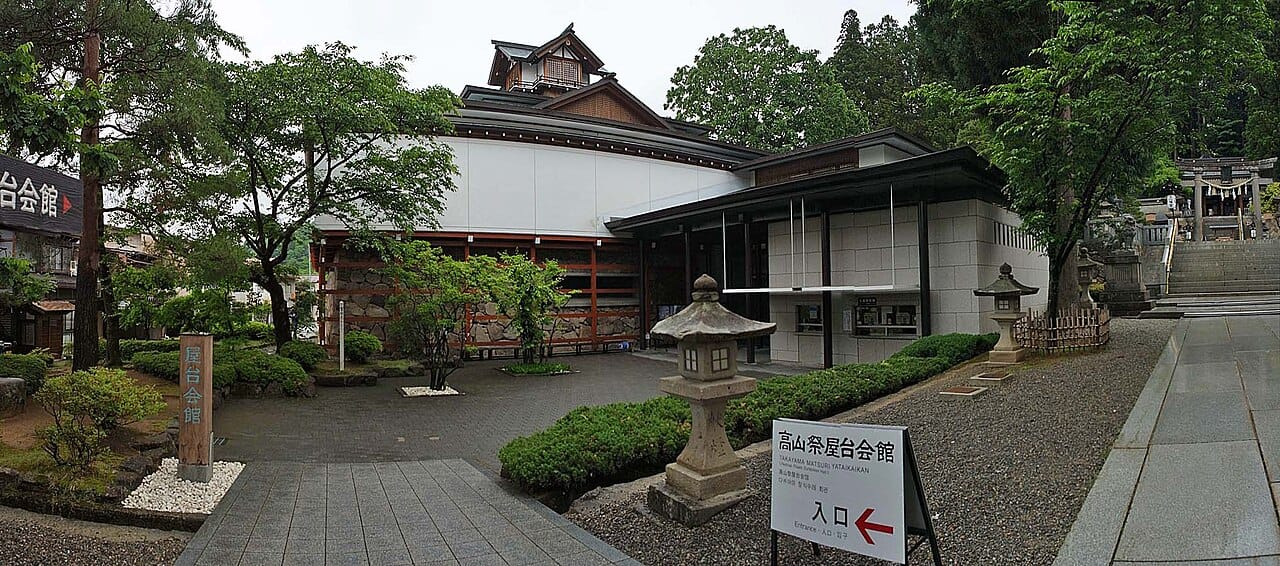
You can see where they live all year. Look out for yatai-gura, the tall, narrow storehouses with oversized doors built into the old streets. If you visit outside the festival, the Takayama Festival Floats Exhibition Hall in the grounds of Sakurayama Hachimangu shows some of the autumn floats in rotation. It is the best way to see the craftsmanship up close.
Karakuri puppets
The highlight for many visitors is the karakuri, mechanical puppets performed on top of the floats. The puppeteers hide inside and work them with strings. In spring, three floats perform: Sanbaso, whose puppet dances and changes its face; Ryujin-tai, where a dragon god bursts out of a jar; and Shakkyo-tai, where a young woman turns into a lion. In autumn, the Hotei-tai float is the star. Its two child puppets swing along a bar to land on the shoulders of Hotei, one of the seven lucky gods.
Performances happen at set times on both days and draw dense crowds. To get a clear view, arrive well before the scheduled time and check the official programme when you arrive, because times and places can change.
The night festival
On the evening of the first day, the floats are hung with lanterns, around a hundred each, and pulled slowly through the old streets. This is the yomatsuri, or night festival, and for many people it is the most memorable part of the visit. Warm light plays over the lacquer and carvings, the float music drifts along the dark lanes, and the wooden merchant houses make a perfect backdrop. At the end of the evening the floats return one by one to their storehouses.
By day there are also processions escorting the portable shrine through town. Hundreds of people in traditional dress walk the route, with lion dancers and musicians.
Getting there
The main approach is from Nagoya on the JR Limited Express Hida, about two and a half hours through the Hida River valley. A limited through service on the Hida also runs from Osaka and Kyoto. Highway buses link Takayama with Shinjuku in Tokyo, with Nagoya, and with Kanazawa via Shirakawa-go. Takayama is about an hour from Shirakawa-go by bus, so the two combine easily. From JR Takayama Station, the festival areas are an easy walk of about 10 to 15 minutes.
When to go and what to expect
The spring festival comes as the mountains are waking up. In some years the cherry blossoms along the Miyagawa River coincide with it, but evenings can be close to freezing, so bring a warm jacket for the night festival. The autumn festival has crisp, clear days and chilly nights. The autumn colours in town usually peak later, though the higher mountains nearby may already be turning.
Rain changes the programme. The floats are fragile, so in wet weather they stay in their storehouses and puppet performances may be cancelled. Build a spare day into your plans if you can.
Where to stay
Takayama's ryokan and hotels fill up very early for both festivals, often many months ahead. If the town is full, look at Gero Onsen to the south on the same railway line, or at Hirayu Onsen and the Okuhida hot-spring villages in the mountains to the east, which are served by bus. Nagoya works as a base for a long day trip, but check the time of the last train back before planning to stay for the night festival.
Practical tips
- Do not touch the floats or step inside the ropes. They are centuries-old, and teams need clear space to steer them.
- Wear warm, comfortable shoes. You will stand for long periods on stone streets.
- Visit the morning markets beside the Miyagawa River and in front of Takayama Jinya early, before the crowds.
- Old-town sake breweries hang a green cedar ball (sugidama) outside, and many offer tastings. Pace yourself if you plan to stay for the night festival.
- Try Hida beef, which you will find grilled on skewers from street stands or on hoba miso, a magnolia leaf over a small burner.
Beyond the festival
Takayama rewards an extra day. Walk the Sanmachi merchant streets and visit Takayama Jinya, the former government office of the region. The open-air Hida Folk Village has thatched farmhouses moved from around the region. From Takayama you can also head into the Northern Alps via the Shinhotaka Ropeway, or on to the gassho-zukuri farmhouses of Shirakawa-go.
Plan your trip
Decide on spring or autumn first, then book your room, then your train or bus. For dates, float lists, karakuri schedules and viewing spots, see our Takayama Festival guide. Groups travelling together can find ideas for a road route in our Nagoya, Takayama and Shirakawa-go itinerary.
More from this region — Chubu (Nagano, Kanazawa)
View all →
Eating Nagano in Autumn: New Soba, Apples and the Rest of the Harvest
11 min · food
Nagano's Autumn Foliage: Which Places Are Actually Worth the Journey
12 min · destinations
Nagano in Autumn Without the Climbing: A Guide for Small Children and Elderly Parents
14 min · tips
Nagano's Autumn Colour Ladder: A Week-by-Week Calendar by Altitude
12 min · tips