Kurokawa Onsen Bath-Hopping Pass: 7 Open-Air Baths and Kumamoto Day Plans
Kurokawa Onsen's ¥1,500 bath-hopping pass: 7 open-air baths to use it on, access, etiquette, the best seasons, plus half-day and Kumamoto day plans.
Mar 9, 2026·✍️ olablog·⏱ 15 min read
Kurokawa Onsen's ¥1,500 bath-hopping pass: 7 open-air baths to use it on, access, etiquette, the best seasons, plus half-day and Kumamoto day plans.
Tap a region to browse articles
Cradled by the vast landscapes of Aso, almost in the centre of Kyushu, Kurokawa Onsen is a much-loved hot-spring town where scenes of old rural Japan unfold around every corner. The one thing no visit should go without is its famous bath-hopping pass. A single wooden pass lets you pick 3 open-air baths from among the town's nearly 30 ryokan, so you can try different kinds of spring water and very different bathing settings for one modest price. In this guide, the OlaChill editorial team picks 7 open-air baths that are especially worth using the pass on, explains the practical details and the mistakes to avoid, and suggests half-day and full-day plans that pair Kurokawa with sightseeing in Kumamoto.
What is Kurokawa Onsen, and why is the bath-hopping pass so good?
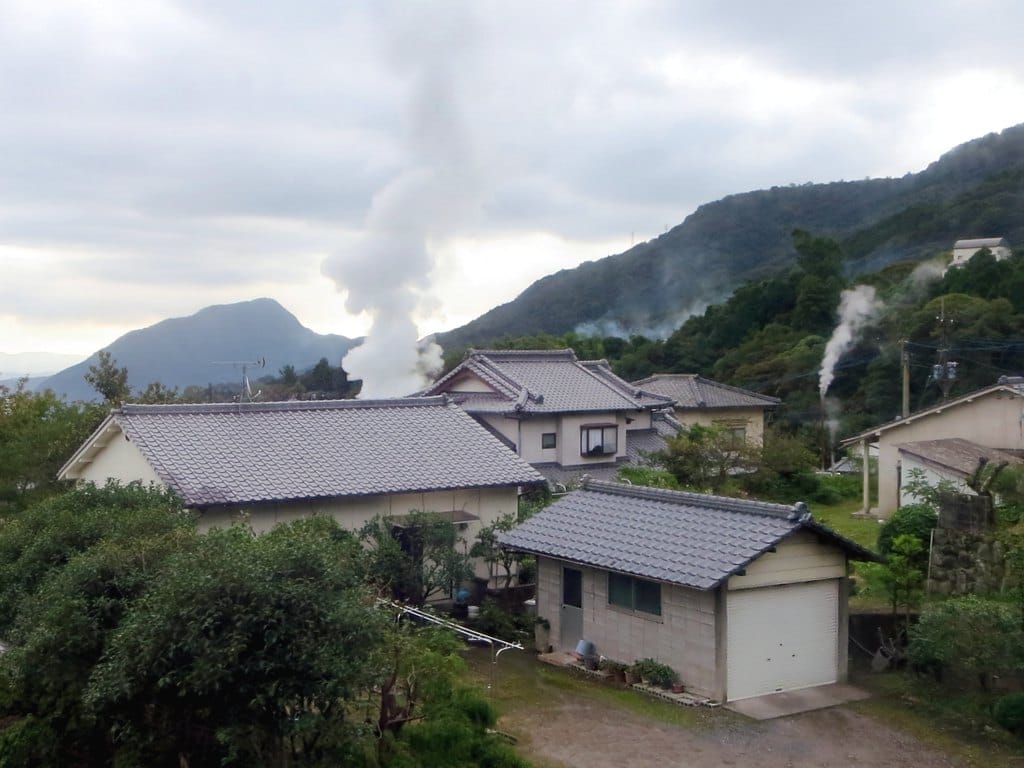
Kurokawa Onsen lies in the mountains of Minamioguni, Aso District, Kumamoto Prefecture, at an elevation of about 700 m. Its roughly 30 ryokan share a distinctive idea, "Kurokawa Onsen, One Ryokan": the whole town is treated as a single large inn. The lanes are its corridors, the trees and flowers its gardens, and each ryokan's baths are rooms of their own character, so the whole community welcomes guests together. Flashy neon and billboards are kept out, and the townscape sticks to blacks and browns, which gives visitors a quiet, refined escape from everyday life.
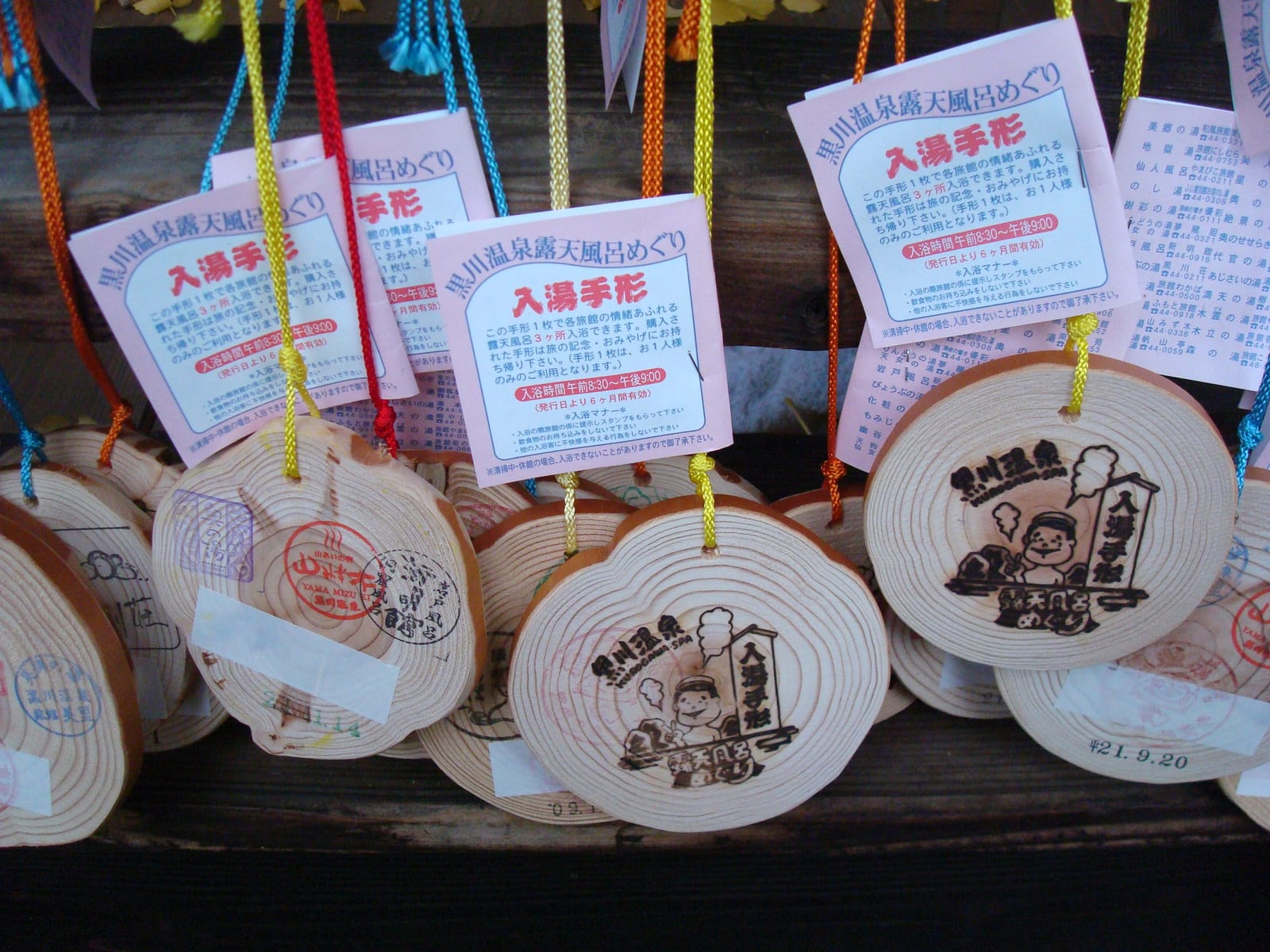
The symbol of that philosophy is the bath-hopping pass (nyuto tegata), a wooden token made from thinned cedar. Buy one and you can pick any 3 of the roughly 25 to 28 open-air baths run by the town's ryokan. A day-use bath at a single ryokan usually costs around ¥600, while the pass covers 3 baths for ¥1,500, so bath-hopping works out very good value. You can also spend one of the 3 entries on food or souvenirs instead of a bath. Afterwards, take the pass home as a keepsake or leave it as an offering at the Jizo hall in the hot-spring town.
Bath-hopping pass essentials
- Price: ¥1,500 per adult pass.
- Where to buy: at any ryokan in Kurokawa Onsen, or at Kaze no Ya, the Kurokawa Onsen Ryokan Association's centre.
- Valid for: 6 months from the date of purchase.
- Bathing hours: 8:30–21:00, with last entry around 20:30. Hours vary by ryokan, so check ahead.
- Good to know: everyone needs their own pass; passes can't be shared. Bathing hours and the number of visitors can be restricted for cleaning, closures or crowding, so check the official website for the latest status at around 9:00 on the day you go.
Getting there
A rental car is by far the easiest way to reach Kurokawa Onsen. There are no rental offices in the town itself, so book a car in advance and pick it up at JR Aso Station, JR Hita Station or Kumamoto Airport.
By public transport, the Kyushu Odan Bus or the Yamabiko express bus takes about 2 hours 30 minutes to 3 hours from Kumamoto Airport. From central Kumamoto, Kyushu Sanko Bus's Kyushu Odan Bus takes about 2 hours 30 minutes to 3 hours from the Kumamoto Kotsu Center (Sakuramachi Bus Terminal); if you set out from JR Kumamoto Station and connect between highway buses, allow about 3 hours 30 minutes to 4 hours. If you drive, take care: the approach is mostly mountain roads, and some streets in the town are narrow. From December to March, snow and icy roads are possible, so winter (studless) tyres or chains are essential.
7 open-air baths worth using the pass on
Kurokawa Onsen is dotted with open-air baths (rotenburo), each with its own personality, and the pass is the best way to sample them. These are the 7 the OlaChill editorial team recommends most. Check each ryokan's official website for the latest details before you go.
1. Ikoi Ryokan: Taki no Yu, one of Japan's 100 famous hidden hot springs
In the middle of Kurokawa's onsen town, Ikoi Ryokan is a folk-craft-style inn full of nostalgic charm. It is best known for Taki no Yu, a mixed-gender open-air bath chosen for the "100 Famous and Secluded Hot Springs of Japan" list. Tree shadows and cascading streams of hot water blend together in the rising steam, and the scene is deeply calming. The inn has 13 different baths in all, including the women-only Bijin no Yu ("beauty bath"), so there is enough variety to feel like bath-hopping without ever leaving the building.
2. Ryokan Sanga: quiet baths fed by two private springs
About 5 minutes by car from the centre of Kurokawa, Ryokan Sanga is a hideaway inn tucked deep in the forest. Its great draw is something rare in Kurokawa: two different private springs, Yakushi no Yu (a simple sulphur spring) and Bihada no Yu (a sodium chloride, hydrogen carbonate and sulphate spring). The high-quality water flows straight from the source and is never recirculated. Try the "two-spring circuit": a soak in the sulphur spring, said to have a detoxifying effect, followed by the chloride spring, known for its moisturising qualities. The mixed-gender Moyai no Yu and the women-only Shiki no Yu open-air baths both look out over peaceful countryside.
3. Yama no Yado Shinmeikan: a hand-dug cave bath
Founded in the Meiji era, the long-established Yama no Yado Shinmeikan stands in the heart of Kurokawa and is famous for its cave bath, which the third-generation owner is said to have dug himself with a chisel and hammer over 10 months. The cave runs about 30 metres in total and fills with steam, so soaking inside feels like a small expedition. With the pass you can also use the Iwato-buro, said to be Kurokawa's first open-air bath, and the women-only Kaze no Yu. The inn is also known for its rustic atmosphere and meals cooked over an irori hearth.
4. Yamamizuki: a riverside bath in the mountains
Set at the foot of the Aso outer rim, Yama-ai no Yado Yamamizuki is a secluded inn beside a mountain stream, a little way from the centre of town. Its open-air bath runs along the Tanoharu River, and soaking to the sound of the water makes you feel part of the forest. The spring is gentle and kind to the skin, highly moisturising and said to keep you warm long after you get out. This is a place that values untouched nature and quiet over glamour, and it is a favourite with adults looking to recharge.
5. Kurokawaso: milky water and the towering Byobu-iwa
Surrounded by green mountains, Kurokawaso is a peaceful inn beside a mountain stream. Its water is a hydrogen carbonate spring, the most common type in Kurokawa, but here it wells up with an unusual milky green tint. The open-air bath is wide and deep and faces Byobu-iwa, a towering rock face named after a folding screen, so you can soak at leisure as the scenery changes with the seasons. Because overnight guests and bath-hoppers use separate bath buildings, day visitors get a full, unhurried experience too.
6. Fumoto Ryokan: a historic inn with plenty of private baths
Fumoto Ryokan is a traditional onsen inn with its own spring, piped straight into the baths. For just 14 guest rooms it has 17 baths in all, counting its large open-air baths, private baths, in-room open-air baths and a footbath. With the pass you can use its open-air baths Uen no Yu (women) and Momiji no Yu (men), both wonderfully open to the sky. The view from the Taiko-bashi, the arched bridge linking the main building with the bathhouse across the river, is especially atmospheric and makes a lovely spot to cool down after a soak. Many of the private baths can be used without a reservation, which suits anyone who wants some time alone.
7. Yamabiko Ryokan: spacious baths for spring green and snow
Yamabiko Ryokan is known for its spacious open-air baths, where the view changes from fresh spring greenery to snow-covered landscapes through the year. Surrounded by nature, it is an easy place to relax. The inn also has 6 family baths, including the Hinoki Oyako-buro (a cypress bath for parents and children) and the Iwa-buro (rock bath), which makes it popular with families. Some rooms have a kitchenette, so it works for longer stays too. If you want to soak while watching Kurokawa's seasons change, this is a strong choice.
Bath-hopping etiquette and tips
A few basic rules keep bath-hopping pleasant for you and everyone else.
- Rinse before you get in. Always pour hot water over yourself (kakeyu) before entering the bath. It is about hygiene, and it also protects your body from a sudden change in temperature.
- Keep your voice down. Open-air baths are shared spaces. Avoid loud conversation or anything that might disturb other bathers.
- No photos in the baths. Photography is banned in almost every open-air bath to protect other guests' privacy.
- No outside food or drink. Most facilities don't allow you to bring food or drinks into the bathing areas.
- Keep your towel out of the water. Dipping a towel into the bath is bad manners. Fold it on your head or leave it beside the bath.
- Prepare for winter roads. From December to March, expect snow and icy roads around Kurokawa. If you drive, fit winter (studless) tyres and carry chains.
- Check the latest information. Each ryokan's opening hours and day-bathing times can change for maintenance or crowding. Check the official website of the Kurokawa Onsen Tourism Ryokan Cooperative on the morning of your visit.
- Don't write off a rainy day. Open-air baths in the rain are wonderfully atmospheric, with the sound of rain, drifting mist and glistening greenery. Some inns lend out tenugui towels or traditional oiled-paper umbrellas on rainy days, or run special pass offers, so it is worth asking.
Kurokawa through the seasons, and what to see nearby
Kurokawa Onsen changes character with every season, and each has its own appeal.
- Spring (March–April): new growth and blossoms. Trees that have waited out the long winter begin to bud, and wild mountain vegetables appear on the slopes after the annual controlled burning of the grasslands. Cherry blossoms open in early April, and the whole town is soon wrapped in fresh green. The mild weather makes this perhaps the most comfortable season for strolling and bath-hopping.
- Summer (July–August): cool air and river play. Thanks to its altitude, Kurokawa stays cooler than the cities and is popular as a summer retreat. An open-air bath beside a rushing stream is a treat, and you can play in the river too. On summer evenings, bamboo kasa andon lanterns are lit, giving the town a magical glow.
- Autumn (late October–mid-November): spectacular foliage. Autumn is the season we recommend most. In a typical year, maples and ginkgo peak from late October to mid-November, turning the town and the surrounding mountains red and gold, and the view of autumn leaves from an open-air bath is breathtaking. Events such as the "Nomichi wo Yuku" walking event let you enjoy the scenery on foot.
- Winter (December–March): snow-view baths and Yuakari. Winter is the most enchanting time of year. When snow falls, soaking in an open-air bath in the silence of the snow is unforgettable. From December the town also holds Yuakari, when bamboo lanterns bathe the streets in warm light (the dates change every year, so check before you go). Yuakari is part of a local project that puts bamboo thinned from nearby groves to good use.
Nearby sights
The area around Kurokawa Onsen is rich in places to take in Aso's vast landscapes.
- Daikanbo: a spectacular lookout with panoramic views over the Five Peaks of Aso and the outer rim, and a superb target for a drive. Our guide to the Aso Milk Road covers the drive in detail, and the Aso Caldera guide explains the landscape.
- Kokonoe "Yume" Grand Suspension Bridge: just across the prefectural border in Oita, this is Japan's highest pedestrian suspension bridge, with superb views over the Naruko River gorge.
- Senomoto Plateau: wide open grassland that is lovely for driving and walking.
Sample plans: Kurokawa Onsen and Kumamoto
These sample plans combine bath-hopping in Kurokawa with some of Kumamoto Prefecture's best-known sights.
Half-day plan in Kurokawa Onsen
A relaxed plan: bath-hop all morning, then explore the onsen town in the afternoon.
- 9:00–12:00: 3 open-air baths with the pass. Choose the 3 that appeal most, for example Taki no Yu at Ikoi Ryokan, the two springs at Ryokan Sanga and the cave bath at Yama no Yado Shinmeikan. Buy your pass at Kaze no Ya, then have it stamped at each ryokan as you go.
- 12:00–13:30: lunch and snacks around town. Once you are warmed through, wander the town. Kurokawa has restaurants cooking with local ingredients and sweet shops made for snacking on the go. Patisserie Roku's shio-koji cream puffs are a favourite: the cream is piped in only after you order, so the shell stays crisp.
- 13:30–15:00: stroll, footbath and souvenirs. Walk the atmospheric stone-paved lanes, browse the souvenir shops and rest tired legs in a free footbath. Hunting for crafts and local products you'll only find in Kurokawa is part of the fun.
Full-day plan: Kurokawa Onsen and Kumamoto City
With Kurokawa as your base, this plan covers Kumamoto City's main sights efficiently.
- 8:00: leave Kurokawa Onsen. Head for central Kumamoto by rental car or Kyushu Sanko bus. By bus, you reach Kumamoto Kotsu Center (Sakuramachi Bus Terminal) in about 2 hours 30 minutes to 3 hours.
- 10:30–12:30: Kumamoto Castle. Counted among Japan's three great castles, Kumamoto Castle impresses with its sheer scale and history. See the keep and the restoration work that has continued since the Kumamoto earthquake, then have lunch and shop for souvenirs at Sakura-no-Baba Josaien, which recreates the atmosphere of the old castle town. Want to see the castle in kimono? Our guide to kimono in Kumamoto has the best photo spots.
- 12:30–13:30: Suizenji Jojuen Garden. This Momoyama-style strolling garden, also known as Suizenji Park, is fed by spring water that flows underground from Aso. Take your time around the Noh stage and the Kokin Denju no Ma hall.
- 13:30–15:00: shopping and food in central Kumamoto. Ride the Kumamoto City Tram to the Kamitori and Shimotori shopping arcades. Try taipien, the glass-noodle soup that is Kumamoto's soul food, rest in a stylish café and do some shopping. The statue of Luffy from One Piece in front of the Kumamoto Prefectural Government office is another popular stop.
- 15:00: leave Kumamoto City. Return to Kurokawa Onsen by bus or rental car.
Summary: the key points
Keep these 5 points in mind to get the most out of Kurokawa Onsen.
- Get the bath-hopping pass. At ¥1,500 for 3 open-air baths, it is the best-value way to experience what makes Kurokawa special.
- Choose baths with different personalities. Comparing spring types and settings is half the fun, from Taki no Yu at Ikoi Ryokan and Ryokan Sanga's two springs to Shinmeikan's hand-dug cave bath.
- Enjoy the season you're in. Autumn foliage and winter snow with Yuakari are the highlights, but spring's fresh greenery and summer's cool mountain air have their own beauty.
- Follow bath etiquette. Rinsing first, keeping quiet and not taking photos make the baths pleasant for you and everyone else.
- Combine it with nearby sightseeing. Add Aso's grand scenery or Kumamoto City's history and food for a fuller Kyushu trip.
Kurokawa Onsen rewards a slow pace. Arrive by car if you can (with winter tyres from December to March), pick up your pass, check which baths are open that morning, and spend a day drifting between rivers, forests and steaming pools. Before you leave, offer your pass at the Jizo hall or take it home as a keepsake of the town that works as one great inn.
Frequently asked questions
Q. Where can I buy the bath-hopping pass? A. At the front desk of any ryokan in Kurokawa Onsen, or at Kaze no Ya, the Kurokawa Onsen Ryokan Association's centre.
Q. Can I choose which baths to use with the pass? A. Yes. Each pass lets you choose any 3 open-air baths from those offered by the participating ryokan, about 25 in the Kurokawa Onsen area.
Q. What is the best way to get to Kurokawa Onsen? A. A rental car is the most convenient option. There are no rental offices in the town itself, so arrange a car in advance at JR Aso Station, JR Hita Station or Kumamoto Airport. By public transport, buses run from Kumamoto Airport and JR Aso Station.
Q. When is the best time to visit Kurokawa Onsen? A. Every season has its charm, but autumn (late October to mid-November), when the foliage is at its most beautiful, and winter, with snowy scenery and the magical Yuakari lanterns, are especially recommended.