Obi: Kyushu’s Little Samurai Castle Town
Aug 25, 2026 · ✍️ olablog · ⏱ 8 min read
Explore Obi’s stone-walled samurai streets, restored castle gate, local specialties, and easy coastal connections in southern Miyazaki.
Tap a region to browse articles
A quiet castle town with old-Kyushu character
On the southern coast of Miyazaki Prefecture, Obi feels wonderfully removed from Japan’s busiest sightseeing routes. Its compact streets, whitewashed walls, preserved samurai homes, and stone ramparts make it one of Kyushu’s most atmospheric historic towns. Often called the “Little Kyoto of Kyushu”, Obi offers the charm of a former castle town without Kyoto’s crowds.
Obi Castle once stood at the centre of the domain ruled by the Ito clan. The original castle buildings are gone, but the town’s layout and many historic features remain. A reconstructed castle gate, old residences, traditional gardens, and quiet lanes give Obi a strong sense of place. It is easy to explore independently, and its small scale makes it an ideal stop on a day travelling along the Nichinan Coast.
The experience here is less about ticking off a long list of attractions and more about slowing down. Walk beneath the castle gate, look closely at the stone walls, step into former samurai residences, and pause for a local snack before continuing towards the coast.
What to see in Obi
Obi Castle and the historic district
Begin at the castle area, where the reconstructed Otemon gate creates a memorable entrance to the old town. The gate is one of Obi’s most recognisable landmarks, framed by greenery and traditional walls. From here, paths lead through the former castle grounds and towards museums and preserved buildings.
Obi Castle History Museum introduces the town’s feudal past and the Ito family’s role in local history. The displays help put the streets around you into context, especially if this is your first visit to a Japanese castle town.
The nearby preservation district is best explored on foot. Expect narrow lanes, stone walls, wooden gates, tiled roofs, and gardens designed for privacy. Some former samurai homes are open to visitors, while others remain private residences. Please follow signs and avoid entering areas that are not clearly open to the public.
Samurai homes and gardens
Obi’s former residences are modest compared with the grand compounds of larger castle towns, but that is part of their appeal. Their low roofs, timber details, tatami rooms, and gardens reveal how samurai families lived away from the castle itself.
Matsuo-no-Maru is among the better-known traditional buildings in the district. Its rooms and garden offer a calm place to appreciate the proportions and craftsmanship of a historic Japanese home. As you move between sites, notice how the walls and entrances once controlled movement through the town while still creating a refined residential atmosphere.
A useful approach is to choose a few buildings rather than rush through all of them. Obi rewards observation: a family crest on a gate, a carefully placed stone, or a glimpse of moss beside an old wall can be as memorable as a formal museum visit.
Try Obi’s local specialties
Obi is also a good destination for tasting regional food. Two local favourites are particularly easy to recognise.
- Obi-ten: A lightly fried fish cake made with locally caught fish and seasoned with ingredients such as miso and tofu. It is savoury, gently sweet, and satisfying as a quick snack.
- Atsuyaki tamago: A thick, sweet Japanese omelette with a soft texture. Obi’s version is known for its dessert-like sweetness and is often served as a small treat or side dish.
Small shops around the historic district sell these specialities, although availability can vary during the day. They are ideal for a casual lunch when you want to keep exploring rather than sit down for a long meal. You may also find local sweets, tea, and simple set meals featuring Miyazaki ingredients.
How to explore the town
Obi Station is on the JR Nichinan Line, and the main historic district is close enough to reach on foot. Once you arrive, walking is the simplest way to move between the castle gate, historic homes, museums, food shops, and old streets.
Cycling can be useful if you want to cover more ground or combine Obi with nearby sights. Ask locally about current bicycle rental options, as availability and arrangements can change. The streets around the central historic district are generally more enjoyable at a relaxed pace, so there is no need to cycle every section.
Getting to Obi from Miyazaki
Miyazaki City is the nearest major hub for most independent travellers. From Miyazaki Station, you can travel south on the JR Nichinan Line to Obi Station. The journey is scenic in places, and the approximate travel time is around 1 hour 20 minutes to 1 hour 40 minutes, depending on the service and connections.
Another option is a Miyazaki Kotsu bus service towards the Nichinan area. Travel times are roughly 1.5 to 2 hours, depending on the departure point and traffic. Check current timetables before setting out, particularly on weekends and outside the busiest travel periods.
| Access option | From Miyazaki | Best for | Planning note |
|---|---|---|---|
| JR Nichinan Line | Roughly 1 hour 20 minutes–1 hour 40 minutes | Travellers who prefer rail and coastal scenery | Services are limited compared with major urban lines; check the current timetable |
| Miyazaki Kotsu buses | Roughly 1.5–2 hours | Flexible access to coastal stops | Route and travel time vary; confirm the latest schedule before travelling |
These journey times are approximate. Always check official transport information on the day of travel, especially if you are planning a tight connection with another coastal stop.
How long should you spend in Obi?
Allow three to five hours for the castle area, historic district, museums, a relaxed lunch, and local snacks. This is enough for a satisfying visit without rushing.
A full day works better if you want to travel slowly, include a garden or former residence, and combine Obi with one or two sights on the Nichinan Coast. Arriving earlier in the day gives you more time to explore before continuing south or returning towards Miyazaki.
Obi is also a good overnight option for travellers who prefer historic atmosphere over a large city base. An evening walk through the quiet lanes feels very different from a daytime visit, though you should confirm accommodation and restaurant availability in advance.
Best seasons to visit
Obi is attractive throughout the year, but each season changes the mood of the town.
- Spring: Fresh greenery and seasonal blossoms soften the stone walls and castle grounds. This is one of the most popular times for a pleasant walk.
- Summer: The gardens are lush, and the nearby coast adds a refreshing second stop. Start early to avoid the strongest midday heat.
- Autumn: Clearer air and changing foliage bring out the colours of the old town and surrounding hills.
- Winter: Quieter streets make it easier to appreciate the architecture, although transport and dining options may be less frequent.
Miyazaki is generally warmer than many parts of Japan, but conditions can still vary. Check the forecast and wear comfortable shoes, as the historic district includes uneven surfaces and plenty of walking.
Nearby places to combine with Obi
Obi works especially well as part of a Nichinan Coast itinerary. Consider combining it with:
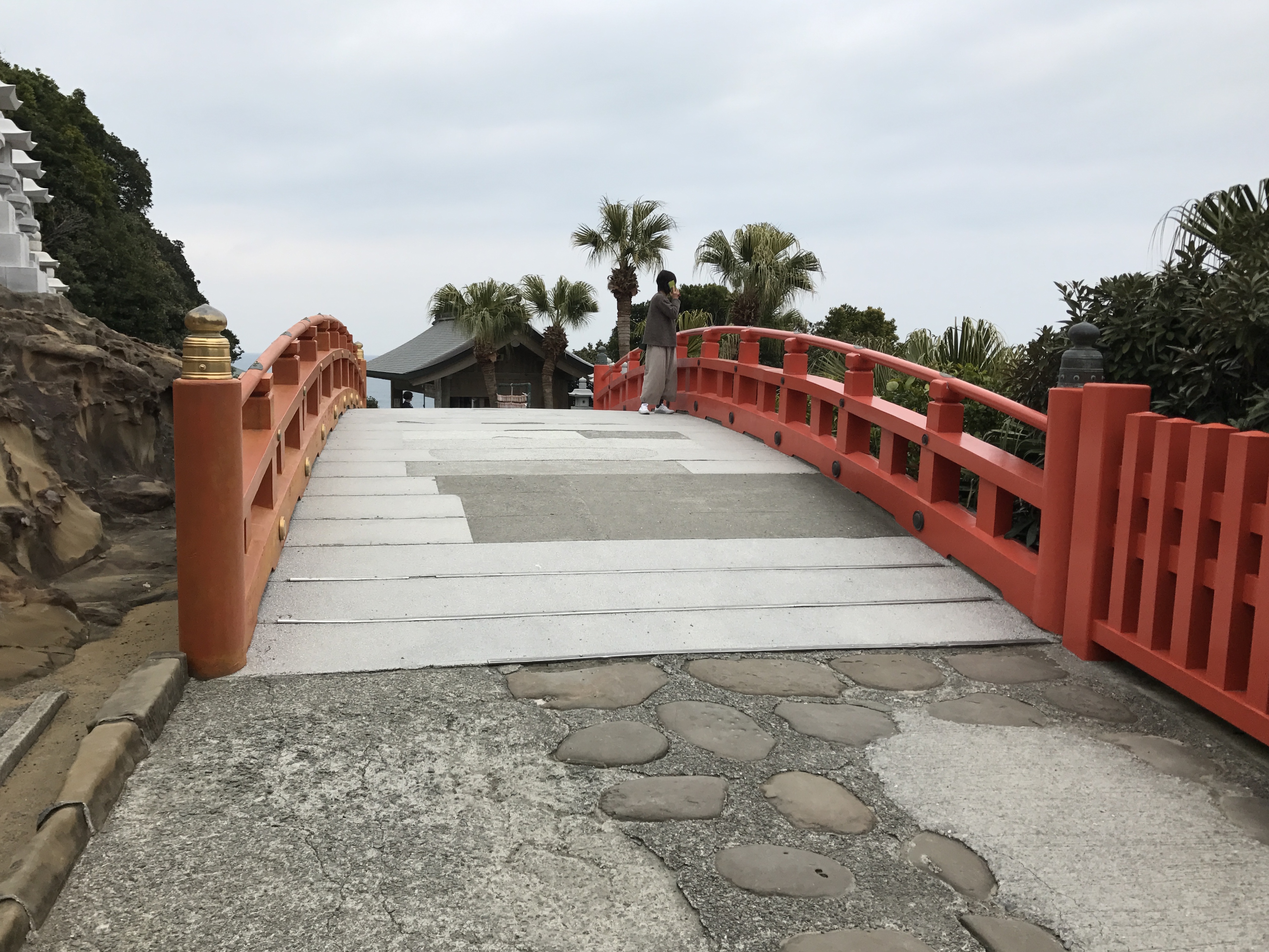
- Udo Shrine: Built into a dramatic seaside cliff, this colourful shrine has ocean views and a distinctive setting. It is one of southern Miyazaki’s signature stops.
- Sun Messe Nichinan: Known for its large Moai-style statues overlooking the Pacific, this open-air attraction offers a change of scenery after Obi’s enclosed historic streets.
- Aoshima: Farther north, this small island is surrounded by unusual rock formations and is home to Aoshima Shrine. It makes a natural addition if you are travelling between Miyazaki City and the southern coast.
A practical route is to visit Aoshima first, continue south through the coastal sights, and finish in Obi—or reverse the order depending on transport schedules. With a rental car, the combination is more flexible; by public transport, check each connection carefully and allow extra time.
For help planning a wider Miyazaki itinerary, browse OlaChill’s destination hub for regional ideas, tickets, and tours.
FAQ
Is Obi worth visiting on a Miyazaki trip?
Yes, especially if you enjoy history, traditional architecture, and quieter destinations. Obi gives you a compact castle-town experience and pairs naturally with the Nichinan Coast.
Is Obi Castle original?
The original castle no longer survives in its complete form. The town preserves the former castle area, stone walls, and historic layout, while key features such as the Otemon gate have been reconstructed.
Can I visit Obi without a car?
Yes. The JR Nichinan Line reaches Obi Station, and buses also connect Miyazaki with the Nichinan area. The central historic district can be explored on foot, but check return services before setting off.
What should I eat in Obi?
Try Obi-ten, the town’s savoury fried fish cake, and atsuyaki tamago, a thick and notably sweet omelette. Both are easy local foods to sample while walking around the historic district.
How much time is enough for Obi?
Three to five hours is suitable for the main sights and a meal. Allow a full day if you plan to combine Obi with Udo Shrine, Sun Messe Nichinan, or another coastal stop.