Kimono in Wakayama: Where to Wear It, Best Photo Spots and How to Plan the Day
Kimono in Wakayama: Koyasan's Okunoin cedars, Kumano Nachi Taisha and Nachi Falls, the Daimonzaka stone path, Wakayama Castle and Shirahama, with train times from Kyoto and a day plan.
Sep 14, 2026·✍️ olablog·⏱ 7 min read
Kimono in Wakayama: Koyasan's Okunoin cedars, Kumano Nachi Taisha and Nachi Falls, the Daimonzaka stone path, Wakayama Castle and Shirahama, with train times from Kyoto and a day plan.
Tap a region to browse articles
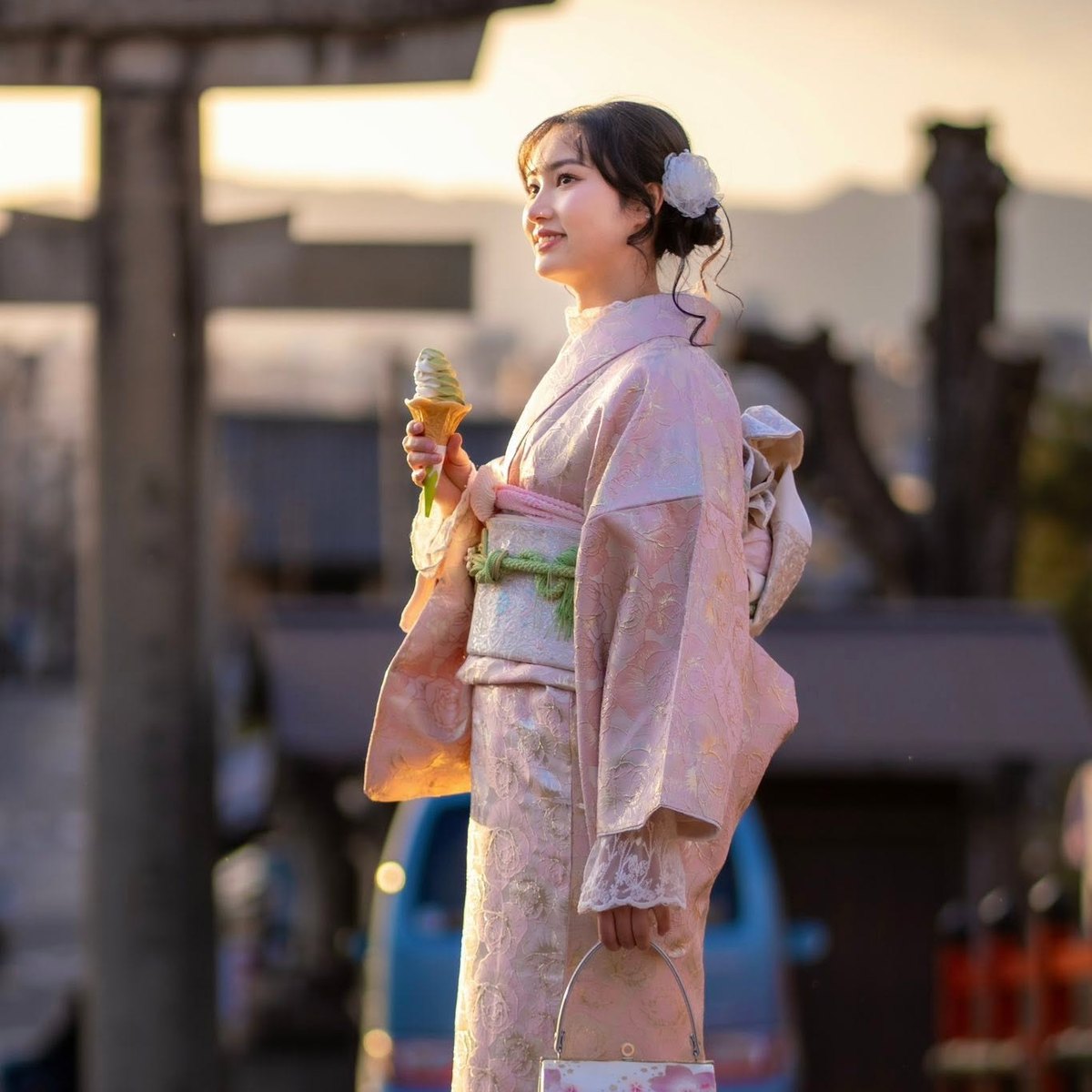
Wakayama (和歌山県) is the Kii Peninsula's sacred south: Koyasan, the mountaintop monastery founded by Kobo Daishi in 816, and the Kumano shrines, where pilgrims of every rank walked for a thousand years. It is a prefecture of cedar forest, waterfalls and cobbled pilgrim roads, and a kimono here is a return to what pilgrims actually wore. At the foot of the Daimonzaka path to Nachi, local shops still rent Heian-era travelling robes for the climb, which tells you how natural the idea is.
This is not a same-day trip from Kyoto. It is an overnight, and one of the most rewarding in Kansai.
Two pilgrimages, two moods
Koyasan (高野山): a town of 117 temples on a plateau at 800 metres. Okunoin (奥之院) is a two-kilometre cemetery path under cedars three centuries old, with 200,000 graves and lanterns, ending at Kobo Daishi's mausoleum. Danjo Garan (壇上伽藍) is the central temple complex with the vermilion Konpon Daito pagoda. Guests stay in temple lodgings (shukubo), eat vegetarian shojin ryori, and attend the 6:00 morning service.
Kumano Nachi (熊野那智): Kumano Nachi Taisha (熊野那智大社) and the Seiganto-ji temple beside it stand on a hillside above Nachi Falls (那智の滝), at 133 metres the tallest single-drop waterfall in Japan. The three-storey pagoda with the waterfall behind is the single most photographed frame in Wakayama. Daimonzaka (大門坂) is the 600-metre cobbled approach through cedars that pilgrims have climbed for centuries.
Best photo spots in Wakayama for kimono
| Spot | Best time | Access | Crowd level |
|---|---|---|---|
| Okunoin cedar path (奥之院) | Early morning mist; dusk with lanterns | Bus from Koyasan Station, 15 min | Medium; empty at dawn |
| Danjo Garan and Konpon Daito (壇上伽藍 根本大塔) | Late afternoon light on the pagoda | 10 min walk from Senjuin-bashi | Medium |
| Daimonzaka stone path (大門坂) | Morning | Bus from Kii-Katsuura, 20 min | Low to medium |
| Seiganto-ji pagoda and Nachi Falls (青岸渡寺 那智の滝) | Morning; the pagoda faces east | Top of Daimonzaka or bus to Nachisan | Medium |
| Kumano Hongu Taisha and the Oyunohara torii (熊野本宮大社 大斎原) | Afternoon | Bus from Shingu or Tanabe, 1 h | Low |
| Wakayama Castle (和歌山城) | Early April cherry; the Nishinomaru garden bridge | 10 min from Wakayama Station by bus | Low |
| Kimiidera temple steps (紀三井寺) | Late March, the earliest cherry in Kansai | JR Kimiidera, 10 min walk, 231 steps | Low |
| Shirahama Engetsu Island (白浜 円月島) | Sunset through the arch | Bus from Shirahama Station, 15 min | Medium |
| Yuasa soy-sauce town (湯浅) | Afternoon | JR Yuasa, 10 min walk | Very low |
Daimonzaka is the kimono photograph of the prefecture: 267 stone steps between cedars, the moss-covered Meoto-sugi twin trees at the entrance, and an incline gentle enough for zori if you take it slowly. It ends at the shrine's own 467 steps, which are steeper; take the bus around if the first climb was enough.
Seasons
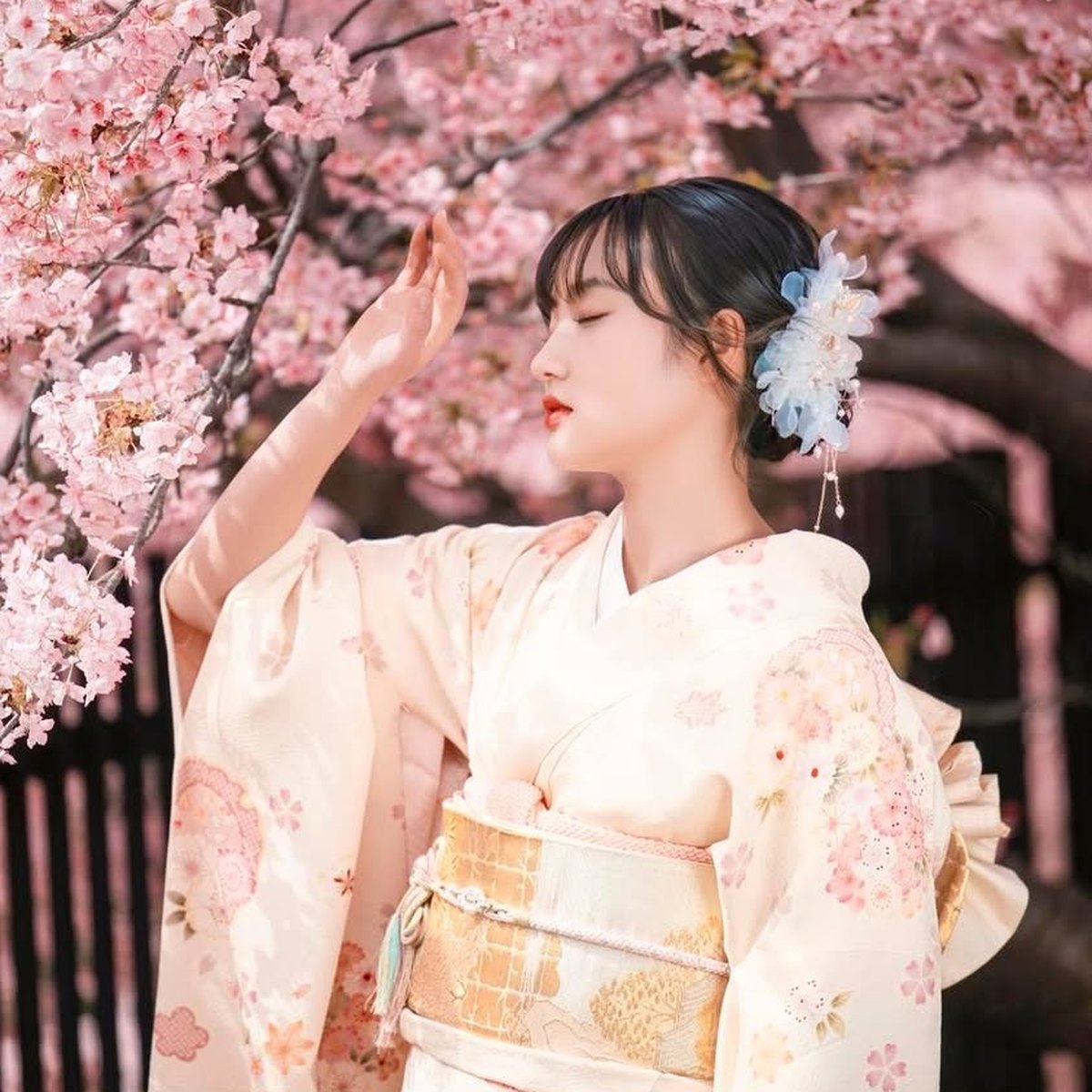
- Late March to early April: Kimiidera's early cherries and Wakayama Castle in bloom.
- May: Koyasan's rhododendrons around Danjo Garan; the mountain is cool.
- July: Nachi's Fire Festival on 14 July, with twelve giant torches carried down to the falls. Yukata for the heat, and expect crowds.
- August: Koyasan is ten degrees cooler than Osaka; the Candle Festival lights Okunoin on 13 August.
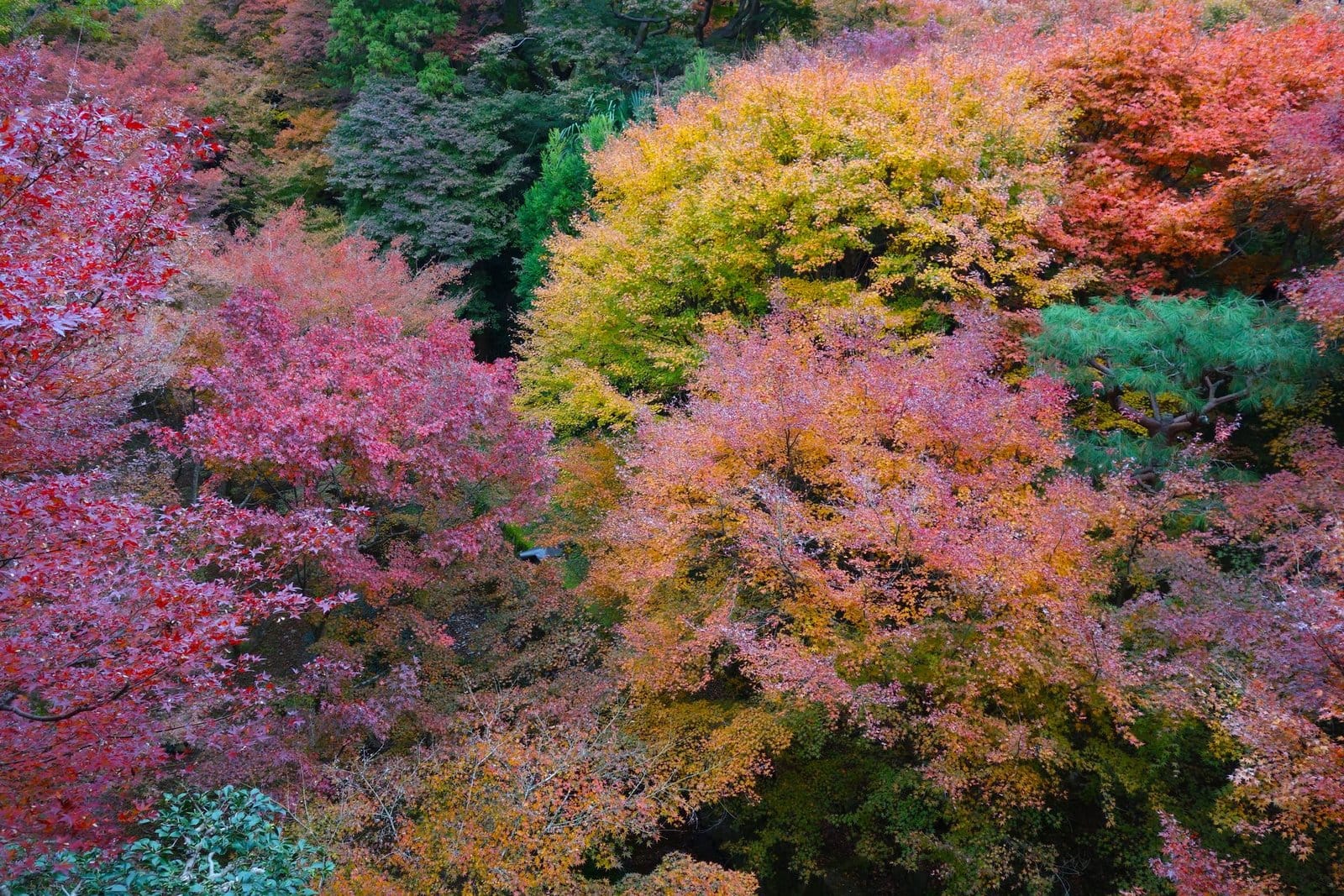
- Late October to November: maples at Koyasan first, then Nachi and Hongu.
- Winter: Koyasan snows. Temple lodgings are unheated in corridors; a haori and the inn's padded coat.
Where the kimono comes from
OlaChill's shops are Kyoto Kiyomizu and Tokyo Asakusa. Wakayama is a Kyoto start with the next-day return add-on (¥1,100), or a two-night plan agreed with the shop at booking.
- To Koyasan: Kyoto to Shin-Osaka by Shinkansen (15 minutes), subway to Namba, Nankai limited express to Gokurakubashi and the cable car up. About three hours in total. Dress at 9:00, on the mountain by 13:00, at Okunoin by 14:30.
- To Nachi: Kyoto to Shin-Osaka, then the Kuroshio limited express to Kii-Katsuura, about three and a half hours from Shin-Osaka. This is a full travel day; stay at Katsuura or Nachi and climb Daimonzaka the next morning.
- Private car: Koyasan and Nachi are four hours apart by road with no direct train. A chauffeured car from Kyoto over two days is the only way to do both in one kimono trip; quotes at Japan luxury car with driver.
Plans start at ¥4,000 for men's yukata and ¥4,500 for women's, ¥5,500 for the Komongi, ¥12,000 for the Houmongi. For Koyasan's temples, the subdued Komongi or a men's Montsuki at ¥10,000 reads right. Hair styling is ¥1,500, makeup ¥5,000. Online booking is 10% below the in-store price.
Plan your kimono days: Koyasan overnight from Kyoto
- Three days before: book the kimono plan with next-day return (confirm two-night timing with the shop), and a shukubo temple lodging on Koyasan.
- 09:00 Kiyomizu: dressing, 30 minutes. Zori, and ask for the shawl.
- 10:00 Kyoto to Namba: Shinkansen and subway. Nankai limited express from Namba around 11:30.
- 13:00 Gokurakubashi cable car: five minutes up the mountain. Bus to Senjuin-bashi.
- 14:00 Danjo Garan: the Konpon Daito pagoda and the Kondo hall. Then the lodging check-in.
- 16:30 Okunoin: enter at Ichinohashi bridge and walk the full cedar path to the mausoleum as the lanterns come on. No photographs beyond the Gobyobashi bridge.
- Next morning: 6:00 service in the lodging, then the Nankai back to Osaka and Kyoto. Kimono returned before 10:00, or on the agreed day.
Practical notes
- Okunoin's path is paved but shaded and damp; moss on the stones is slippery in zori. Walk on the crown of the path.
- Shukubo lodgings provide a yukata for sleeping and bathing. Hang the rental kimono on the hanger they give you, not folded on tatami.
- Daimonzaka has no railings. Hold the front hem in one hand and use the other for balance.
Related reading: Nachi Falls, Wakayama and Kumano Kodo pilgrimage route, and for the Osaka approach, Osaka to Koyasan by charter minibus.
FAQ
Can I walk the Kumano Kodo in a rented kimono? Only Daimonzaka, which is cobbled and short. The forest routes such as Nakahechi are mountain trails; do them in boots on another day.
Is Koyasan a same-day trip from Kyoto? Not in kimono. Three hours each way leaves no time. Stay one night in a temple lodging with the next-day return add-on.
Which is better in kimono, Koyasan or Nachi? Koyasan is easier to reach and walk. Nachi has the stronger single photograph. With two nights and a car, both.
Is there a kimono shop on Koyasan? Not an OlaChill one. The Heian costume rentals at Daimonzaka are local and for the climb only; for a full kimono day, dress at Kiyomizu.
How cold is Koyasan? About eight degrees cooler than Osaka year-round. In November, near freezing at dawn. The haori and a shawl are essential.
Book the Kyoto start
Choose your plan on the OlaChill kimono rental page, agree the return timing for an overnight, and take the cable car to the mountain. For Koyasan and Nachi together by car, ask at Japan luxury car.