
One Night in Kamikochi: Choosing Where to Stay and Planning a Two-Day Autumn Itinerary
When the last bus leaves the valley, the real scenery begins. Tips on booking accommodation, comparing hotels with camping, and pacing yourself over two days.
Aug 12, 2026·✍️ olablog·⏱ 16 min read
When the last bus leaves the valley, the real scenery begins. Tips on booking accommodation, comparing hotels with camping, and pacing yourself over two days.
Tap a region to browse articles
The last bus leaves Kamikochi toward the end of the afternoon. About an hour earlier, the valley is still full of rolling suitcases, guides counting heads, and the relentless clicking of cameras at Kappa Bridge. Then the bus pulls away, and within about fifteen minutes, everything falls silent, as if someone had just turned down the volume of an entire forest. That is the moment everyone who stays overnight remembers: Kamikochi really has two versions, and you only get to see the second one by booking a place to sleep in the valley.
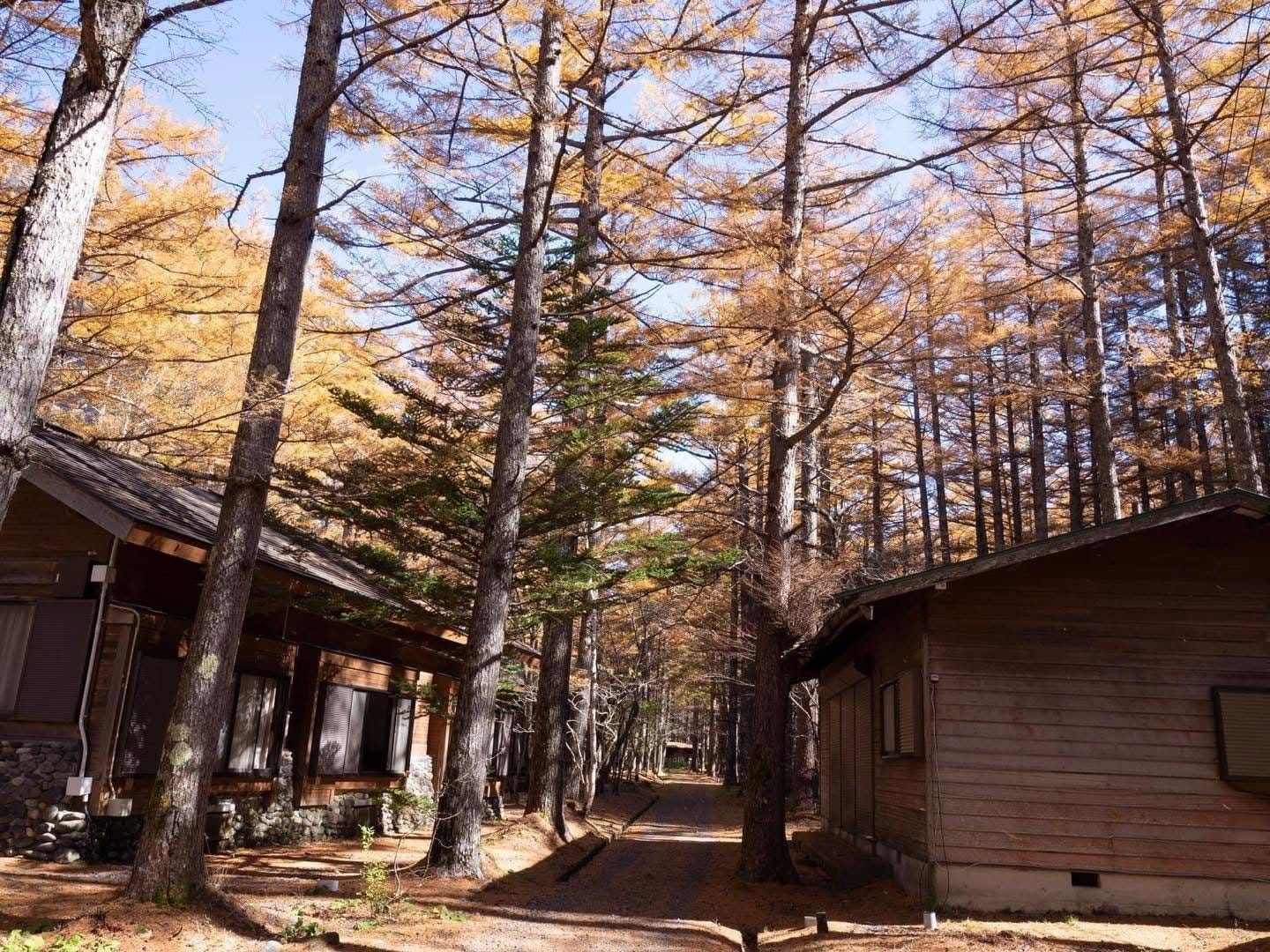
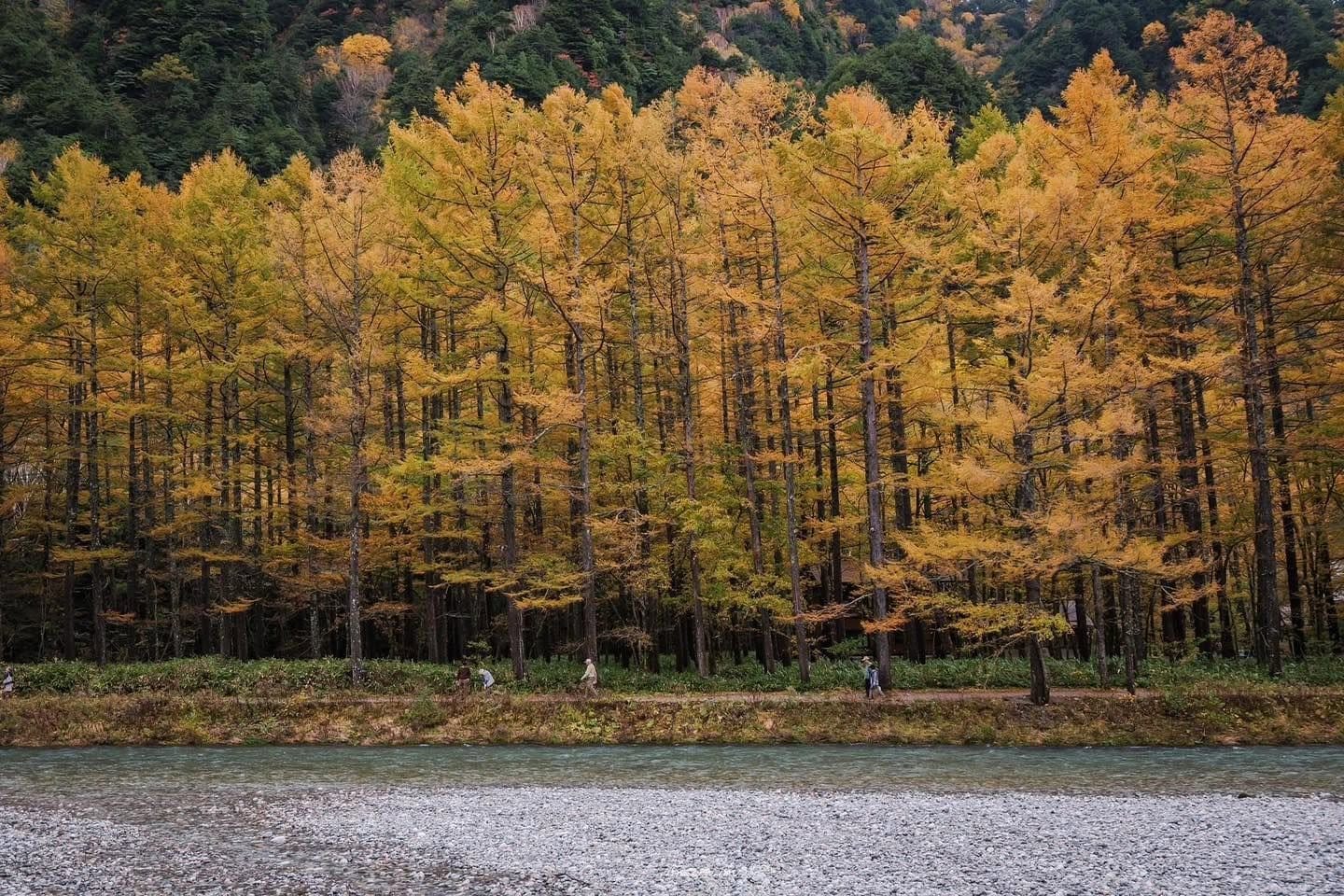
Autumn makes that contrast even more pronounced. The area sits at an elevation of around 1,500 meters, and early mornings in late October can drop close to 0 degrees while the daytime sun is still warm enough for a T-shirt. Mist rises from Taisho Pond at dawn, the deciduous karamatsu forest turns golden like gold dust sprinkled across the mountainsides, and the Hotaka Range occasionally wears a light dusting of snow on its peaks while the autumn leaves remain below. All of this happens before 8 a.m. or after 4 p.m.—outside the hours when day-trippers are here.
This article is for people who have already decided to stay overnight, or are wondering whether it is worth it. I’ll walk through a practical two-day, one-night itinerary, then compare four types of accommodation in the valley: the Imperial Hotel, the lodges around Kappa Bridge, the inns in the Myojin area, and Konashidaira Camping Ground. Each suits a different kind of traveler, and choosing the wrong one isn’t exactly “bad”—it’s “a waste.”
Why One Night Here Is Worth More Than Two Days of Commuting
Kamikochi does not allow private cars. You have to leave your car at Sawando (on the Nagano side) or Hirayu/Akandana (on the Gifu side), then take a bus or taxi in. That means everyone entering and leaving is funneled into a narrow time window: arrivals from around 8 a.m., the midday peak, and departures before late afternoon. If you stay overnight, you automatically get both ends of the day.
Three Things Only Overnight Guests Get to Experience
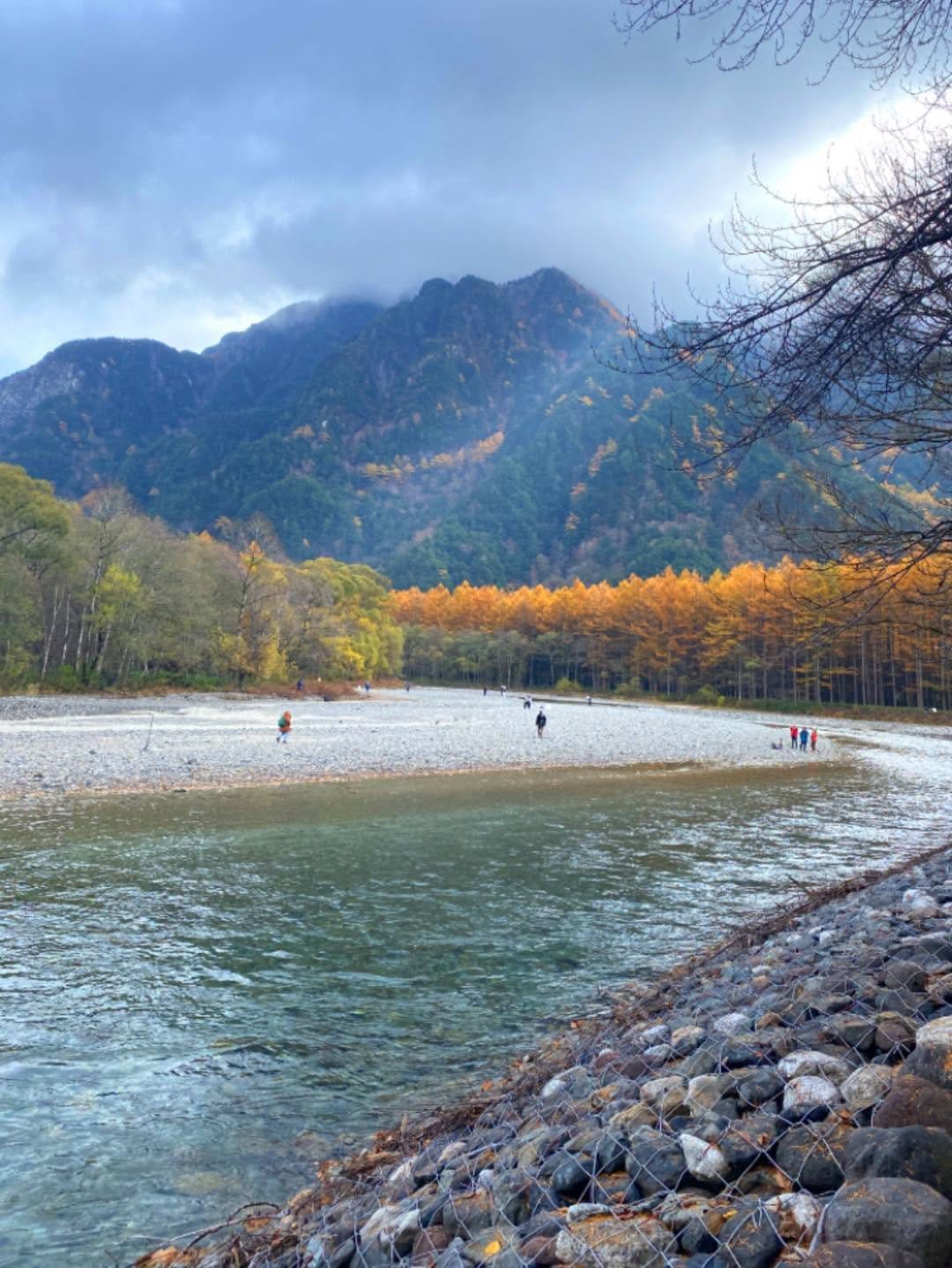
Sunset over the Hotaka Range. The autumn light here doesn’t blaze red; it shifts from honey gold to orange-pink and then pale purple across the cliffs. The easiest viewpoint is on the gravel bank of the Azusa River, a few dozen meters upstream from Kappa Bridge—stand in the shallow riverbed and face toward Hotaka. Bring an extra layer, because the temperature drops quickly once the sun disappears behind the mountains.
The starry sky. There are no streetlights and no town close enough to create significant light pollution. One thing to keep in mind: the valley is hemmed in by 3,000-meter peaks, so the “window” overhead is fairly narrow. You’ll see more from a wide-open area such as Konashidaira or the riverbank gravel than from inside the forest. If you can go on a night close to the new moon, the autumn Milky Way is clearly visible. Bring a headlamp with a red-light mode, which helps preserve your night vision and is more considerate toward those around you.
Mornings without anyone around. This is the biggest advantage of all. From around 5:30 to 8 a.m., the trails are practically yours alone. Taisho Pond is smooth as a mirror, mist rises in ribbons, and if you’re lucky enough to catch the first frost of the season, the grass along the shore will be white. The same scene at 11 a.m. will have thirty people lining up to take photos.
A Two-Day, One-Night Itinerary That Won’t Exhaust You
The principle I follow is: take it easy on day one and start early on day two. Many people do the opposite, cramming everything into the first day and then being unable to get up the next morning—missing the best part entirely.
Day 1: Enter the Valley and Take a Slow Walk Upstream
If you’re coming from Tokyo or Osaka, realistically you’ll reach the Kamikochi bus terminal around noon or early afternoon. Don’t try to squeeze in more than that.
- Get off at Taisho Pond instead of going to the final stop. Buses into the valley usually stop at Taisho Pond before reaching the main terminal. Get off here and walk back along the riverside trail toward Kappa Bridge. At an easy pace, it takes about one and a half to two hours. The route is flat, includes wooden boardwalks, and passes through Tashiro Marsh and beautiful autumn wetlands.
- Check in and drop off your luggage. This is why you book a place to stay instead of making a day trip: from this point on, you only need to carry a small bag.
- Late afternoon: take an easy walk toward Myojin or around Kappa Bridge. If you still have energy, the walk from Kappa Bridge to Myojin takes about one hour each way and is flat. But keep an eye on the time—it gets dark earlier here in autumn than you might expect, and even faster in the forest.
- Watch the sunset from the riverbank gravel, then head back for dinner.
Night: Eat Early and Go Outside Once
Most accommodation in the valley serves dinner during a fixed time slot, usually quite early. After eating, you have a long stretch before bed—don’t waste it lying around scrolling on your phone (the signal is patchy in some places anyway). Dress warmly, go somewhere open, let your eyes adjust to the darkness for about fifteen minutes, and only then look up. Those fifteen minutes are the secret. Everyone skips them, then complains, “There aren’t even that many stars.”
Day 2: Get Up Before the Sun
- Around 5 a.m.: head to the river. If you’re staying near Kappa Bridge, it only takes a few minutes to get there. Mist hovers over the water, and the mountains gradually turn pink from the peaks downward—a phenomenon mountaineers call “morgenrot.”
- Visit Myojin Pond early. Myojin Pond is within the grounds of Hotaka Okumiya Shrine. There is an admission fee of a few hundred yen per person, and opening hours should be checked on-site or on the official website because they vary by season. The surface is so still that the reflections are almost perfect, and if you go early, you’ll practically have the place to yourself.
- If you still have the time and energy: continue to Tokusawa, about another one hour from Myojin. There you’ll find wide meadows, few people, and a wonderfully relaxed atmosphere.
- Return, have a light lunch, and take the bus out. Lines at the bus terminal can be long during the autumn peak, so don’t plan around the last departure.
Four Types of Accommodation in the Valley
The one thing they all have in common: you need to book in advance, and autumn is the busiest season of the year. Also remember that Kamikochi closes during winter; most facilities operate only from around mid-April to mid-November. Check each property’s official website for the exact dates every year.
Kamikochi Imperial Hotel — The Red-Roof Experience
The famous red-roofed hotel sits in the forest and belongs to the Imperial Hotel group. It offers classic mountain-resort style: a lobby with a large fireplace, dark wood furnishings, and polished service.
- Best for: couples, special occasions, people who want gentle walks during the day and a luxurious place to relax afterward, or those traveling with elderly parents.
- Not ideal for: people who want to get up at 4:30 a.m. and head into the mountains, or anyone who sees accommodation as nothing more than a bed.
- Price: the highest in the valley, generally charged per person with meals included depending on the package. I won’t give a figure because prices vary considerably by season and room type—check the booking page directly.
- A genuine caveat: this is the hardest place to book. Rooms for weekends during the autumn foliage season often sell out very soon after reservations open, with many people booking more than half a year in advance. The hotel is near the Imperial Hotel bus stop and about 15–20 minutes on foot from Kappa Bridge, so if you want to go down to the river to see the stars, you’ll still have to walk a stretch in the dark.
Lodges Around Kappa Bridge — The Best All-Round Choice
Around Kappa Bridge is a group of mountain-style hotels and lodges (Gosenjaku, Shirakabaso, Nishi-itoya, Lemeiesta, and several others). This is the option I recommend to most first-time visitors.
- Best for: families, groups of friends, first-time visitors, and anyone who wants to maximize the “golden hours” without walking far.
- The biggest advantage is the location. Step outside and you’re at the riverbank gravel. Sunset, stargazing, and sunrise are all within a five-minute walk. For people who don’t like walking at night or are traveling with children, this makes a huge difference.
- Room types: everything from Japanese-style rooms with futons to Western-style beds, with many properties offering an onsen or a large bath. Packages with dinner and breakfast are common.
- Price: mid-range—more expensive than mountain inns but cheaper than the Imperial. The difference between weekdays and peak weekends can be substantial.
- A genuine caveat: because this area is right in the center, it is crowded and noisy during the day. But you’ll be out walking during the daytime, while early mornings and evenings are absolutely silent.
Inns in the Myojin Area — Quiet in Exchange for an Hour’s Walk
About one hour on a flat trail upstream from Kappa Bridge are several small inns, such as Myojinkan and Yamano Hidaya. These are traditional mountain lodges on a small scale.
- Best for: people who truly value peace and quiet, those who love photographing Myojin Pond early in the morning, and anyone who sees walking as part of the trip.
- The advantage: in the morning, you’re right next to Myojin Pond and can reach it before anyone from Kappa Bridge has had time to walk up. The atmosphere also feels much more “mountain-like”—home-style dinners, and owners who usually know the local trails extremely well.
- The drawback: you have to carry your luggage for one hour each way. It sounds manageable, but with a rolling suitcase, that hour will be miserable. Bring a backpack, or leave some belongings in a locker near the bus terminal if there is space.
- Price: generally cheaper than the Kappa Bridge area, charged per person with two meals included. Facilities are simpler; some places have shared or small rooms, and bathing facilities are basic.
Konashidaira Camping Ground — Cheapest, Coldest, Most Memorable
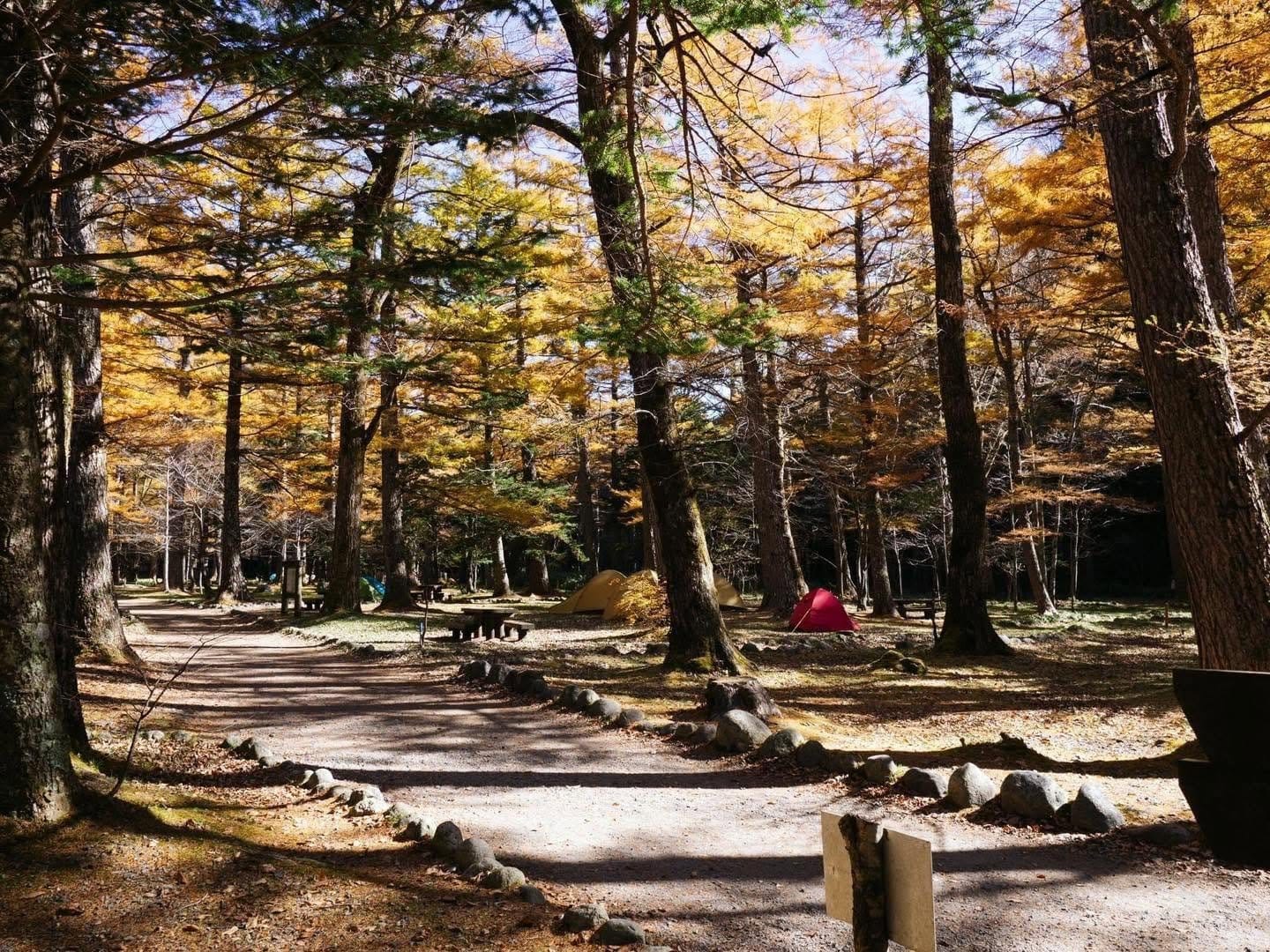
Konashidaira Camping Ground is located between the bus terminal and Kappa Bridge, about 10–15 minutes on foot from the terminal. There is space for pitching your own tent, and usually options for pre-erected tents or bungalows as well—check the official website because services change from year to year.
- Best for: experienced campers, people who want the best possible stargazing, solo travelers or young groups of friends, and those on a tight budget.
- The advantage: prices are only a small fraction of those at the lodges, usually a few hundred to around one or two thousand yen per person per night for a tent site. You also get a wide-open area—the best stargazing spot in the valley without having to go anywhere.
- The drawback—speaking frankly: at an elevation of 1,500 meters, autumn nights can drop to around 0 degrees or below in late October and early November. A summer sleeping bag is a recipe for a shivering, sleepless night. You need a sleeping bag rated for below-freezing temperatures, a proper insulating sleeping pad, and warm clothes for sleeping.
- A note on bears and food storage: there are bears in the area. Never leave food inside your tent, and follow the campground’s instructions about storing food and disposing of rubbish. This is not just a scare story.
Quick Comparison
| Type of accommodation | Price range | Location | Best for |
|---|---|---|---|
| Imperial Hotel | Highest | Between the bus terminal and Kappa Bridge | Special occasions, travelers with elderly companions |
| Lodges around Kappa Bridge | Mid-range to fairly high | Right in the center, beside the river | Most first-time visitors, families |
| Inns in the Myojin area | Mid-range to low | ~1 hour on foot from Kappa Bridge | People who value quiet, early-morning photography |
| Konashidaira Camping Ground | Lowest | ~10–15 minutes from the bus terminal | Campers, stargazers, budget travelers |
Booking in Autumn: Timing Matters
Peak autumn foliage in Kamikochi usually falls around the latter half of October, when the karamatsu forest turns golden, extending into early November depending on the year. This is also when every type of accommodation fills up fastest.
Here are a few lessons I’ve learned:
- Book as early as possible, especially if you want a Saturday. Many properties open reservations on a fixed schedule each year; sign up for updates on their websites if you’re determined to go.
- Shift your trip to a weekday. Tuesday and Wednesday are easier to book, cheaper, and quieter on the trails. If your schedule is flexible, this is the most valuable tip in the entire article.
- Don’t overlook meal-inclusive packages. There are no supermarkets or late-night convenience stores in the valley. A few restaurants and small shops are available, but their hours are limited. A two-meal package is often the most sensible option in terms of both money and effort.
- If everything in the valley is sold out, the backup plan is to stay at Hirayu Onsen or around Sawando, then take the earliest bus in the next morning. It’s not as good as sleeping in the valley, but you still get the early morning—far better than coming from Matsumoto.
Preparing for a Cold Night
The most common mistake Vietnamese visitors make on their first trip to Kamikochi is dressing for Matsumoto’s weather forecast. The difference in elevation makes temperatures here considerably lower, with a very large day-to-night range.
- Dress in layers: a base layer next to your skin, an insulating middle layer (fleece or a lightweight down jacket), and a windproof outer layer.
- Thin gloves and a wool hat—these may sound excessive, but you’ll be grateful for them when standing by the river taking photos at 5 a.m.
- A headlamp, even if you’re staying at a lodge. The valley trails are completely dark at night.
- Grippy walking shoes. The main trails are easy, but morning mist and thin ice can make the wooden boardwalks surprisingly slippery.
- Cash. Many small properties and restaurants in the valley still prefer cash, and ATMs are virtually nonexistent.
- A power bank. Cold weather drains phone batteries very quickly, especially when you’re taking photos continuously.
Common Mistakes
Booking accommodation but keeping a day-tripper’s itinerary. If you pay to stay overnight and then sleep until 8 a.m. for breakfast, you’ve missed exactly the part you paid to experience.
Dragging a suitcase to Myojin. The trail is flat, but it is made of dirt and gravel, and the suitcase wheels will make you suffer.
Not checking the afternoon return bus schedule. The last bus leaves the valley much earlier than many people expect, and queues are long on busy days. Give yourself an extra hour.
Underestimating mountain weather. Autumn rain here is bitterly cold, and fog can completely erase the Hotaka Range for half a day. Bring rain gear and be prepared not to see the mountains—that’s another reason to stay overnight: you get two mornings to try your luck instead of one.
Frequently Asked Questions
Is staying overnight really worth the money? If you’re visiting Kamikochi mainly to photograph Kappa Bridge and leave, then no. But if you want to see mist over Taisho Pond, sunset over Hotaka, and a trail without another person in sight at 6 a.m., then yes. There is no other way to experience all of that.
When is the best time to visit in autumn? Usually from the latter half of October to early November, though the timing shifts each year. About one or two weeks before your trip, check Kamikochi’s official website for updates on the foliage conditions.
Can children or older adults manage the trip? Yes, if you choose a lodge around Kappa Bridge and stick to the flat riverside trails. The Taisho Pond–Kappa Bridge–Myojin route is almost entirely level. Avoid camping, and avoid Myojin if you need to carry a lot of luggage.
Is there cell service and Wi-Fi? There is service in some areas, especially around the bus terminal and larger hotels, but it is patchy and disappears once you go deeper into the trails. Download offline maps in advance.
Can I drive a private car in? No. Private vehicles are not allowed into Kamikochi. Leave your car at Sawando or Hirayu/Akandana, then take a bus or taxi. Remember to check the first and last departures for the correct season.
What can I do if it rains? The riverside trails are still walkable with rain gear, and the autumn forest has a unique beauty in the rain. If your lodge has an onsen, that’s the day to use it. And keep hoping for the next morning—after a night of rain, mist rising from the river is one of the most beautiful sights many people have ever seen here.
Is autumn camping too cold for beginners? Honestly, yes. If you’ve never camped in conditions close to 0 degrees, save Konashidaira for summer and choose a lodge for this autumn trip. A sleepless night from the cold will ruin the following day—and the following day is the best part.
More from this region — Chubu (Nagano, Kanazawa)
View all →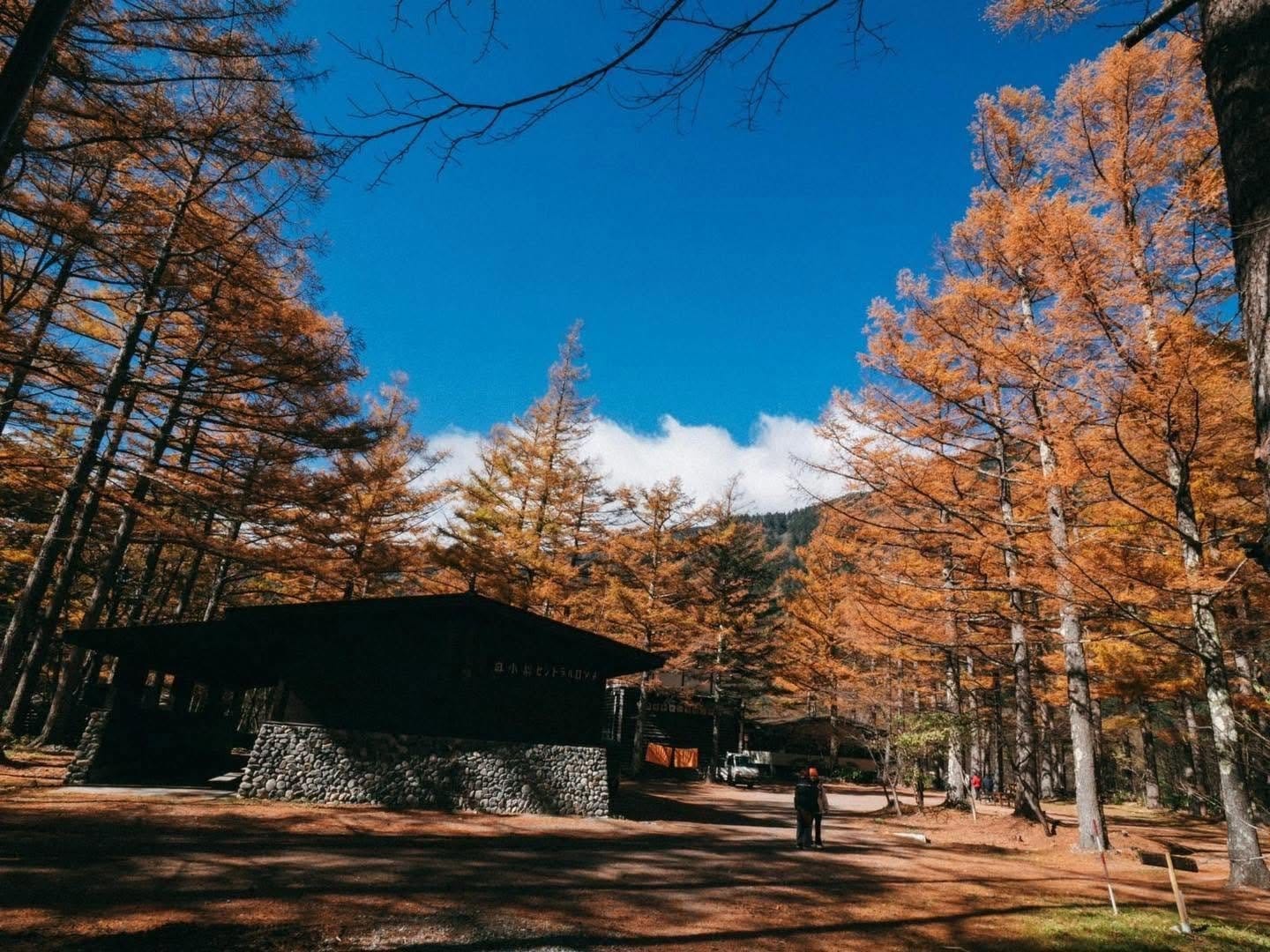
What to Eat in Kamikochi in Autumn: Grilled Iwana, Fresh Soba, and Nagano Apples
16 min · tips
Kamikochi in autumn: private cars are banned—how to get into the valley easily
16 min · tips
Hiking in Kamikochi in Fall: Choosing a Route to Match Your Fitness and the 15/11 Closure Deadline
16 min · tips
A Guide to the Best Angles for Kamikochi’s Autumn Colors: Where and When to Shoot
16 min · tips