
Hakuba in 2 Days, 1 Night in Autumn: Three Types of Accommodation and How to Plan Your Schedule
Visit Tsugaike marshland on the first day, hike Happo on the second, then stroll around the village at the foot of the mountains; plus how to choose between a pension, an onsen ryokan, and a lodge for easy access to the bus terminal.
Aug 12, 2026·✍️ olablog·⏱ 20 min read
Visit Tsugaike marshland on the first day, hike Happo on the second, then stroll around the village at the foot of the mountains; plus how to choose between a pension, an onsen ryokan, and a lodge for easy access to the bus terminal.
Tap a region to browse articles
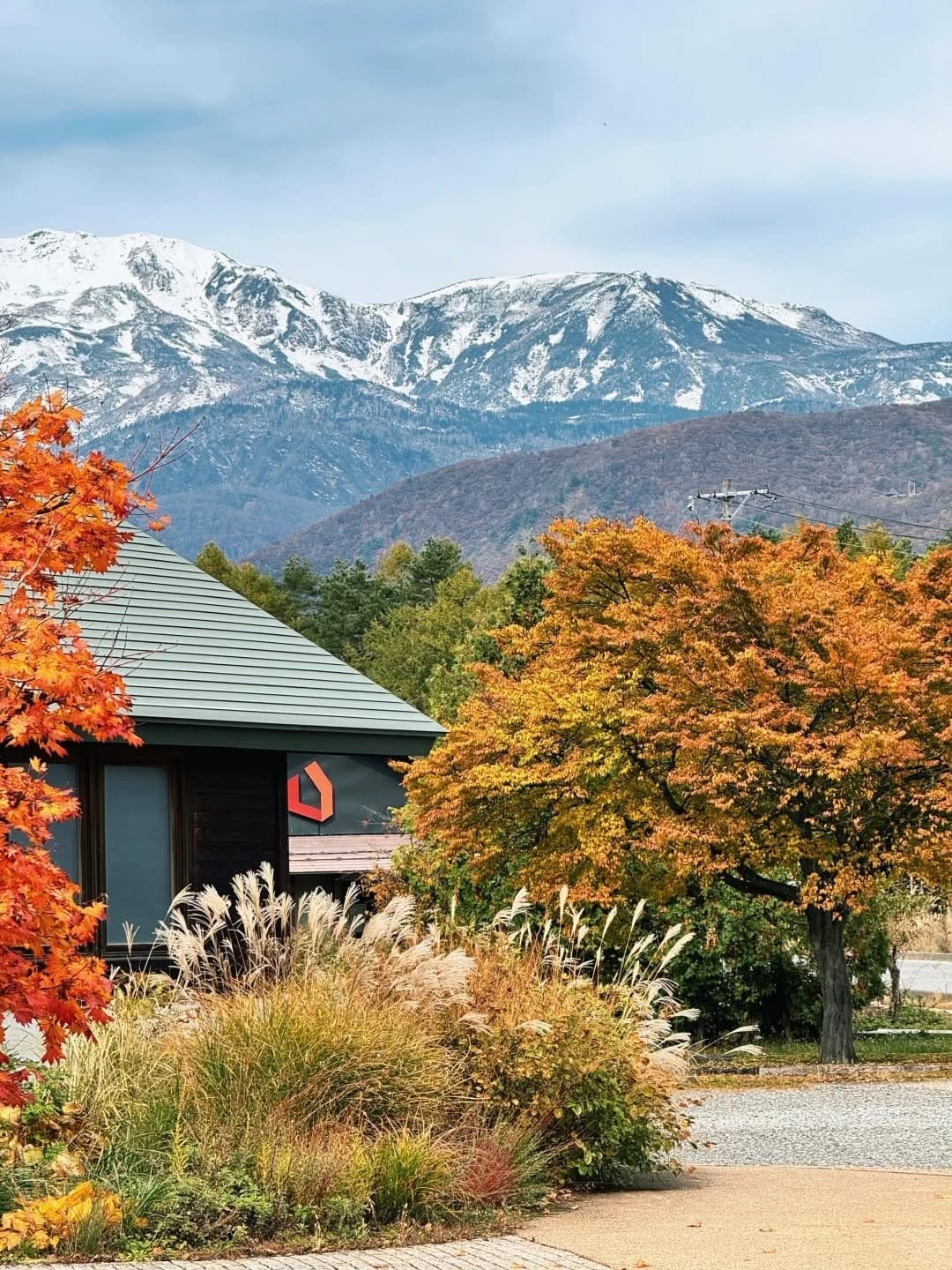
Everyone knows Hakuba in winter: powder snow, more foreign visitors than locals, and buses shuttling back and forth from morning until late at night. But if you visit in mid-October, this valley is an entirely different place. The village roads are quiet, ski-rental shops sit closed and silent, and the slopes behind the village are layered in changing colors, from orange-red to yellow and finally the green of the valley forests. This is the season when you can stand at one of the most famous viewpoints in the Japanese Alps with only a handful of people around you.
The price of that tranquility is that everything operates in "standby mode." Buses run less frequently, many restaurants close between seasons, some open only on weekends, and each area has its own ropeway schedule, with some shutting down entirely from early November. In other words, when visiting Hakuba in autumn, choosing where to stay is not simply a matter of comfort or price—it determines what you will be able to eat that evening and how you will get to the bus terminal the next morning.
This article lays out a 2-day, 1-night plan that takes these realities into account: a visit to the high-altitude Tsugaike marshland on the first day, a hike at Happo on the second, and a half-day walking around the village in between. It also includes what I think many travelers need most—a comparison of the three most common types of accommodation here (European-style pensions in the Echoland area, ryokan with onsen, and budget lodges), which areas are within walking distance of the bus terminals, and what evenings in the village actually look like during the off-season.

Why 2 Days, 1 Night Is Just Right
From Tokyo, Hakuba takes about 3–4 hours if you take the Hokuriku Shinkansen to Nagano and then connect to an Alpico bus into the valley, or around 4.5–5 hours if you choose a direct highway bus from Shinjuku (considerably cheaper, with early-morning departures available). A day trip is theoretically possible, but you will spend almost the entire day on the road and only have time for one ropeway area.
Staying overnight completely changes the equation. You get two mornings—and in the mountains, morning is when the skies are clearest, before clouds rise and cover Mount Shirouma. You also get something a day trip can never offer: an evening so quiet that you can hear the stream, plus a dense field of stars that Tokyo forgot long ago.
So why not 3 days? During the off-season, once you have covered Tsugaike and Happo-one, the remaining options in Hakuba become limited—many summer outdoor activities (SUP, canoeing, ziplining) have closed, and some ropeways have stopped running as well. Two days is the sweet spot between the effort of getting there and what you get in return.
How to Time Your Visit
At elevations of around 1,900–2,000 meters (Tsugaike and Happo Pond), the foliage is usually at its best from around late September to mid-October. Down in the valley and around the village, the colors arrive later, usually from late October to early November. If you want to "get the best of both worlds"—beautiful foliage at higher elevations while the valley is just beginning to turn yellow—the second and third weeks of October are the most reasonable window.
The timing can vary by as much as a week from year to year depending on the weather, so around 7–10 days before your trip, check Nagano Prefecture's autumn foliage reports and the official websites of each ropeway area. Those websites are also the only reliable source for finding out whether the ropeways are still running or have closed for the season—the autumn operating schedule is short and often changes with the weather.
Understand Hakuba's Map Before Booking a Room
The most common mistake first-time visitors make is treating "Hakuba" as a compact little town. In reality, it is a valley stretching for more than a dozen kilometers along National Route 148 and the Himekawa River, with many separate residential clusters. Getting from one area to another can take 15 minutes by bus—and during the off-season, that bus may run only once every two hours.
These are the four areas you will come across most often when looking for accommodation:
- Around Hakuba Station (JR Ōito Line): the village's "administrative center," with a supermarket, convenience stores, a few local restaurants, the highway-bus terminal for Tokyo, and local bus stops for other areas. The most convenient option if you are not renting a car.
- Happo and Echoland: Happo is at the foot of the region's largest ski area, and is home to the Happo bus terminal and gondola station. Echoland is a narrow strip of streets running parallel to it, packed with restaurants, bars, and noodle shops—in other words, Hakuba's "dining and nightlife district."
- Wadano: slightly higher up than Happo, amid pine forests, with many lodges and small hotels. Quiet and scenic, but steep and dark at night.
- Goryu / Kamishiro and Tsugaike (in Otari Village): farther from the center and generally more affordable, making them suitable if you have a car.
The rule of thumb I have come away with after several trips is this: during the off-season, stay within walking distance of one of two places—Hakuba Station or the Happo bus terminal. These are the real transportation hubs; every other location depends on a bus that may not run on the day you visit.
Day 1: Tsugaike Nature Park—Golden Marshland Beneath Snowy Peaks
Getting There and Timing Your Day
If you leave Tokyo early in the morning, you will arrive in Hakuba around noon. Leave your luggage at your accommodation (most pensions and lodges will hold bags before check-in, but message ahead to be sure) or use the lockers at the station, then take the bus toward Tsugaike Kōgen in the direction of Otari. The ride from Hakuba Station takes about half an hour.
From the base of the area, take the gondola and then connect to another ropeway to reach the park entrance at an elevation of around 1,900 meters. The ride up is a scenic experience in itself: below you, the forest is patchy with changing colors, while the valley opens out in the distance. A round-trip gondola + ropeway ticket costs a few thousand yen per person; prices and operating schedules change by season, so check the official website before you go.
The most important thing to remember here is that the last ropeway down is fairly early, and autumn days grow dark quickly. As soon as you arrive, take a photo of the final-departure timetable and work backward to calculate how long you can stay up there.
On the Marshland Trail
Tsugaike Nature Park is a high-altitude marshland crossed by a loop of wooden boardwalks. Depending on whether you choose the shorter or longer loop, the route is a few kilometers; walking leisurely and taking photos takes about 2–4 hours. The boardwalk is flat and requires no mountaineering skills—people in sneakers, families with children, and older travelers can all manage it, as long as they are prepared for the thinner air and colder temperatures than in the valley.
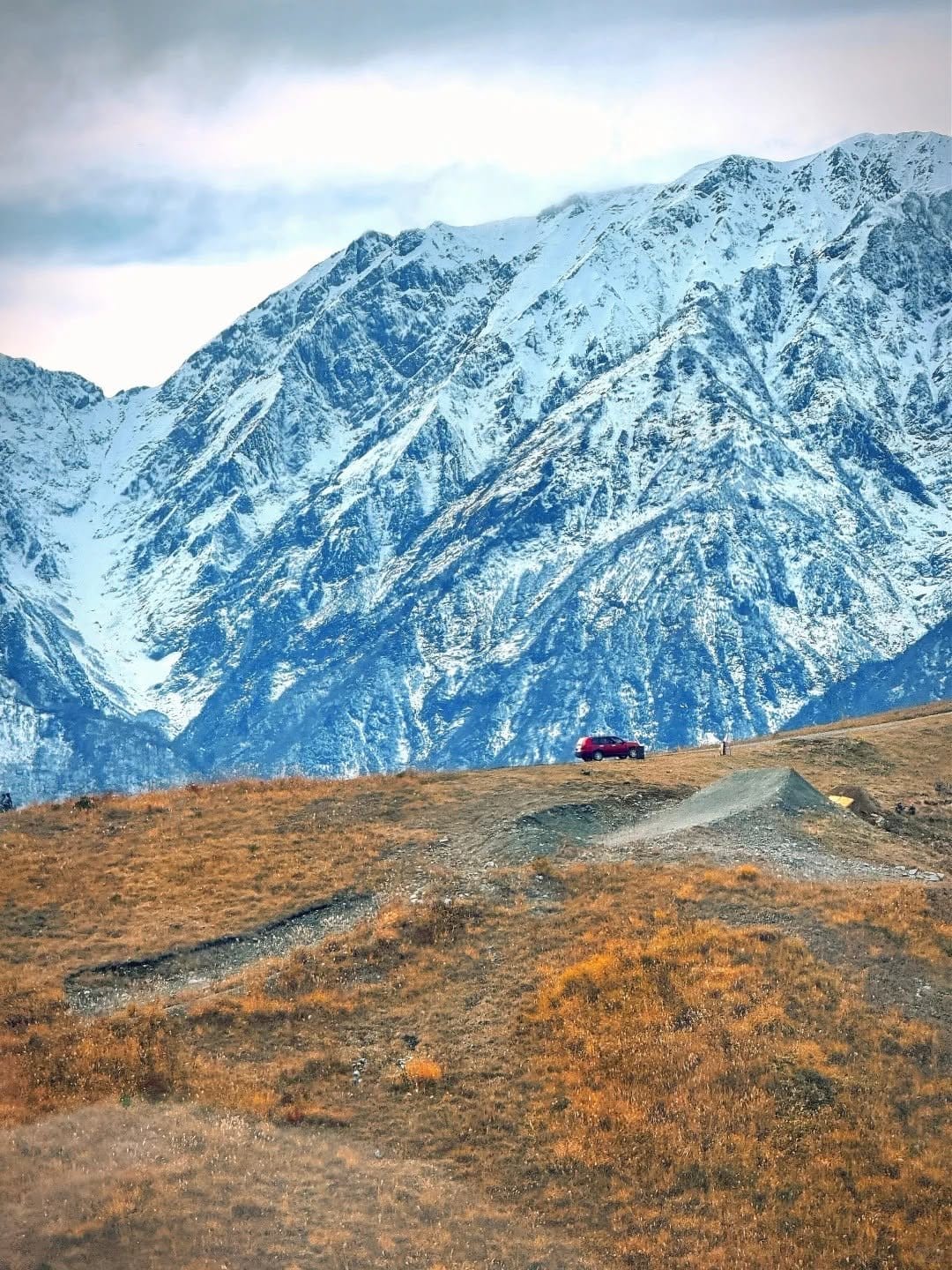
The beauty of Tsugaike at this time of year lies in its layers: withered golden marsh grass in the foreground, orange-red forests halfway up the slopes, and the newly snow-covered Shirouma Range completing the view behind them. The Japanese call this three-layered color effect sandan kōyō. It does not appear every day—you need the peaks to have received their first snow while the lower leaves have not yet fallen—so if you see it, you are lucky.
A few practical points: the wind up there is colder than you might expect, with little shelter along much of the route; restrooms are available only at a few fixed locations; and this is Nagano mountain country, meaning it is bear country. Wearing a bear bell (available at mountaineering stores or right at the ropeway area) is a sensible habit, not a gimmick.
Late Afternoon: Return to the Village and Soak in Hot Water
Come back down around 3–4 p.m., take the bus to your accommodation, check in, and do the most important thing of the day: soak in an onsen. Hakuba has its own hot-spring sources, and around Happo there are several small public baths that accept visitors. The water is known for being mildly alkaline, leaving your skin feeling smooth after a bath. Admission is usually a few hundred yen; bring small change and your own towel for convenience. Off-season opening hours may be shorter, so ask at your accommodation—the hosts usually know exactly which baths are open that day.
Evenings in the Village During the Off-Season: Set the Right Expectations
This is the part that few articles tell you honestly. Hakuba in October does not have the lively atmosphere of snow season. In Echoland—where the lights stay on late in winter—there may be only a few restaurants open during the off-season, some operating only on weekends, and kitchens may close earlier than you expect (many stop accepting customers around 8–9 p.m.).
Here is how experienced travelers handle it:
- Sort out dinner before dark. Either book a plan with dinner included at your accommodation or call/message to reserve a table in the afternoon. Wandering around looking for a restaurant at 7 p.m. is a recipe for a convenience-store dinner.
- Find the nearest convenience store and supermarket in advance. There are konbini around Hakuba Station and along the national highway; local supermarkets close much earlier than city supermarkets.
- Bring a flashlight or use your phone's light. Many village roads have no streetlights, especially in Wadano and on the smaller side streets of Echoland. It gets dark at around 5 p.m. in mid-October.
In return, the off-season gives you something winter does not: silence. Walk a few hundred meters to somewhere without streetlights, look up, and you will understand why astrophotographers love this valley. October nights here can drop below 10 degrees, with late-month nights approaching 0—so a lightweight down jacket, a knit hat, and thick socks are far from excessive.
Day 2: Happo-one in the Morning, Hakuba Village in the Afternoon
Going Up to Happo Pond
Wake up early, have breakfast, and head to the Happo bus terminal. From there, take the gondola to Usagidaira, then connect to two chairlift sections to reach the trailhead at an elevation of over 1,800 meters. From there, the trail to Happo Pond (Happo-ike) is a real mountain trail: rocky and steep in places, taking around 60–90 minutes each way depending on your fitness.
The reward is the iconic view of the entire area: a small pond nestled among mountain slopes, its surface flat as a mirror on windless days and reflecting the entire Shirouma Range. If you have ever seen a Hakuba tourism poster, there is a good chance this is the scene it showed.
Minimum preparations: shoes with good traction (ideally high-cut hiking shoes), a waterproof windbreaker, thin gloves, water, and a few snacks. It is considerably colder up there than in the valley, and fog can roll in within fifteen minutes. If the weather is poor or you do not want to hike, there is still a beautiful alternative: stop at Usagidaira after the gondola ride, sit at the café there and look out over the valley, or switch entirely to Iwatake, where a café and an observation deck jut out from the mountainside and can be reached by cable car with almost no hiking.
Afternoon: Walking Around the Village
Come back down in the early afternoon, have a late lunch in Happo or Echoland, and spend the rest of the day exploring the village itself—the part that 90% of visitors miss.
The most worthwhile stop is the Ōide area north of the village: a suspension bridge over the Himekawa River, with an old thatched-roof house beside it and the Alps rising behind. This is Hakuba's classic "Japanese countryside + snowy mountains" photo spot, with autumn foliage framing the view. It takes about half an hour to walk there from Hakuba Station; cycling is much faster, and many accommodations lend bicycles for free, so ask.
Elsewhere around the village, you will find a small Hakuba shrine beneath cedar trees, freshly harvested rice fields with the mountains as a backdrop, and small cafés run by local residents. These often keep irregular hours during the off-season, so finding one open is a matter of luck. If you still have time before your afternoon bus, take another soak in an onsen so you can board the bus warm.
The Journey Home
Highway buses to Shinjuku and connecting buses to Nagano Station depart from the Hakuba Station area (some services also stop at Happo). There are few departures during the off-season, and late-day tickets can sell out, so book your return ticket as soon as you finalize your itinerary rather than waiting to buy one at the terminal.
Comparing 3 Types of Accommodation in Hakuba
European-Style Pension in Echoland—for Those Who Want "Something to Do" in the Evening
A pension is a small, family-run guesthouse with Western-style rooms, usually 5–15 rooms, where the owners prepare the meals. Hakuba has had many of these pensions since the area became a ski destination, and the largest concentration is around Echoland.
What you get: a location among a strip of restaurants, so you can simply step outside and have dining options in the evening—more important than you might think during the off-season. Pension owners often speak a little English, know which restaurants and ropeways are open that day, and may lend you a bicycle. The homemade European-style breakfasts at Japanese pensions are often much better than expected.
What you give up: a genuine onsen is rare; most have only a shared ofuro-style bath. Rooms are simple, with moderate soundproofing. Some places accept cash only and lock their doors at night.
Typical price: around 8,000–15,000 yen per person per night with breakfast; adding dinner costs more. This figure varies widely depending on the season and day of the week, so use it as a comparison point rather than setting your budget around it.
Ryokan with Onsen—for Those Who Want the Accommodation to Be Part of the Trip
Hakuba and the surrounding area have ryokan and hot-spring hotels looking out over the Alps, with tatami rooms and kaiseki-style dinners featuring Shinshu ingredients such as autumn mushrooms, rainbow trout, beef, and mountain soba.
What you get: an all-in-one experience. Return to your room in the late afternoon, soak in an outdoor bath as the sky darkens, have dinner on-site, and go to sleep. You do not have to worry about which restaurants are open—a major benefit during the off-season. For travelers with parents or couples celebrating an anniversary, this is the lowest-risk option.
What you give up: this is the most expensive of the three types, and many ryokan are somewhat removed from the restaurant areas, meaning you are essentially "confined" to the property in the evening. Dinner is served at a fixed time (usually 18–19), so you have to come down from the mountains on schedule and cannot linger to watch the sunset at higher elevations.
Typical price: around 15,000–30,000 yen per person per night for a two-meal plan, and higher at upscale properties.
Budget Lodge—for Young Travelers, Groups of Friends, and Anyone Who Sees a Room as Just a Place to Sleep
In winter, Hakuba is full of lodges, hostels, and guesthouses catering to backpacking skiers. In autumn, the ones that remain open often offer steep discounts because of the lack of guests.
What you get: low prices, around 4,000–8,000 yen per person per night for a bunk or small room, plus a shared kitchen for preparing your own food—a lifesaver when restaurants are closed. The international atmosphere makes it easy to meet people, and other guests often have up-to-date trail information.
What you give up: shared bathrooms and toilets, noise, and little privacy. Many lodges are in Wadano or on outlying side streets, where roads are steep and dark at night. Also, quite a few lodges close entirely during the off-season for maintenance before snow season, so do not wait until the last minute to book.
Quick Choice by Traveler Type
| You are | Choose |
|---|---|
| A couple who mainly wants to relax | Ryokan with onsen |
| A group of friends who likes going out to eat in the evening | Pension in Echoland |
| A solo traveler on a tight budget | Lodge/guesthouse near the station or Happo |
| A family with young children | Pension with dinner, near a bus terminal |
| Traveling with elderly parents | Ryokan with onsen; avoid steep areas such as Wadano |
Which Areas Are Convenient for Walking to the Bus Terminal?
If you are not renting a car—as is true for most travelers coming from Tokyo—this is the criterion I would put ahead of room price.
Around Hakuba Station is the safest choice: the highway-bus terminal, local bus stops, taxis, konbini, and supermarket are all within walking distance. The next morning, you can simply wheel your luggage out and catch the bus. The trade-off is that the area feels less like a resort, and evenings are also fairly quiet.
Happo and Echoland offer a good compromise: the Happo bus terminal is a hub for the main routes to Hakuba Station and other areas, and it is right next to the gondola station for day two. From most pensions in Echoland, it takes about 10–20 minutes to walk to the terminal—fine during the day, but a little long if you are pulling luggage through the rain. When booking, ask the owner directly, "How long does it take to walk from here to the Happo terminal, and do you pick guests up at the station?" Many properties offer free transfers during certain hours; they simply do not clearly mention them on booking sites.
For Wadano, Goryu, Kamishiro, and Tsugaike, I would recommend staying there only if you have a car. They are beautiful and peaceful, but buses run infrequently during the off-season, and local shuttle services (which operate frequently during snow season) are usually not running yet. Before booking, open the regional bus operator's timetable and check the exact dates of your trip—the green-season, off-season, and snow-season timetables are three different schedules.
One small tip: have small cash ready for buses and taxis. Many local mountain routes still favor cash, and there are not many ATMs in the village that accept foreign cards, so withdraw money in advance for peace of mind.
Costs and Booking Tips
For a very rough estimate, a 2-day, 1-night trip from Tokyo costs around 8,000–18,000 yen for round-trip transportation depending on whether you choose an overnight bus or the shinkansen, plus roughly 6,000–9,000 yen for the combined ropeway fares at the two areas, accommodation at one of the three price levels above, meals, and onsen fees. This is only an estimate to give you a sense of scale—fares and room prices change by season, so compare them with the official websites and booking sites at the time of your trip.
A few useful tips:
- Book earlier than you think you need to, even during the off-season. The paradox of Hakuba in October is that the problem is not high demand but low supply: many properties close between seasons, leaving far fewer actual rooms available.
- Weekends during the best foliage period can still be fully booked. If you can take time off, going midweek is both cheaper and quieter.
- Prioritize accommodation with dinner if you are not staying near Echoland or the station.
- Ask in advance about transfers and bicycles. These two free services can completely change how comfortable your trip is.
- Check the ropeway closure dates before booking accommodation, not afterward. In some years, early snow causes certain routes to stop operating earlier than expected.
What to Bring for These Two Days
The rule is to dress in layers: thermal underwear, a sweater or fleece, and a waterproof windbreaker on top. Add a knit hat, thin gloves, and thick socks. Wear shoes with good traction for Happo. Bring water, snacks, a power bank (batteries drain quickly in the cold), and sunscreen—the autumn mountain sun is stronger than it feels. Bring a bear bell if you plan to hike. And bring cash.
Frequently Asked Questions
Do I need to rent a car in Hakuba in autumn?
Not necessarily, if you stay around Hakuba Station or Happo and only visit Tsugaike and Happo-one. But having a car lets you expand your trip to Lake Aoki, Ōide, and other spots around the village without depending on infrequent bus schedules.
Can I visit Tsugaike and Happo-one on the same day?
In theory, yes, but I would not recommend it. The two areas are about half an hour apart by bus, and each involves multiple ropeway sections with an early final departure down the mountain. Trying to fit both into one day is a recipe for exhaustion and rushing, and the risk of missing the last ropeway is very real.
Can people who are not used to hiking reach Happo Pond?
If you can walk briskly for 1–2 hours without finding it too strenuous, you should be able to manage it, but you need shoes with good traction because the trail is genuinely rocky. If you are not confident, stop at Usagidaira after the gondola ride—the view is still well worth it—or choose Iwatake, whose observation deck requires almost no hiking.
Where can children and older travelers go?
Tsugaike Nature Park is the best option: the wooden boardwalk is flat, and you can take a shorter route and turn back. The Ōide area and the lakeside paths in the valley are also easygoing. It is best to avoid the trail to Happo Pond.
What is there to do in Hakuba in the evening during the off-season?
Honestly, not much in the sense of "entertainment." There are a few restaurants and bars in Echoland, onsen, and stargazing. If you need a lively evening, Hakuba in October is not the place for you—but if you want a genuinely quiet evening, it is hard to find anywhere better.
Can I use an onsen if I am not staying at a ryokan?
Yes. Around Happo and throughout the valley, several hot-spring baths accept daytime visitors, with admission usually costing a few hundred yen. Off-season opening hours may be shorter, or some baths may close on certain weekdays, so ask at your accommodation or check the official website before going.
Can I still see autumn foliage in Hakuba in November?
There is usually still some color in the valley in early November, but the foliage season at higher elevations is over, and many ropeways begin closing in preparation for snow season. This is Hakuba's most awkward "between seasons" period—if November is your only option, focus on the village, onsen, and early-season snowy mountain scenery rather than autumn leaves.
More from this region — Chubu (Nagano, Kanazawa)
View all →
Hakuba in Autumn: Getting There, Lift Tickets, and the Final Operating Day
19 min · tips
Hakuba in Autumn: Choose the Right Dates for Fewer Crowds and Much Lower Prices
18 min · tips
Hakuba in Autumn: Gentle Walks for Three-Generation Families
18 min · tips
Hakuba Changes Color by the Week: A Leaf-Peeping Calendar from Summit to Valley
17 min · tips