
A Fall Day in Hakuba: Happo-ike in the Morning, Golden Valley Views from Iwatake in the Afternoon
A stop-by-stop schedule for a day trip from Tokyo or Nagano, including gondola costs and early-season soba for lunch, plus backup plans for foggy or rainy mountain weather.
Aug 12, 2026·✍️ olablog·⏱ 18 min read
A stop-by-stop schedule for a day trip from Tokyo or Nagano, including gondola costs and early-season soba for lunch, plus backup plans for foggy or rainy mountain weather.
Tap a region to browse articles
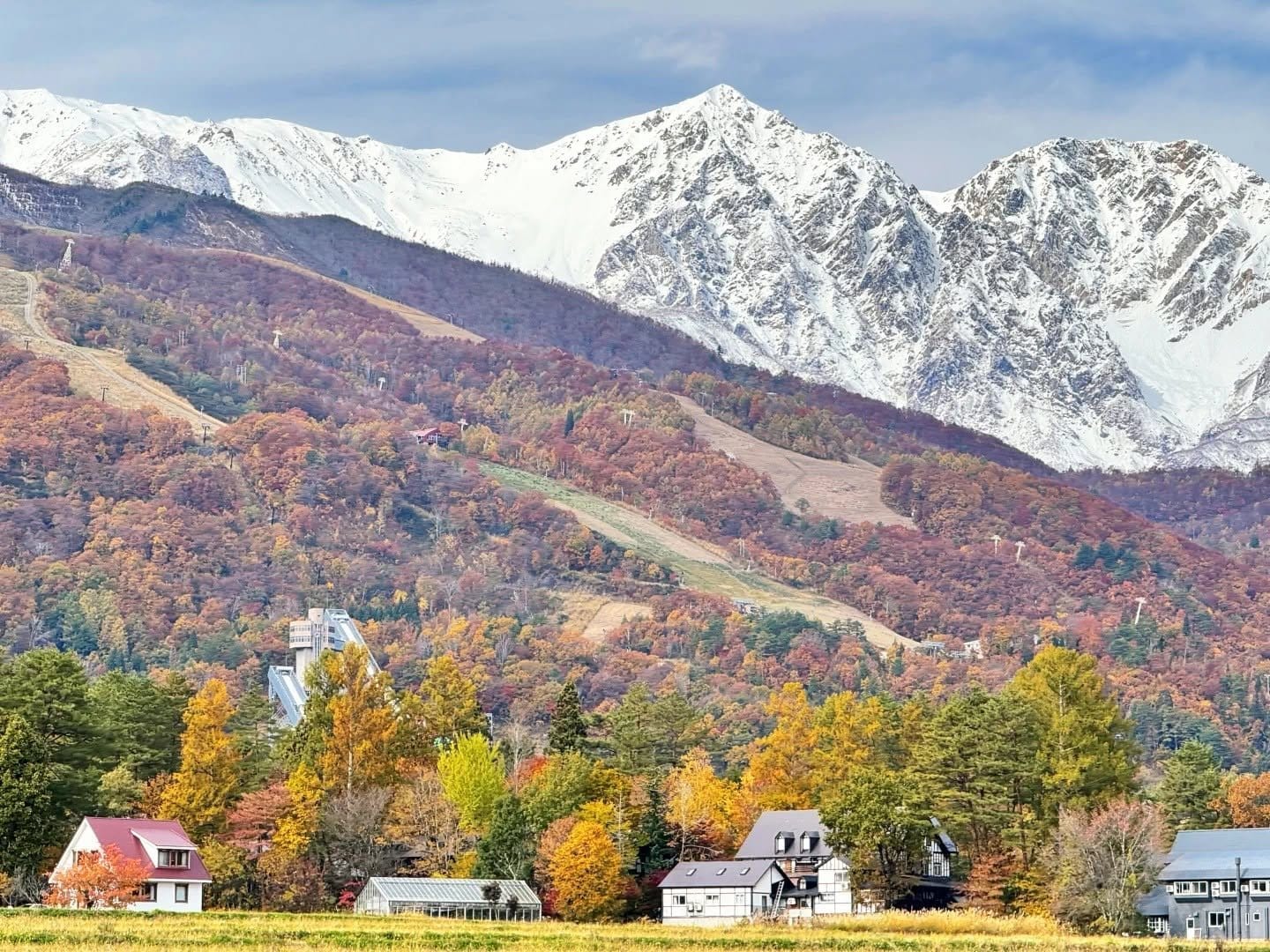
Here’s a slightly harsh truth about Hakuba in autumn that not many people tell you: the best scenery here only lasts for around three hours a day. Happo-ike’s surface lies flat as a mirror, reflecting the entire Shirouma Range dusted with its first snow — the scene featured on every promotional poster for the area — and it depends on still air and clear skies early in the morning. By around midday, mountain winds pick up, rippling the lake, while clouds begin creeping over the peaks. Someone who arrives at 11 a.m. and someone who arrives at 8:30 a.m. can see two completely different Hakubas, despite paying the same ticket price.
The problem is that Hakuba is a long way away. It takes around three hours to get here from Tokyo and more than an hour from Nagano. Most day-trippers set off late, arrive after the sun is already high, and console themselves with “I guess the weather just isn’t nice today.” It’s not that the weather isn’t nice — you simply arrived after the good window. This entire post is really about shifting your departure time early enough to catch that window, then arranging the rest of the day sensibly.
The itinerary below is the one I still use and recommend to friends: take the Happo-one gondola up in the morning and walk to Happo-ike while the water is still calm, head down to the valley for early-season soba at lunchtime, then cross over to Iwatake in the afternoon and sit on the Mountain Harbor deck overlooking the golden valley spread out below. I’ve also included specific times, estimated costs for each leg, and — what I think is most important — alternatives for when the weather refuses to cooperate, because in the mountains that happens more often than you might expect.

How practical is a day in Hakuba?
Let me be direct before you book anything: a day trip from Nagano is easy, while a day trip from Tokyo is doable but requires a few compromises.
The direct express bus from Nagano to Hakuba takes around one hour to one hour and fifteen minutes. If you spend the night in Nagano — something I highly recommend, since Nagano has Zenkoji, a lively dining area, and cheaper hotel rooms than Hakuba during peak season — you can catch an early-morning bus and reach the foot of the mountain before 9 a.m., leaving you plenty of time for the whole day.
From Tokyo, you’ll need to take the Hokuriku Shinkansen to Nagano Station, then transfer to a bus. The total one-way journey takes around three hours if the connection goes smoothly. To arrive in Hakuba at 9 a.m., you’ll need to leave Tokyo at around 6 a.m. — which means getting up at 5 a.m. In return, you’ll have to leave Hakuba by around 5 p.m. to get back to Tokyo that night. That leaves you roughly eight hours in Hakuba: enough for the two main stops, but not enough time to wander around at leisure.
There’s another option that few Vietnamese travelers consider: an overnight or early-morning highway bus running directly from Shinjuku to Hakuba, with no transfers. The ride takes around four and a half to five hours, but the fare is usually about half the price of the train, and the earliest service gets you there in the morning. If budget is your main concern, it’s worth considering — just book ahead, because seats sell out quickly on autumn weekends.
The best time for this exact itinerary is usually from around late September to mid-October for the highlands around Happo-ike, and from mid-October to early November for the valley and Iwatake area. The timing may sound slightly mismatched, but that’s precisely the appeal: around mid-October, you can catch both in a single day — the upper slopes already blazing red and speckled with snow, while the lower elevations are just turning golden.
The itinerary by time
The times below are based on traveling from Nagano. If you’re coming from Tokyo, shift everything later by around 30–45 minutes and cut the relaxing part at the end of the day.
6:30–7:45 — Leave Nagano and catch up on sleep on the bus
The express bus departs from the terminal in front of Nagano Station, by the Zenkoji exit. Buy your ticket at the counter or on the bus, depending on the operator; during peak season, arrive around 15 minutes early because there may be a line. Sleep through this leg — the scenery only becomes interesting during the second half, when the bus follows the valley.
Your stop is Hakuba Happo Bus Terminal, not Hakuba Station. The terminal is right in the center of the Happo area, just a few minutes’ walk from the gondola station.
7:45–8:30 — Store your luggage, grab a quick breakfast, and buy tickets
First things first: put all your heavy luggage in a locker. Lockers are available at the bus terminal and around the gondola station; if they’re full, many guesthouses and cafés in Happo will hold your bags. You’ll be walking on rocky trails for two hours, and a large backpack will make your life miserable.
Don’t expect much from breakfast — this mountain area starts its day late. The convenience stores around Happo are your safest bet; pick up a rice ball and a bottle of water to take up the mountain, since food up there is limited and expensive.
Mountain tickets are usually sold as a round-trip package covering the Adam Gondola + two chairlift sections, taking you from around 760 meters up to the Happo-ike Sanso area at roughly 1,800 meters. The first and last departures vary by season and weather, so check the official Happo-one website before your trip and screenshot the last descent time so you don’t forget it.
8:30–9:15 — Head up the mountain
The gondola ride takes around eight minutes, followed by two sections on open-air chairlifts. This is when you realize you didn’t dress warmly enough: sitting on a chairlift in the wind, without moving, at nearly 1,800 meters, can mean temperatures of only around 5–8 degrees on an early October morning. Keep a windbreaker and thin gloves within easy reach, not buried at the bottom of your backpack.
The views from the chairlift are part of the experience in their own right: mountain slopes stretch out below, the Hakuba Valley gradually shrinks, and the Northern Alps appear in full across the valley.
9:15–10:15 — The trail to Happo-ike
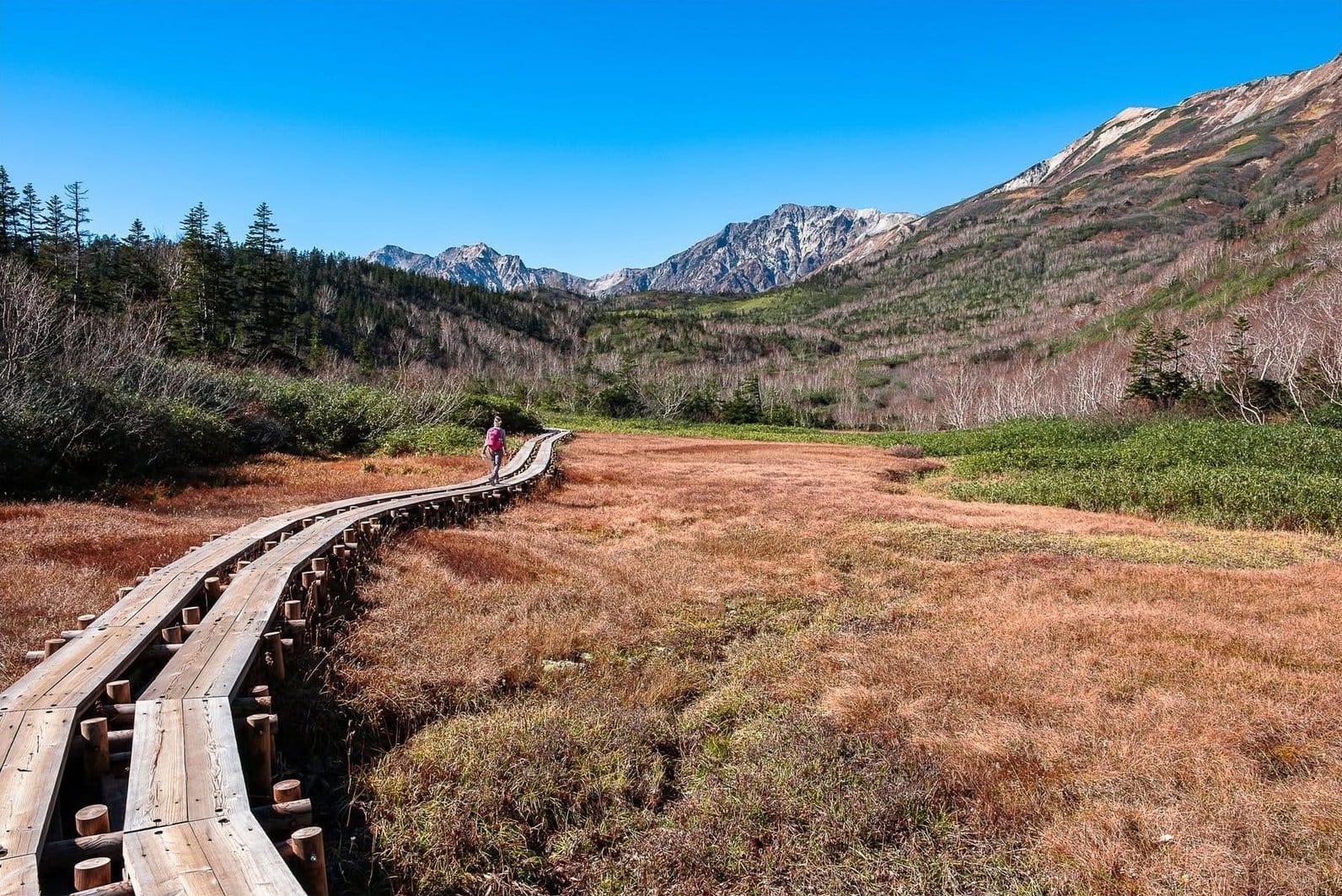
From the final station, the trail to Happo-ike is around one and a half kilometers long and takes around 60–90 minutes each way, depending on your fitness and how often you stop for photos. There are two routes: one with wooden boardwalks that’s easier to walk, and another steeper, rockier path with more open views. An average person can manage it, but this is a real mountain trail, not a park promenade: the rocks are uneven, the wind can be strong, and some sections will leave you breathless.
Footwear is the point I most want to emphasize. Athletic shoes with good grip are the bare minimum; high-cut hiking shoes are much more reassuring. Every autumn, people in this area sprain their ankles because they came in flat-soled canvas shoes.
10:15–11:15 — Happo-ike
Happo-ike sits at an altitude of over 2,000 meters. It’s smaller than you might expect from the photos, but on a windless day its surface becomes perfectly still, reflecting the entire Shirouma Range. This is why you got up early.
A few practical notes about being up there: the wind changes direction very quickly, and clouds can roll in and completely hide the mountains for ten minutes, then clear again ten minutes later — so don’t give up too quickly; sit and wait. Bring something warm to drink, find a sheltered spot, and be patient. Many of the best photos here are rewards for people willing to sit for another twenty minutes.
If you still have the energy and time, the trail continues higher toward the slopes of Karamatsu. But on a one-day itinerary, stop at the lake — you’ll need to conserve both your energy and your time.
11:15–12:15 — Descend the mountain
The descent is faster than the climb, but don’t get careless: downhill rocky sections are when slips are most likely. Once you reach the chairlift station, reverse the sequence of chairlifts and gondola rides. By around 12:15, you should be back at the foot of the mountain.
12:30–13:30 — Early-season soba
Nagano is soba country, and autumn is the season for shin-soba — noodles made from freshly harvested buckwheat, which usually begin appearing on restaurant signs from around late October. The difference from regular soba is not subtle: the noodles are slightly greener, the aroma is much more pronounced, and the flavor has the gentle sweetness of fresh grain.
There are plenty of small, family-run soba restaurants around Happo and along the Hakuba Valley’s main road. One thing to know: these places close early and often run out of noodles — many stop serving and close as soon as they sell out, often in the early afternoon. So don’t wait until 2 p.m. to eat. If a restaurant has a 新そば (shin-soba) sign, that’s the one you want.
For your first taste of shin-soba, I recommend zaru soba — chilled noodles served with a dipping sauce — because cold noodles preserve the grain’s aroma best. If it’s too cold outside, hot kake soba is perfectly fine too, though the fragrance will be somewhat less pronounced.
13:45–16:00 — Iwatake and the Mountain Harbor deck
Iwatake is a few kilometers from the Happo area. Local buses connect the different areas of the valley seasonally, but services are infrequent; if there are two or more of you, a taxi is often better value than waiting around. This is also the easiest leg of the day for the schedule to fall apart, so ask about bus times as soon as you come down from the mountain at lunchtime.
Take the separate gondola up to Iwatake; the ride takes around five to ten minutes. At the summit is Hakuba Mountain Harbor — a wooden deck extending out from the mountainside, looking straight down over the Hakuba Valley, with the wall of the Northern Alps opposite. On an autumn afternoon, the entire valley below turns golden, while the distant mountains are blue-gray and speckled with snow. There’s a café beside the viewing deck serving drinks and pastries, and outdoor seating is available if you can handle the cold.
On weekdays, afternoons here are fairly quiet; on autumn weekends, you may have to queue for a few minutes for the best photo spot on the deck. Beyond the viewing platform, the Iwatake summit area also has several short walking paths and hammock areas — no particular fitness required, just time.
Iwatake’s biggest advantage in this itinerary is that it has the sun at your back in the afternoon: the light falls onto the opposite mountain slopes, so photos from the deck usually have warmer colors and much clearer mountain details than they would in the morning.
16:15–17:30 — Onsen or head straight back
If you’re traveling from Nagano and aren’t in a rush, spend the final half hour at an onsen. The Happo area has a public hot-spring bathhouse right near the bus terminal, so conveniently located that you can soak and then walk straight out to catch your bus. The water in this area is known for its silky feel, and after a day of walking rocky trails, it’s the most well-deserved reward. Remember to bring a small towel or buy one there.
If you’re traveling from Tokyo, honestly, you should skip the onsen and get to the bus terminal early. Missing the last bus to Nagano also means missing the last shinkansen, and you’ll have to find a room in Hakuba during peak season — an unexpectedly expensive evening.
Estimated costs for each leg
The figures below are estimates for budgeting purposes, not listed prices — fares and operating times change by season, so check the official websites before you go.
If you’re starting from Nagano:
- Nagano–Hakuba express bus, round trip: around four thousand yen. Some round-trip tickets are cheaper than buying separate one-way tickets, so ask at the counter.
- Happo-one gondola + chairlift ticket, round trip: around three to four thousand yen.
- Iwatake gondola, round trip: around two thousand yen.
- Soba lunch: around one to one and a half thousand yen.
- Coffee and pastry at Mountain Harbor: around one thousand yen.
- Onsen: around eight hundred to one thousand yen.
- Local transportation (local bus or a shared taxi): around one to two thousand yen.
The total comes to around thirteen to sixteen thousand yen per person.
If you’re starting from Tokyo, add the round-trip Tokyo–Nagano shinkansen fare, around sixteen to eighteen thousand yen for a regular seat. The total for the day will be around thirty thousand yen. Taking a direct highway bus from Shinjuku brings the figure down considerably, but adds more time on the road.
A practical money-saving tip: Hakuba’s ropeway areas sometimes offer multi-area passes or combo tickets that include food vouchers during the season. They aren’t available every year and aren’t always the best deal, but it costs nothing to ask at the counter before buying separate tickets.
When the weather is bad: don’t cancel, change the plan
This is the section I most want you to read carefully, because there’s a good chance you’ll need it. Mountain weather in Nagano changes very quickly in autumn, and forecasts for the valley are nearly useless when it comes to elevations of 2,000 meters.
Low clouds and fog, but no rain
This is the most common situation. The lifts are still running, but when you reach the top, you may see nothing but white. The solution: go up anyway, but go early and be prepared to wait. Fog at Happo-one often clears in patches; it’s perfectly normal to wait forty minutes at the upper station and suddenly see the clouds open up. If it’s still completely covered after an hour, head down early and spend more time at lower elevations — that’s when Plan B comes into play.
Light rain or intermittent showers
Skip the trail to Happo-ike. Wet rocks are slippery and the risk isn’t worth it on a one-day trip. Instead, shift your focus to the valley:
- Ōide Park, with its suspension bridge over the stream, historic wooden storehouses, and mountains in the background — a classic Hakuba photo spot that looks uniquely beautiful in misty weather. It’s an easy walk with no climbing.
- Lake Aoki south of the valley, with a flat lakeside path and autumn forests glowing orange-red in the reflections.
- Hakuba Olympic Ski Jumping Stadium, a remnant of the 1998 Winter Olympics, with a lift to the top of the jumping platform — standing there and looking down is enough to understand why this sport makes people shudder.
- Turn lunch into a long soba lunch: many restaurants in the valley have attractive interiors, and sitting by the window watching the rain is its own kind of pleasure.
Heavy rain all day or strong winds that stop the lifts
Strong winds are a common reason for chairlifts to stop, sometimes affecting only the upper sections while the gondola continues operating. If the entire system is closed, switch plans completely:
- Spend the whole afternoon at an onsen. There’s nothing wrong with trading a day of mountain hiking for a day of soaking in hot water while watching rain fall over the autumn forest.
- Go to Matsumoto. The local Ōito Line from Hakuba to Matsumoto takes around one and a half to two hours with one transfer. The scenery along the way is beautiful, and the journey ends at Matsumoto Castle’s striking black keep — a destination that doesn’t depend on the weather.
- Return to Nagano early and visit Zenkoji. This historic temple is at its best when the air is damp and the crowds are thin, while the street leading to it is lined with restaurants and bakeries.
My general rule when heading into Japan’s mountains: always have a low-altitude alternative in mind before setting out. If you’re trying to come up with Plan B while standing in the rain at the bus terminal, you’re going to have a bad day.
Small details that make a big difference
- Carry cash. Family-run soba restaurants, local buses, and some mountain rest stops still prefer cash. There aren’t many ATMs in the valley that accept foreign cards.
- Follow the three-layer principle. A thermal base layer, fleece or wool mid-layer, and waterproof windbreaker. The temperature difference between the Mountain Harbor deck in the afternoon and Happo-ike in the morning can be more than ten degrees.
- Screenshot the last departure times. The last cable-car descent, the last bus back to Nagano, and the last shinkansen back to Tokyo — these three times should be saved on your phone before you set out. Mobile reception isn’t reliable everywhere on the mountain.
- Bring a power bank. Cold weather drains batteries unusually fast, and you’ll be taking photos constantly all day.
- Go on a weekday if you can take time off. The weekend in mid-October is peak of peak season in Hakuba; Tuesday through Thursday is much quieter, and you’ll have a far more comfortable experience for the same amount of money.
- Carry a bear bell or go with someone else. Nagano’s mountain areas have bears. The main trails are relatively safe because they’re busy, but if you branch off onto a quiet path, it’s wise to take precautions.
Frequently asked questions
Is a day trip from Tokyo too rushed?
It’s rushed but possible, provided you leave Tokyo around 6 a.m. and accept leaving Hakuba around 5 p.m. If this trip matters to you, the much more relaxed option is to spend one night in Nagano — it’s cheaper than staying in Hakuba during peak season and gives you an extra two hours on the mountain.
Can I reach Happo-ike if I’m not used to hiking?
Yes, if you can walk continuously for around an hour and have shoes with good grip. The trail doesn’t require mountaineering skills, just average fitness and care on the rocks. If you don’t feel confident, you can still ride to the highest cable-car station, enjoy the views, and explore the flatter area nearby before heading back — the views alone are well worth the ticket price.
Happo-ike or Mountain Harbor: which should I choose if I can only visit one?
Choose based on your fitness and the weather. If the sky is clear and your legs are strong, Happo-ike is by far the more rewarding experience. If there are low clouds, or you’re traveling with older adults or young children, Iwatake wins hands down: you can take the gondola up, there’s no hike, there are warm places to sit, and you still get expansive views.
Can children manage this itinerary?
The Iwatake section is very child-friendly. The trail to Happo-ike depends on the child — for children under around ten years old, I recommend stopping at the highest cable-car station, enjoying the views, and walking around the nearby flat area rather than pushing on to the lake.
Which week of autumn should I visit?
Mid-October is usually the best balance for this two-elevation itinerary. But the foliage season can shift by an entire week from one year to the next, so about one week before your trip, check the autumn foliage reports and updated photos on the official websites of Hakuba’s ropeway areas to see which elevations are at their “peak.”
Do I need to book the gondola tickets in advance?
Usually, buying them at the counter on the day is fine. However, the first and last departure times and opening dates for each area vary by season and may be temporarily suspended because of the weather, so check the official website the night before.
Where should I have dinner if I decide to stay overnight?
The Happo area has the highest concentration of restaurants in the valley, from izakayas and noodle shops to several Western-style places catering to international ski visitors. Note that outside winter, quite a few restaurants close early or open only a few days a week — so ask your accommodation in advance, or book a plan that includes dinner to be safe.
More from this region — Chubu (Nagano, Kanazawa)
View all →
Hakuba in 2 Days, 1 Night in Autumn: Three Types of Accommodation and How to Plan Your Schedule
20 min · tips
Hakuba in Autumn: Getting There, Lift Tickets, and the Final Operating Day
19 min · tips
Hakuba in Autumn: Choose the Right Dates for Fewer Crowds and Much Lower Prices
18 min · tips
Hakuba in Autumn: Gentle Walks for Three-Generation Families
18 min · tips