
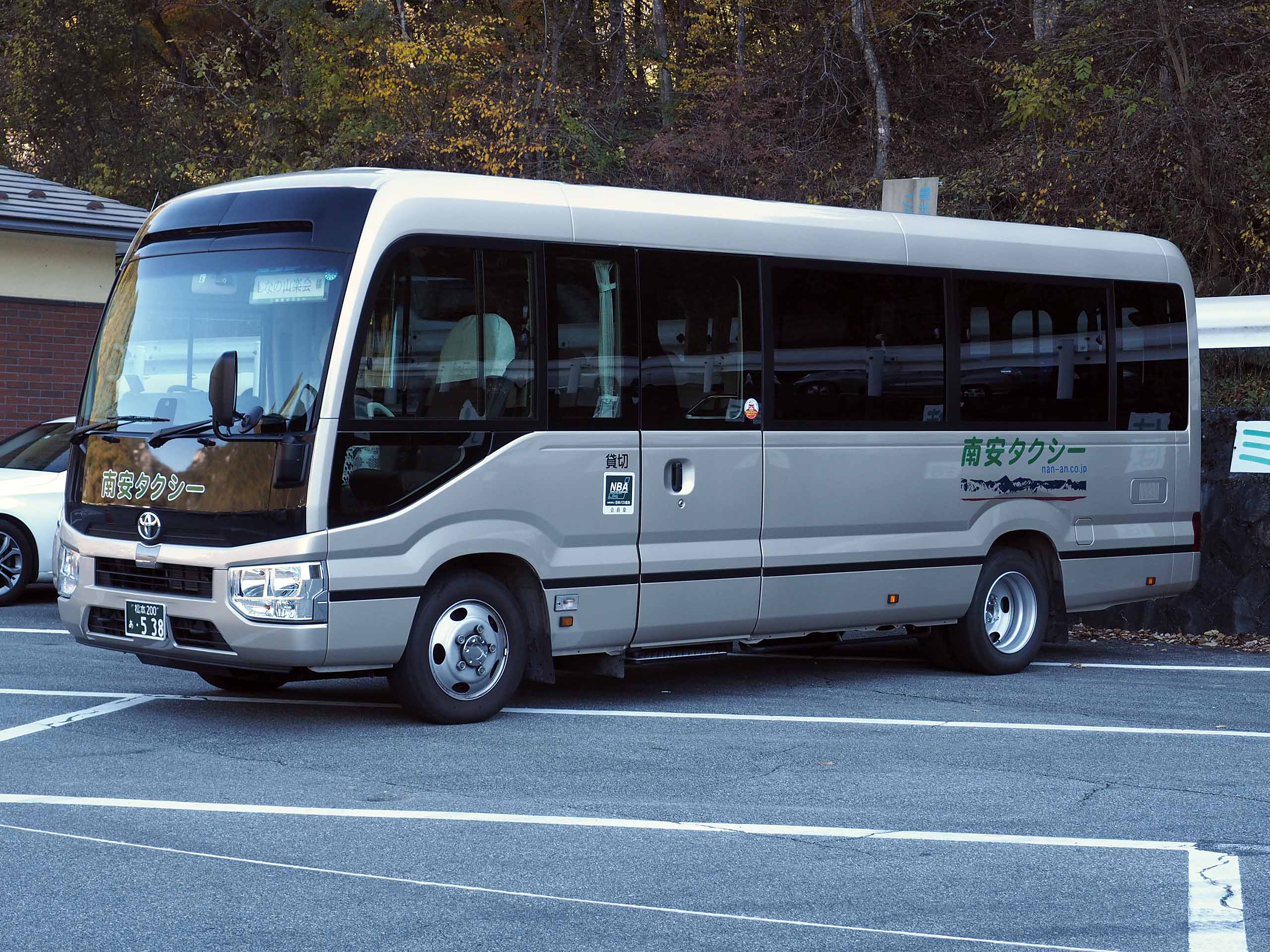
Chubu Nagoya Airport Transfers by 29-Seat Minibus
See why a 26–29-seat Toyota Coaster minibus suits groups of 15–25, with luggage guidance, van comparisons, and estimated pricing.
Aug 21, 2026·✍️ olablog·⏱ 8 min read
See why a 26–29-seat Toyota Coaster minibus suits groups of 15–25, with luggage guidance, van comparisons, and estimated pricing.
Tap a region to browse articles
Arriving at Chubu Centrair International Airport with 15–25 travelers can make the first stage of a Japan trip surprisingly complicated. Your group may have large suitcases, carry-ons, ski bags, strollers, or shopping luggage—and moving everyone together by train or several taxis is rarely relaxing after a long flight.
A 26–29-seat Toyota Coaster-class minibus offers a comfortable middle ground. It is large enough for a medium-sized group but more compact and flexible than a full-size coach. With a licensed Japanese operator, your group can travel together from Chubu Nagoya Airport to Nagoya, Gifu, Mie, or other destinations without splitting up at the terminal.
Why a 29-seat minibus fits groups of 15–25
A 29-seat minibus is not only about the number of seats. It gives your group room to spread out, keep the journey organized, and avoid the coordination problems that come with multiple vehicles.
For a group of 15–25, a Coaster-class minibus can offer:
- One vehicle and one meeting point at the airport
- Direct travel to your hotel, venue, or first sightseeing stop
- Easier headcounts when leaving the terminal
- Space for a tour leader or accompanying staff member
- A more social journey for families, colleagues, or student groups
- More flexibility for an itinerary with several stops
The vehicle is especially useful when your arrival times are close together but not identical. Rather than arranging several separate rides, your group can coordinate pickup with the operator and depart once everyone is ready.
It can also simplify the return journey. A scheduled group transfer to Chubu Centrair means you can leave your hotel together, keep luggage in one vehicle, and avoid asking everyone to navigate airport connections with bags.
Luggage: what to consider before booking
Luggage planning is the most important practical point for airport transfers. A 29-seat minibus may have plenty of passenger seating, but luggage space depends on the specific vehicle layout, the number of travelers, and the size of their bags.
For a group of 15–25, tell us about your luggage when requesting a quote. Useful details include:
- The number of large checked suitcases
- Carry-on cases and backpacks
- Golf bags, musical instruments, sports equipment, or other oversized items
- Strollers or wheelchairs
- Whether everyone will travel with luggage on both the arrival and departure transfers
A group of 15 with large cases may need a different arrangement from a group of 25 traveling with small bags. In some situations, the seating layout can be adjusted to create additional luggage room. In others, an additional vehicle or luggage solution may be more suitable.
Do not assume that an empty passenger seat automatically solves luggage capacity. The safest approach is to provide your approximate luggage count in the booking form so the vehicle and layout can be checked before confirmation.
Minibus or two vans?
Two vans can work for a group of 15–25, but they introduce another layer of coordination. Travelers may need to divide themselves between vehicles, keep track of two drivers, and wait for the second van before departing or making stops.
A single minibus is usually more convenient when:
- The group wants to stay together
- You have one hotel or destination
- A tour leader needs to make announcements
- You are carrying shared equipment or group supplies
- You prefer one pickup and one drop-off process
- The itinerary includes several stops
Two vans may be useful when the group is splitting between different hotels, traveling on separate schedules, or carrying an unusually large amount of luggage. They can also be a practical option when narrow roads or very restricted parking make a larger vehicle less suitable.
| Consideration | 26–29-seat Coaster-class minibus | Two passenger vans |
|---|---|---|
| Group coordination | One vehicle, one driver, one departure | Two vehicles and two departure checks |
| Comfort for 15–25 people | More room to stay together | Can feel less unified, especially on longer transfers |
| Luggage planning | Must be checked against the vehicle layout | Luggage can be divided, but loading needs coordination |
| Hotel and airport arrival | One vehicle to manage at the curb or meeting area | Two vehicles may arrive separately |
| Best for | Groups with one shared itinerary | Groups with split destinations or schedules |
| Estimated one-way planning budget | From ¥69,000 (10-hour day) + tolls & parking | Approximately ¥70,000–¥120,000 for both vans combined |
The minibus price is OlaChill's fixed 10-hour day (¥69,000); expressway tolls, parking and any hours beyond ten (¥15,000 each) are added. The two-van figures are market estimates for comparison only. The exact quote comes from the booking form.
Estimated transfer pricing from Chubu Nagoya Airport
A 26–29-seat minibus is ¥69,000 for the 10-hour day, plus expressway tolls and parking.
Longer routes to destinations in Gifu, Mie, the Kiso Valley, or other areas can cost more. A transfer with extended waiting, multiple hotel drops, or sightseeing stops may also require a different quotation. Early-morning or late-night services can have their own operating conditions.
When comparing the price with trains or taxis, consider the complete journey rather than only the fare:
- Airport-to-hotel transportation
- Transfers between stations and accommodation
- Taxi costs for travelers with heavy luggage
- The time needed to gather everyone
- The inconvenience of splitting the group
- The value of traveling directly to the final destination
For a business delegation, family group, wedding party, or organized tour, the convenience of a private vehicle can be as important as the transport cost itself.
How the airport pickup works
Your operator can confirm the meeting instructions before the travel date. After clearing immigration and collecting luggage, travelers should remain together and contact the group leader if anyone is delayed.
A smooth pickup usually involves:
- Confirming the arrival flight number and date
- Agreeing on a meeting point at Chubu Centrair
- Keeping the group leader’s phone available
- Allowing time for immigration, baggage collection, and customs
- Loading luggage before everyone boards
- Confirming the final destination and any planned stops
Flight delays are common enough that your arrival information should be included in the booking request. The operator can then review the timing and waiting arrangements for your transfer.
If your group is arriving on separate flights, provide all flight details. This is particularly important when the minibus is expected to wait for the last arriving travelers.
What to include when requesting a quote
To receive a useful estimate, prepare the following information:
- Travel date
- Arrival or departure flight details
- Number of passengers
- Approximate luggage quantity and size
- Airport terminal information, if known
- Hotel or destination address
- One-way or round-trip requirement
- Additional stops or sightseeing requests
- Need for a child seat, wheelchair access, or special equipment
The exact quote comes from the booking form. It is based on your actual route and requirements rather than a generic airport-transfer rate.
For a tailored estimate, request a free quote from OlaChill—the team replies within 24 hours.
Is a 29-seat minibus right for your group?
For 15–25 travelers arriving at Chubu Nagoya Airport, a 26–29-seat Toyota Coaster-class minibus is often the most balanced option. It keeps the group together without the size of a full coach, works well for direct hotel transfers, and can be planned around your luggage and itinerary.
The key is to confirm the luggage arrangement and route before booking. If your group has a shared schedule and one main destination, a private minibus can make the start of your Japan trip noticeably easier.
Frequently asked questions
Can a 29-seat minibus carry 25 passengers and their suitcases?
It may be possible, but this depends on the number and size of the suitcases, as well as the vehicle’s seating and luggage layout. Share your approximate luggage details when requesting a quote so the arrangement can be checked properly.
Is one minibus cheaper than two vans?
Not always. A minibus may offer better value because it uses one driver and one vehicle, but the final comparison depends on the route, date, waiting time, and luggage requirements. Use the estimated ranges as a starting point only.
Can the minibus take us beyond Nagoya?
Yes, subject to route, operating hours, vehicle availability, and driver arrangements. Transfers to destinations in nearby prefectures can be requested, although longer routes may have a higher estimated price.
Can we add sightseeing stops between the airport and hotel?
Additional stops can often be arranged. Include every requested stop in your booking details because waiting time, parking, and route changes may affect the quotation.
How far in advance should we arrange the transfer?
Earlier is better for groups, especially during busy travel periods, holidays, and peak sightseeing seasons. Providing flight, passenger, luggage, and destination information early gives the operator more time to confirm a suitable vehicle.
More from this region — Chubu (Nagano, Kanazawa)
View all →
Chubu Travel Guide: Takayama, Shirakawa-go, Kanazawa, and the Japan Alps
10 min · destinations

A Fall Day in Hakuba: Happo-ike in the Morning, Golden Valley Views from Iwatake in the Afternoon
18 min · tips

Hakuba in 2 Days, 1 Night in Autumn: Three Types of Accommodation and How to Plan Your Schedule
20 min · tips

Hakuba in Autumn: Getting There, Lift Tickets, and the Final Operating Day
19 min · tips