

A Day Across Tateyama in Autumn Colors, Hour by Hour
A detailed hourly timeline for traveling from Toyama to Ogizawa in one day via 6 modes of transport: what time to catch the early departure, how long to stop at each point, and the final deadlines to remember.
Aug 12, 2026·✍️ olablog·⏱ 16 min read
A detailed hourly timeline for traveling from Toyama to Ogizawa in one day via 6 modes of transport: what time to catch the early departure, how long to stop at each point, and the final deadlines to remember.
Tap a region to browse articles
There’s a very particular kind of “missing the deadline” on the Tateyama–Kurobe Alpine Route that I once witnessed firsthand: a group of travelers standing at Murodo at nearly 4 p.m., their faces turning pale as a station employee pointed at the timetable and shook their head. They had been busy photographing Mikurigaike Pond and forgotten that this isn’t an ordinary sightseeing spot—it’s a chain of 6 consecutive modes of transport, and missing just one link brings down the entire chain behind it. Traveling one way from Toyama to Ogizawa means you can’t simply say, “I’ll continue tomorrow”: your luggage has already been sent to the other side of the mountains, and tonight’s hotel is in Nagano.
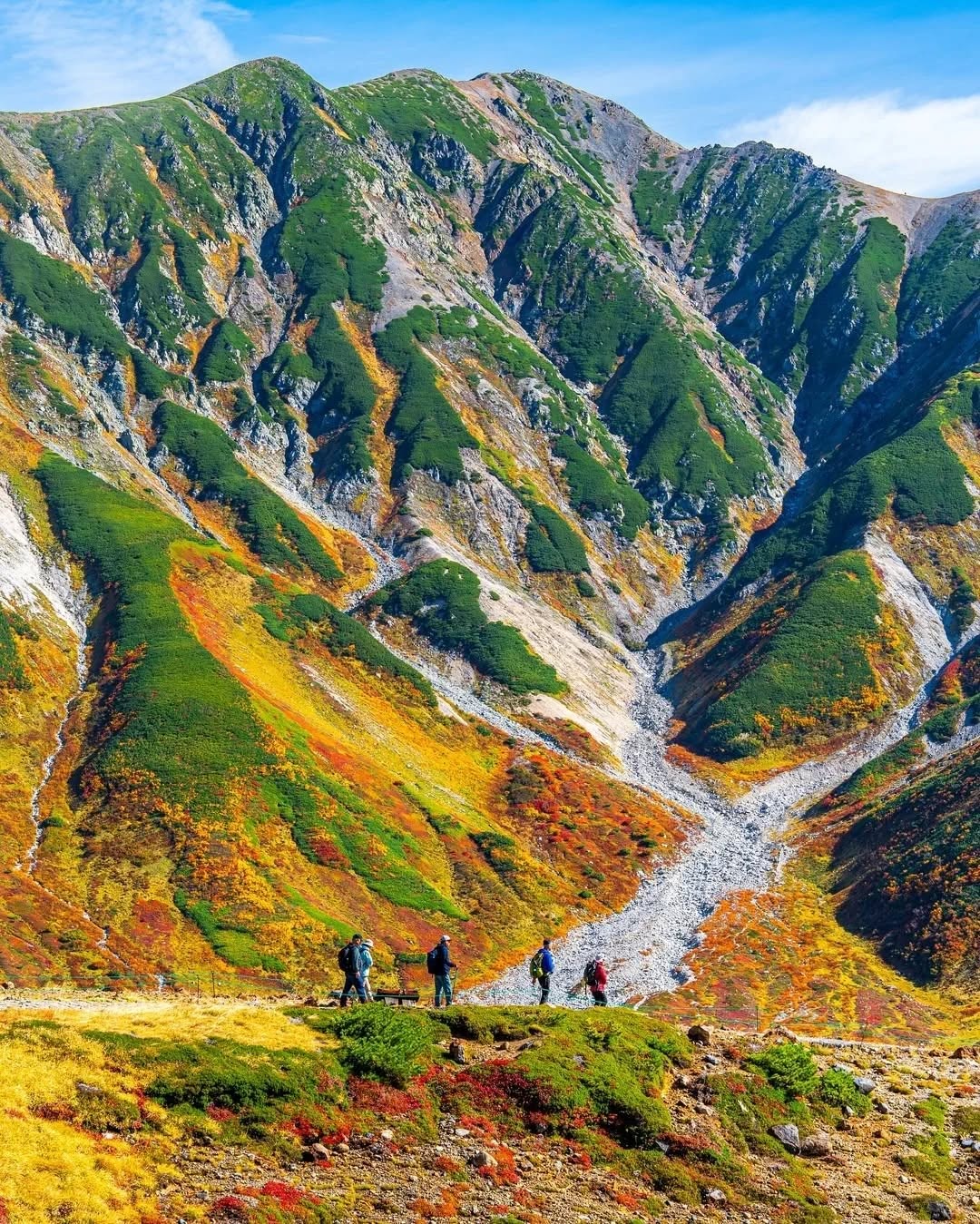
But that same “one way, one day, right on time” nature is exactly what makes this route so spectacular in autumn. In less than 10 hours, you go from the still-green Toyama Plain up to the golden pampas grass of the Midagahara Plateau, reach Murodo at around 2,450m, where most of the leaves have already fallen and early snow may even be sticking to the ground, then gradually descend toward Kurobe Dam just as the mountains around the lake blaze orange and red. The Japanese call this “sandan kouyou”—three tiers of autumn in a single view: white snow on the peaks, red leaves in the middle, and green forests below. Few places in Japan let you see all three layers in one day.
I wrote this article as a practical schedule you can actually take with you: what time to catch each departure, how long to stop at every point, which times are absolute “final deadlines” you must not forget, and what to cut if the weather is bad that morning. One important note first: train and bus times on this route change by season and by year, so treat all the times below as approximate. Before your trip, be sure to check the official Tateyama Kurobe Alpine Route website against the timetable for the exact month you’ll be traveling.
Why Travel One Way from Toyama → Ogizawa
The Alpine Route can be traveled from either end, but for people staying around Toyama/Kanazawa or flying in from Osaka, traveling from Toyama → Ogizawa has several clear advantages:
- Better light throughout the day: In the morning, you’re on the western side (Midagahara and Murodo), when the sunlight is still beautifully angled. In the afternoon, you move to the eastern side (Kurobe Dam)—the autumn light on Lake Kurobe is wonderfully “sweet.”
- You’re traveling against the crowds: Group tours from the Nagano side usually pour into Murodo around midday. Coming from Toyama, you arrive at Murodo before them and leave just as they begin arriving.
- You finish closer to Tokyo: After descending to Ogizawa, you can take a bus to Shinano-Omachi Station, then continue to Matsumoto or Nagano, from where taking the shinkansen to Tokyo is very convenient—ideal for anyone traveling the Kanazawa → Tokyo route.
The key consideration when traveling one way is sending your luggage ahead. Trust me, you don’t want to drag a suitcase through 6 modes of transport and along mountain-station stairways. Tateyama Station, as well as some hotels at both ends of the route, offer same-day luggage forwarding to the Ogizawa/Shinano-Omachi side: drop it off in the morning and collect it at the other end in the late afternoon or evening. The fee is around several thousand yen per piece, and there is a morning drop-off deadline (usually quite early—acceptance often ends around mid-morning), so check the official website in advance and arrive a little early. All you need to carry is a small backpack with warm clothes, water, and snacks.
Remember the 6 Modes of Transport
Starting from the Toyama side at the foot of the mountains, your day will involve these modes of transport in order:
- Toyama Chihou Railway: Dentetsu-Toyama Station → Tateyama Station, approximately 1 hour, with a pleasant route along the river valley.
- Tateyama Cable Car: Tateyama Station → Bijodaira, only about 7 minutes but incredibly steep, passing through a forest of ancient cedars.
- Highland Bus: Bijodaira → Murodo, approximately 50 minutes, passing through Midagahara—the most beautiful road section on the route in autumn.
- Tateyama Tunnel Electric Bus: Murodo → Daikanbo, approximately 10 minutes through a tunnel bored into the heart of the mountain. This section used to be served by the legendary trolleybus, but it was replaced by an electric bus from the 2025 season. The ride is still fun; nostalgic travelers may just feel a little wistful.
- Tateyama Ropeway: Daikanbo → Kurobedaira, approximately 7 minutes. This is a single-span ropeway with no support pillars in the middle, offering an unobstructed view across the valley—in the autumn foliage, you’re quite literally floating above a sea of orange and red.
- Kurobe Underground Cable Car: Kurobedaira → Kurobeko, approximately 5 minutes entirely underground. Once you arrive, walk across Kurobe Dam, then take the Kanden Tunnel Electric Bus (Kurobe Dam → Ogizawa, approximately 16 minutes). If you count this as well, there are 7 sections, but regular travelers usually group “crossing the dam” together as the final leg.
A one-way through ticket from Toyama → Ogizawa covers the entire chain and is purchased in one transaction. Prices change by year, so check the official website. During peak autumn foliage season (approximately late September to mid-October), it is highly recommended that you book your tickets online in advance, especially an early-morning Tateyama Cable Car departure. This is the first bottleneck, and on weekends you may wait an entire hour if buying tickets on the day.
One-Day Timeline: Getting Up Early Is the Best Investment
Around 5:30 – 6:30 | Toyama → Tateyama Station
Take the earliest possible train from Dentetsu-Toyama Station (next to JR Toyama Station). The first trains of the day usually run from around 5:30–6:00 in the morning and take roughly 1 hour to reach Tateyama Station. It sounds brutal, but this is the most important decision of the entire day: leaving Toyama 1 hour earlier buys you 1 hour of breathing room at Murodo, while leaving 1 hour later means you’ll pay for it by cutting an entire stop. During the high season, additional services may operate, so check the timetable for that month.
Around 7:00 – 7:40 | Tateyama Station: Send Your Luggage and Take the Cable Car
When you arrive at Tateyama Station, your first task is to send your suitcase (the luggage-forwarding counter usually opens early), and your second is to collect or exchange your ticket and board an early cable car. The first departure is usually around 7:00, though it may run earlier during the high season. Once you reach Bijodaira (977m), continue immediately if you can make the connecting bus. Bijodaira is beautiful, but it isn’t the place to “spend” time in a one-day itinerary.
Around 8:00 – 9:00 | Midagahara Stop (1.930m)—45 Minutes to 1 Hour
The Highland Bus takes approximately 50 minutes from Bijodaira to Murodo, but you should get off halfway at Midagahara. This is a high-altitude marshland plateau; in mid-October, the grass turns a brilliant gold (the Japanese call it “kusa-momiji”—autumn colors in the grasses), dotted with small pools reflecting the sky. A wooden boardwalk loop takes around 40–60 minutes and is an easy walk.
A practical note: if you want to get off at Midagahara, tell the staff when buying your ticket or boarding the bus. To continue to Murodo, you can board a later bus only if there is space available. In the busy morning high season, this usually works if you travel early; by midday, you may have to wait for several buses. This is another reason to take the first departure of the day.
Around 9:30 – 12:30 | Murodo (2.450m)—The Heart of the Day, Allow 2 to 2.5 Hours
It takes only around 20 minutes by bus from Midagahara to Murodo. Murodo is the highest point on the route, and in late September–early October, the surrounding slopes burn with the orange-red colors of nanakamado trees. By mid-to-late October, the leaves up here have fallen, but you’re much more likely to encounter fresh snow on the peaks of Tateyama. That’s when the “three tiers of autumn” become clearest as you look down into the valley.
Here’s how to divide up 2.5 hours:
- Mikurigaike Pond loop (60–90 minutes): The paved trail leads around a deep-blue volcanic lake reflecting the Tateyama peaks. When there’s no wind, the lake becomes mirror-like—don’t begrudge the time spent waiting for the clouds to clear.
- View Jigokudani from a distance: The “Valley of Hell” releases sulfurous steam and can currently only be viewed from the observation deck because of poisonous gases. You cannot go down closer.
- Early lunch (30–40 minutes): Murodo Station has several restaurants, most famously serving rice and noodles made with water from the Tateyama springs. Eat at 11 to avoid the 12 o’clock crowds. To be extra safe, buy onigiri in Toyama in advance—food counters in the mountains can have long lines during the high season.
The air up here is thinner and about 15 degrees colder than at the foot of the mountain. October at Murodo feels like early winter by Vietnamese standards: thermal underwear, a thick jacket, and thin gloves are all well worth bringing.
Around 12:45 – 13:30 | Murodo → Daikanbo, Stop for 20–30 Minutes
The electric bus takes approximately 10 minutes through the Tateyama Tunnel to Daikanbo (2.316m). There’s nothing here except… one of the best views in Japan: an observation deck looking straight down over the Kurobe Valley and the emerald-green Lake Kurobe. During autumn foliage season, the entire basin below looks as if it has been set ablaze. Allow just 20–30 minutes to go up to the observation deck, take photos, and wait for the next ropeway. The ropeway runs fairly frequently during the high season, but you may have to wait according to your assigned number—once you have your ticket, keep an eye on the timetable display.
Around 13:45 – 14:15 | Ropeway Down to Kurobedaira, Short Stop of 15–20 Minutes
The 7-minute ropeway ride from Daikanbo to Kurobedaira is the best-value 7 minutes on the route in autumn—you “lose altitude” while passing directly through the layer of red foliage. Kurobedaira has a small rock garden and observation area; a 15–20-minute stop is enough before taking the underground cable car down to Kurobeko.
Around 14:30 – 15:45 | Kurobe Dam—Allow a Full 1 Hour
When you emerge from the tunnel, you’ll be standing directly on Kurobe Dam, Japan’s tallest arch dam (186m), a structure associated with such a famously arduous construction story that it has even appeared in films. Things to do:
- Walk across the dam (15 minutes)—the wind rushes around you, and the drop below is dizzying.
- Climb to the mountain-side observation deck (20–30 minutes round trip): It takes some effort because of the many stairs, but this is the classic viewpoint for photographing the dam, lake, and autumn-colored mountains together.
- Watch the water discharge: The dam usually carries out its spectacular water discharge until around mid-October. If you visit in late October, don’t expect a rainbow over the torrent anymore—but the foliage around the lake will be at its reddest then.
If you have extra time and the weather is good, sightseeing boats also operate on the lake (seasonally, usually ending in early November—check in advance if you want to ride).
Around 16:00 – 16:30 | Kurobe Dam → Ogizawa → Shinano-Omachi
The Kanden Tunnel Electric Bus takes approximately 16 minutes to reach Ogizawa—officially bringing you “down the mountain” on the Nagano side. From Ogizawa, a local bus takes approximately 40 minutes to Shinano-Omachi Station. From there, you can take a train to Matsumoto, Nagano, or the onsen around Omachi for a soak after a long day. The final Ogizawa → Shinano-Omachi bus of the day is usually timed to connect with the last tunnel bus, but you should still photograph the timetable as soon as you arrive at Ogizawa in the afternoon… actually, once you arrive at Ogizawa, you’ve already completed the route—just take a photo of the bus timetable to the station before leaving the ticket counter.
The “Final Deadlines” You Must Remember
The final departure times change by season (October–November usually ends earlier than summer), so the rule is: when you arrive at Tateyama Station in the morning, immediately photograph the final-departure timetable for every section operating that day. The timetables are posted prominently at every station. As a general reference:
- Final departure from Murodo toward Daikanbo: usually around 16:00–16:30. But never aim for the last departure—you may have to wait for 1–2 ropeway departures at Daikanbo during the high season. Safe benchmark: leave Murodo before 14:30, and 15:00 at the latest.
- Final Daikanbo → Kurobedaira ropeway: usually around 16:30. This is the most likely afternoon bottleneck during autumn foliage season.
- Final Kurobe Dam → Ogizawa electric bus: usually around 17:00–17:30, depending on the month. That means you need to be at the dam by around 15:30 if you want a full 1 hour there.
- Morning luggage-forwarding counter at Tateyama Station: there is a morning drop-off deadline, usually sometime in the morning. Arrive late and you’ll be hauling your suitcase across the mountains yourself.
Here’s a rule of thumb I often give friends: at every point during the day, ask yourself, “If every section after this requires an additional 30-minute wait, will I still make it?” During the autumn foliage season, “waiting another 30 minutes” isn’t a worst-case scenario—it’s the usual one.
A Shortened Plan for Bad Weather
At 2,400m, the mountain does whatever it wants. Here are a few scenarios and how to handle them:
Heavy rain or thick fog at Murodo: Cut the Midagahara stop (take the bus straight to Murodo; looking out through the windows is still worthwhile), and reduce your time at Murodo to 1 hour. Walk the first section of the Mikurigaike trail if visibility allows; otherwise, rest inside the station, eat an early lunch, and continue. Use the extra time at Kurobe Dam: weather on the two sides of the mountains can be completely different, with the Kurobe side often clearing up while Murodo remains foggy (and vice versa).
Strong winds: The most vulnerable link is the Daikanbo–Kurobedaira ropeway—strong winds can temporarily stop operations. If strong afternoon winds are forecast that morning, move quickly through the first half of the route (stop for only 30 minutes at Midagahara or skip it, and allow 1.5 hours at Murodo) so you can get past the ropeway before midday. Being stranded on the Murodo side when the ropeway stops completely is the worst-case scenario for one-way travelers.
Early snow from late October – November: The route continues operating through the end of November (check the official website for the exact closing date), but heavy snow can slow or temporarily suspend the Highland Bus. If traveling during this period, treat Midagahara as a “secondary goal if possible,” and always leave at least 1 hour of buffer time compared with the standard schedule above.
Weather bad enough to consider canceling the route: If there is already a warning in the morning that part of the route has suspended operations, don’t stubbornly follow a “go as far as possible” approach when traveling one way with luggage already sent ahead. Ask the staff at the Tateyama Station ticket counter directly whether the entire route is passable before deciding. The official route website updates operating conditions in real time, so check it before boarding your train in Toyama that morning.
A Few Tips for Autumn Foliage Season
- Best foliage timing by elevation: Murodo turns red first (around late September–early October), Midagahara and Daikanbo–Kurobedaira look best around early–mid-October, and the area around Lake Kurobe peaks a little later. Traveling midweek during the first or second week of October often gives you the best chance of catching multiple layers at once—but foliage is ultimately up to the weather, so check updated photos on the official website before finalizing your date.
- Dress in layers: It may be 20 degrees at the foot of the mountain, while Murodo can be 5 degrees with strong winds. A waterproof windbreaker is your best friend.
- Cash: Many businesses along the route now accept cards, but it’s still a good idea to carry some cash for vending machines and smaller stalls.
- Portable battery: Cold weather drains phone batteries quickly, and you’ll be taking photos nonstop all day.
- Book Nagano-side accommodation early: Hotels around Shinano-Omachi and Matsumoto fill up early during the autumn foliage season.
Frequently Asked Questions
Is this route very tiring to complete in one day?
It’s tiring in the sense that you have to get up early and travel a lot, rather than physically strenuous—the walking sections are all on prepared paths, with the longest being the Mikurigaike Pond loop at more than 1 hour. Older travelers and young children can manage it, as long as they take care at Murodo’s altitude: walk slowly, drink water, and don’t run around immediately after arriving.
What happens if I miss the final departure?
There are a few accommodations along the route (at Murodo, Midagahara, and elsewhere), but they are almost always fully booked in advance during the high season. In practice, station staff monitor the deadlines very carefully and warn passengers, so getting stranded overnight is rare—but don’t test your luck. Following the “leave Murodo before 15:00” benchmark is the safest approach.
Do I need to book tickets in advance?
You can buy a through ticket at the station, but during autumn foliage season, book through the official ticketing website in advance to secure an early cable-car departure from Tateyama Station—the biggest morning bottleneck. Booking ahead also means you won’t have to queue to buy tickets at 6:30 in the morning.
Can I travel in the opposite direction, from Ogizawa → Toyama?
Absolutely. Just reverse the timeline: leave early from Shinano-Omachi, prioritize getting through the ropeway before noon, and keep in mind that the final-departure deadline applies to services leaving Murodo toward Bijodaira in the afternoon. Both directions are beautiful, so choose based on the overall direction of your trip.
Can I use a JR Pass on the route?
No—the entire 6-section mountain route is operated by private companies, so you need to purchase a separate ticket. The JR Pass is only useful for shinkansen/JR train sections to Toyama and onward from Shinano-Omachi/Nagano.
How long is the route open each year?
It usually operates from mid-April through the end of November, then closes completely for winter. Check the official Tateyama Kurobe Alpine Route website for the exact opening and closing dates each year, as well as daily operating conditions, before you go.
More from this region — Chubu (Nagano, Kanazawa)
View all →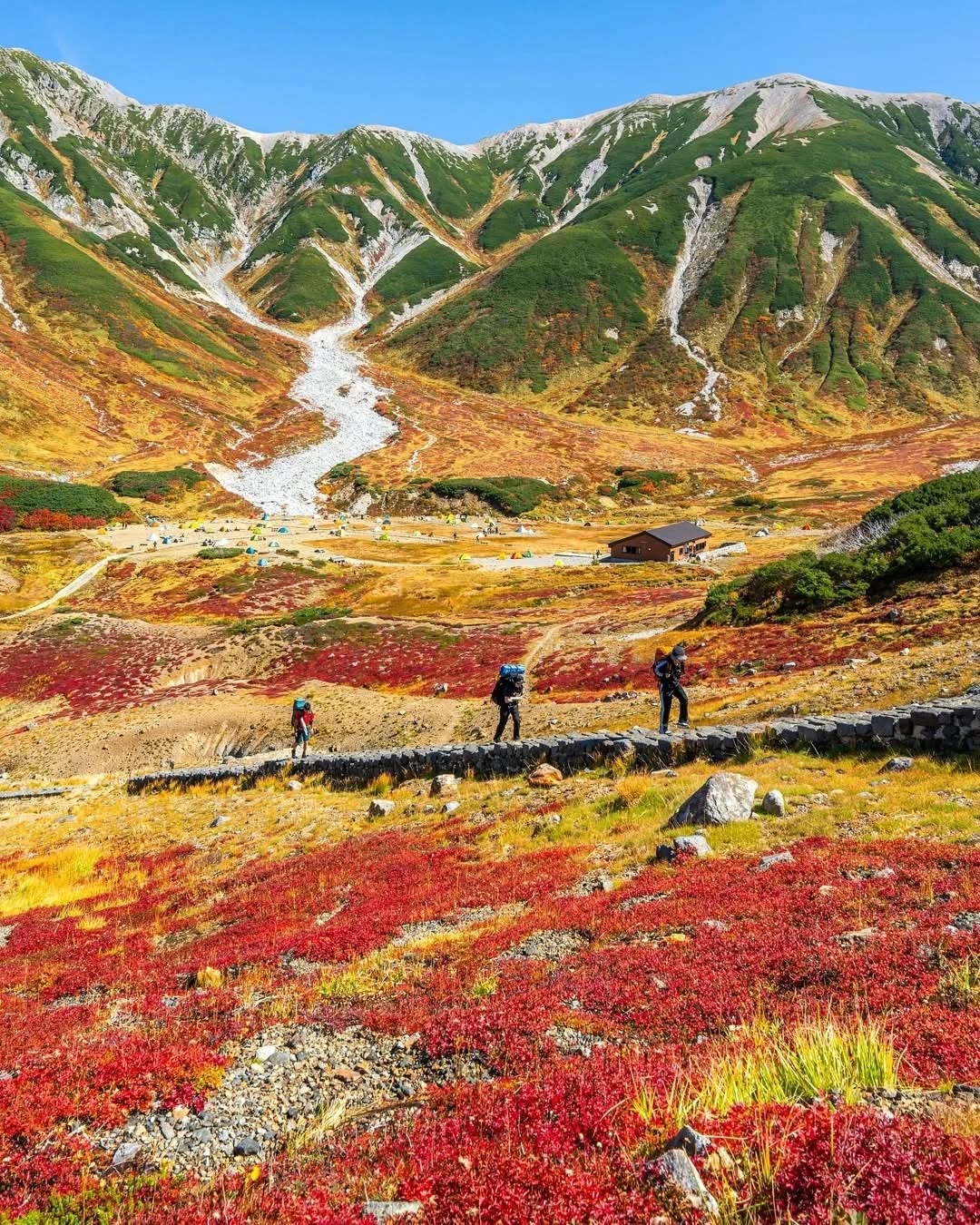
Staying Overnight on the Alpine Tateyama Route: a 2-Day, 1-Night Autumn Itinerary
17 min · tips

Tateyama in Autumn: Strategies for Avoiding Crowds and the Real Budget
16 min · tips
Three-Tier Autumn Colors Along the Tateyama Alpine Route
16 min · tips

Soak in Japan’s Highest Onsen Amid Tateyama’s Autumn Leaves
17 min · tips